During the Work
Restoring an old house is rarely a straight line.
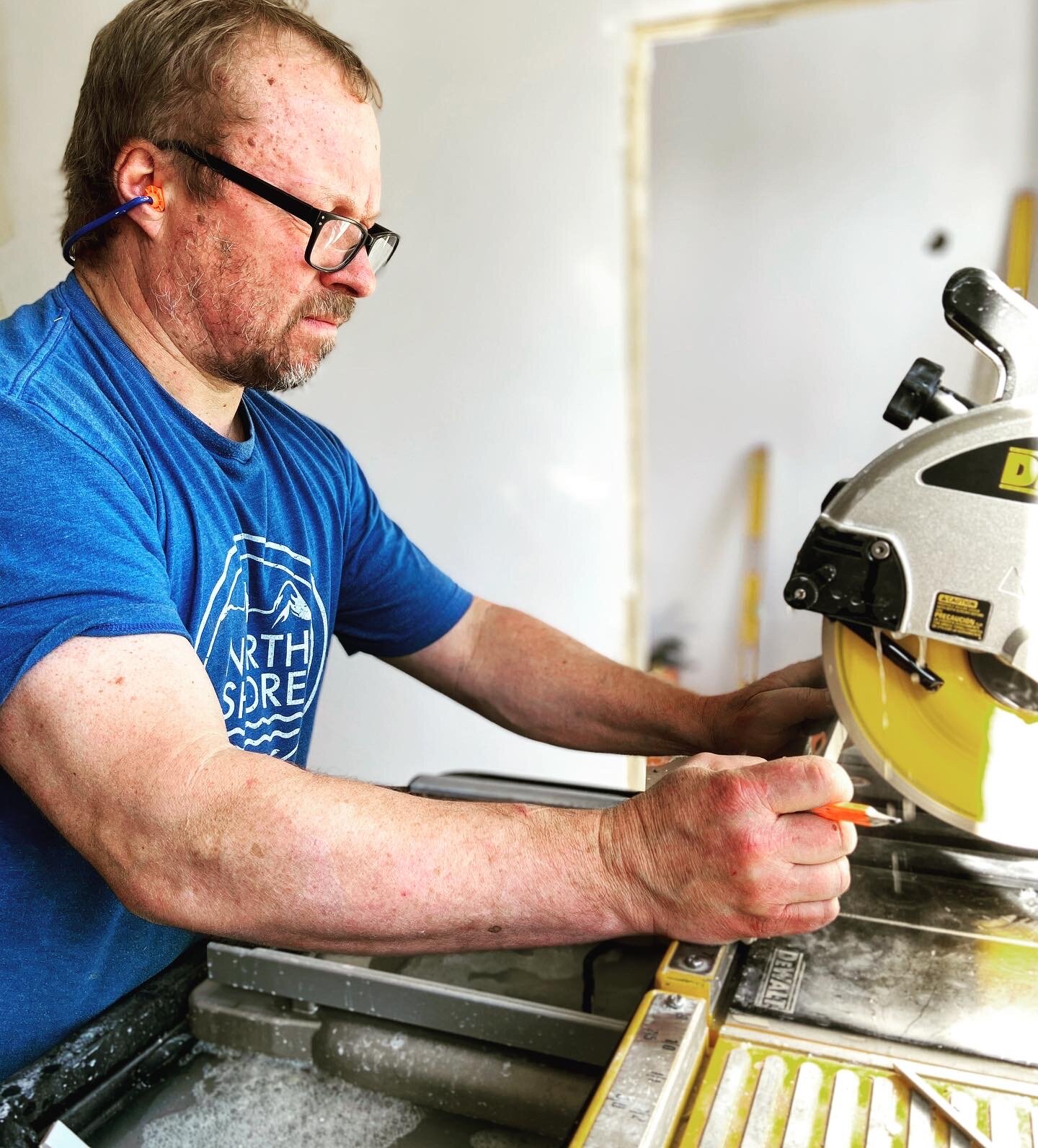
Some projects have been carefully planned. Others have started because we opened a wall and discovered something entirely different behind it. There have been structural repairs, new systems, old materials saved and reused, things rebuilt more than once, and a few decisions we would probably make differently with the benefit of hindsight.
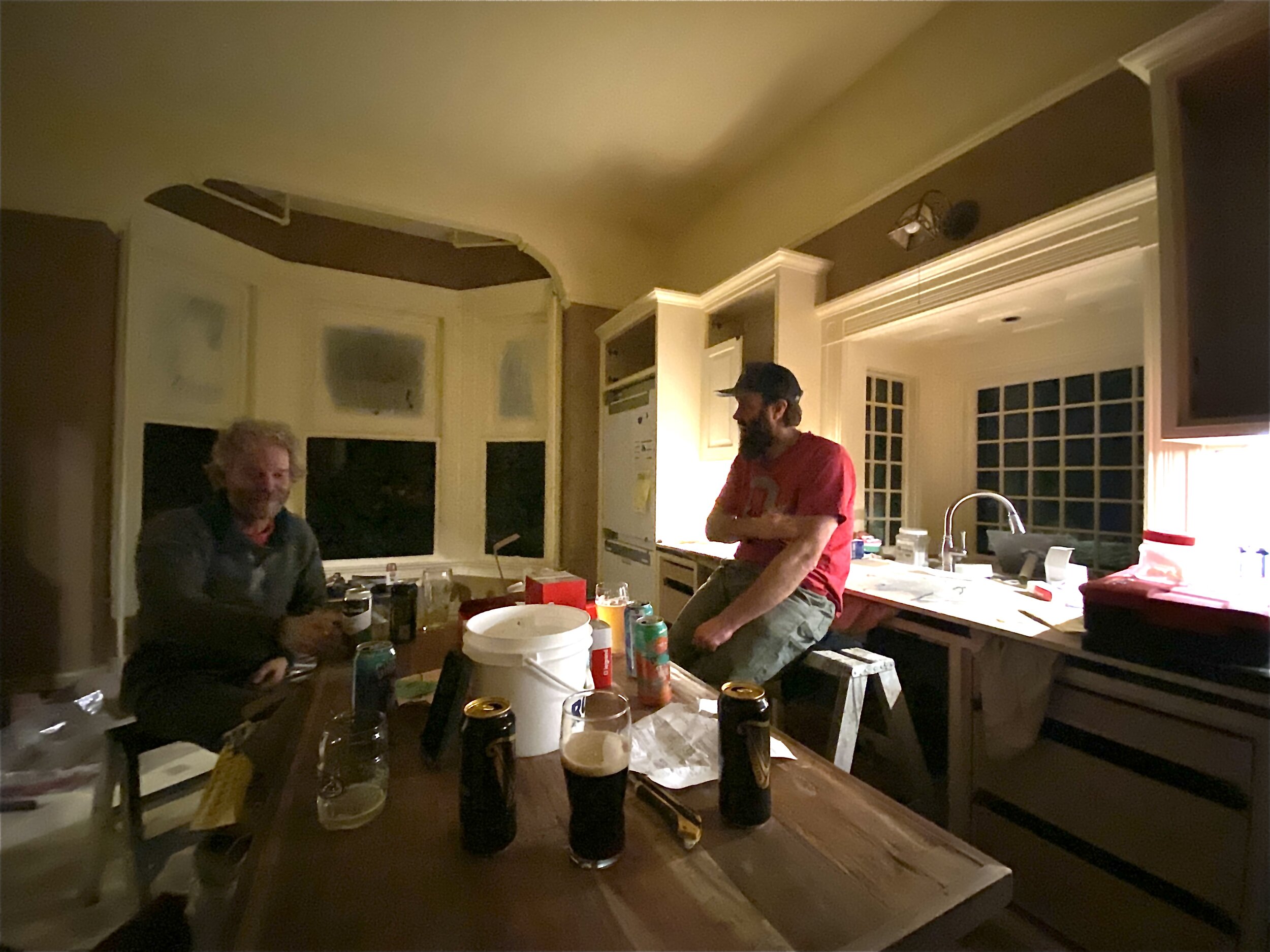
These photographs are our record of the messy middle: the part between deciding something needs to change and finally standing back to see what survived.
For the history buffs and renovation dorks, this is where most of the fun lives.
The Grand Entrance
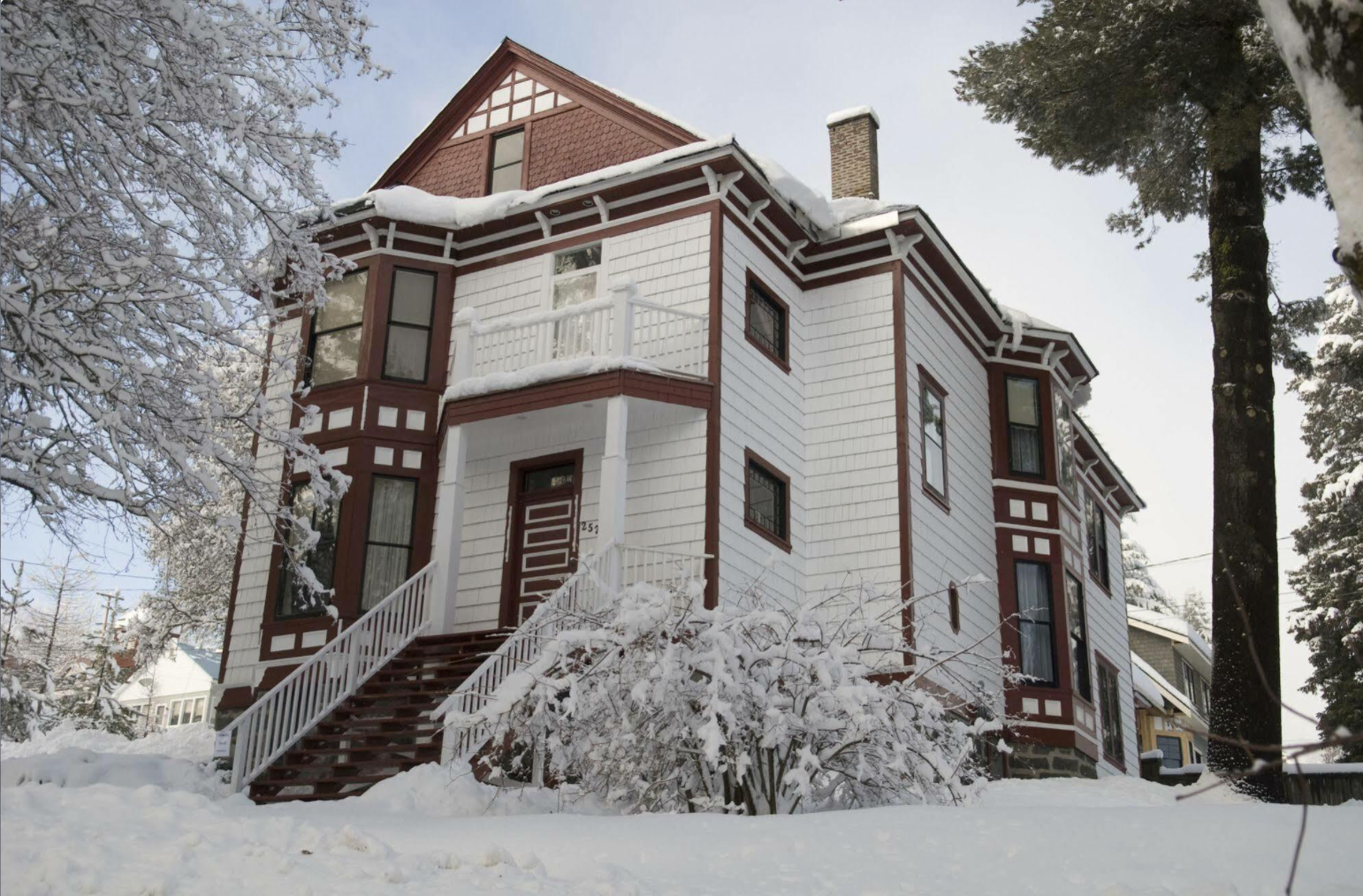
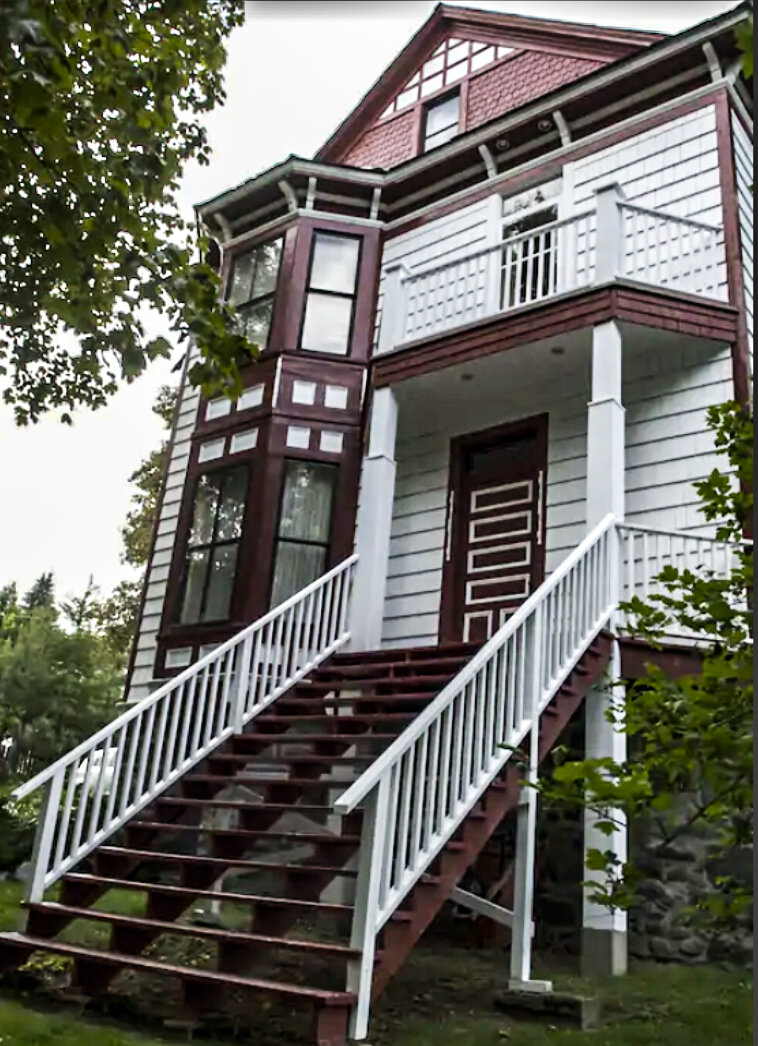
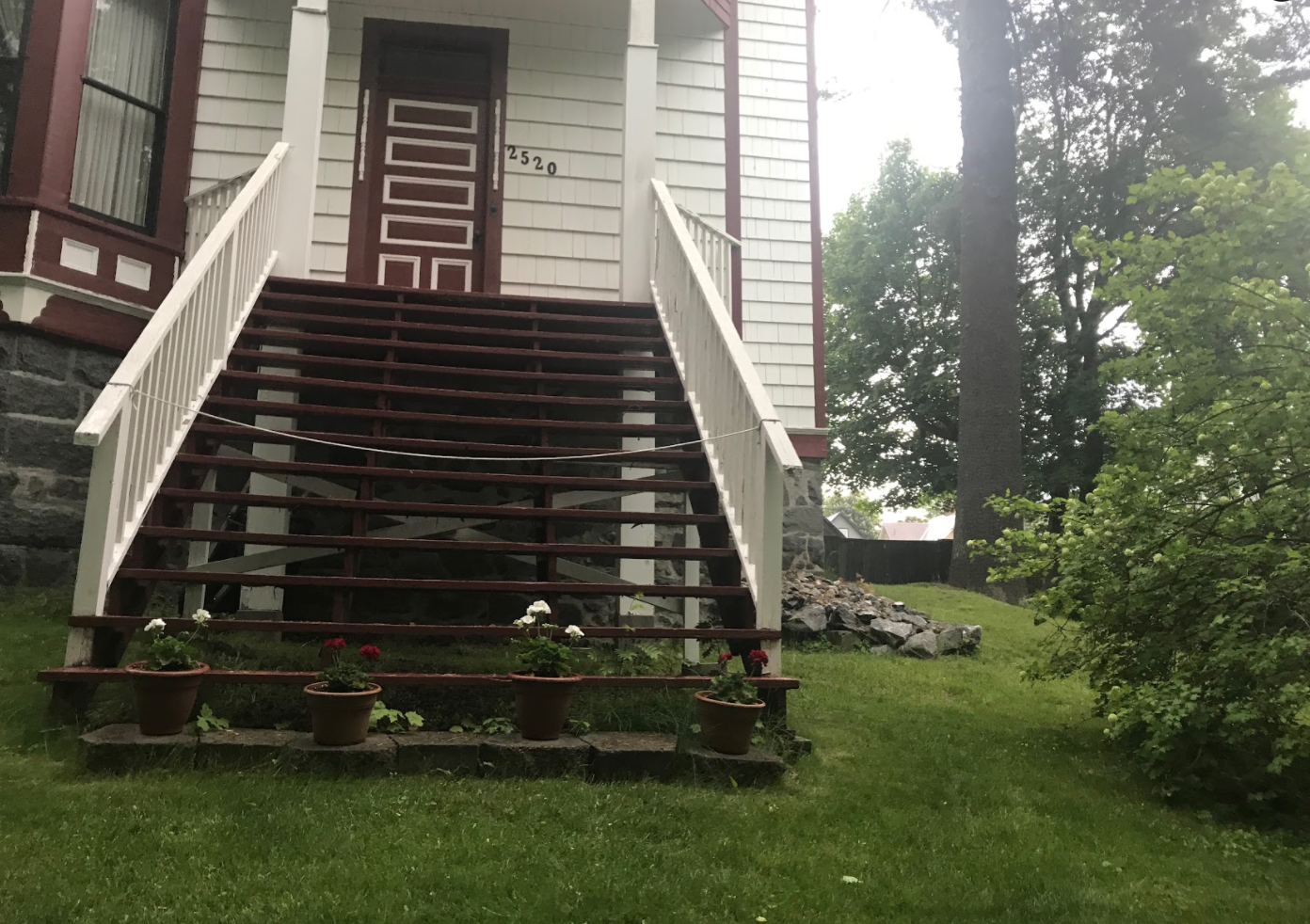
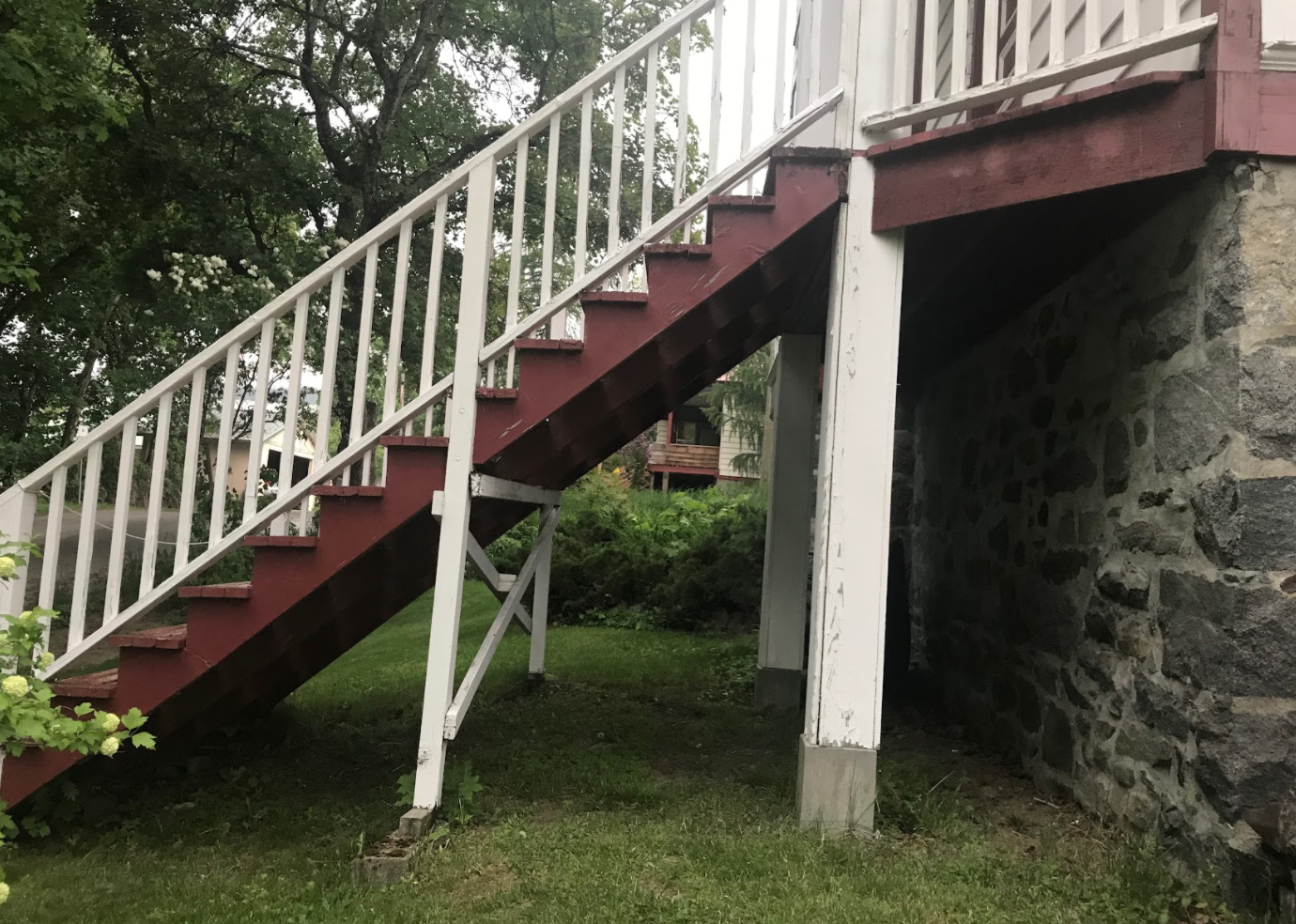
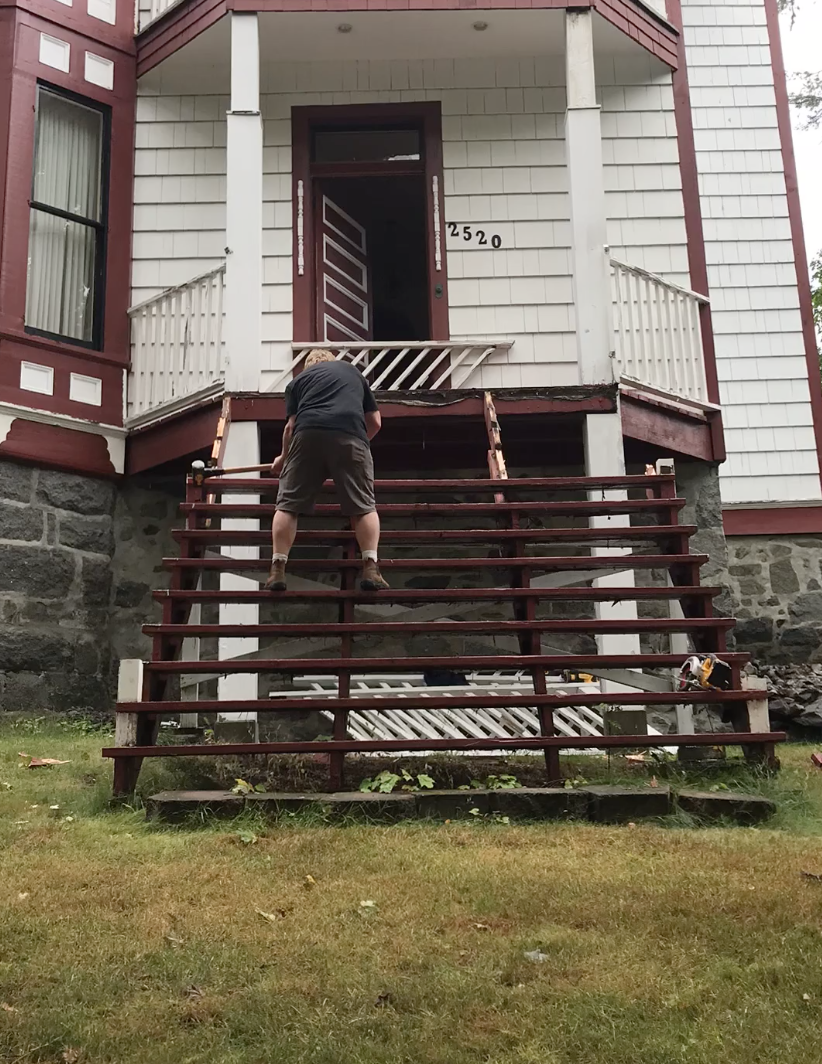
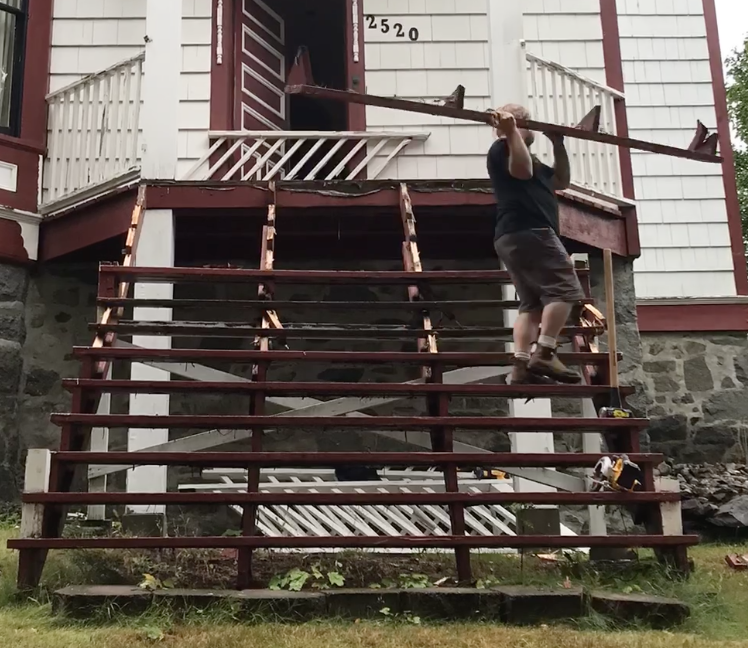
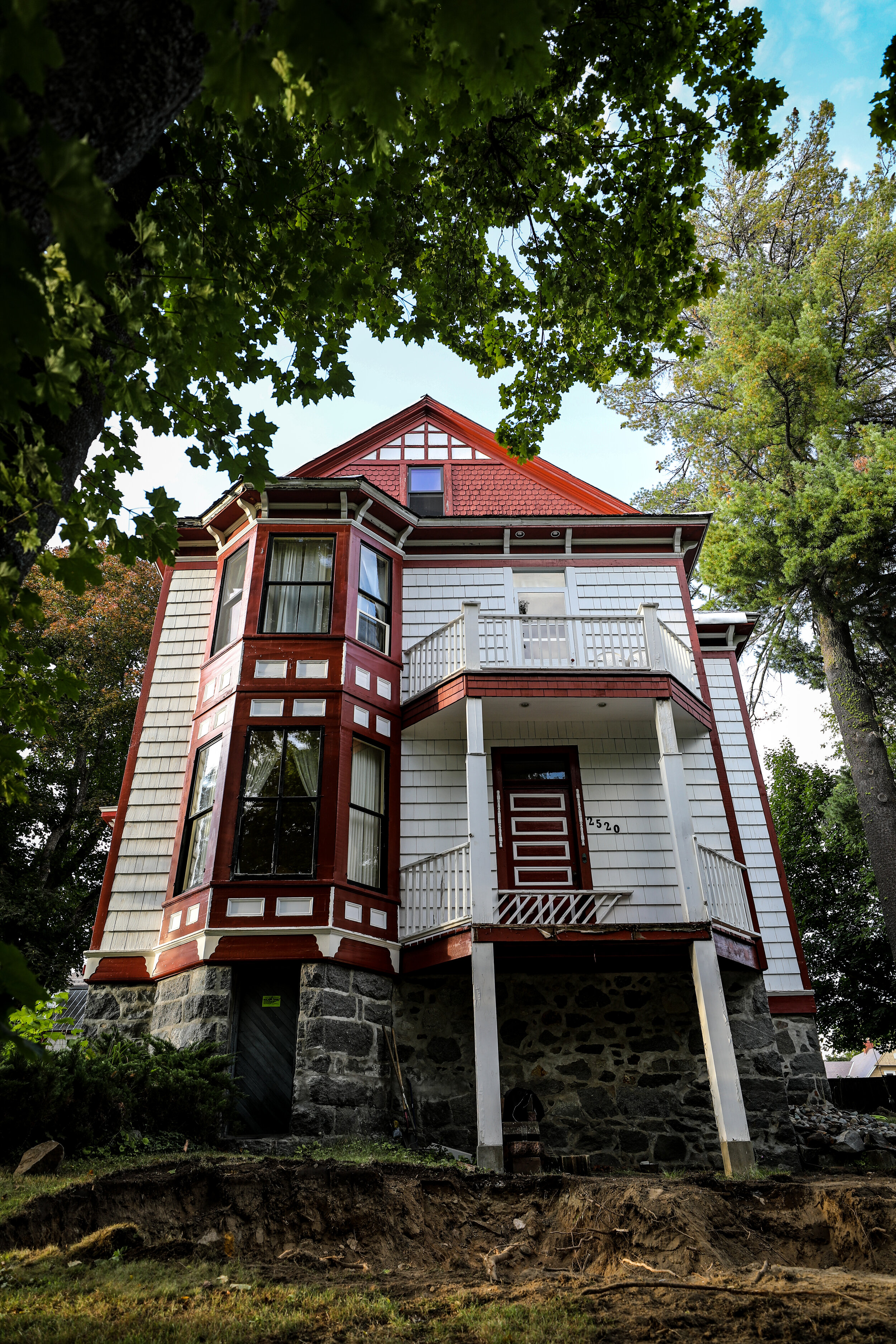
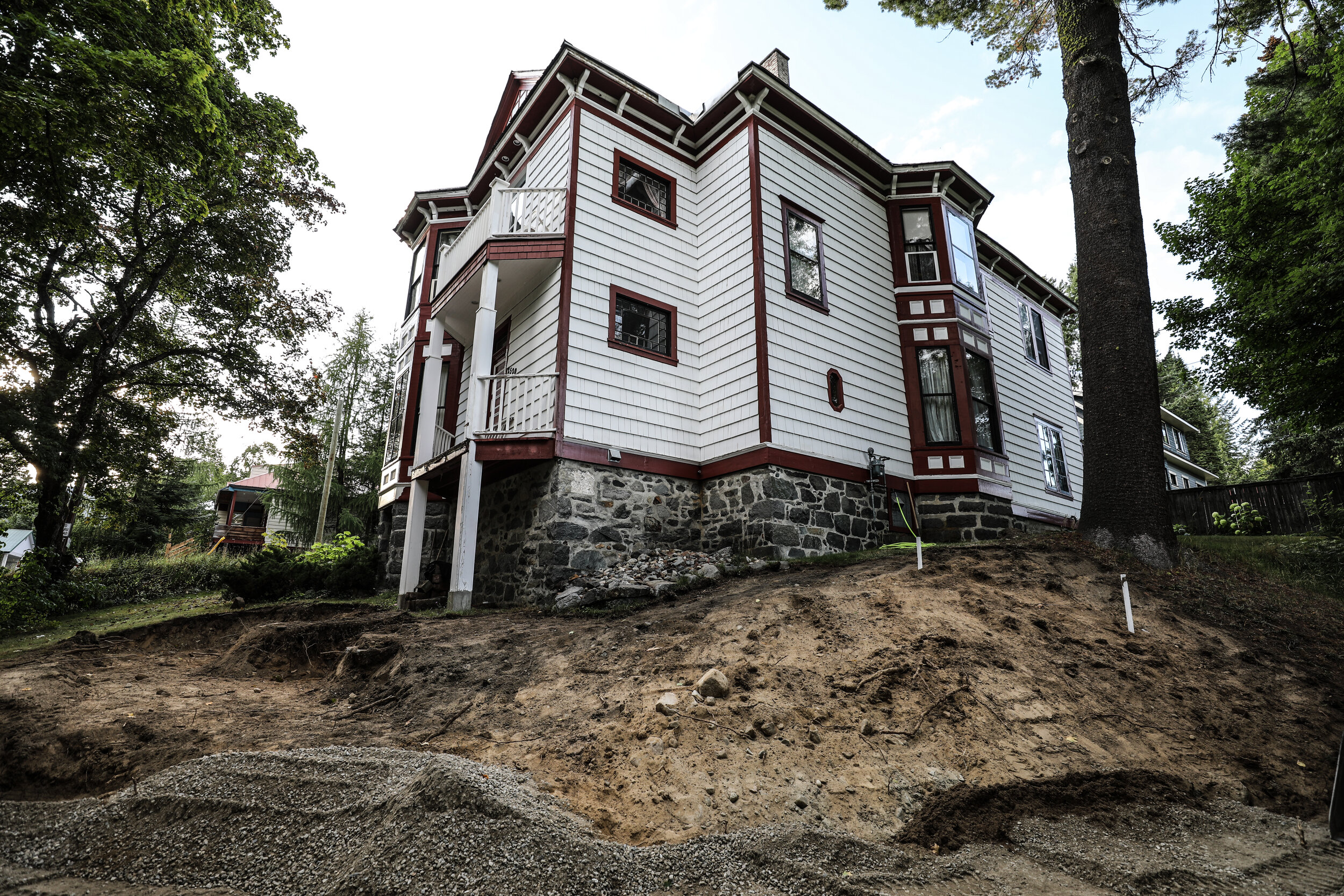
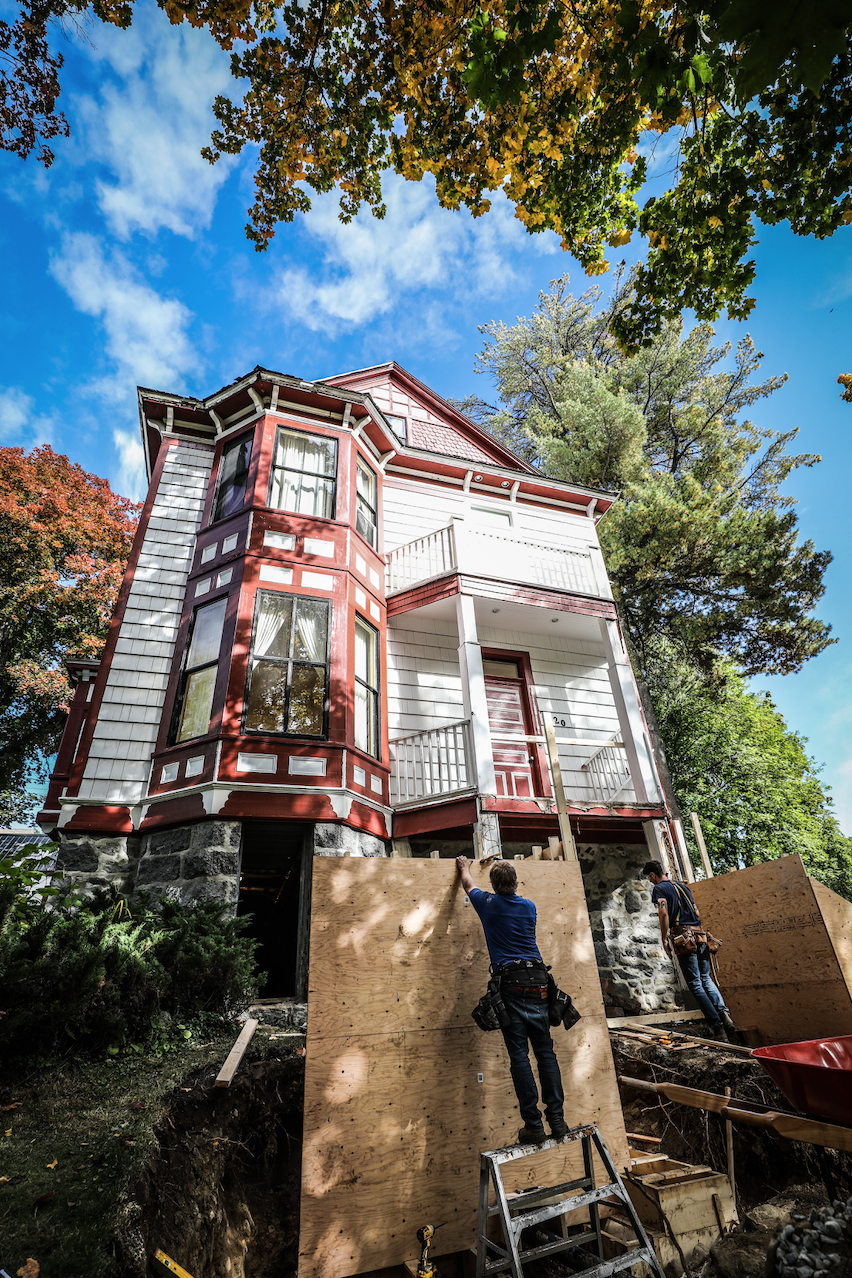
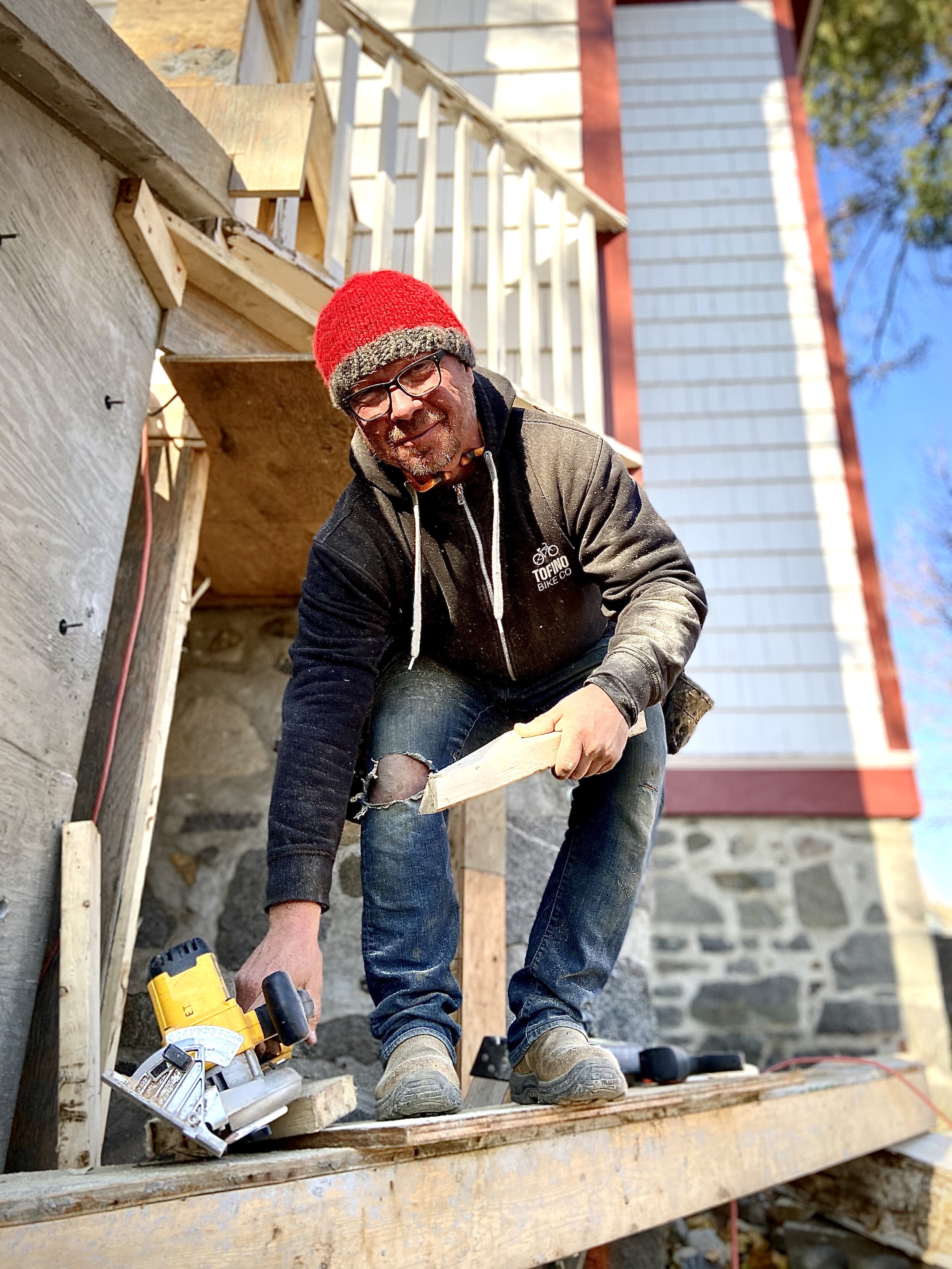
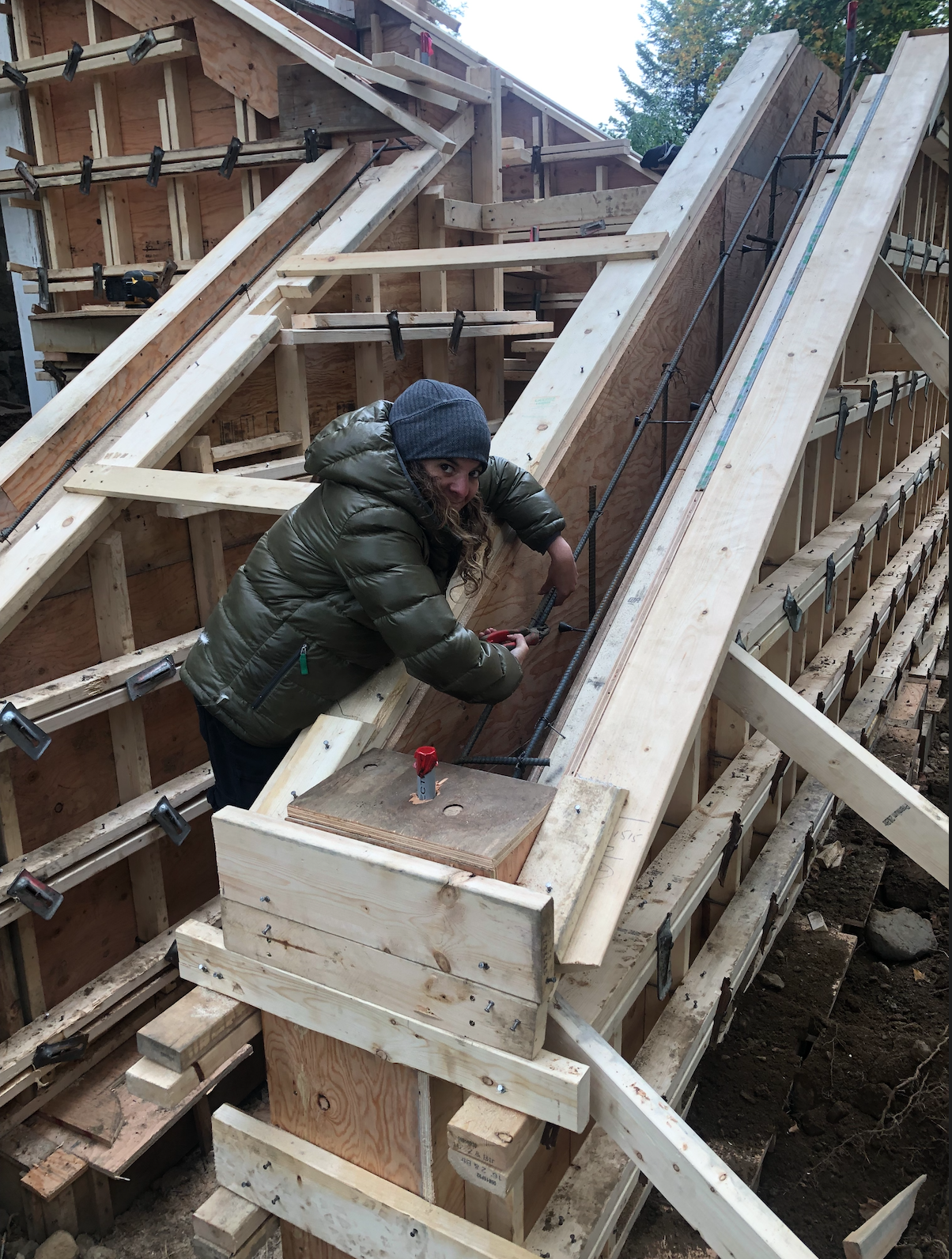
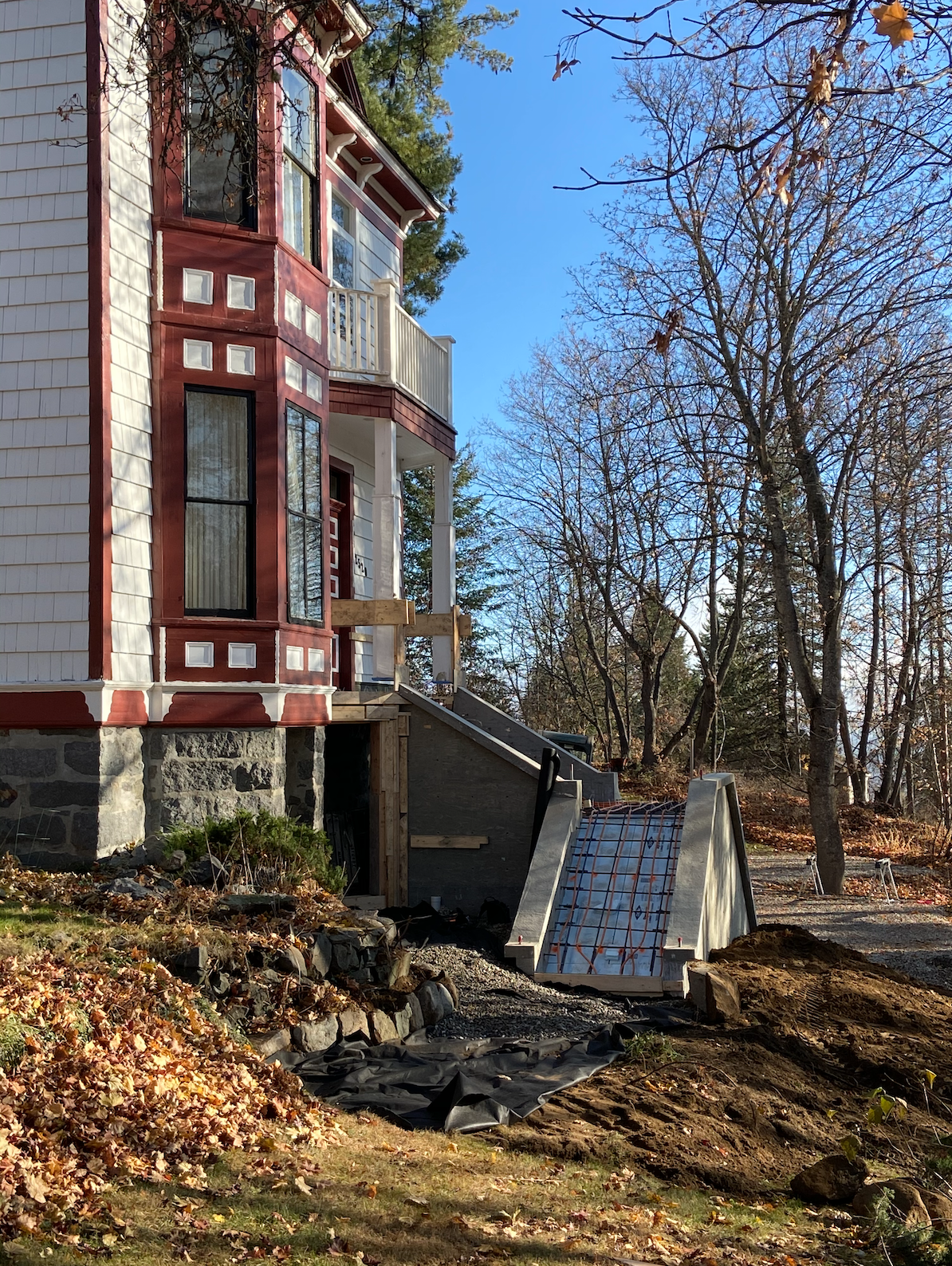
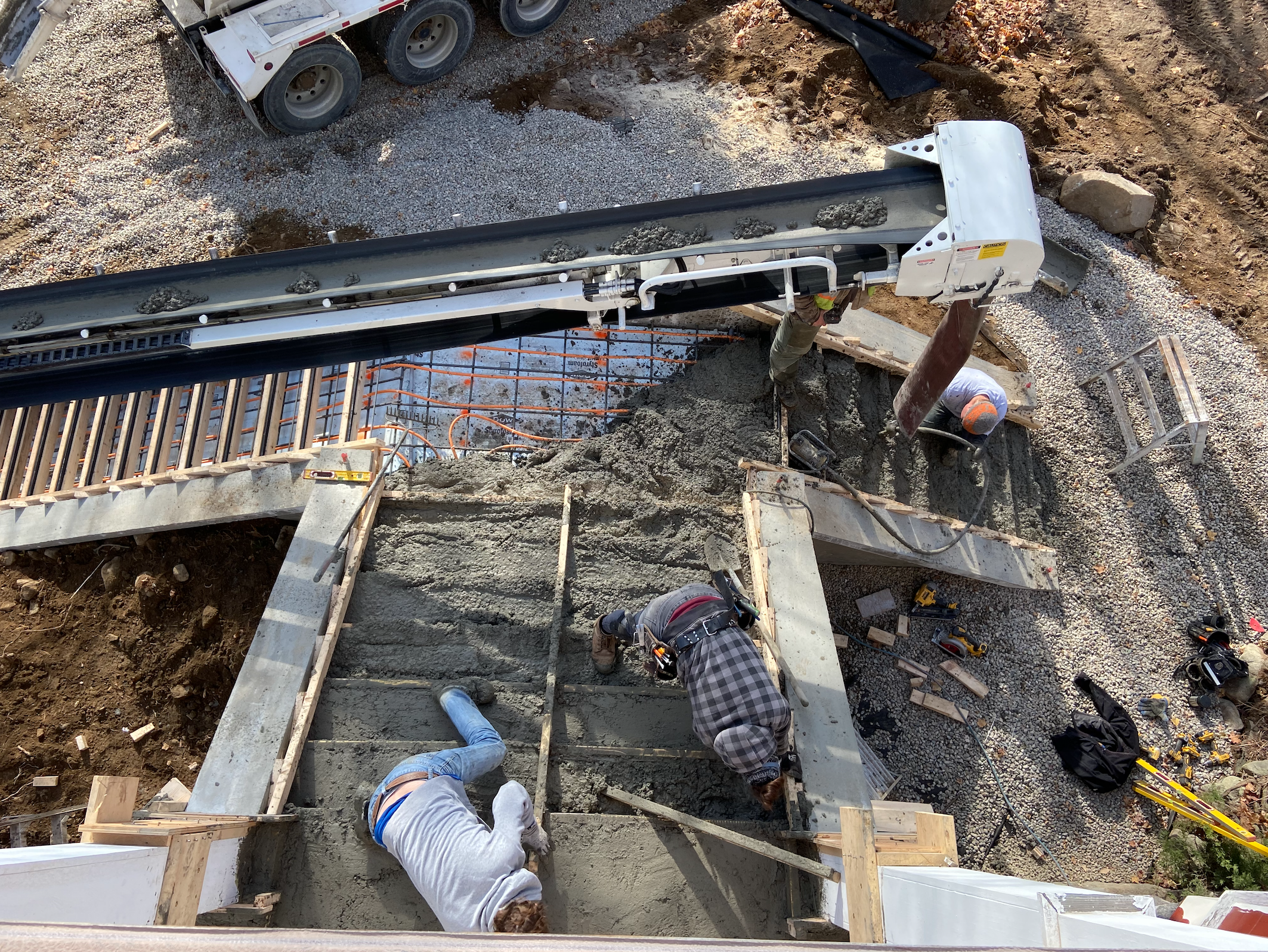
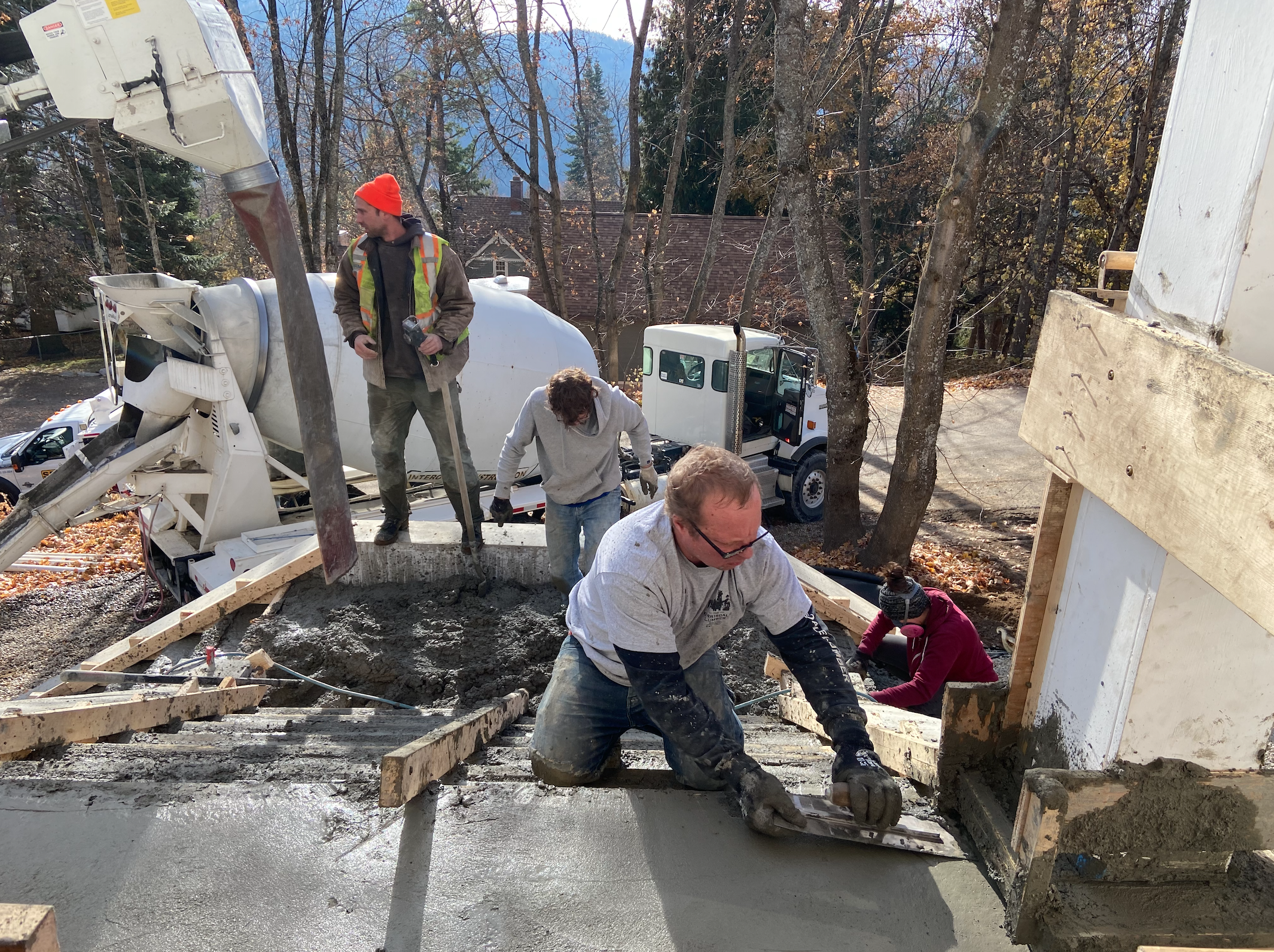
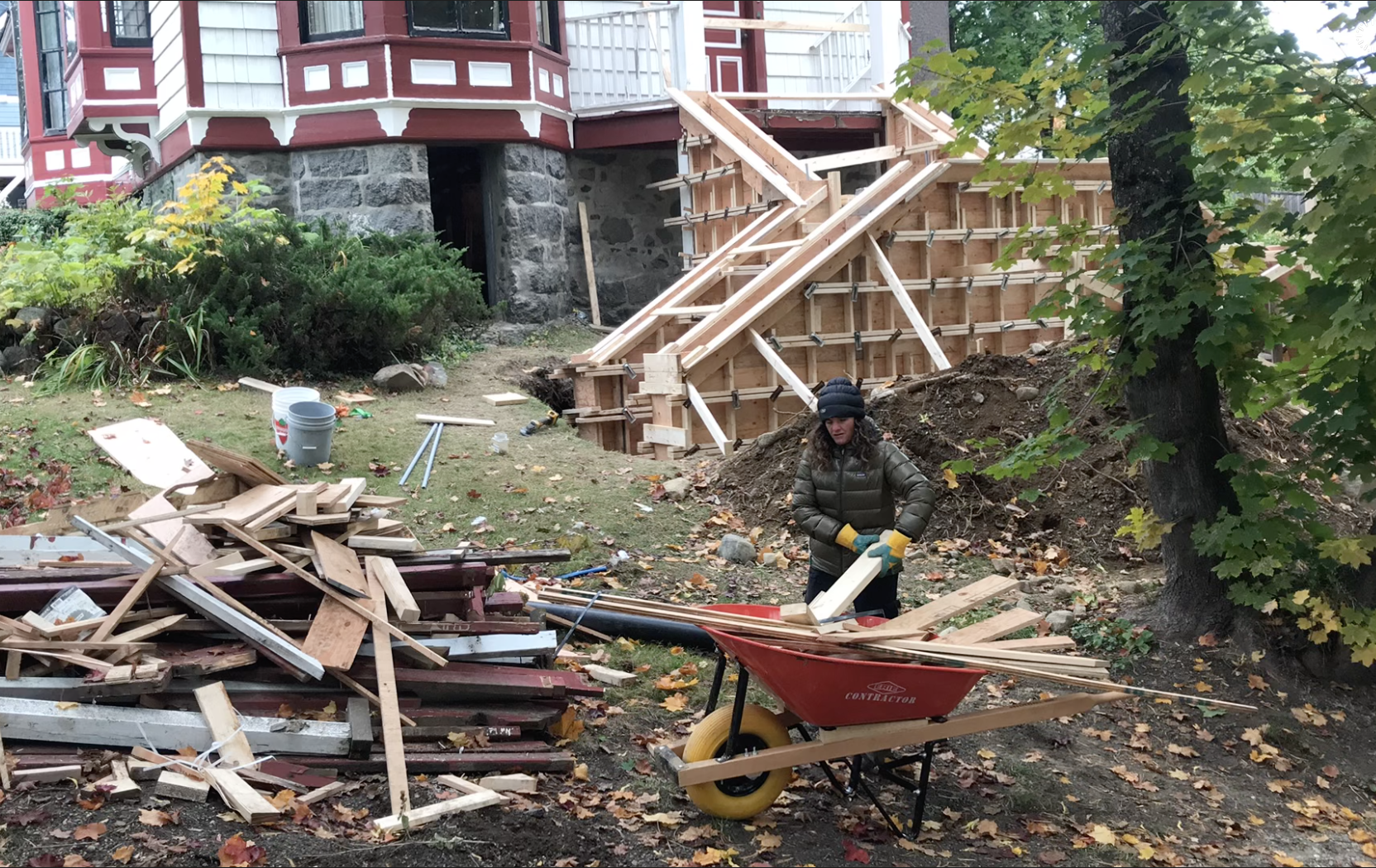
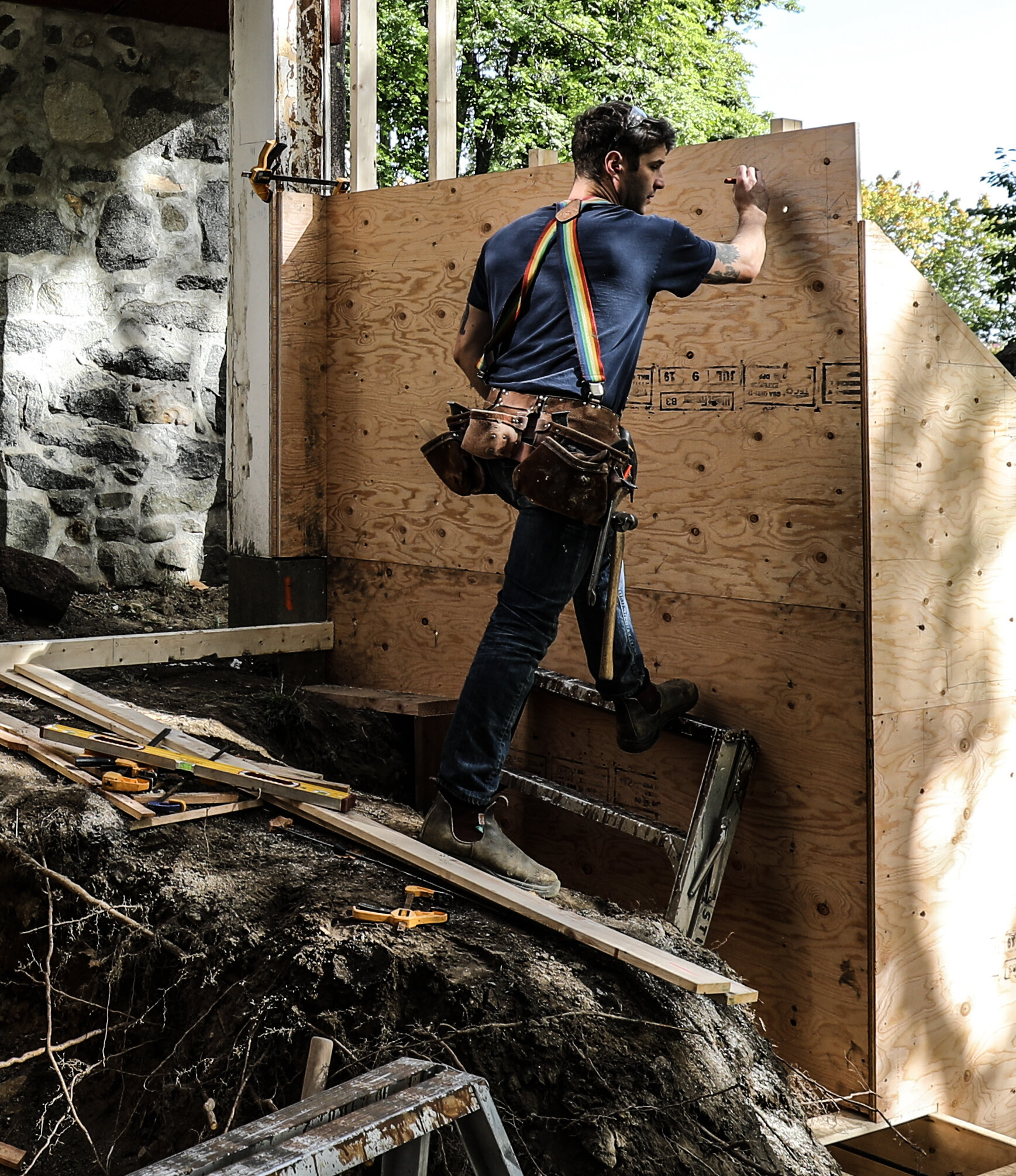
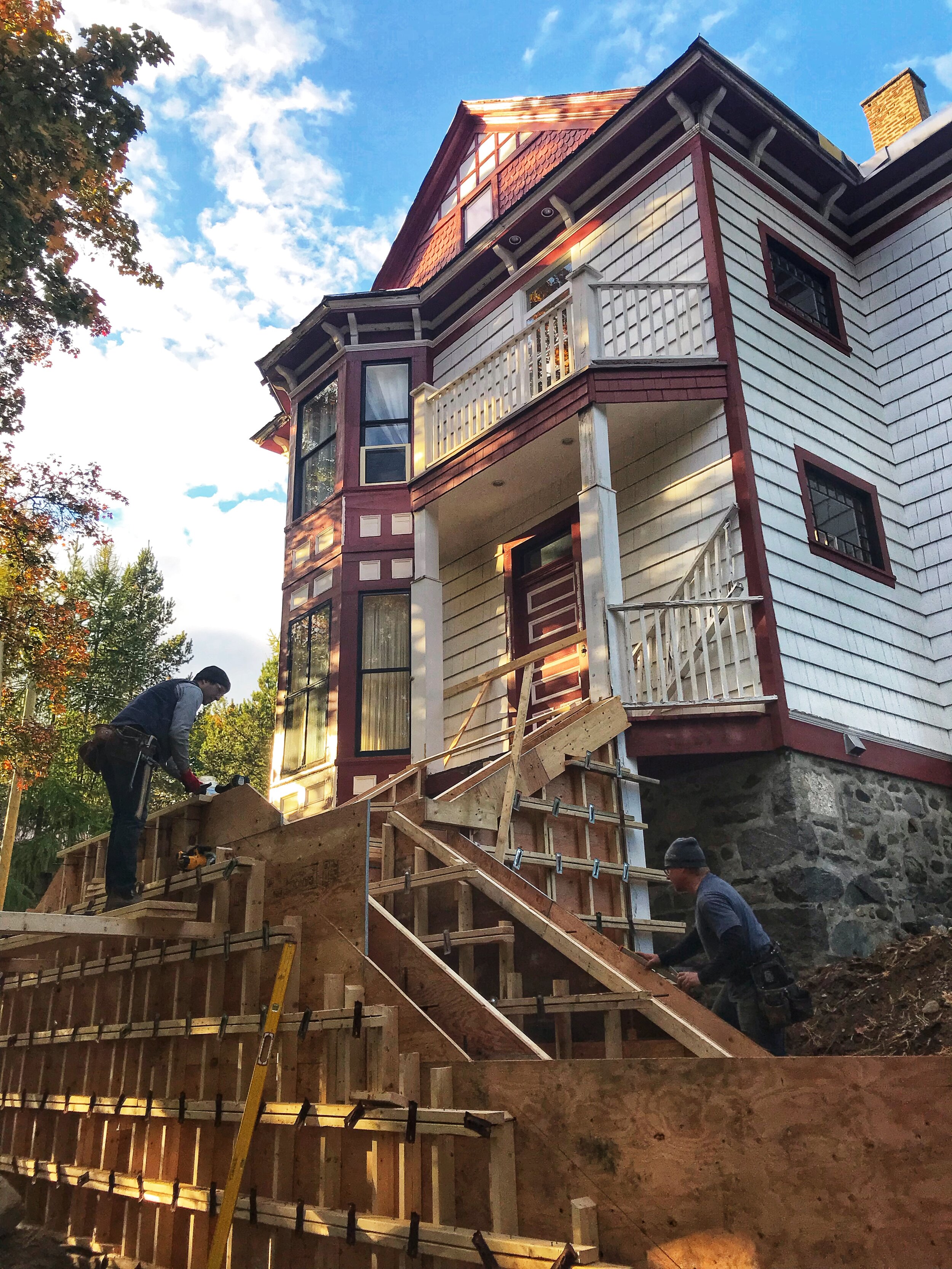
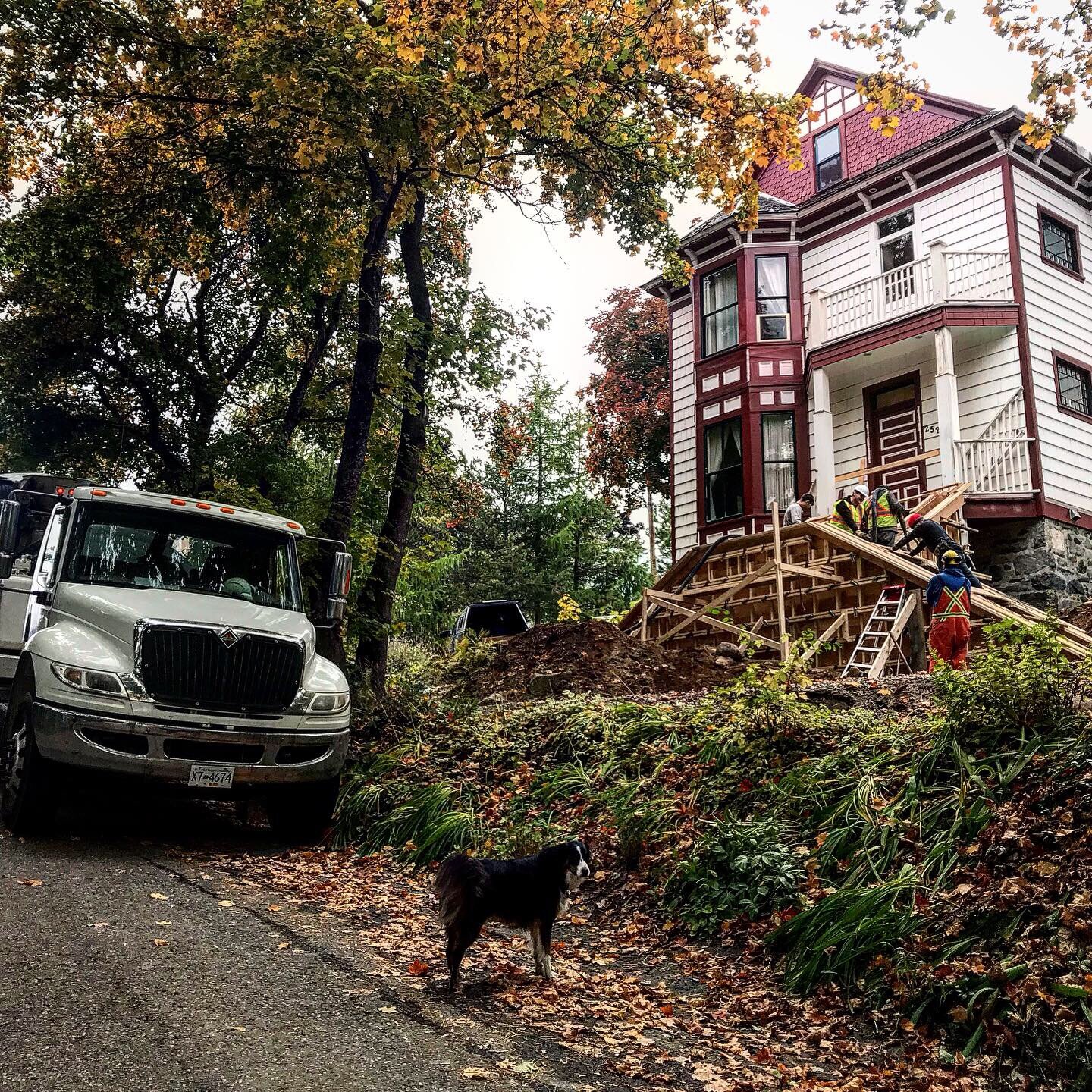
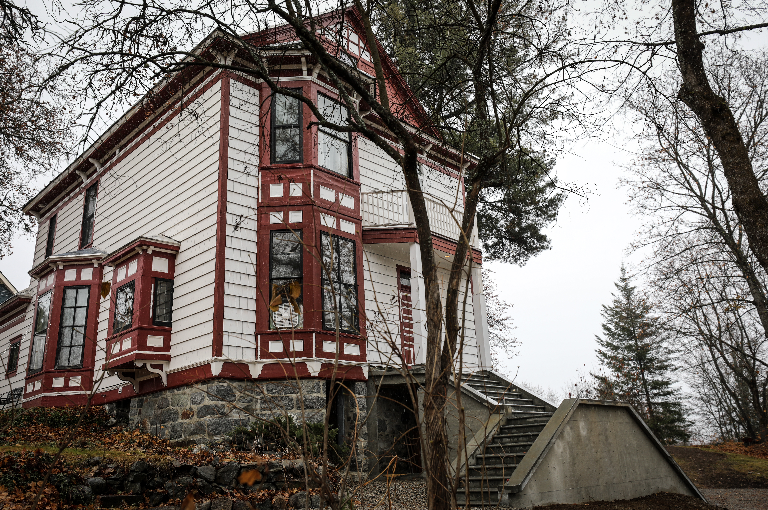
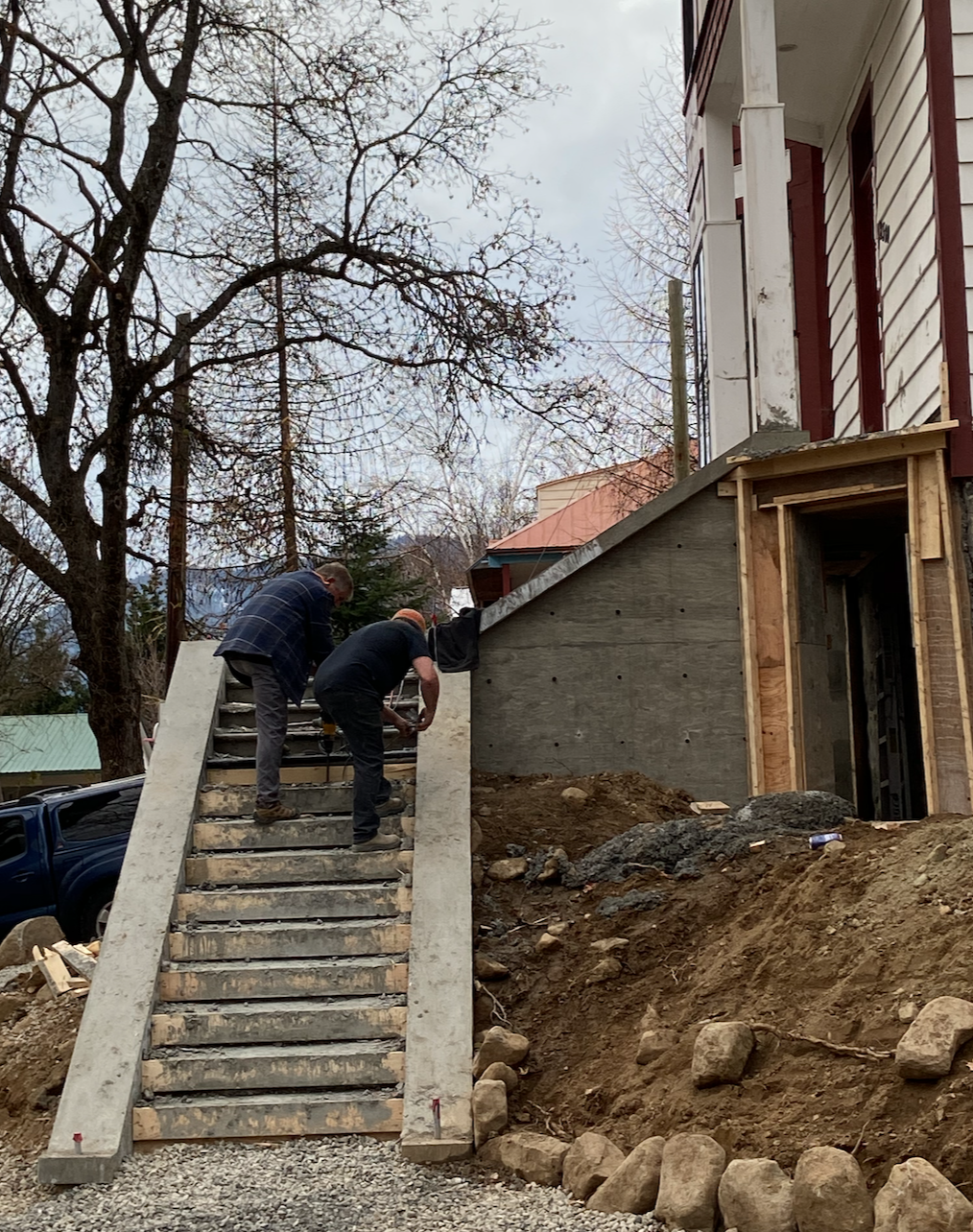
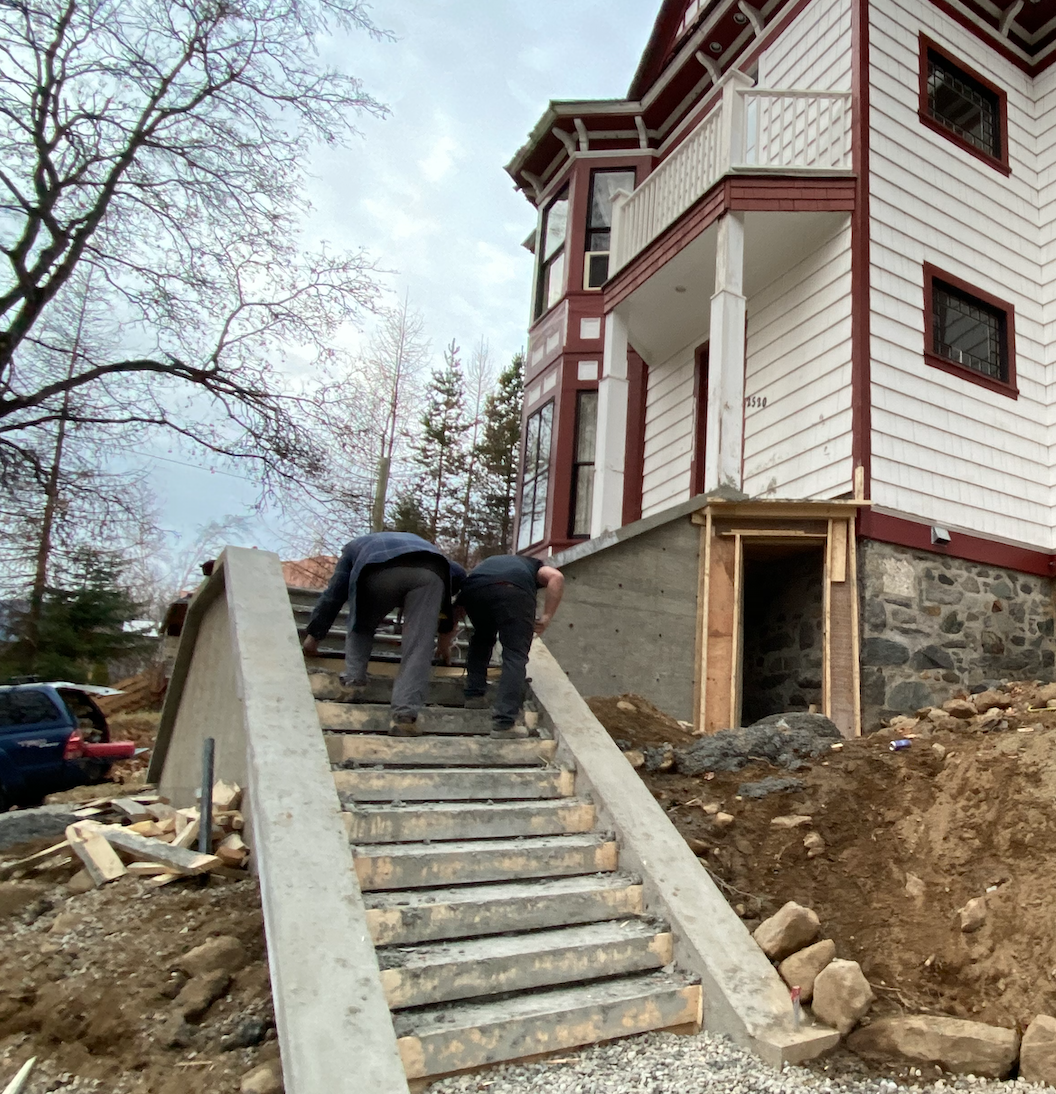
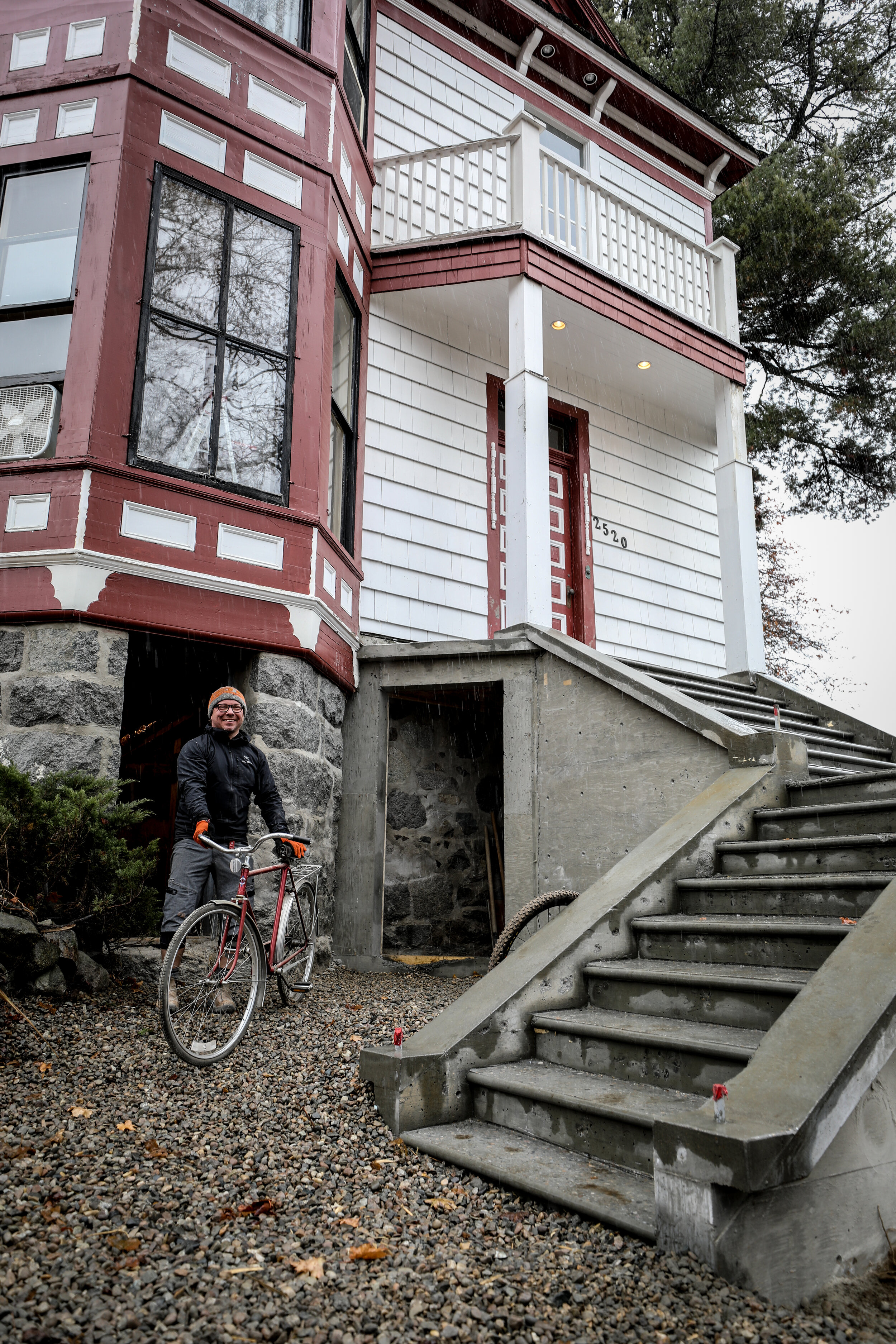
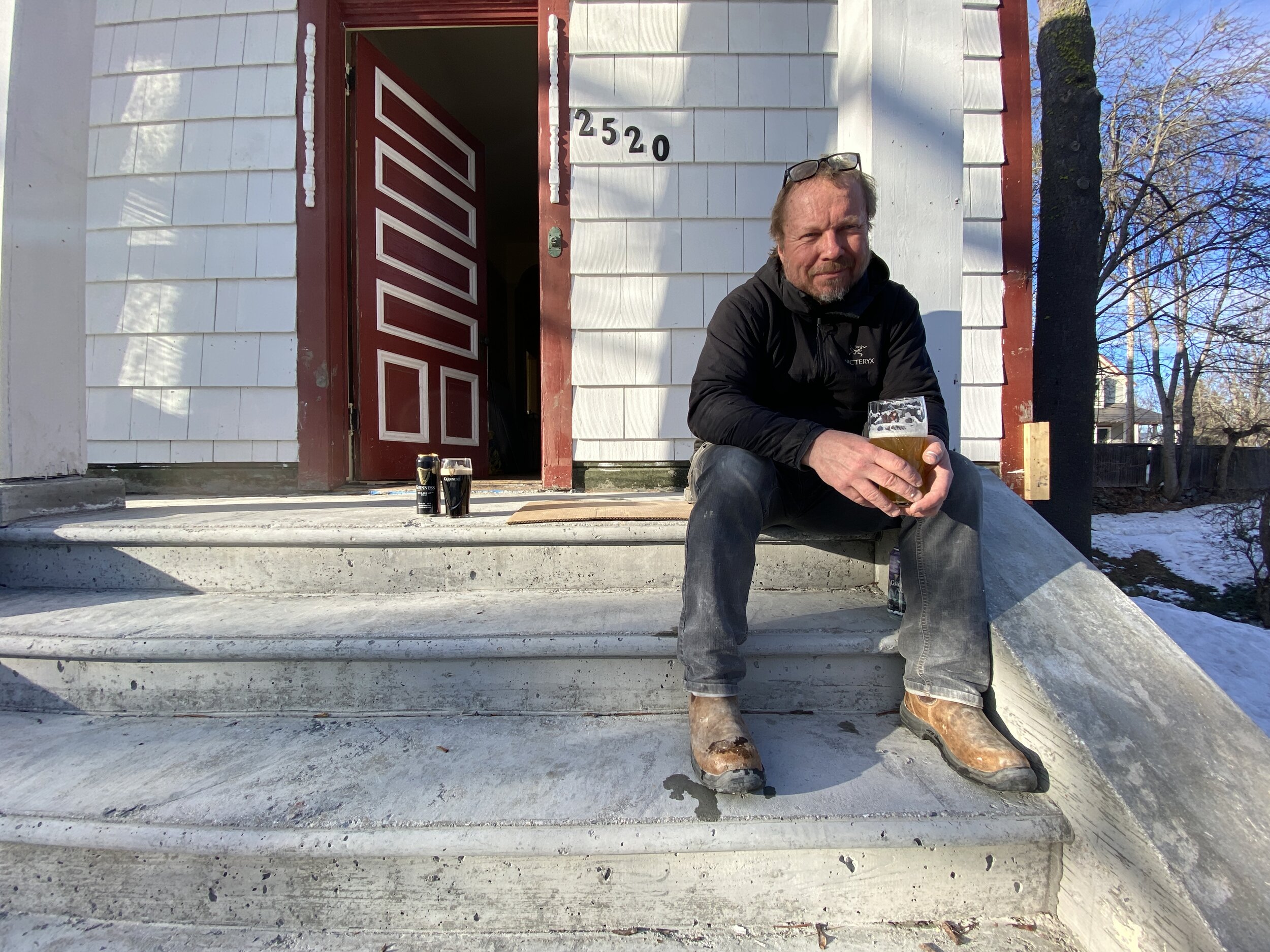
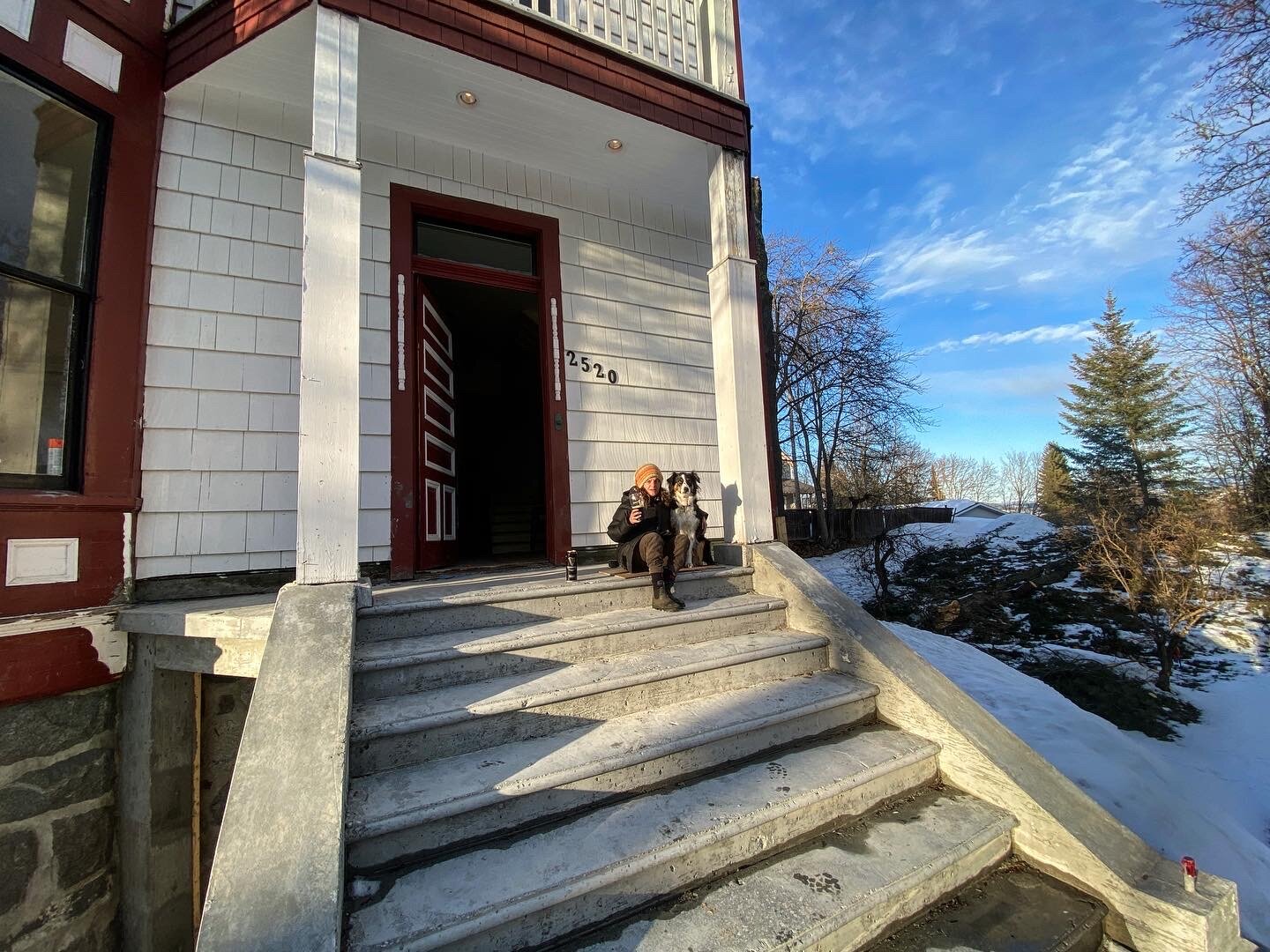
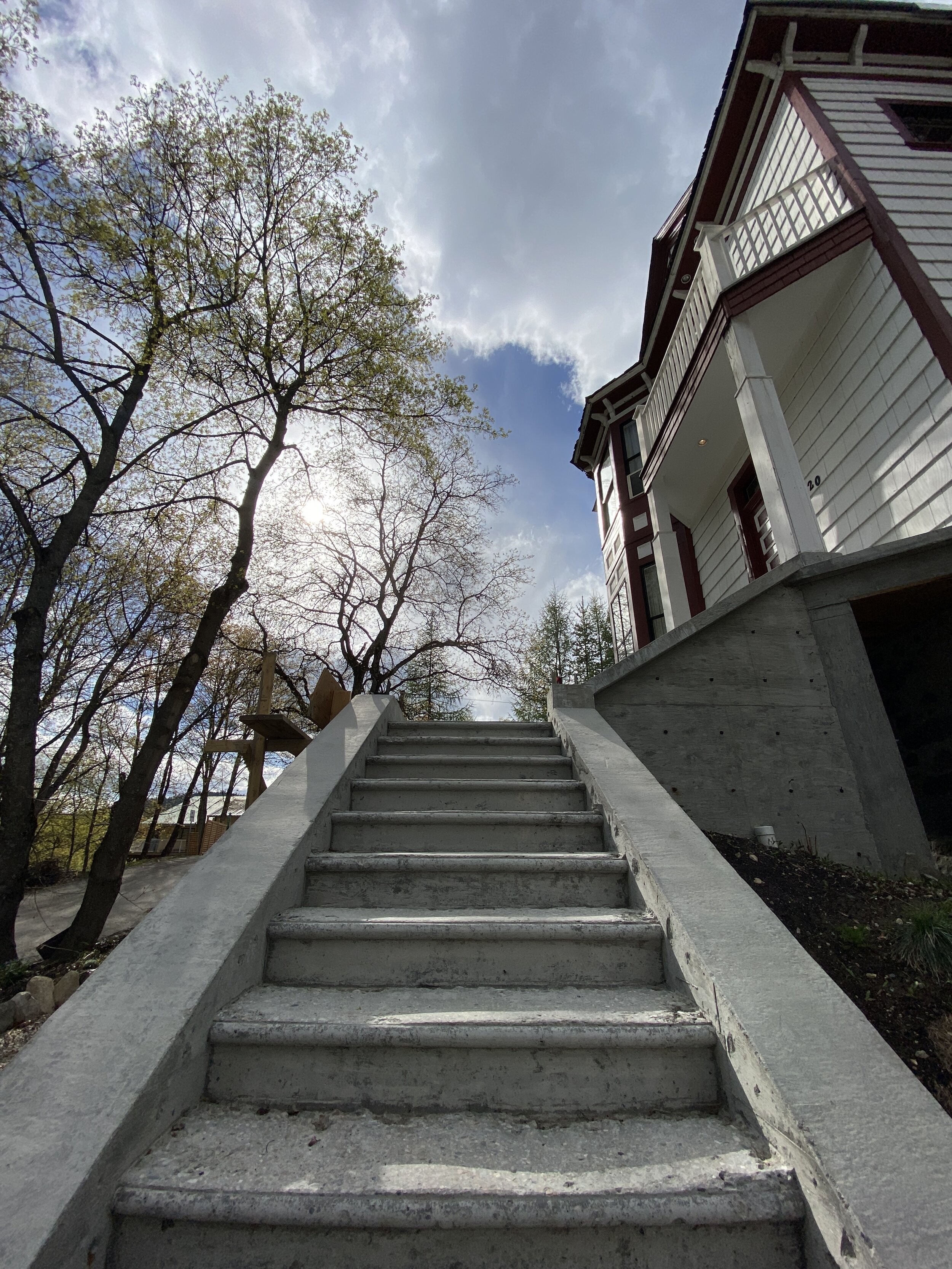
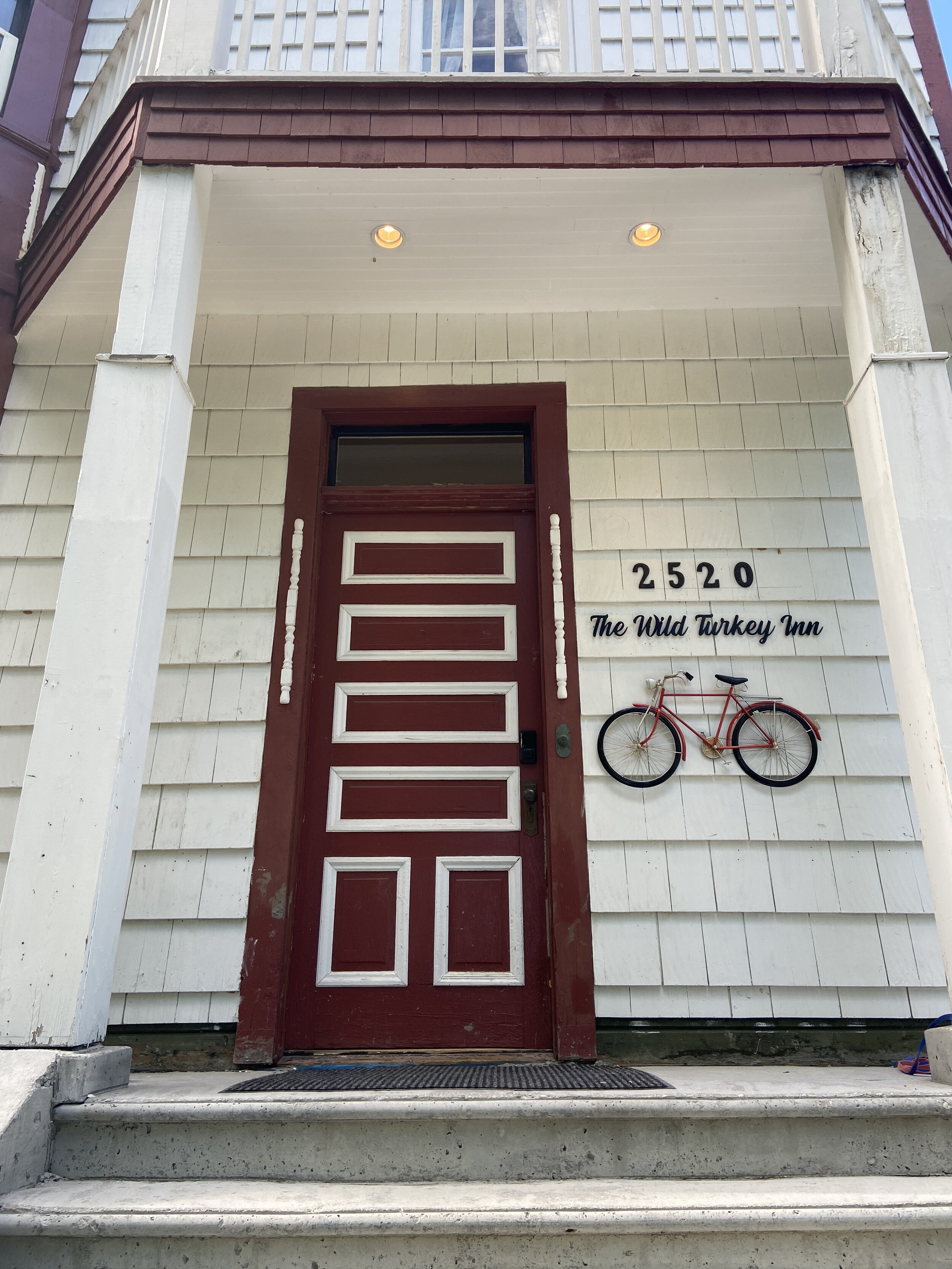
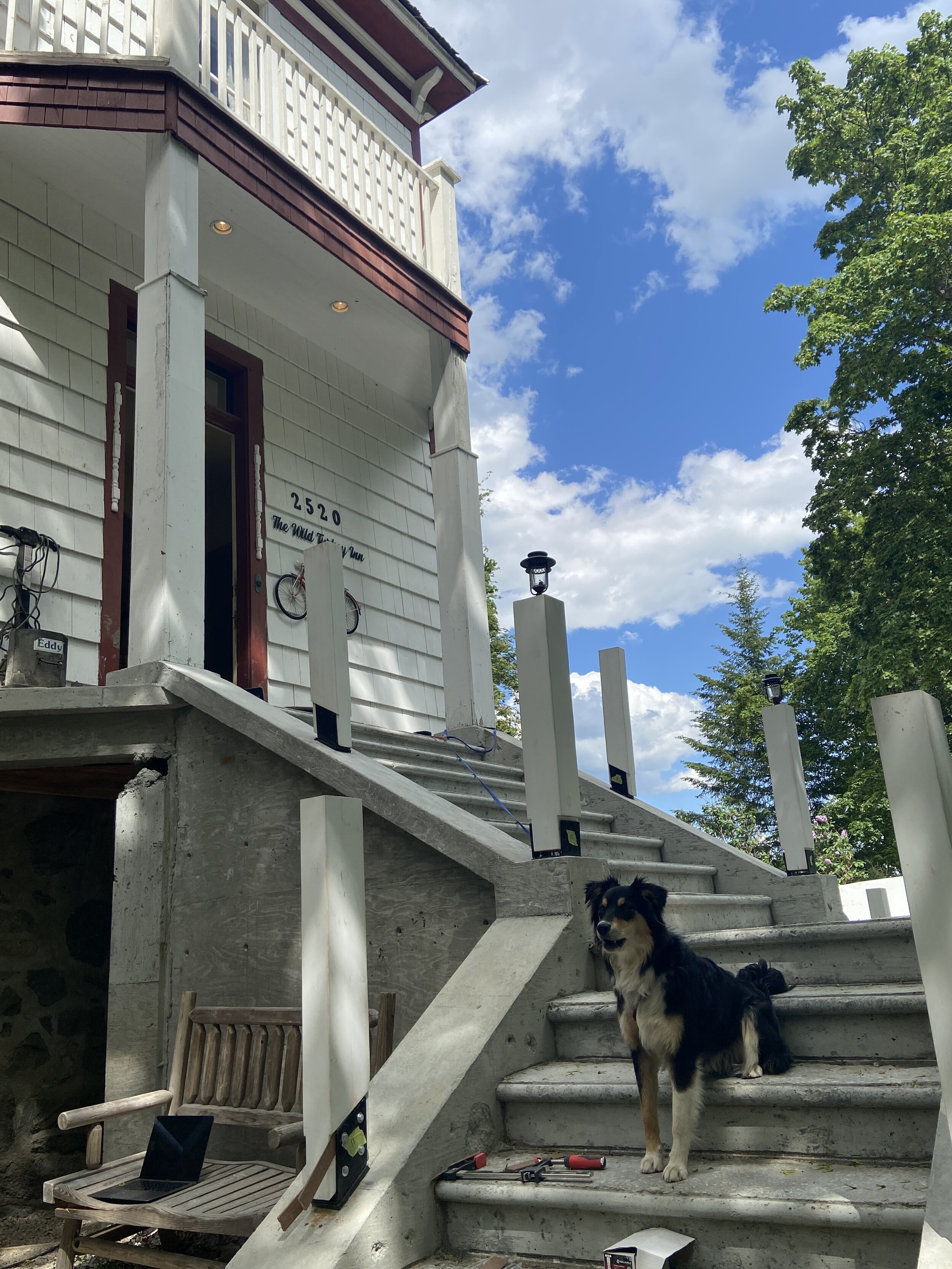
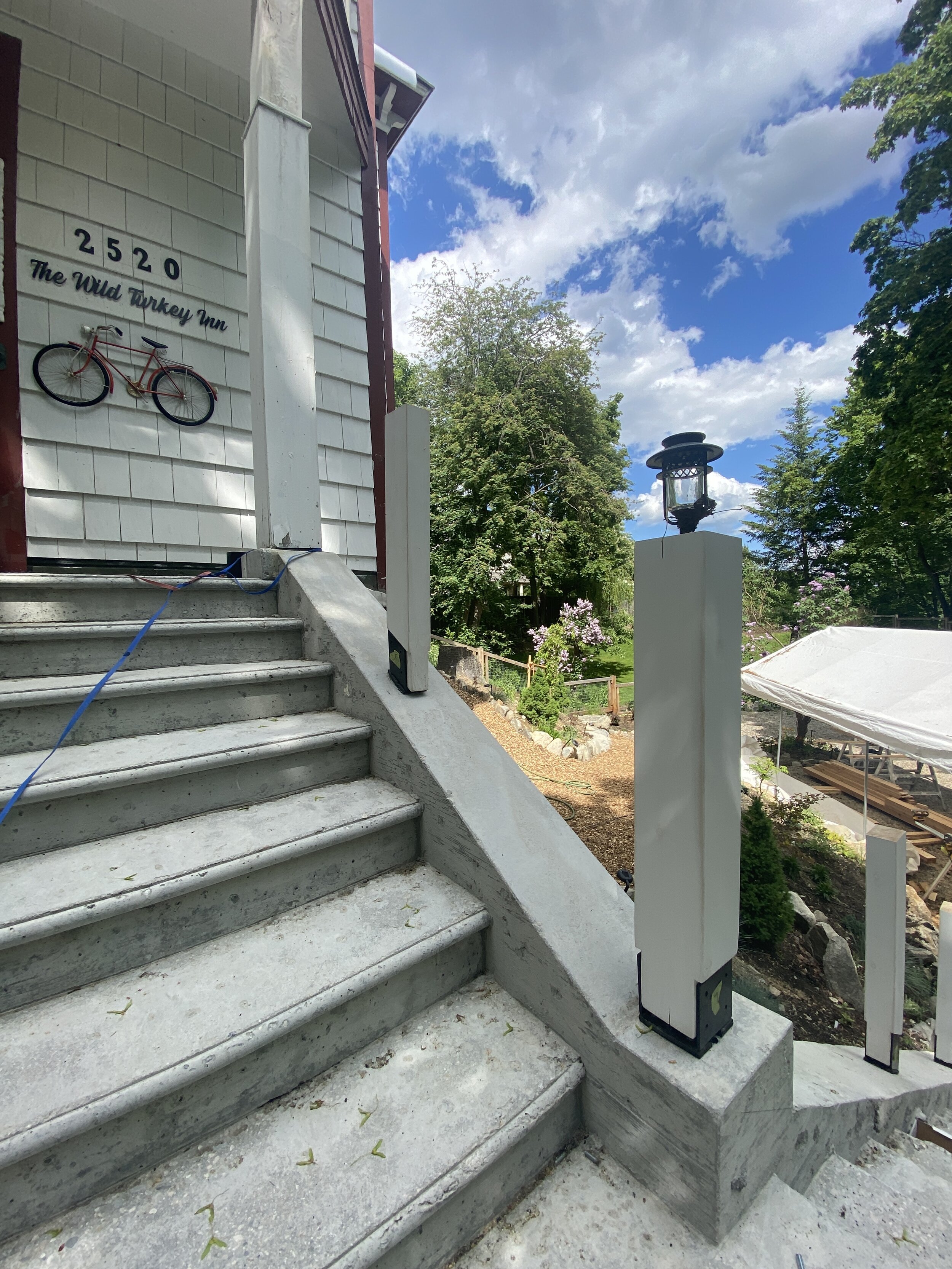
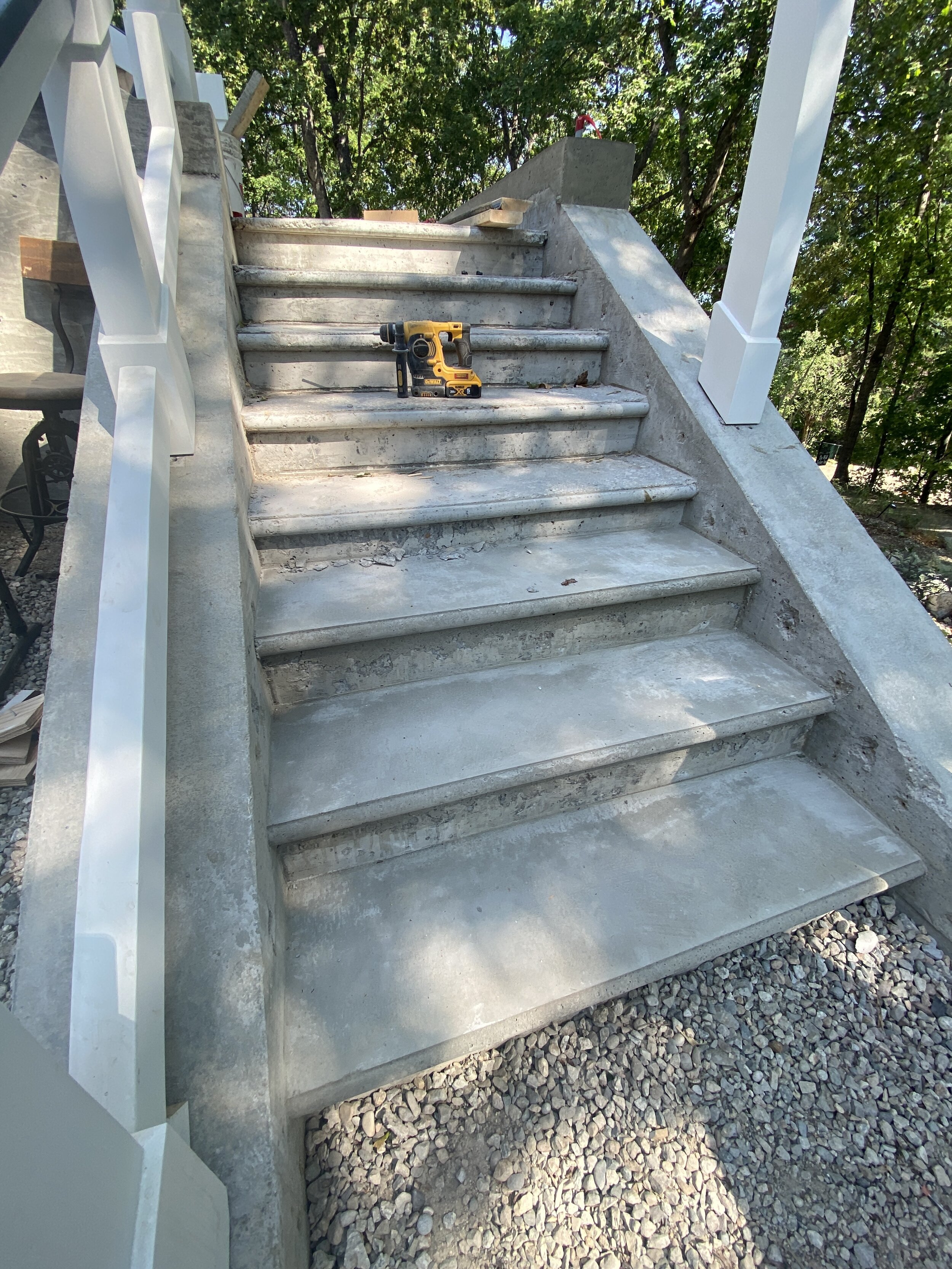
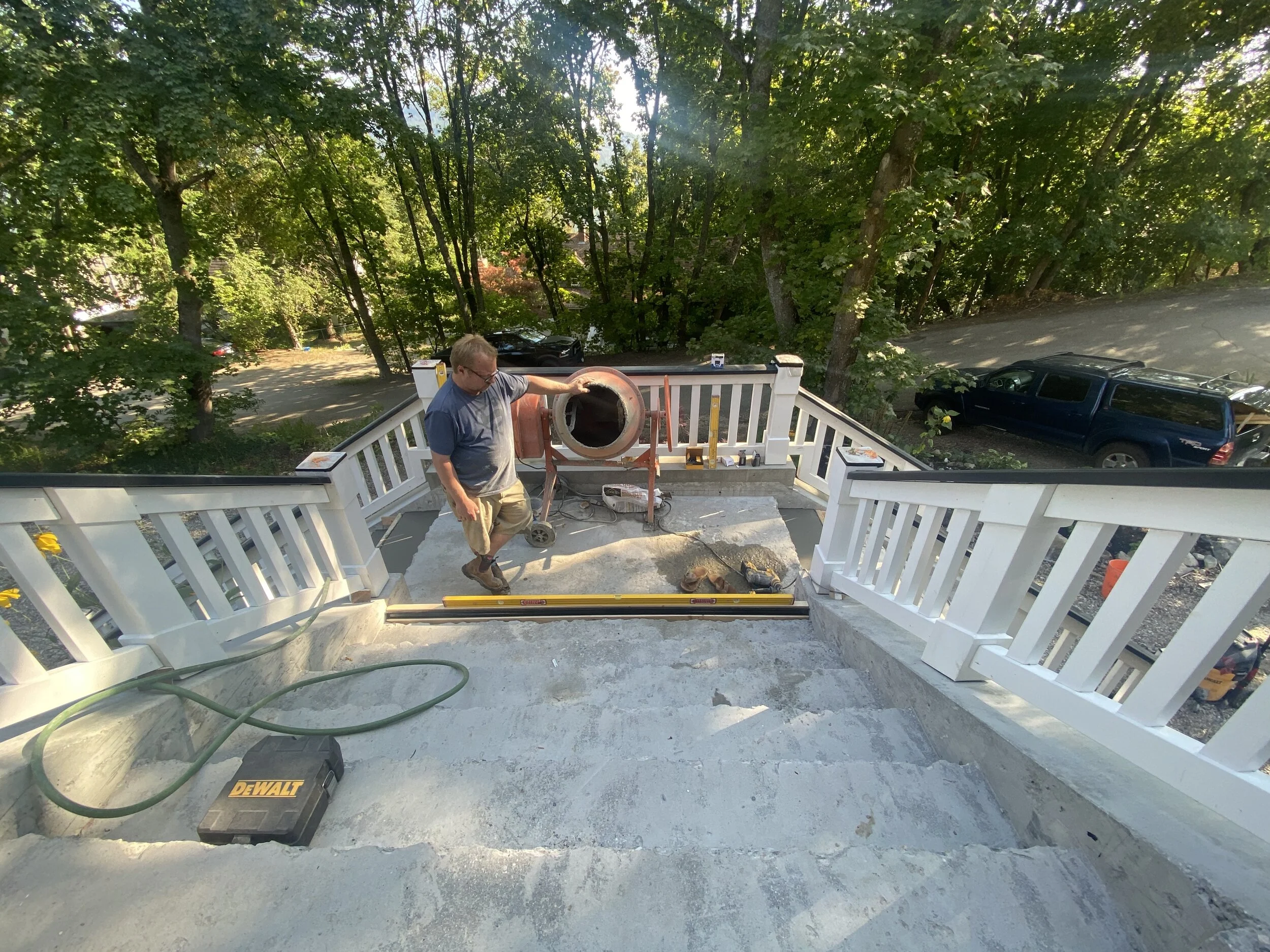
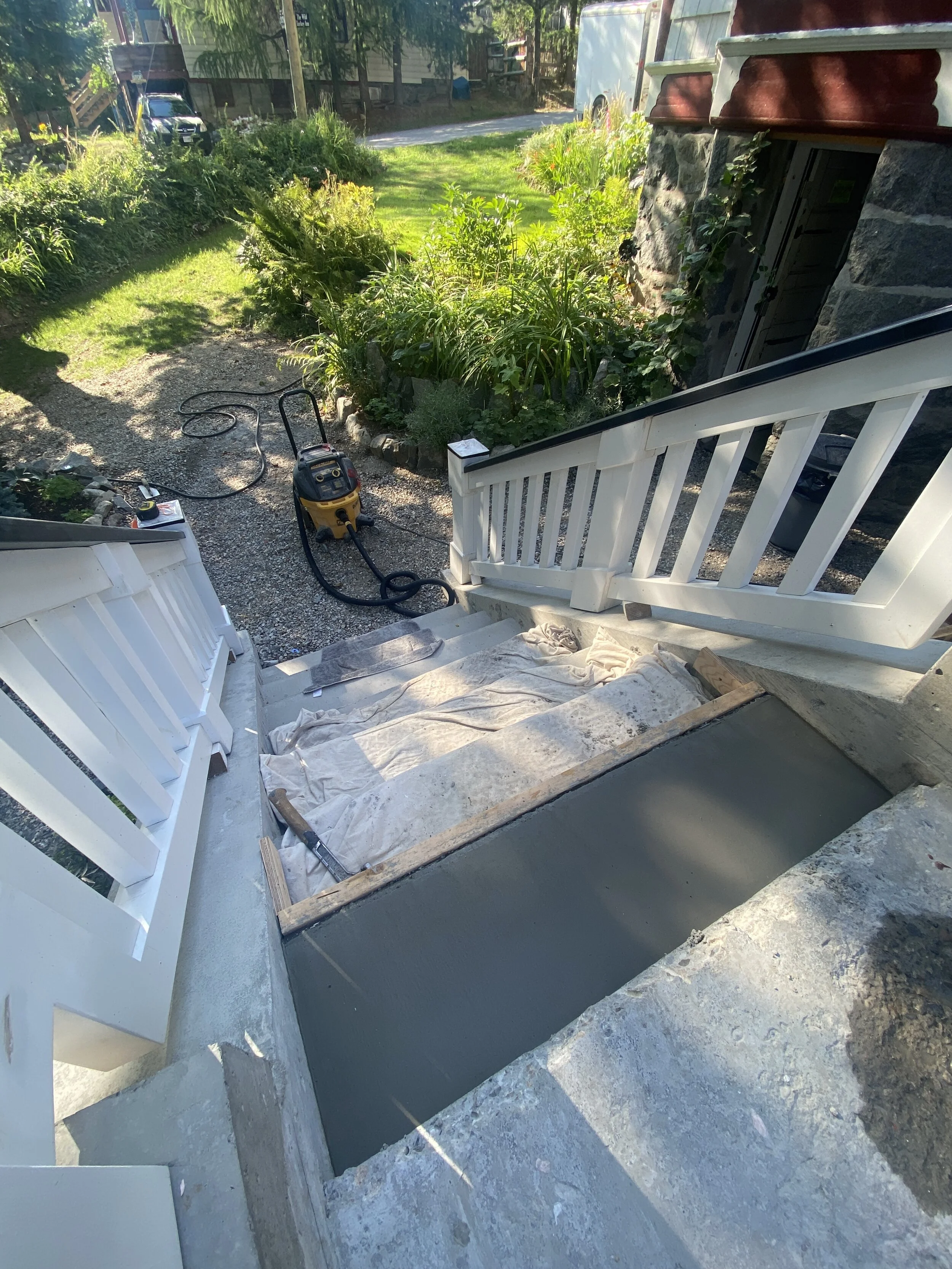
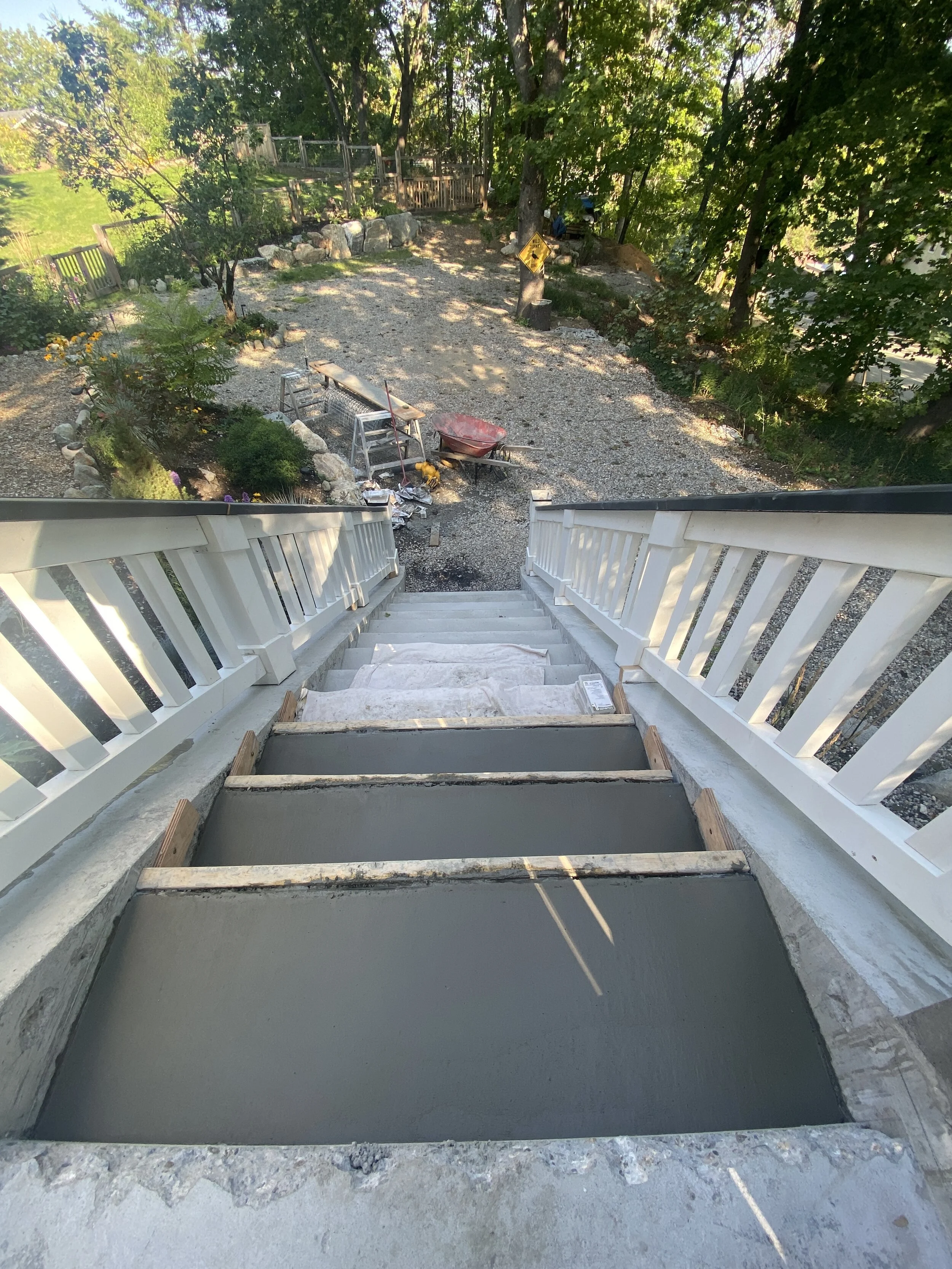
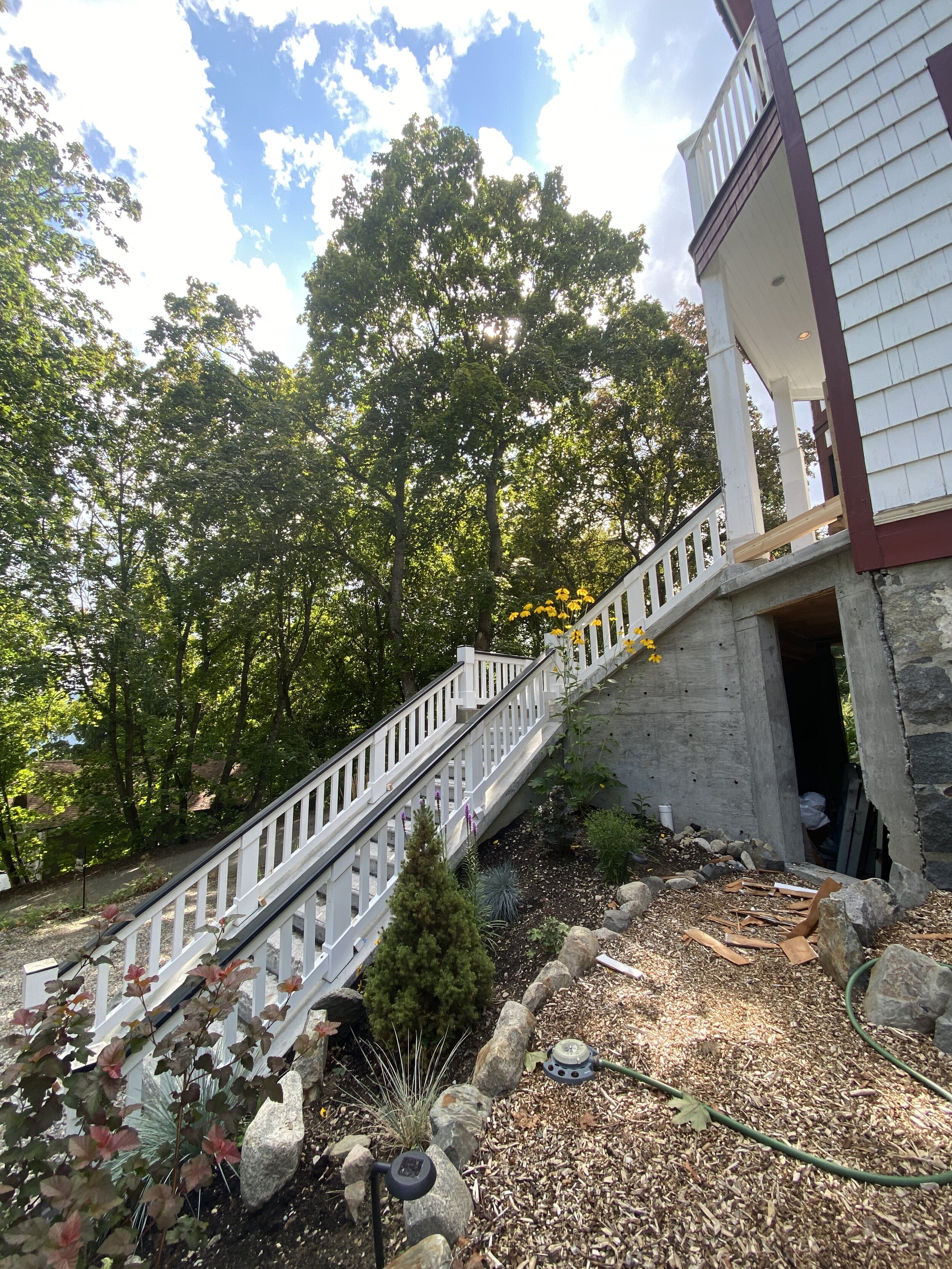
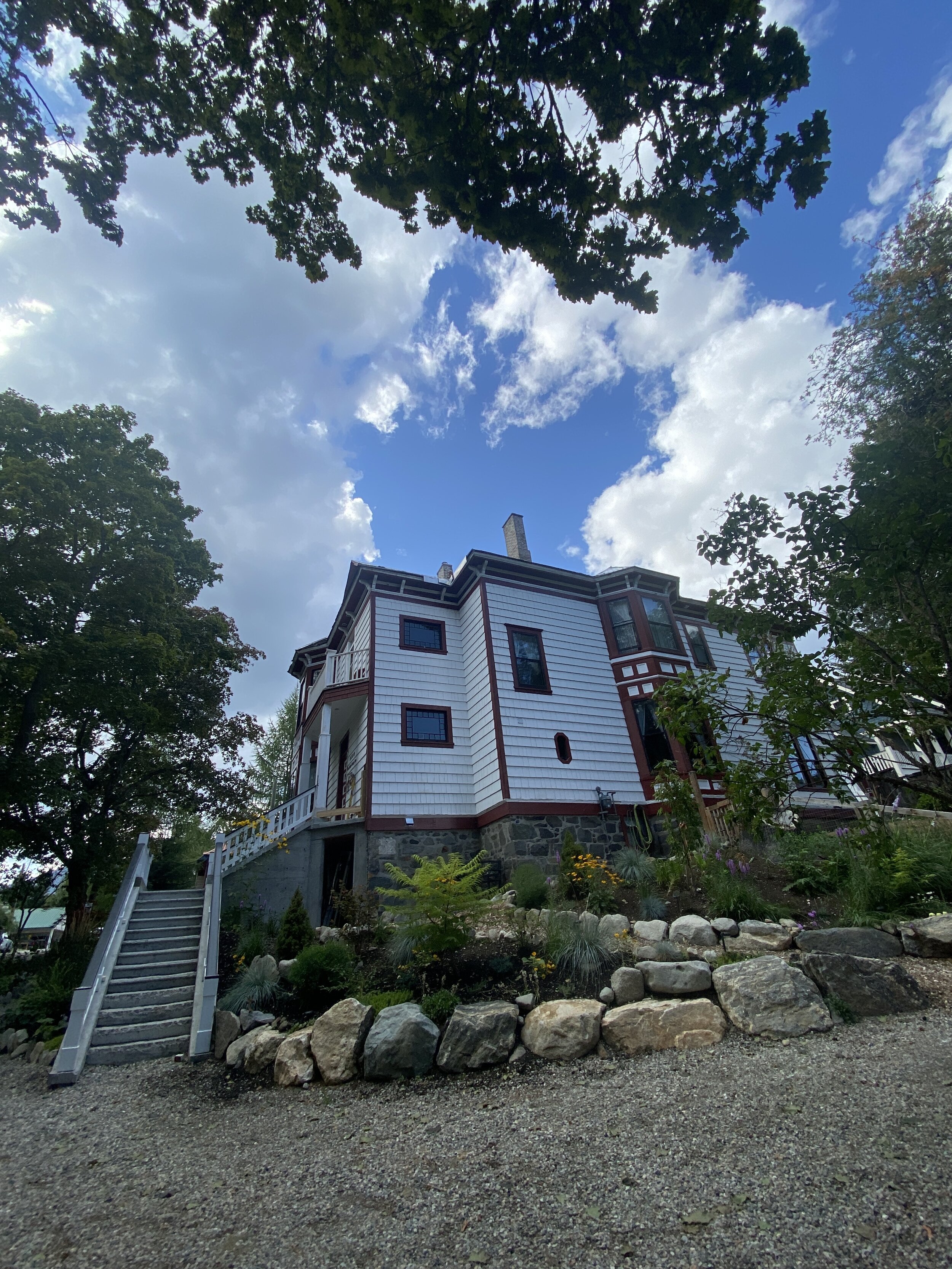
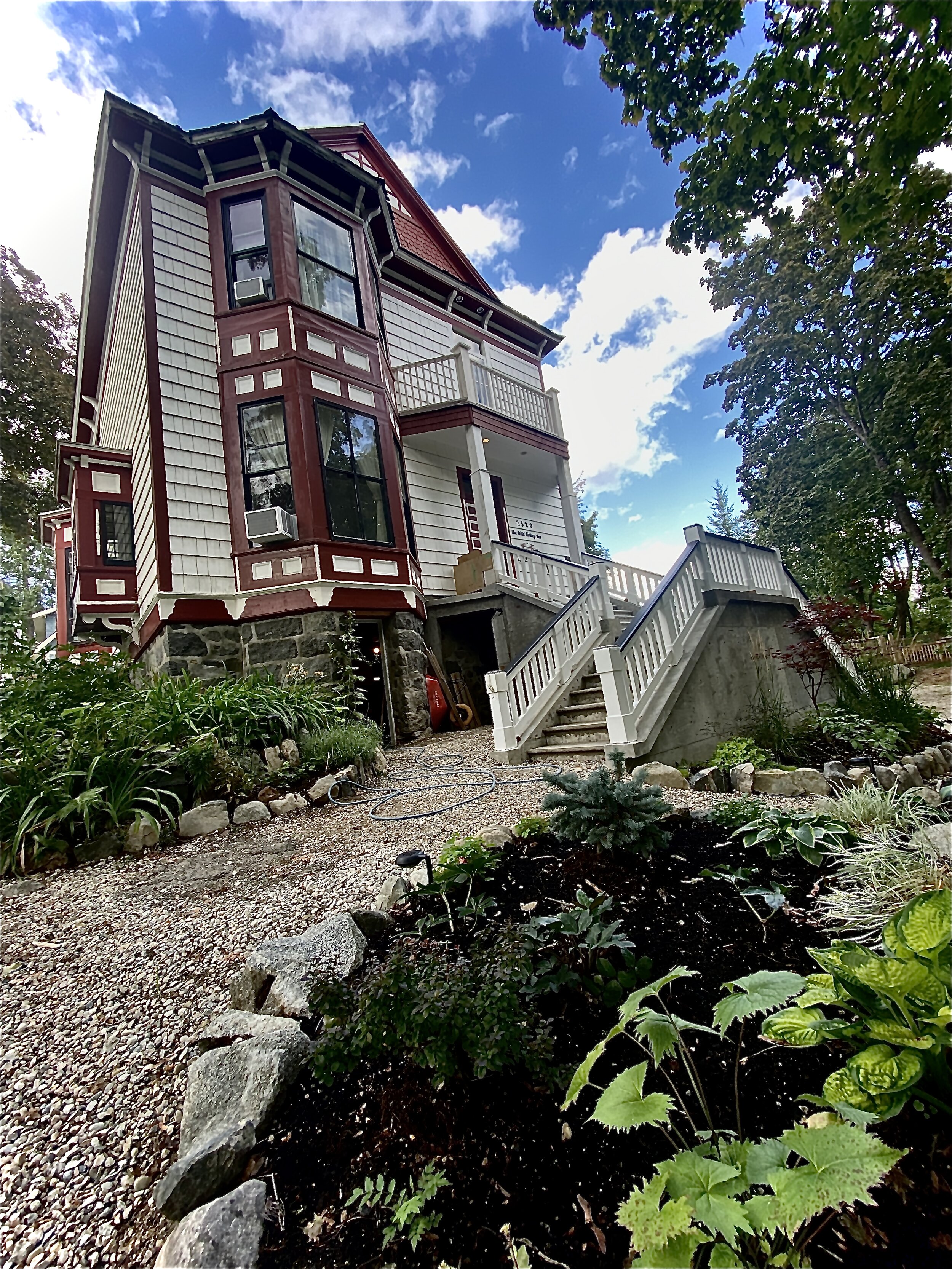
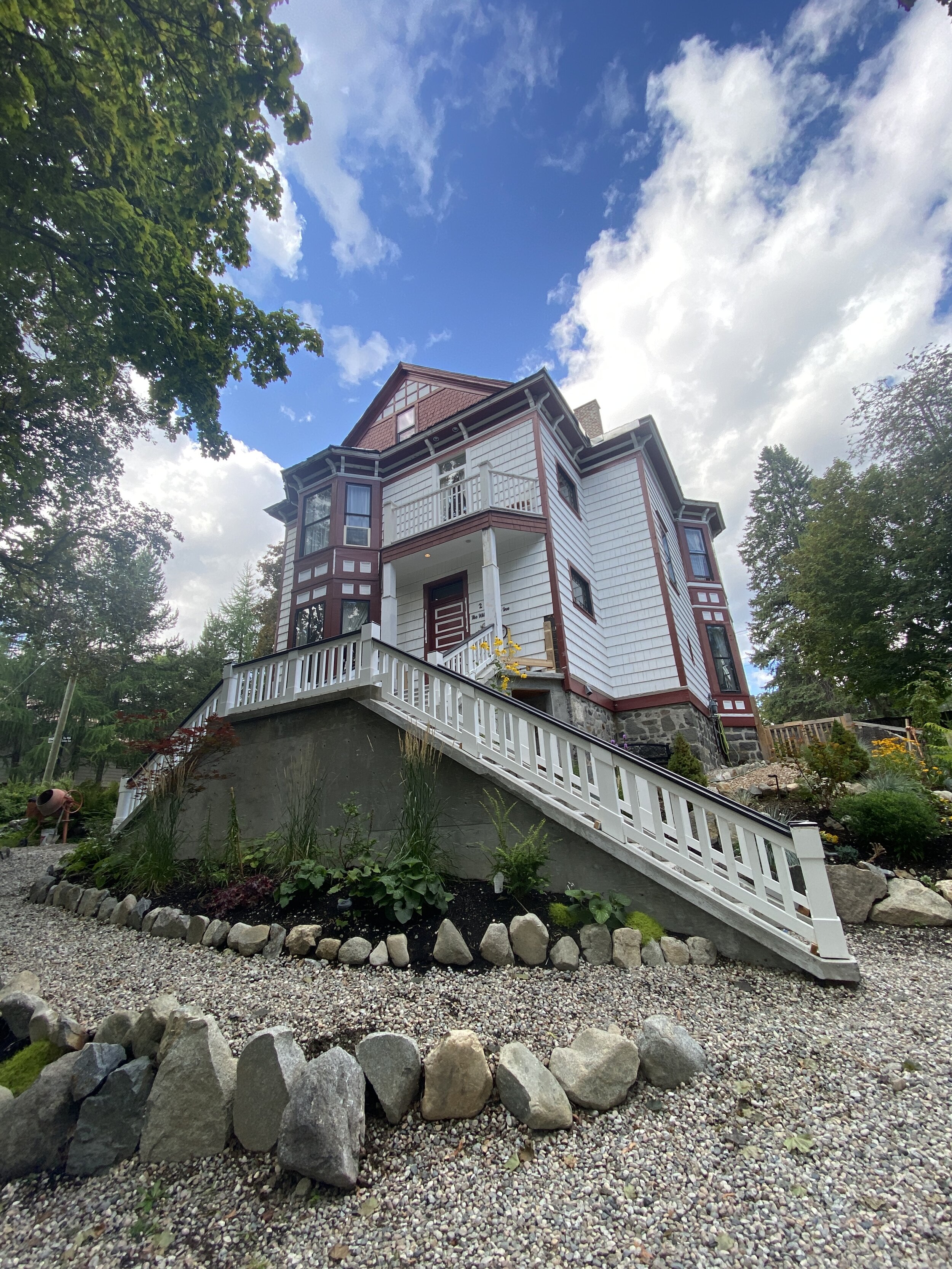
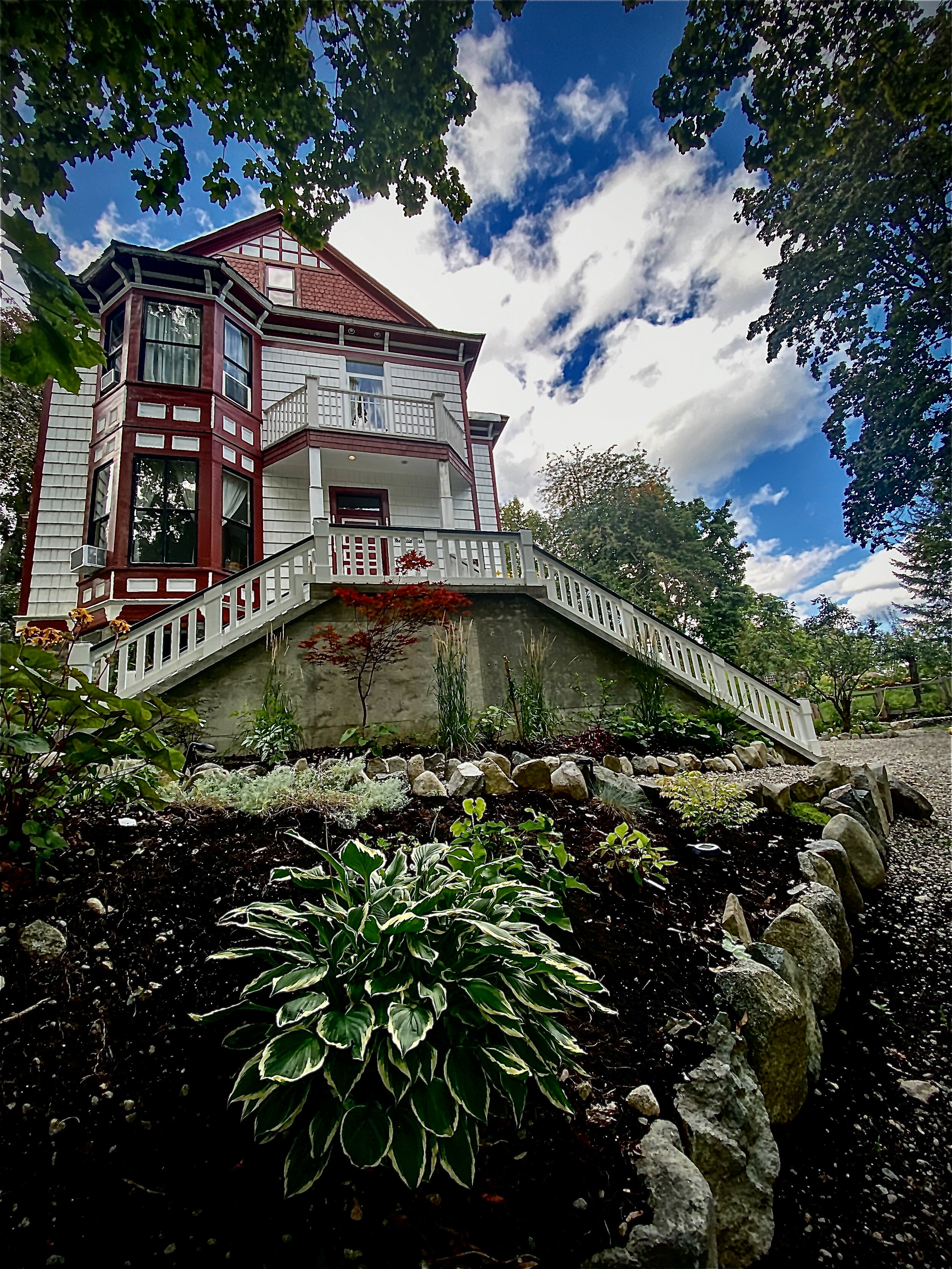
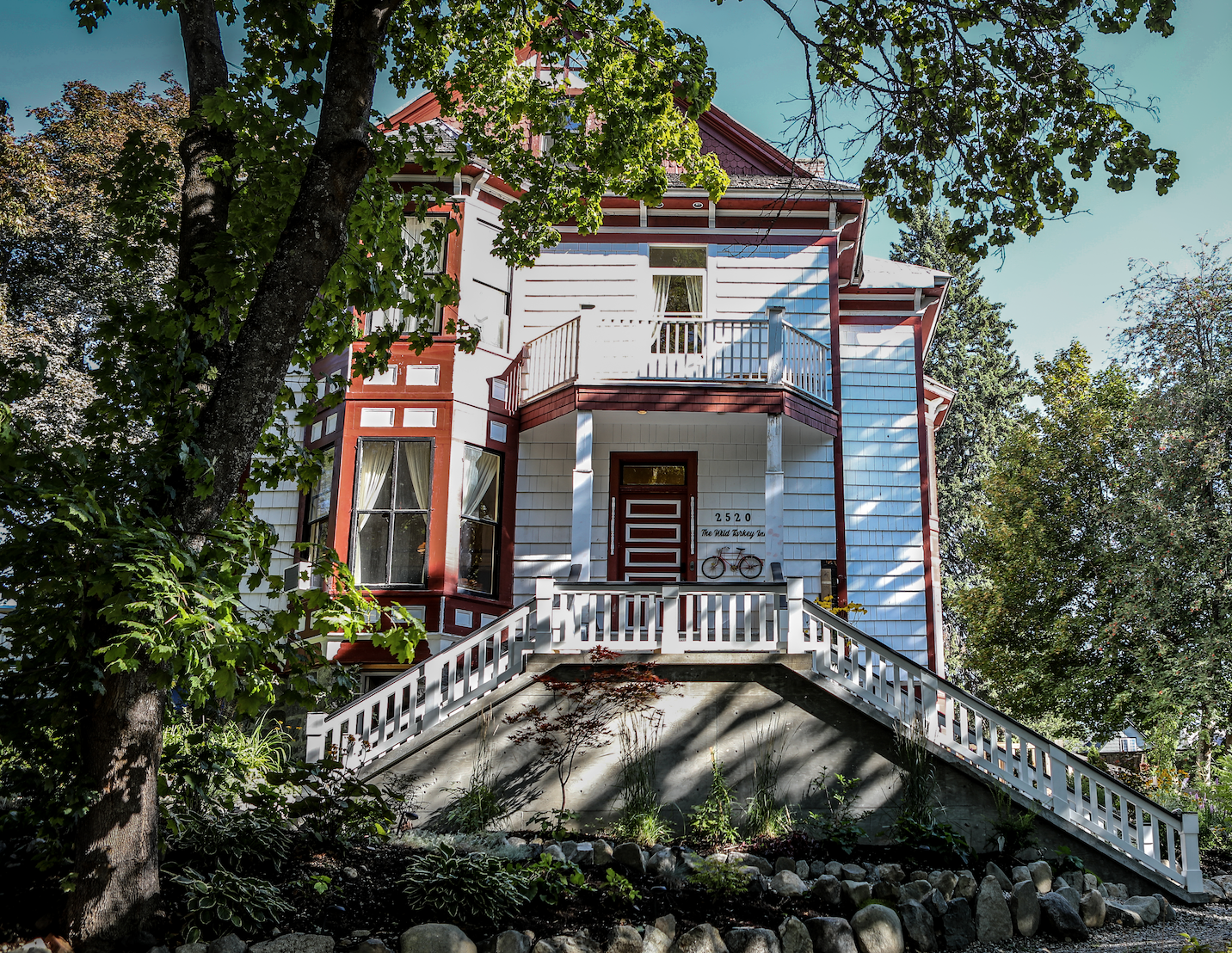
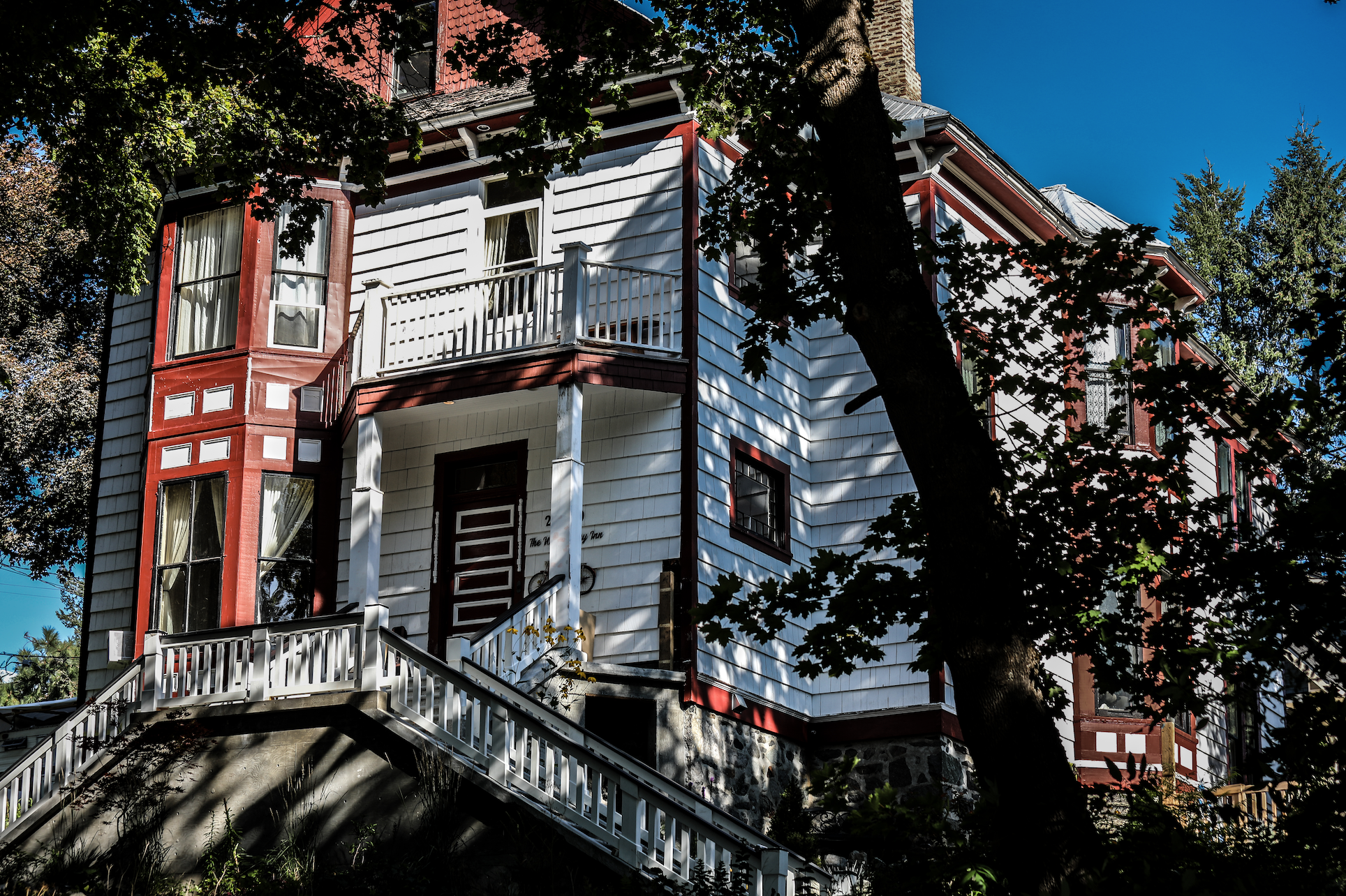
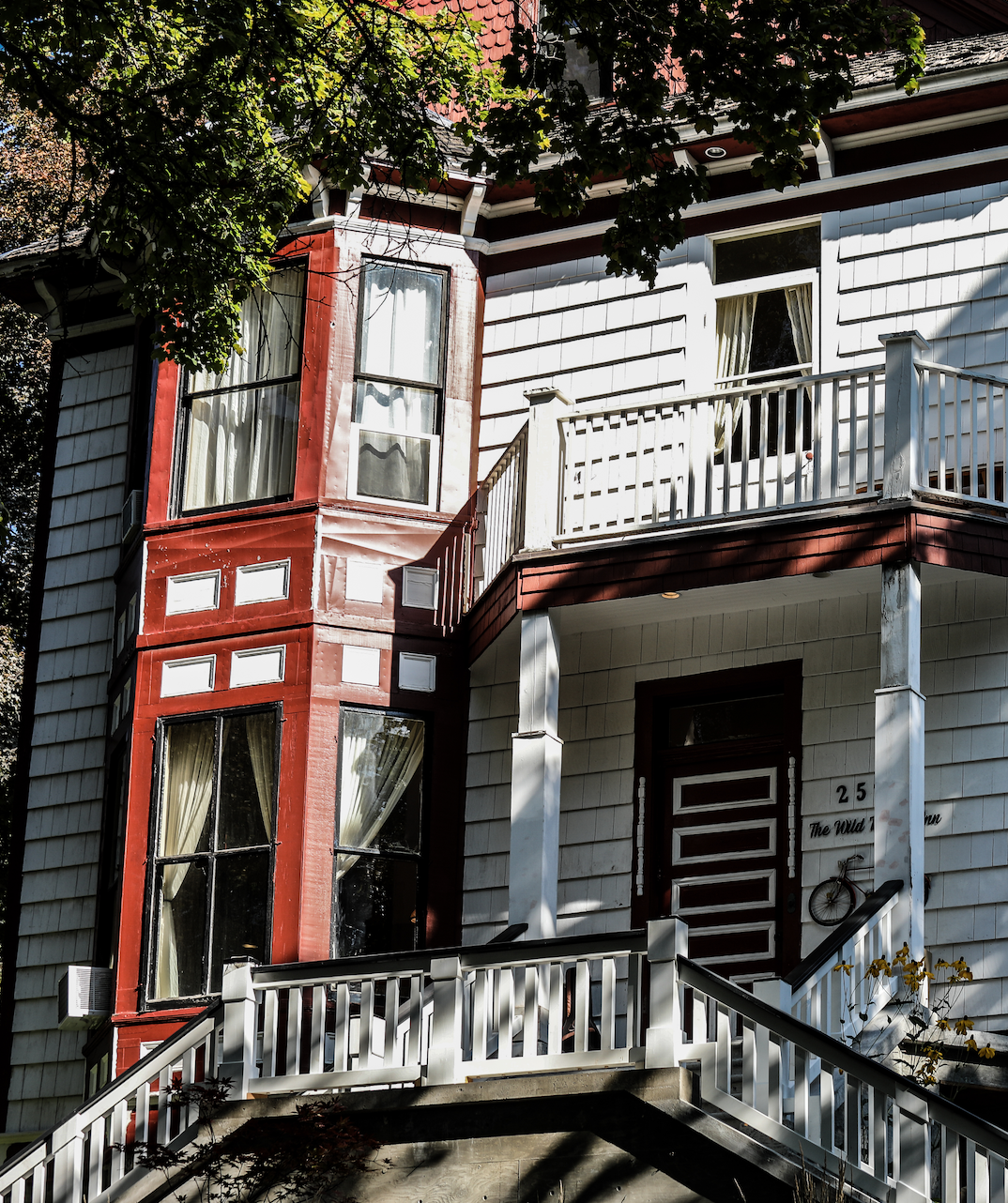
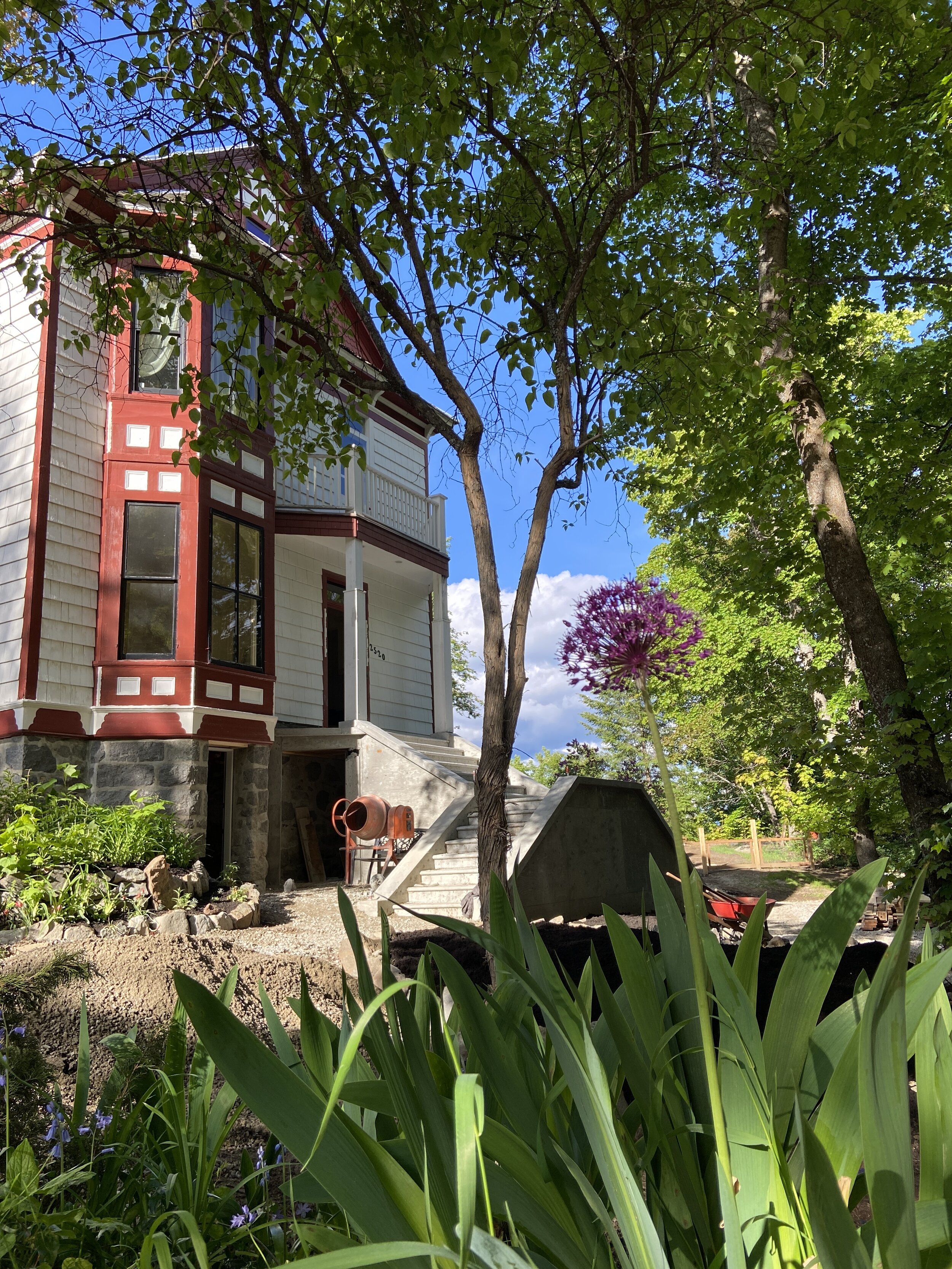
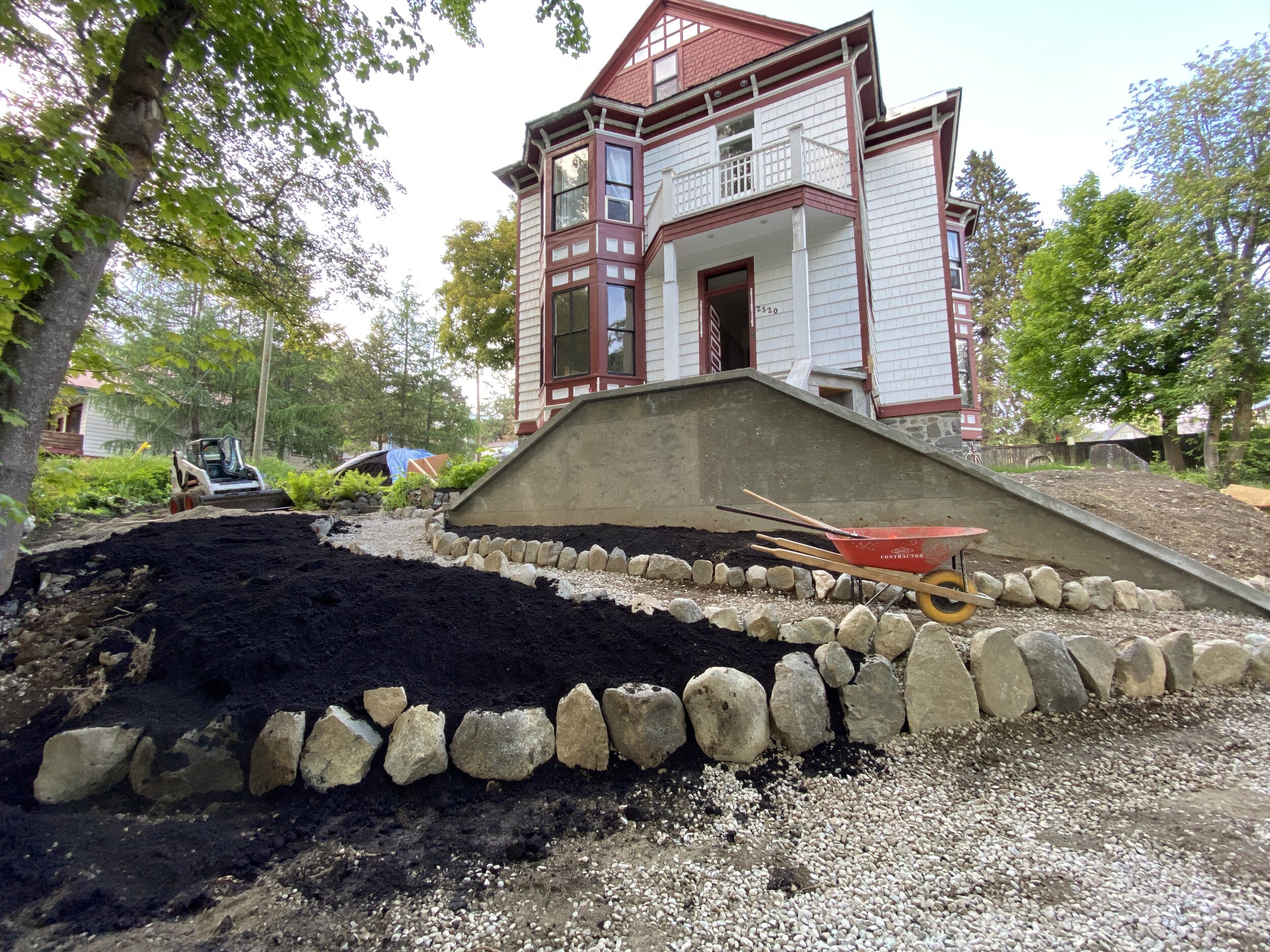
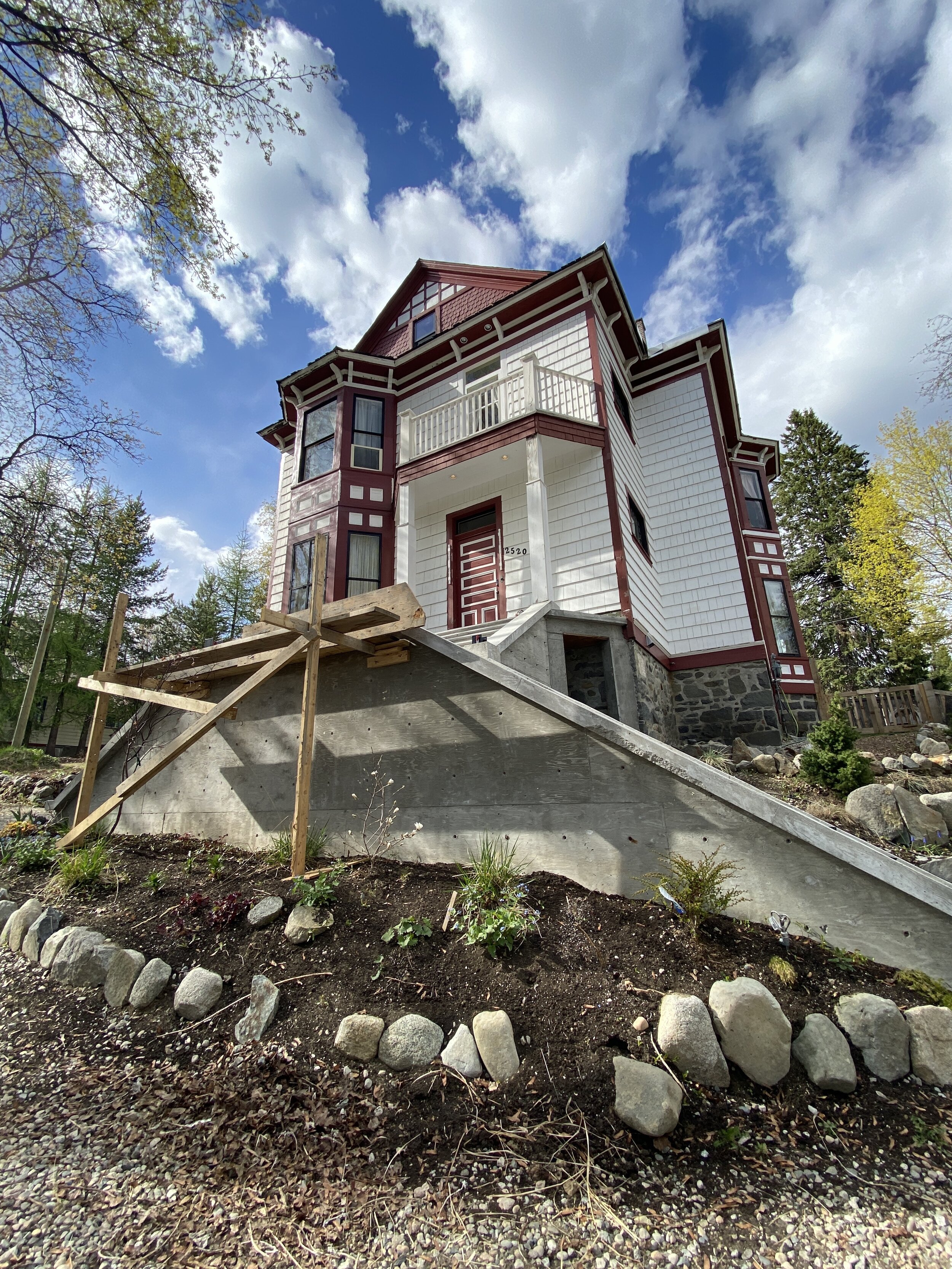
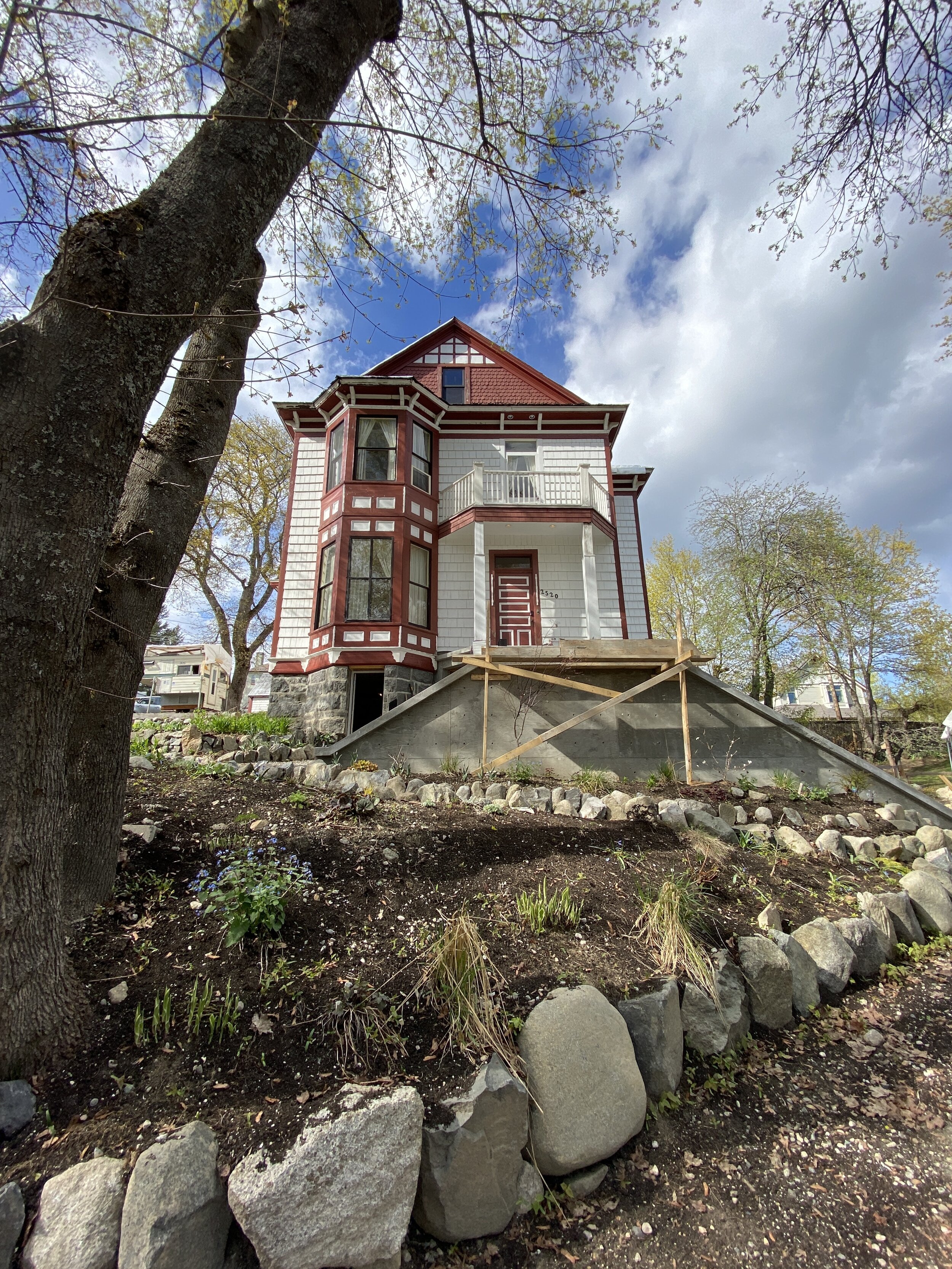
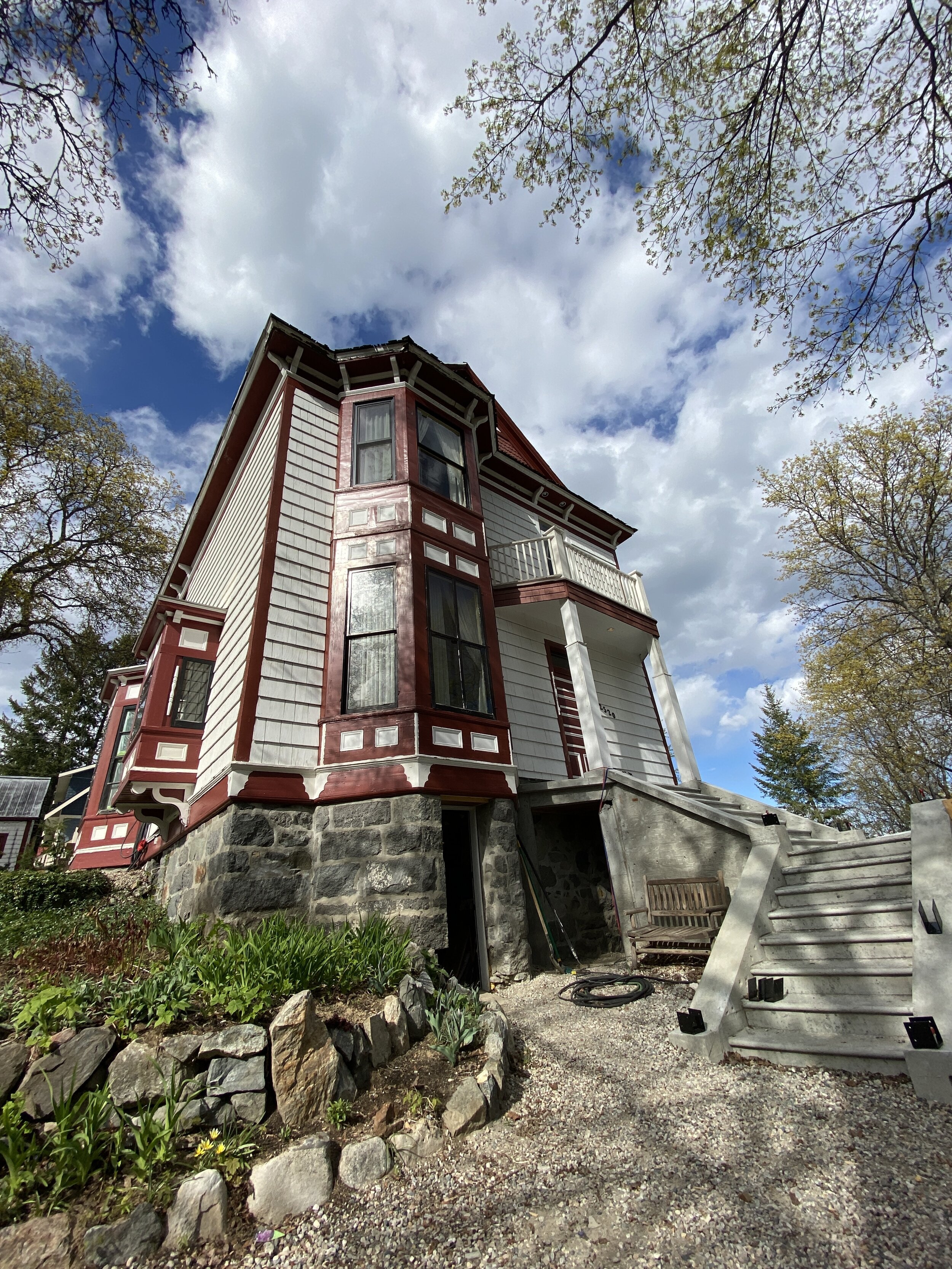
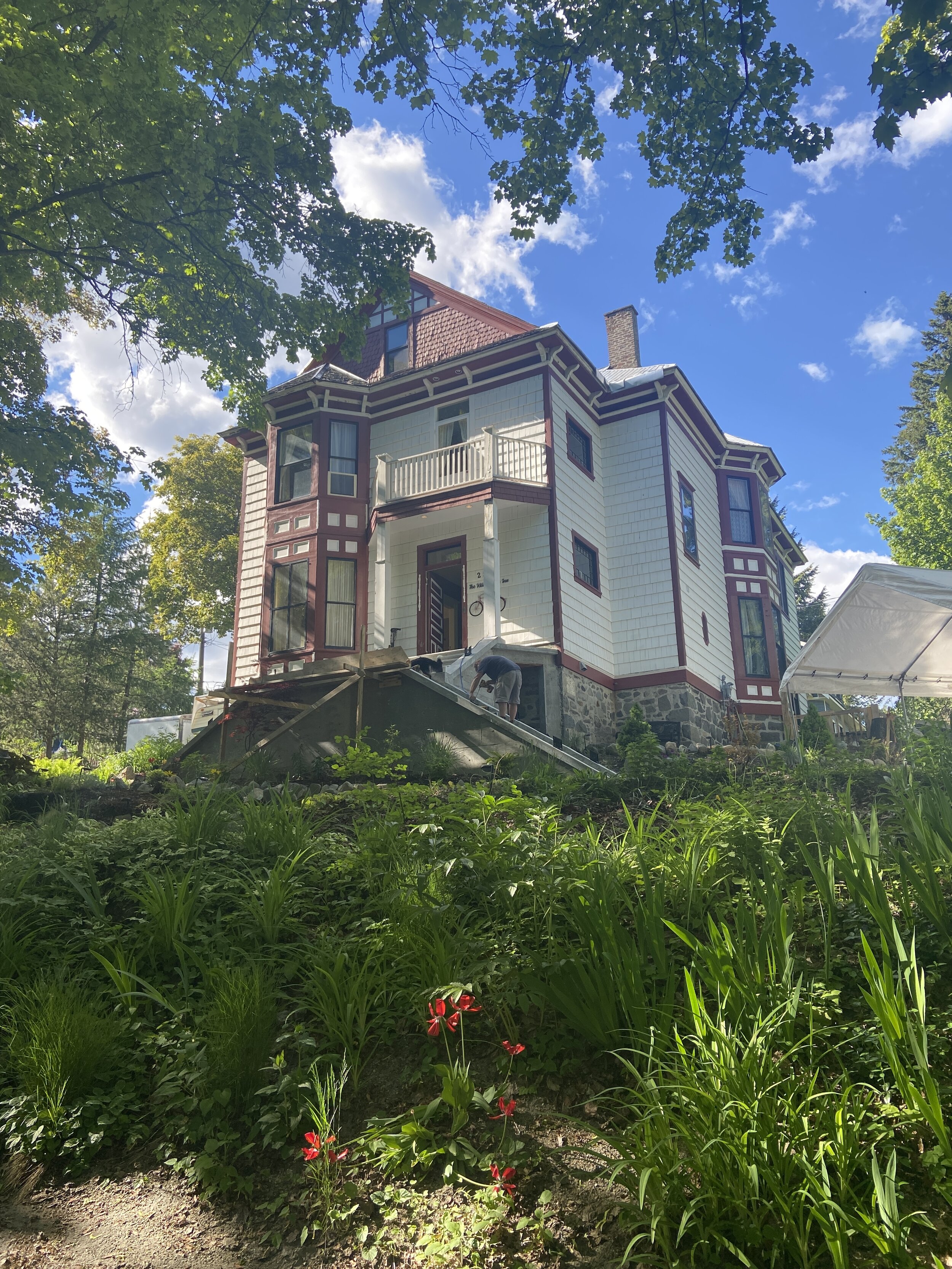
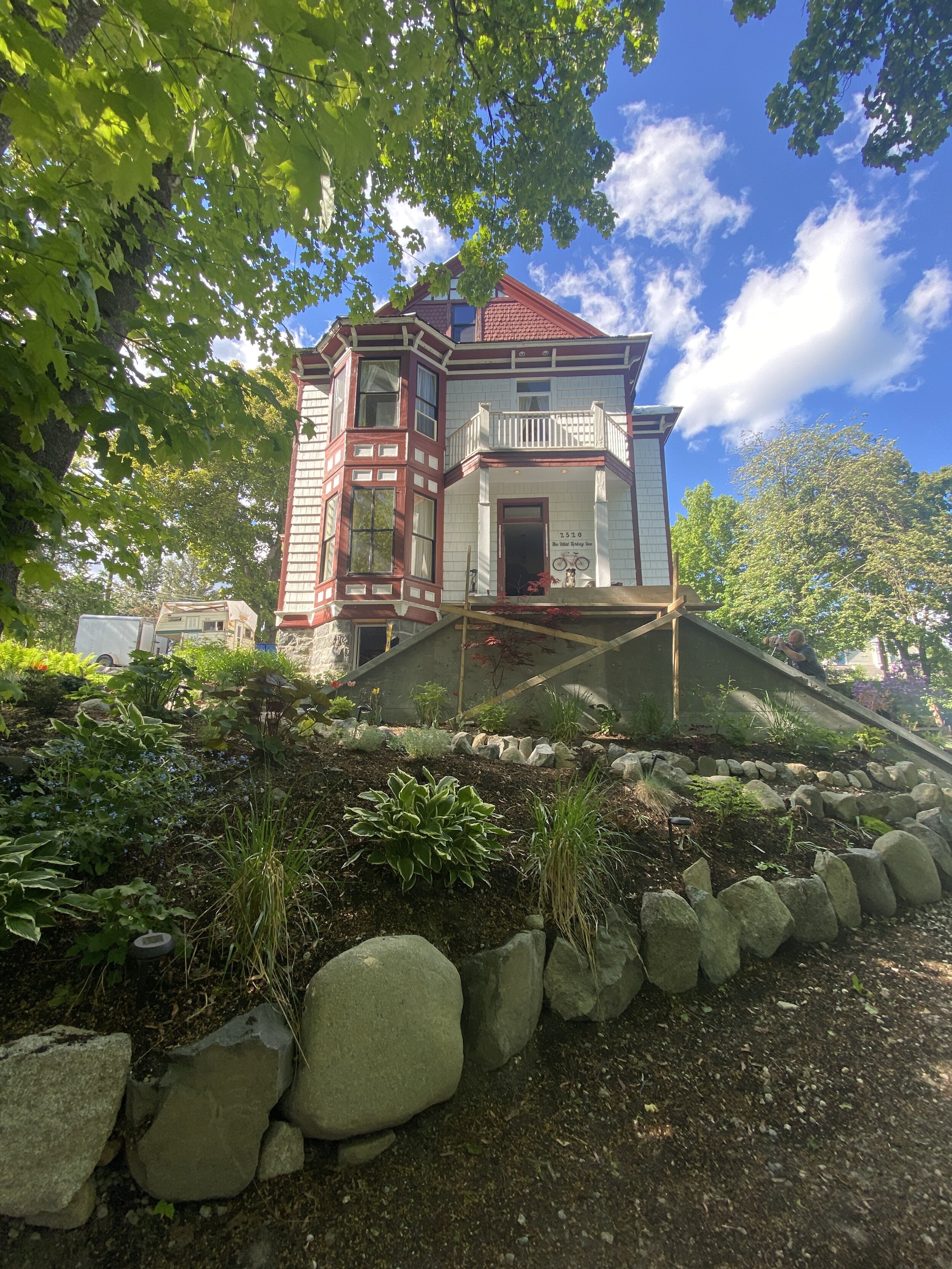
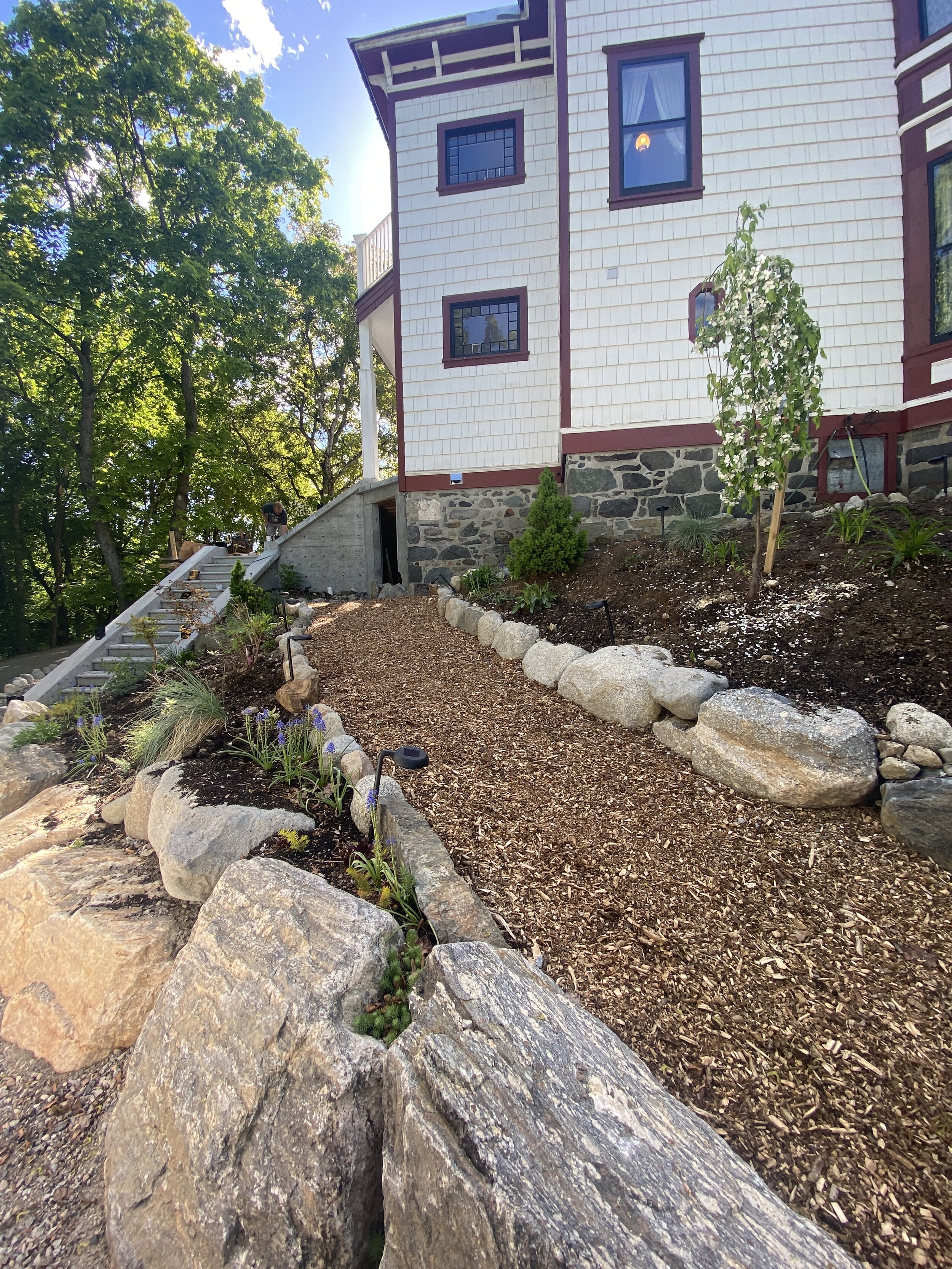
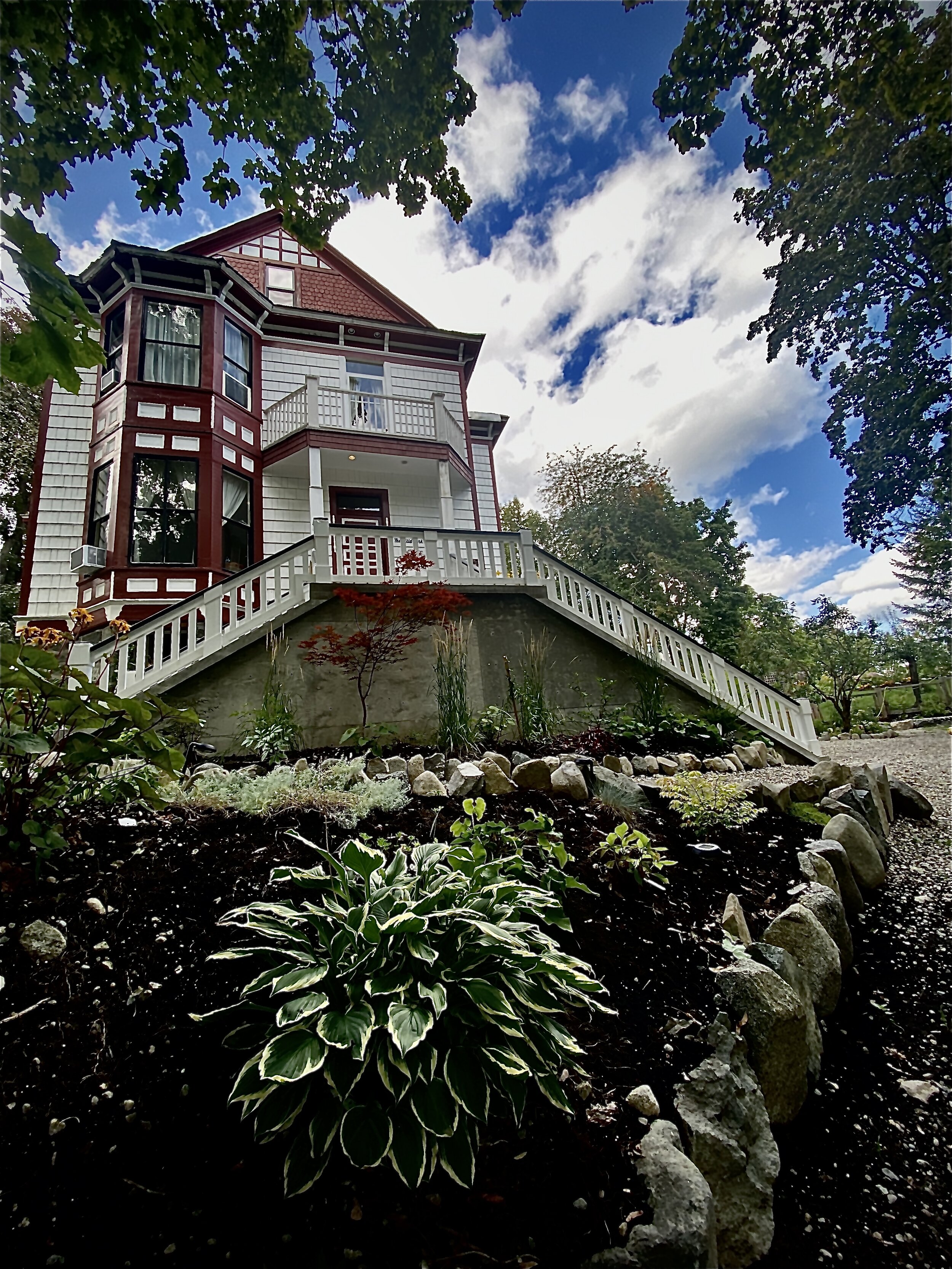
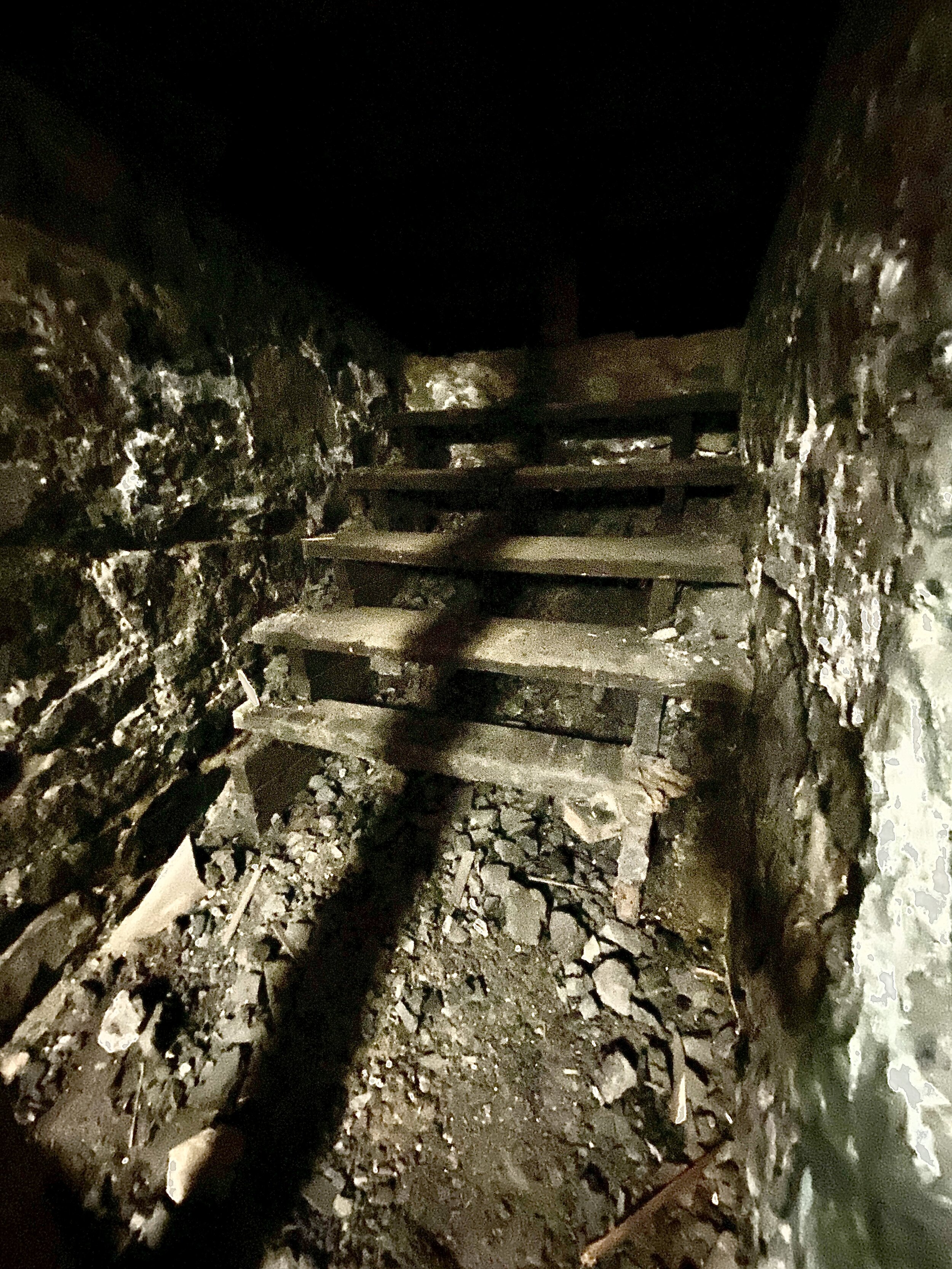
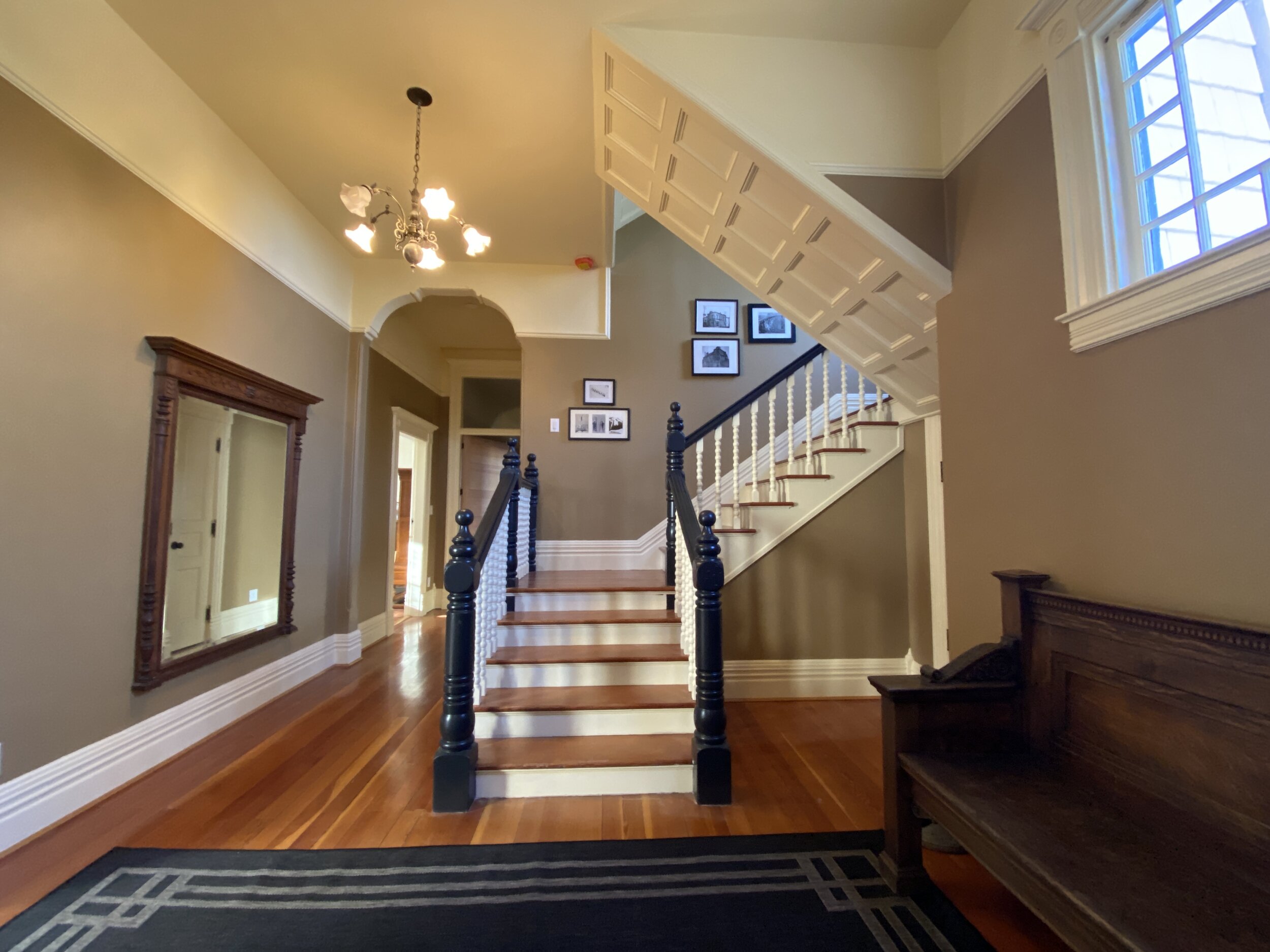
The original front staircase had been condemned, but rebuilding it became a much bigger project than simply replacing a set of stairs.
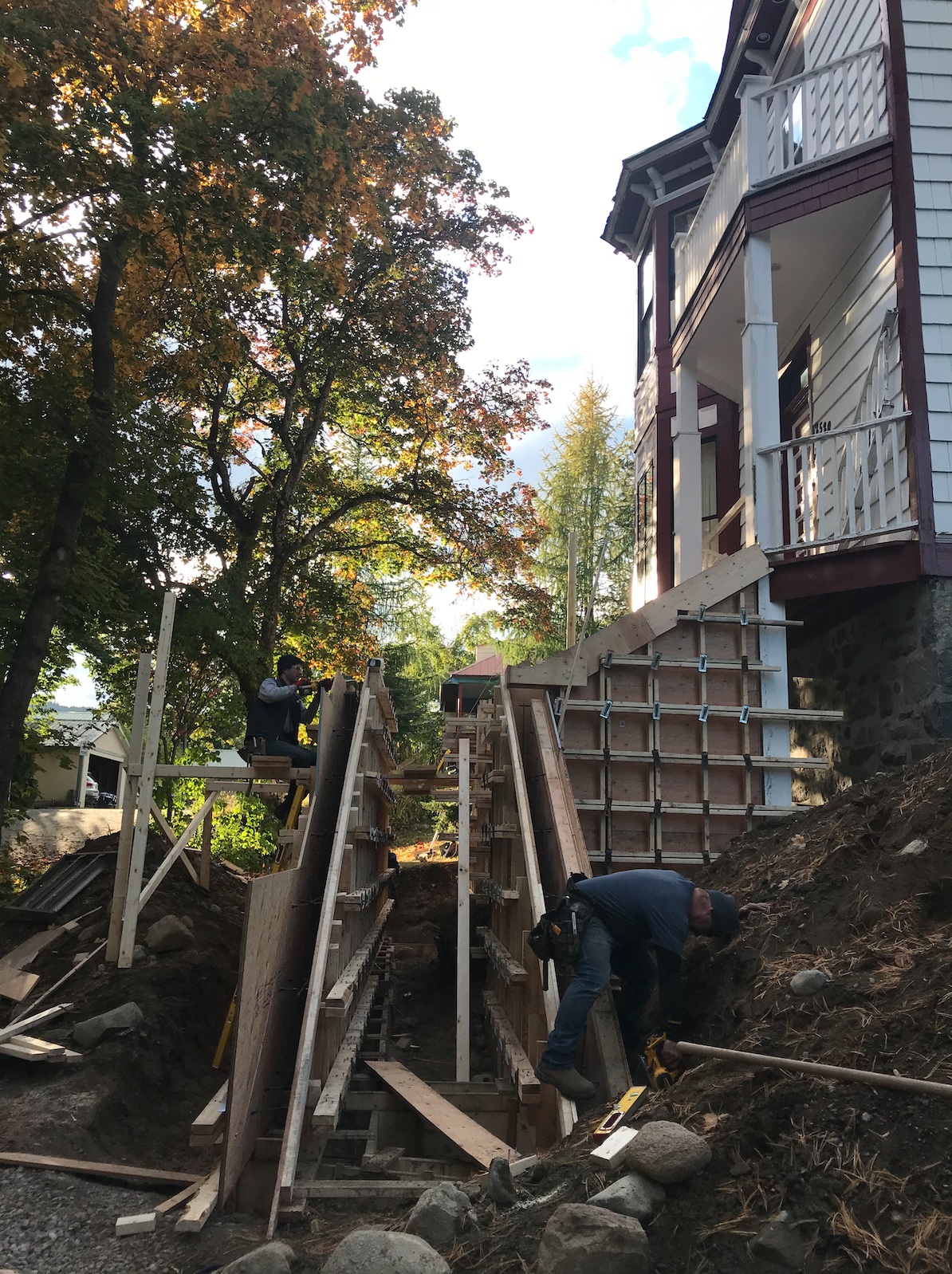
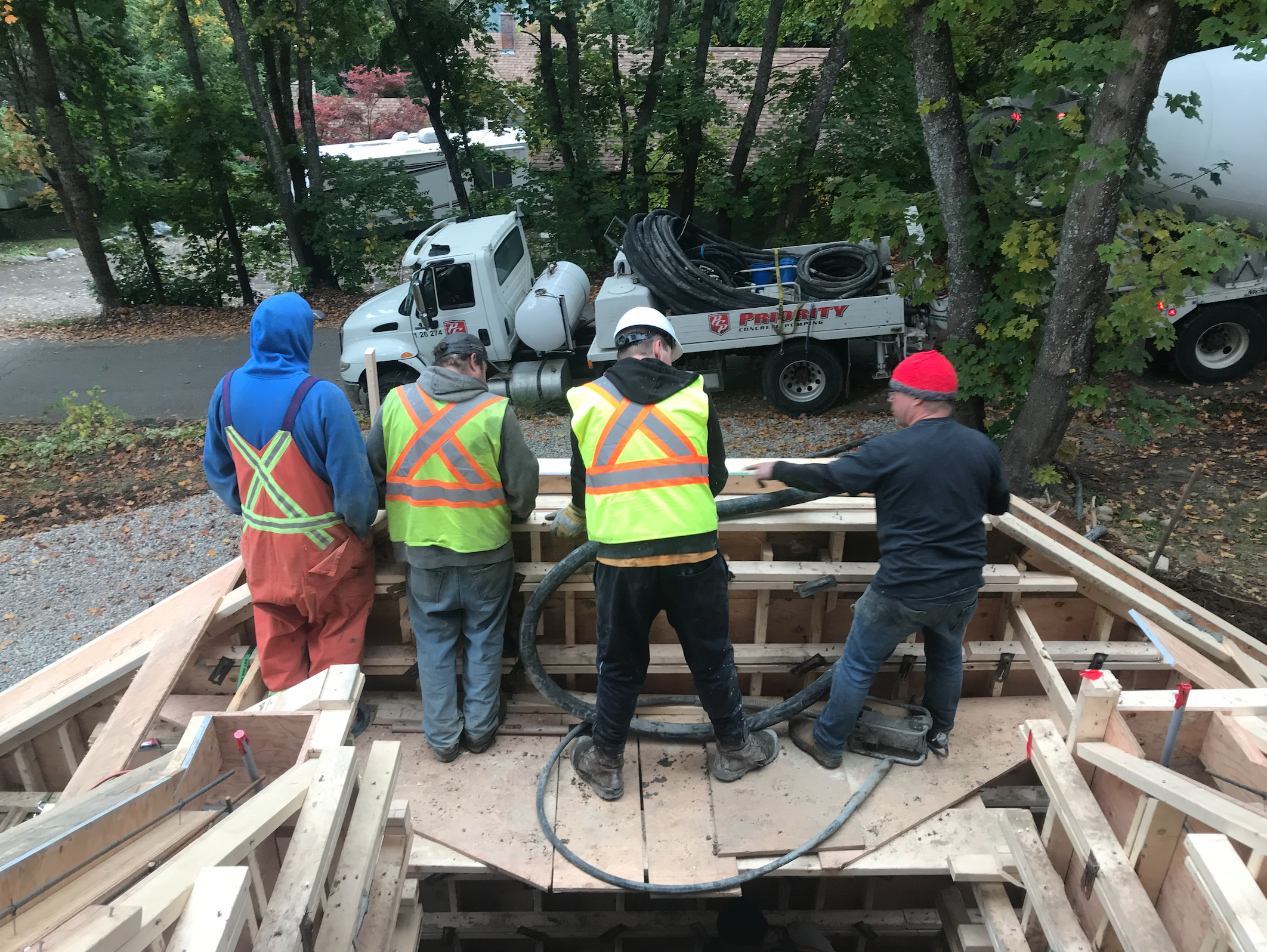
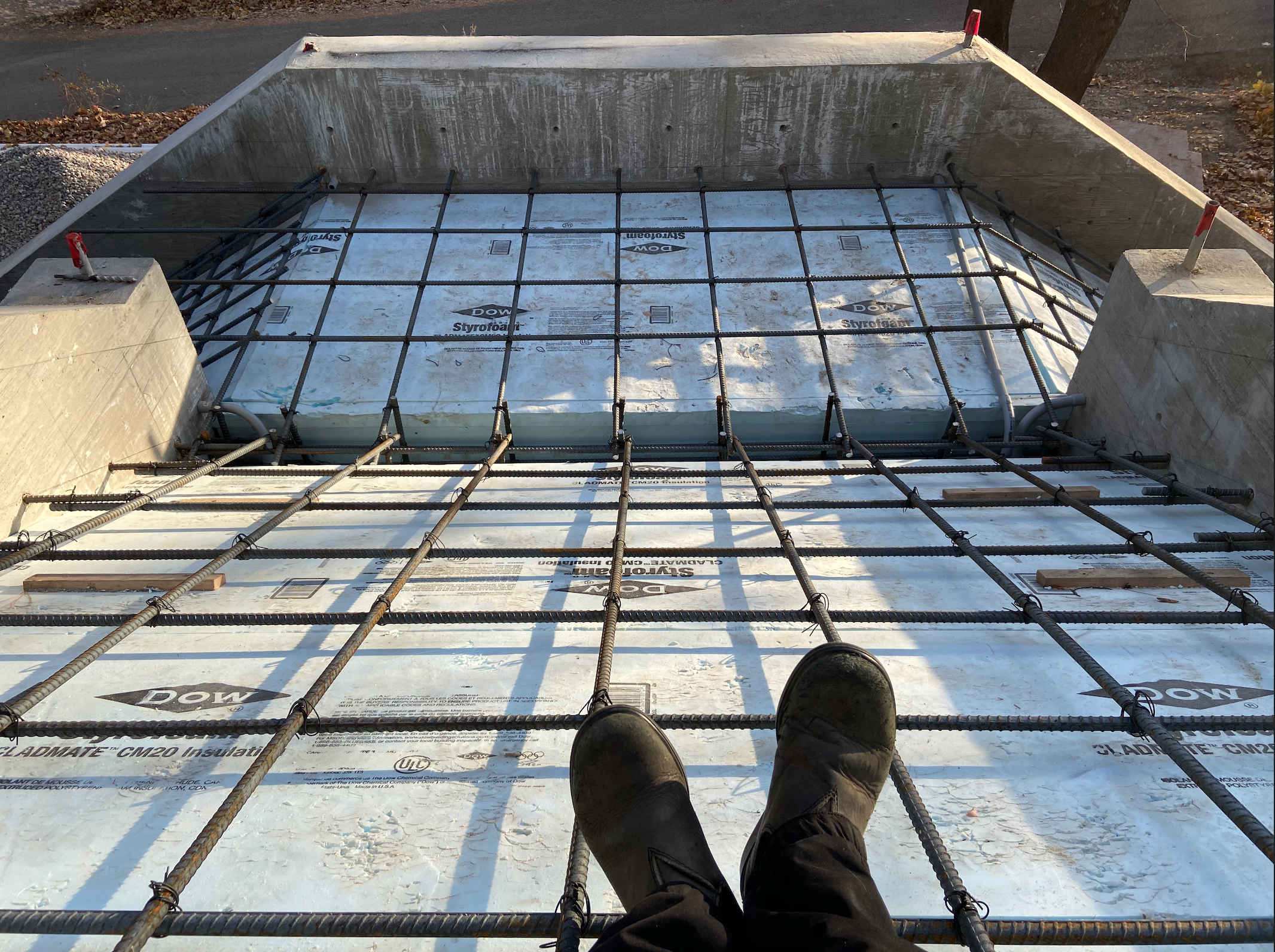
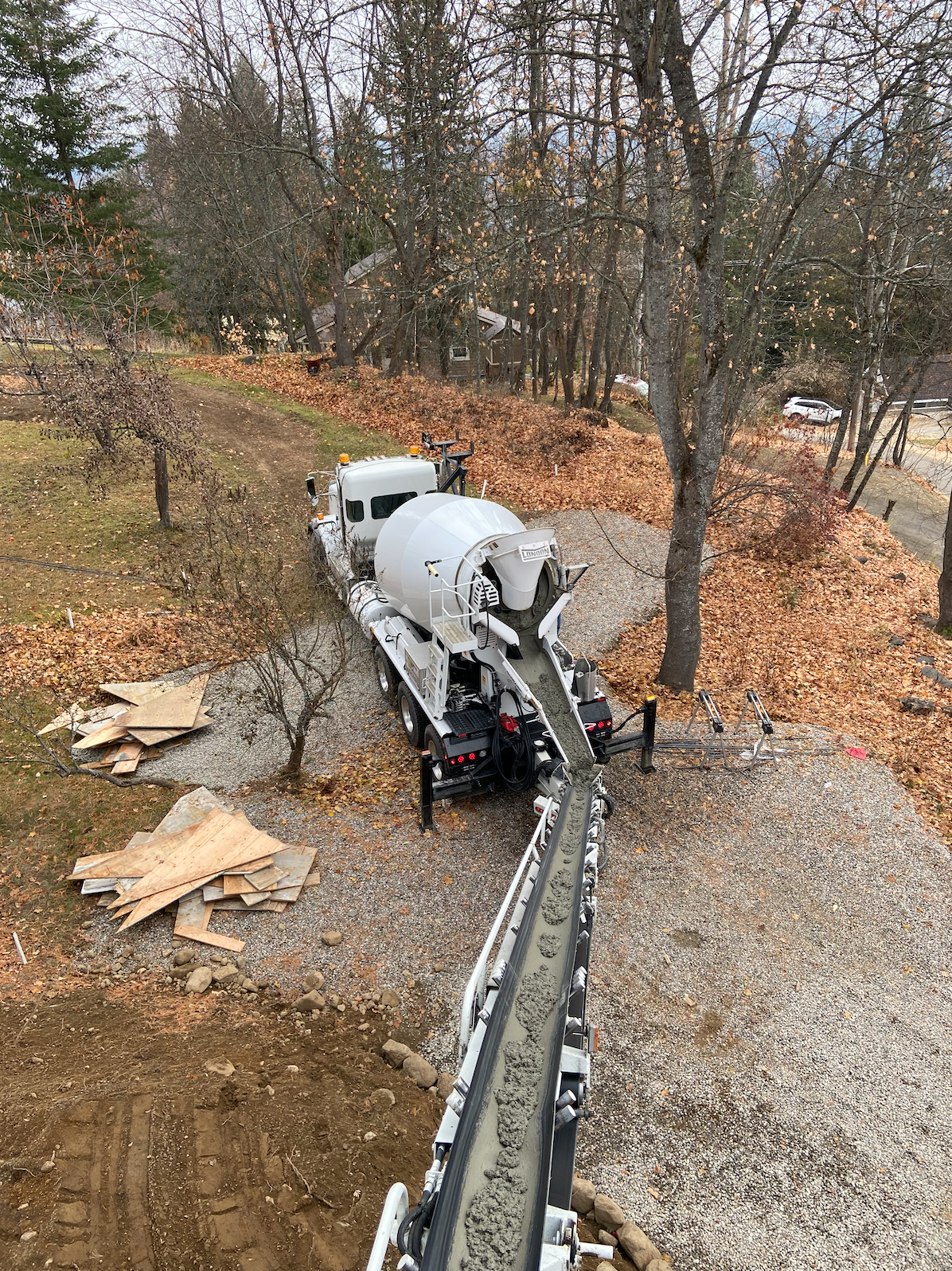
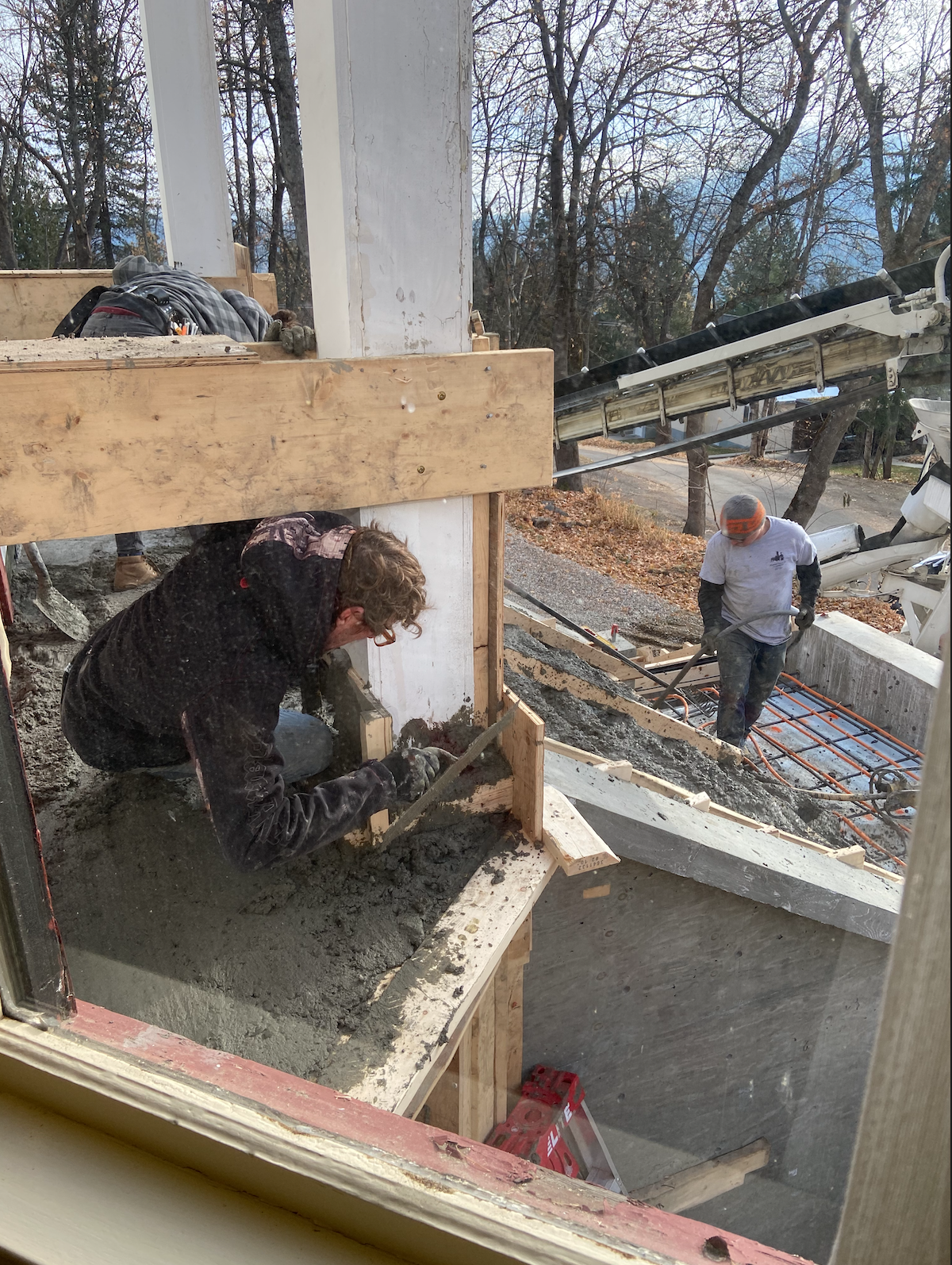
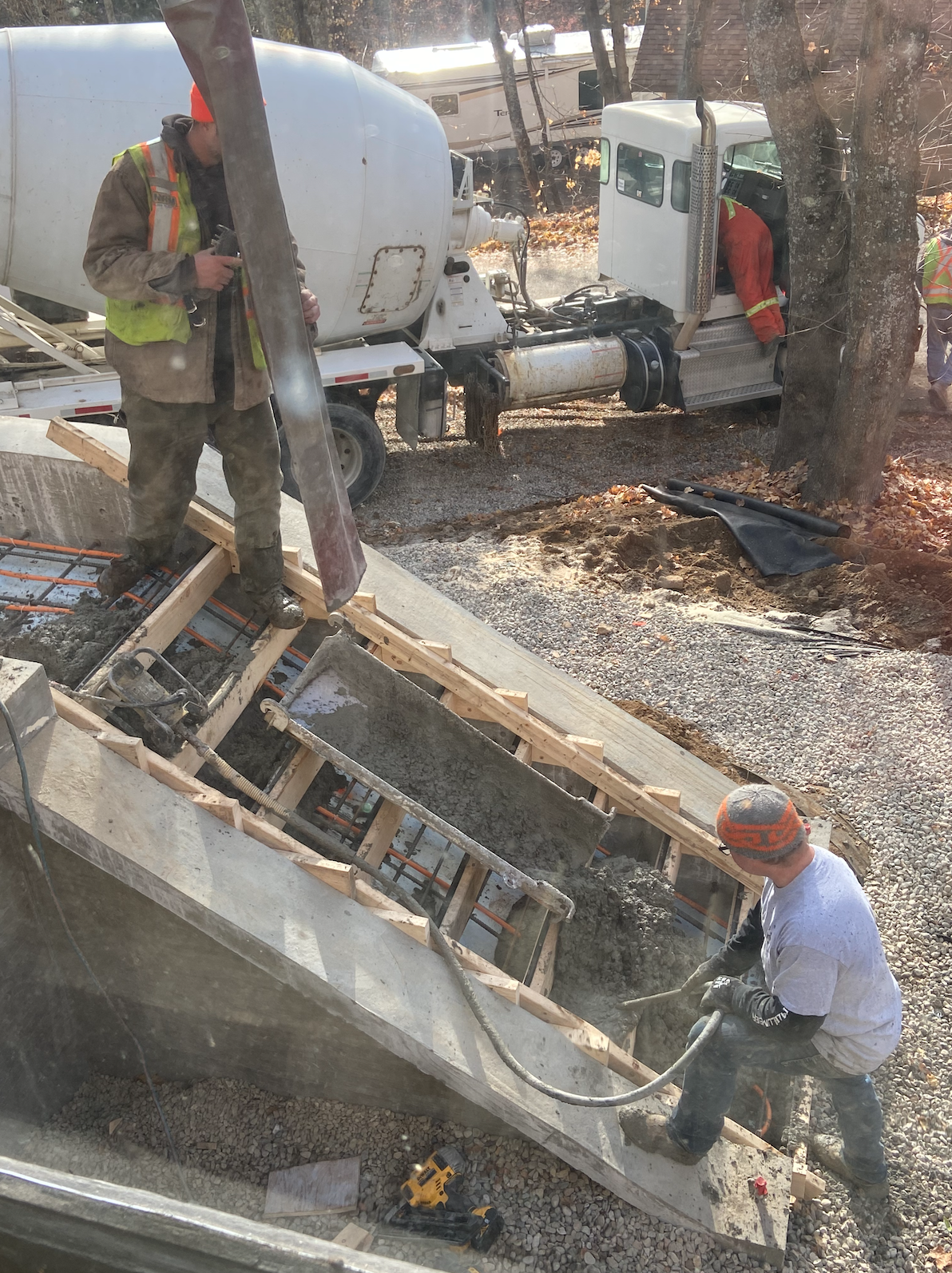
We wanted to create a proper entrance for the inn while maintaining two separate living spaces within the house. That meant excavation, foundations, concrete, framing, drainage and considerably more engineering than we had first imagined.
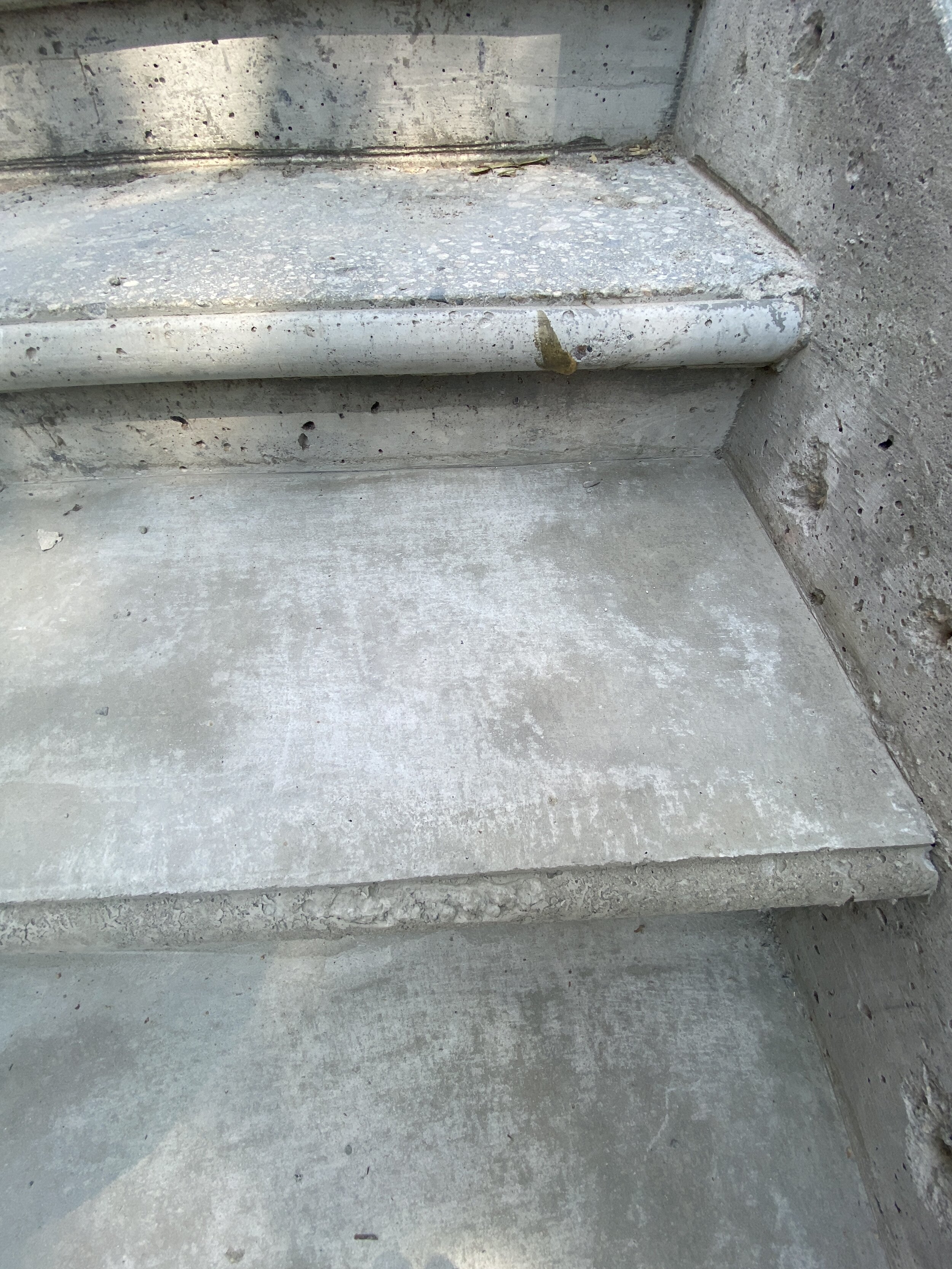
The first concrete pour went beautifully.
The stairs did not.
That part of the story is probably best told by Mike over a beer.
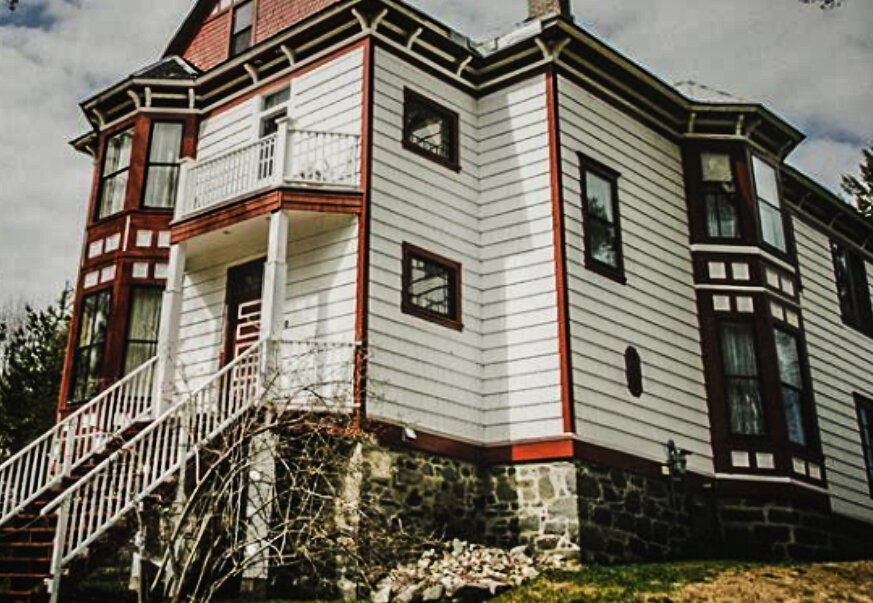
Other projects intervened, seasons changed, and what began in 2019 stretched across the next couple of years. Eventually, the house had a front staircase substantial enough to match it.

The Grounds
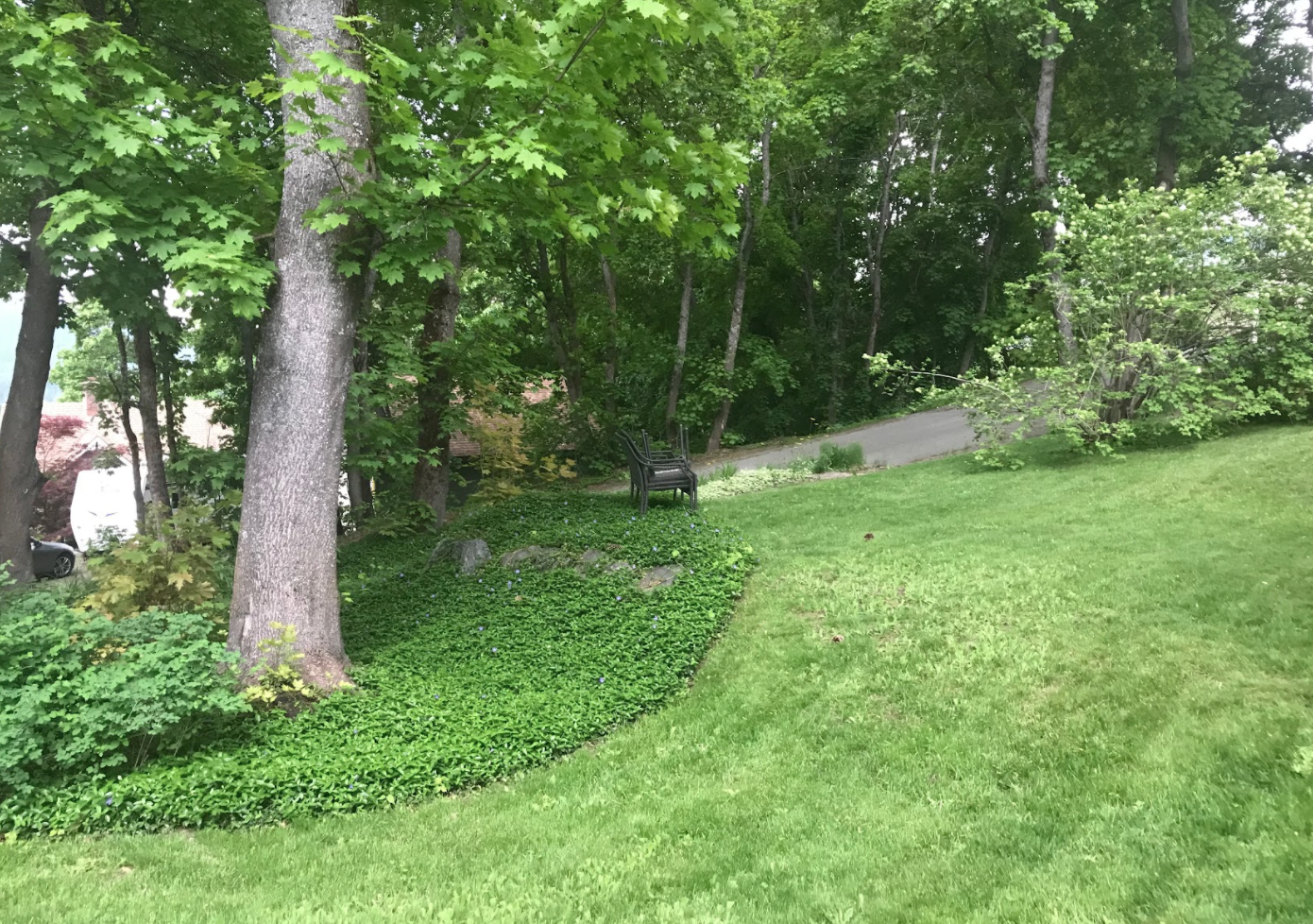
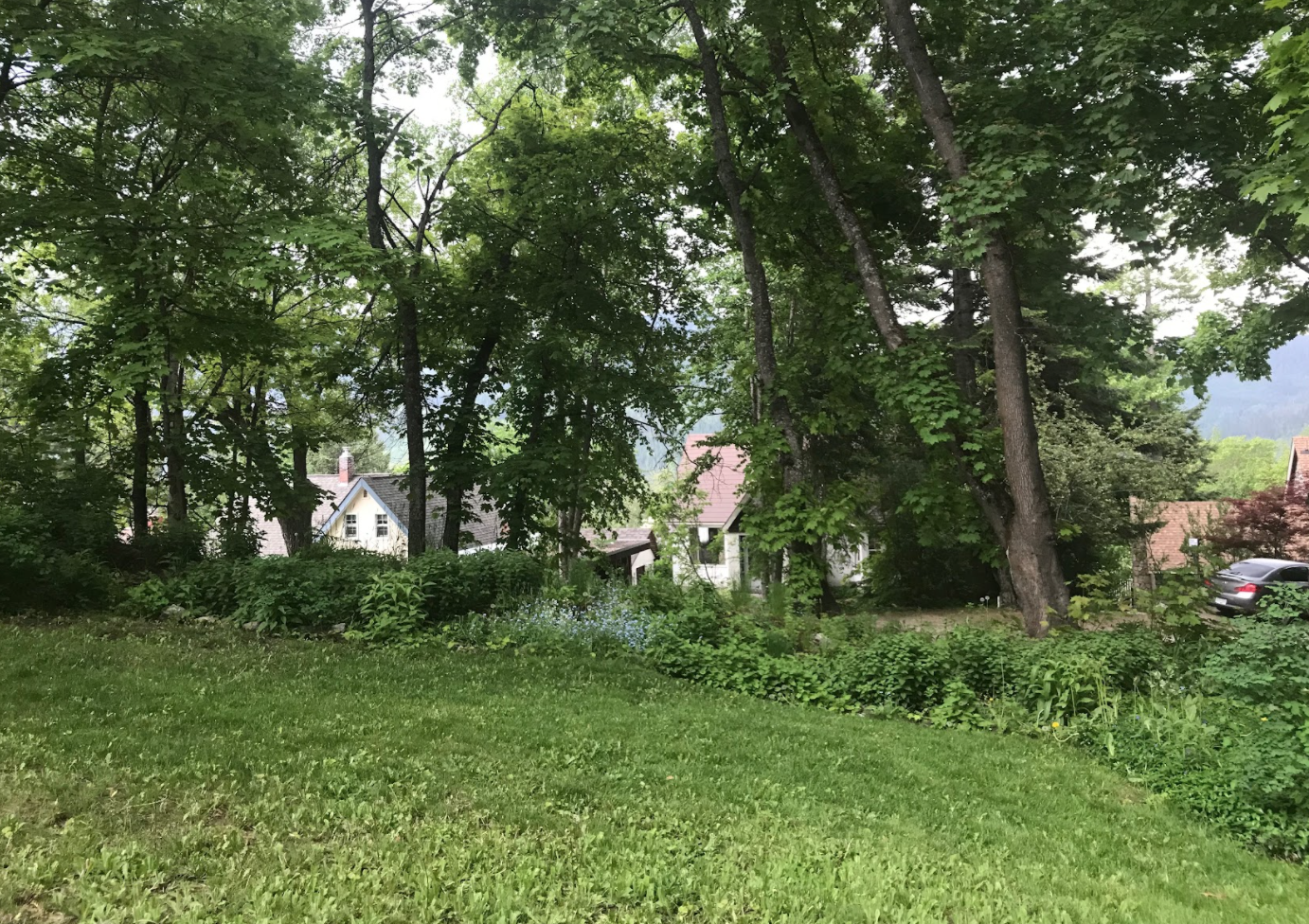
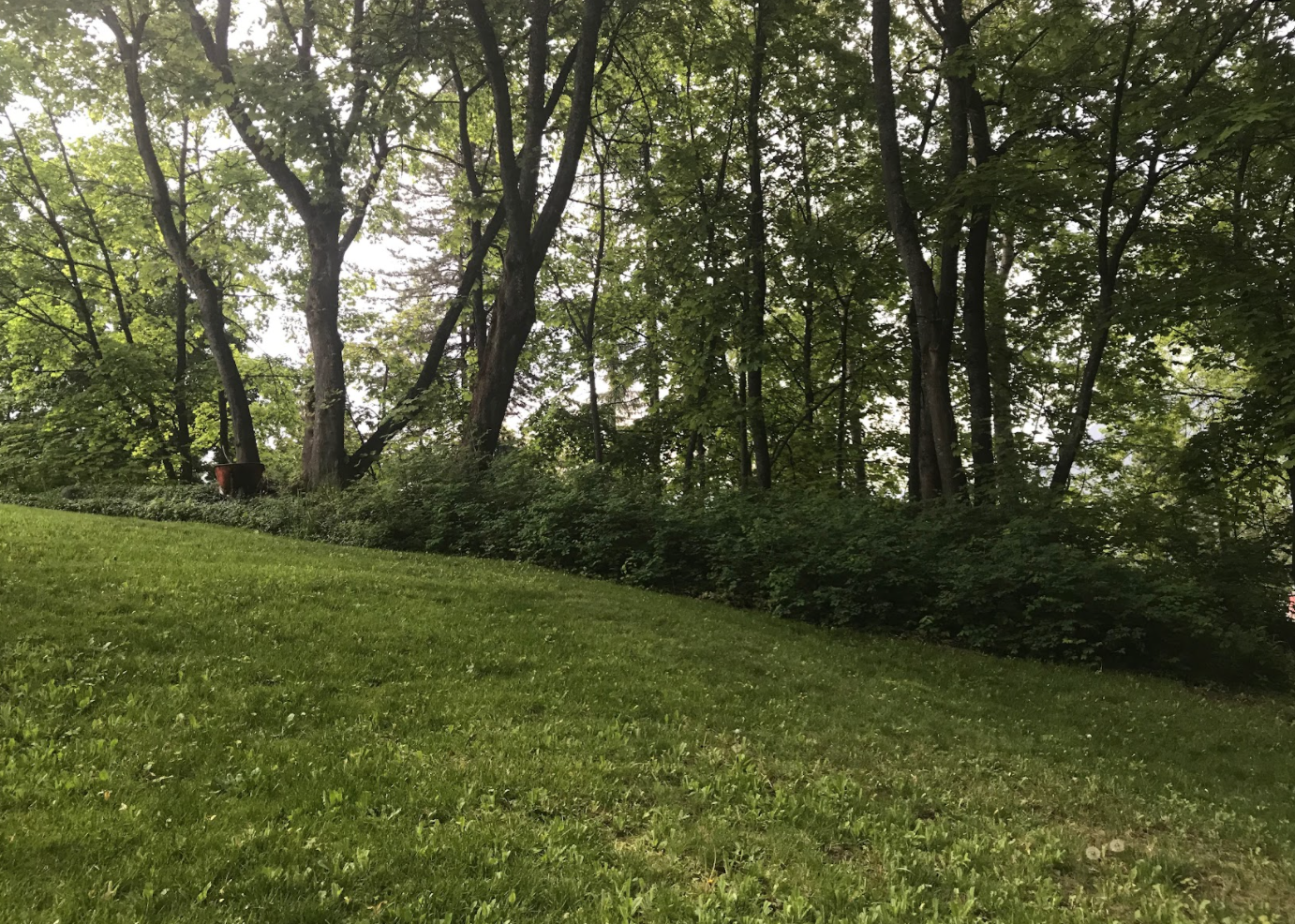
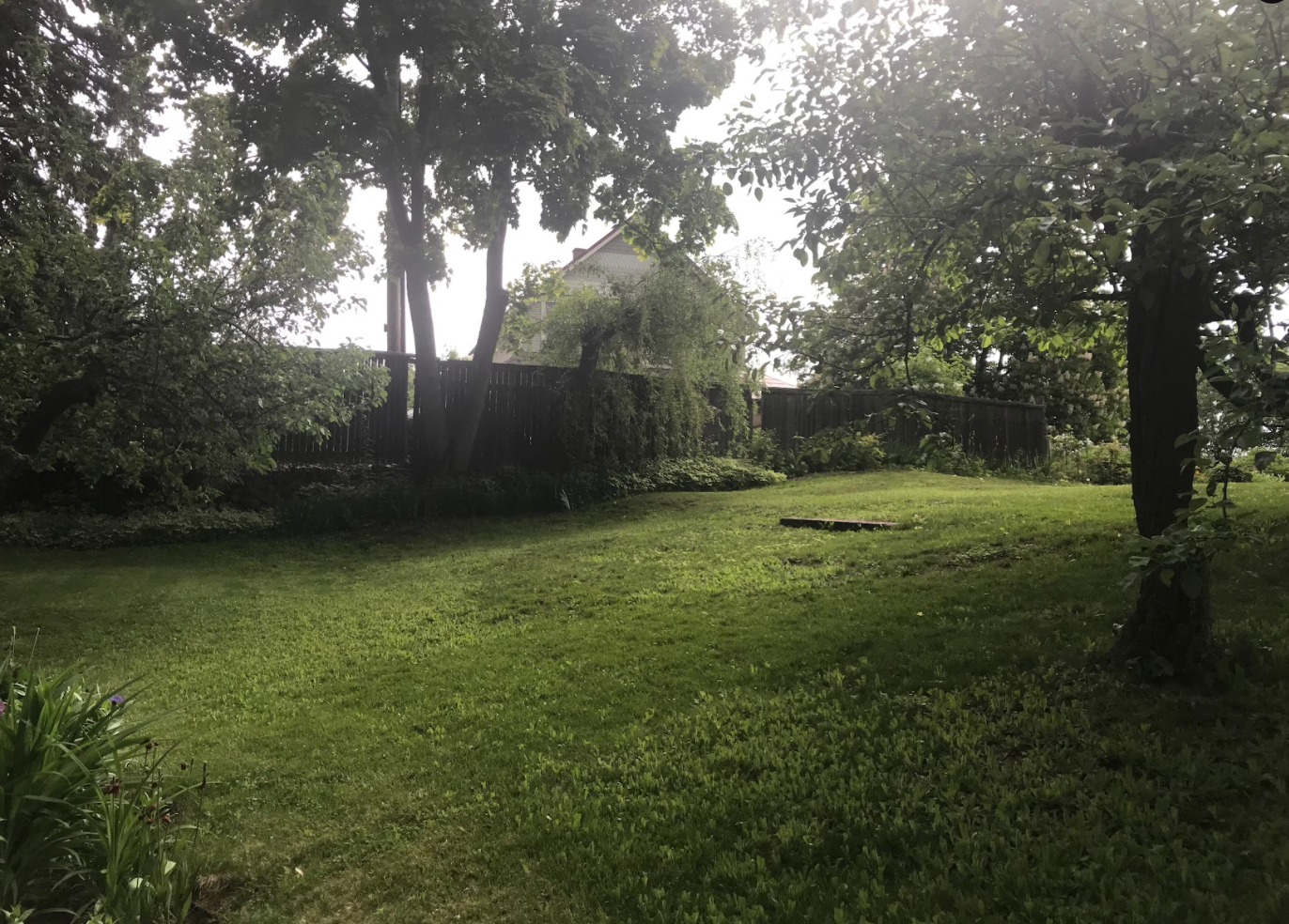
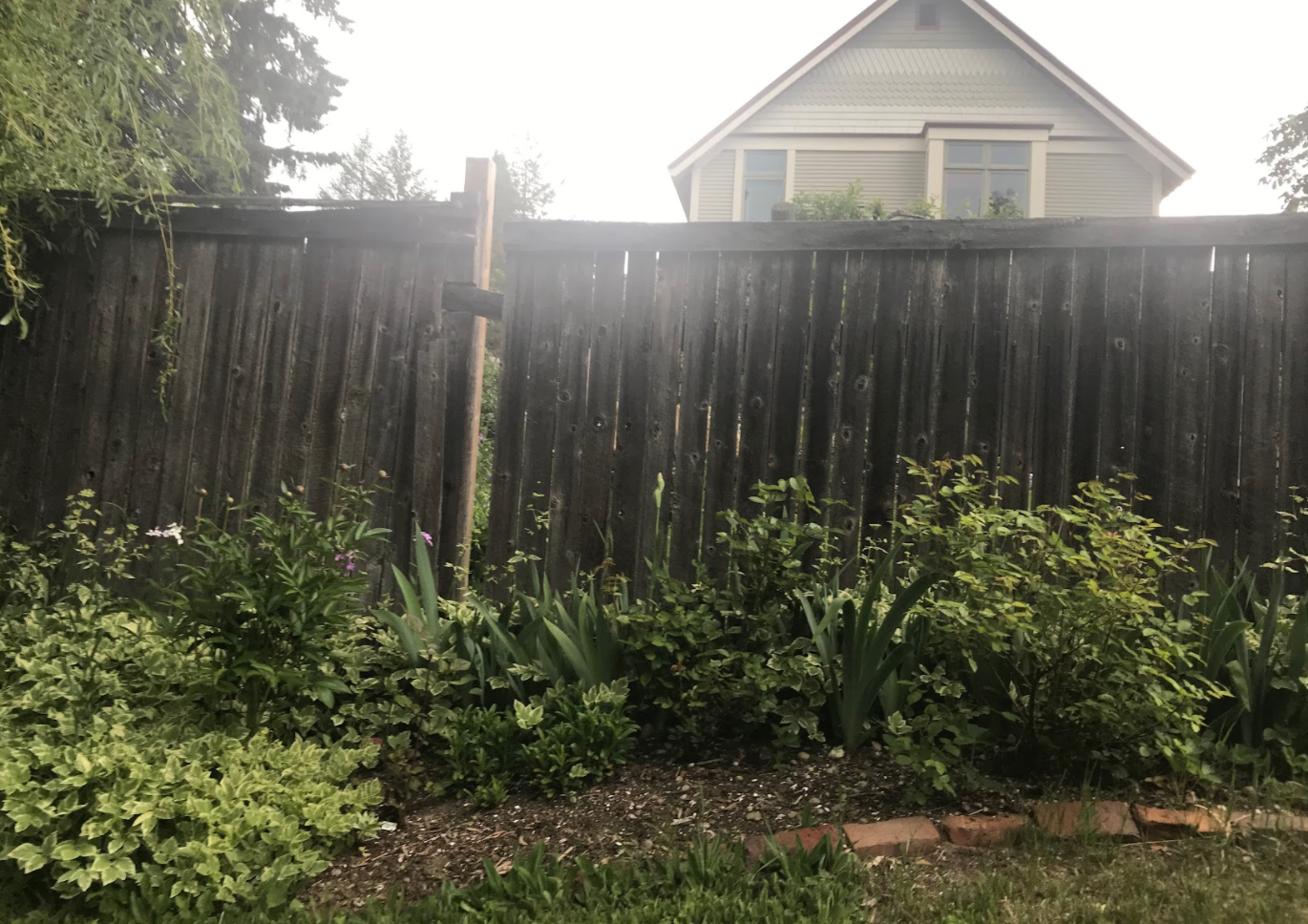
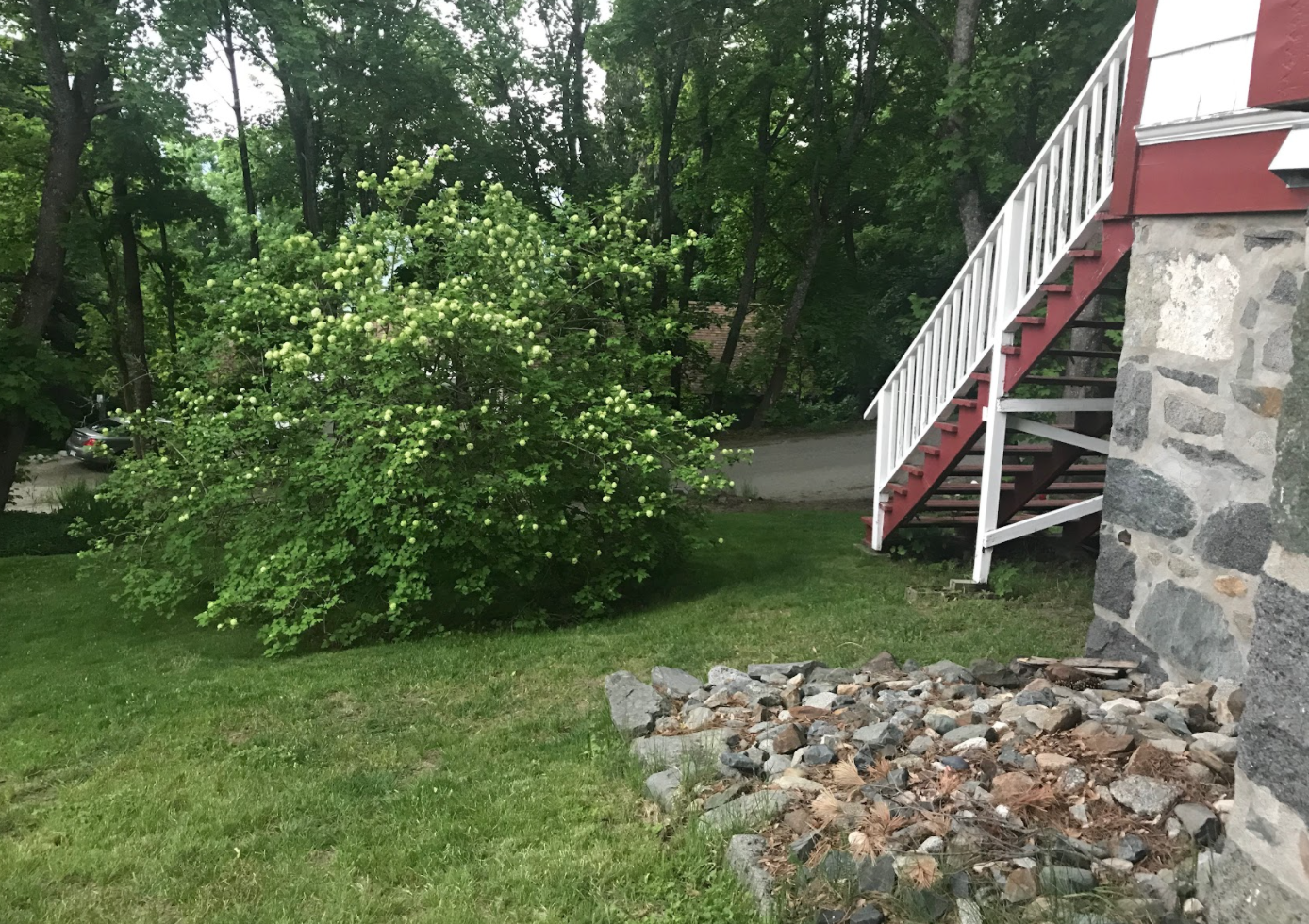
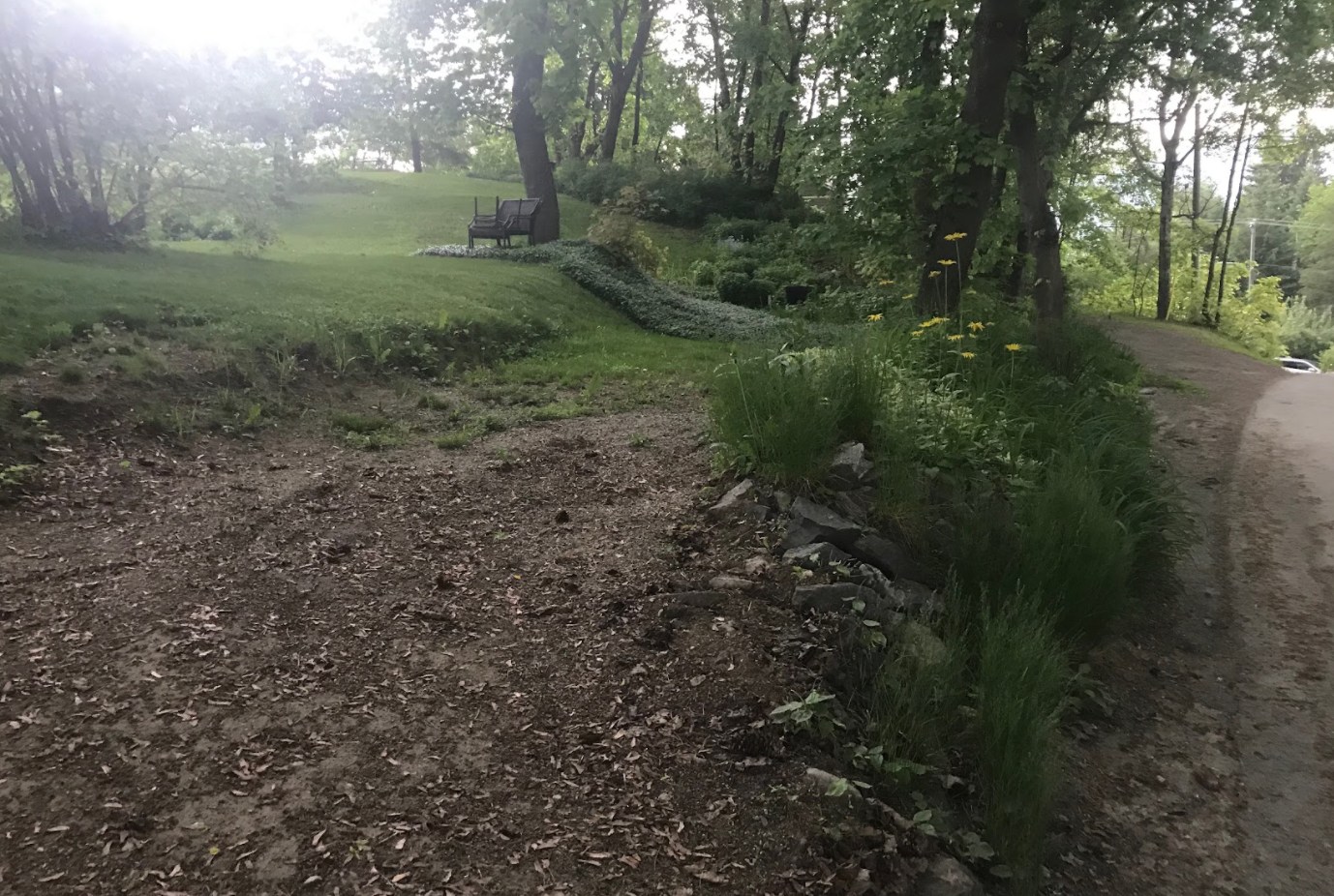
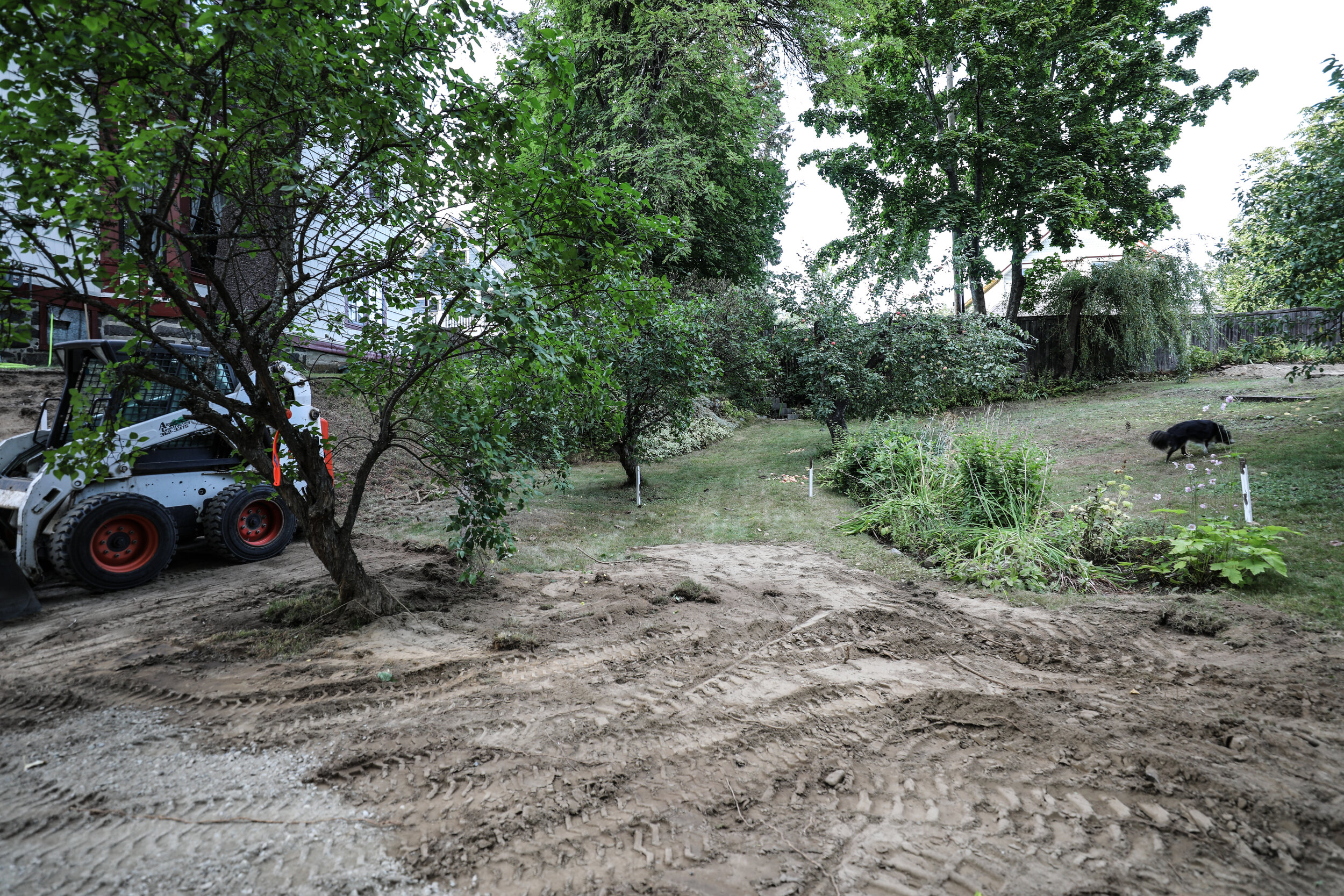
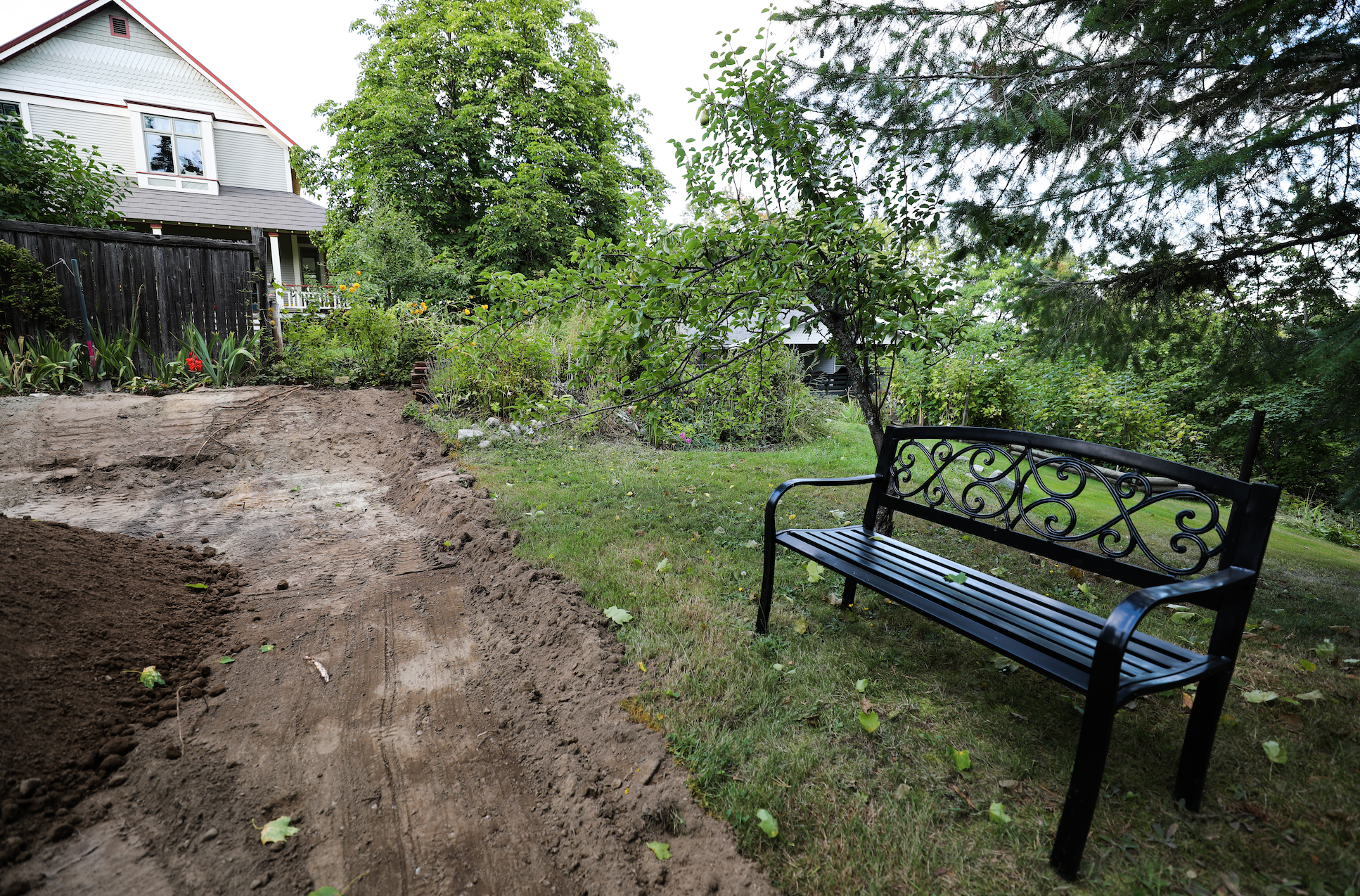
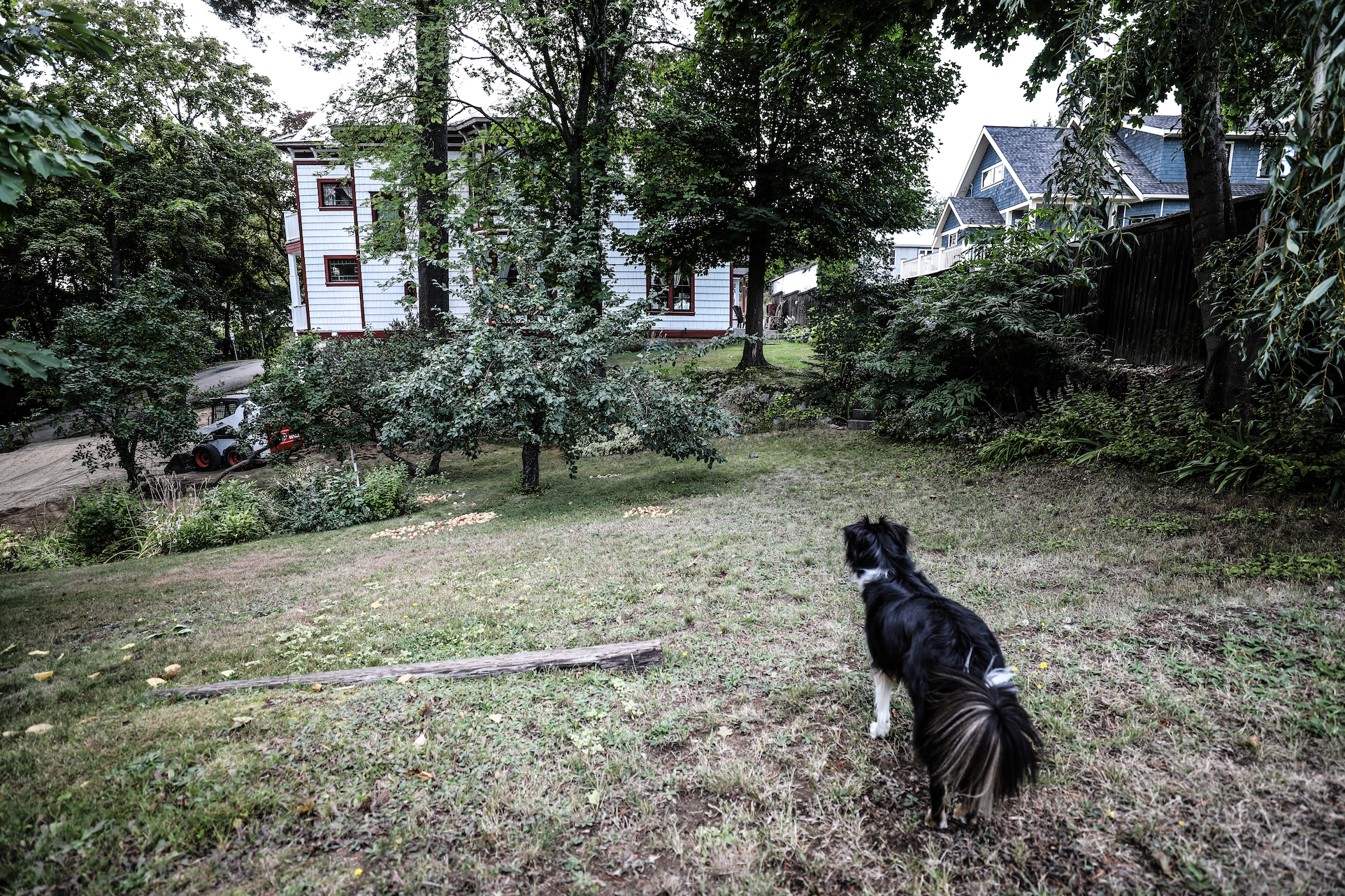
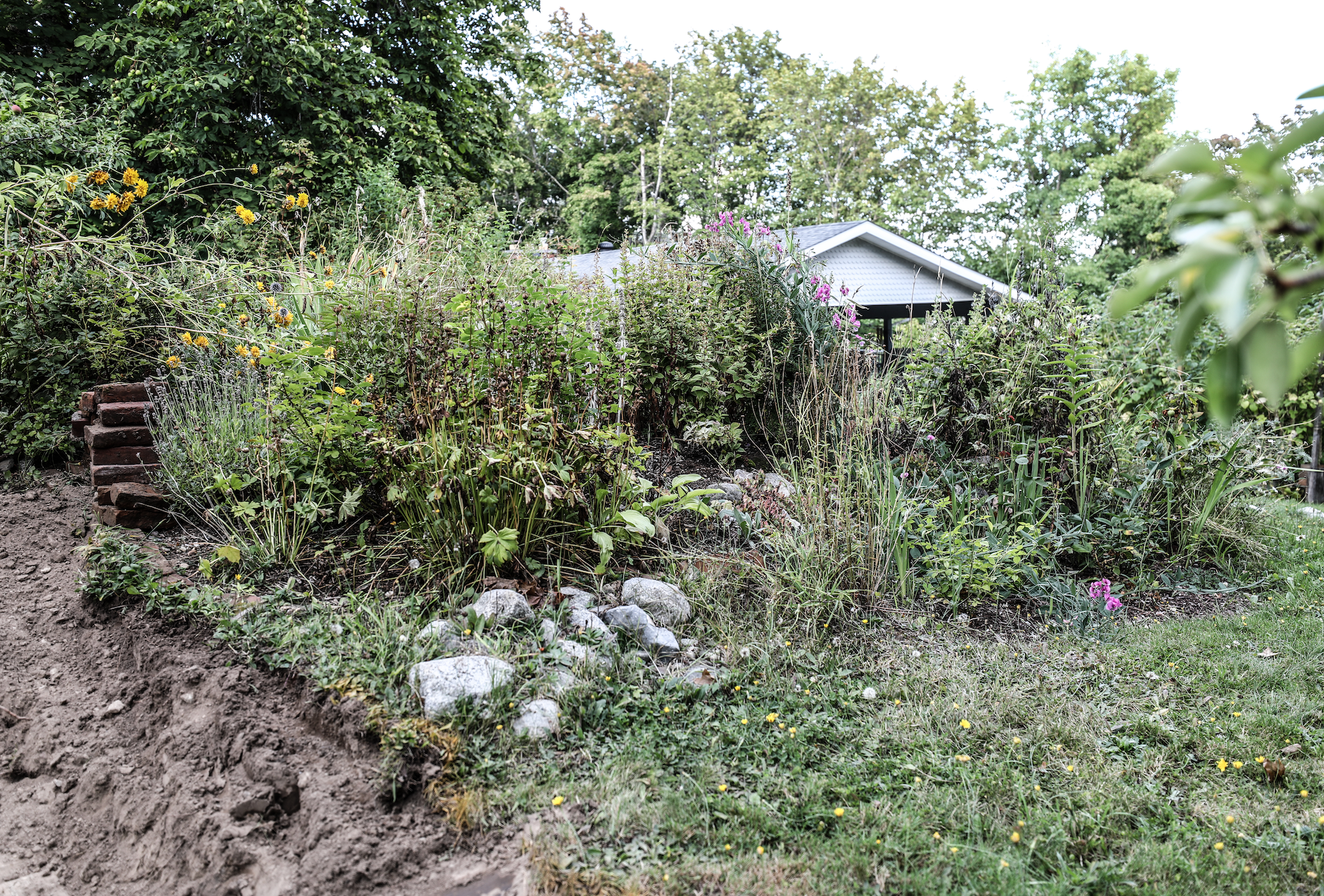
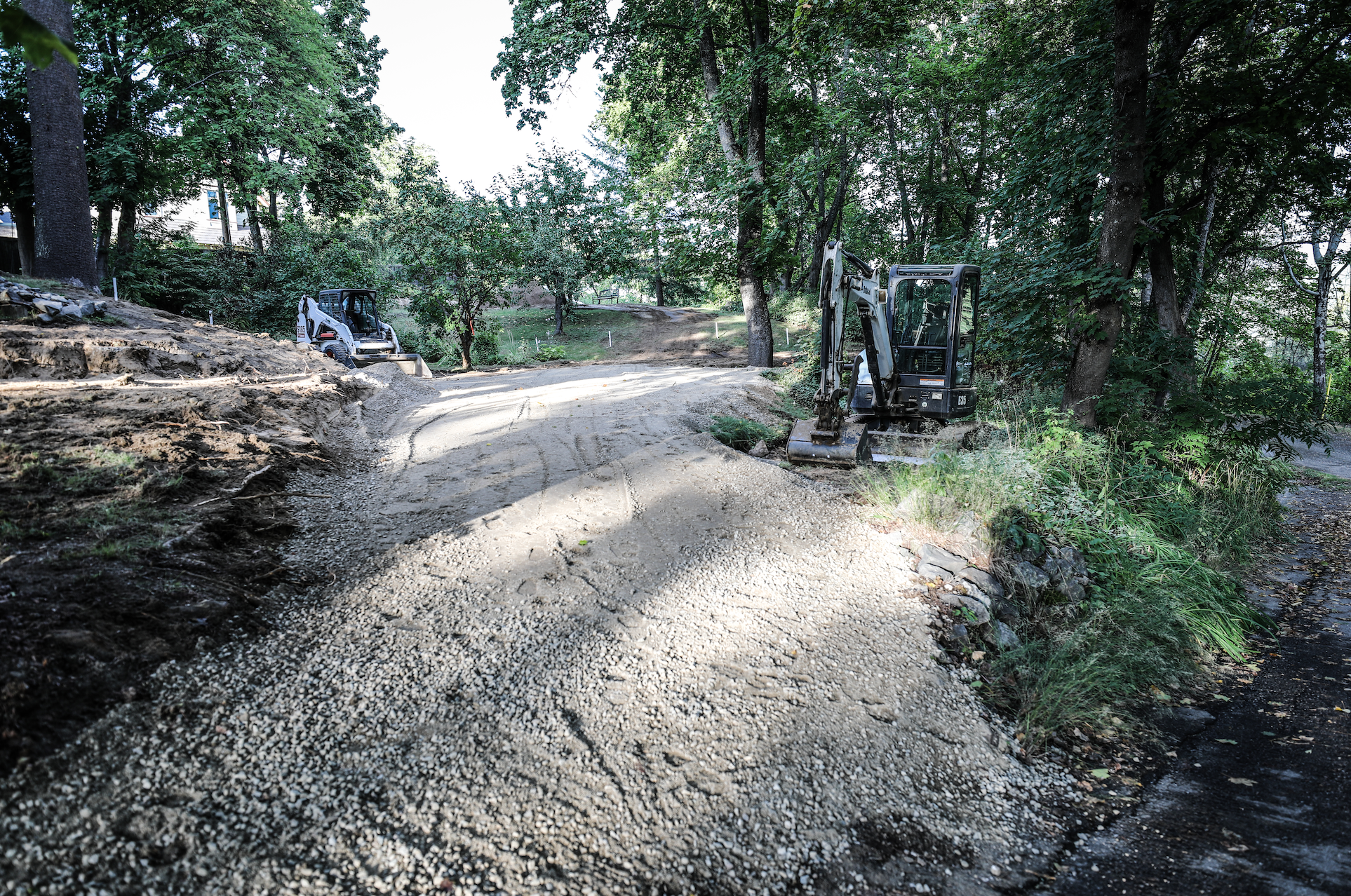
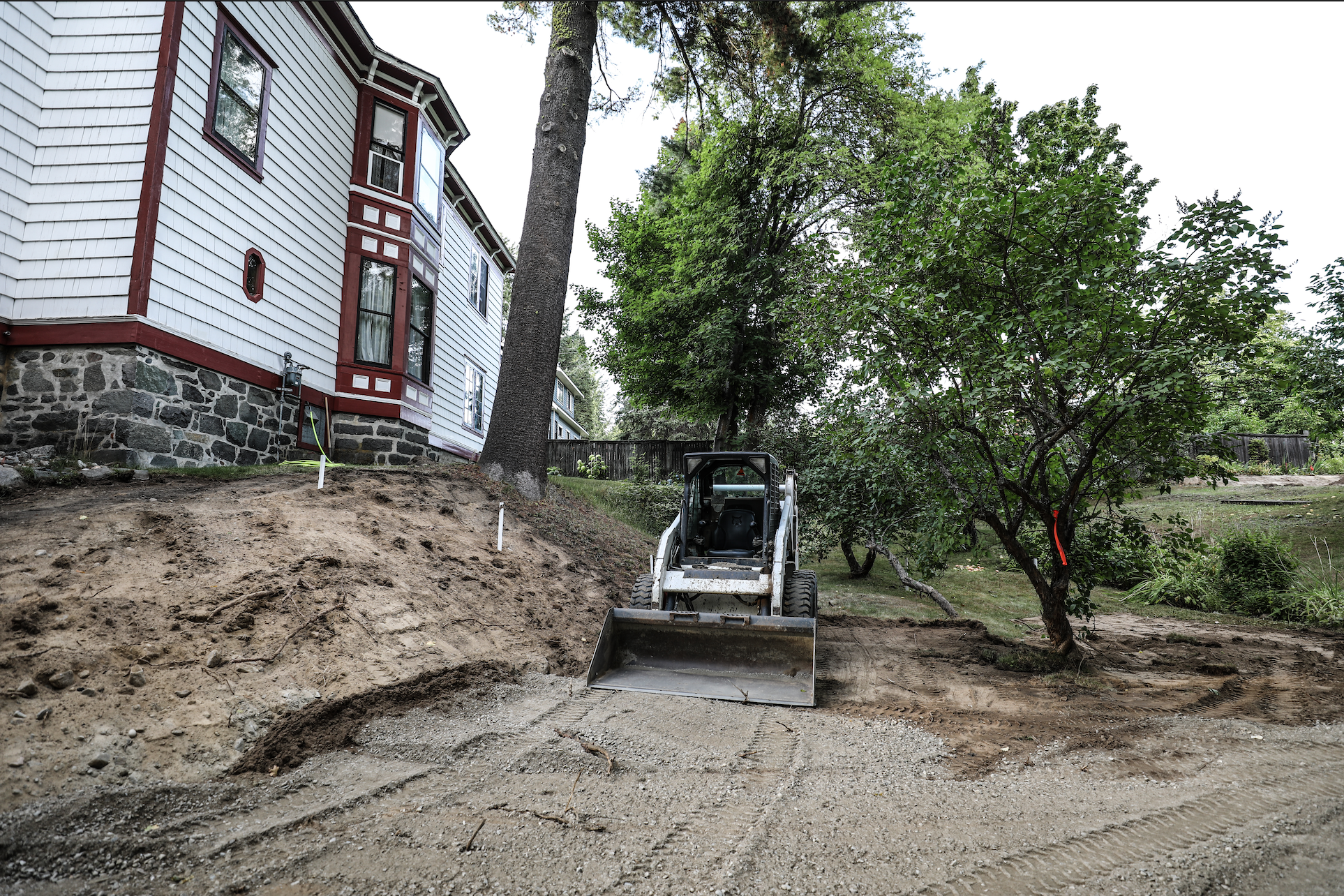
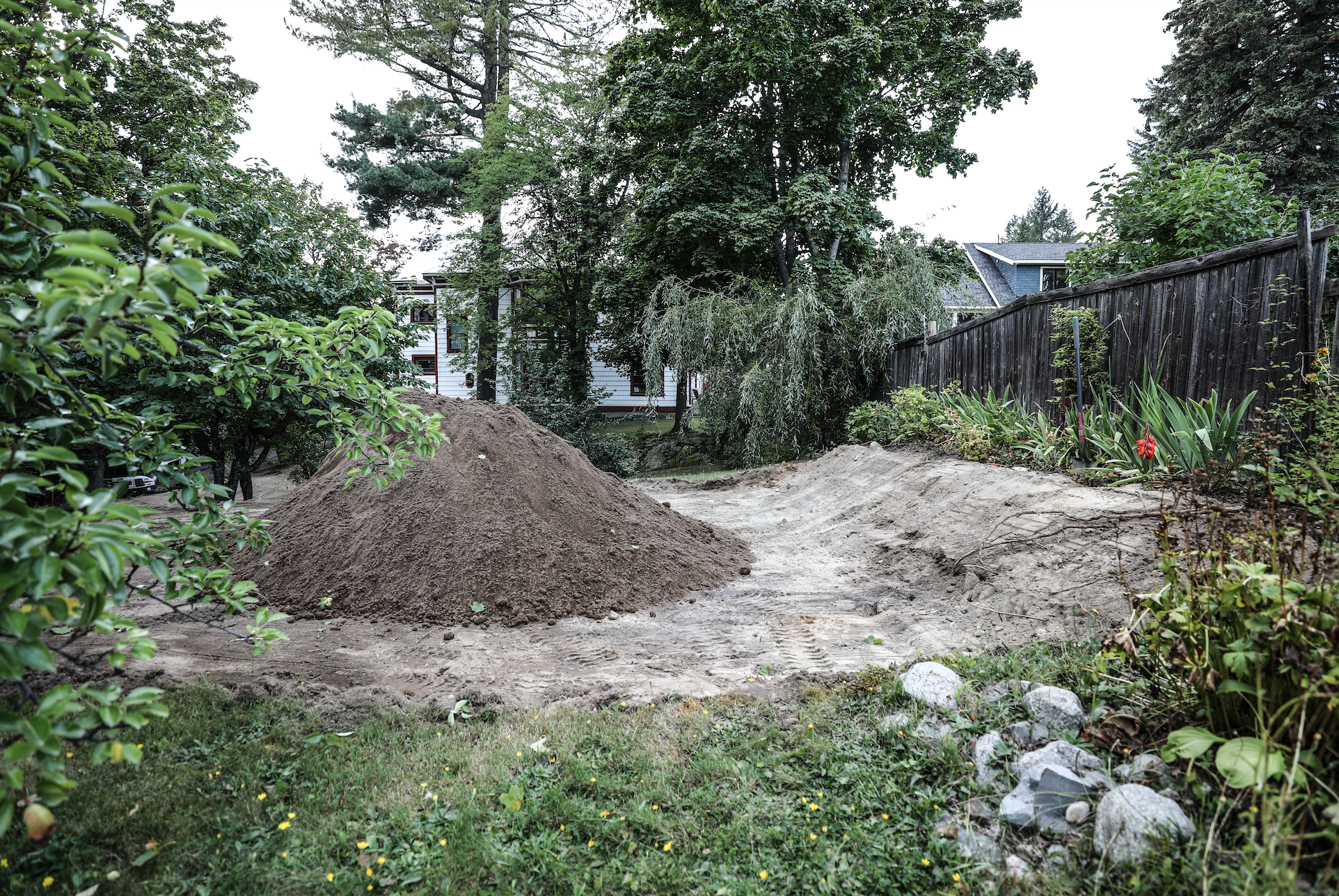
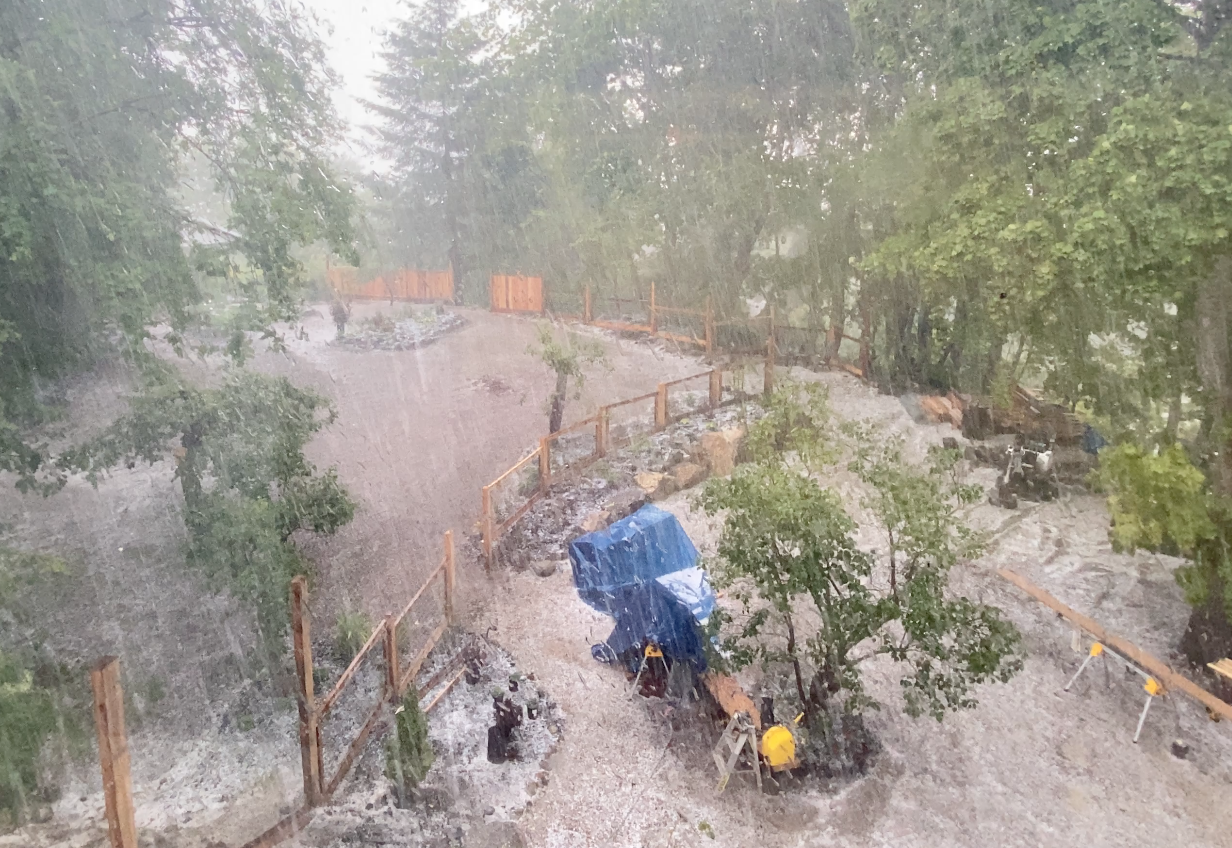
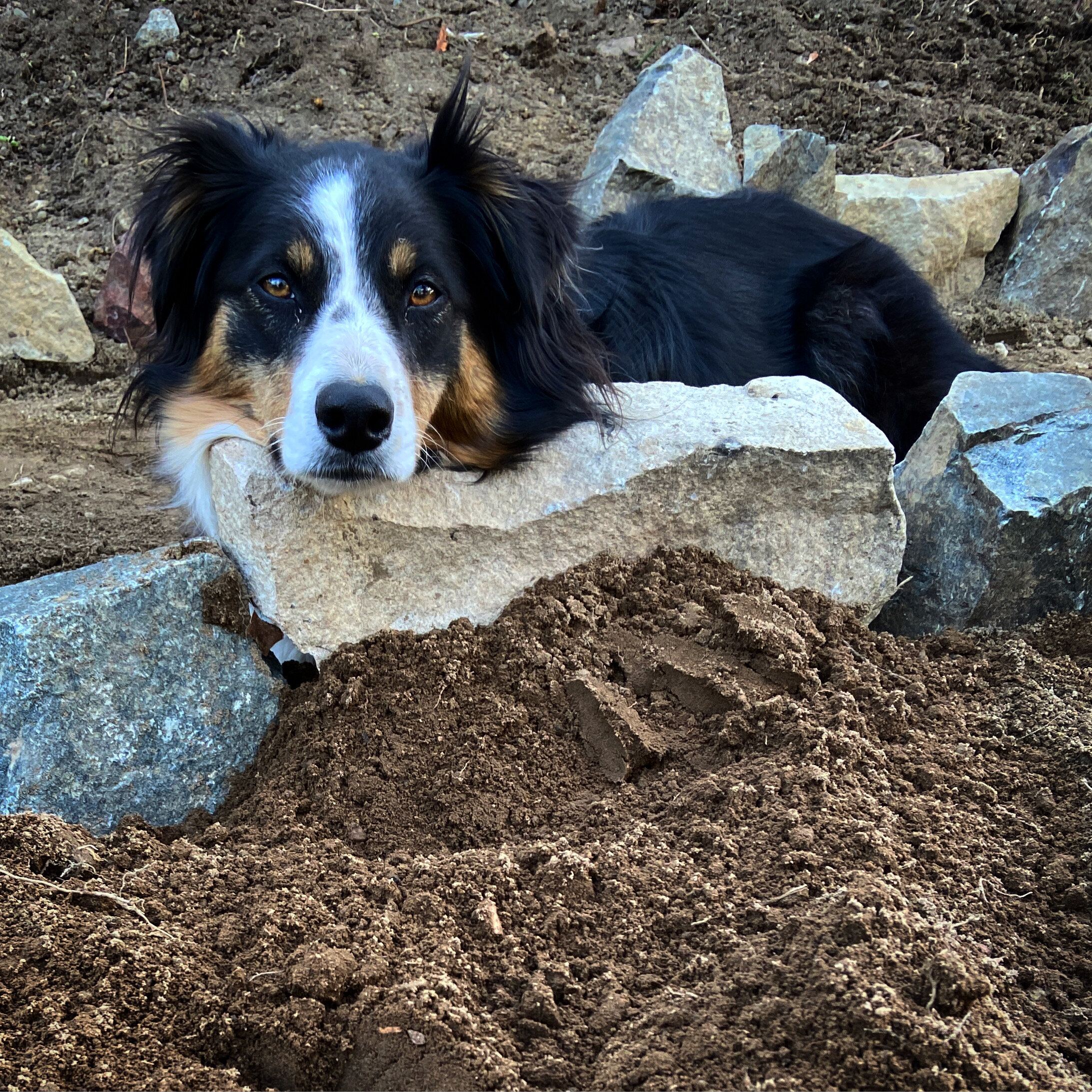
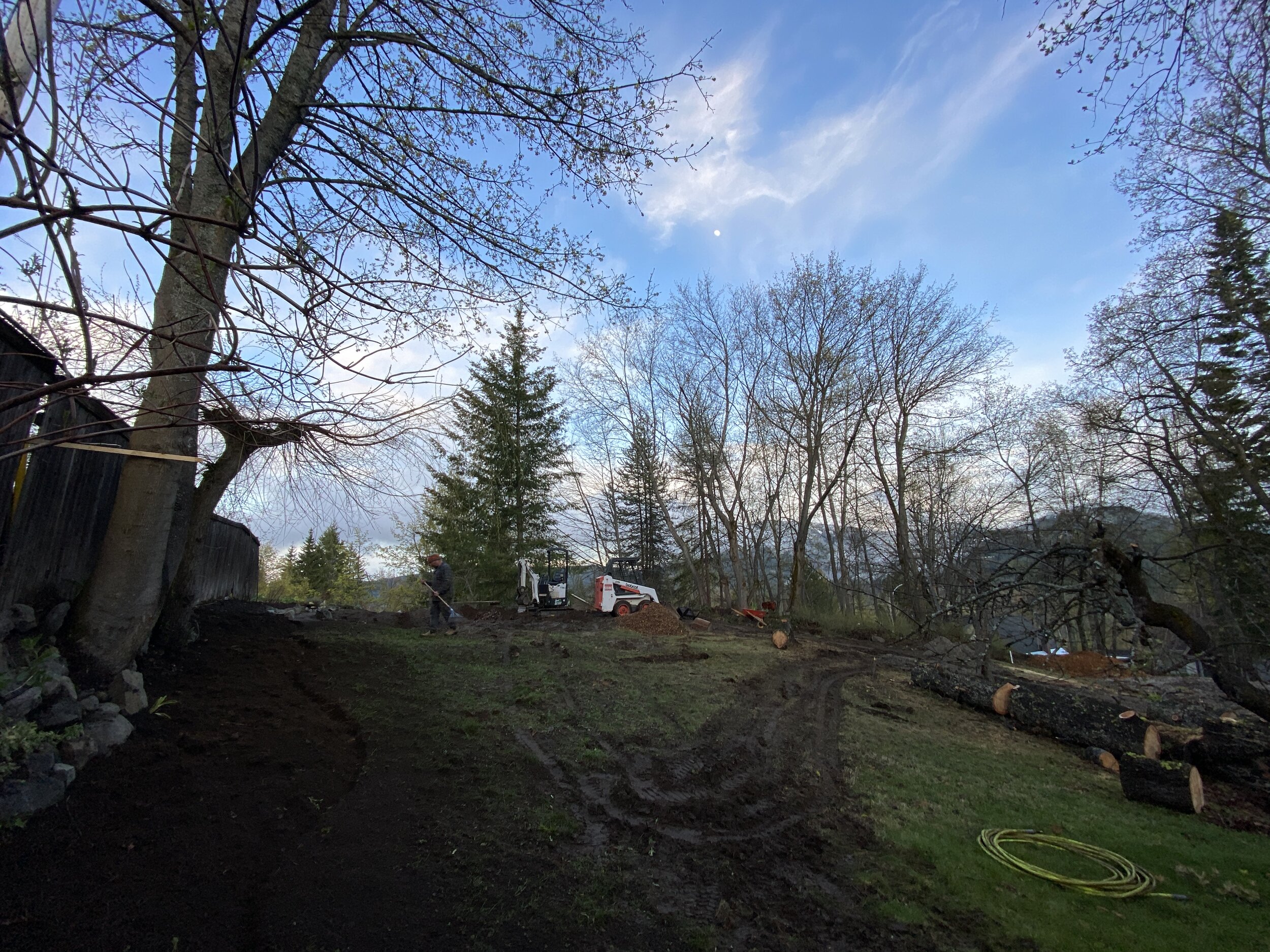
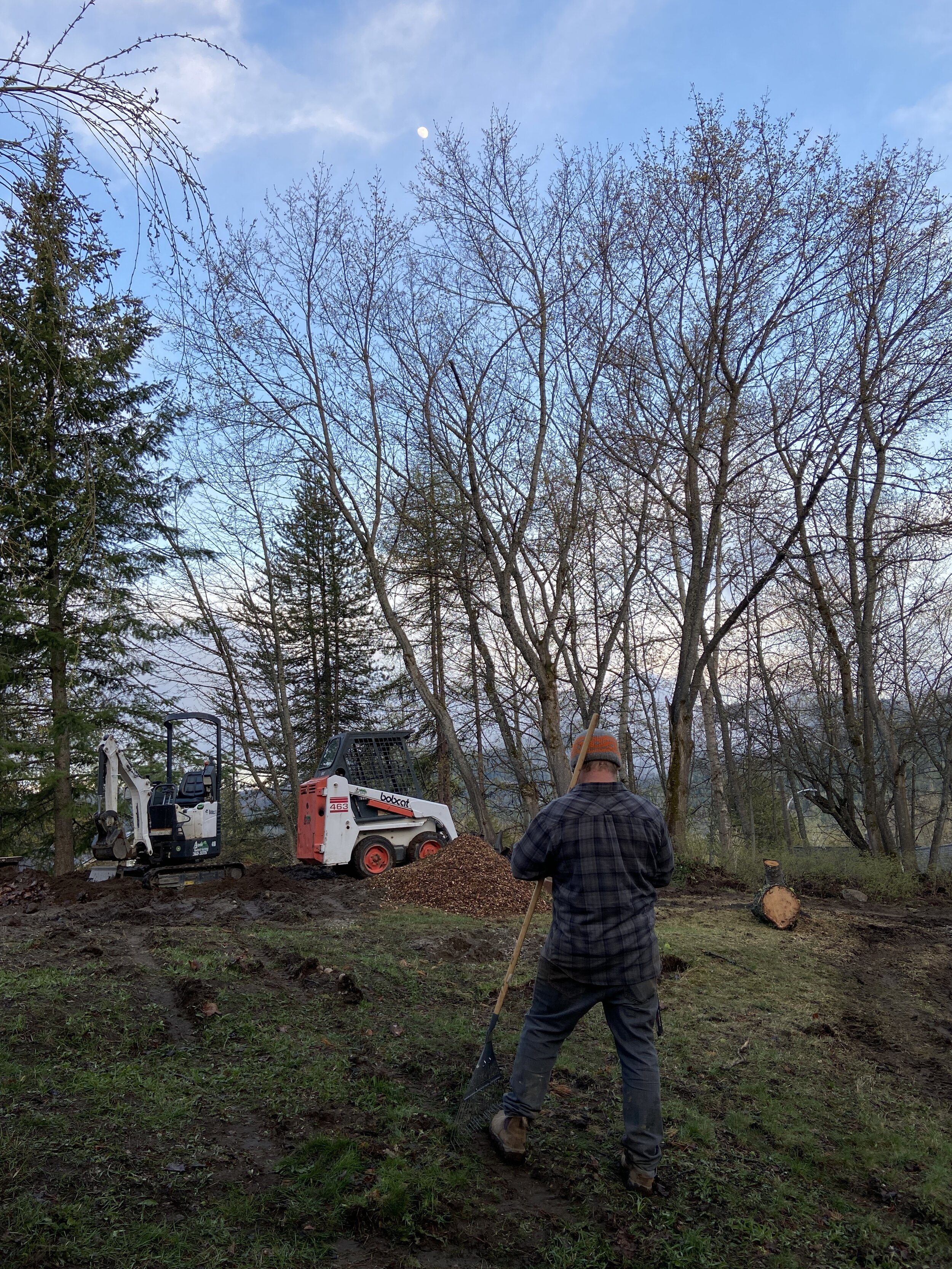
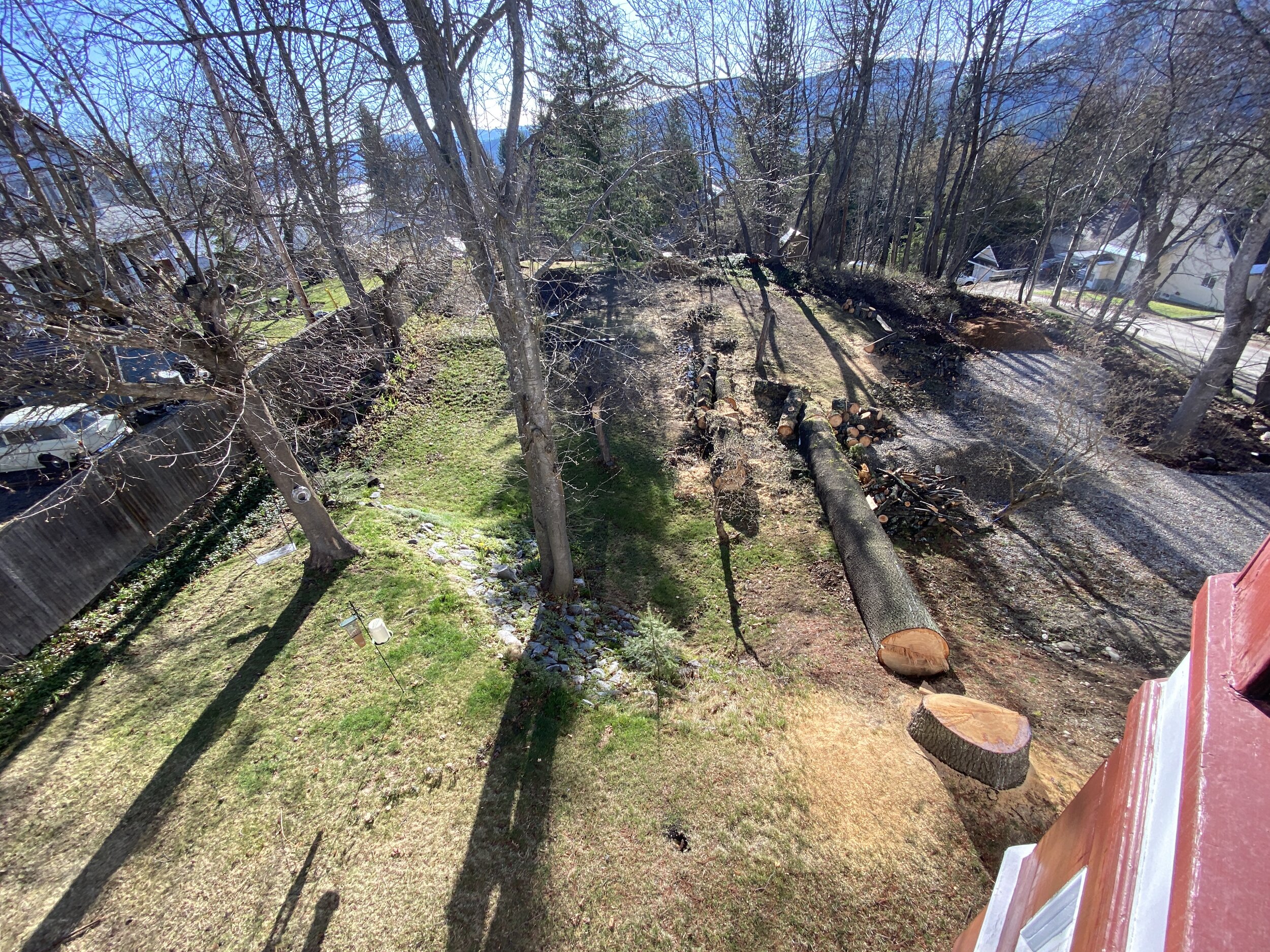
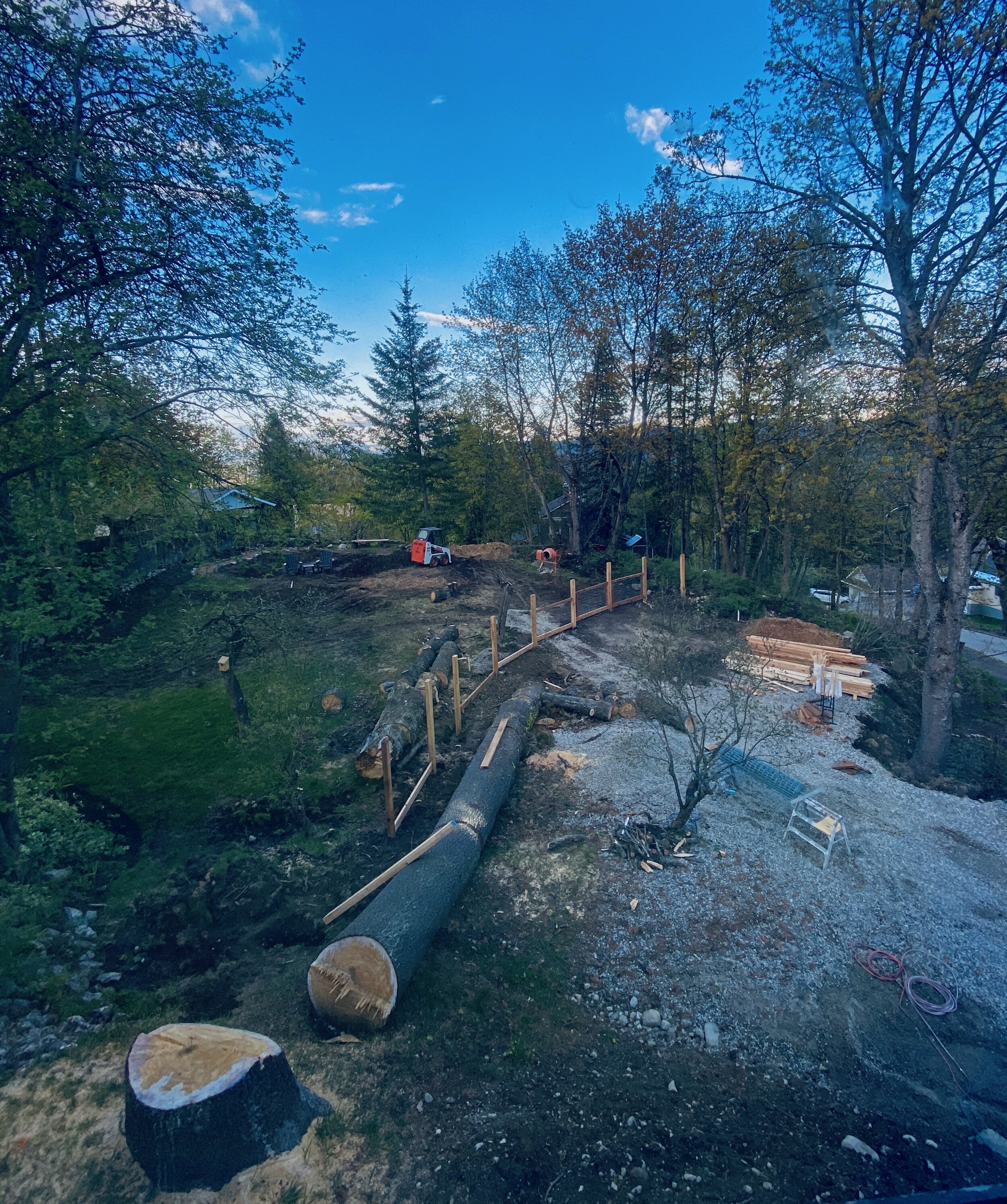
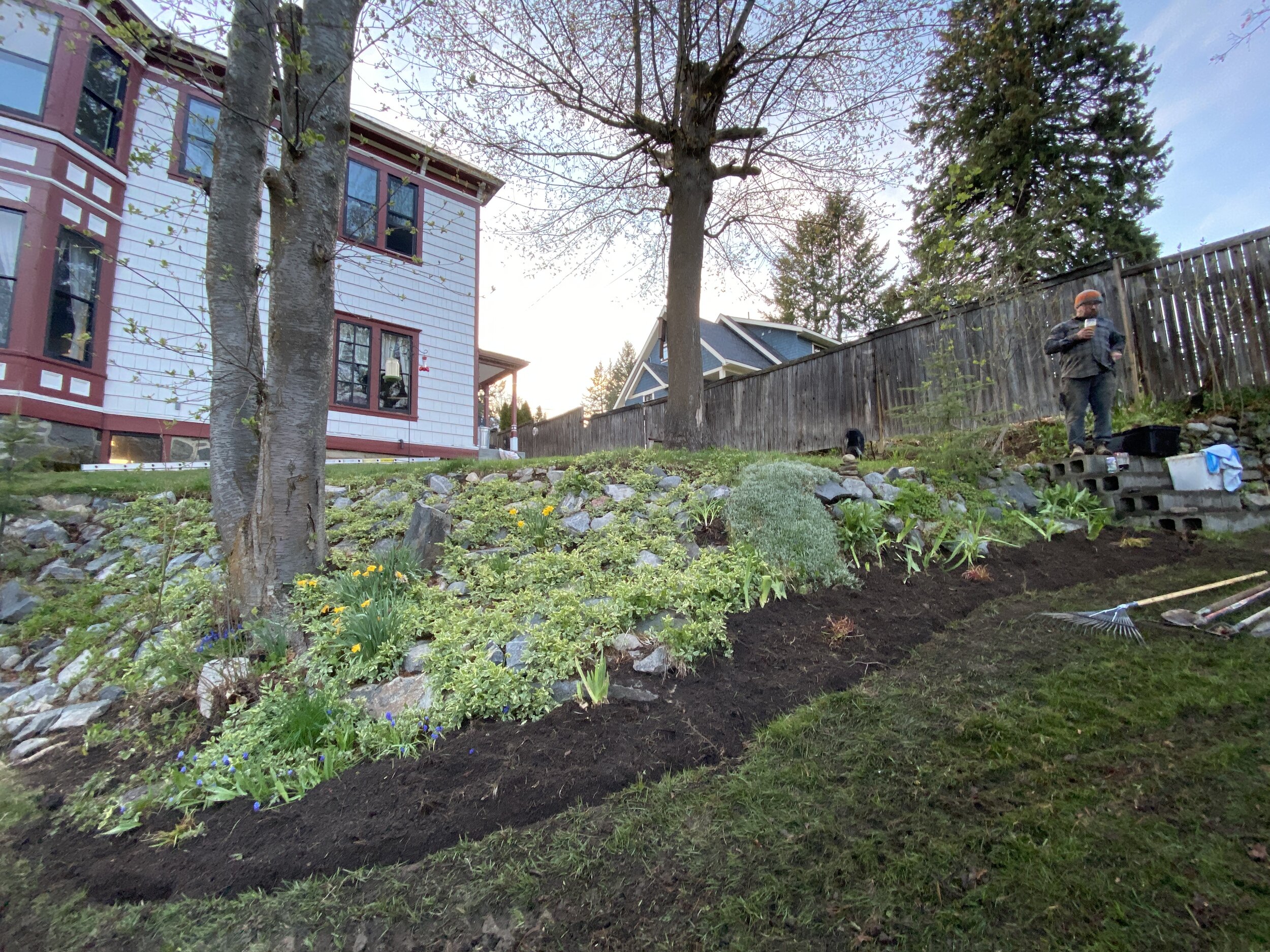
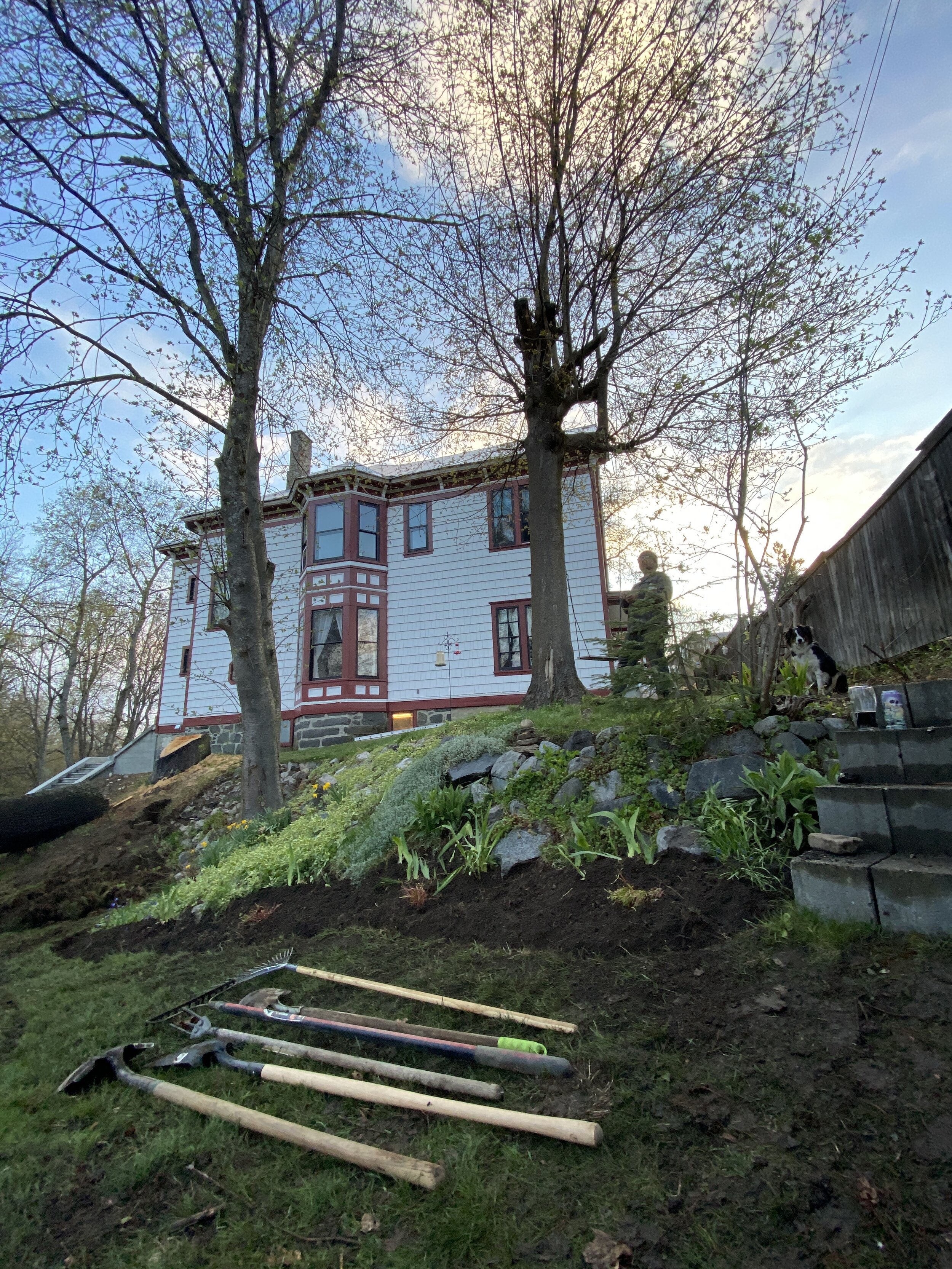
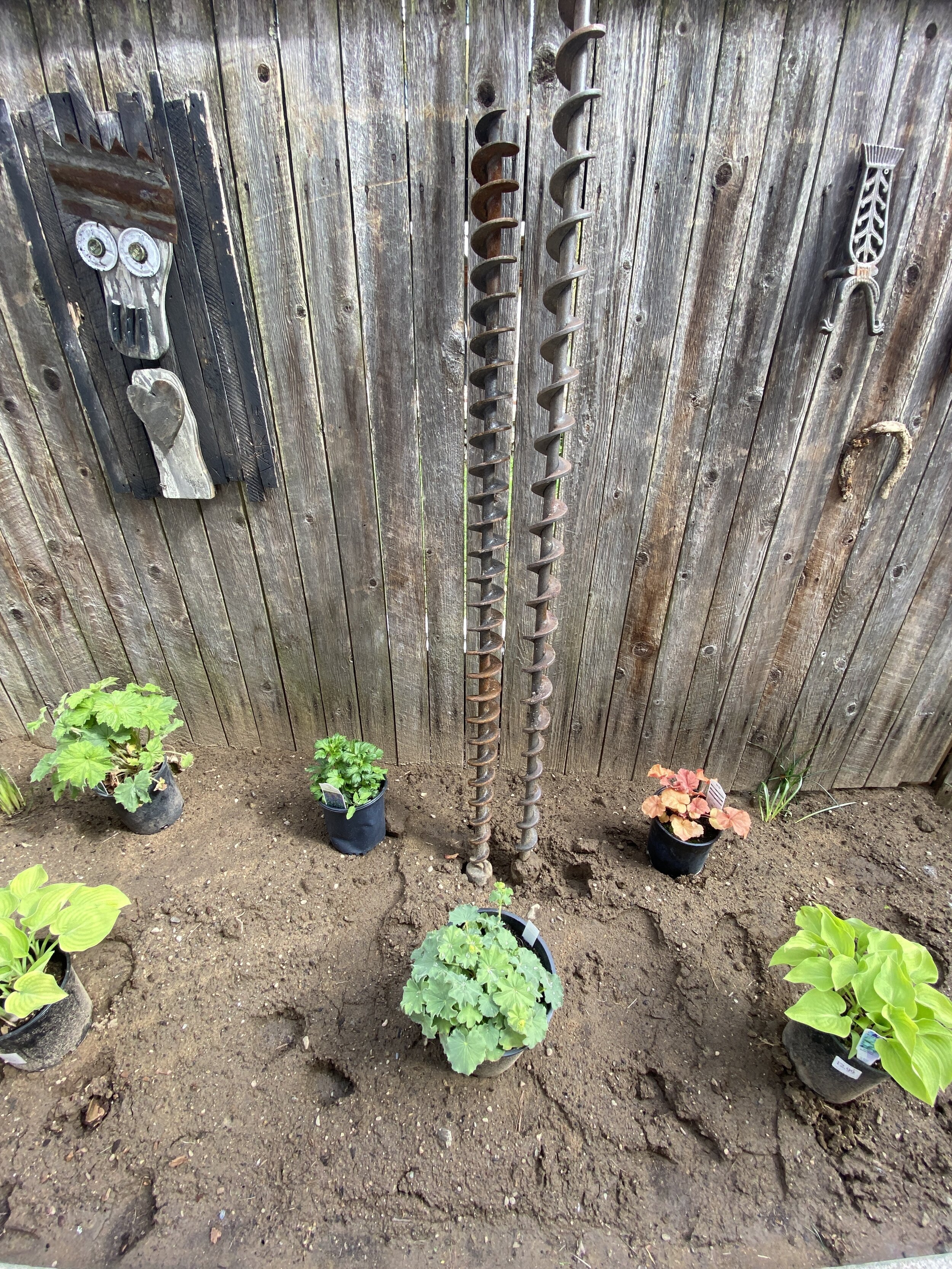
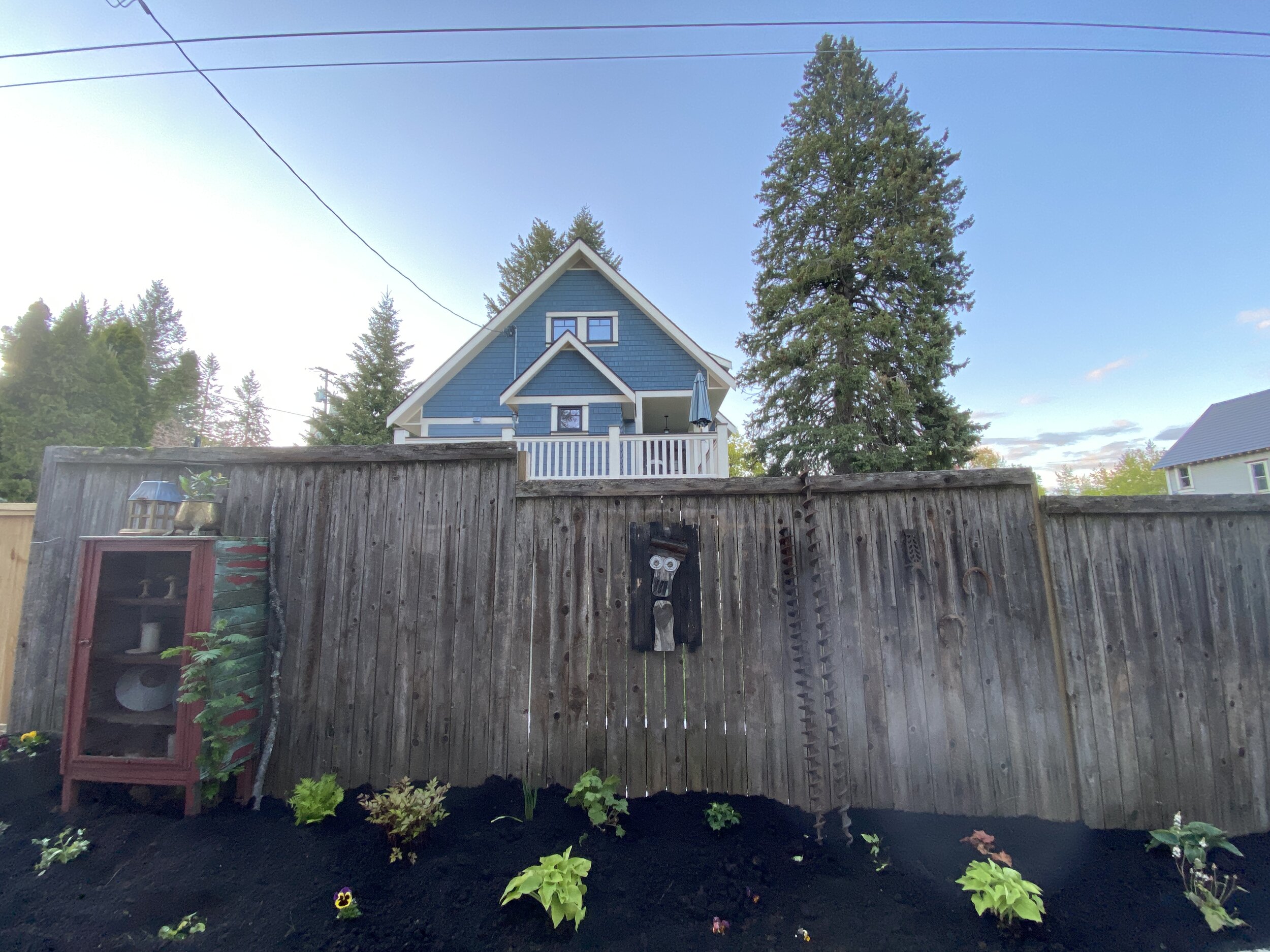
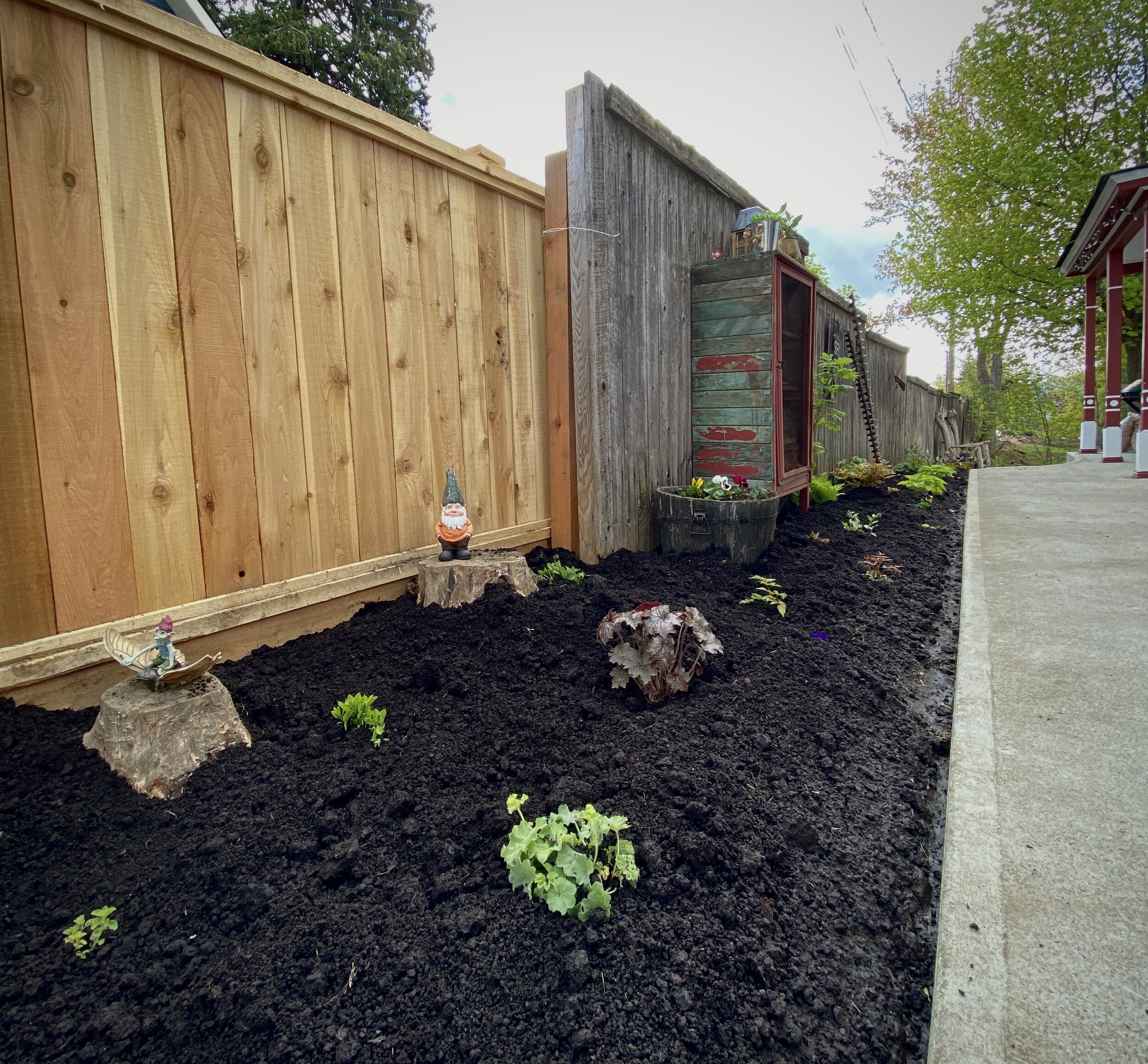
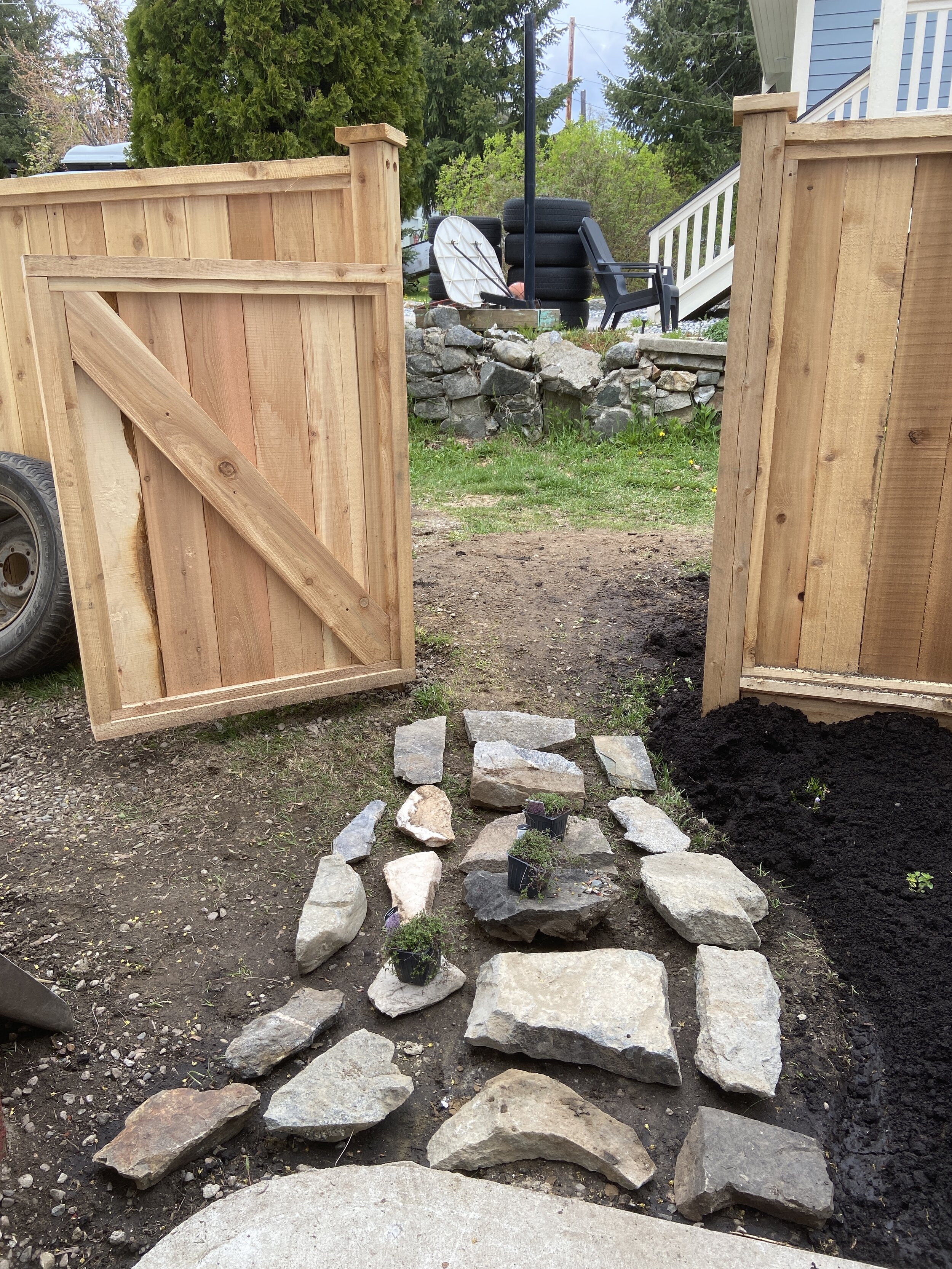
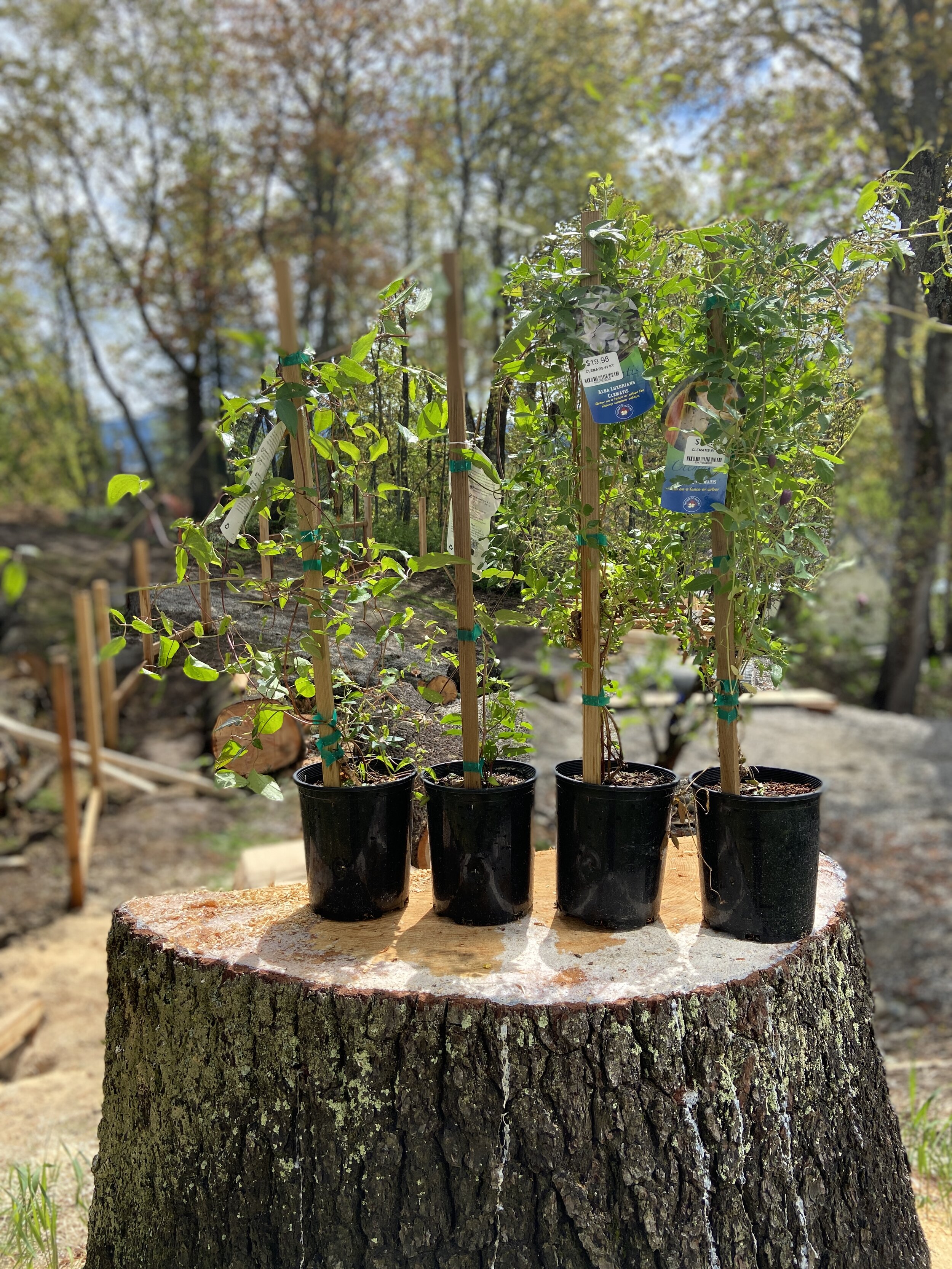
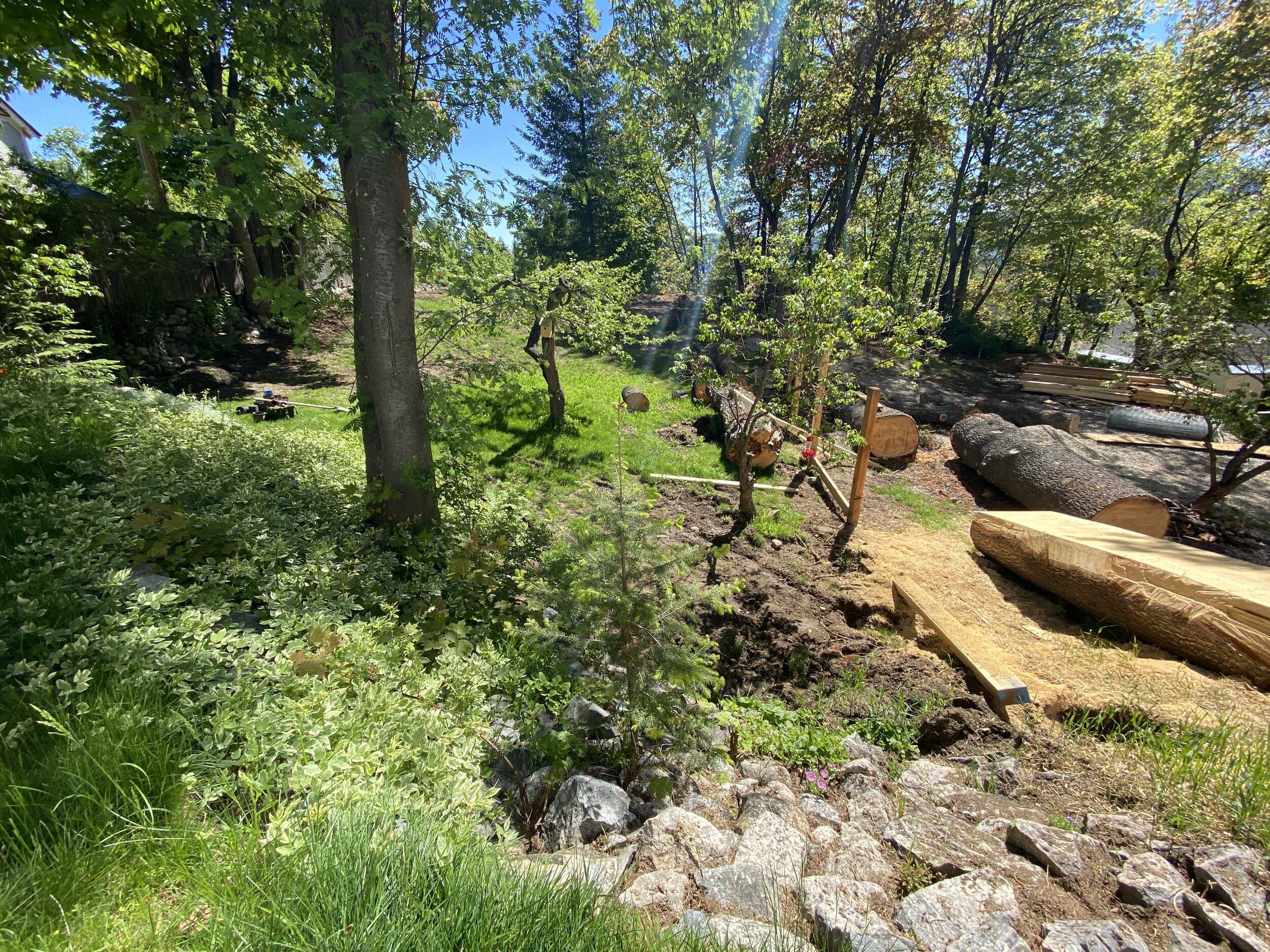
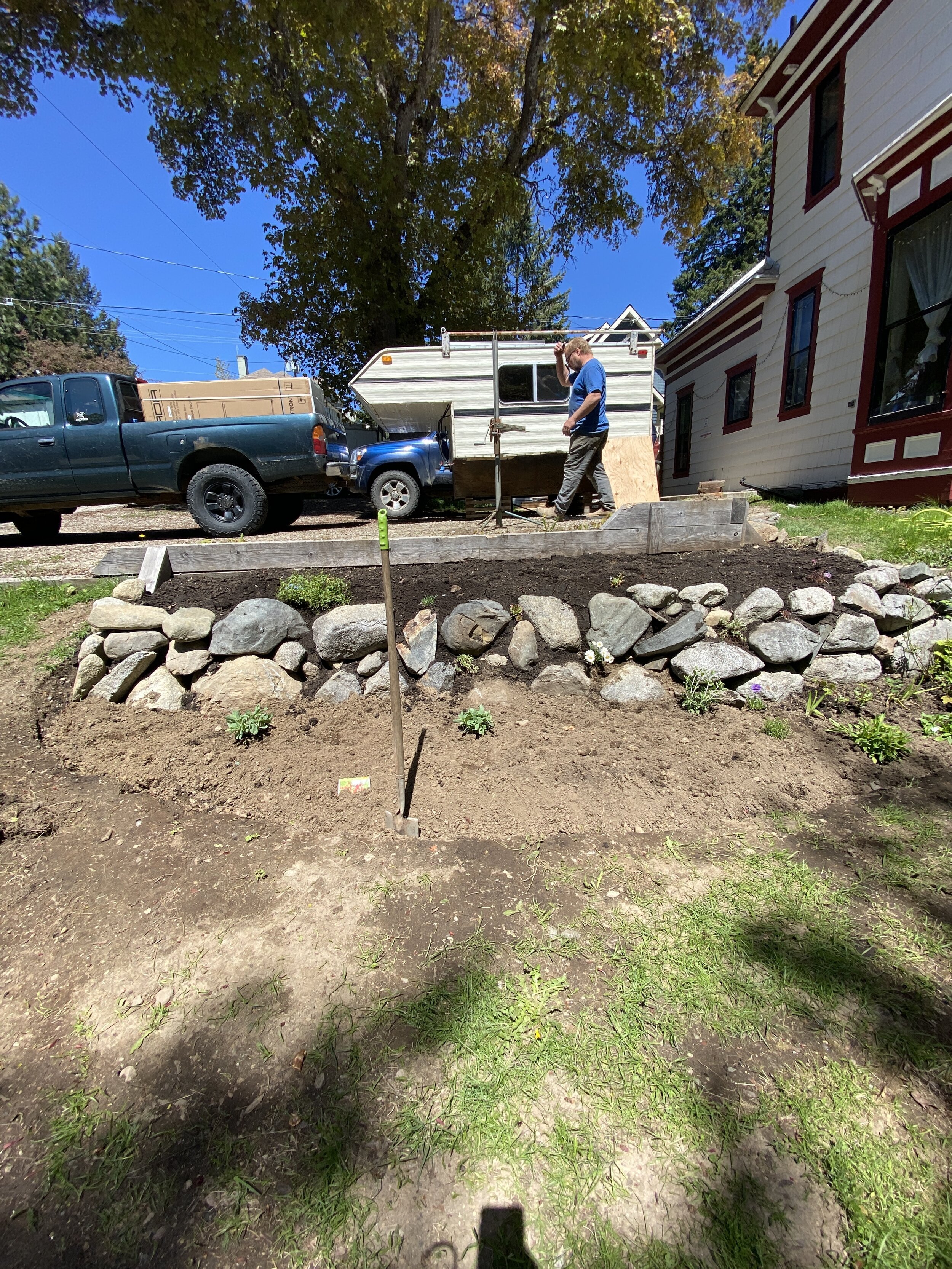
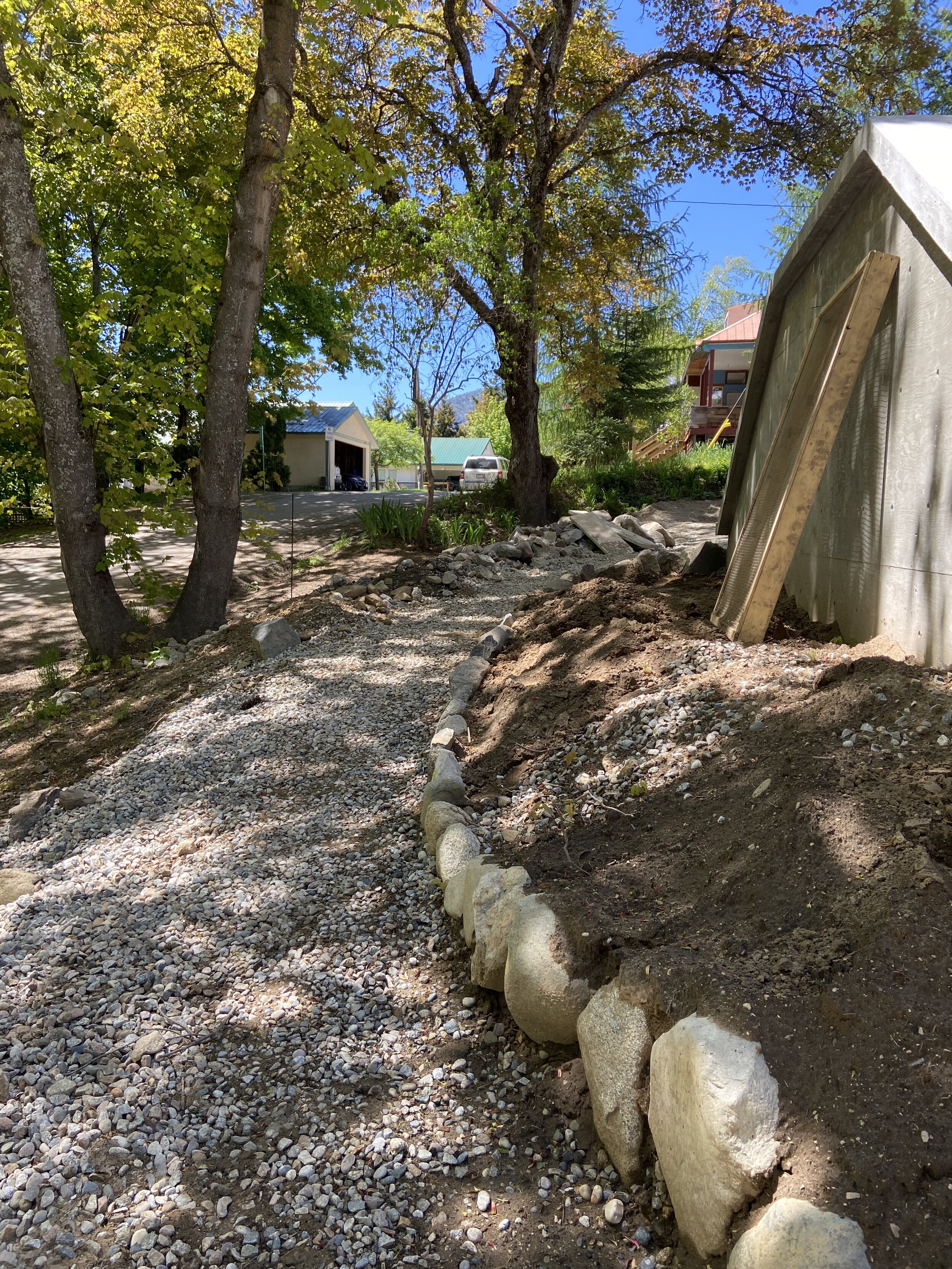
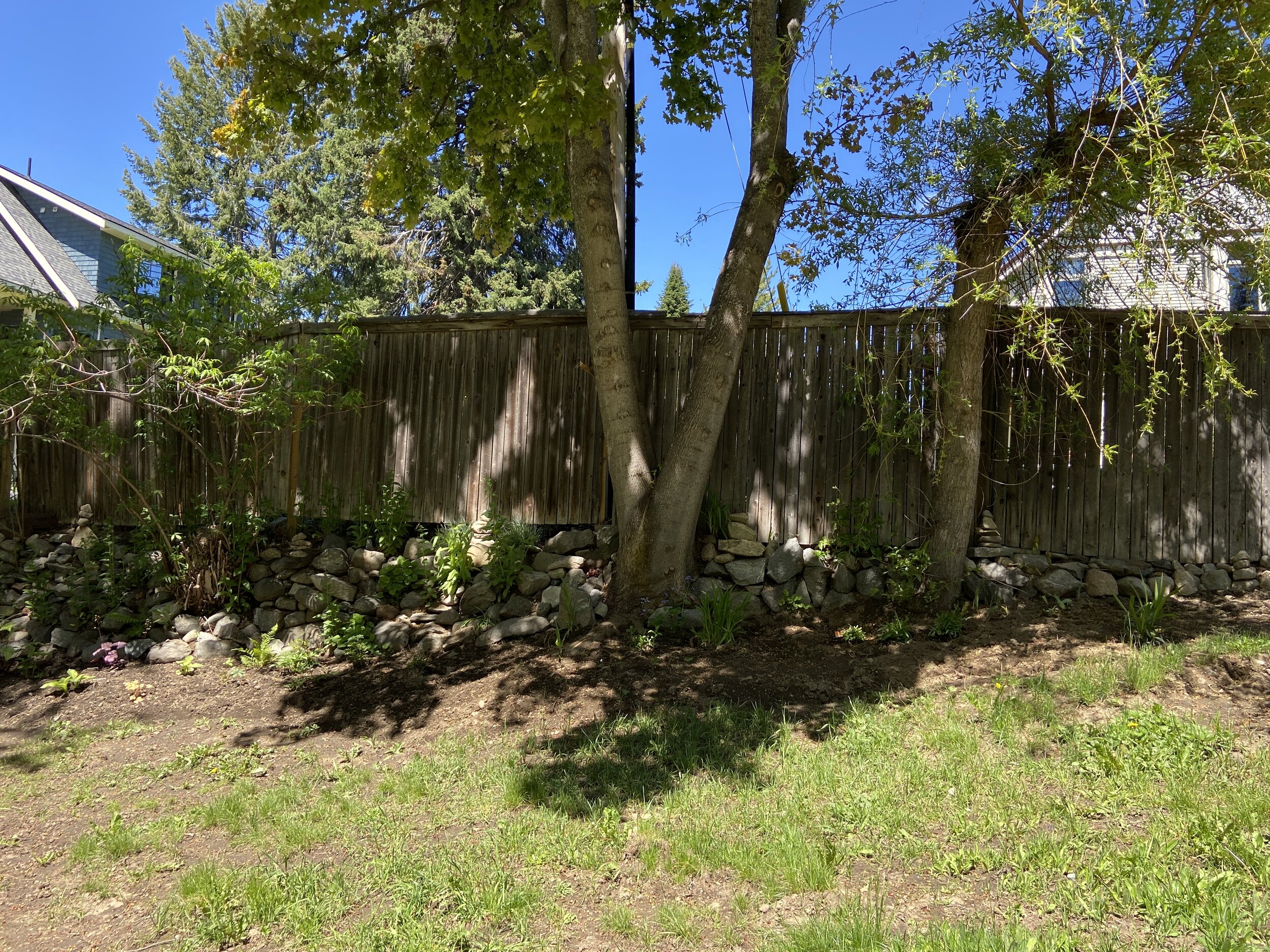
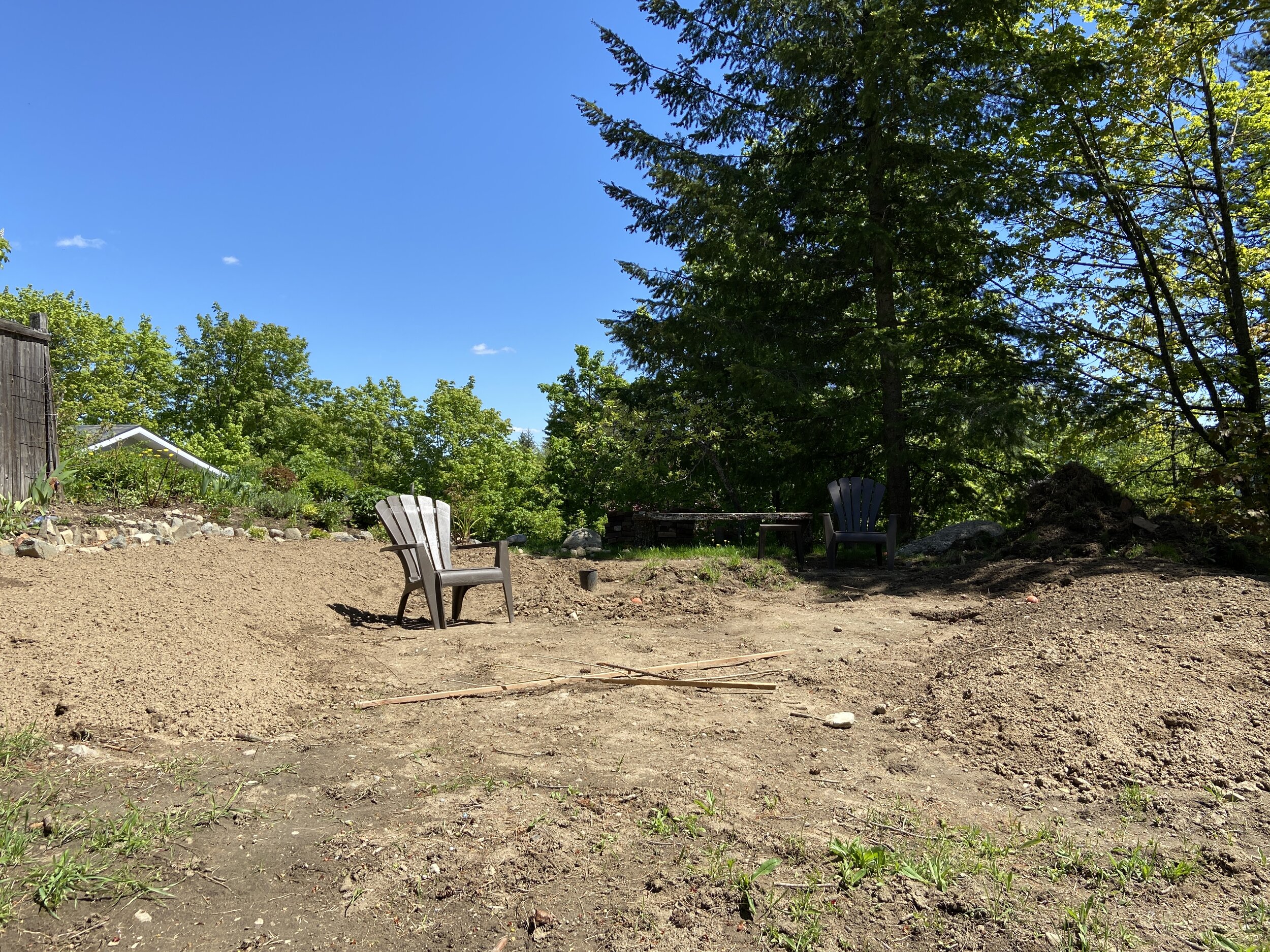
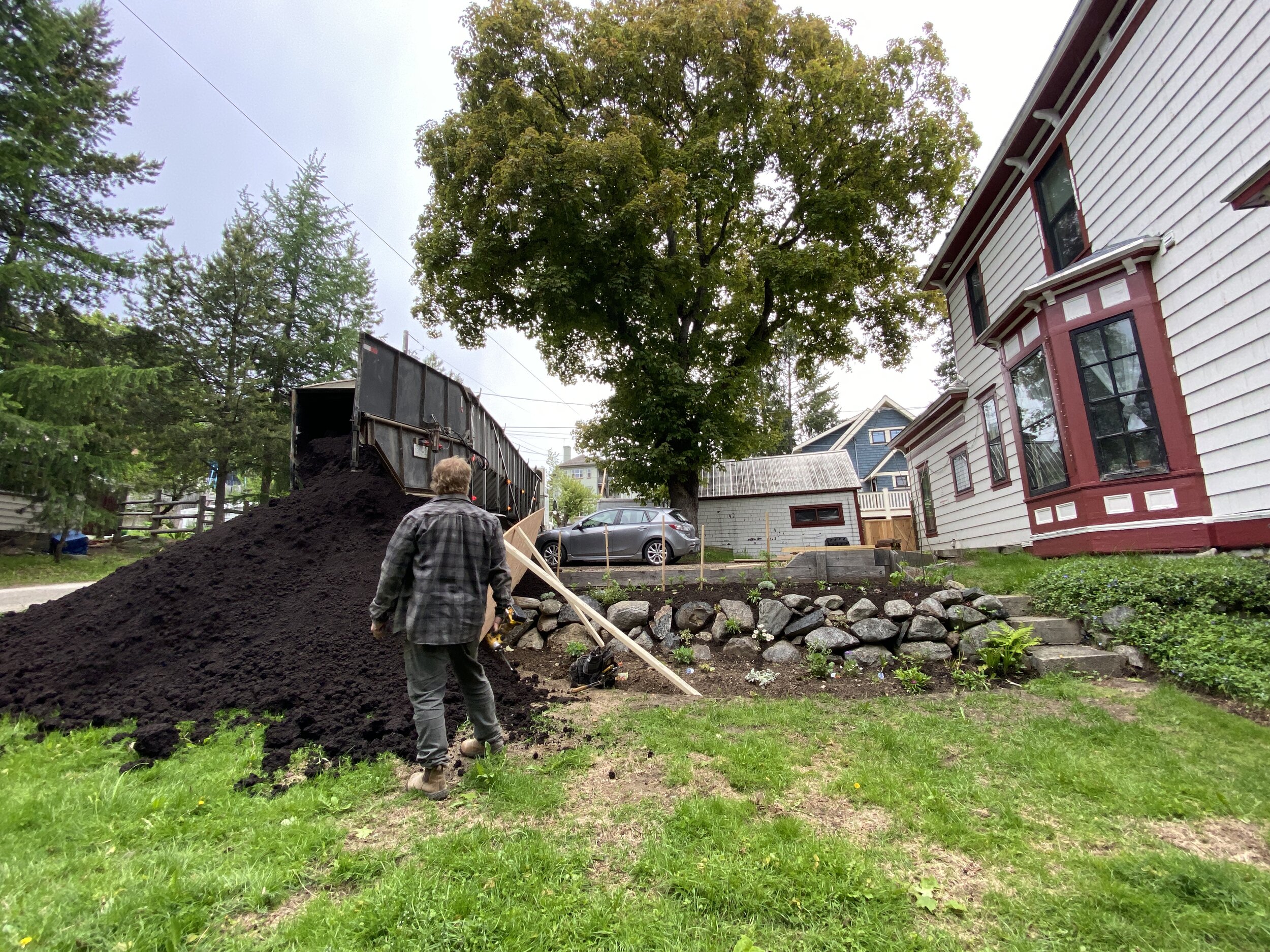
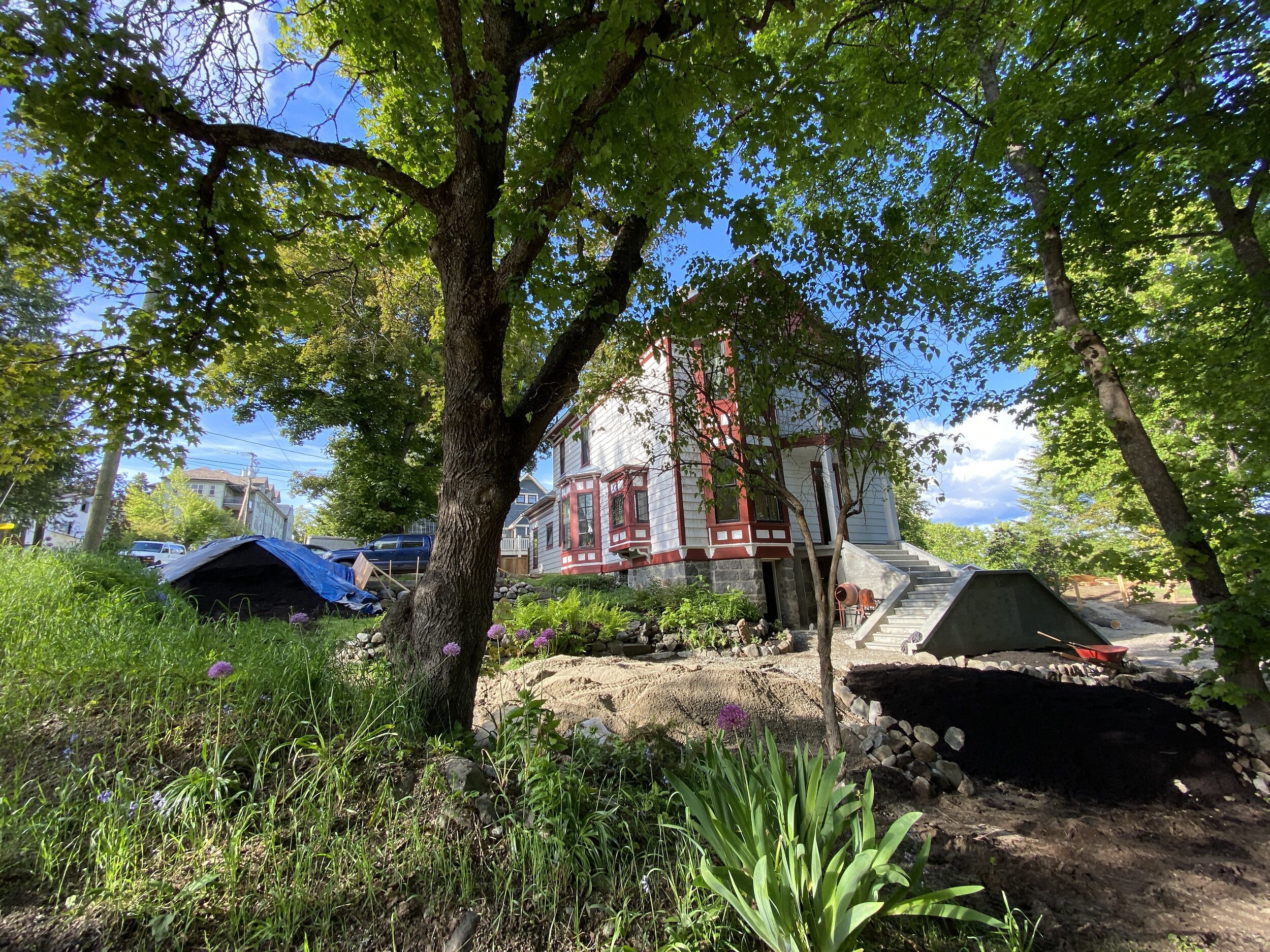
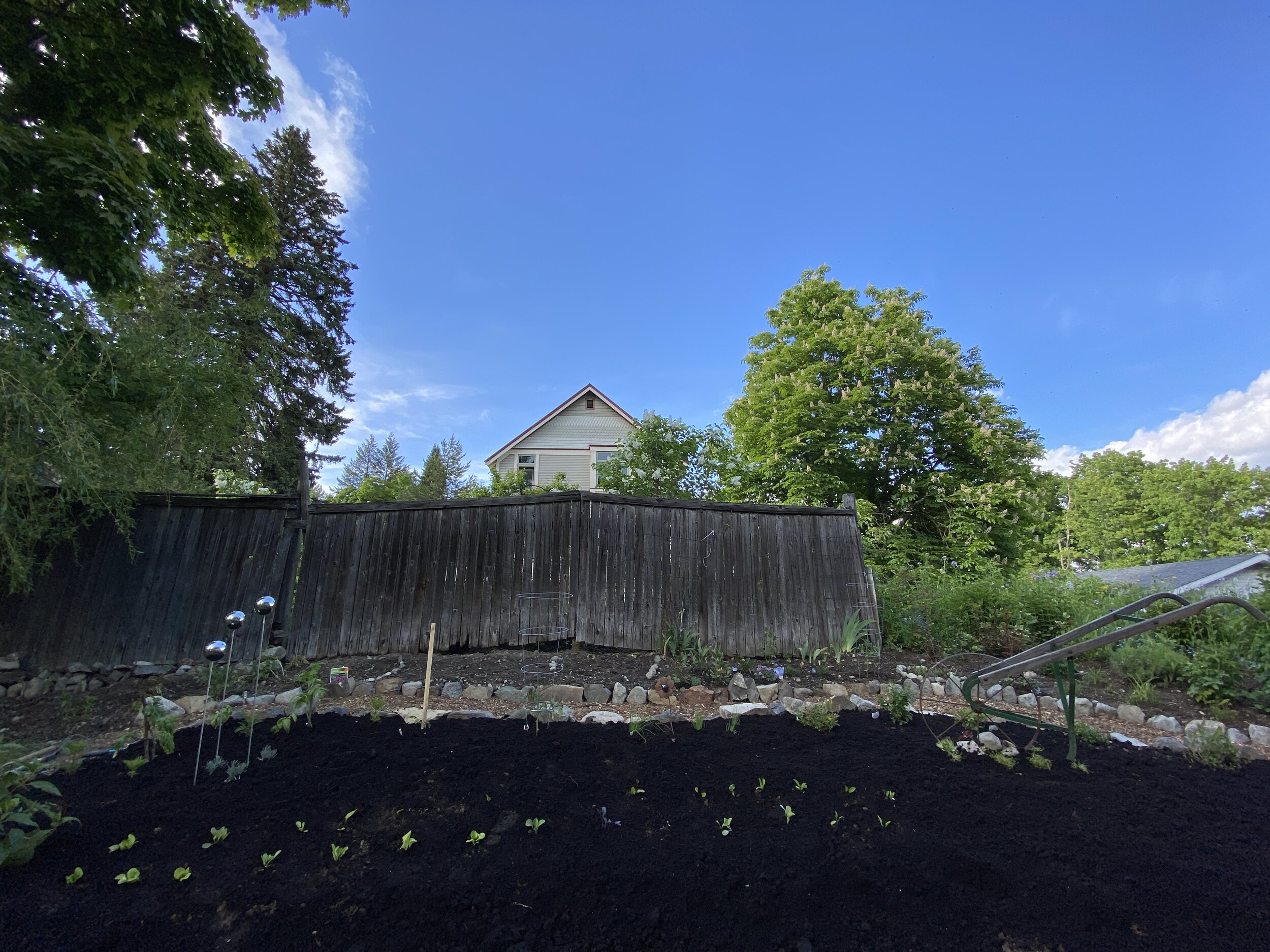
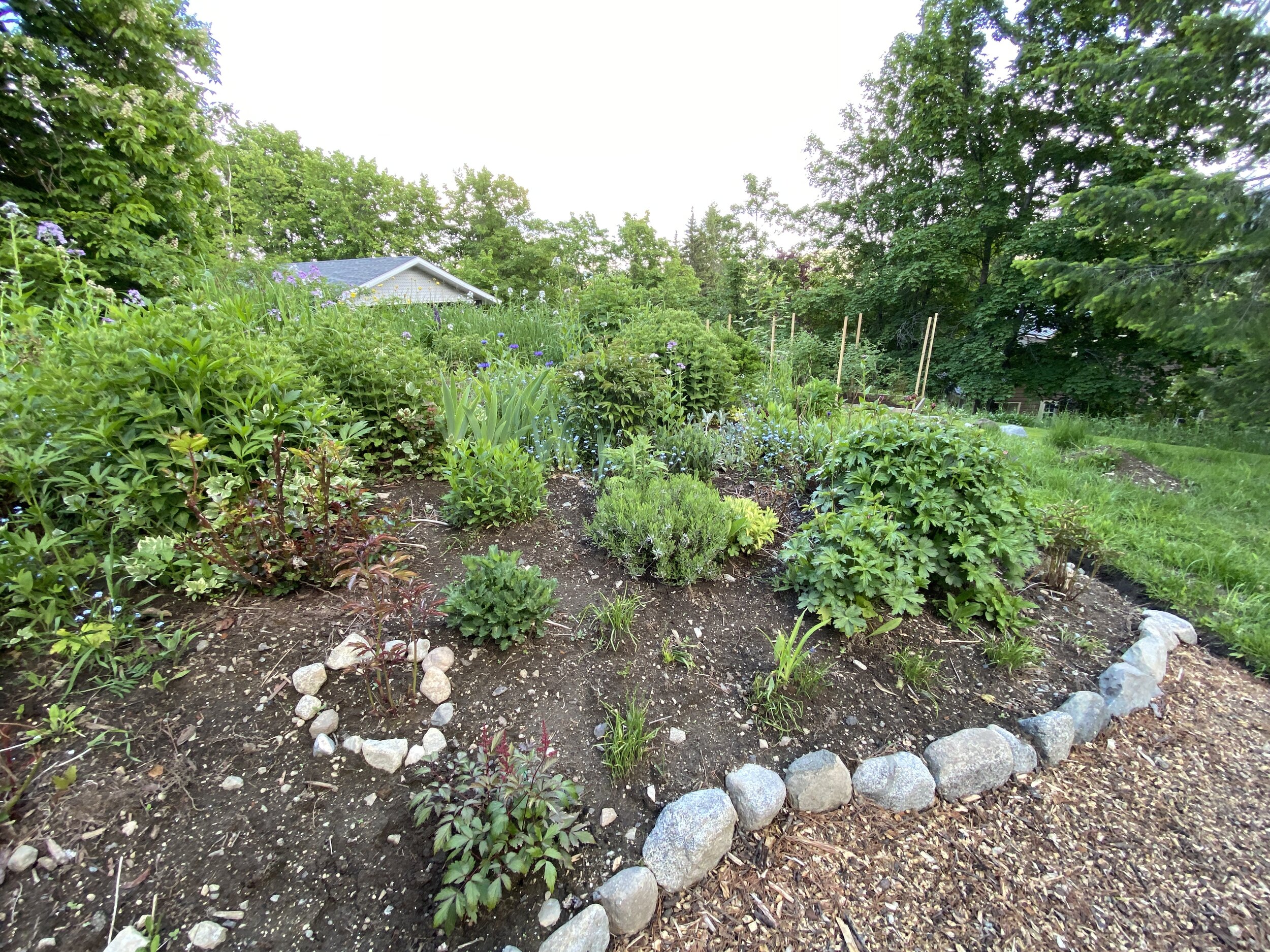
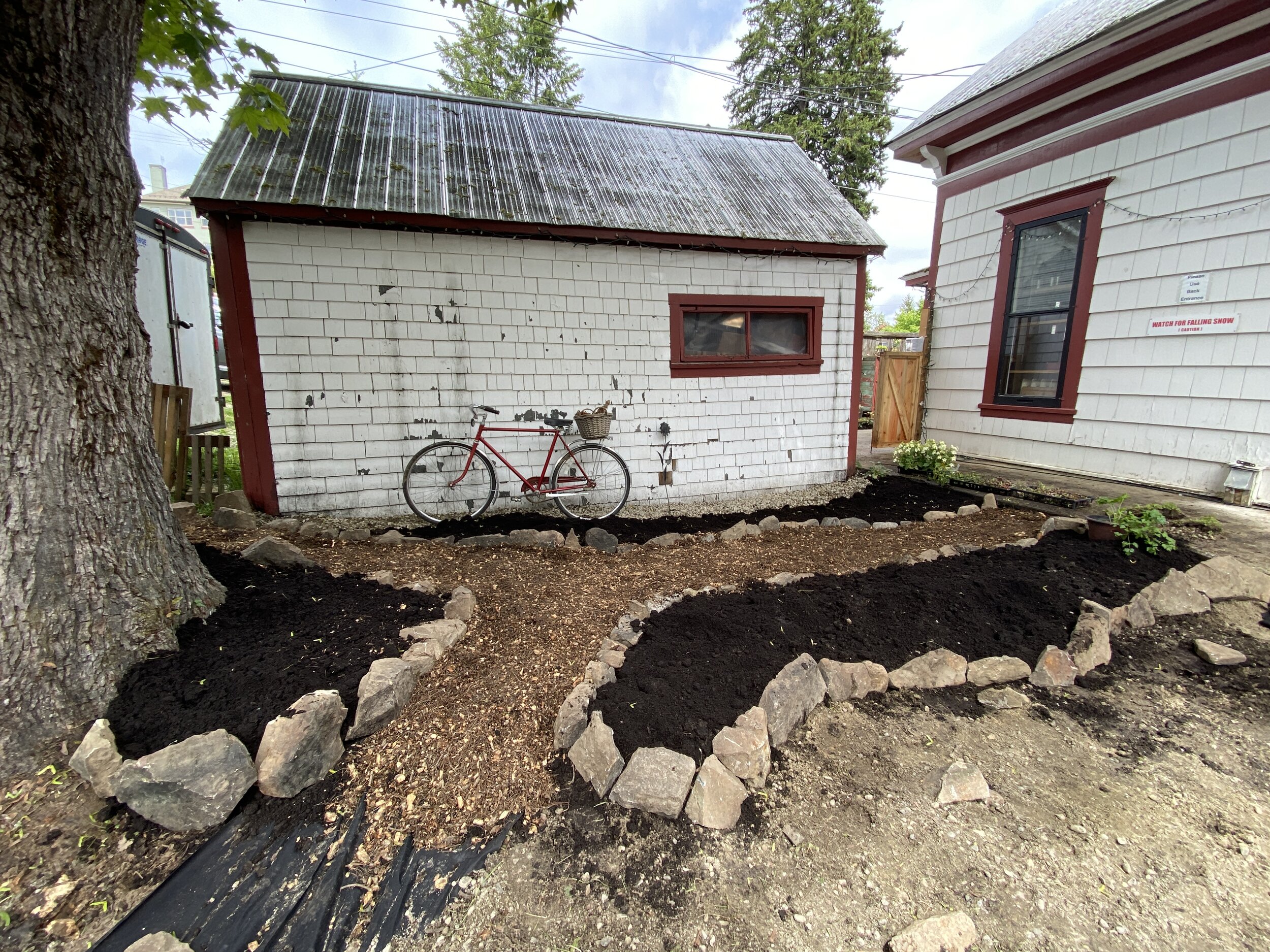
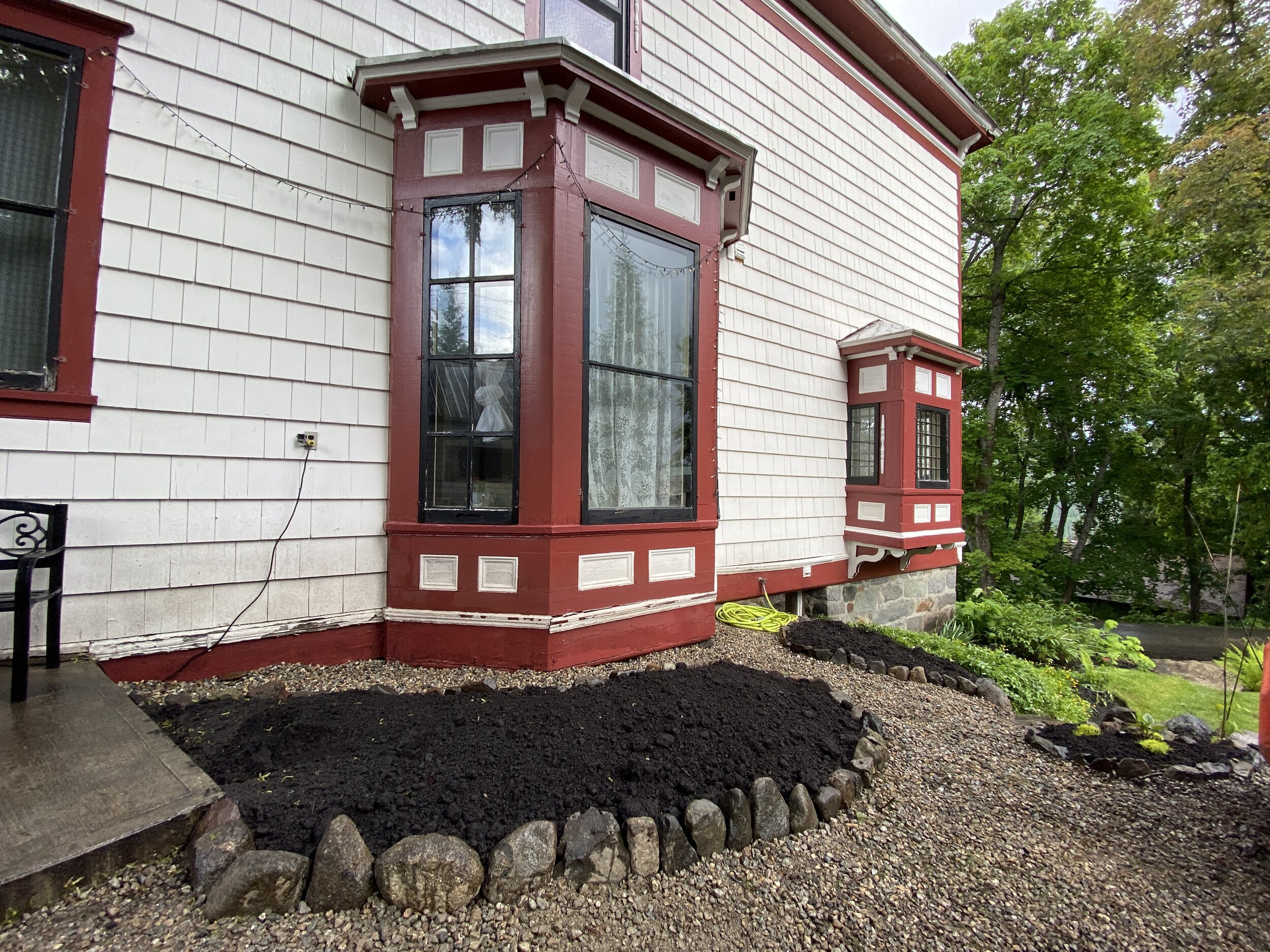
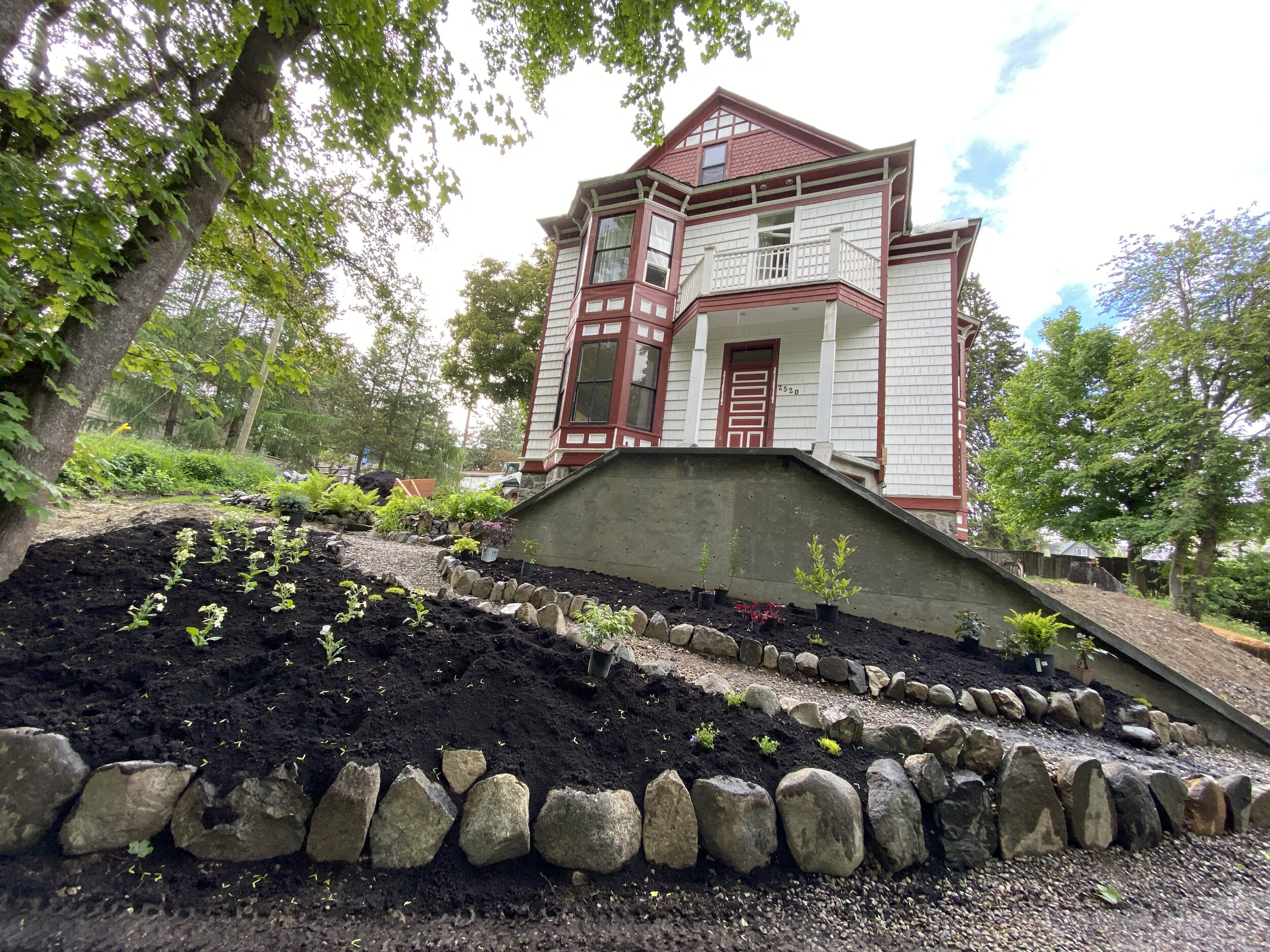
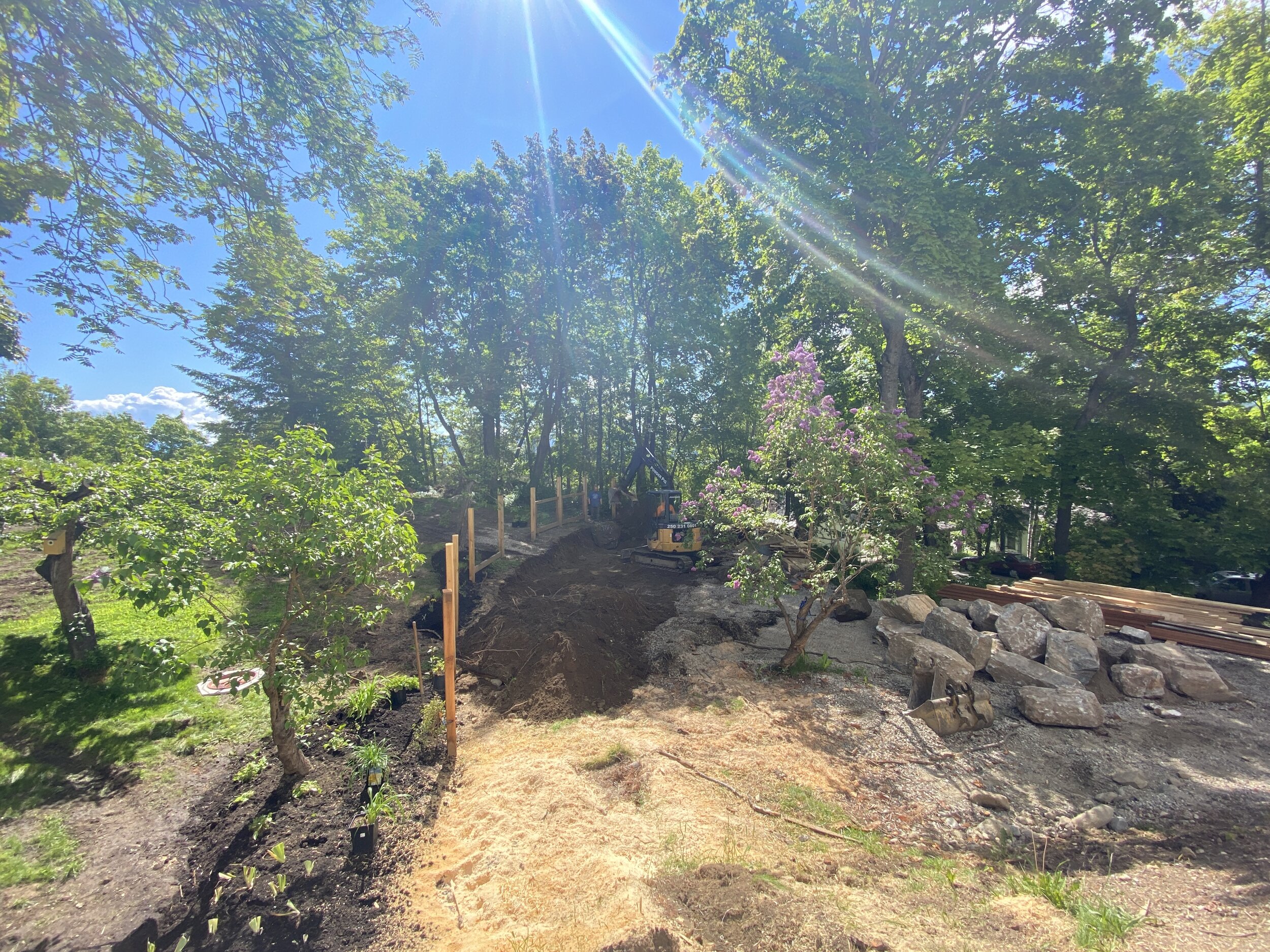
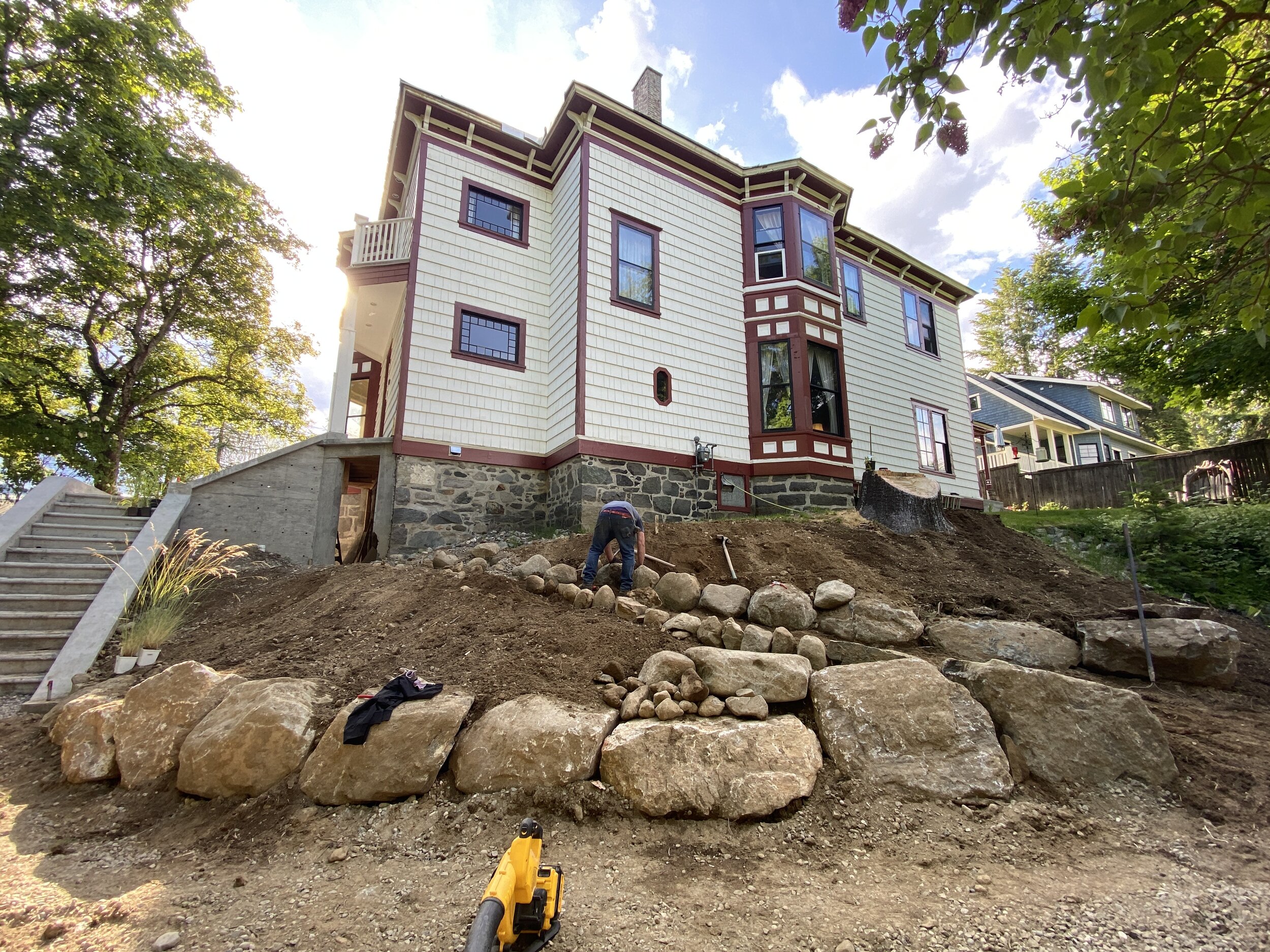
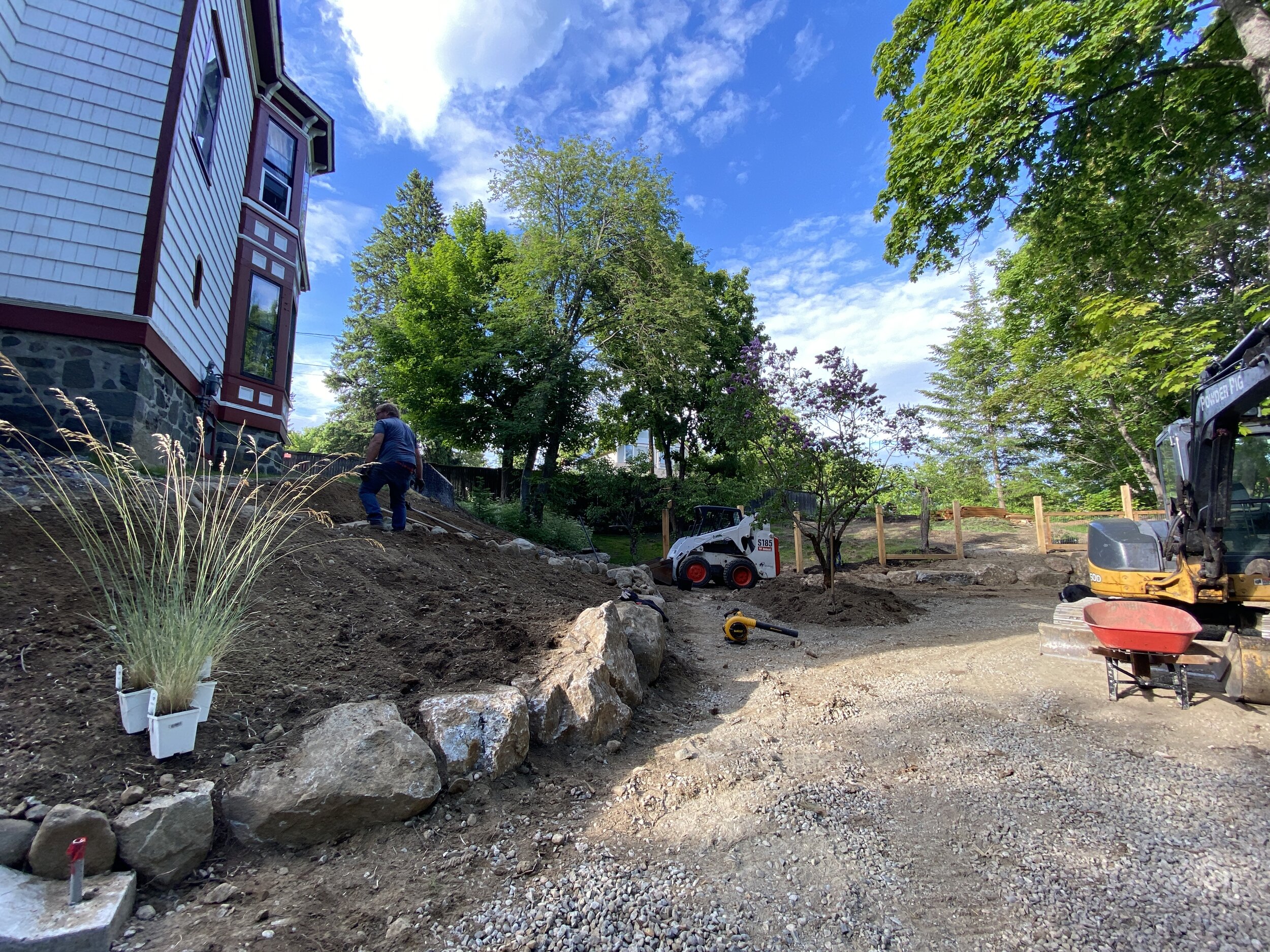
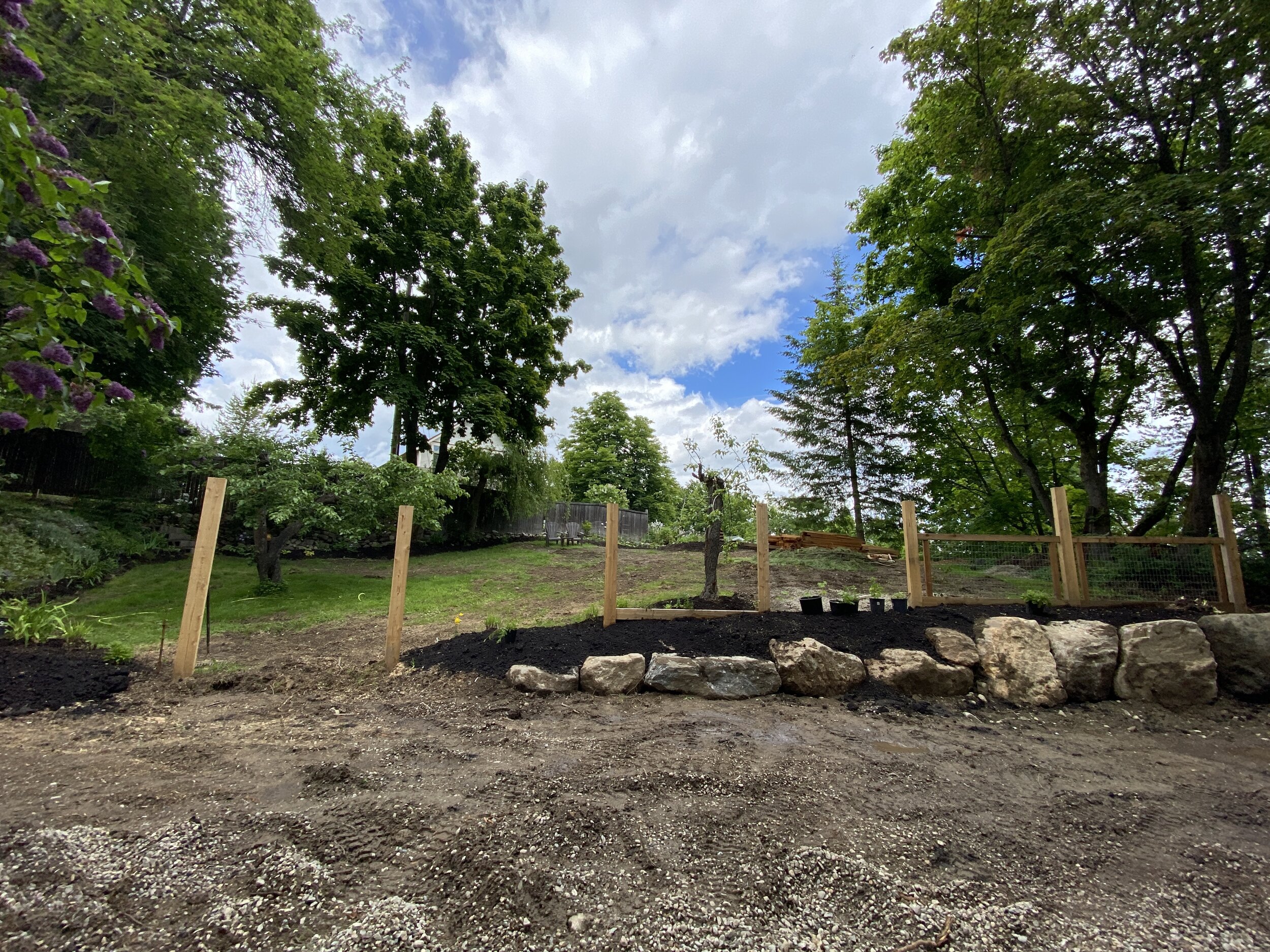
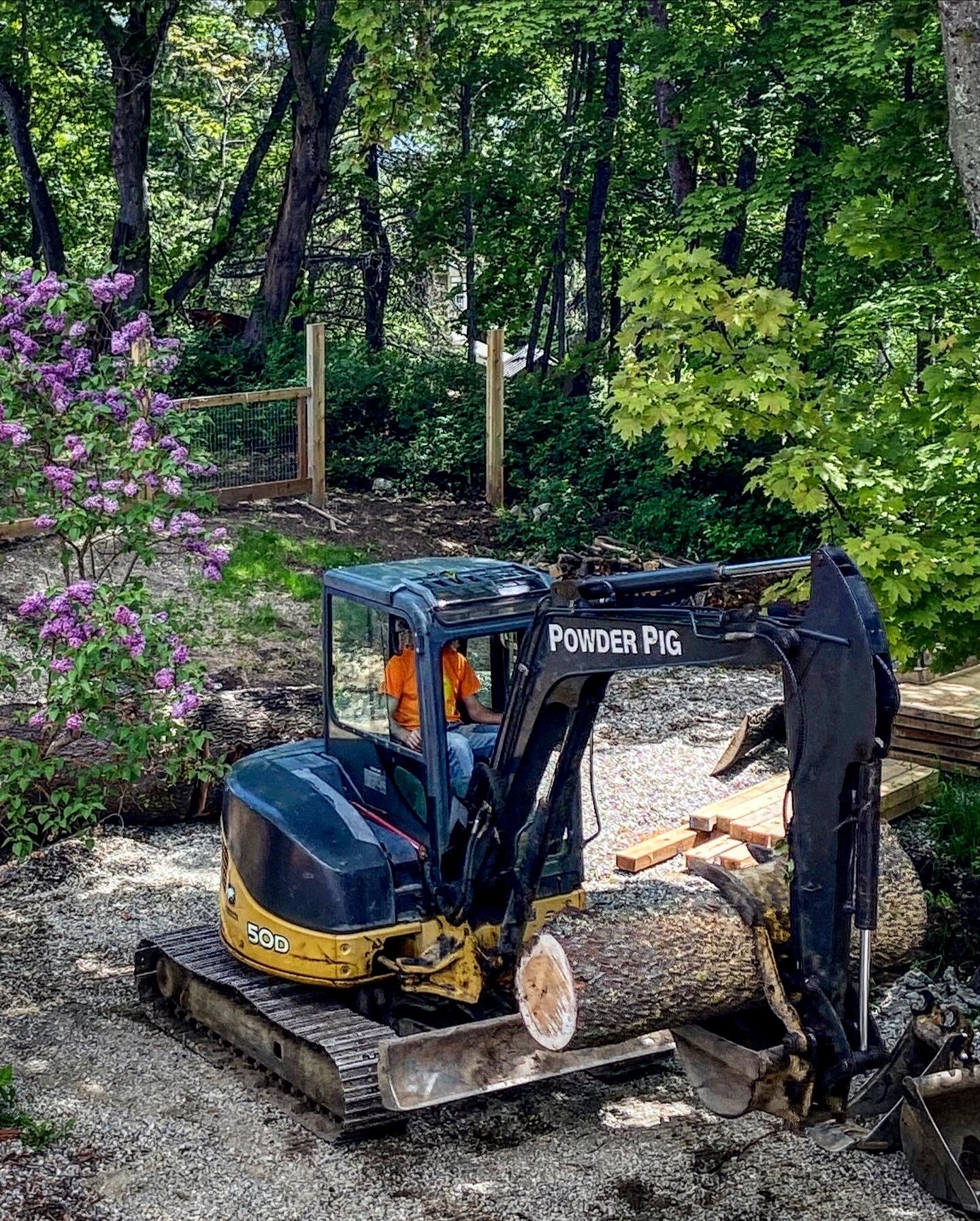
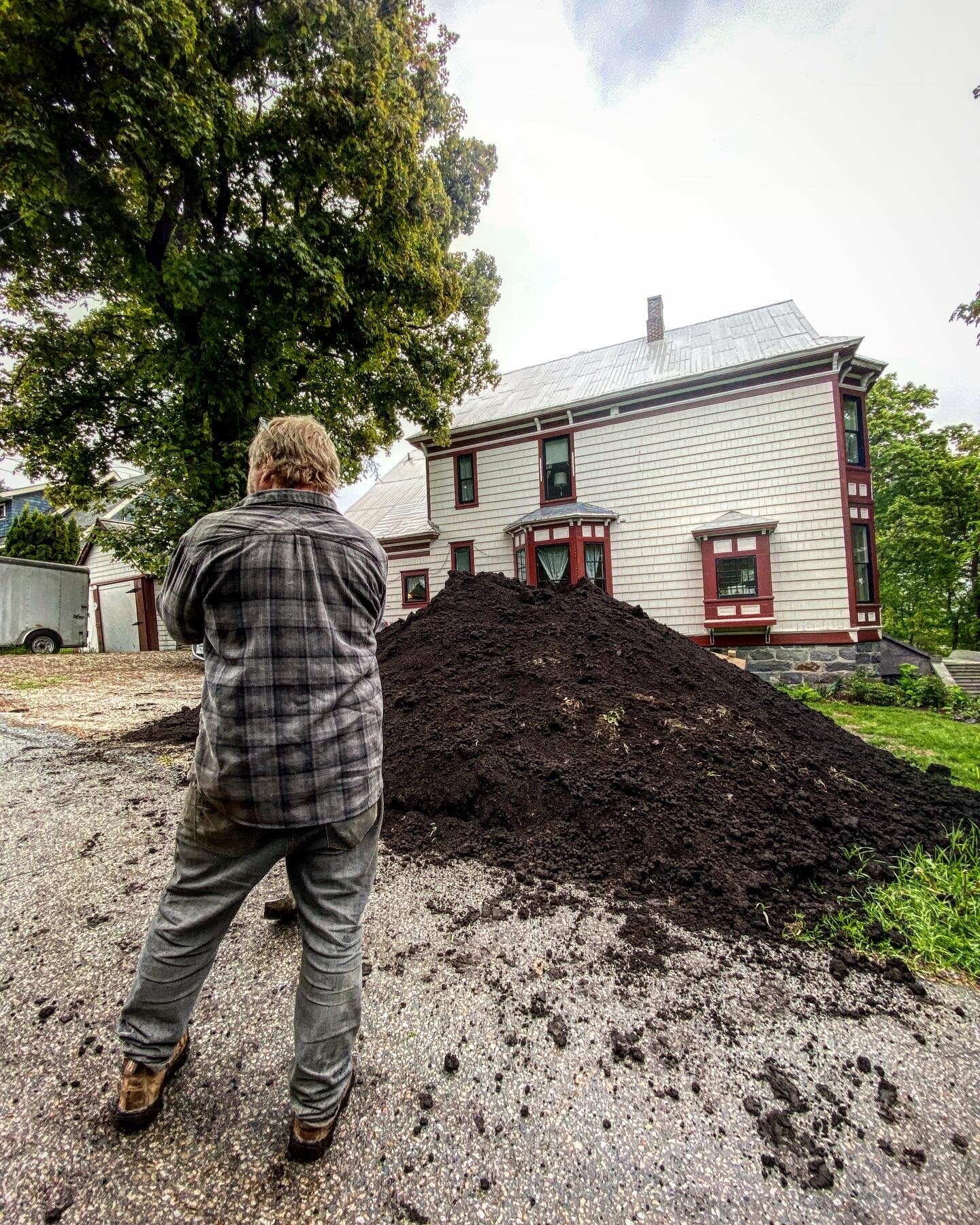
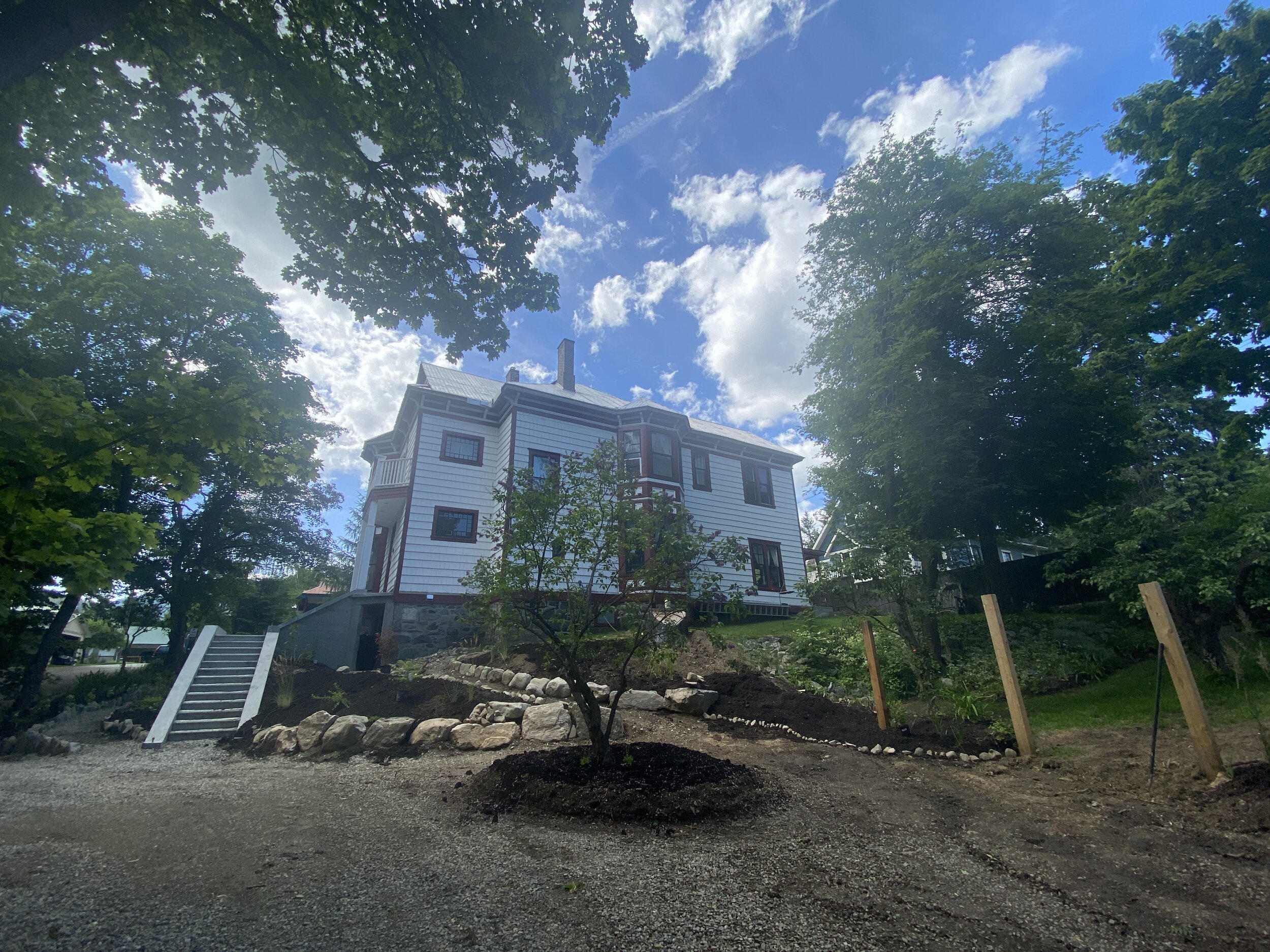
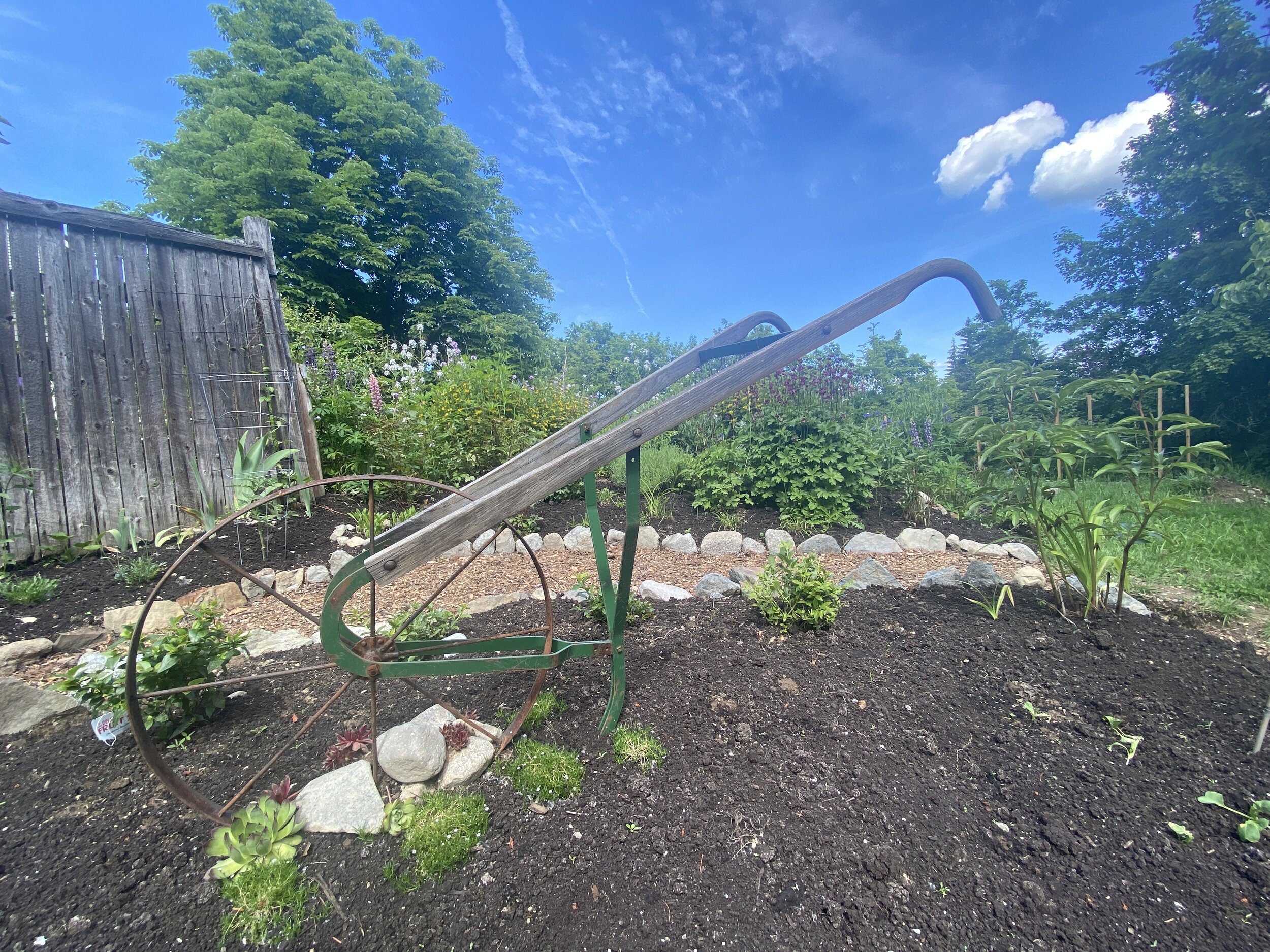
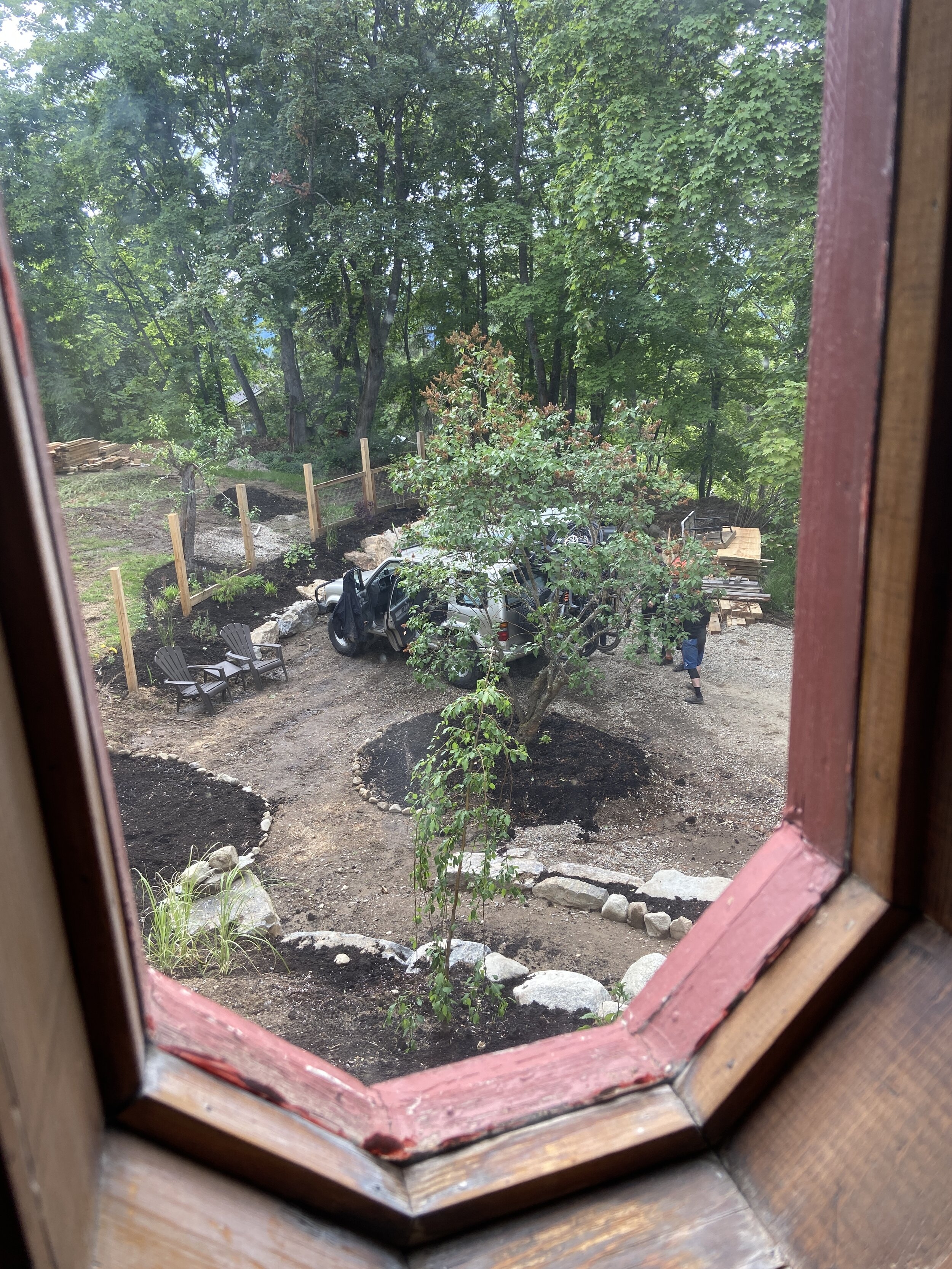
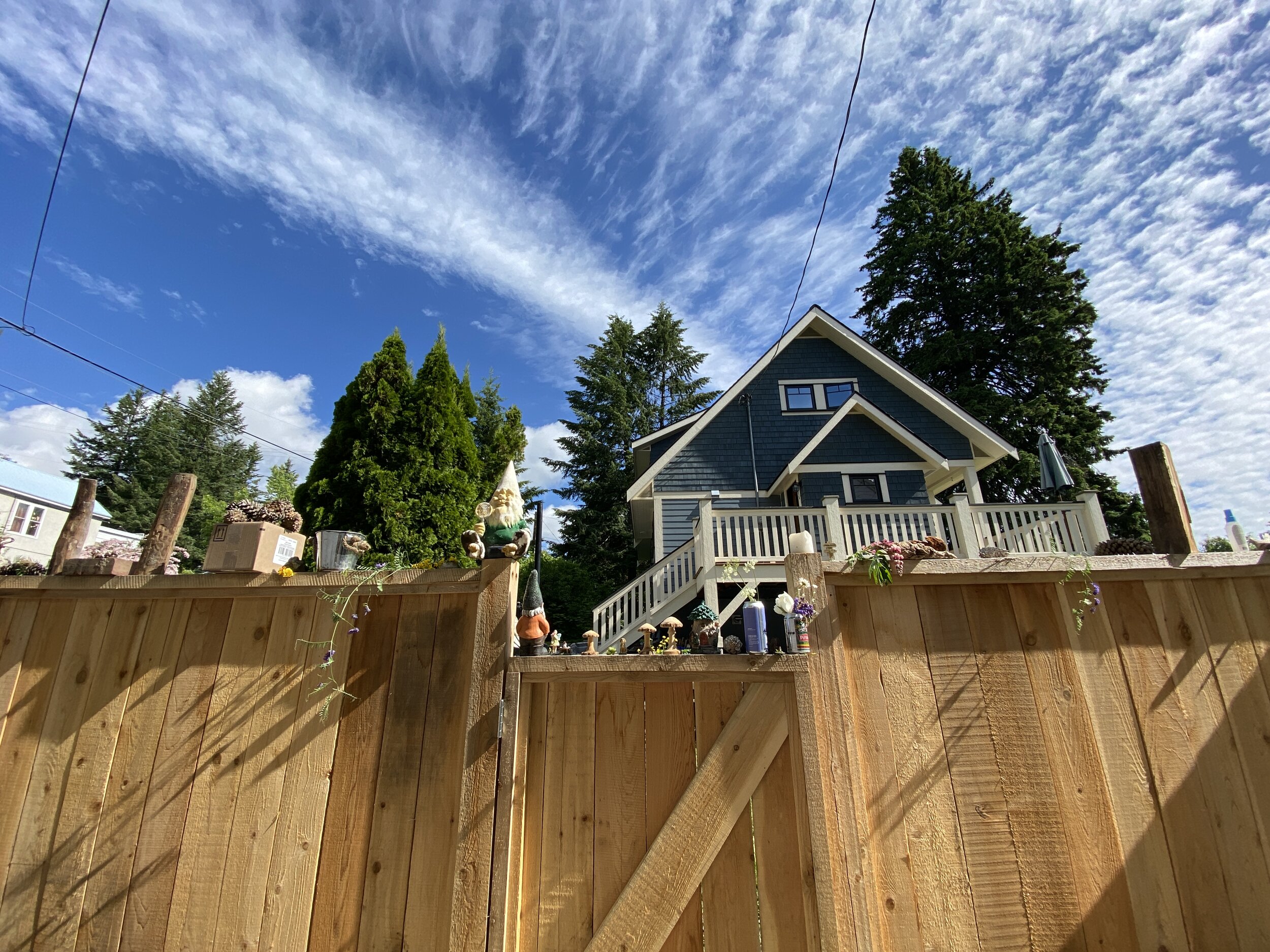
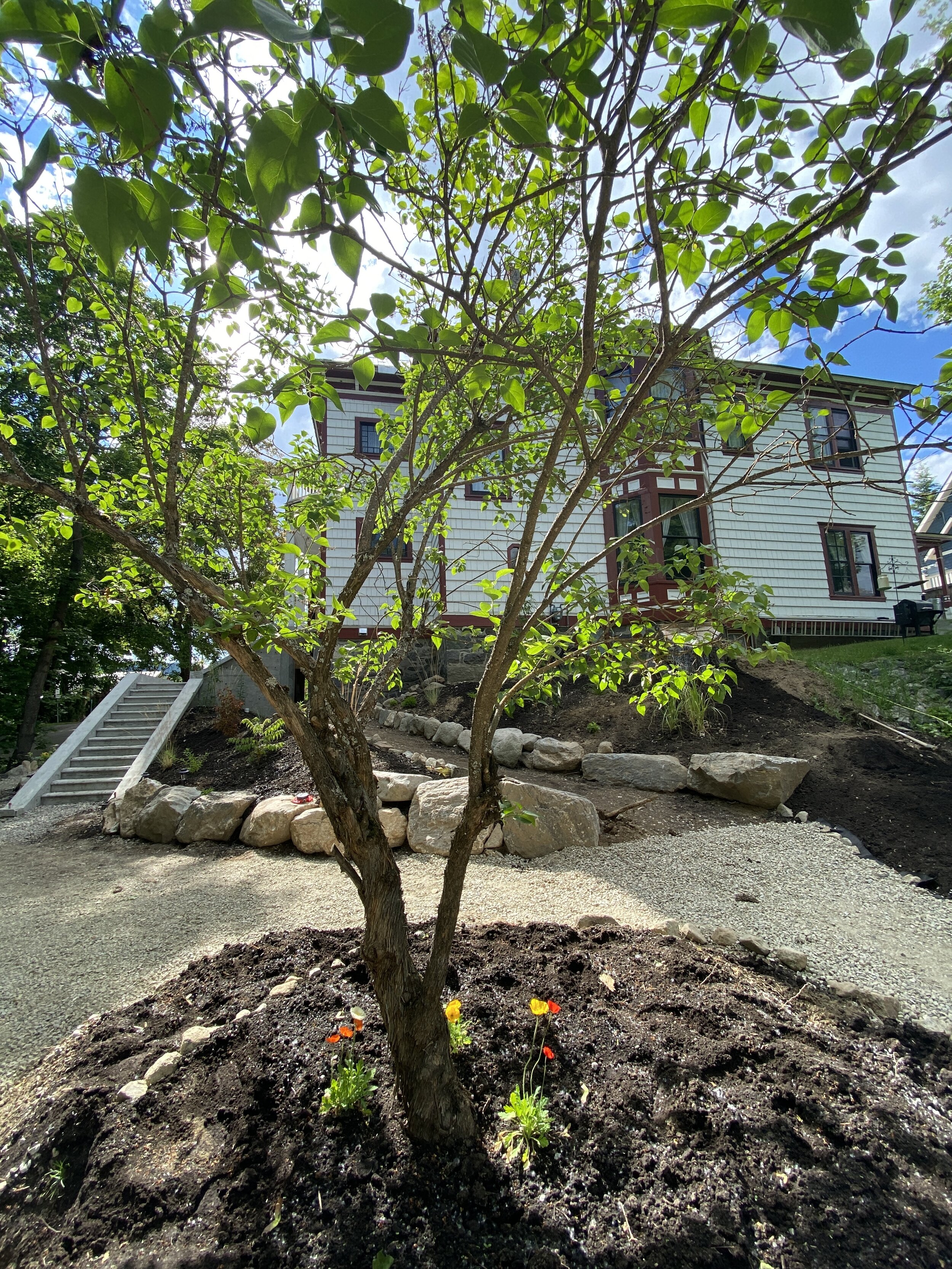
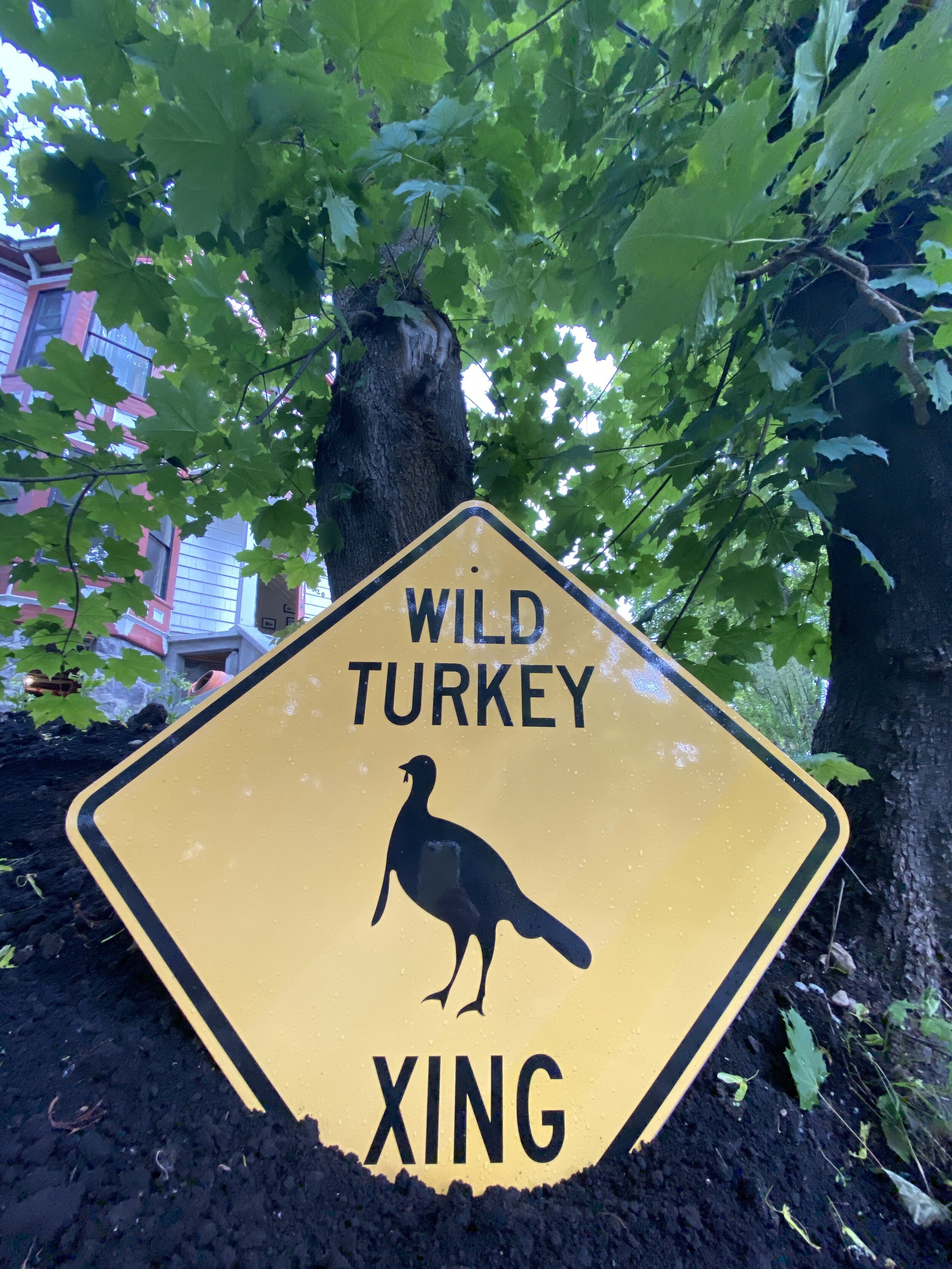
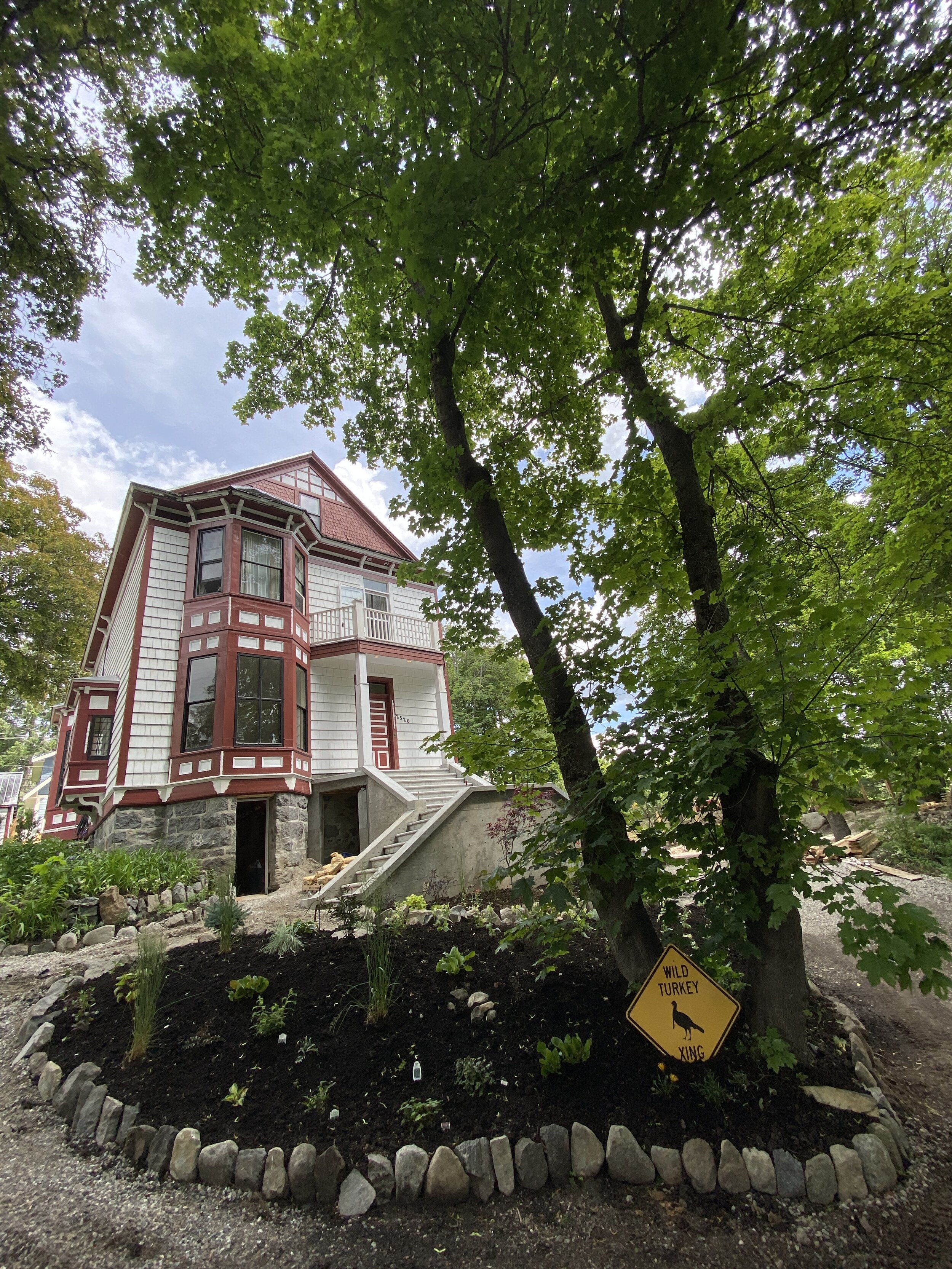
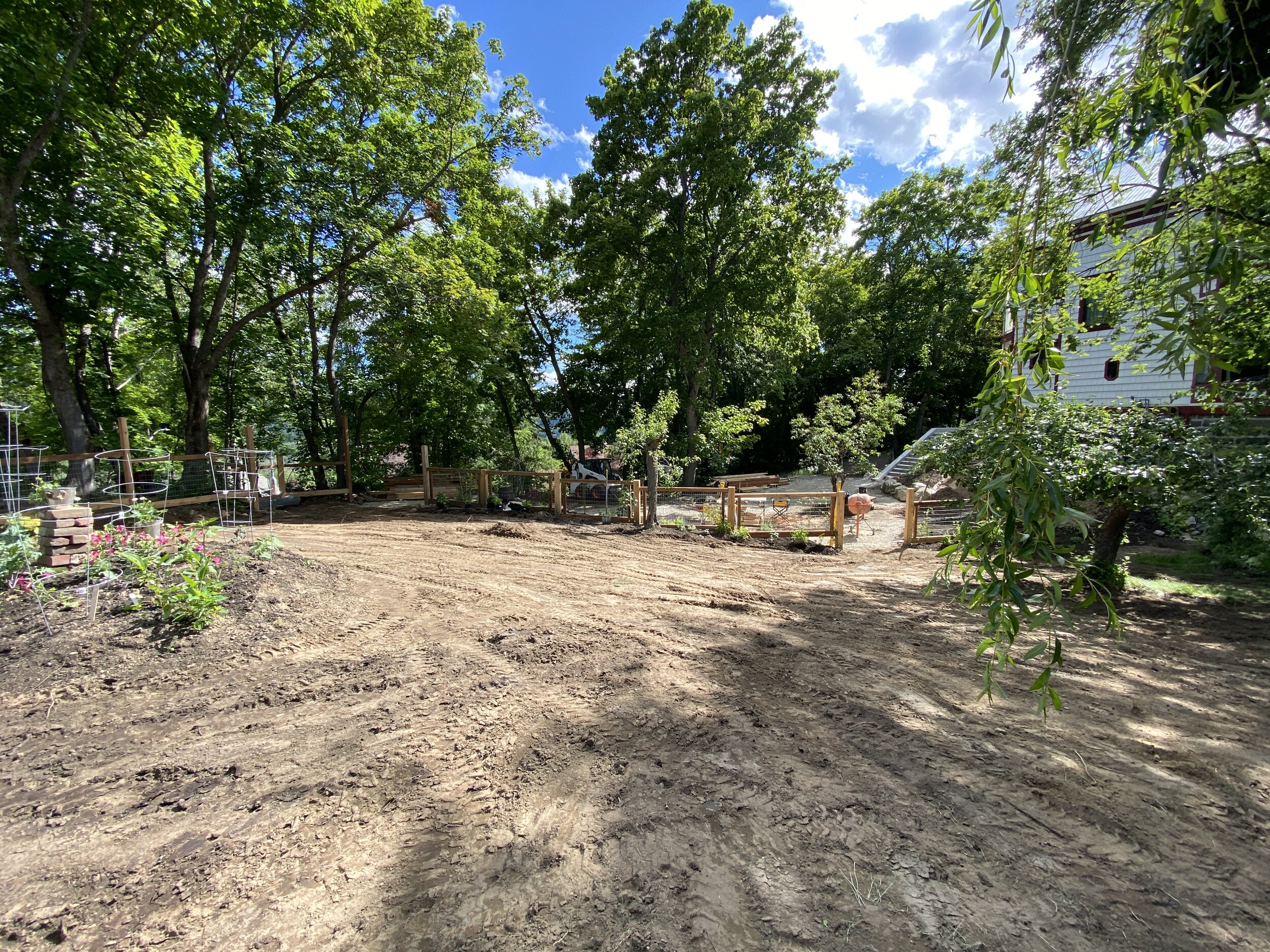
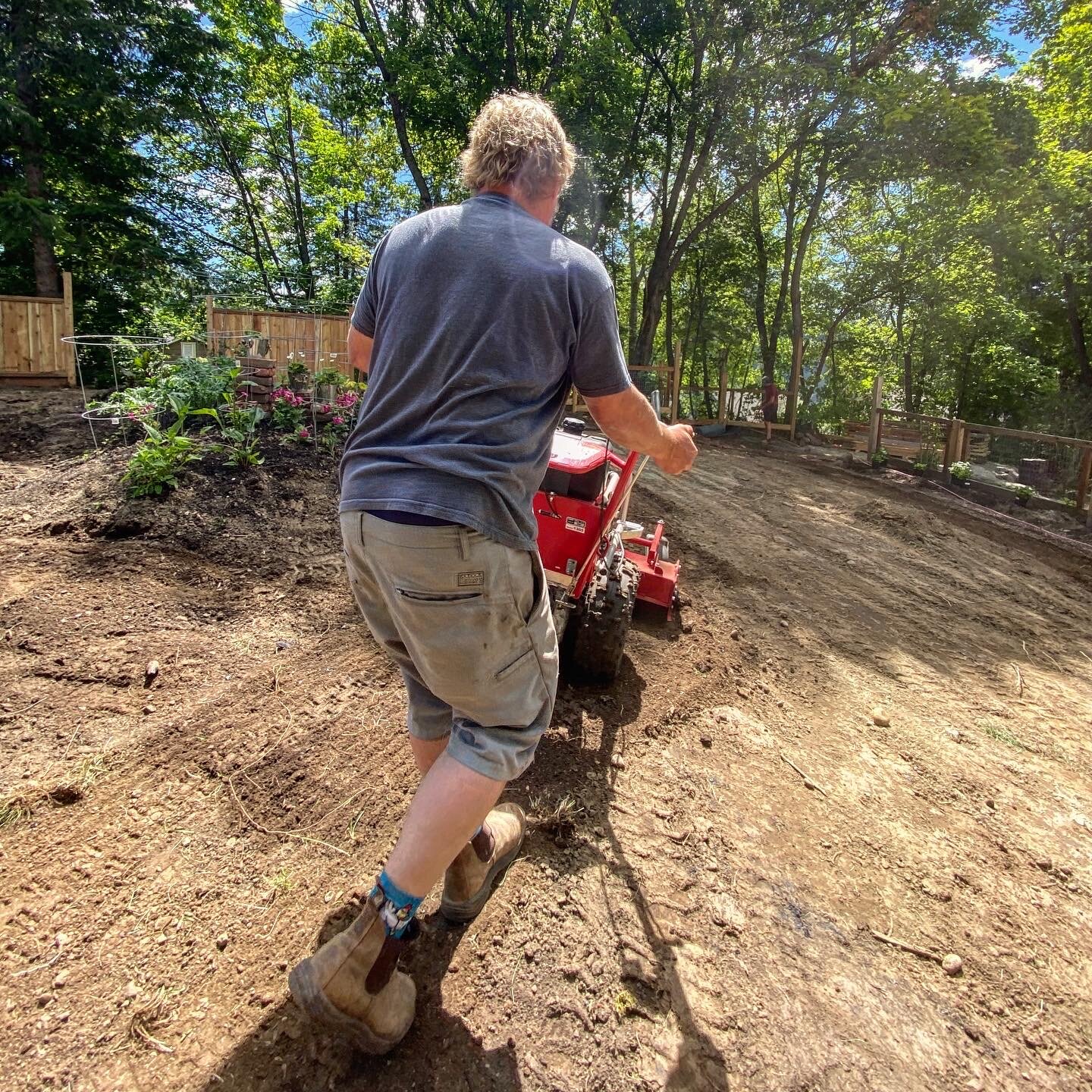
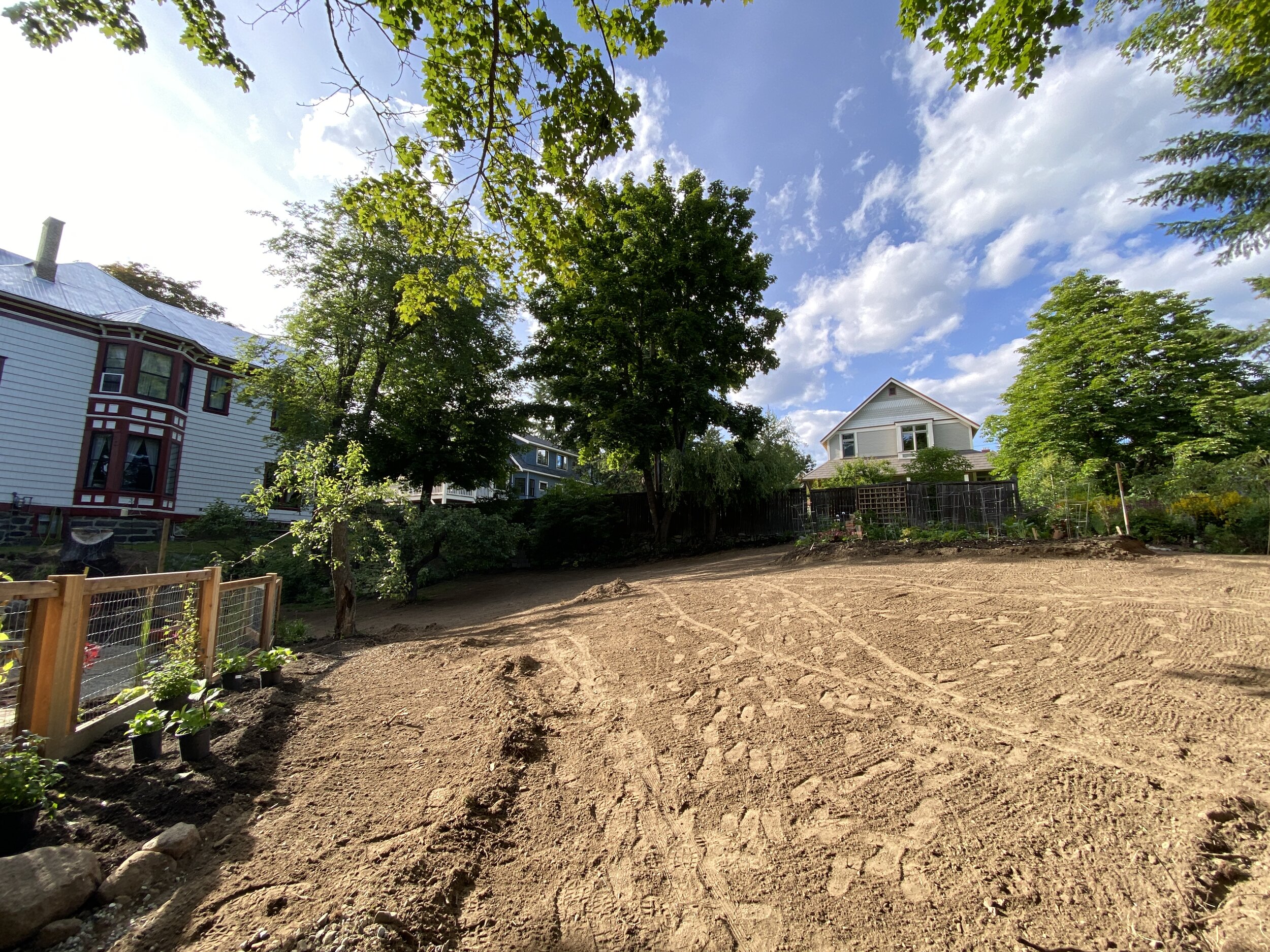
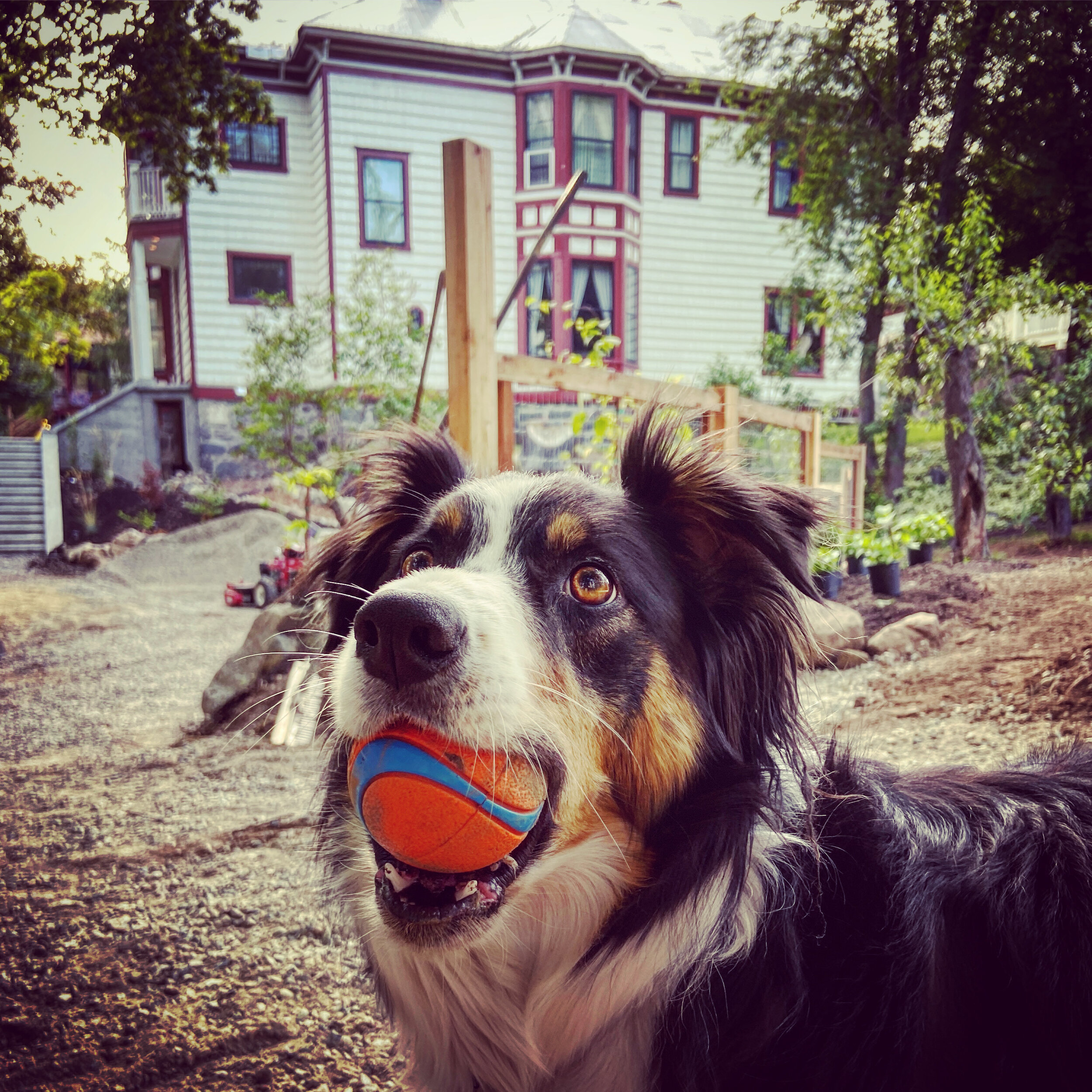
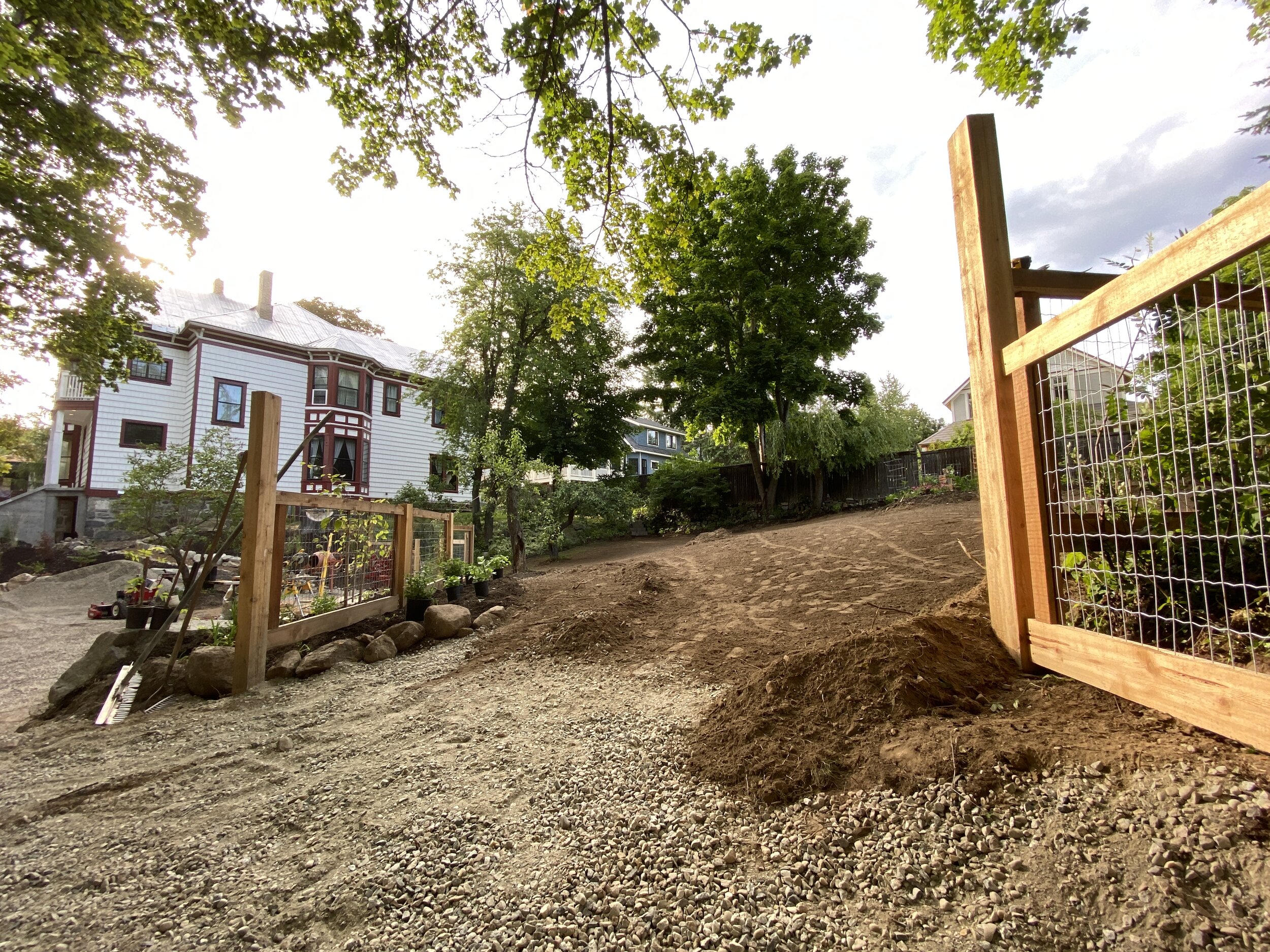
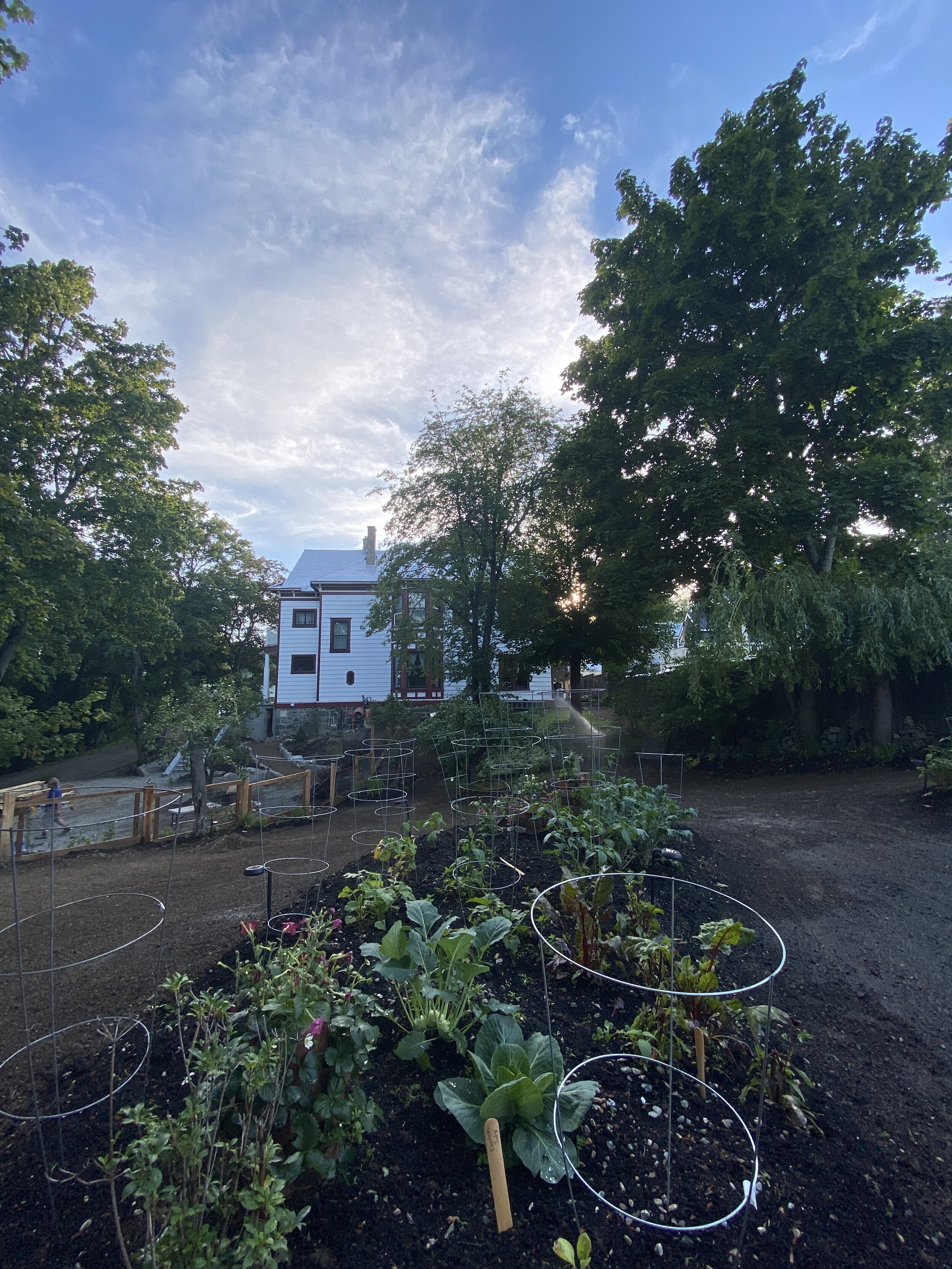
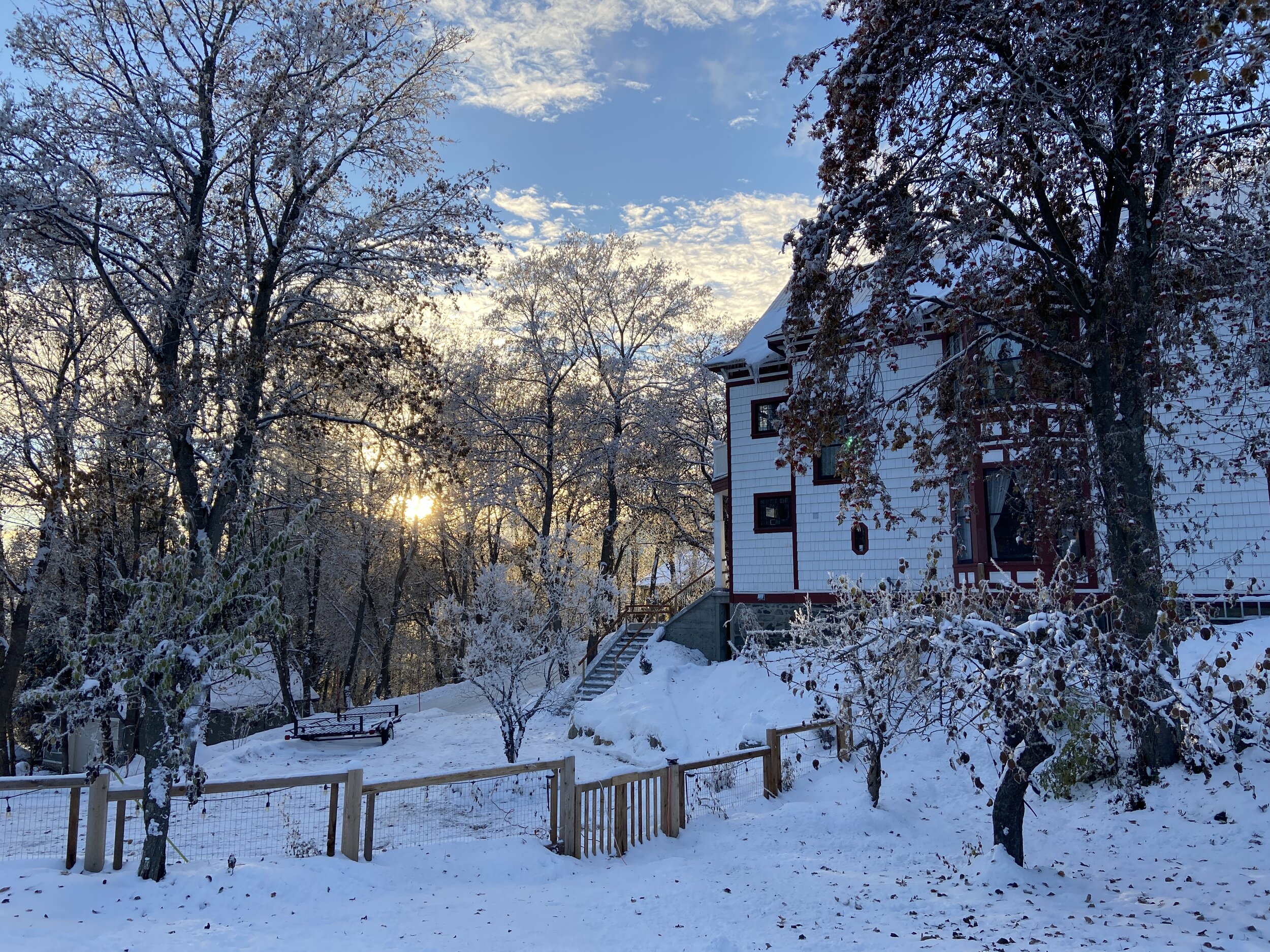
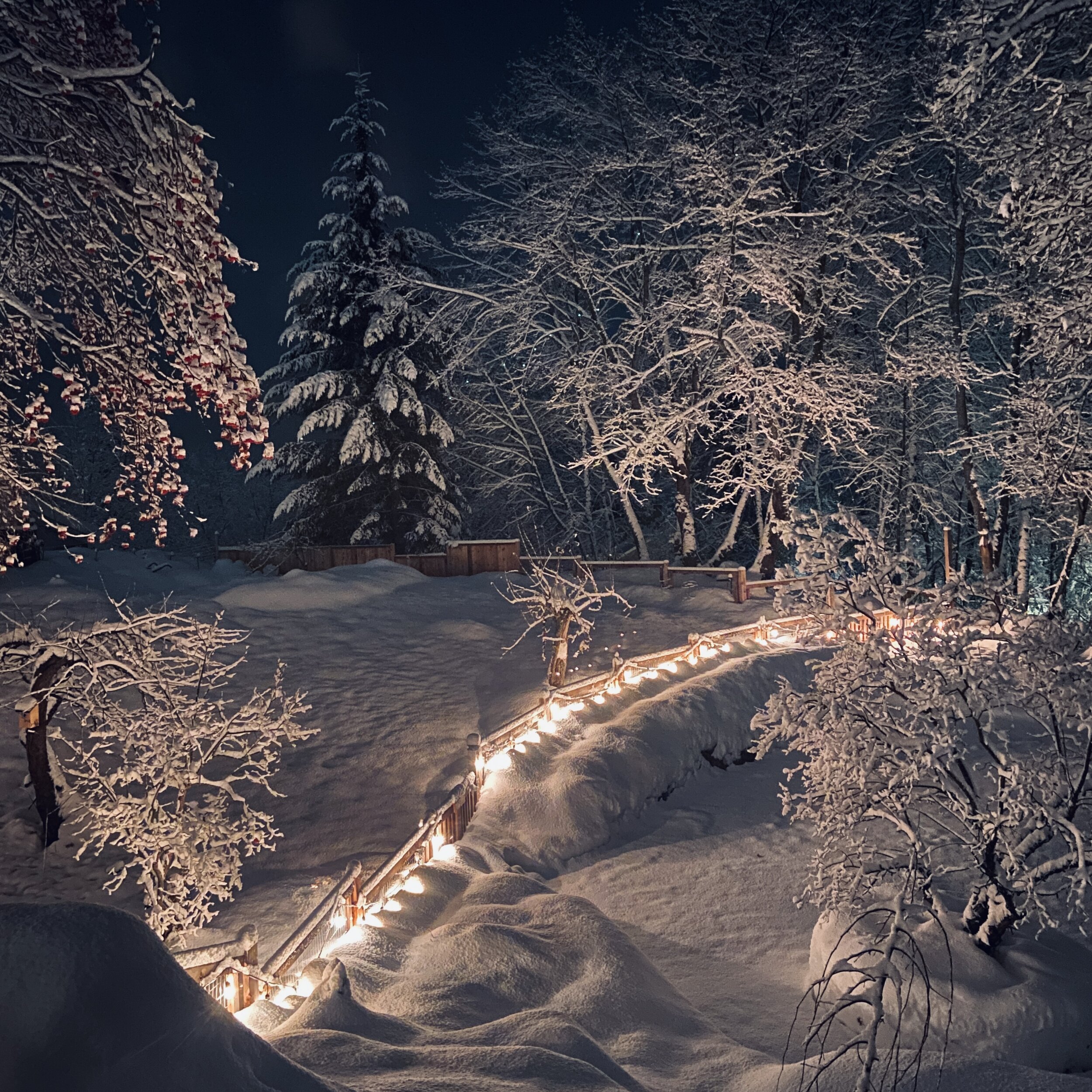
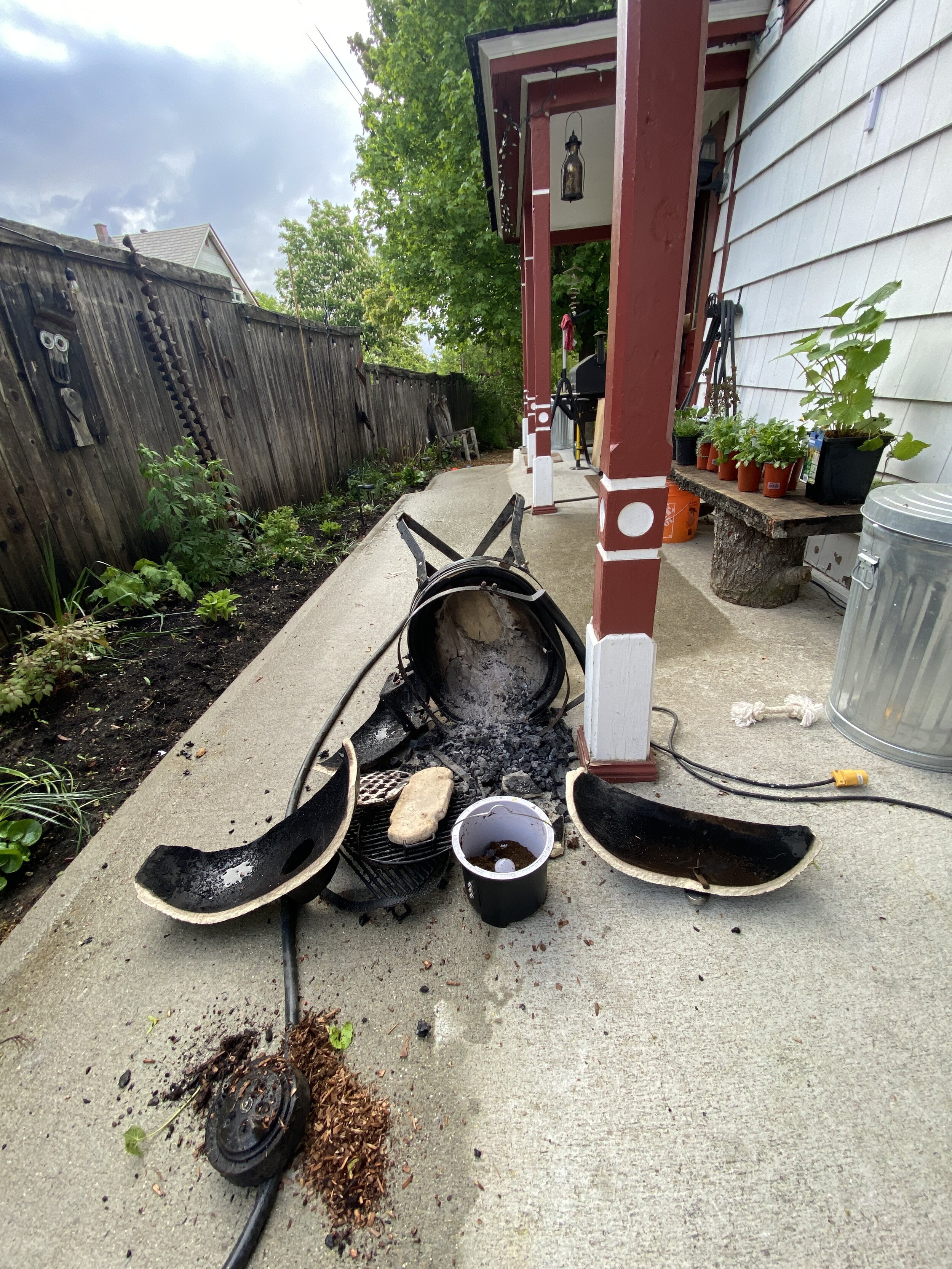
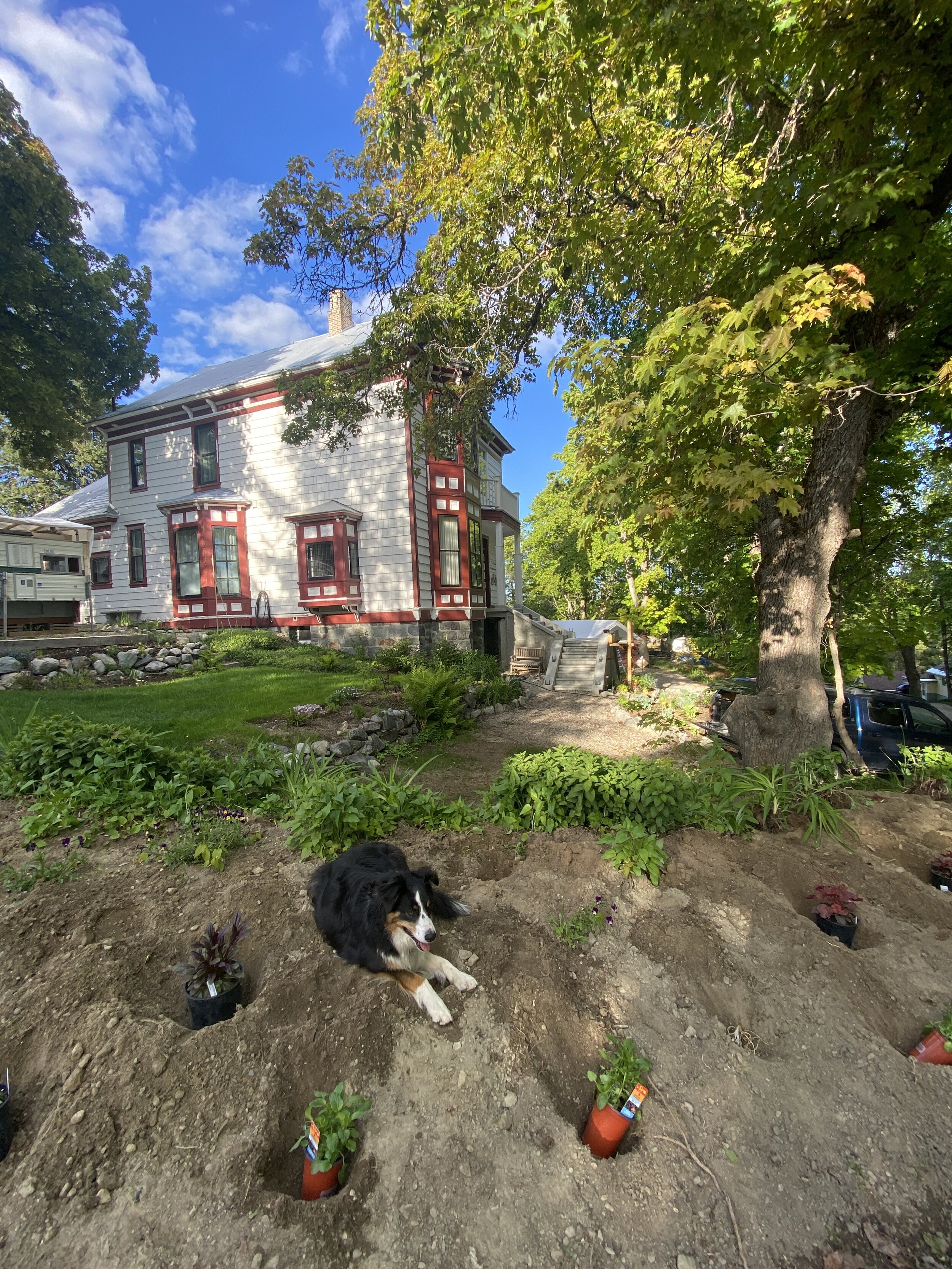
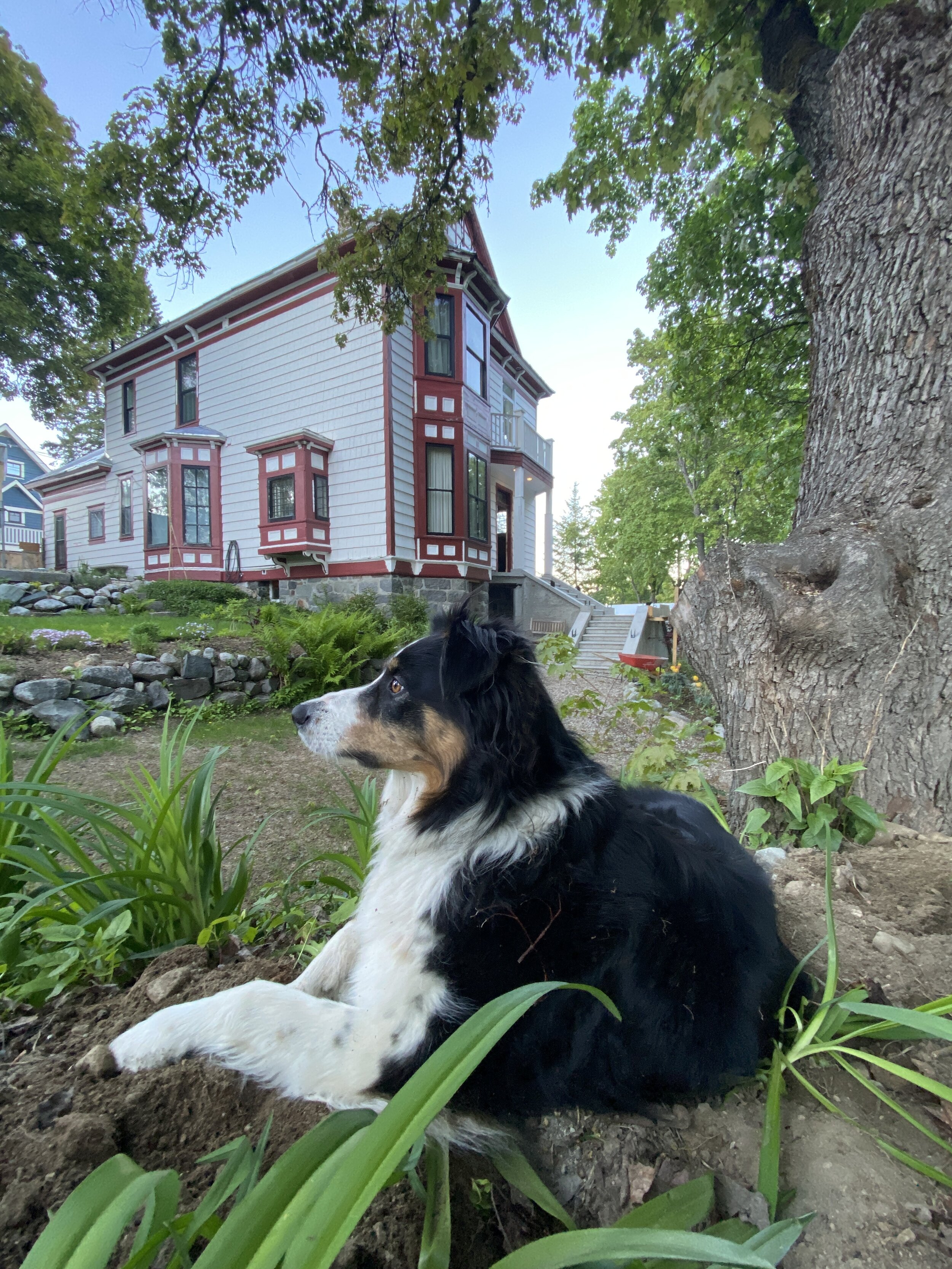
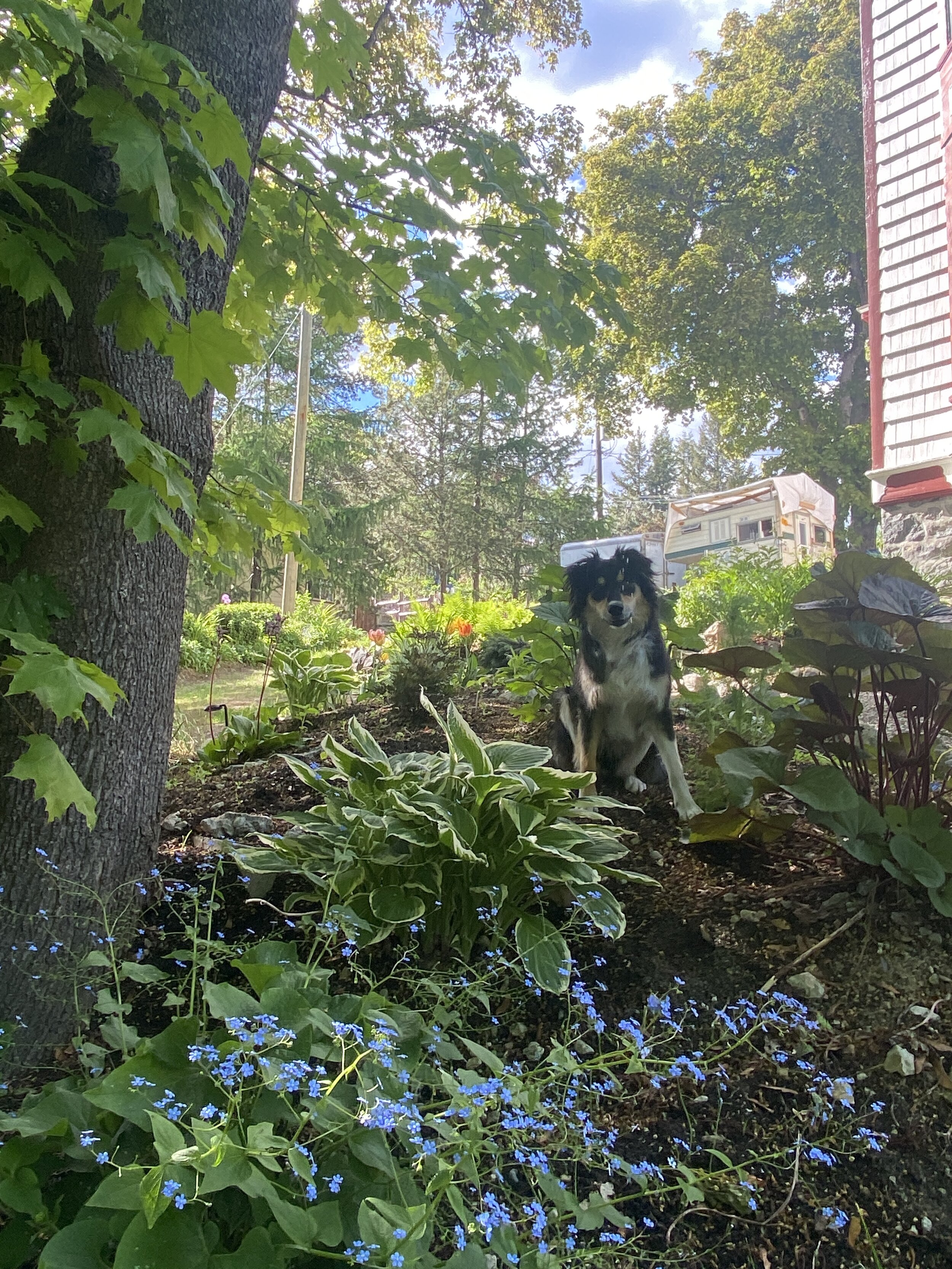
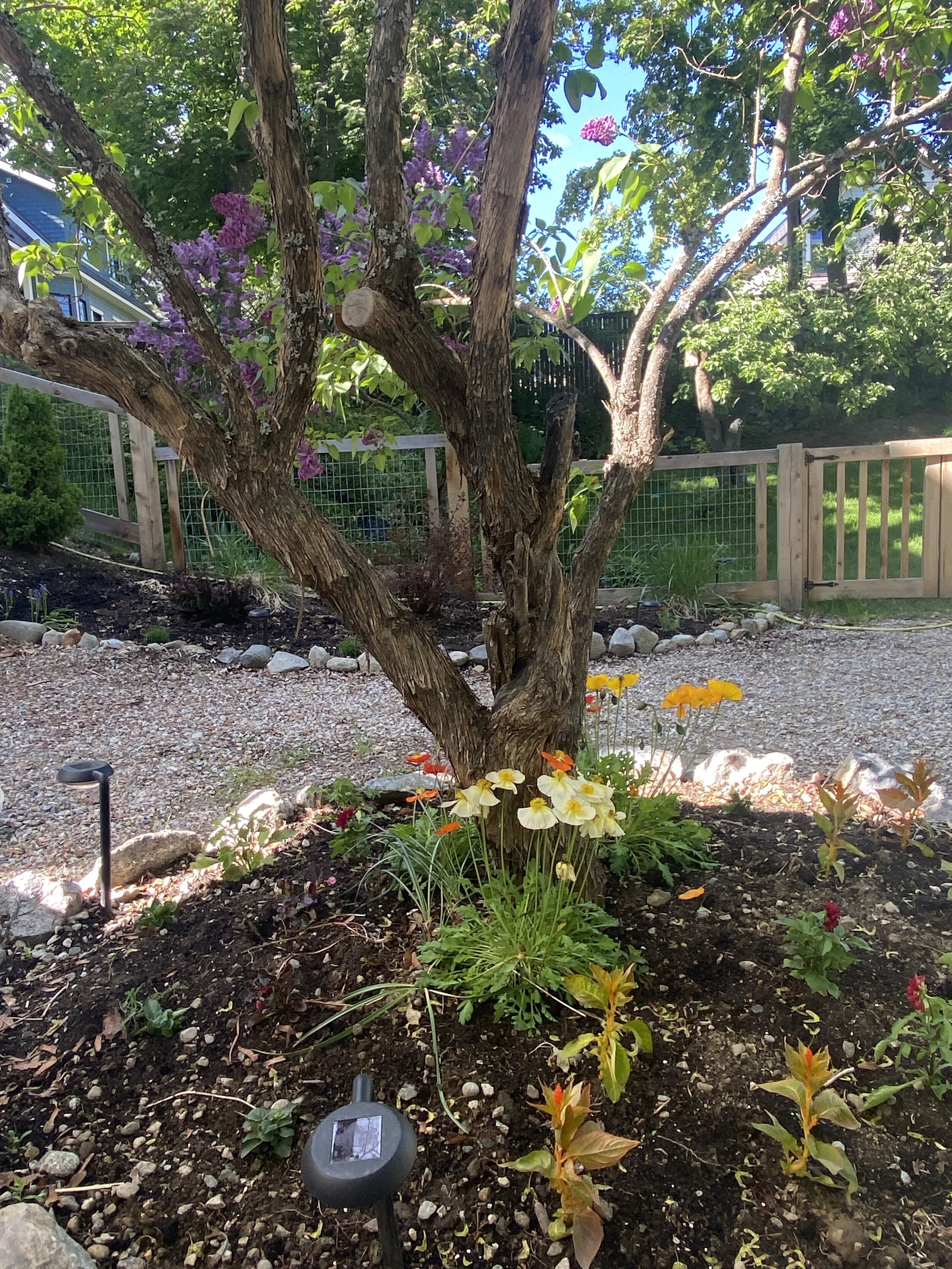
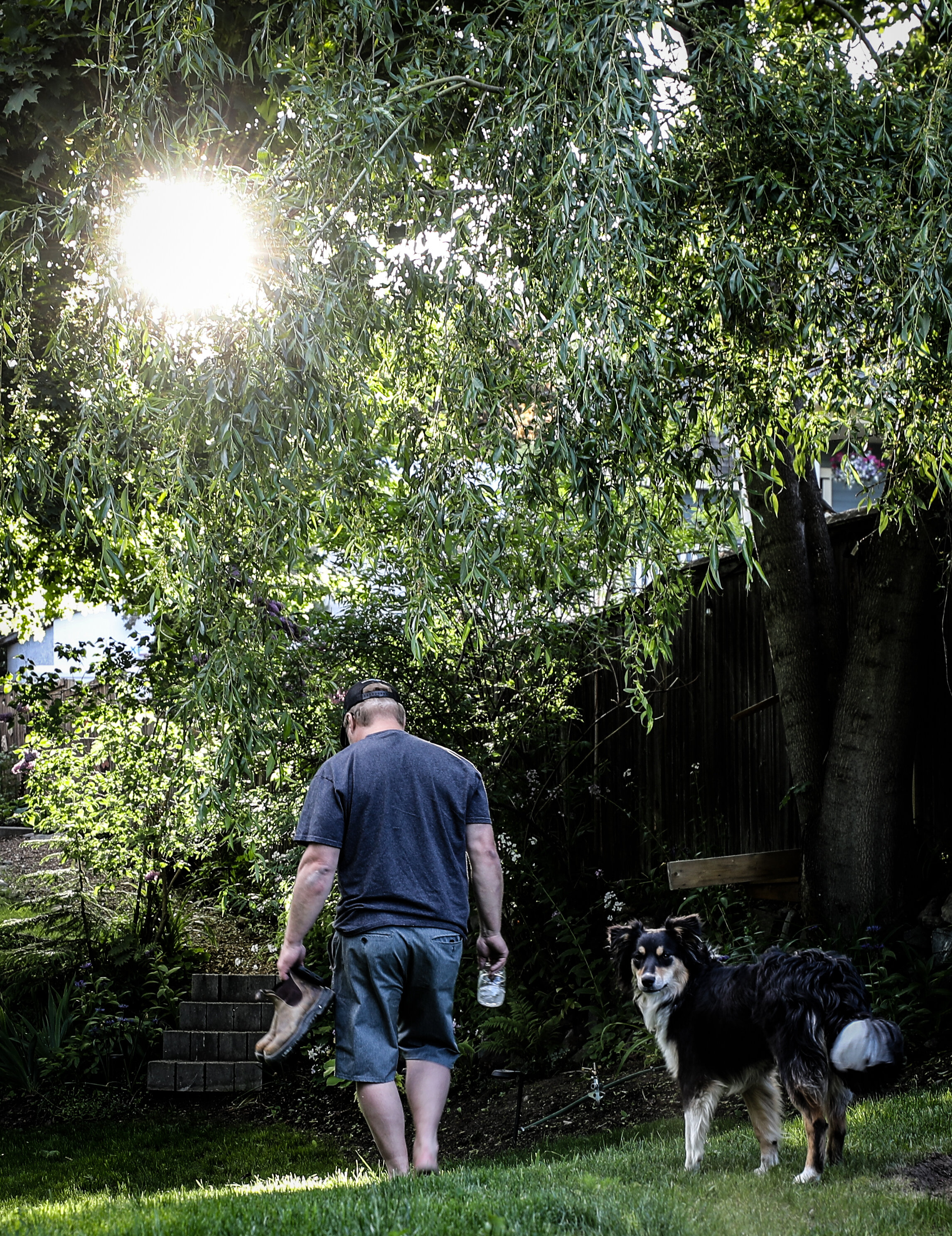
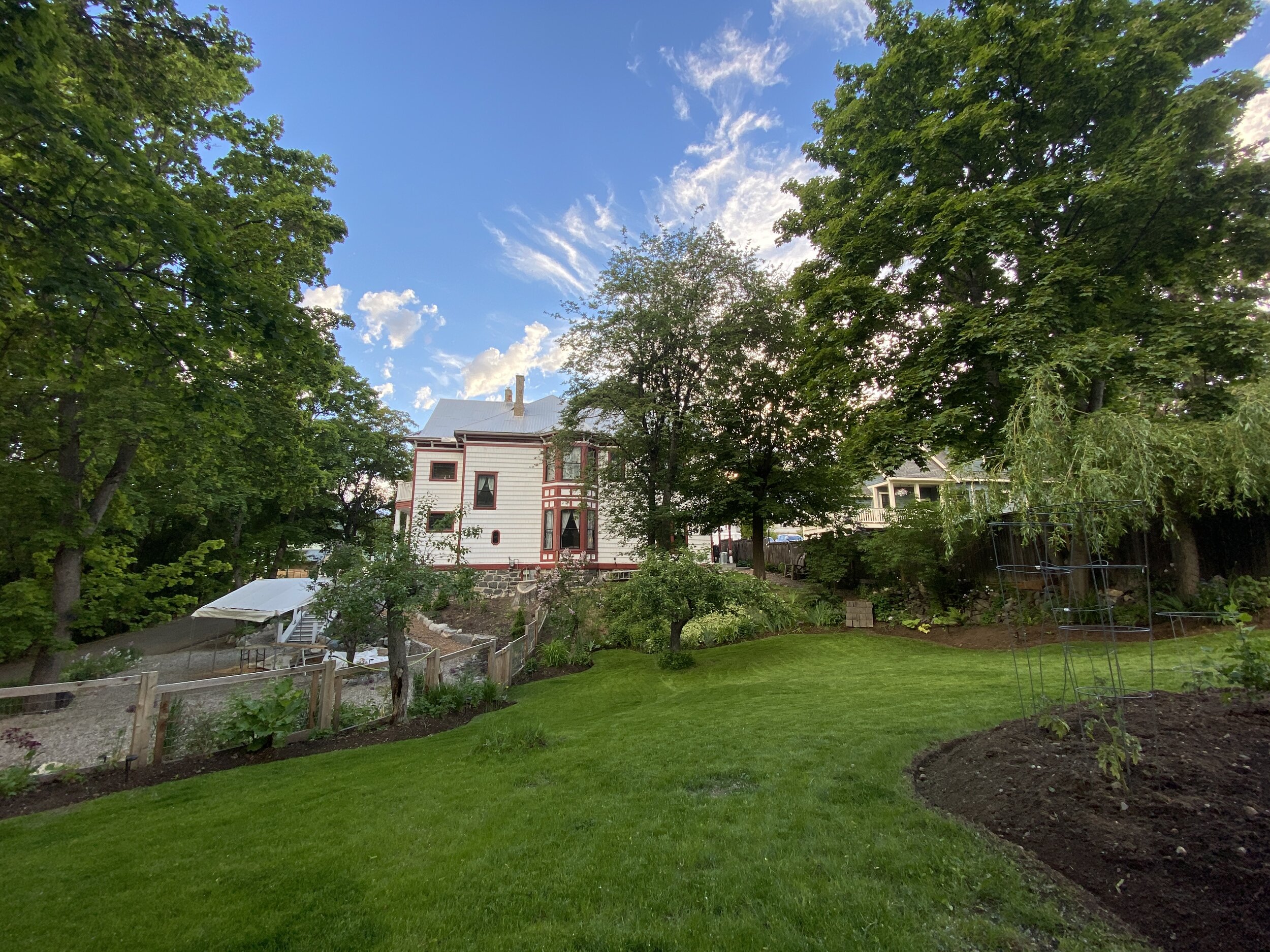
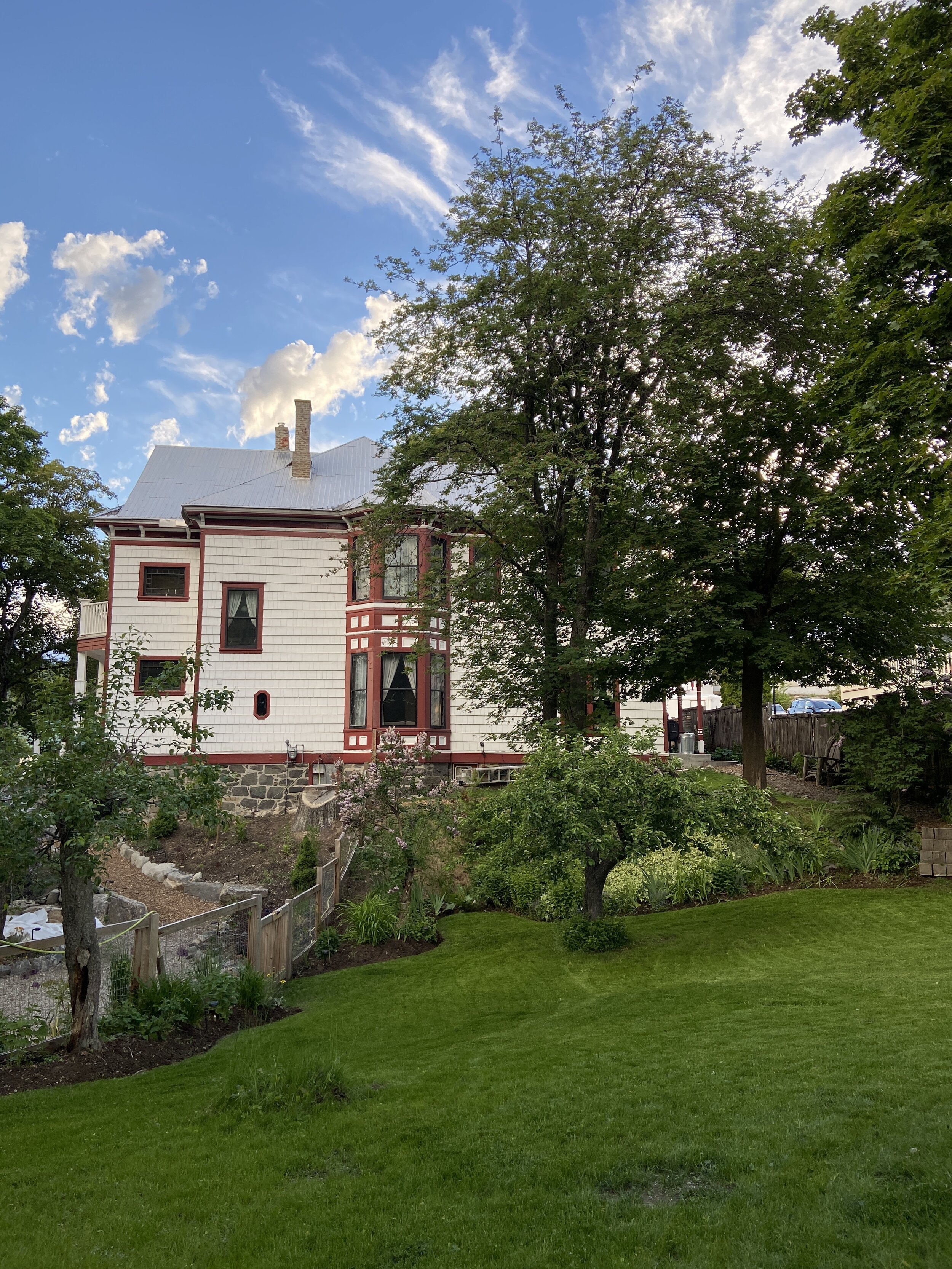
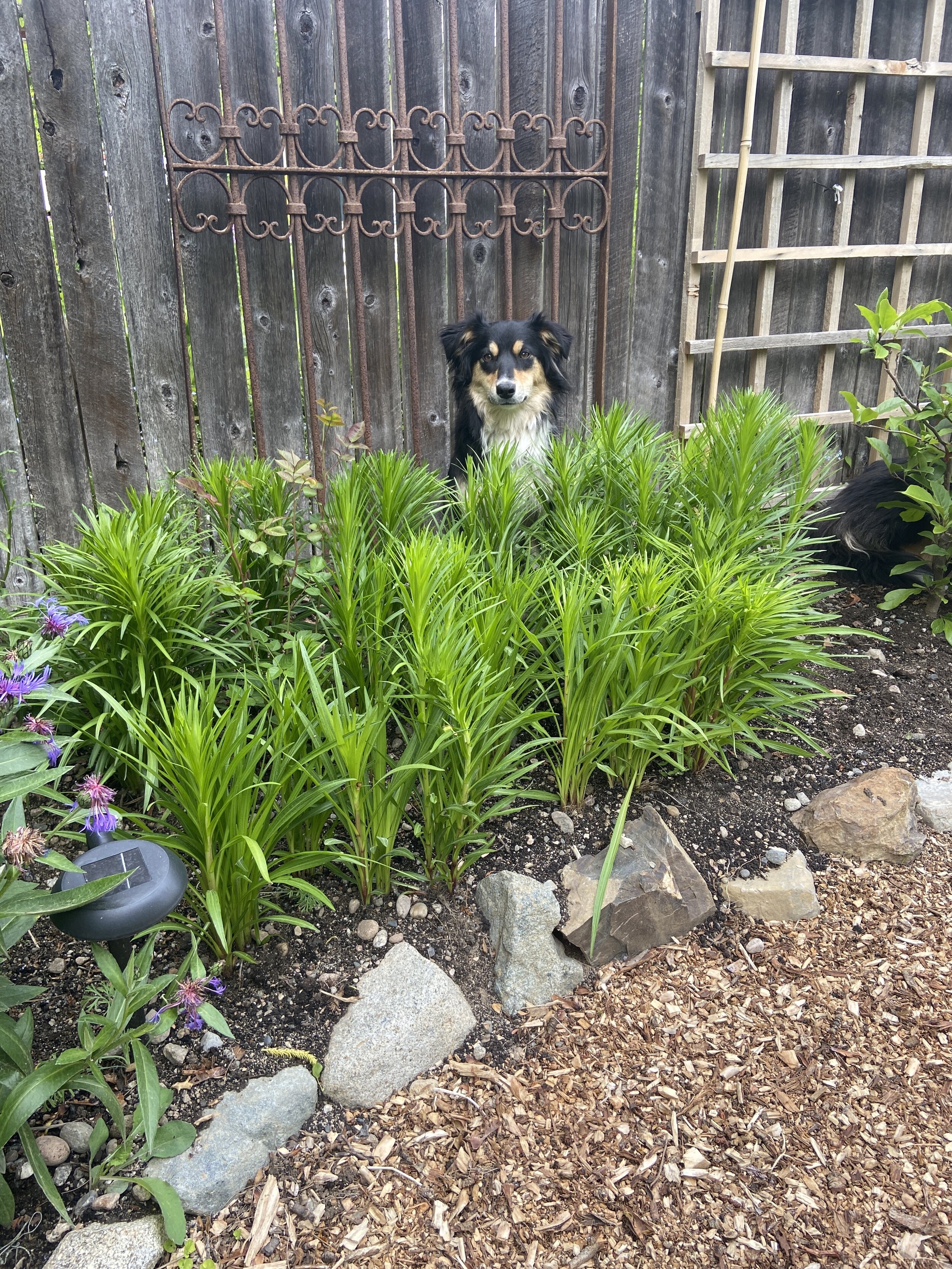
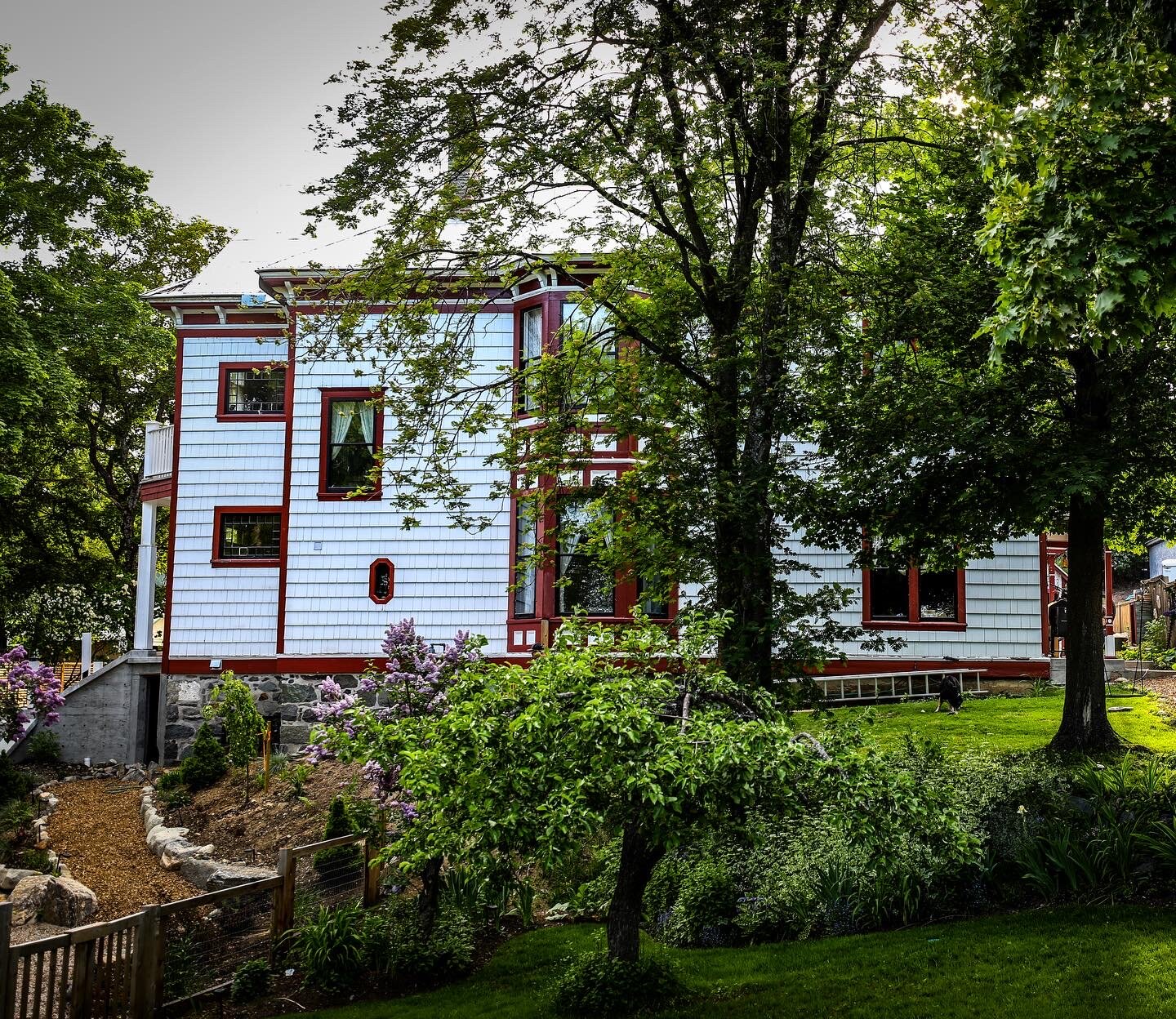
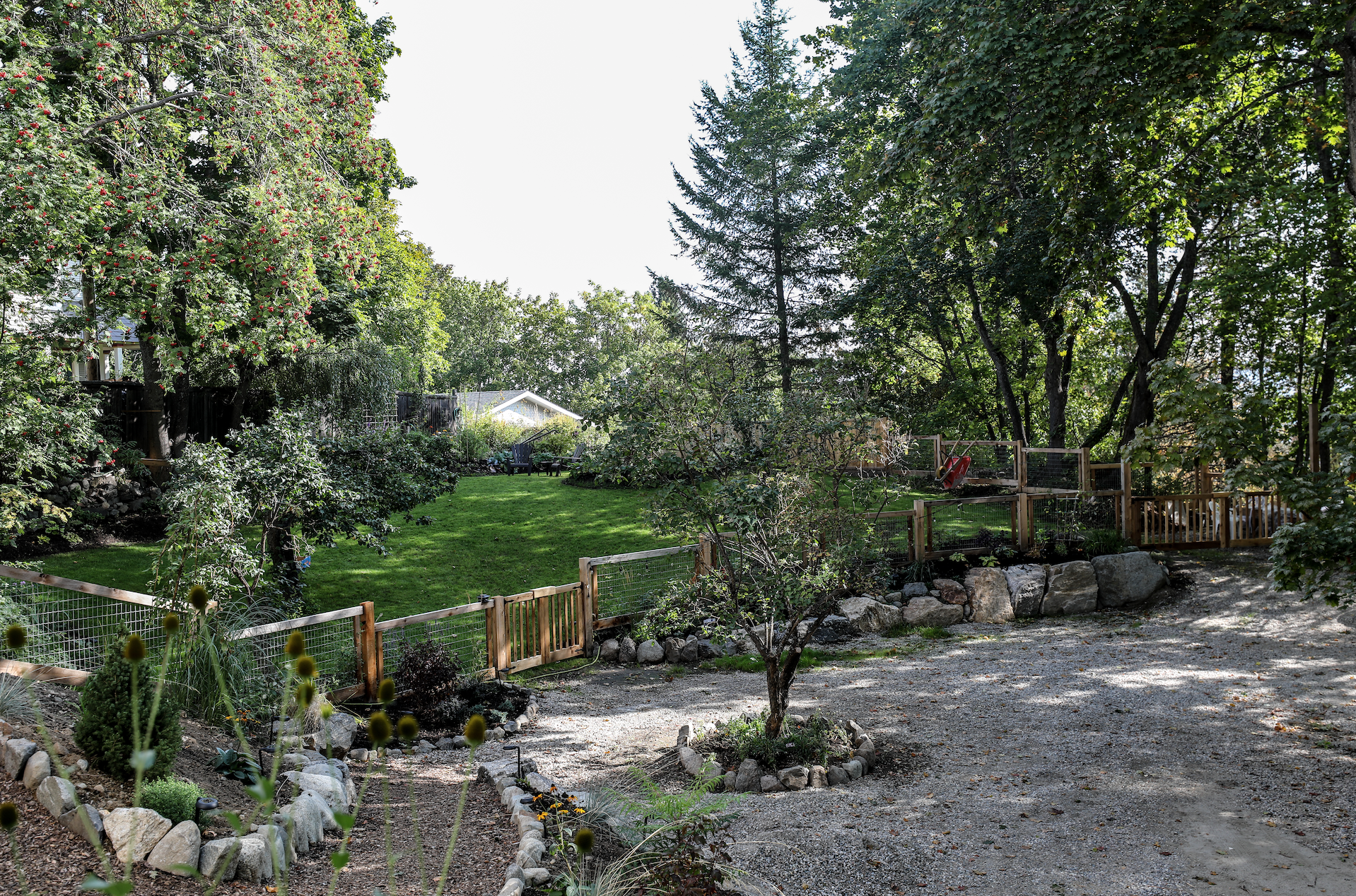
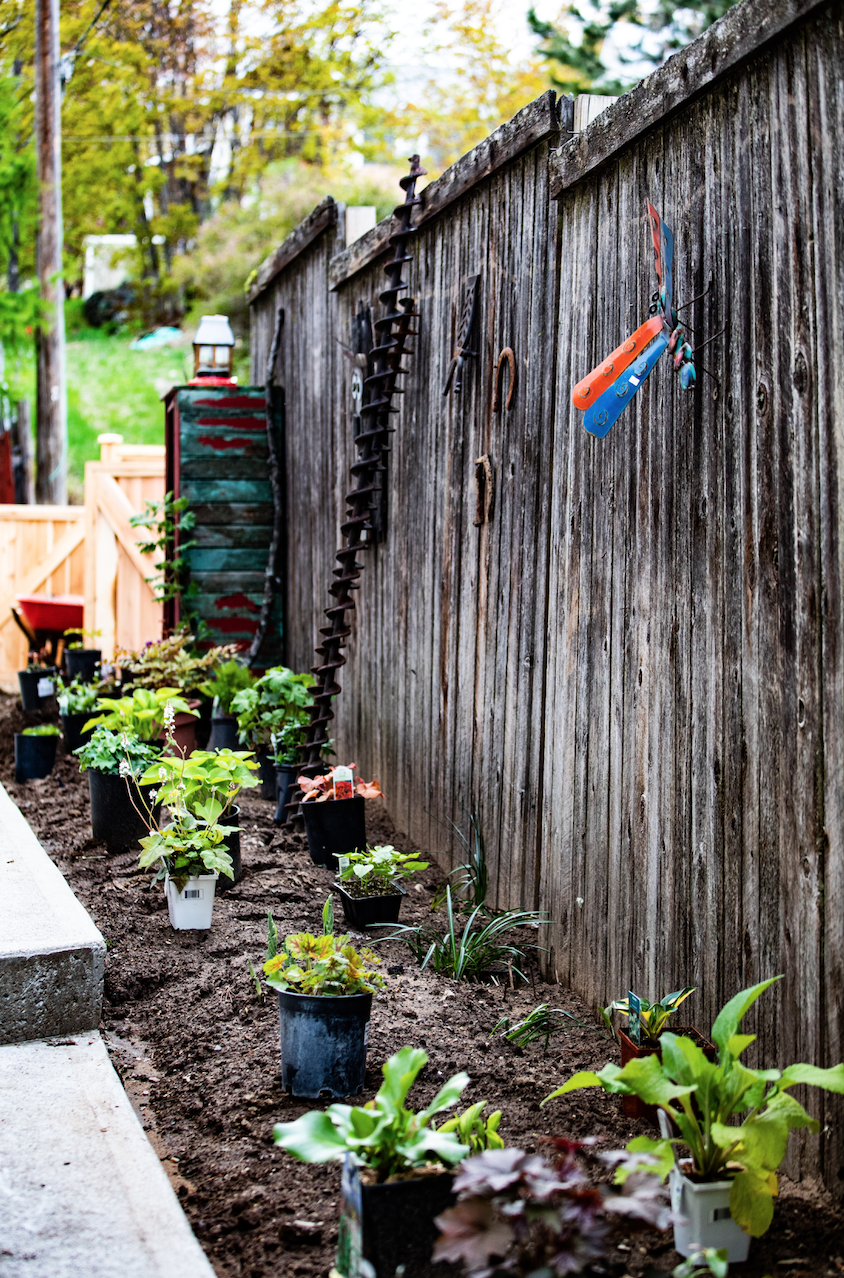
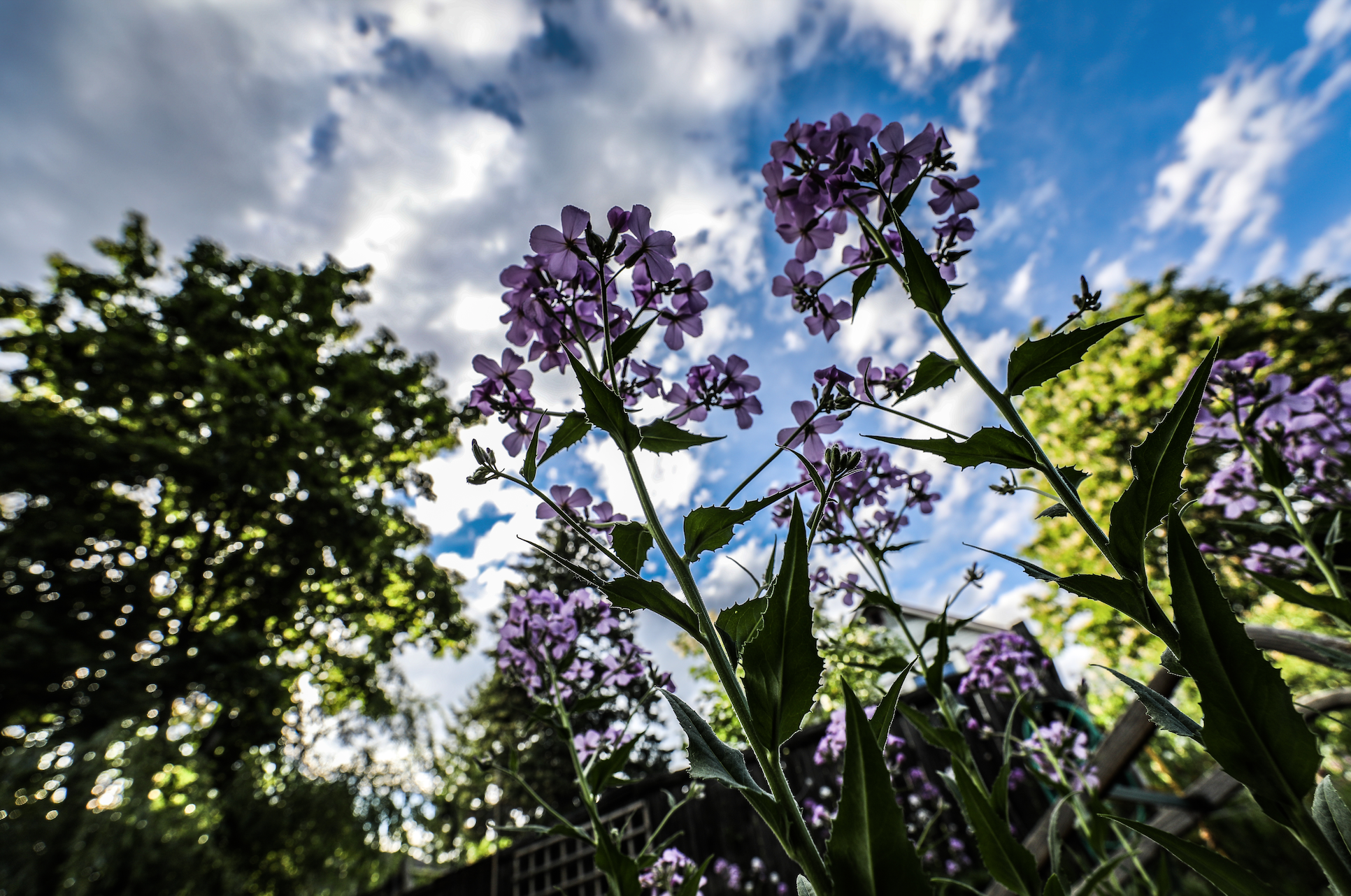
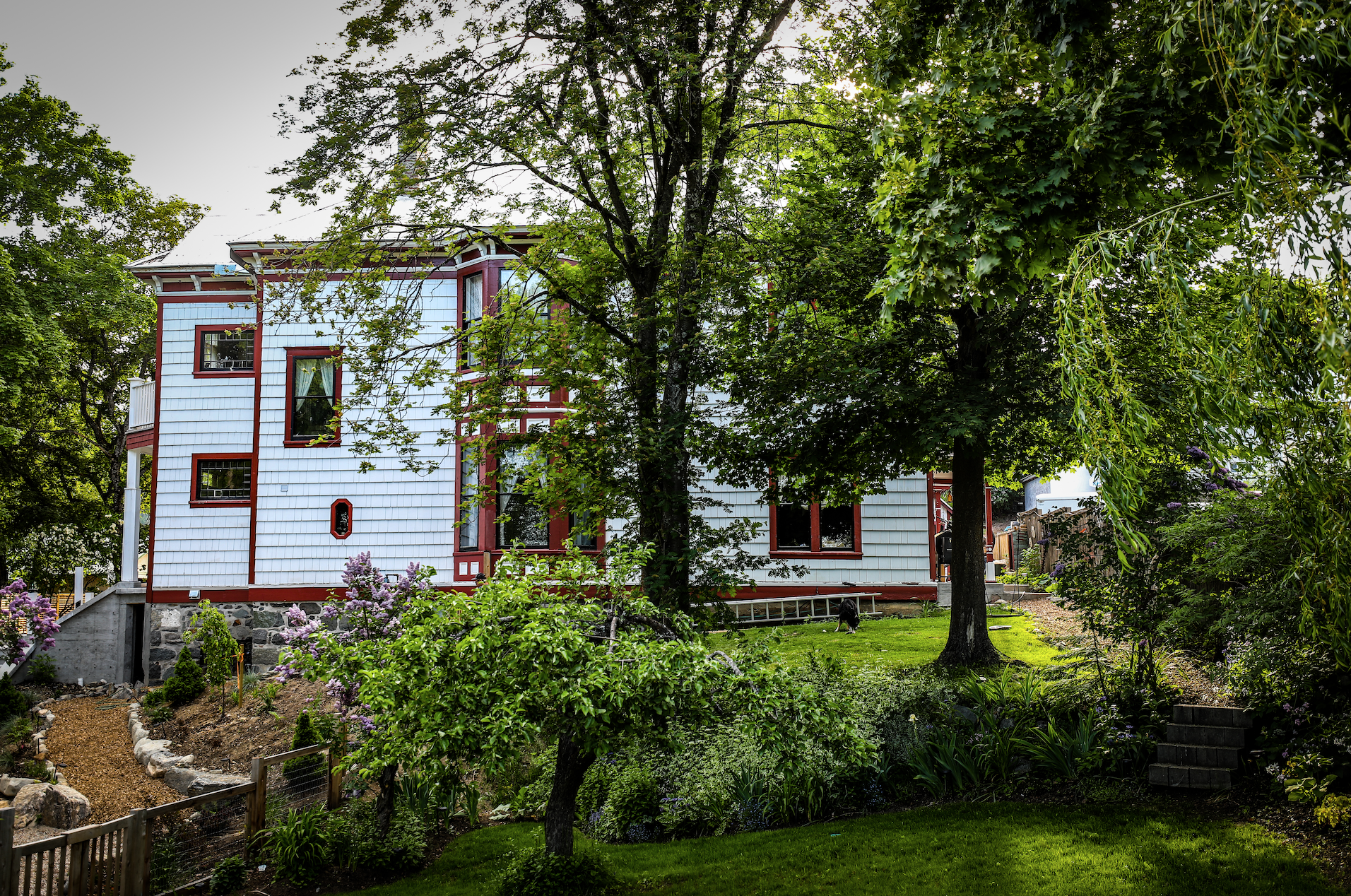
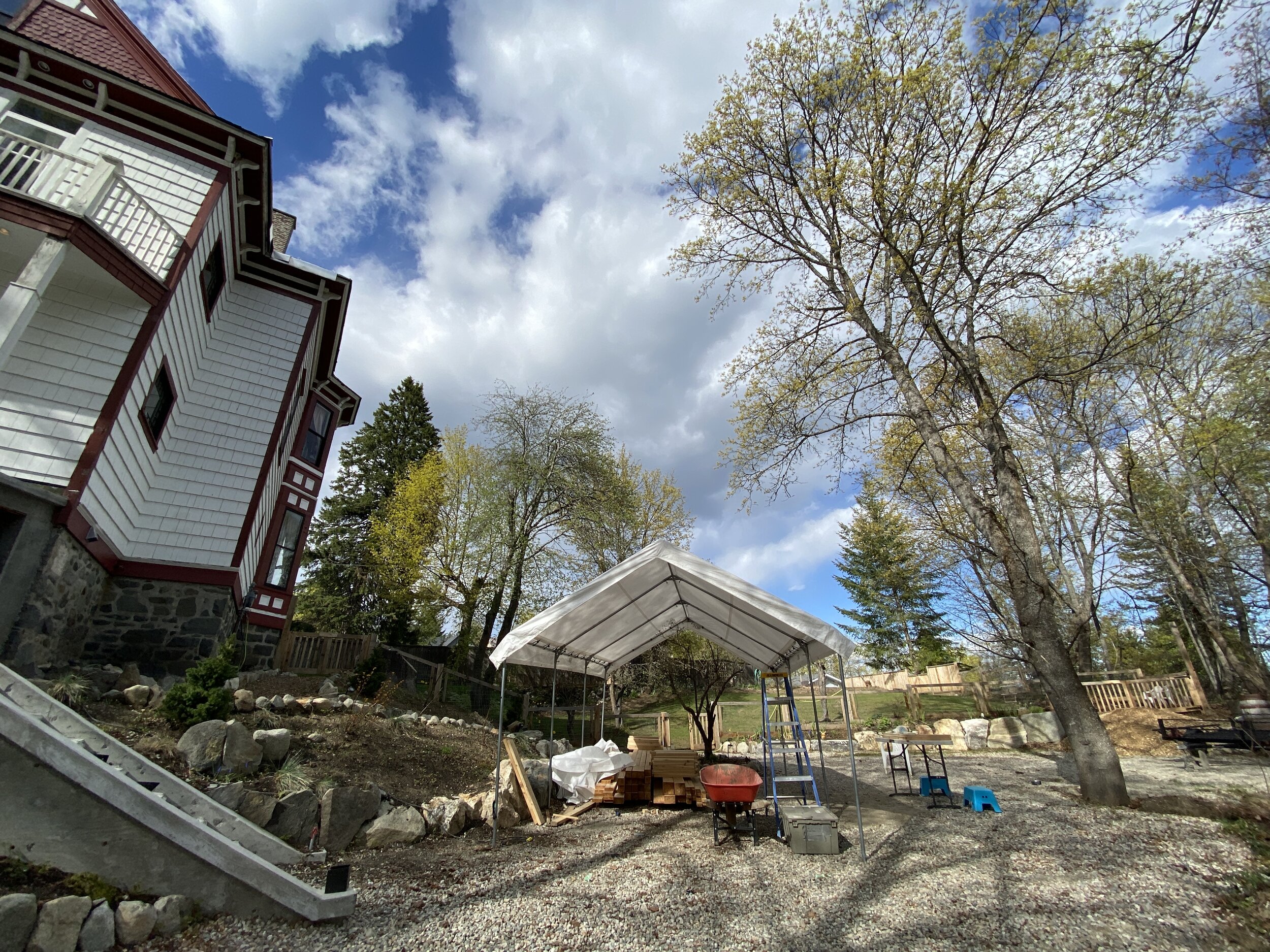
The property spans two lots, and much of the early outdoor work was about making the grounds function better for guests, dogs, gardens and gatherings.
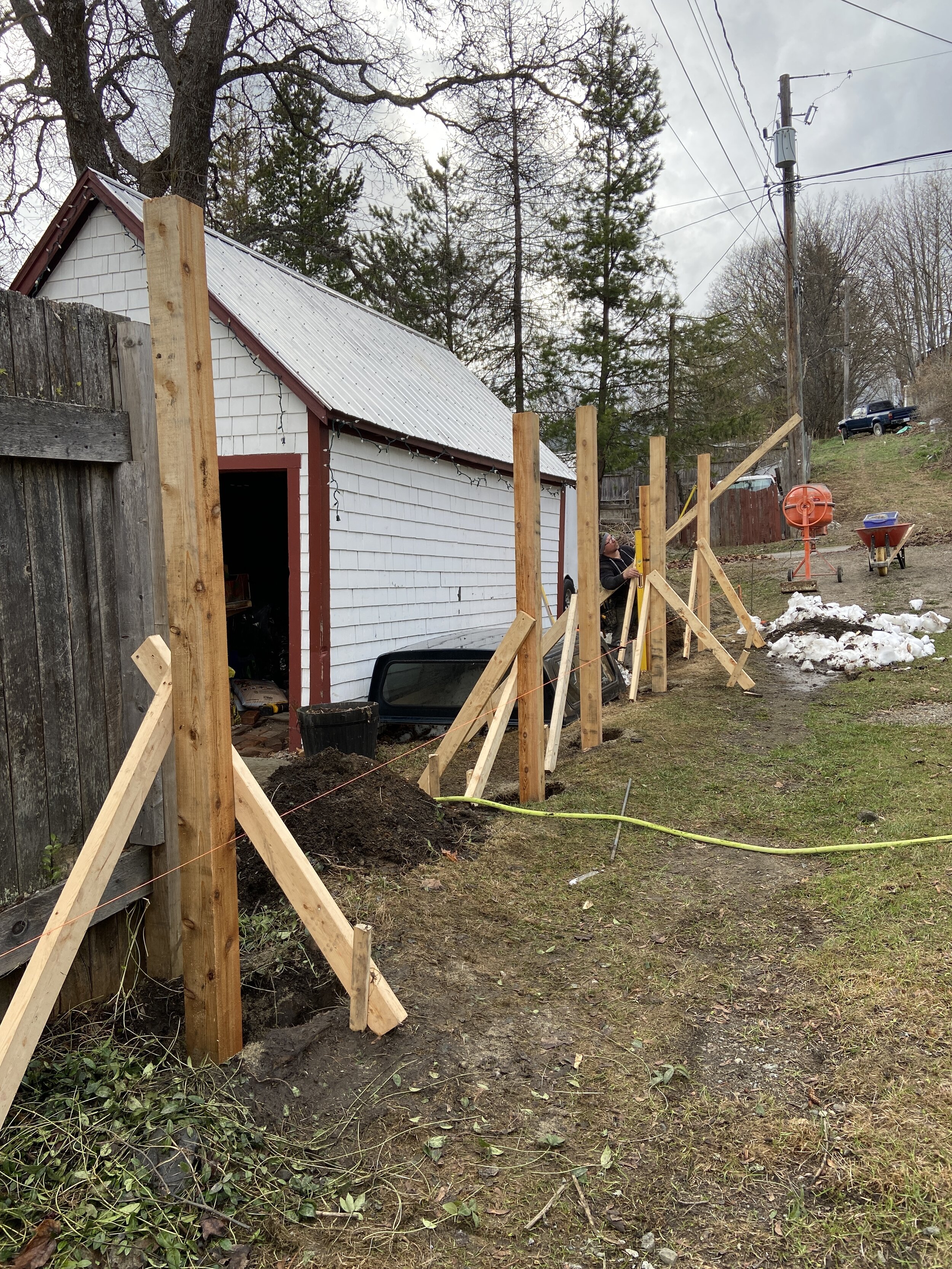
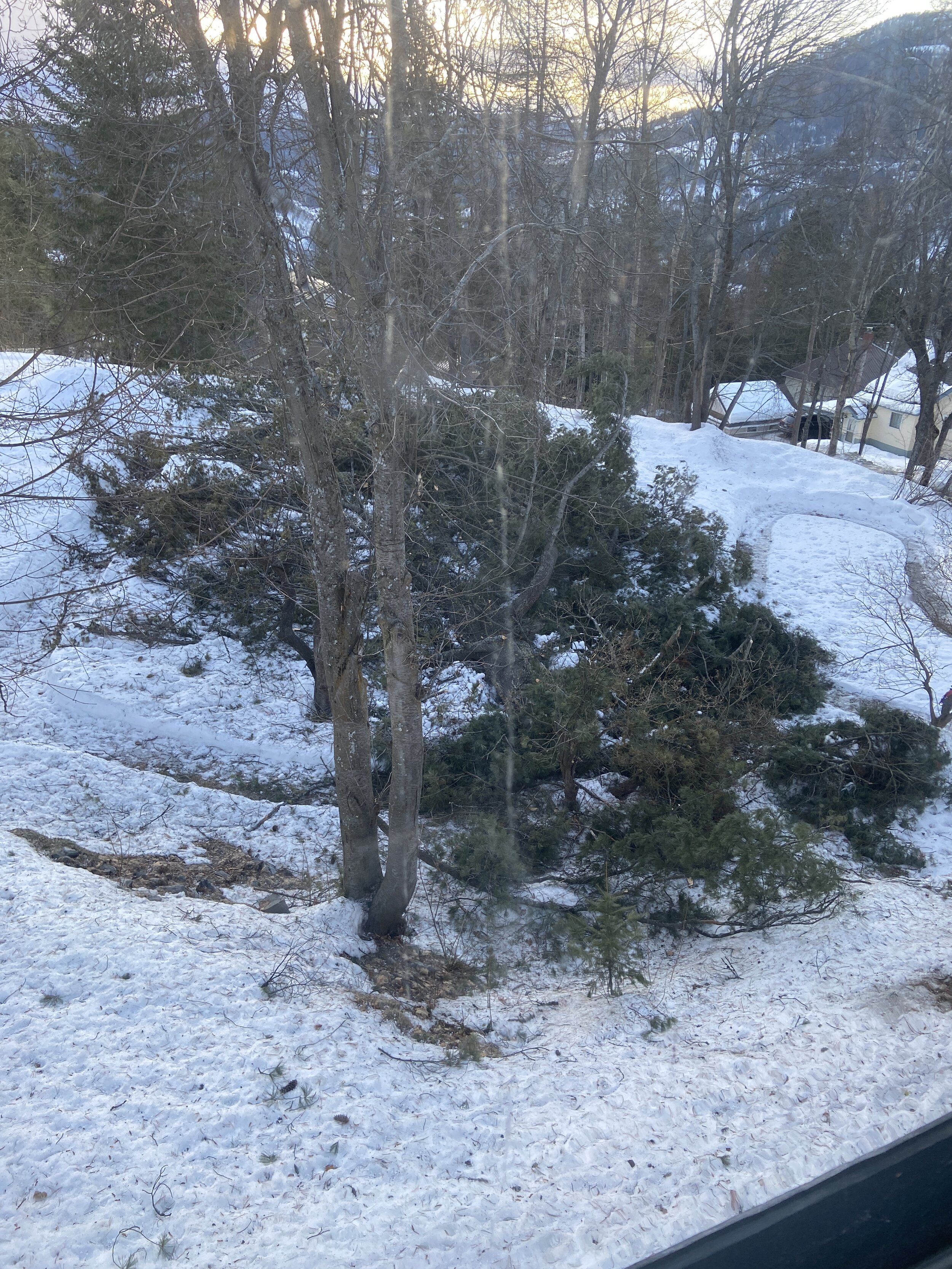
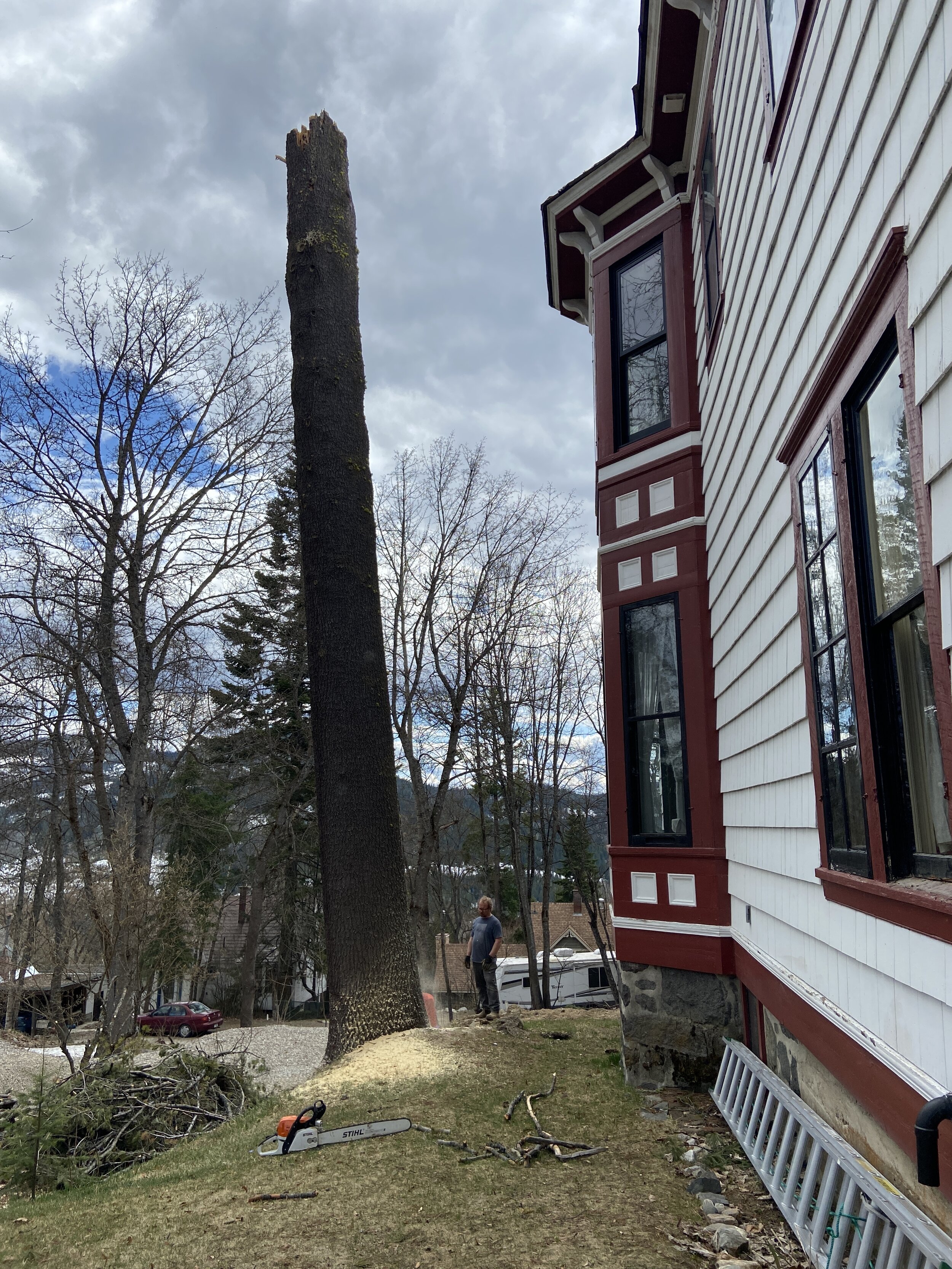
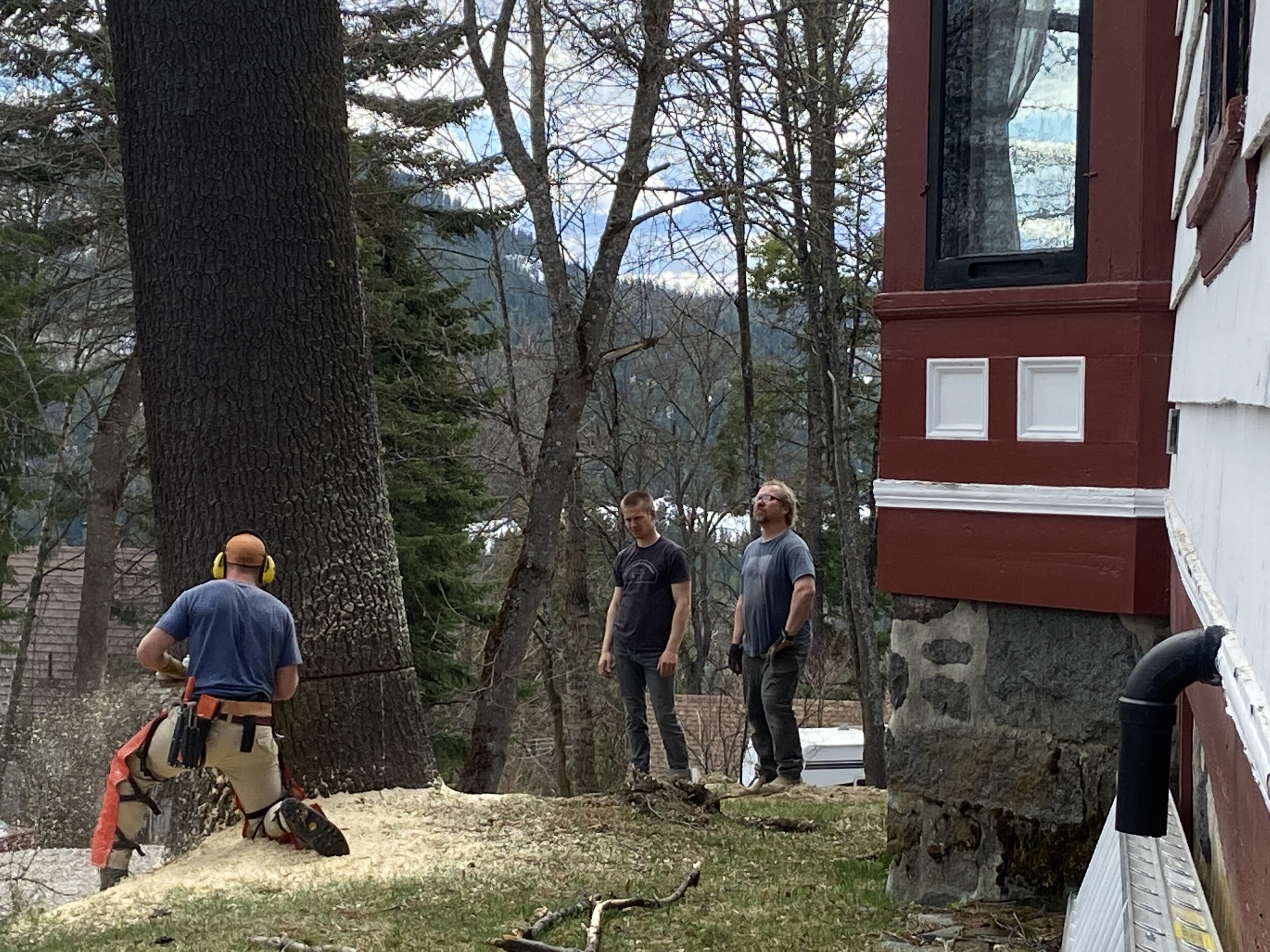
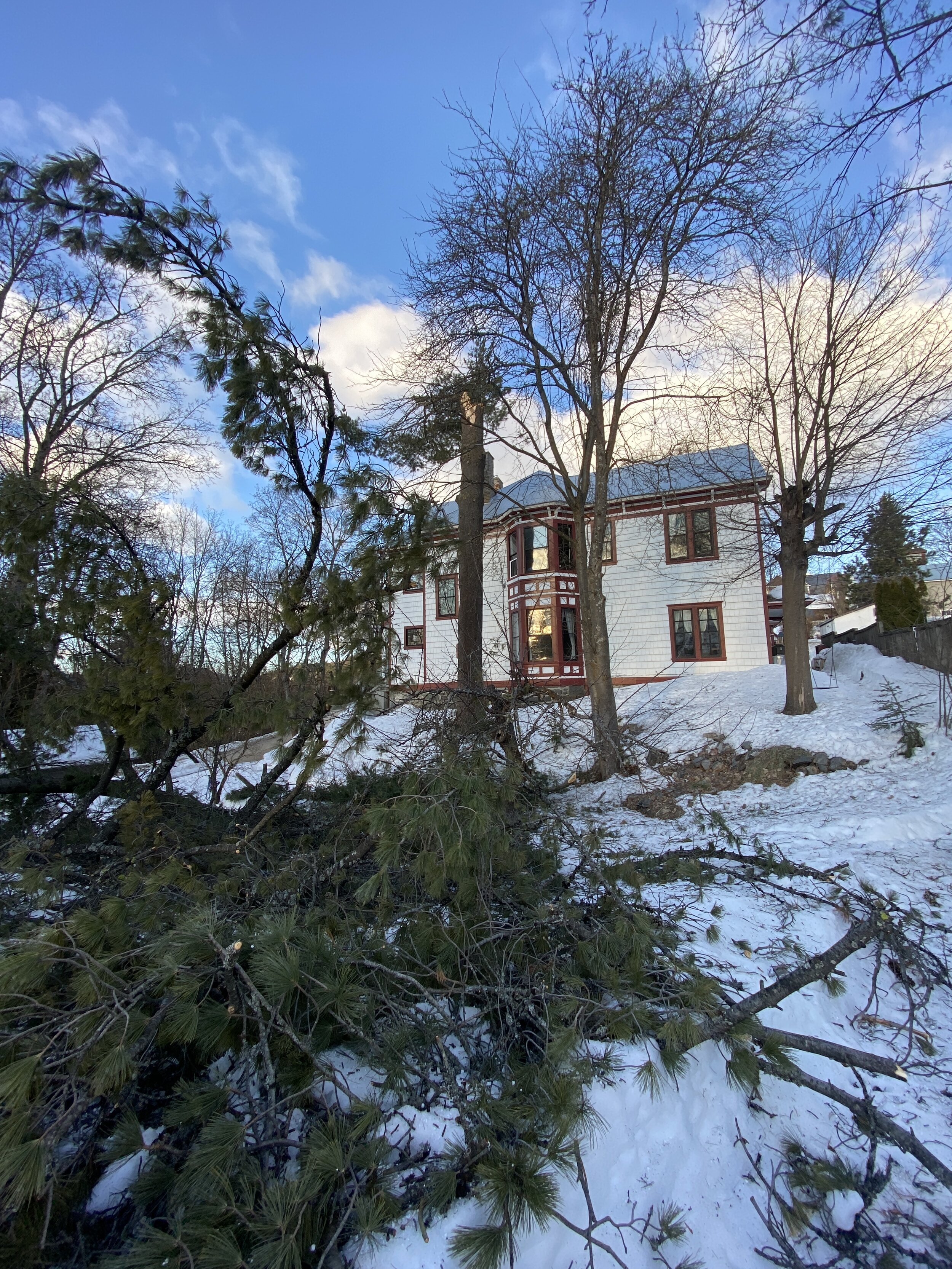
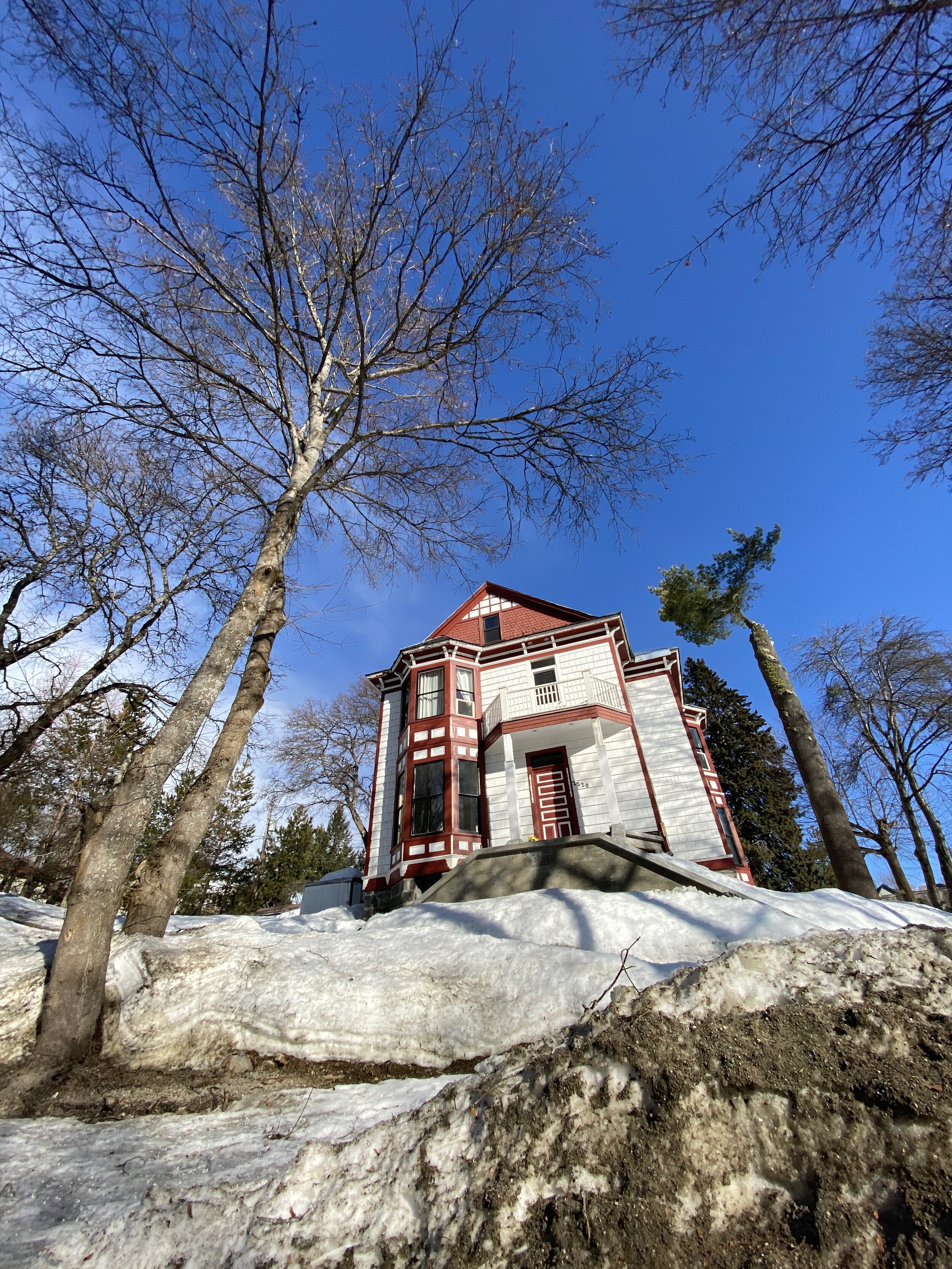
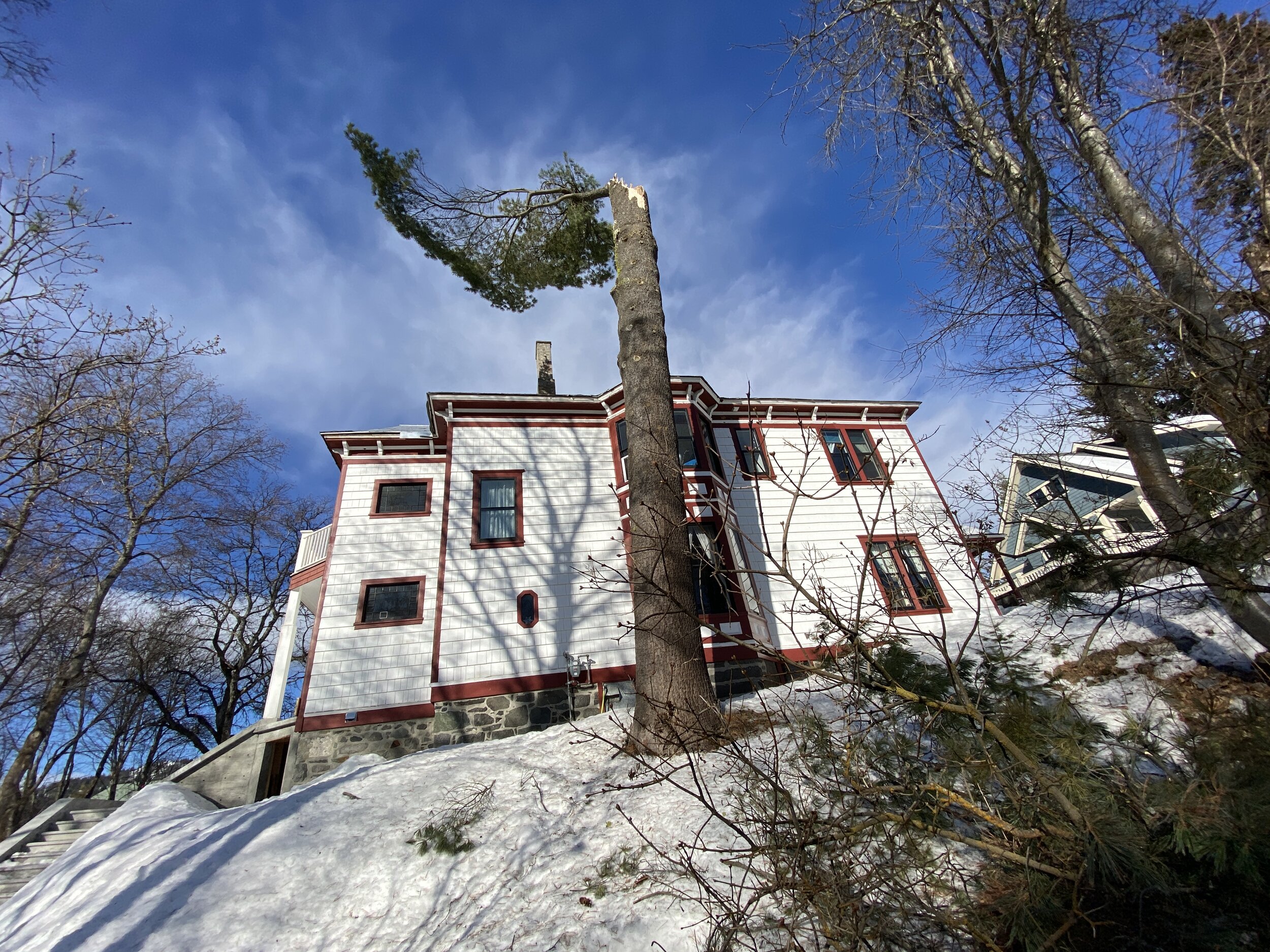
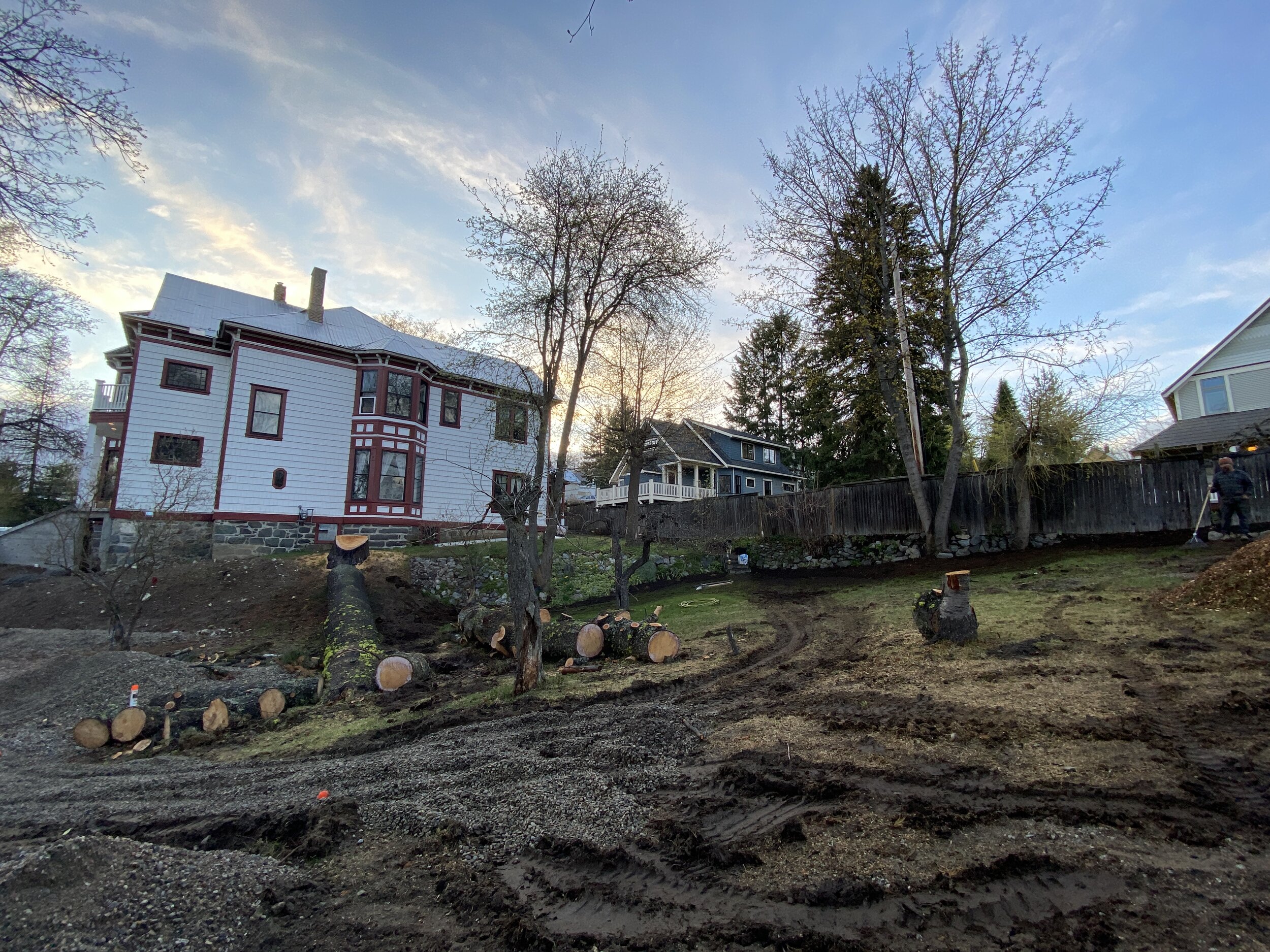
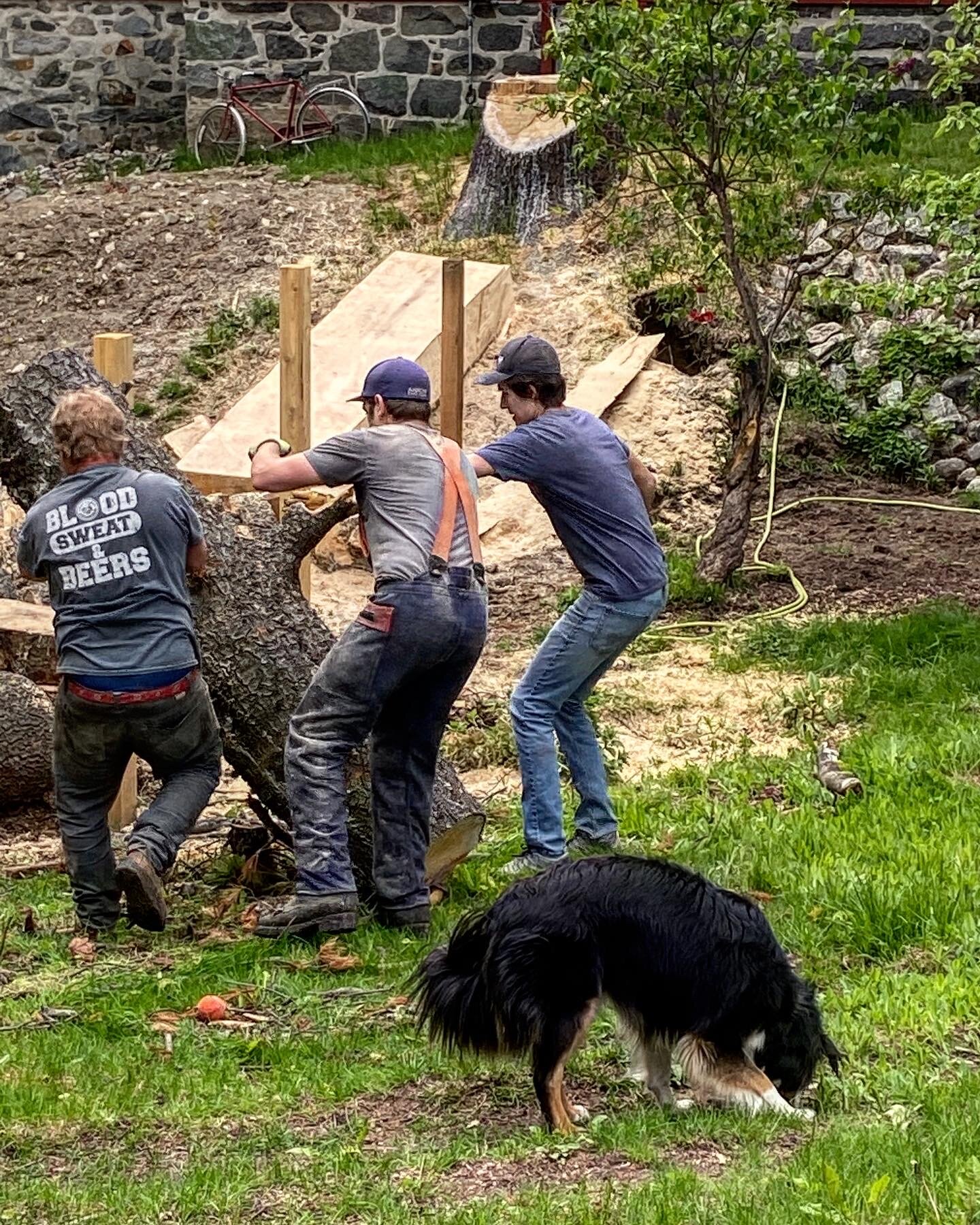
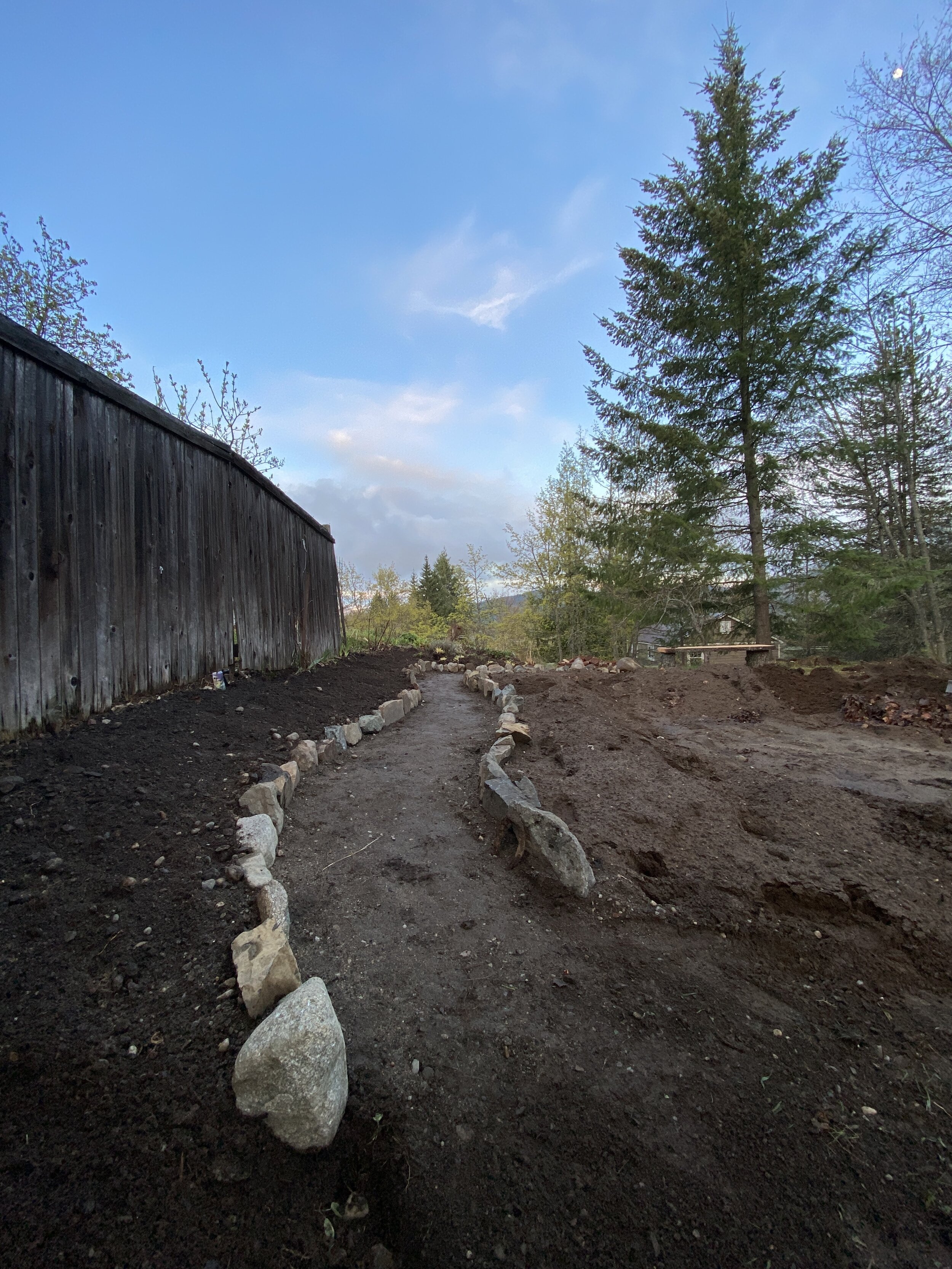
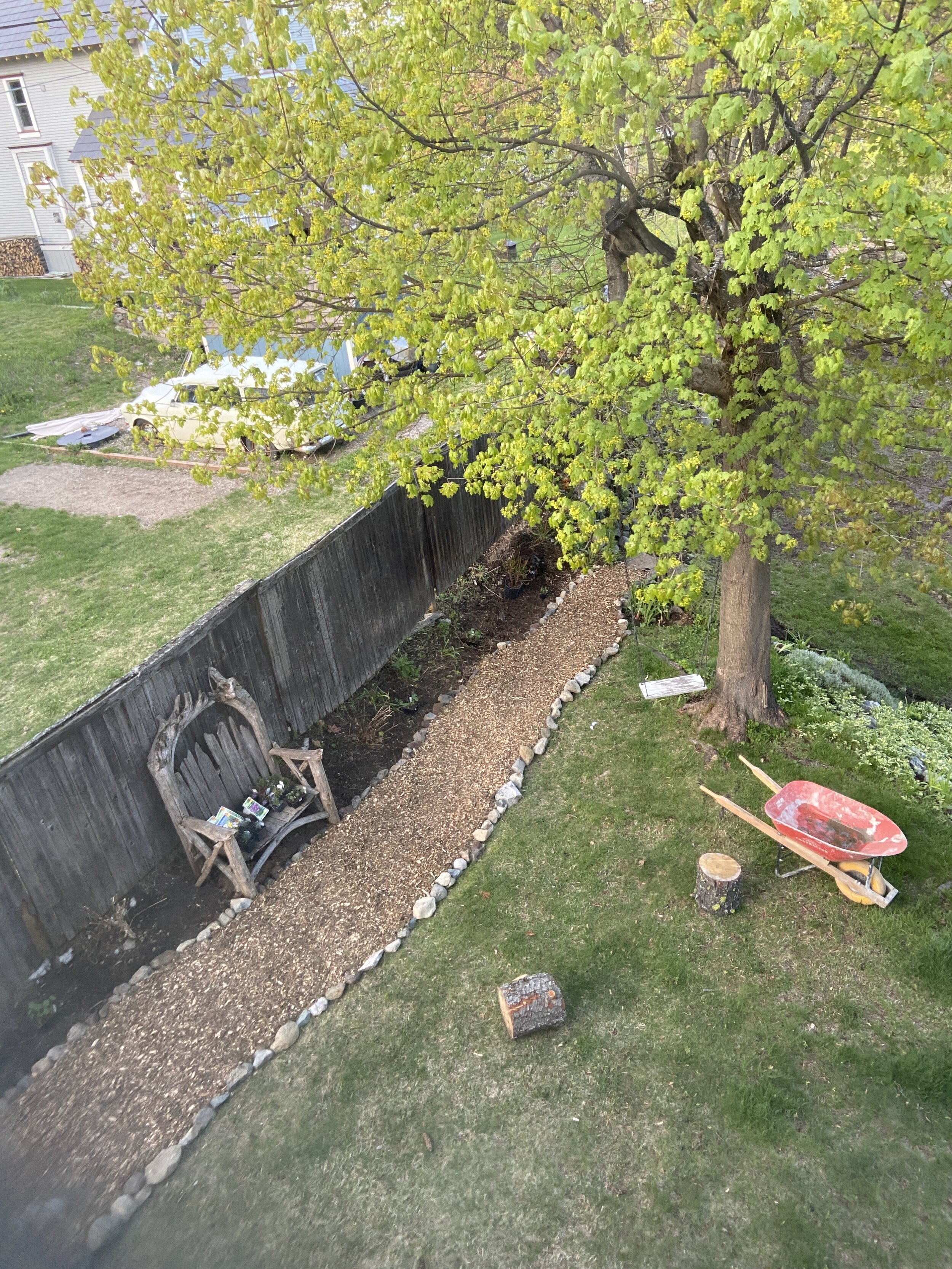
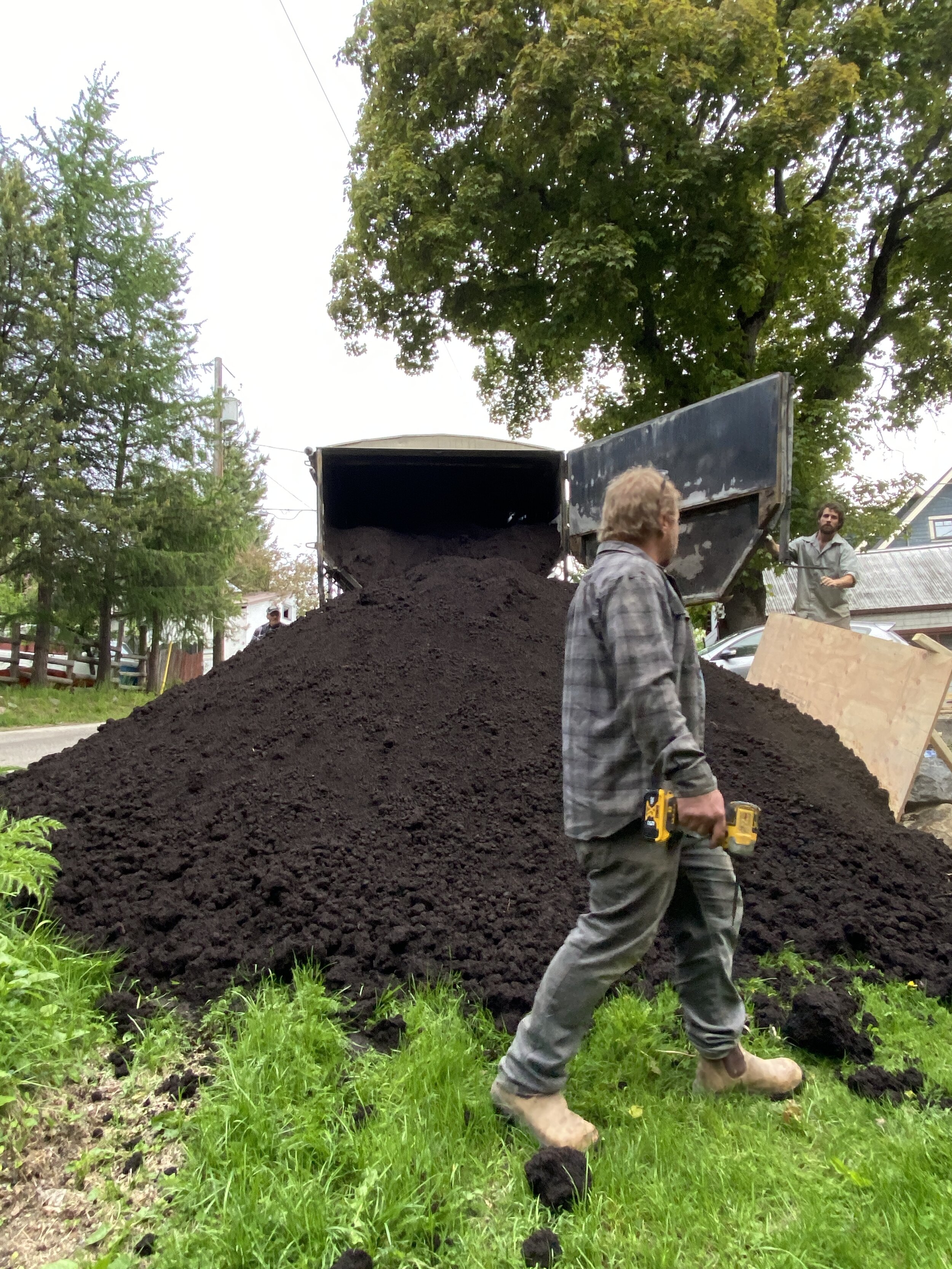
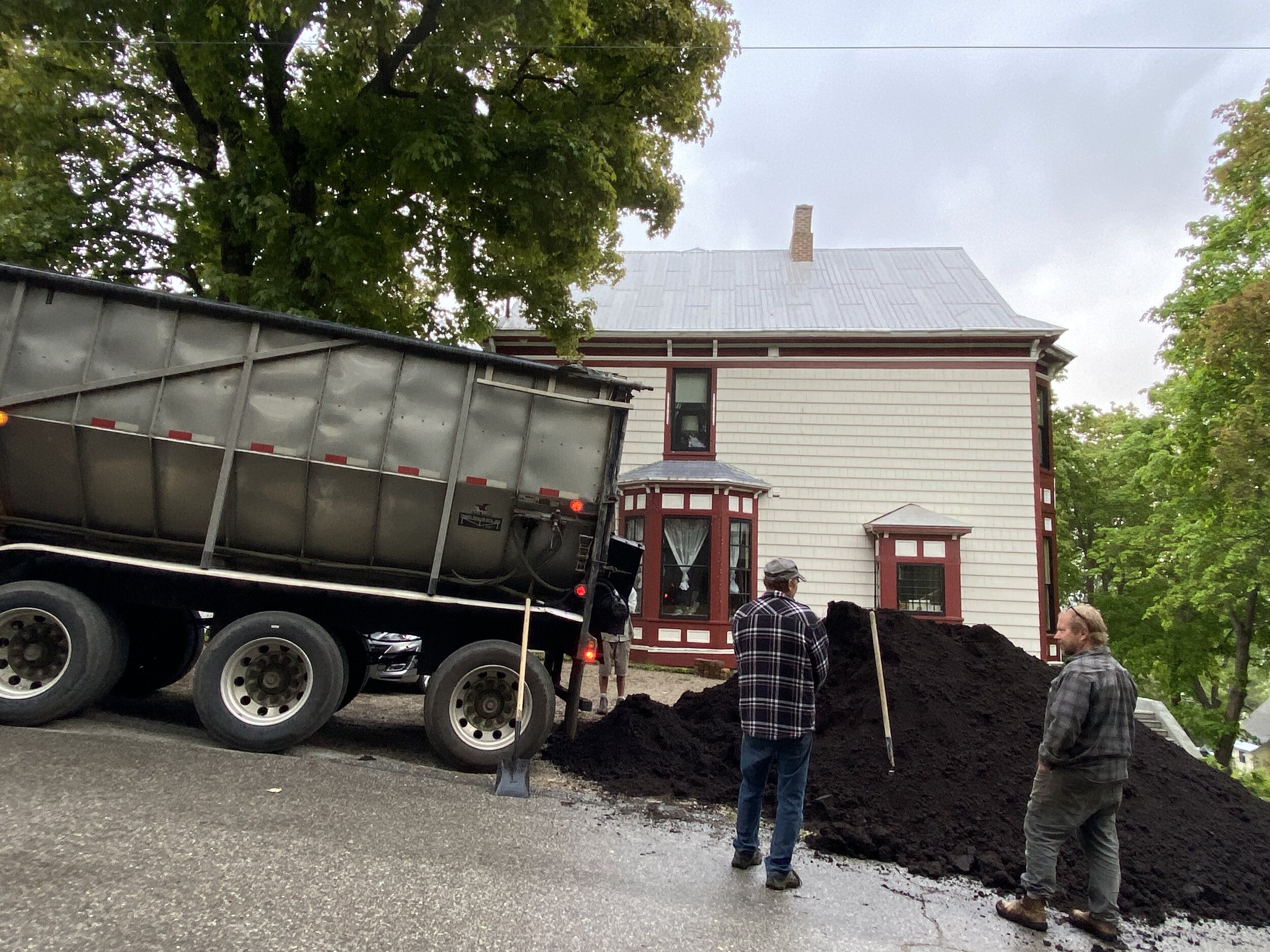
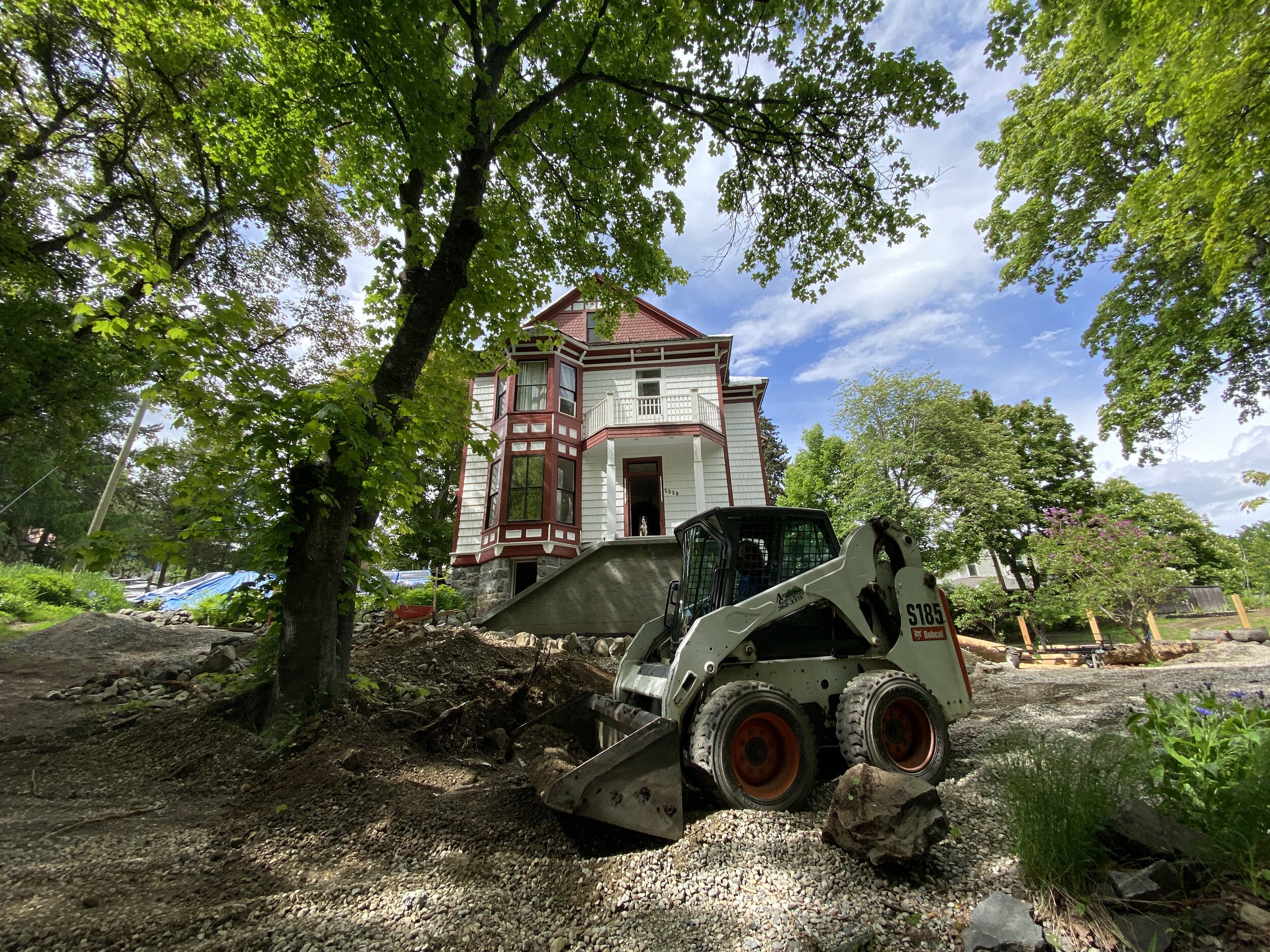
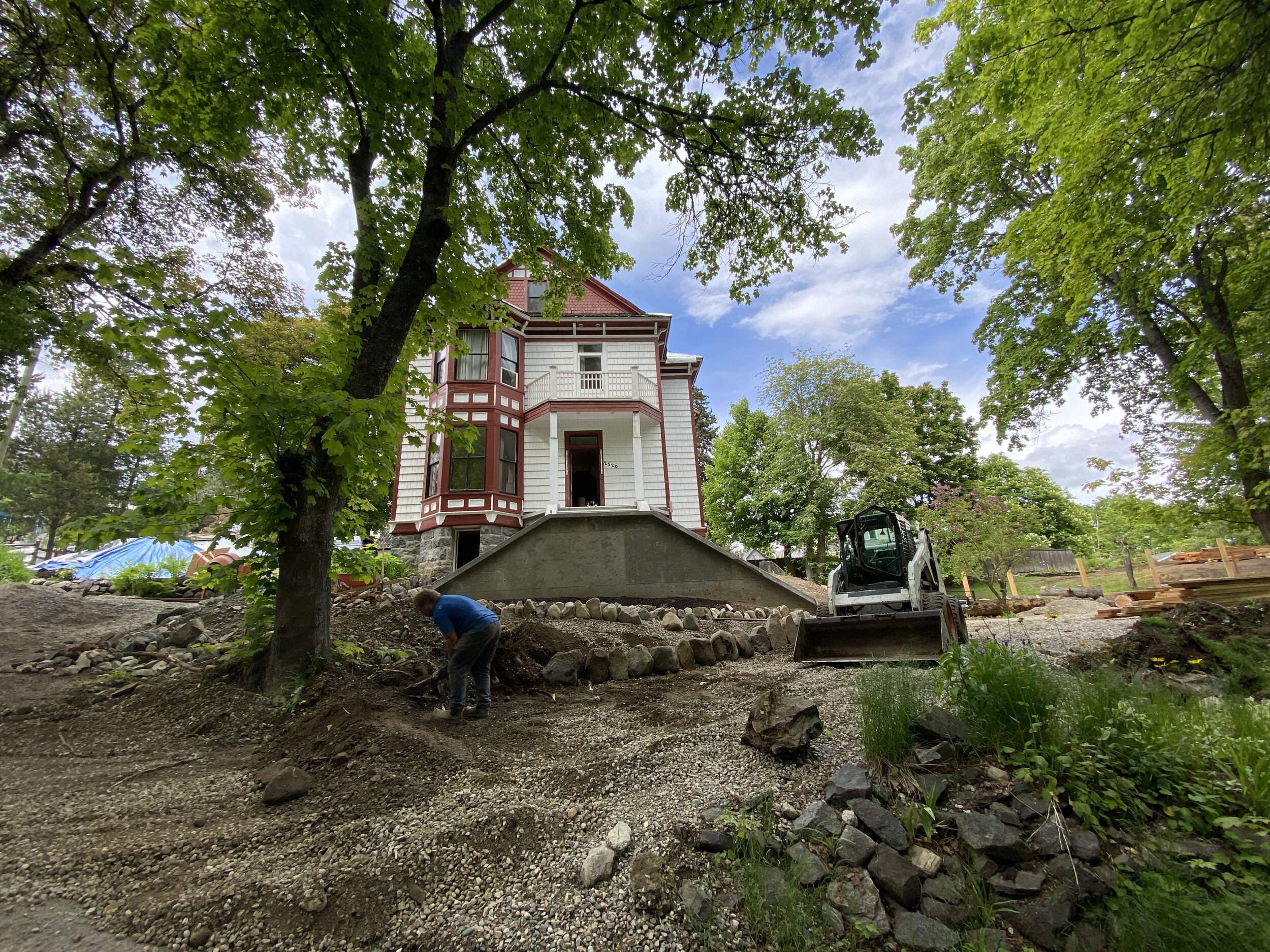
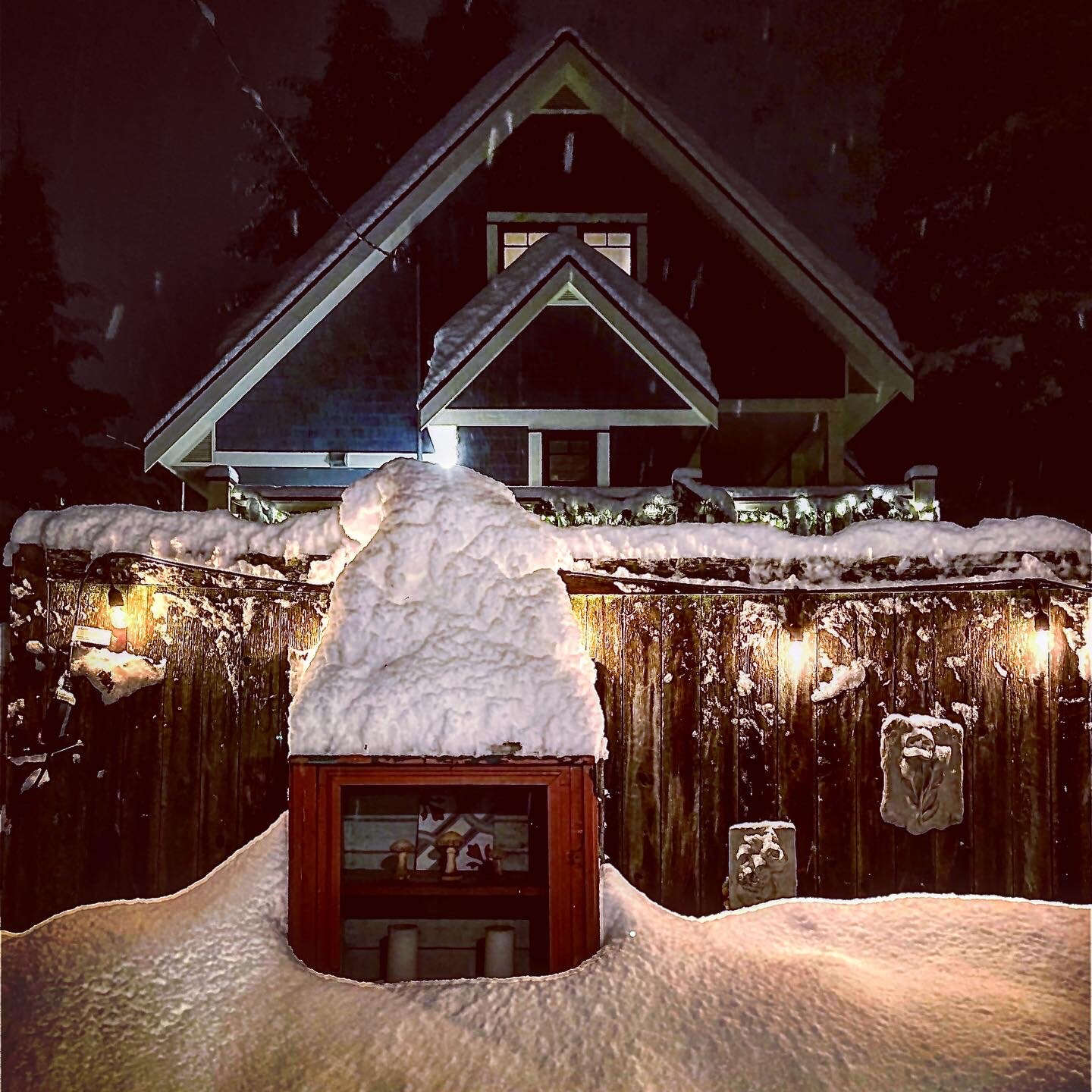
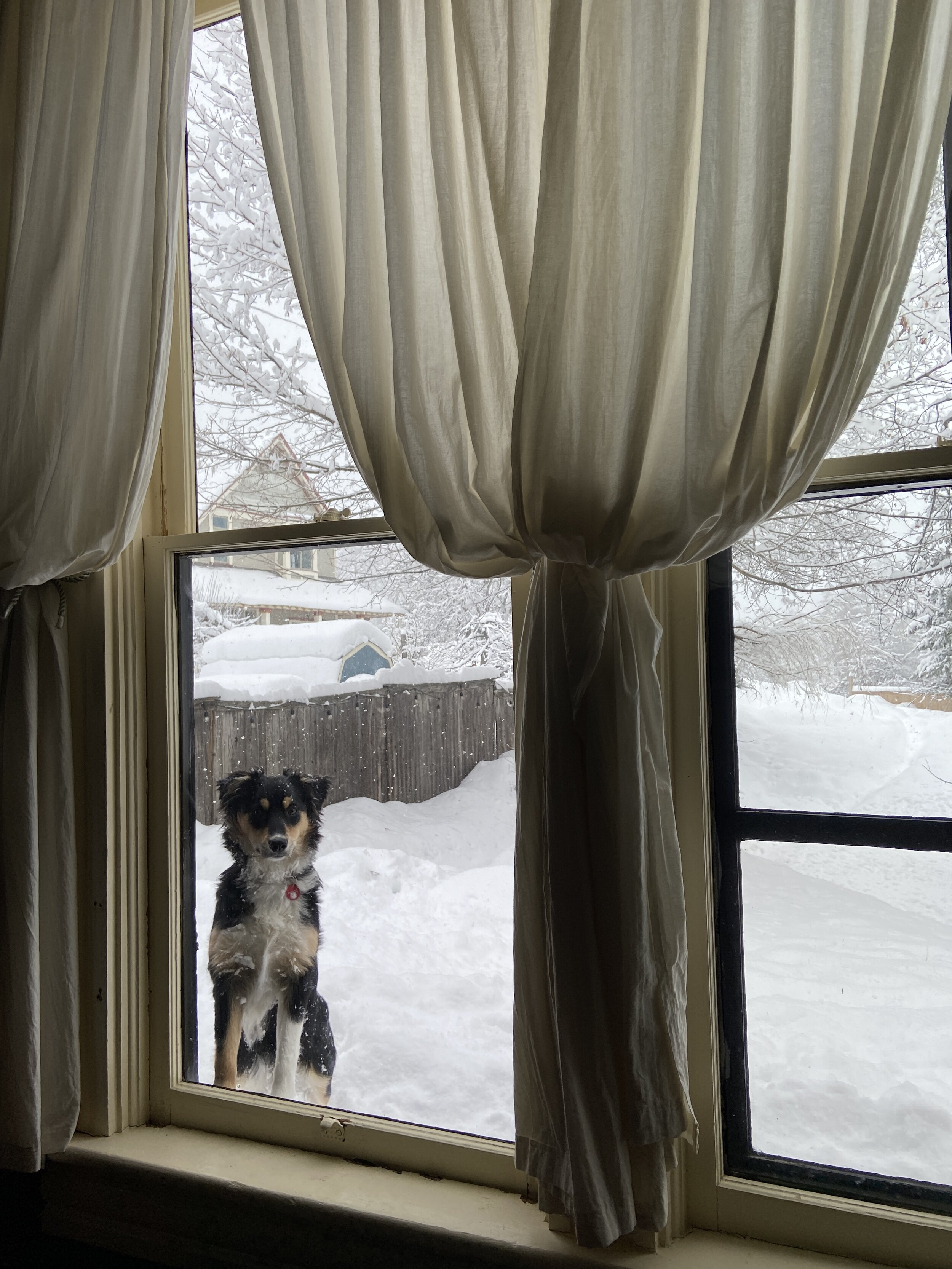
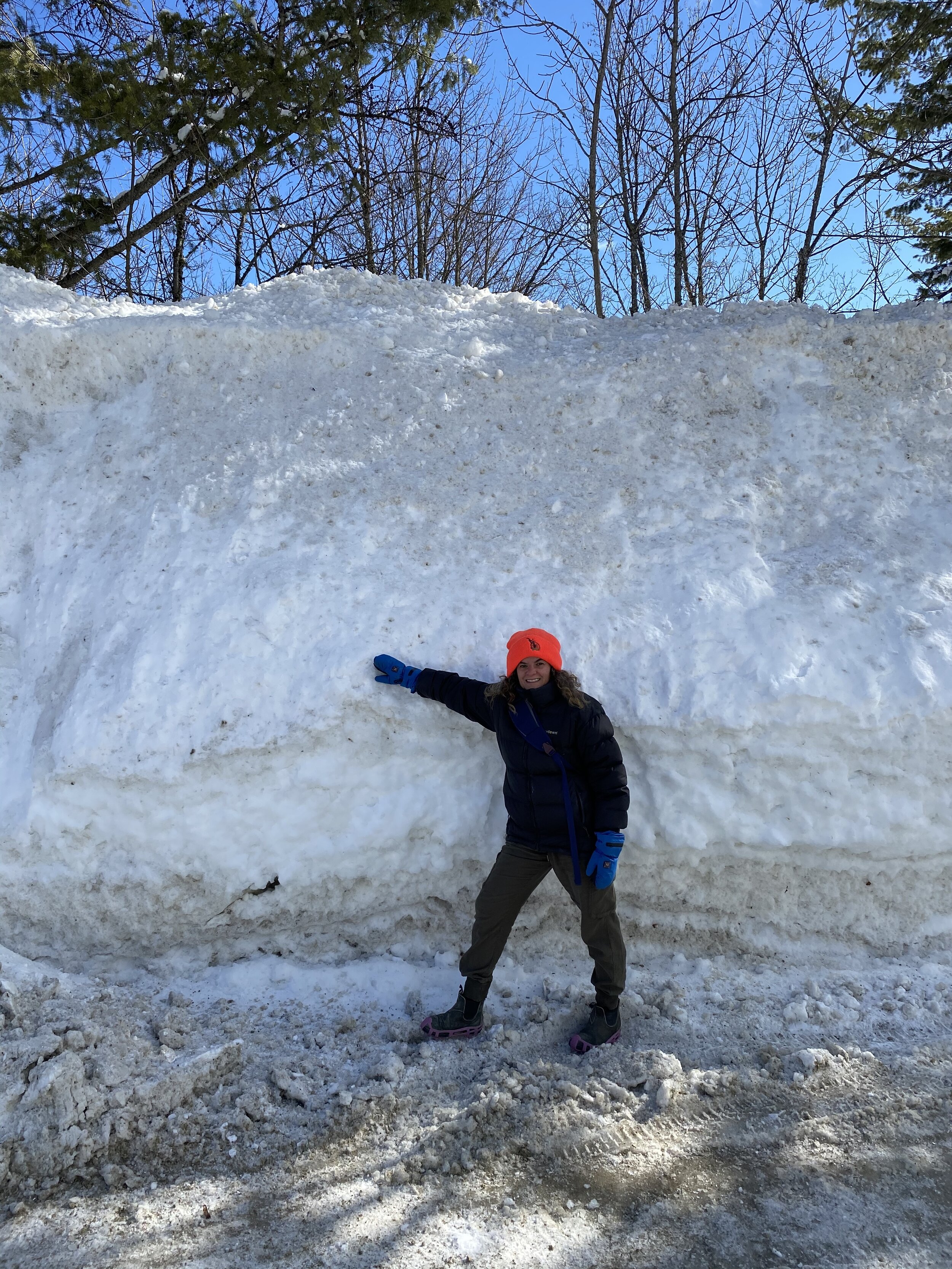
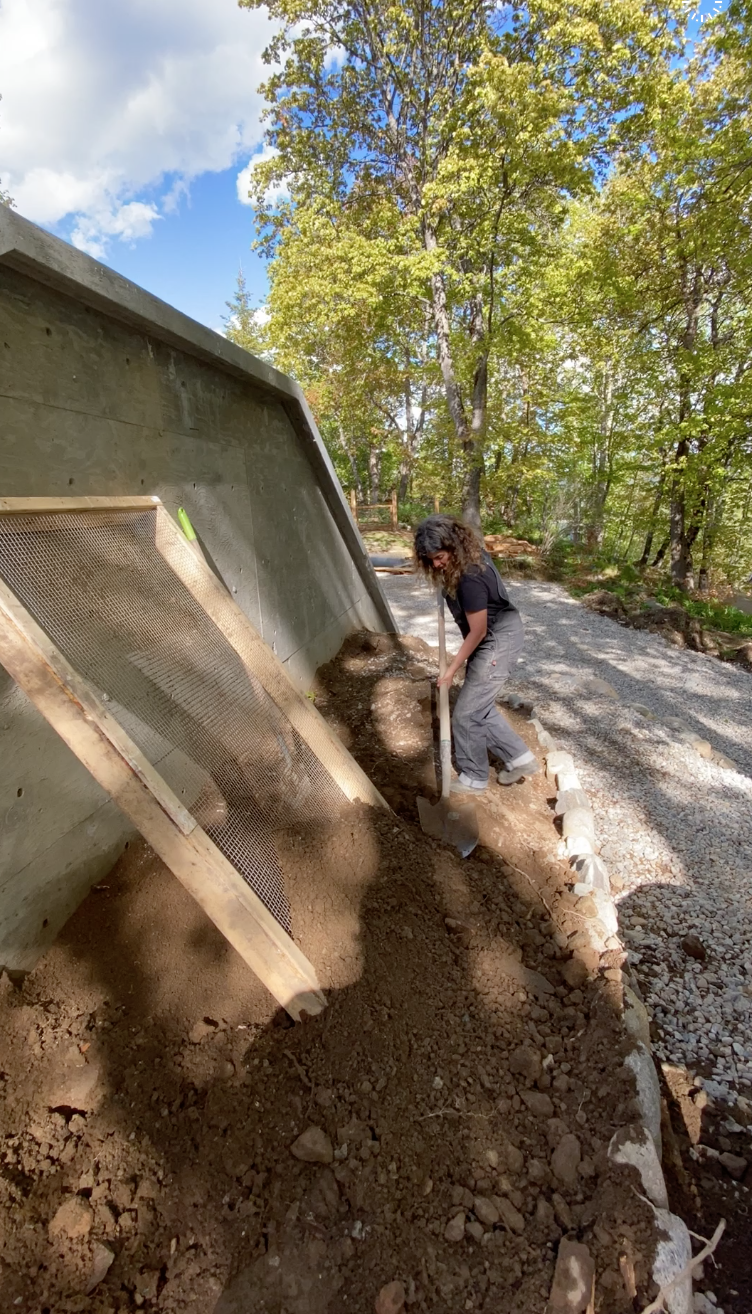
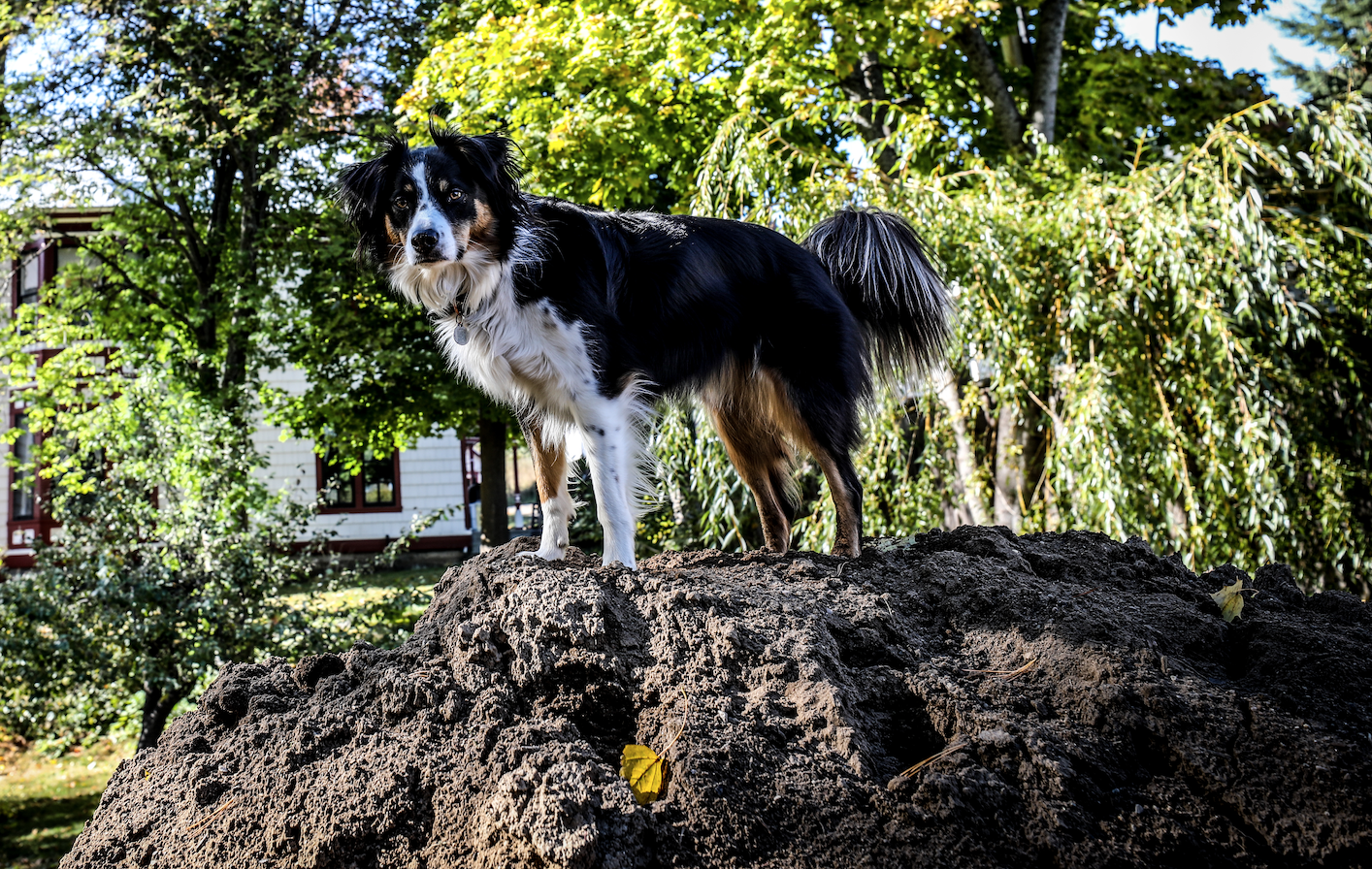
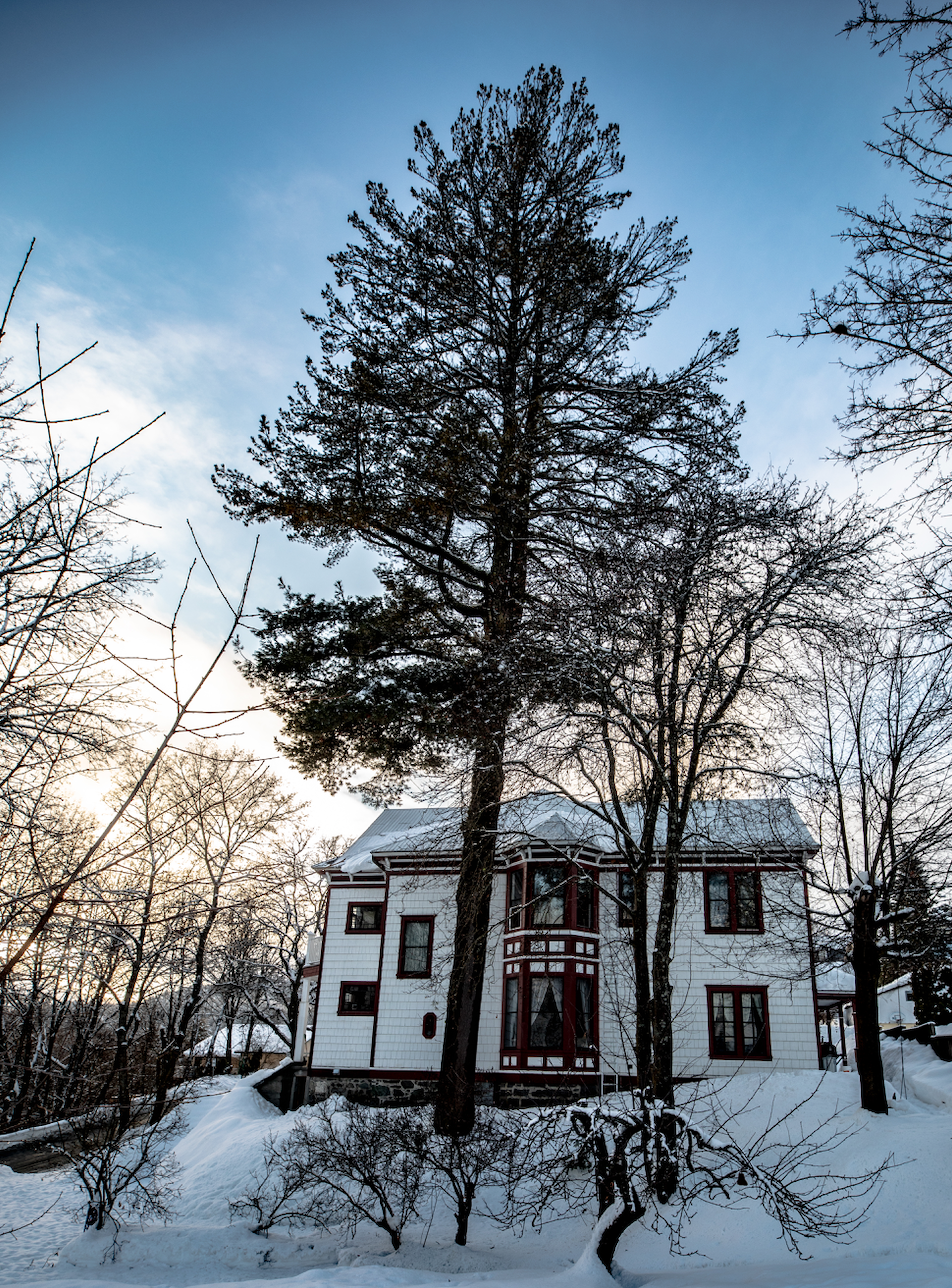
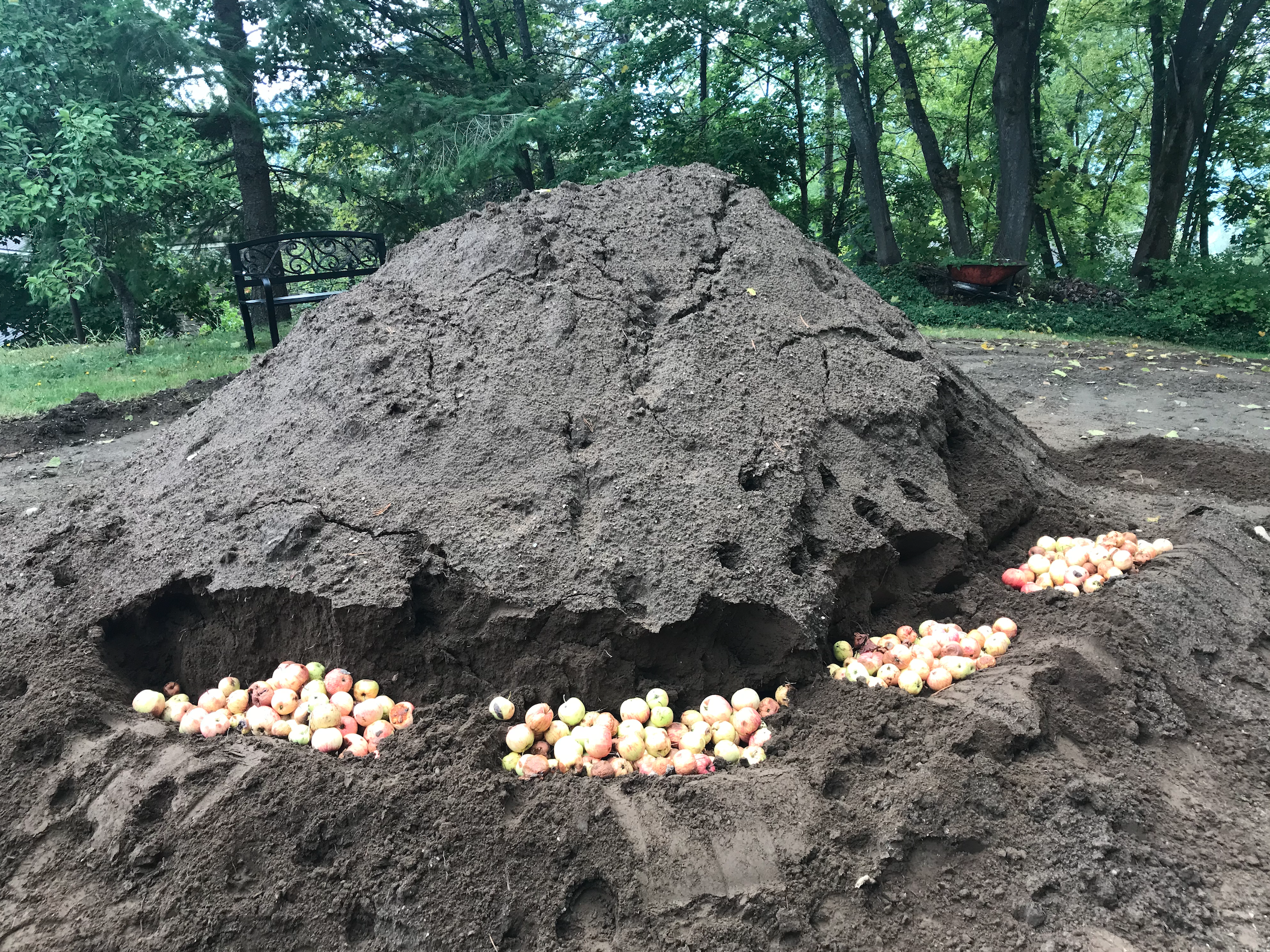
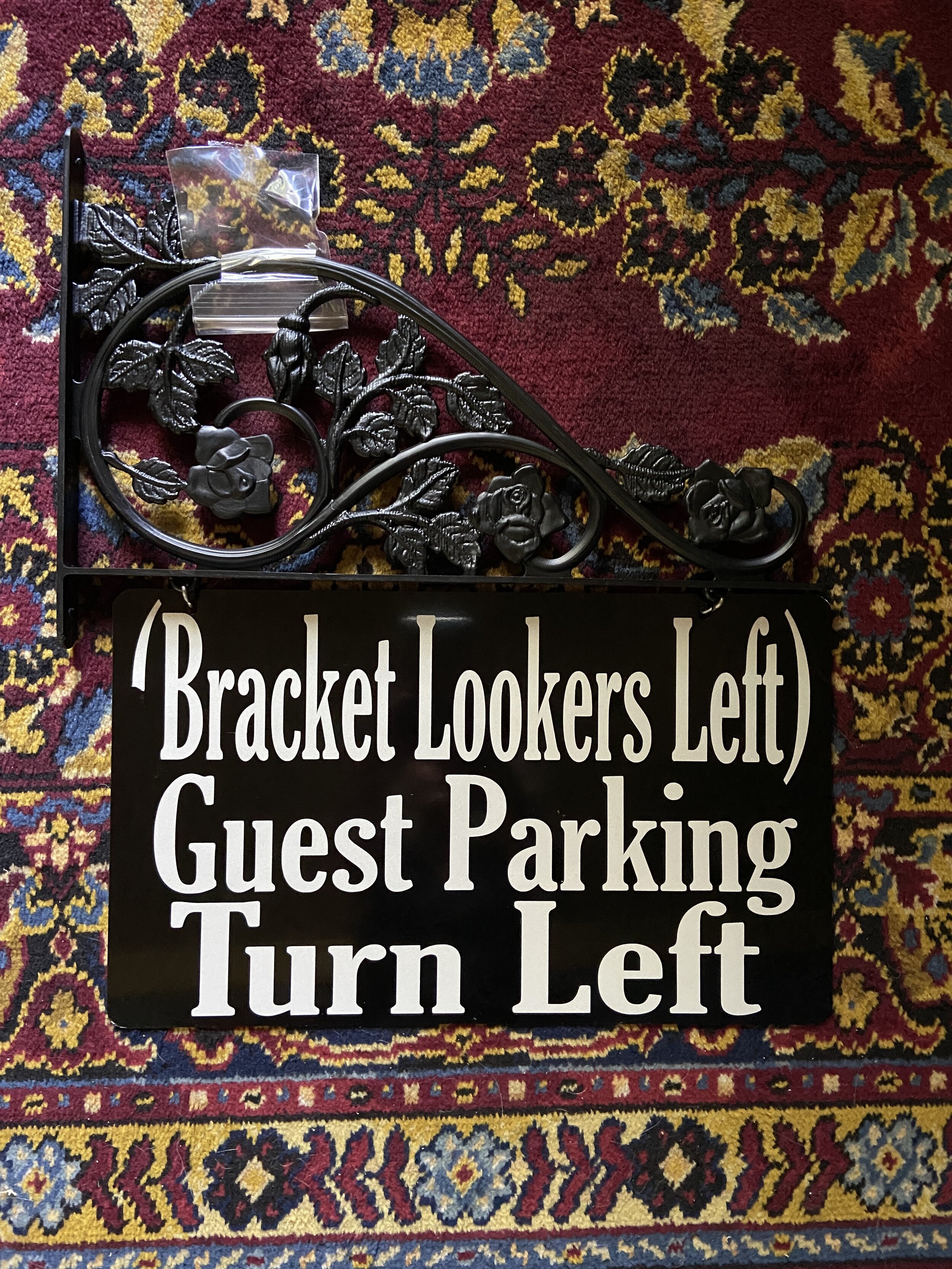
Then, in March 2020, nature made one decision for us. A massive western white pine beside the house came down during a fierce windstorm. Once the snow disappeared, the work expanded: guest parking, fencing, paths, new garden beds, vegetable gardens and a considerable amount of earth moving.
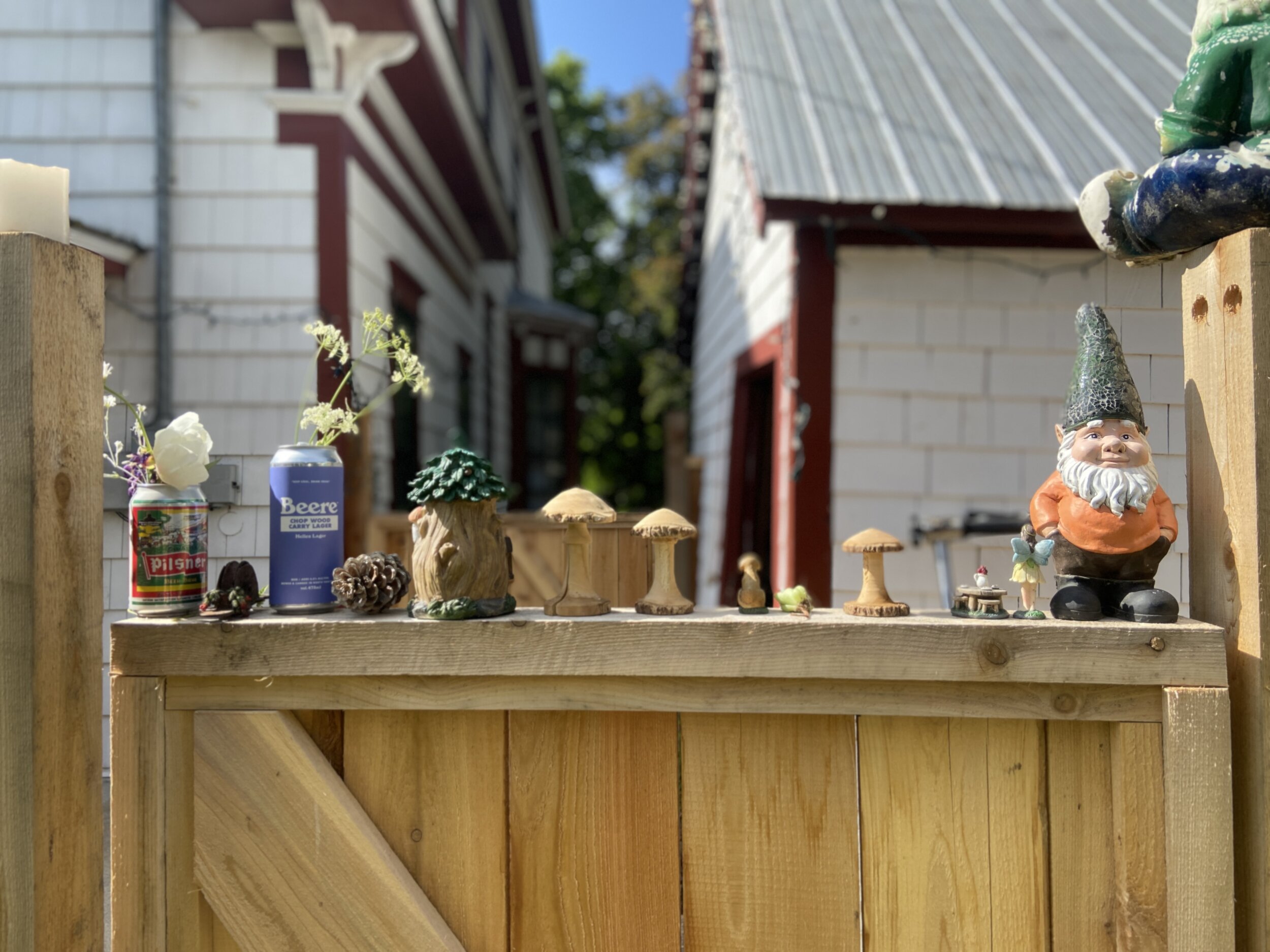
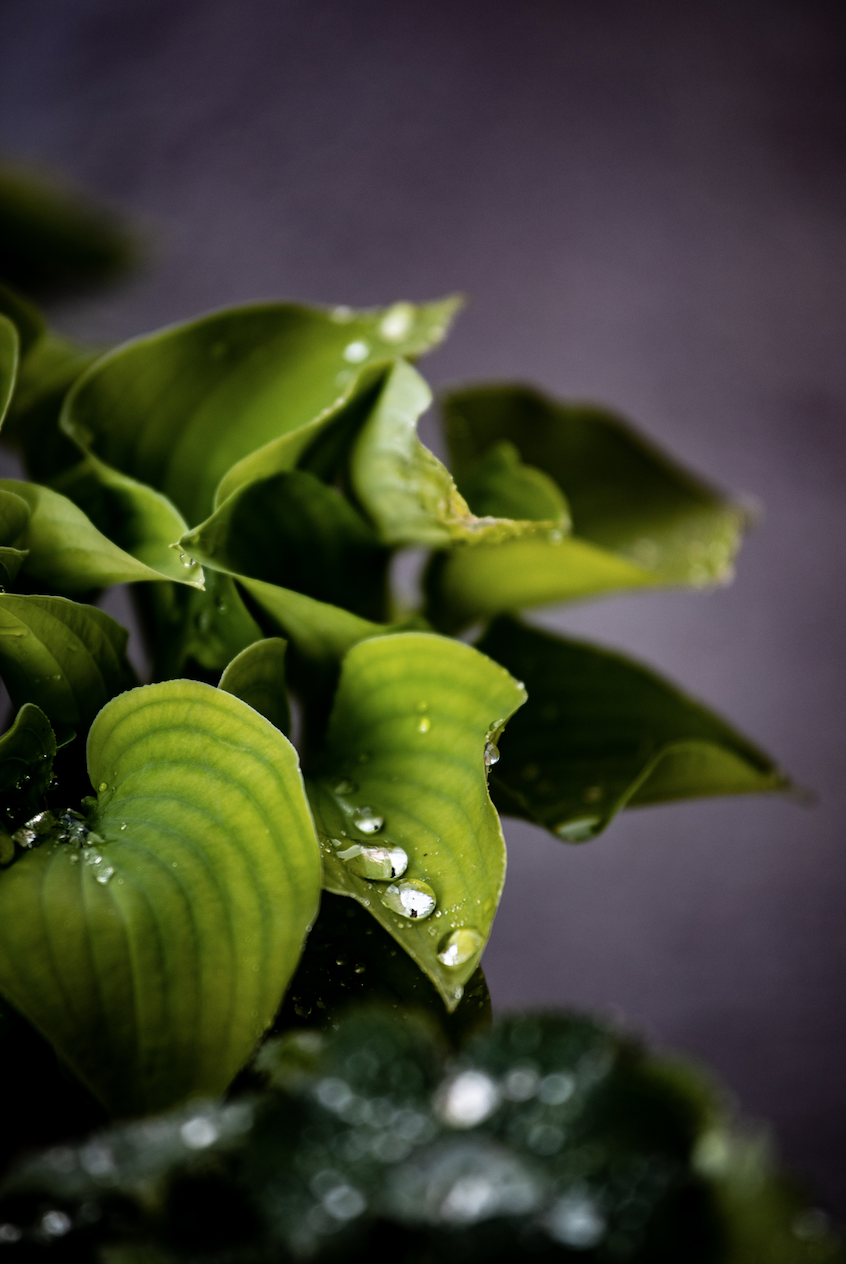
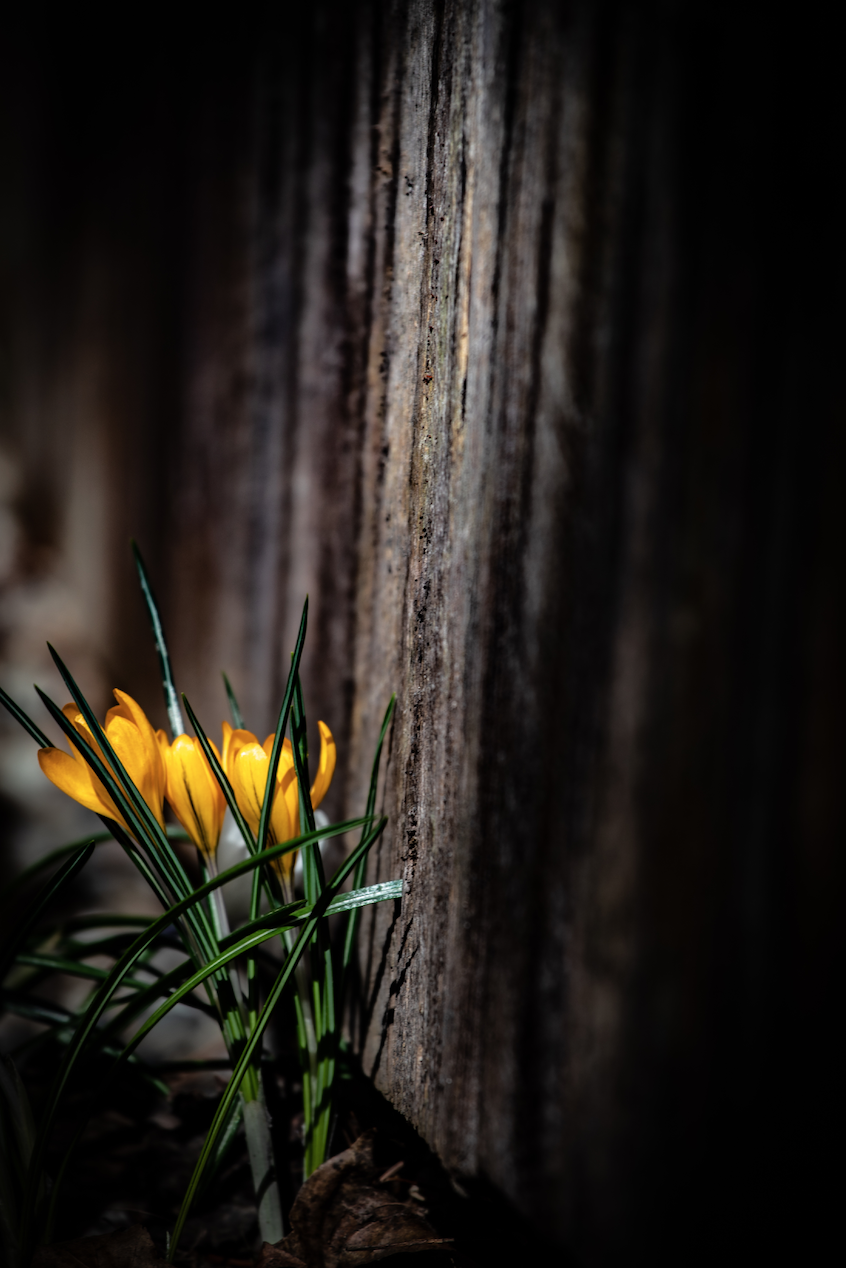
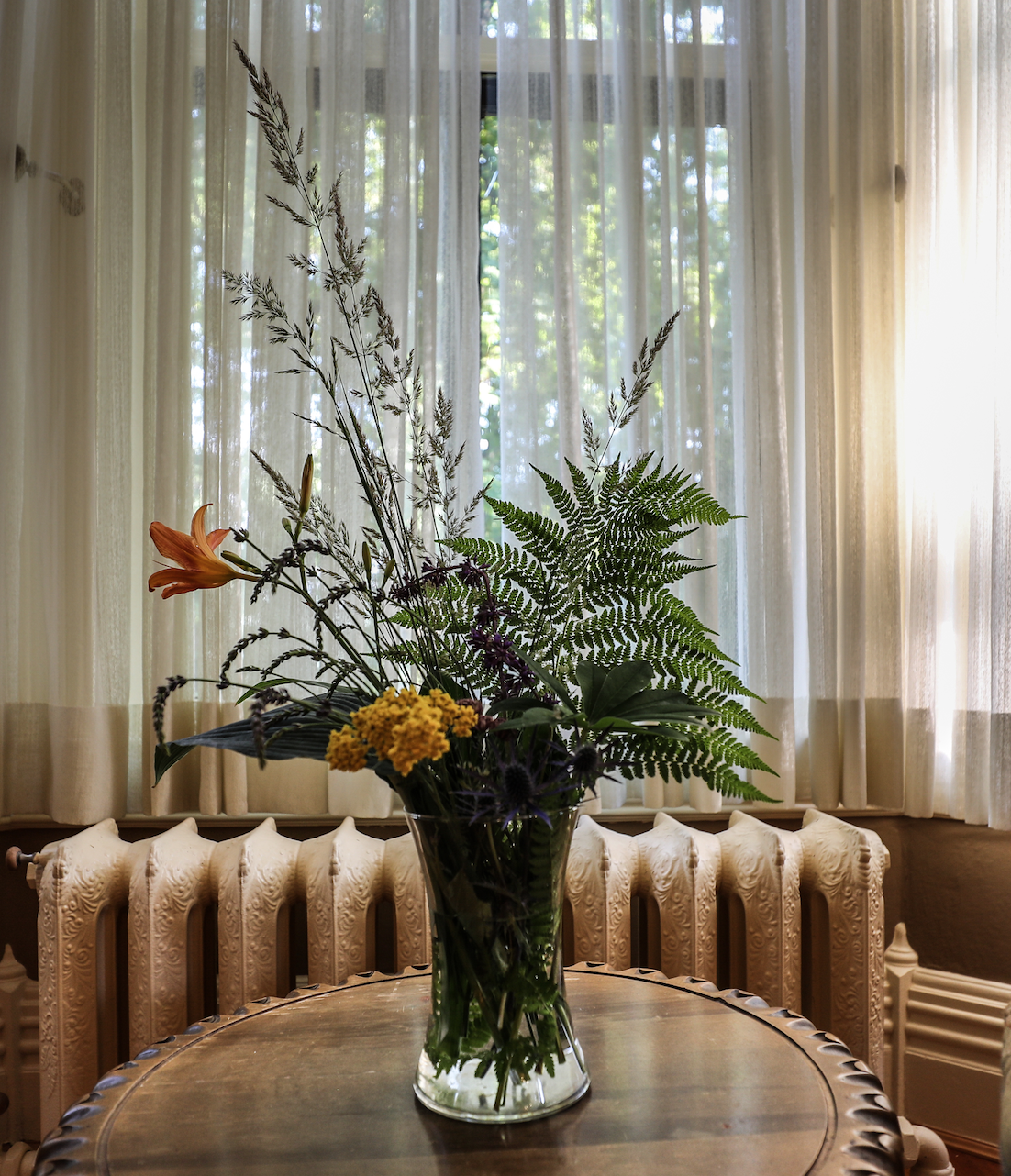
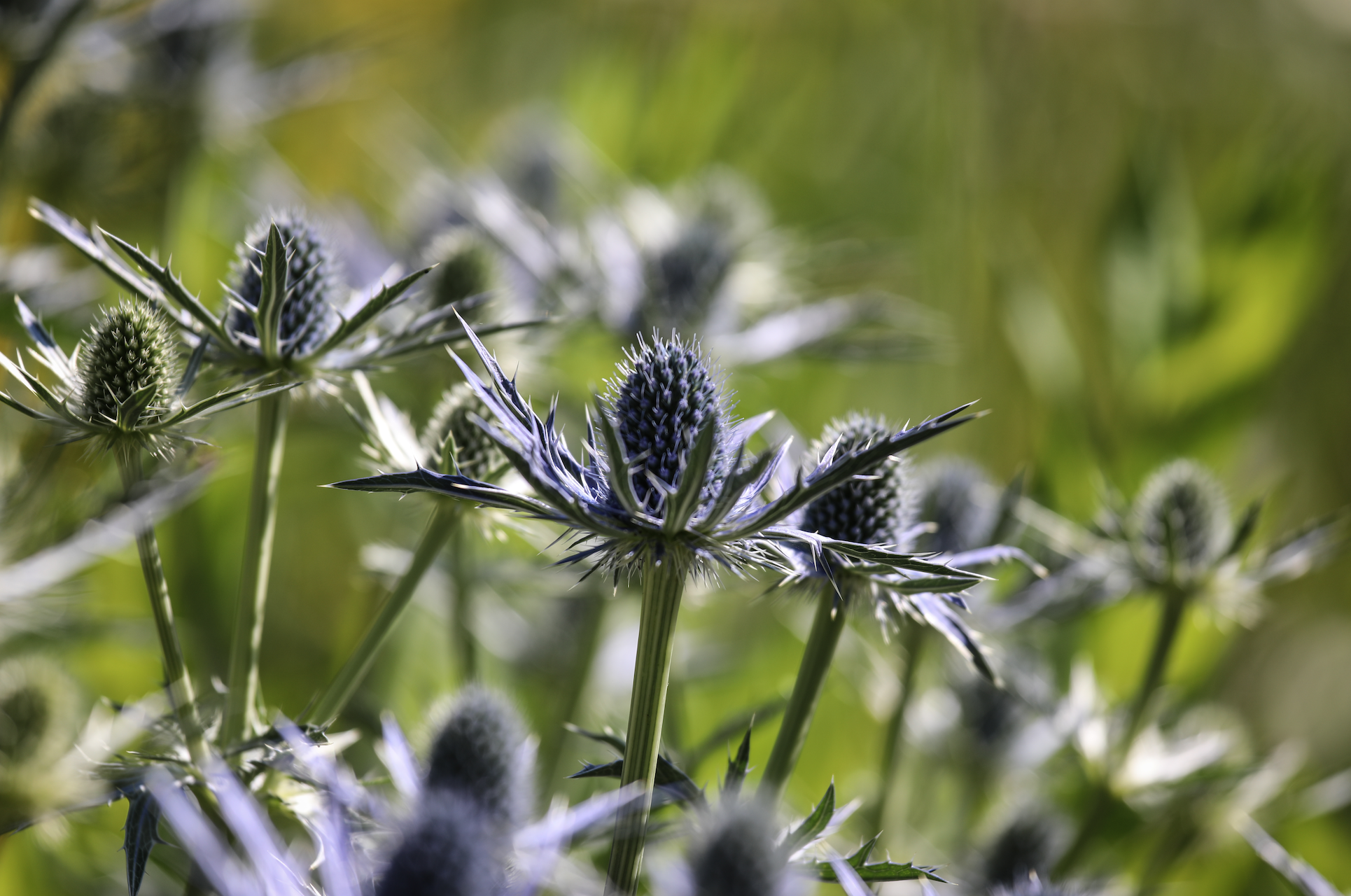
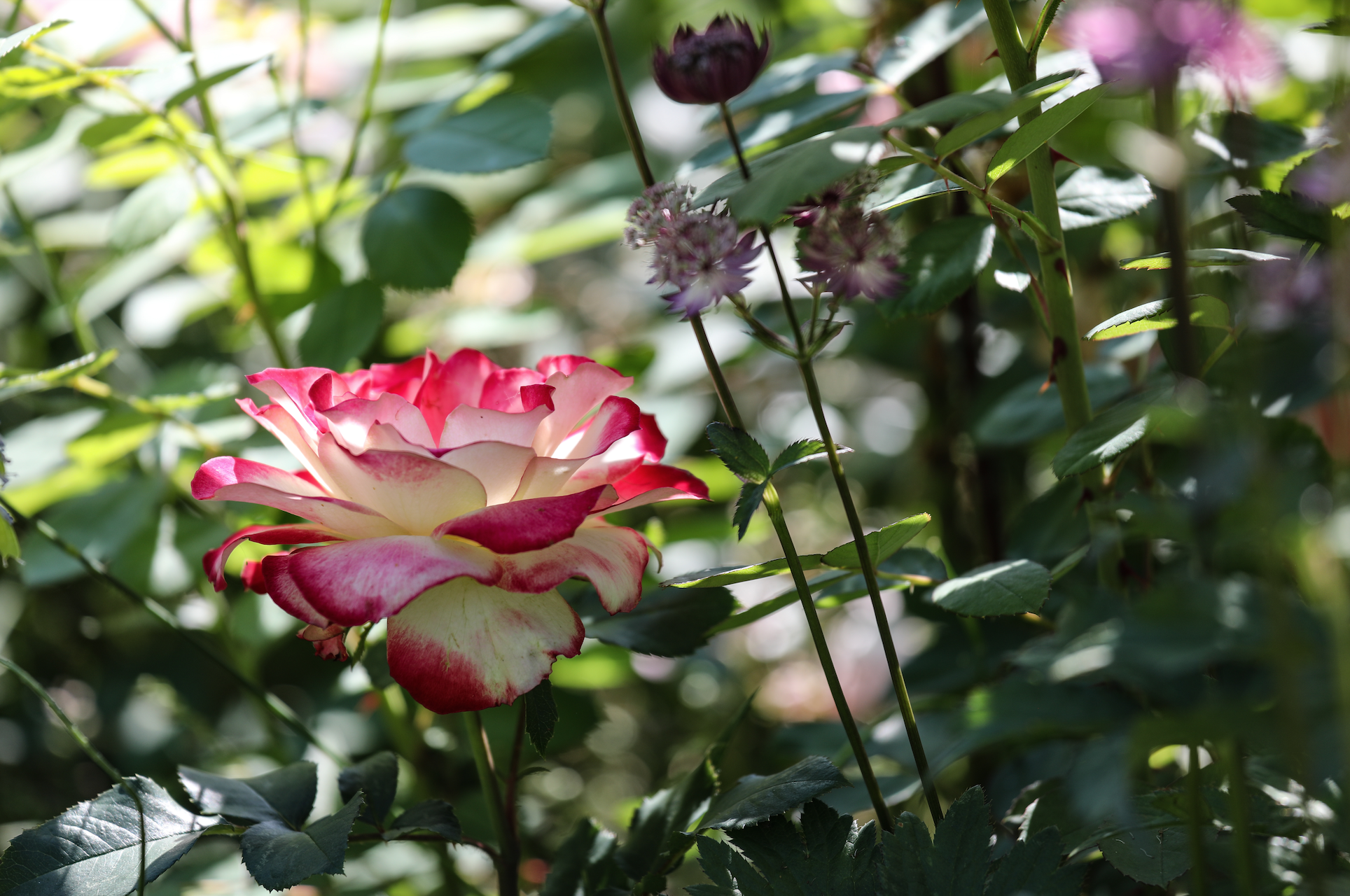
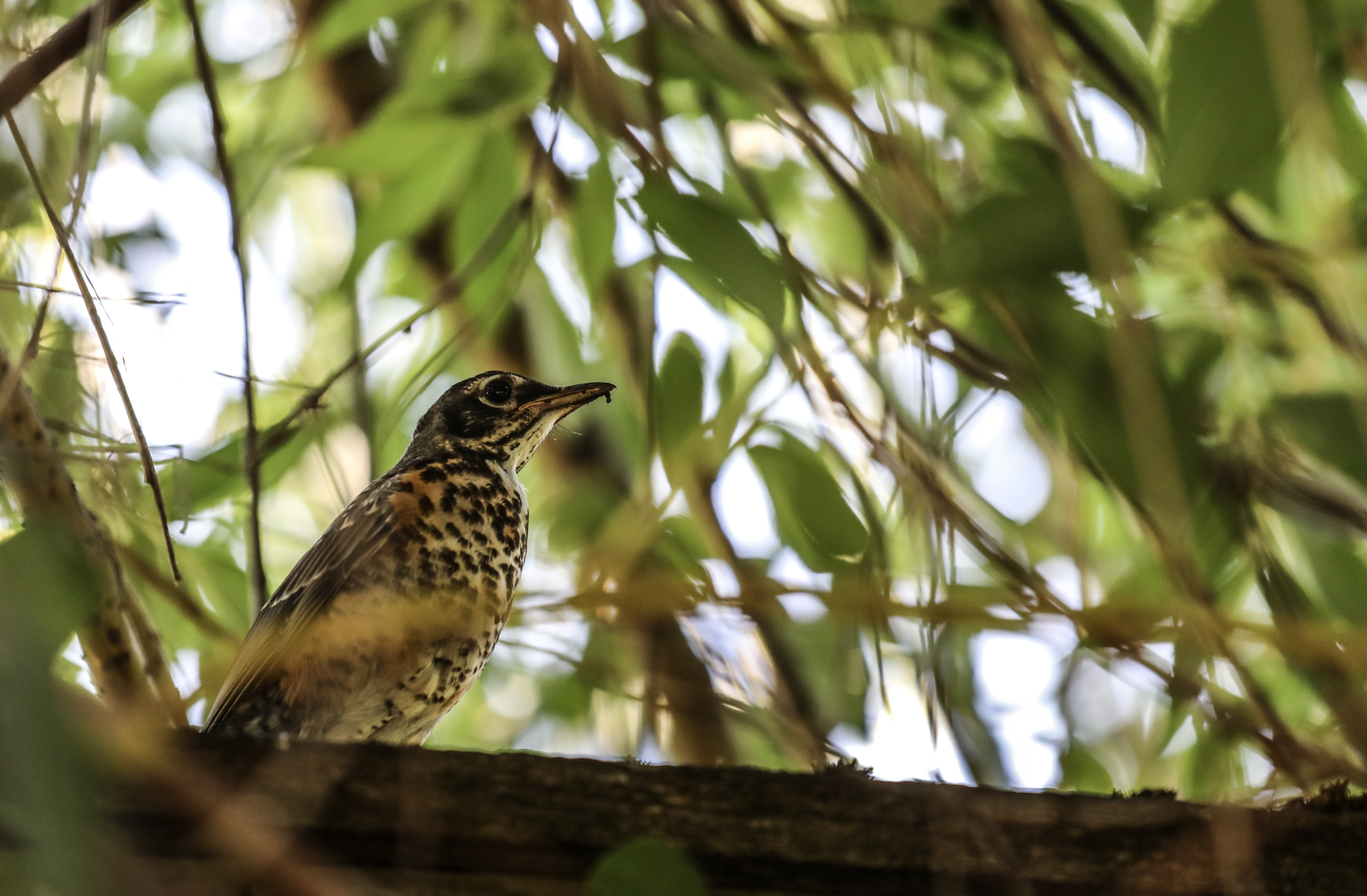
The grounds have continued to evolve ever since. What began largely as practical work has gradually become one of our favourite parts of the property, with shaded gardens, gathering spaces and plenty of room for things to grow a little wild.


The Basement
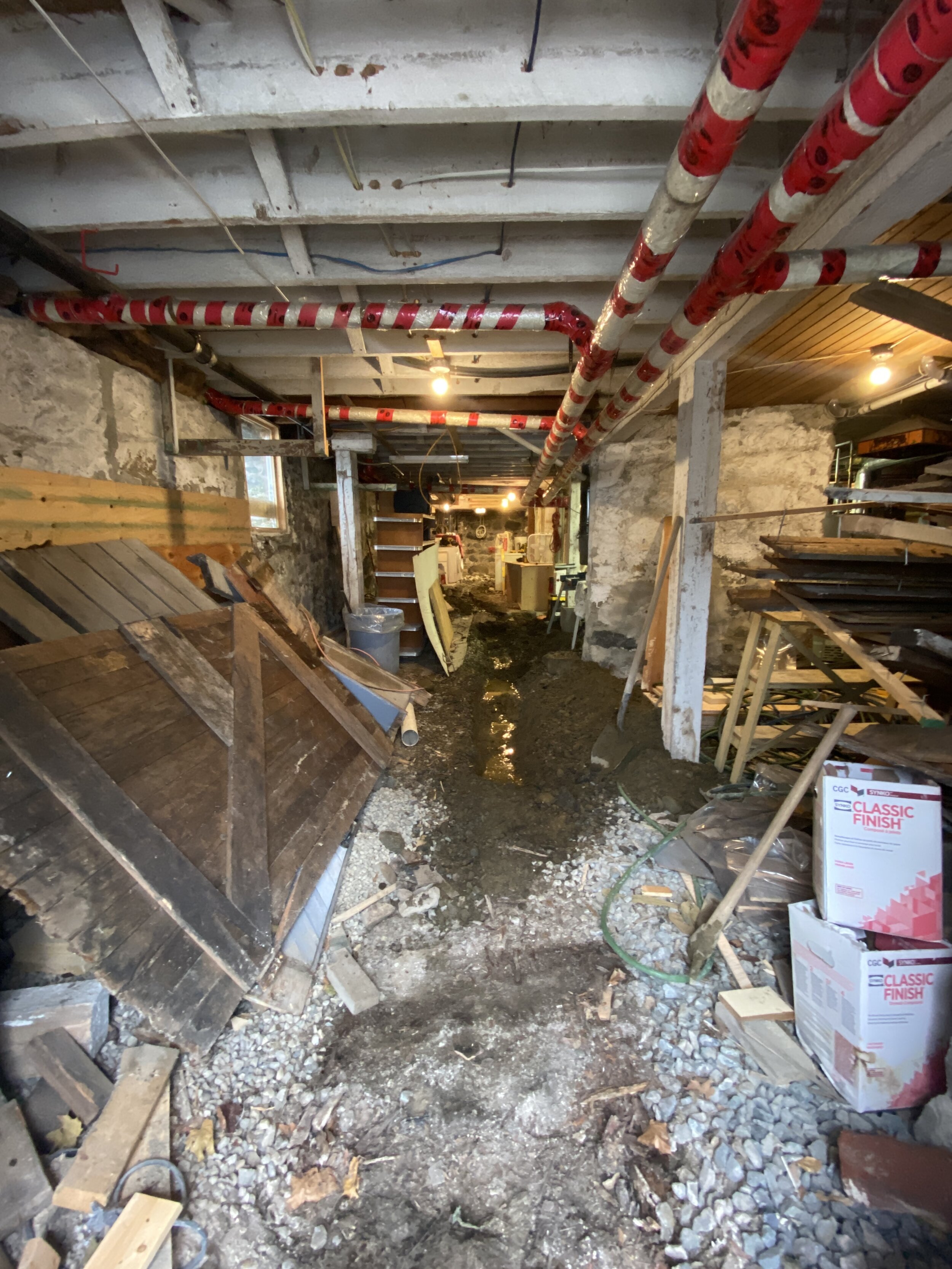
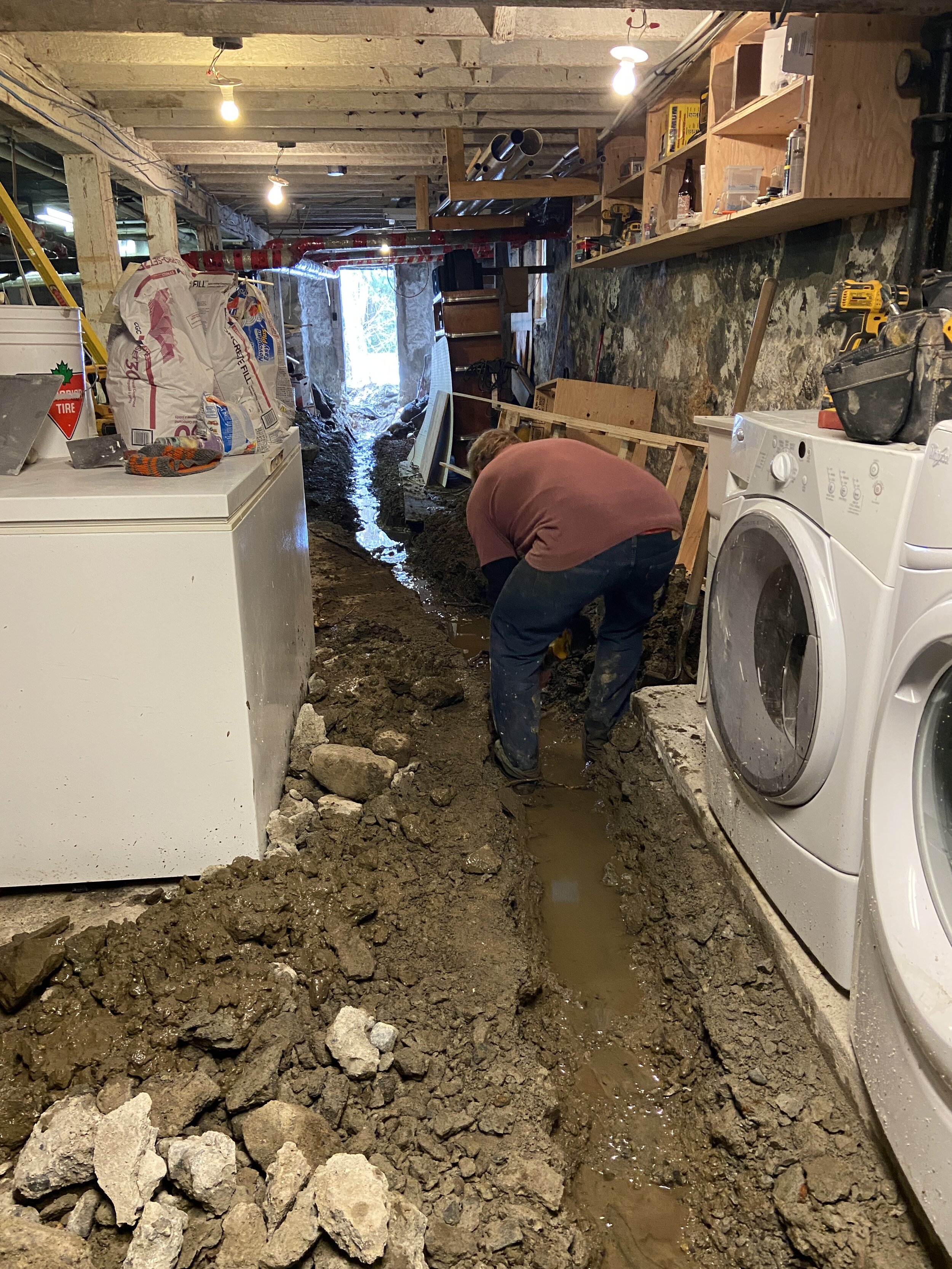
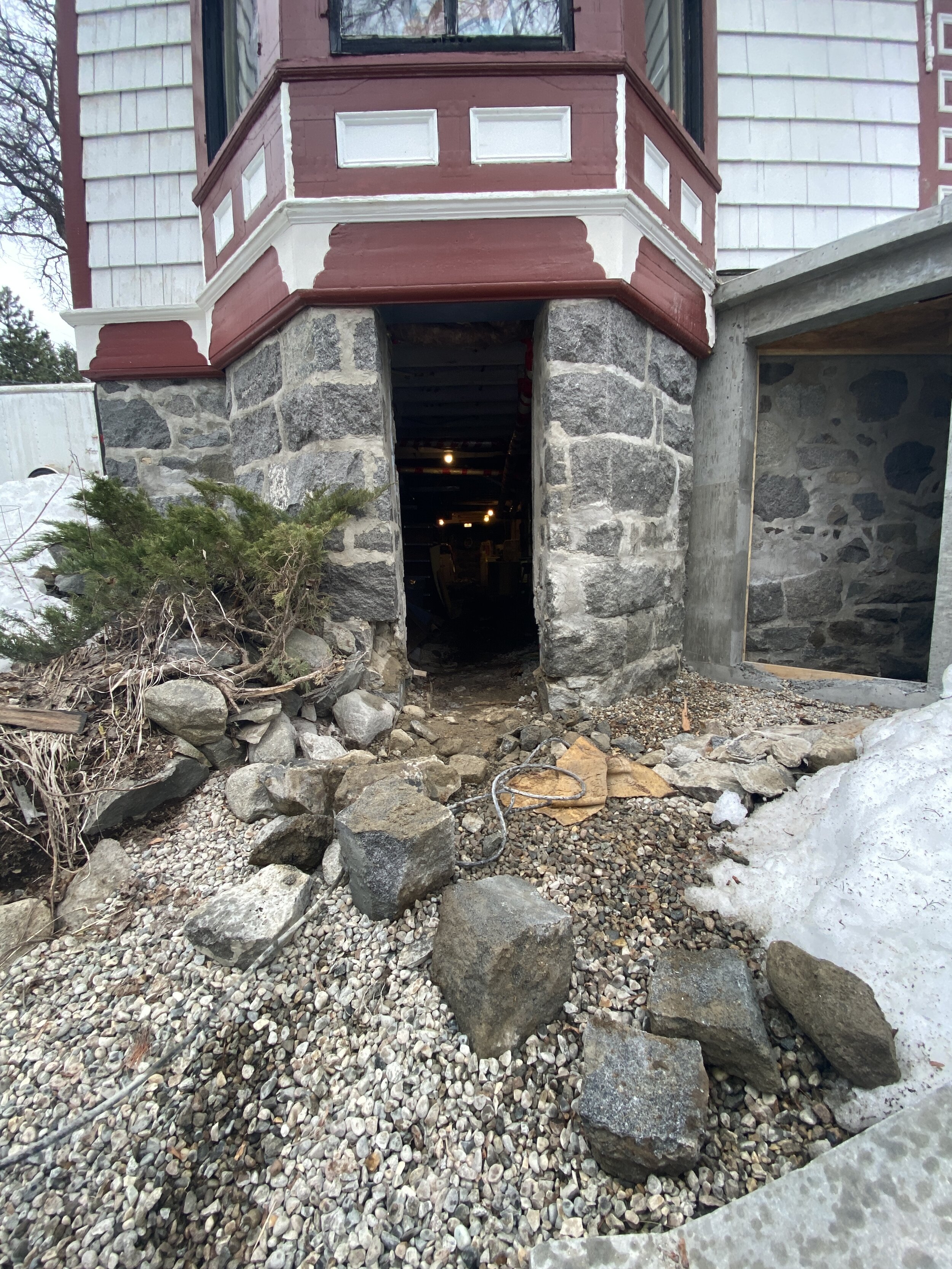
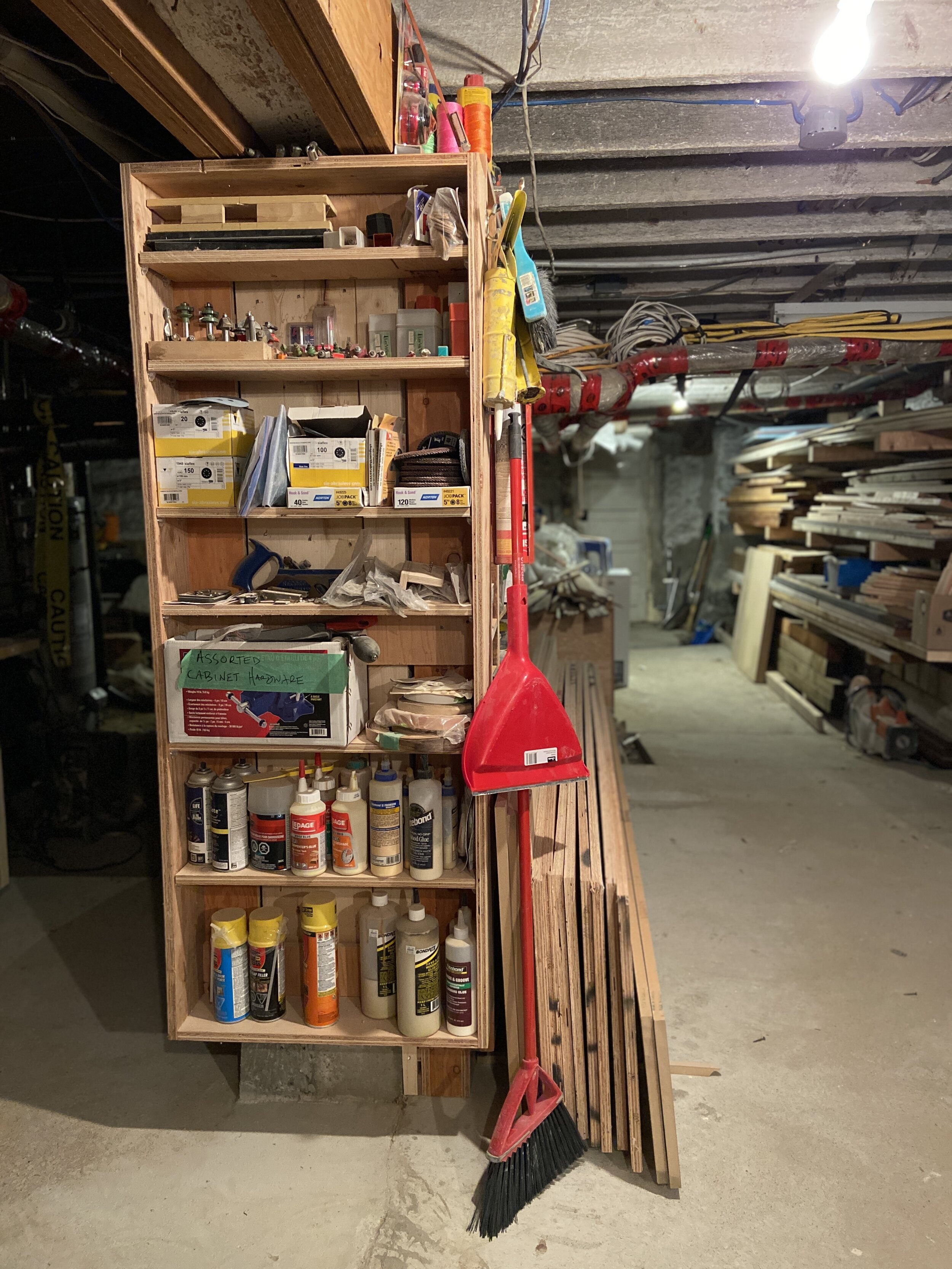
When we bought the house, the basement had a coal-blackened gravel floor, seasonal water running through it and old asbestos-wrapped pipes. It was not somewhere anyone particularly wanted to spend time.
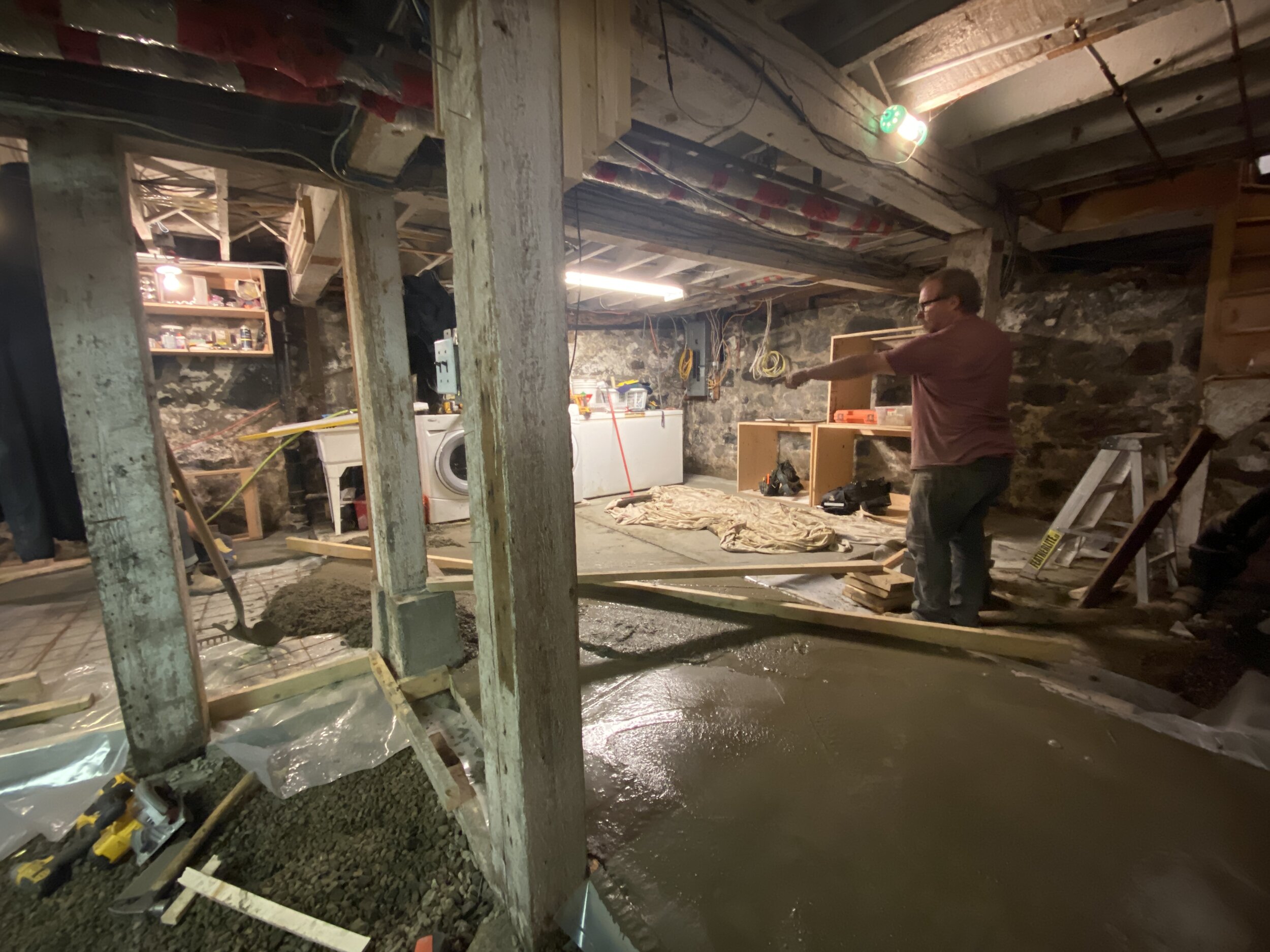
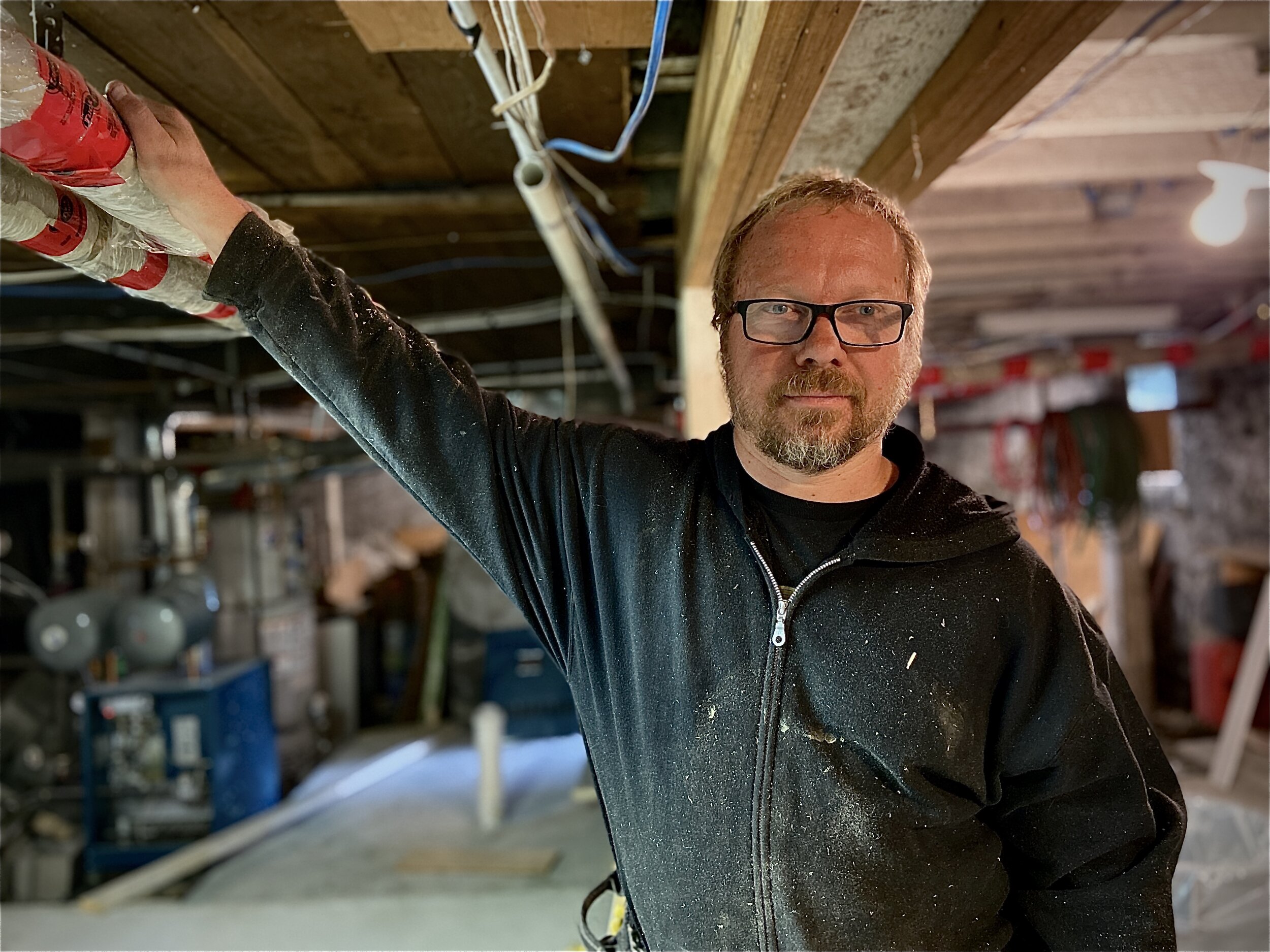
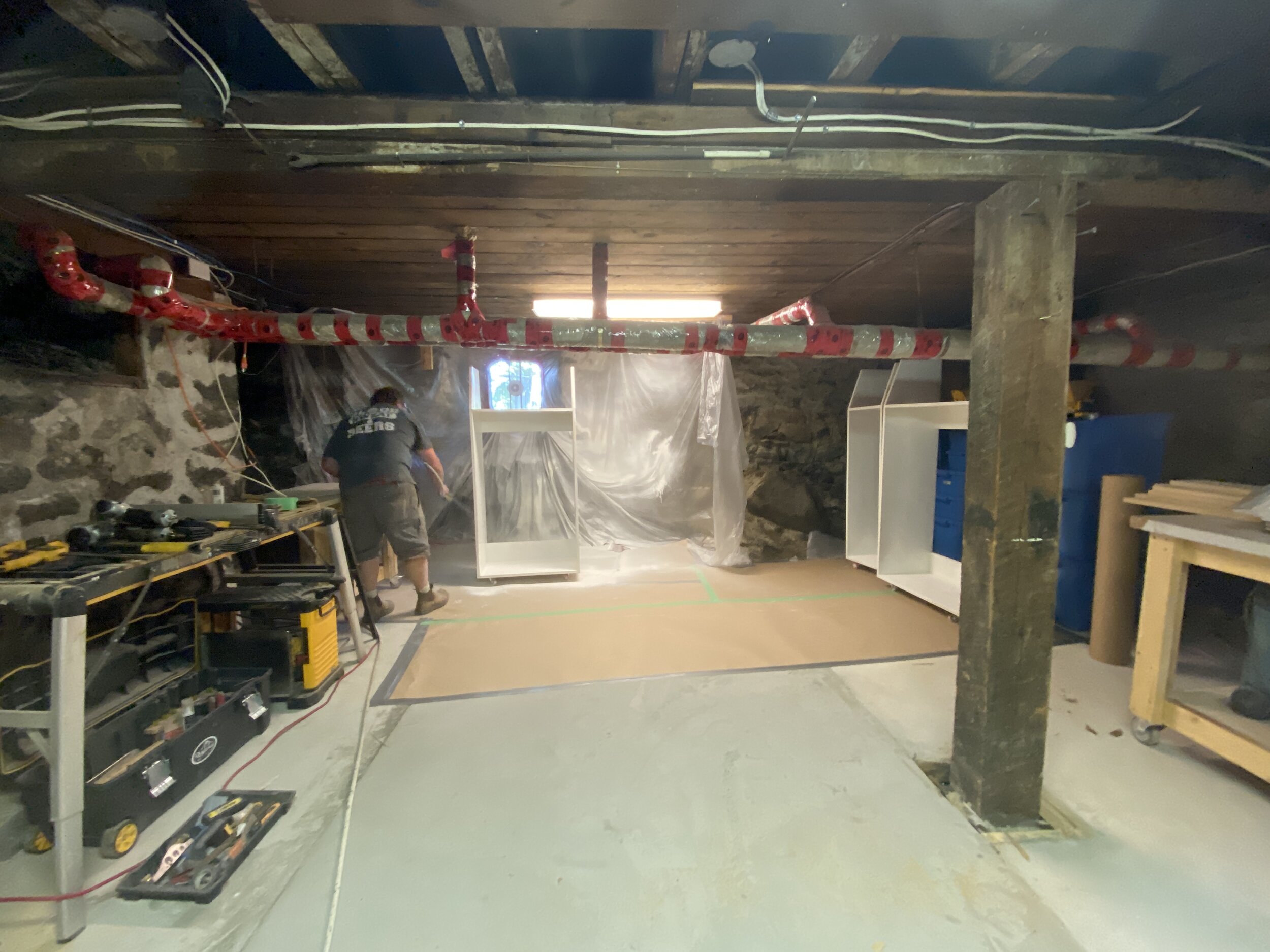
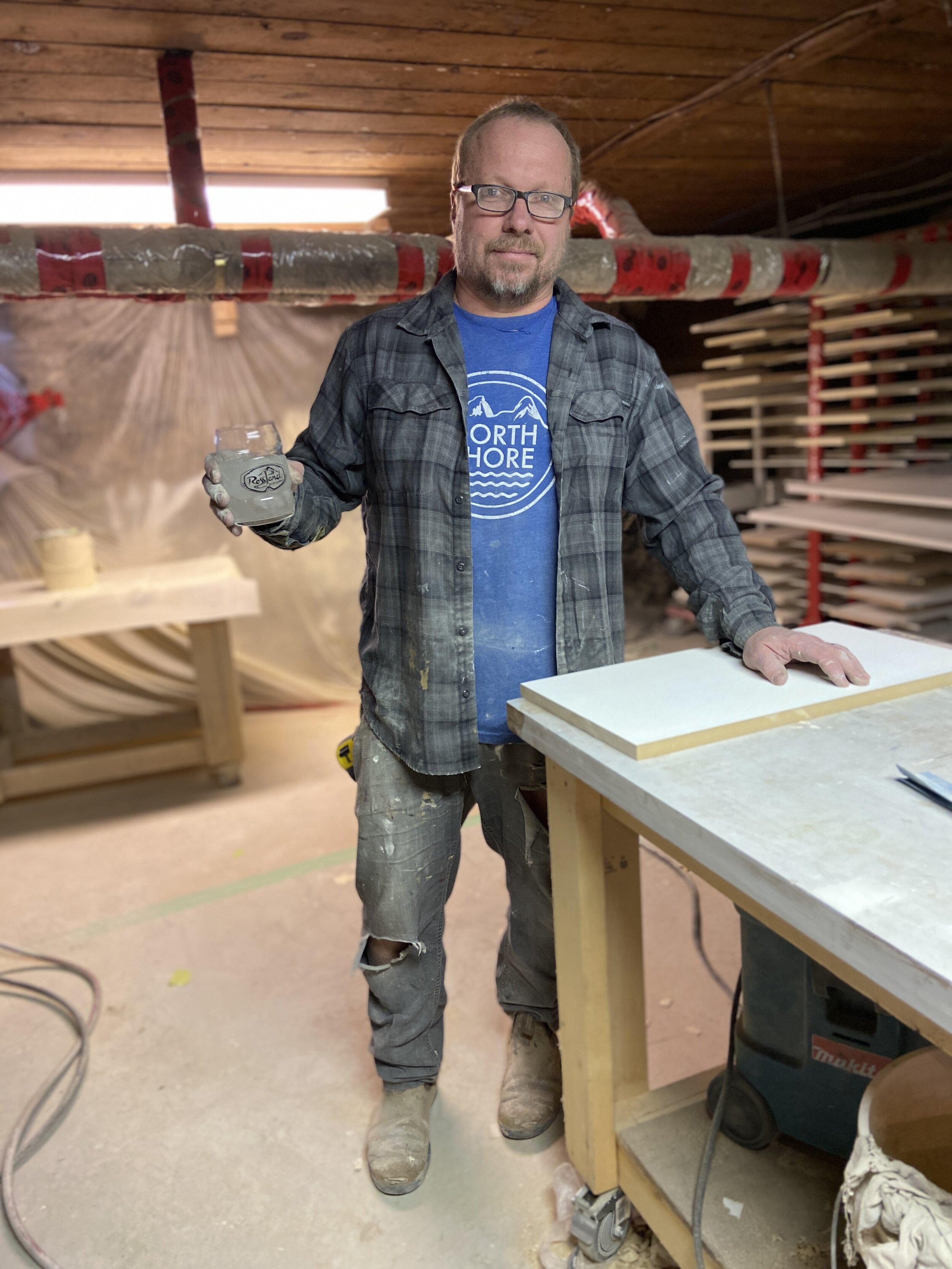
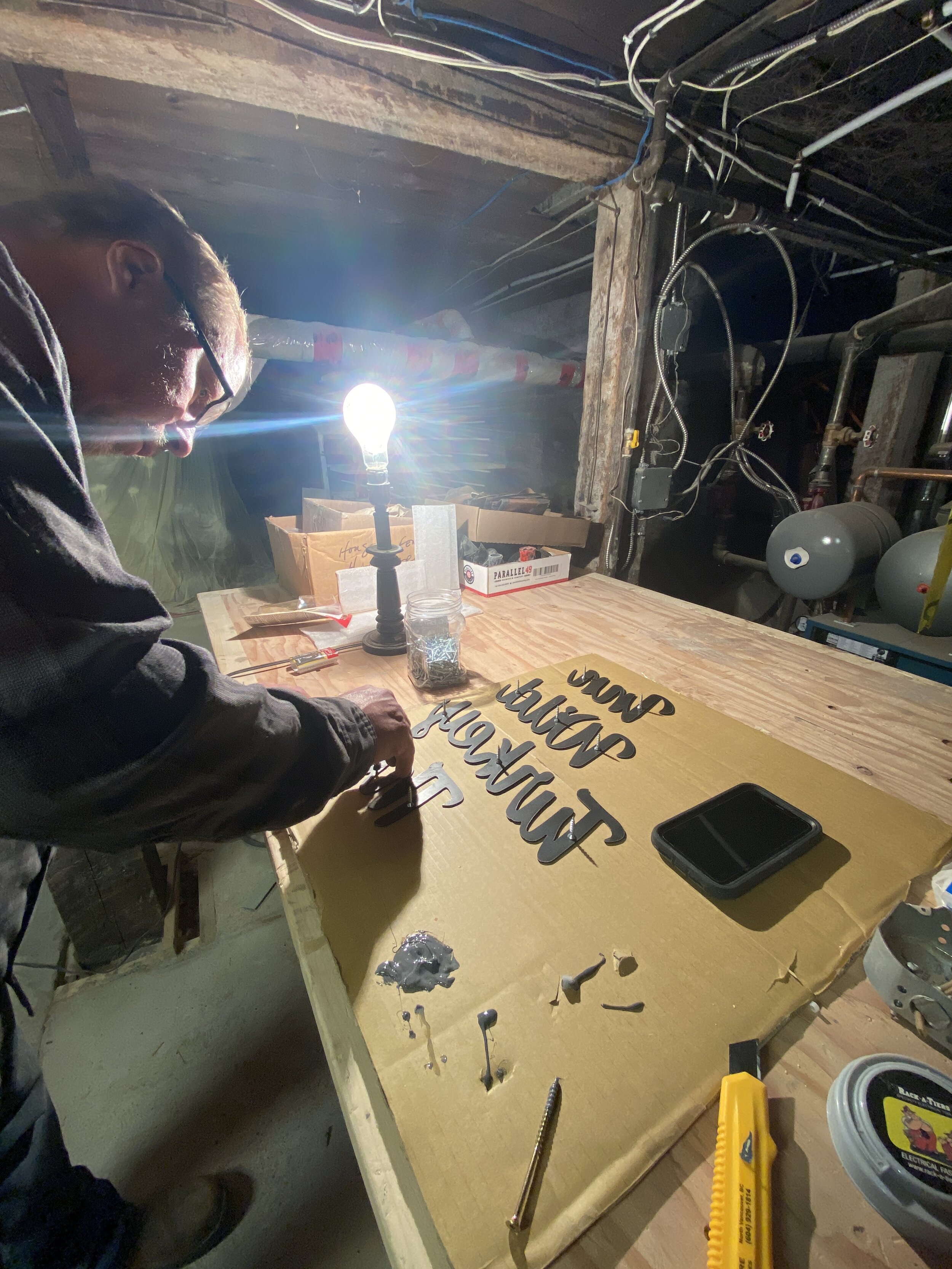
The quieter months of 2020 gave us an opportunity to tackle it properly. Mike excavated around the interior perimeter, installed drainage to redirect groundwater, and a new concrete floor was poured.
It was heavy, wet, dirty work, but it transformed the lowest level of the house from a problem into useful space.
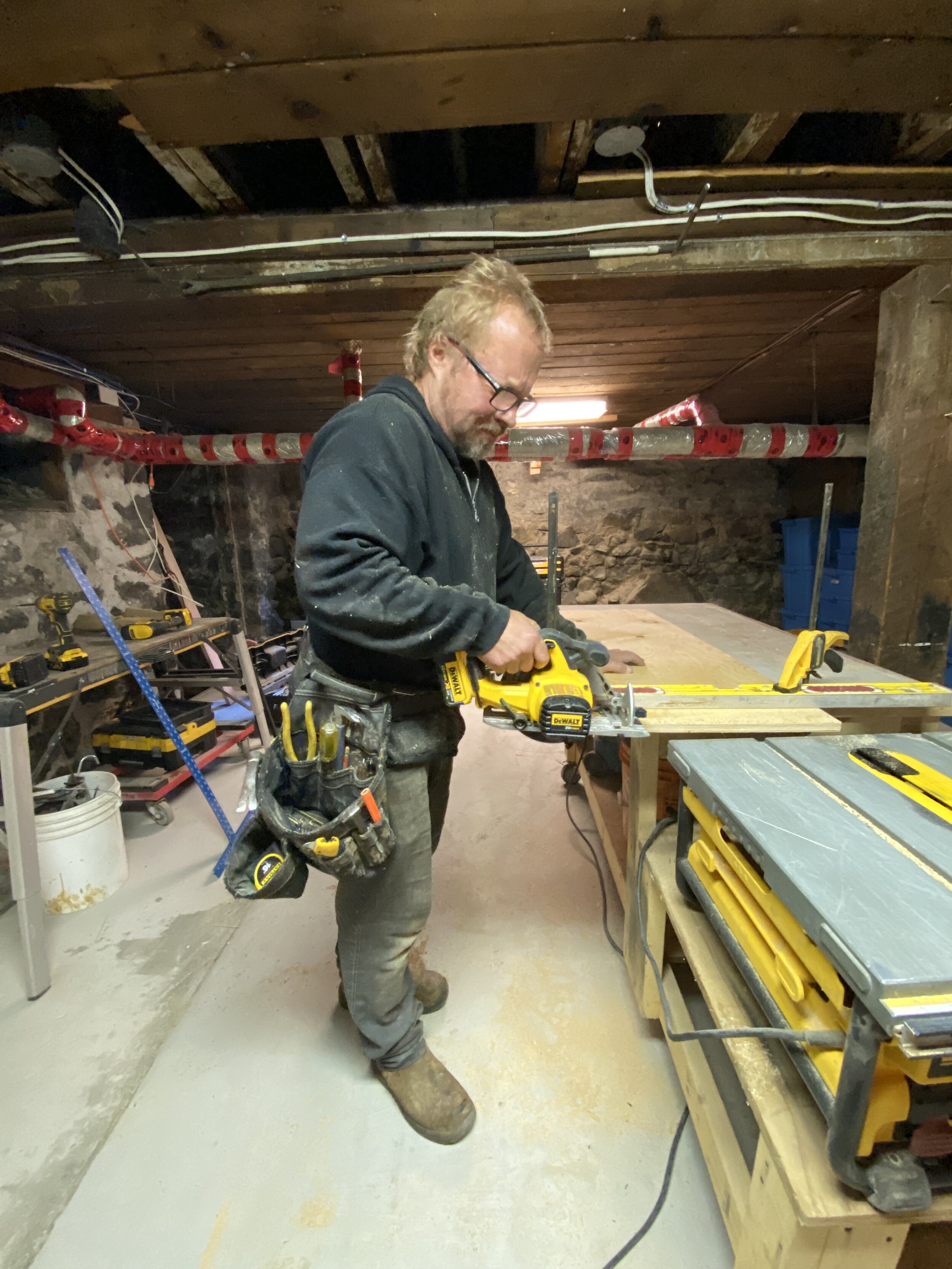
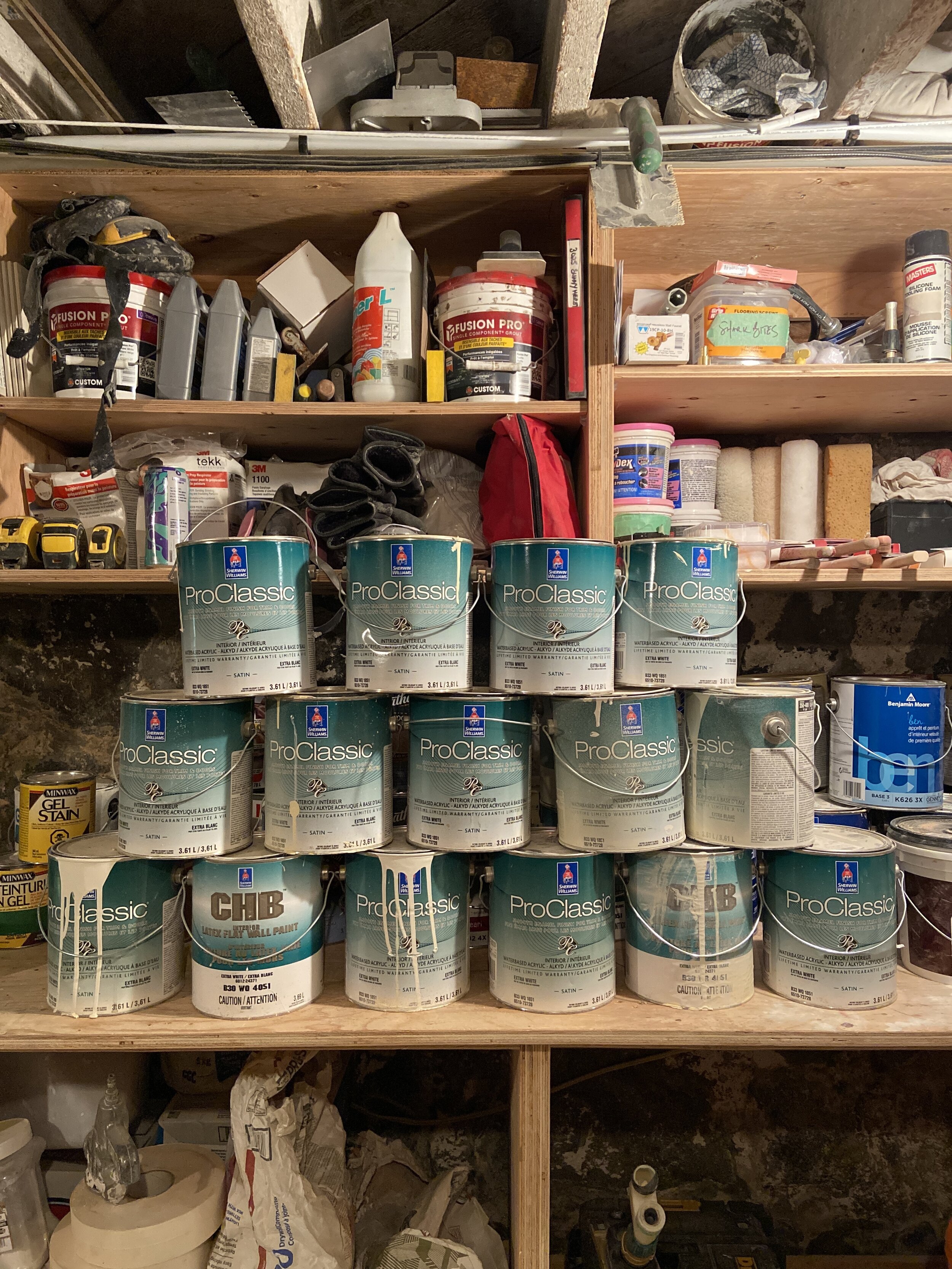
Today it is dry and working hard as workshop, laundry, storage and gear space for skis and bikes.
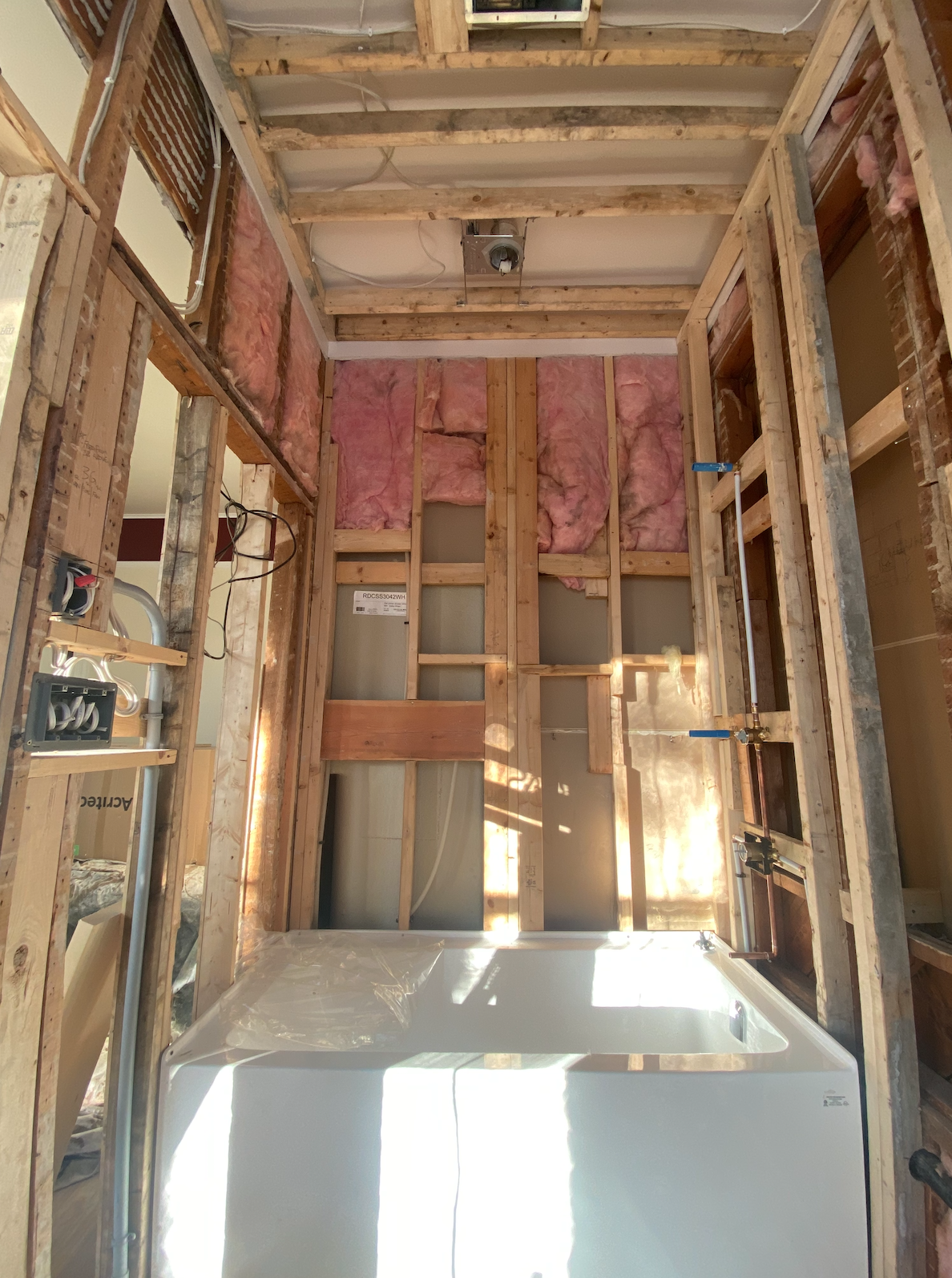
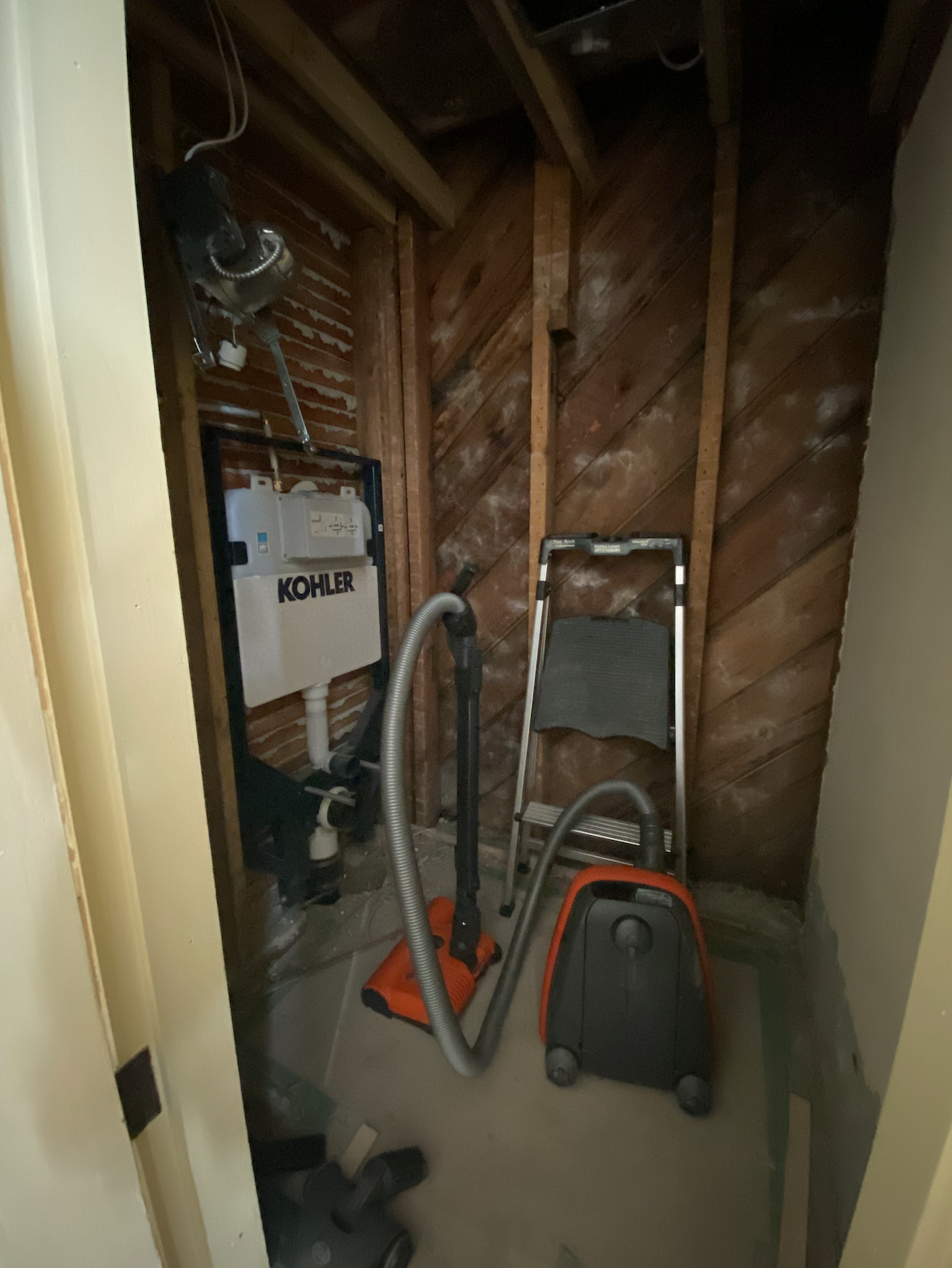
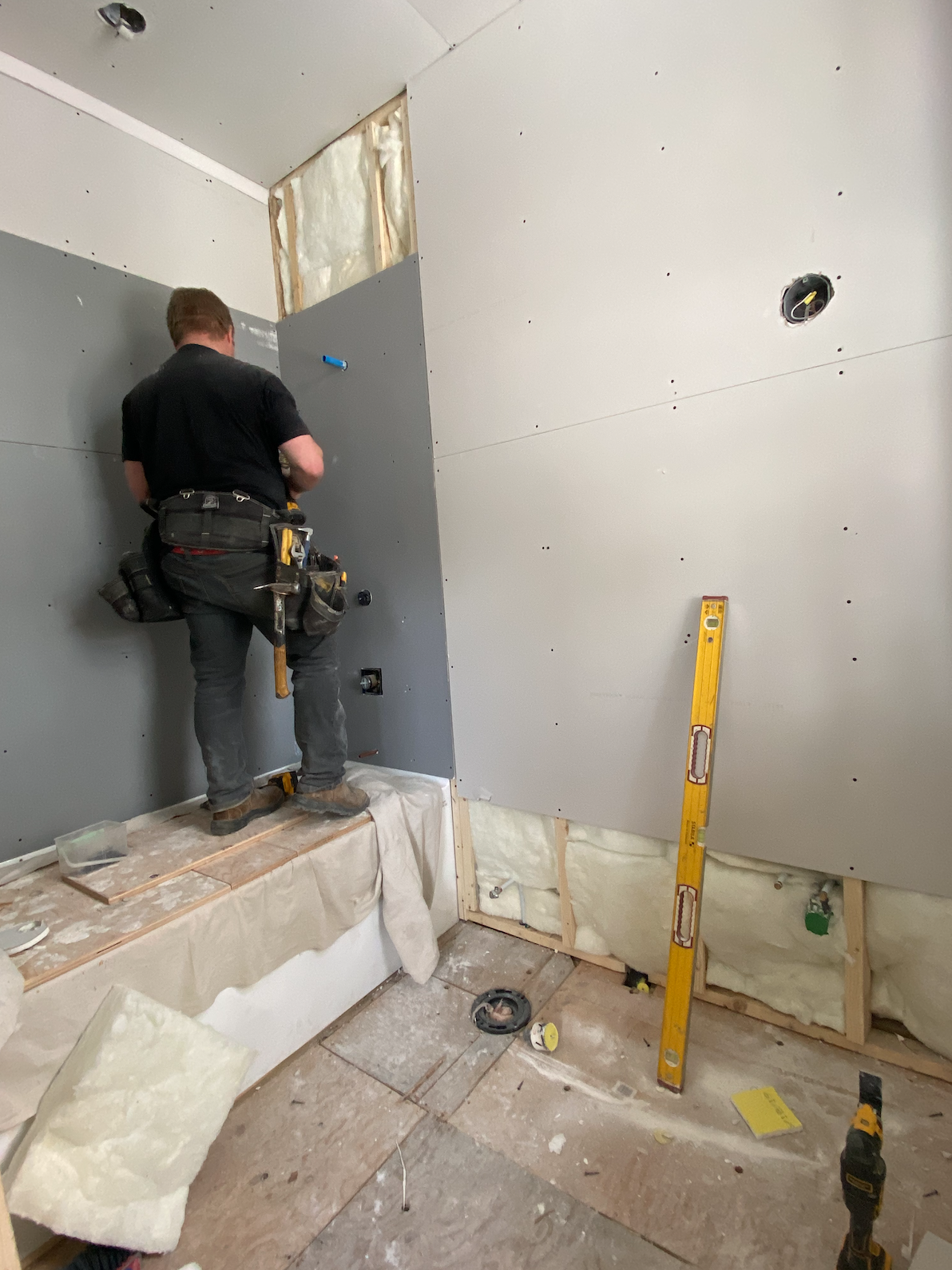
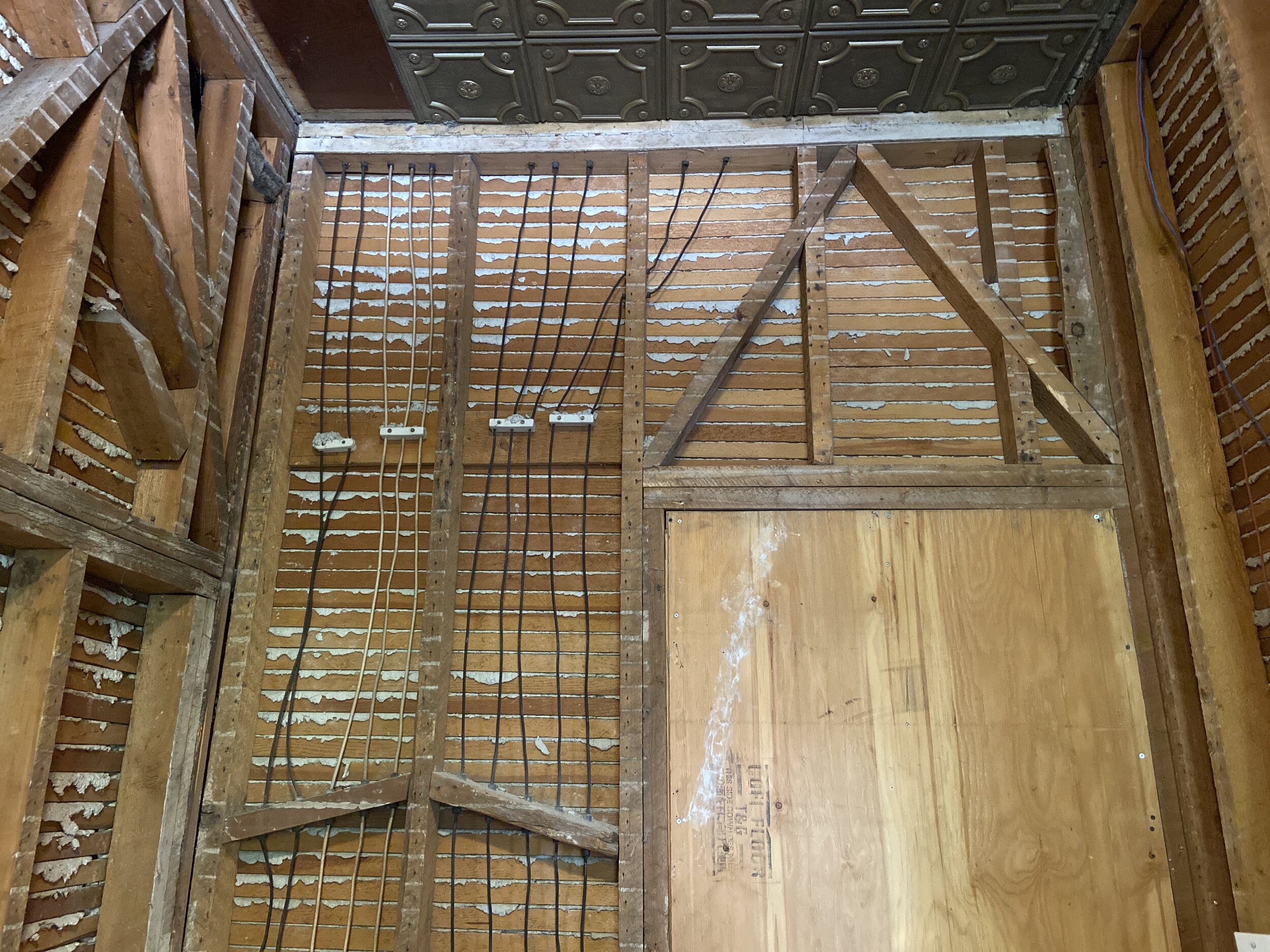
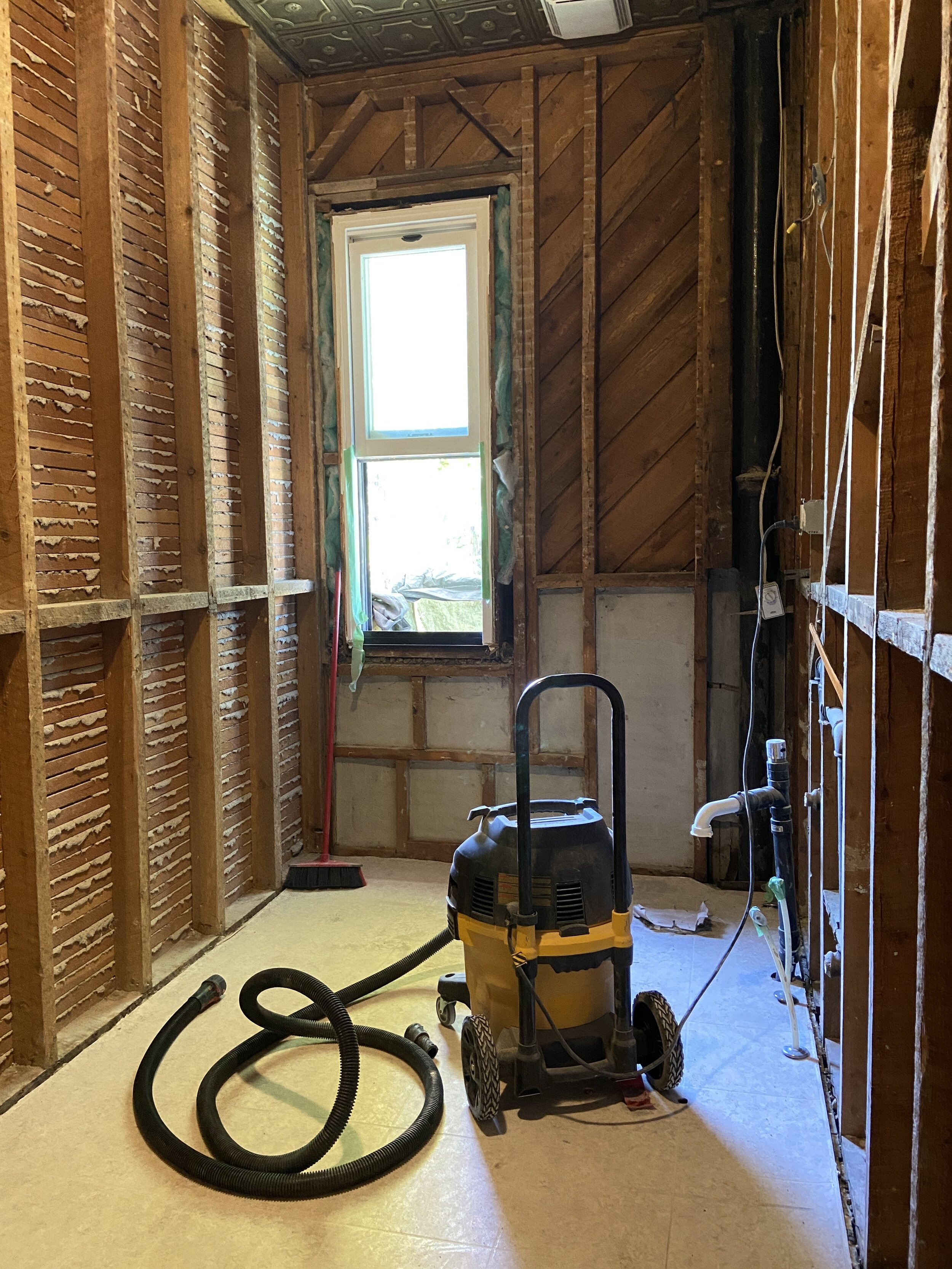
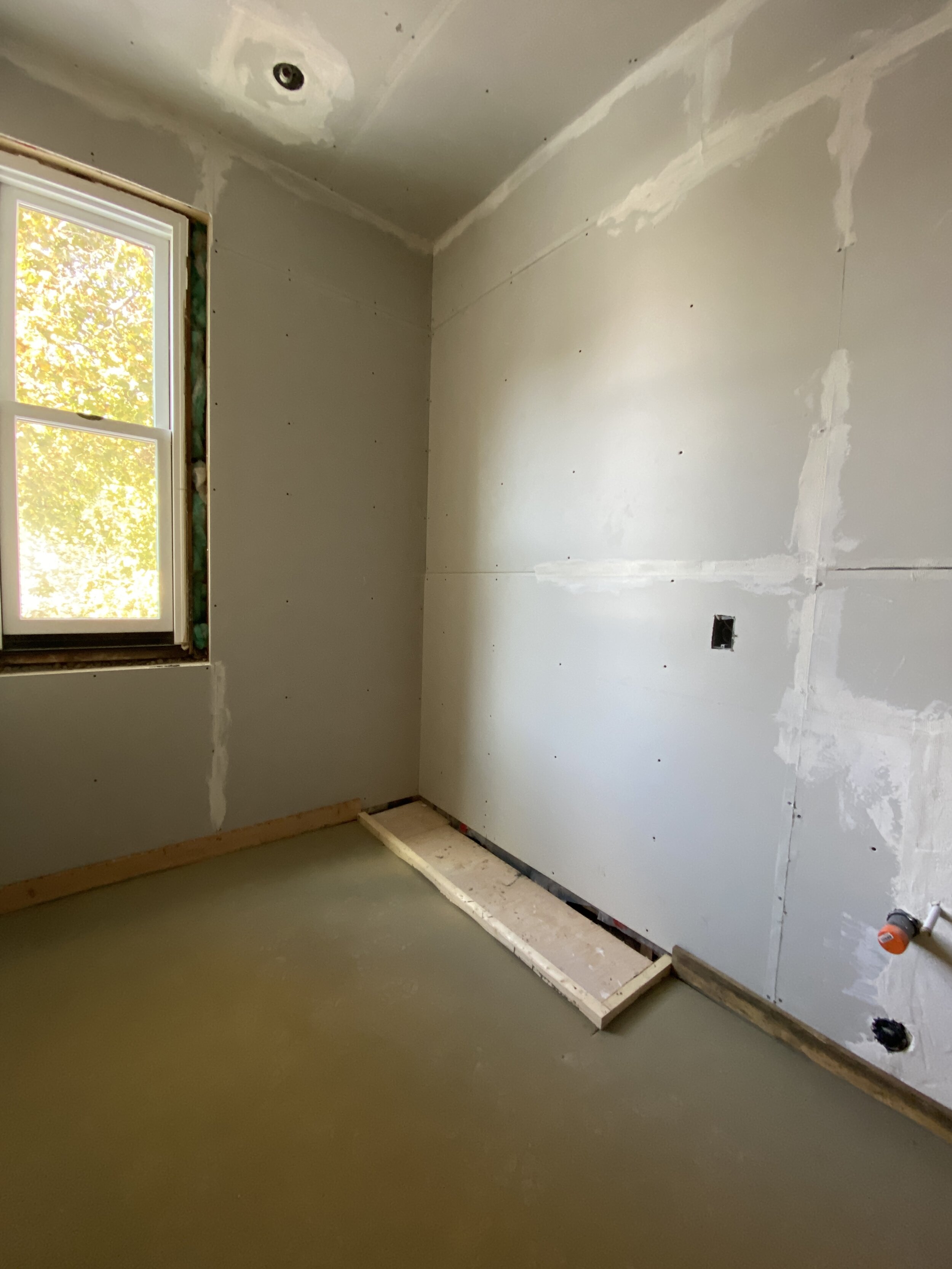
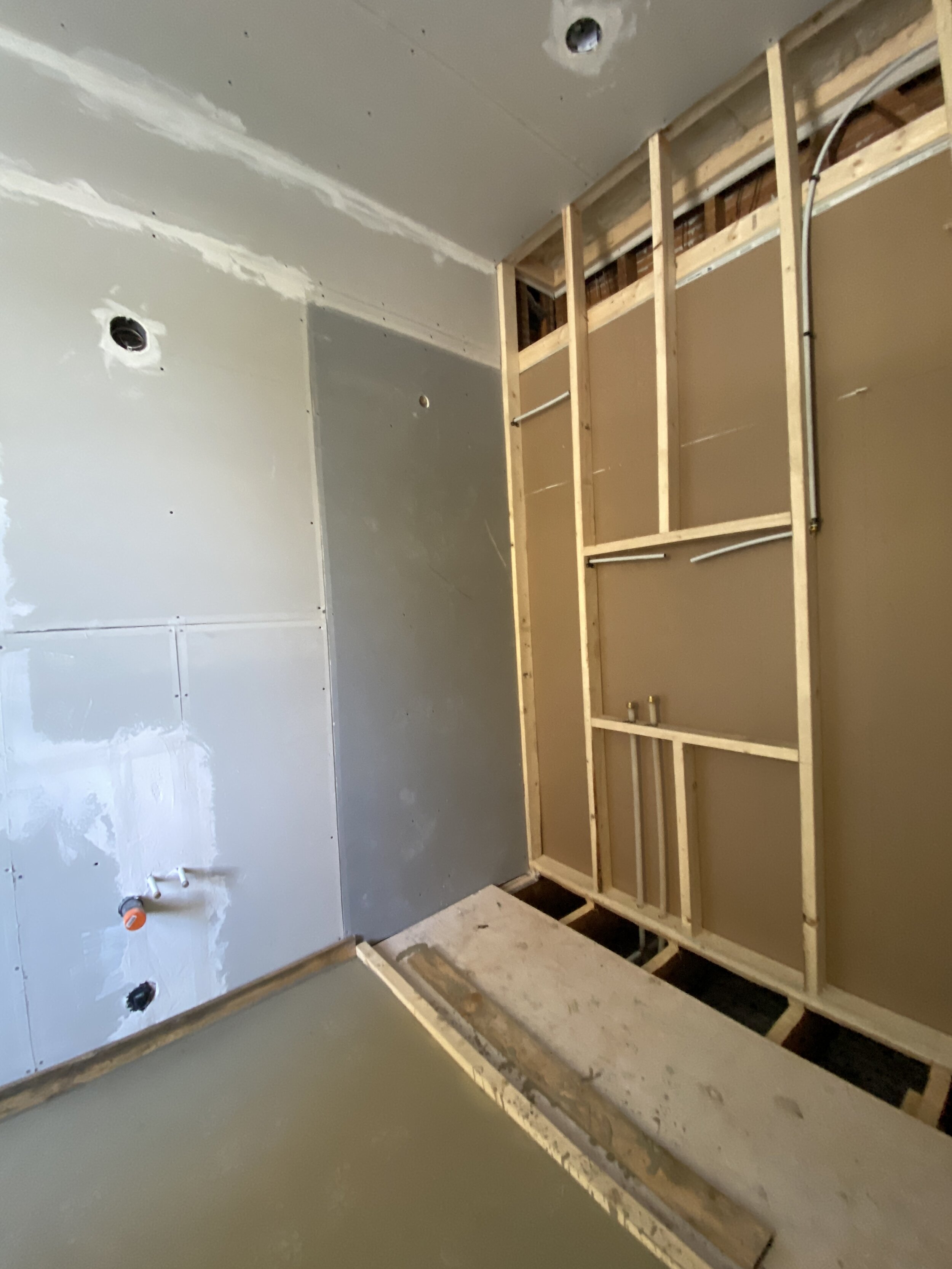
Four Bathrooms,
Four Very Different Projects
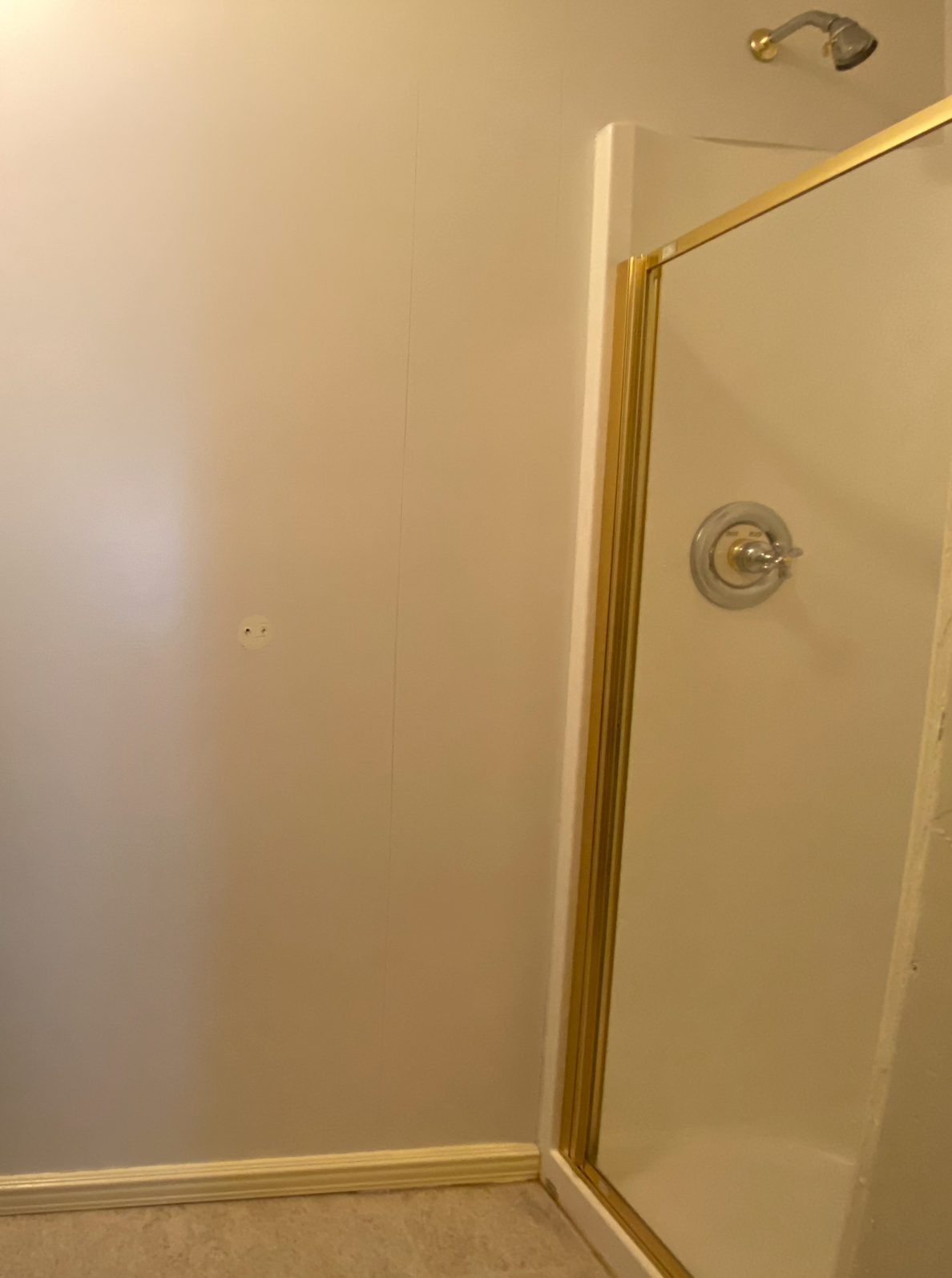
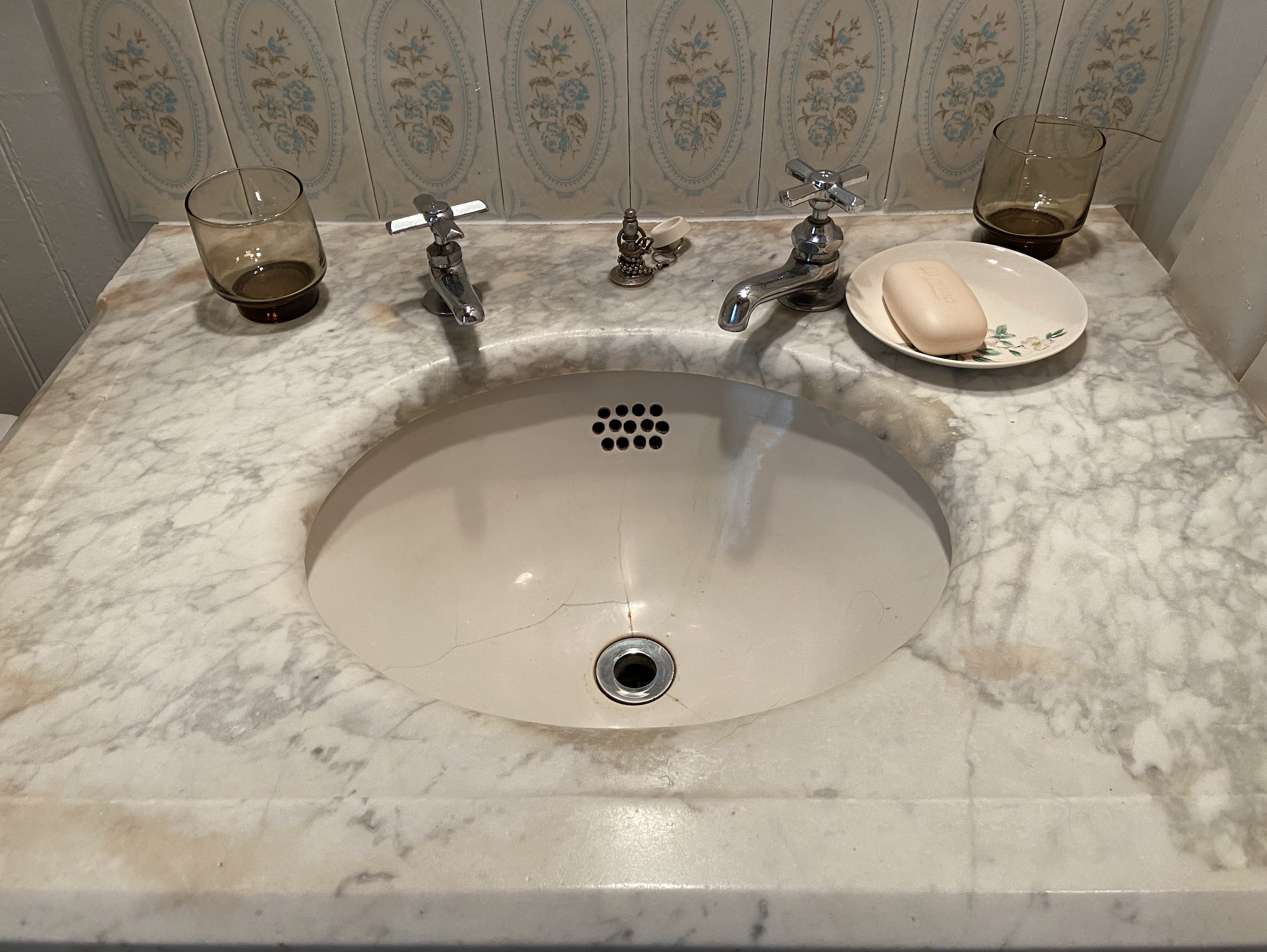
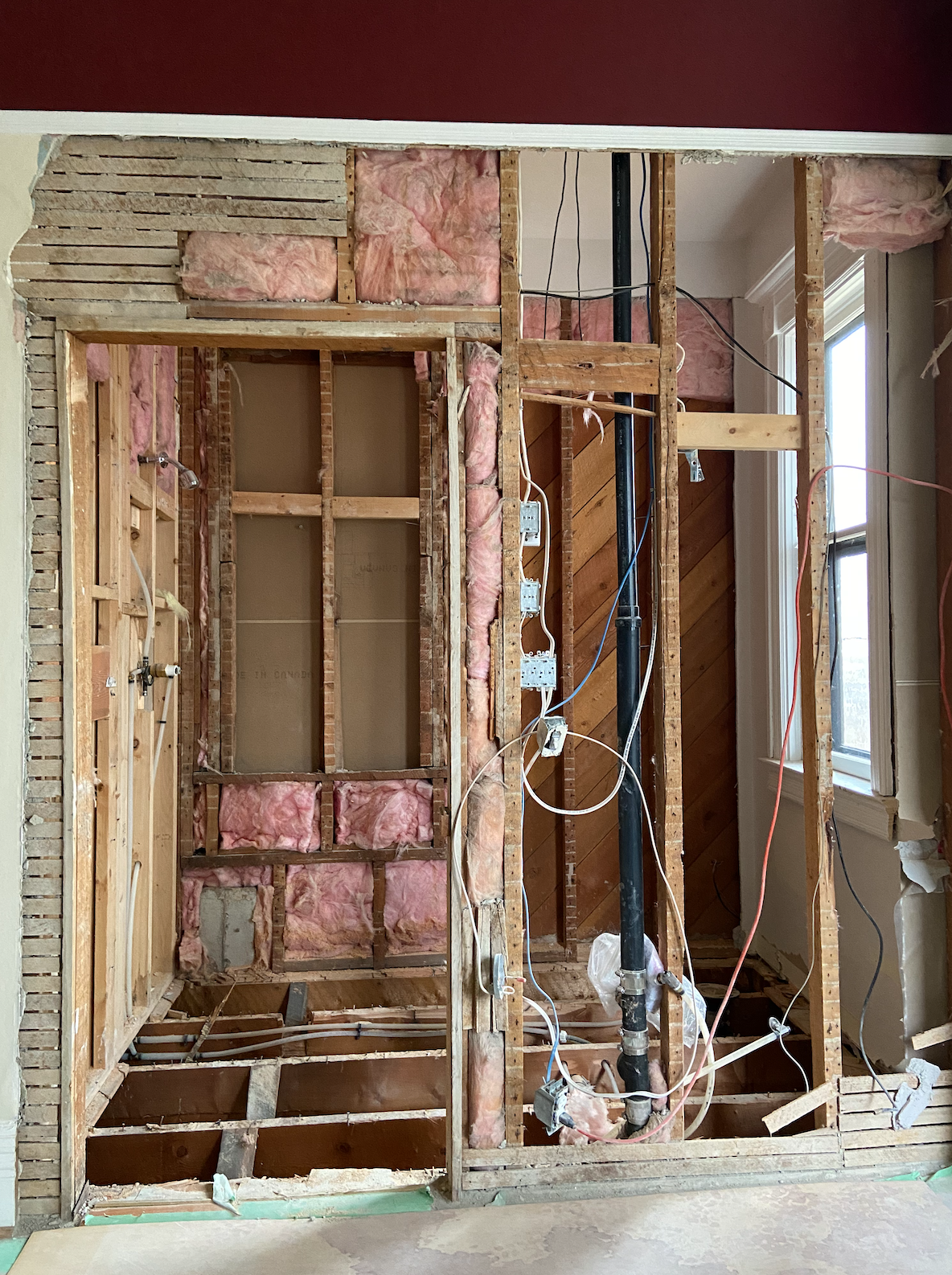
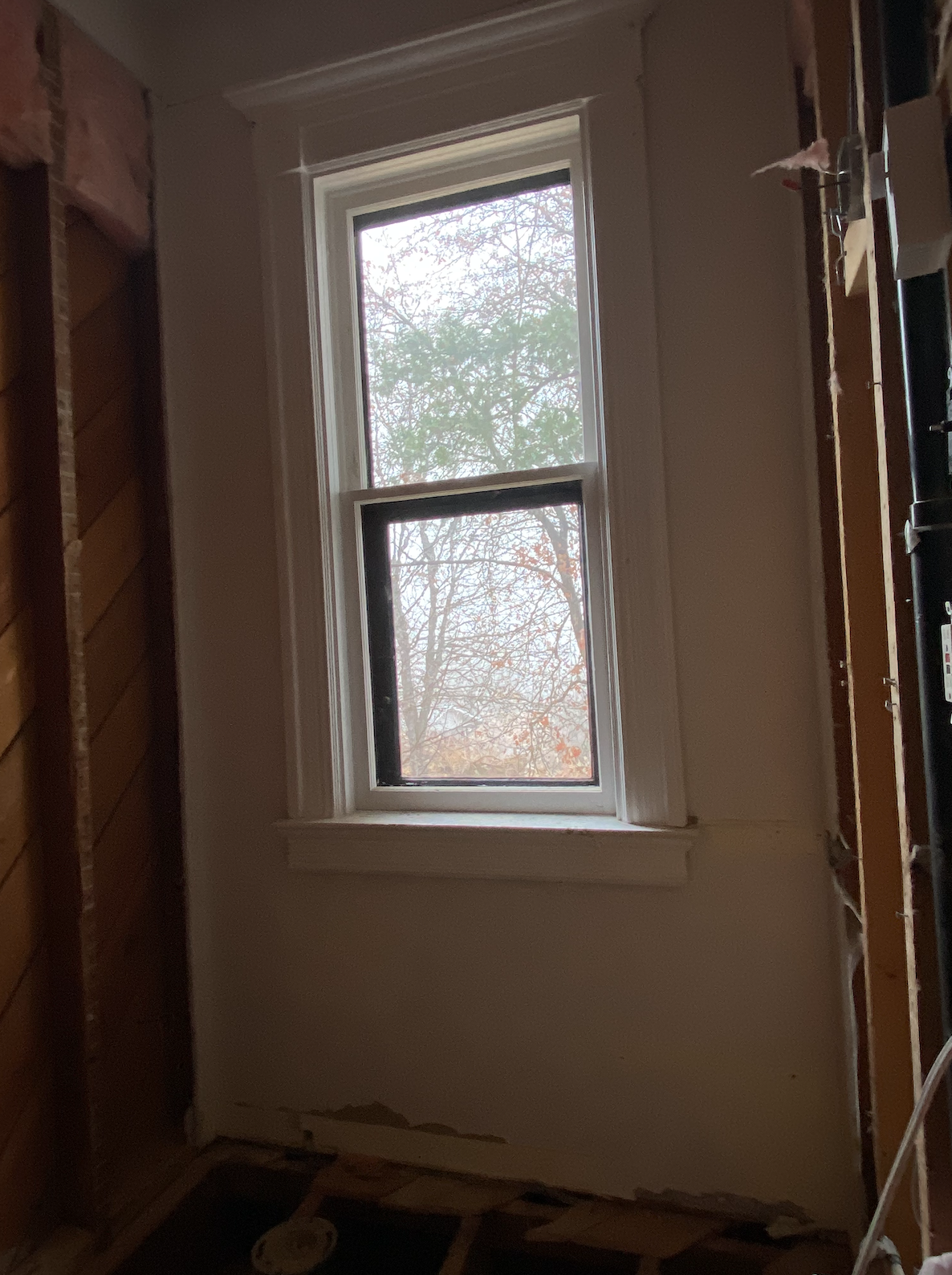
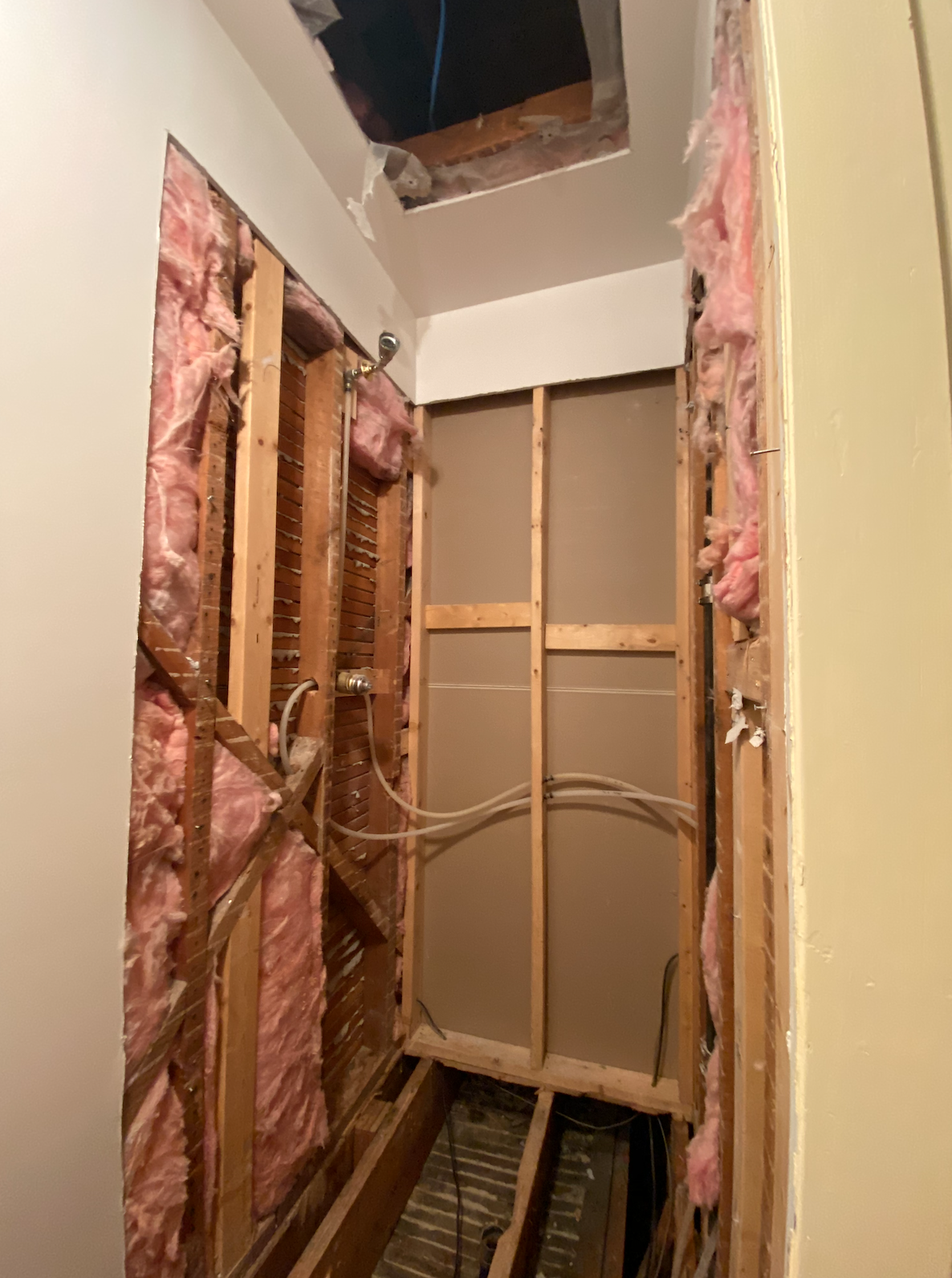
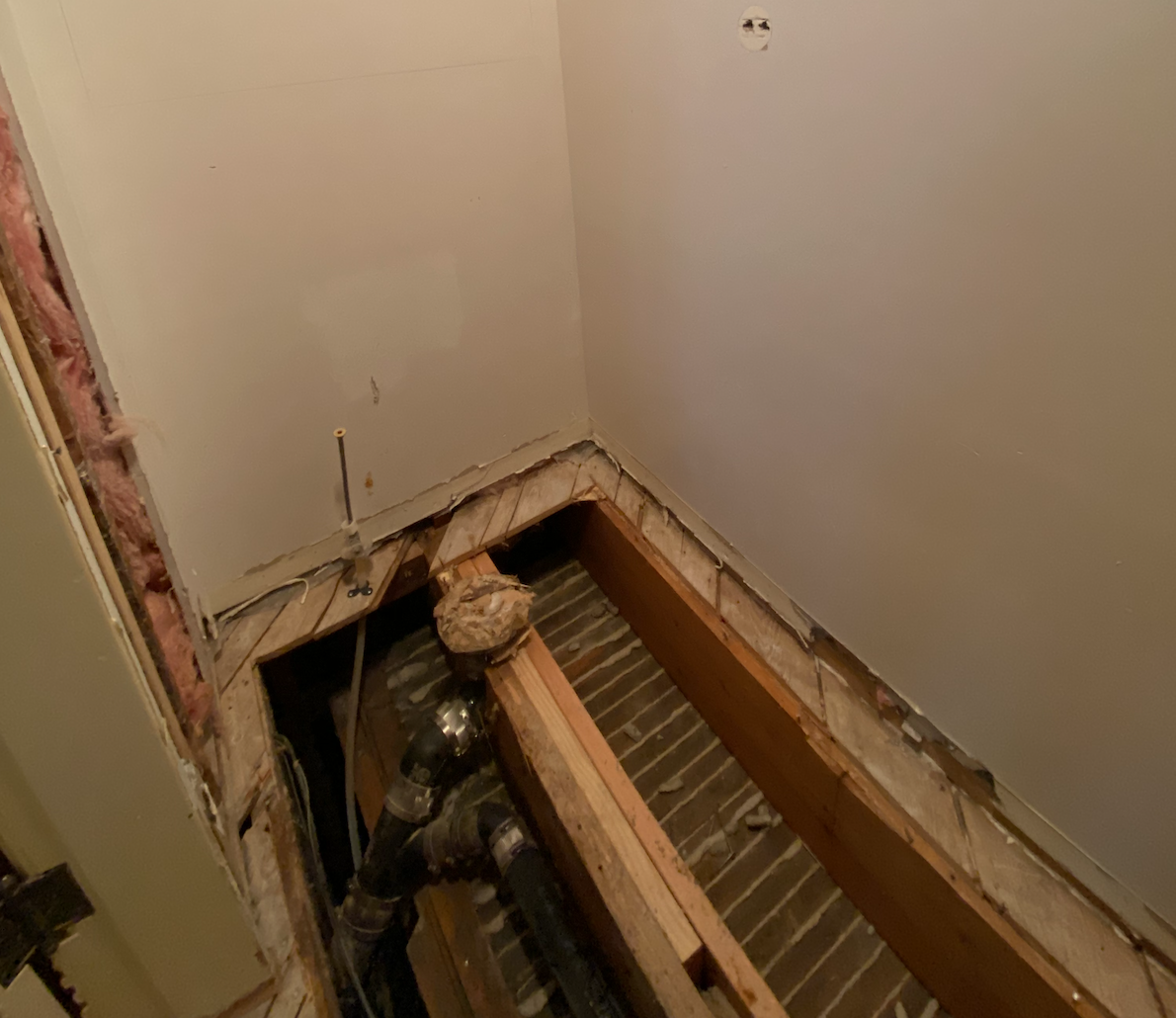
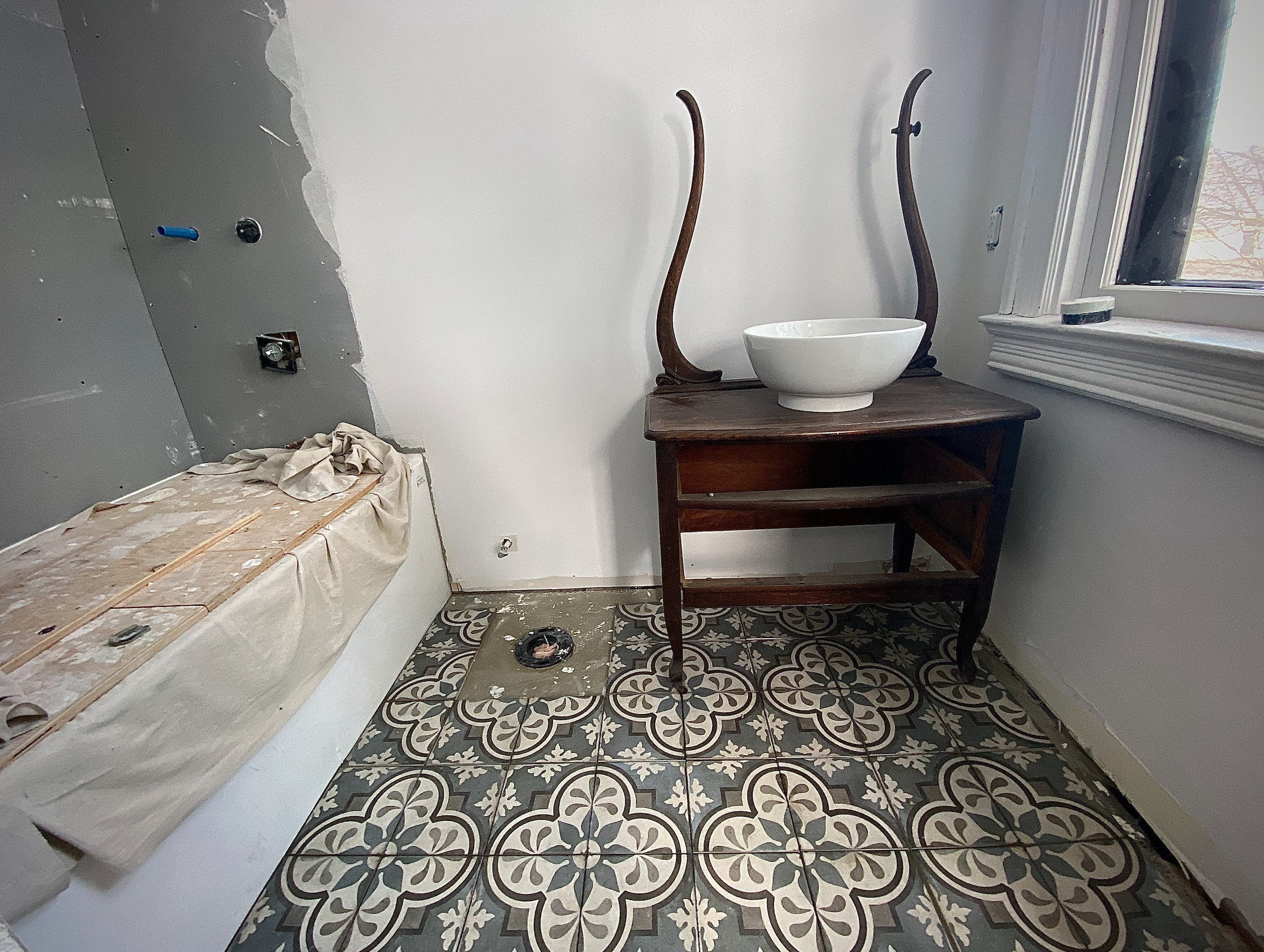
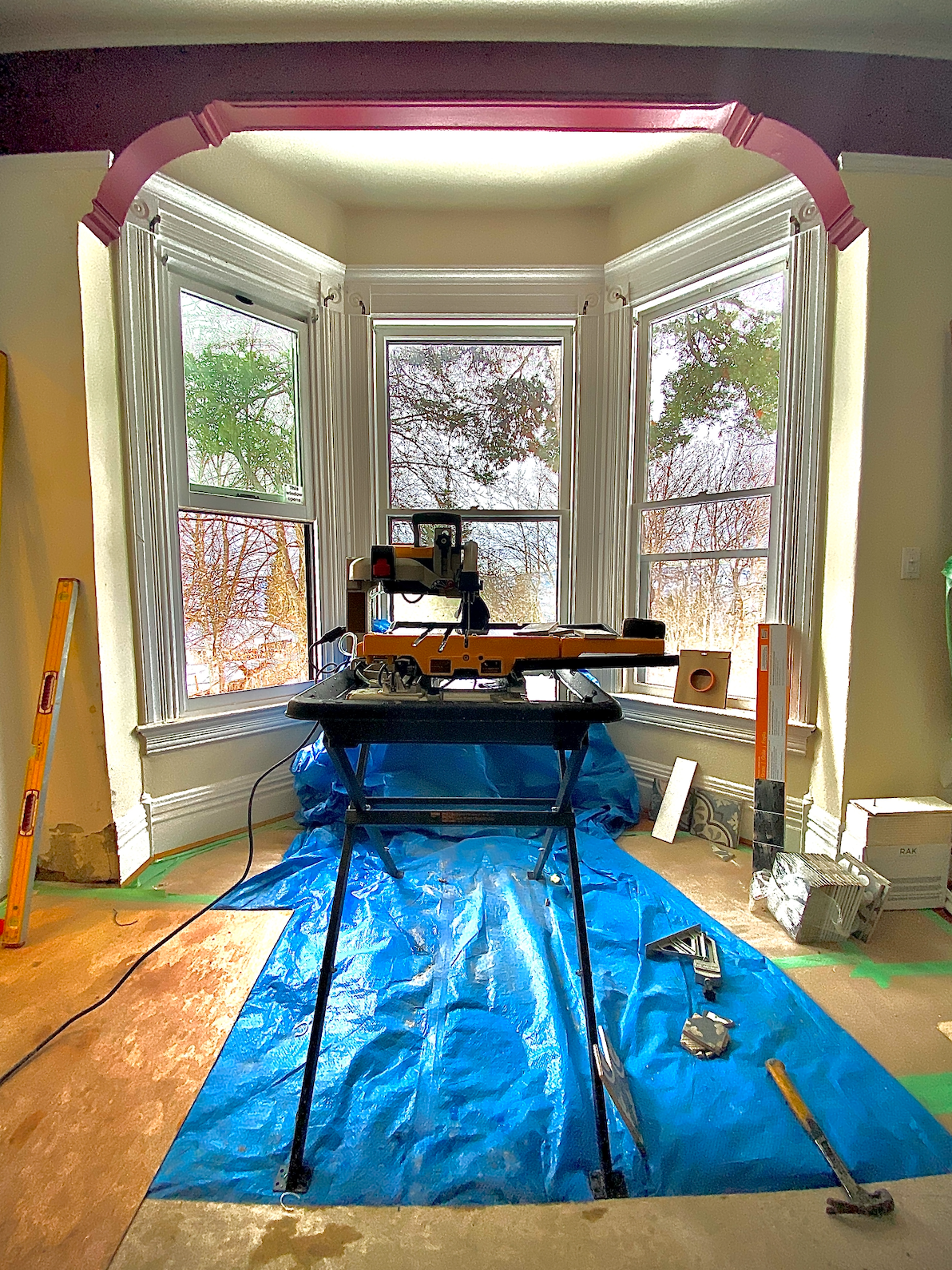
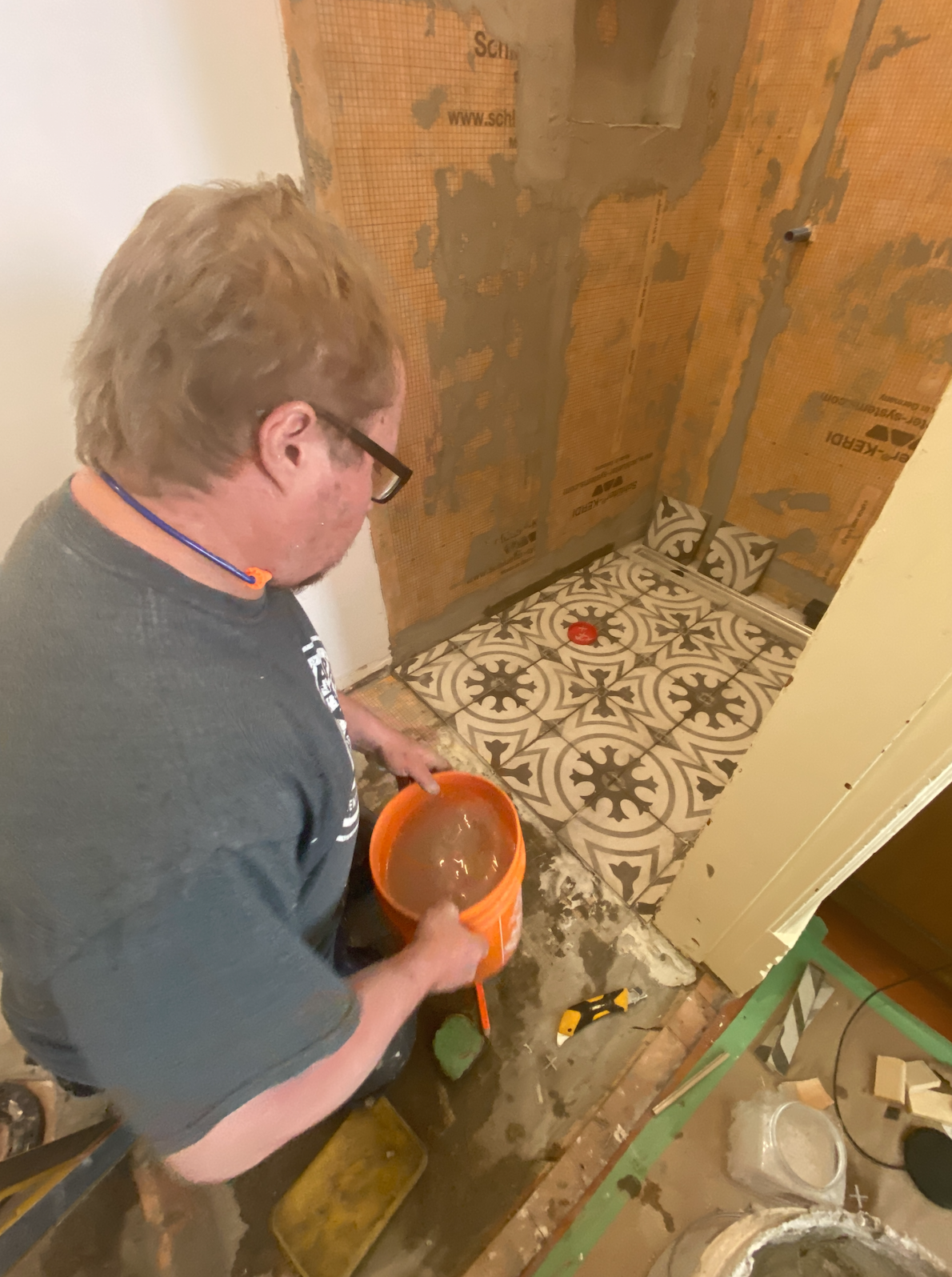
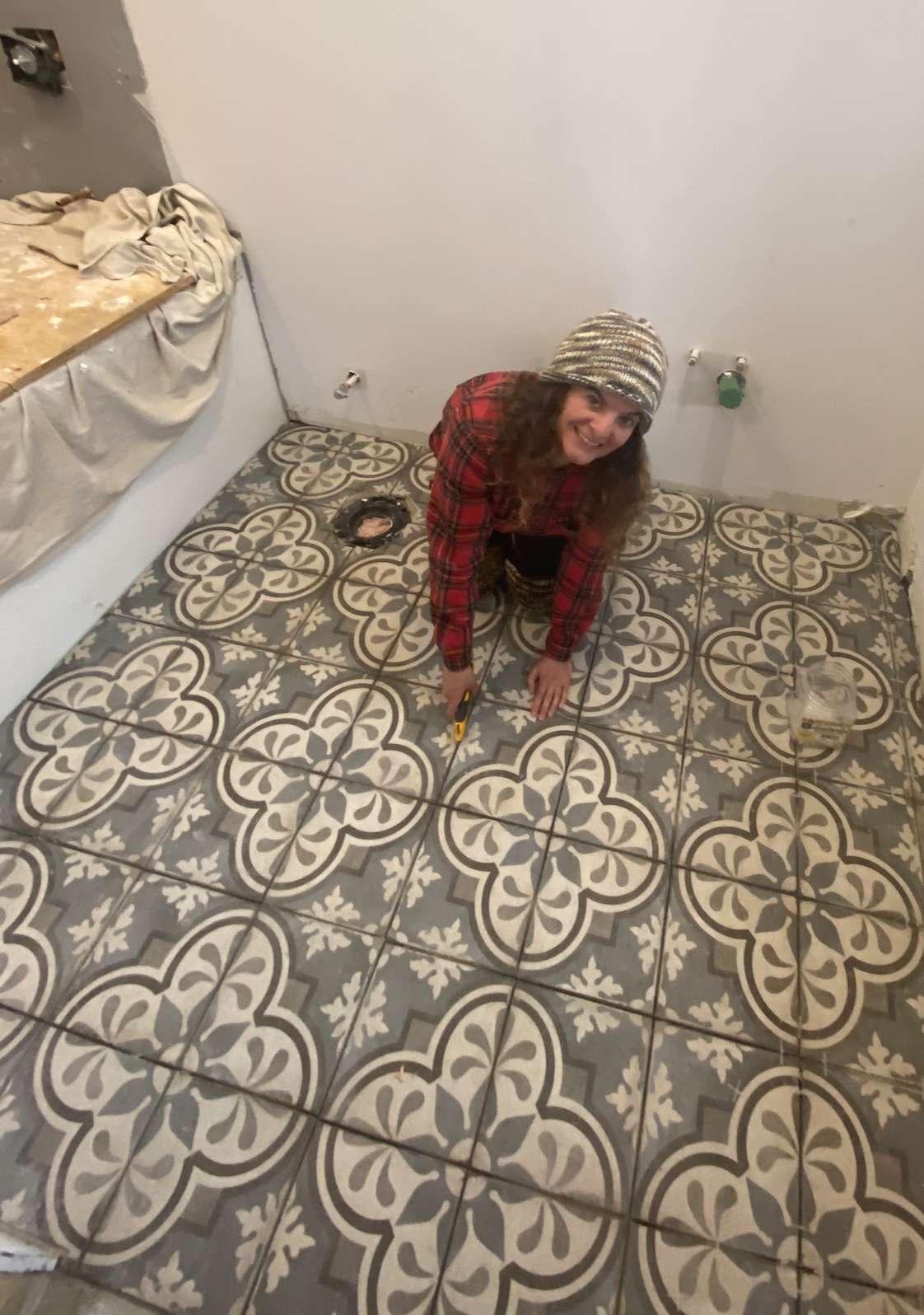
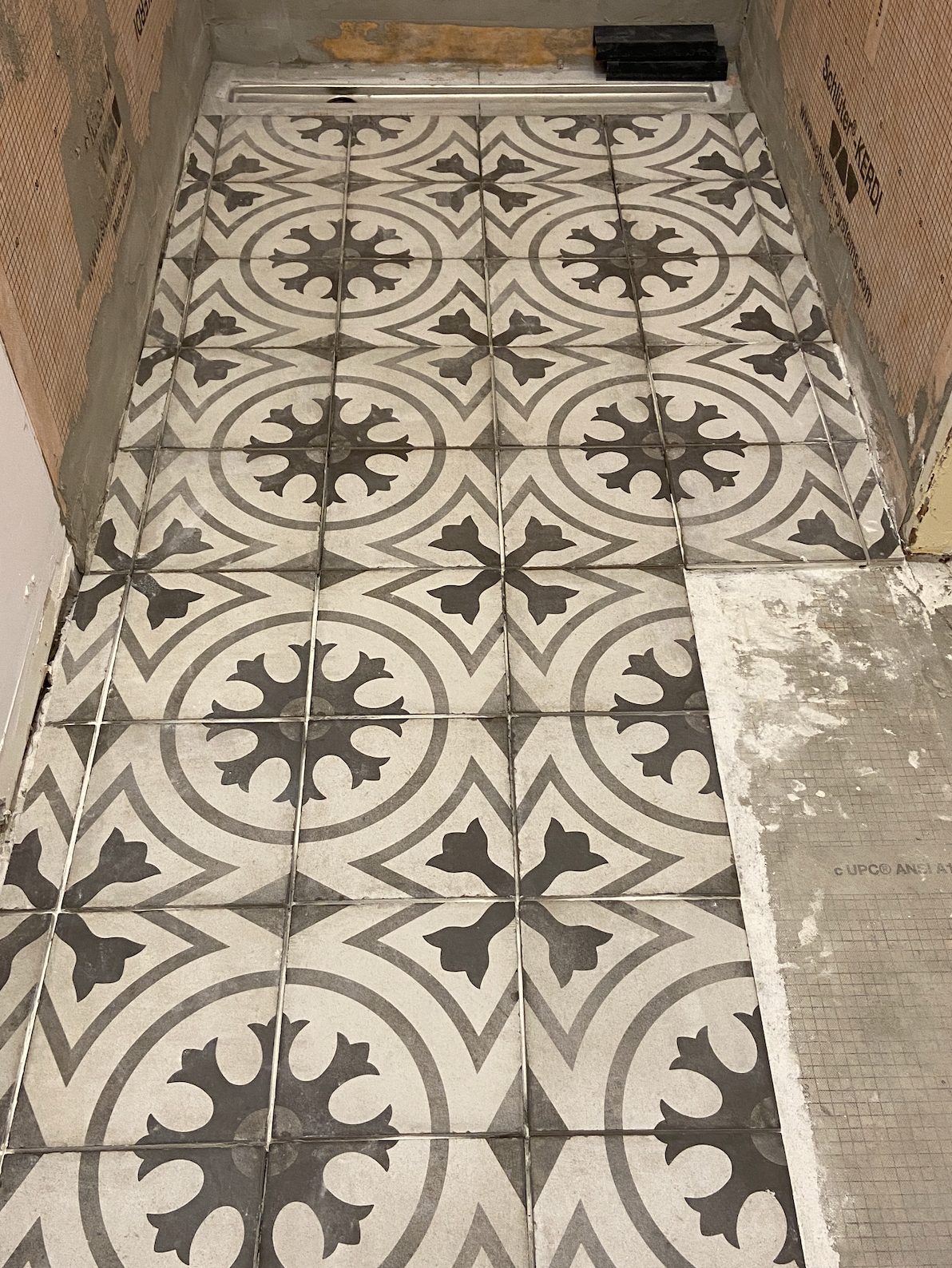
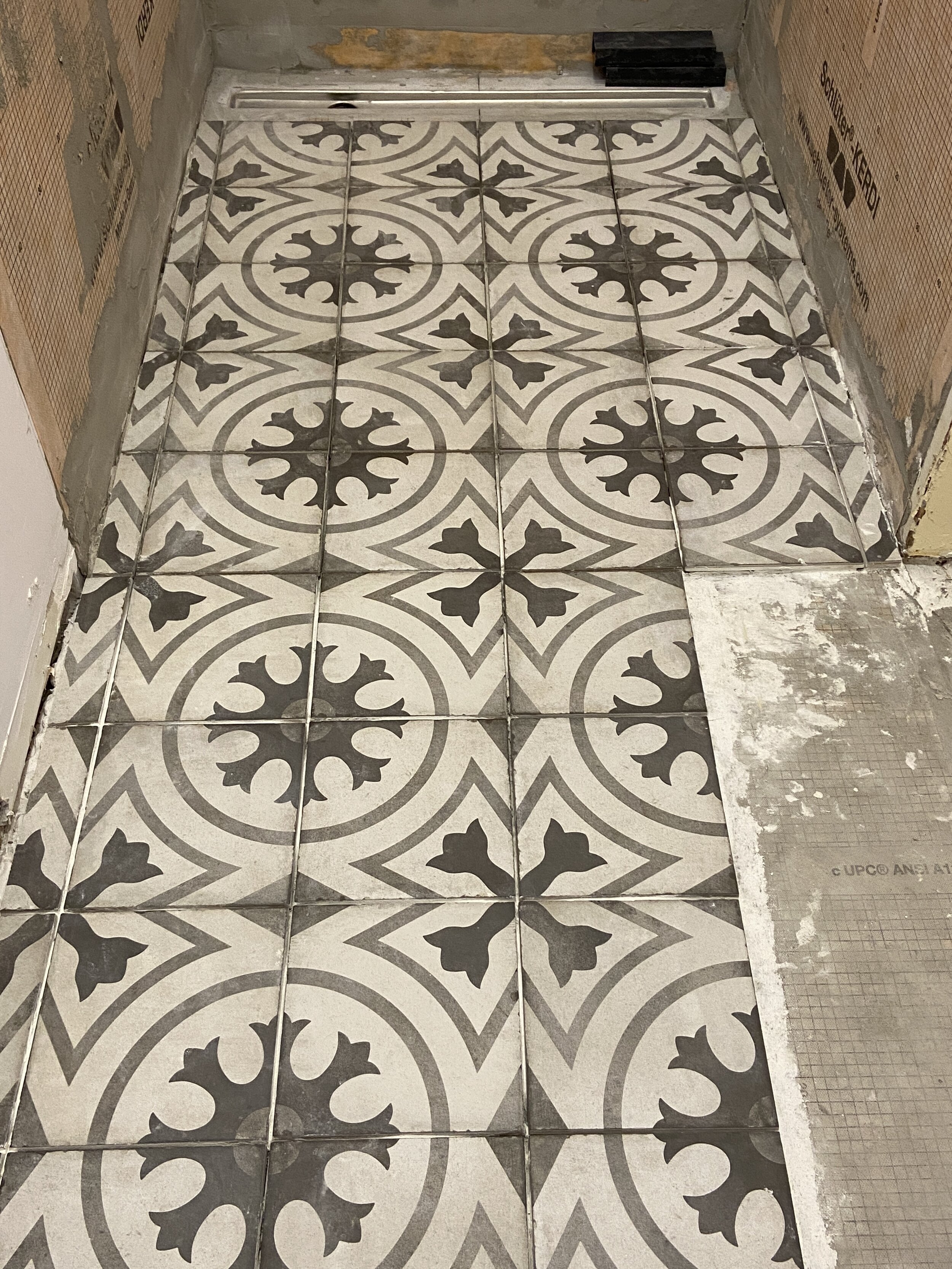
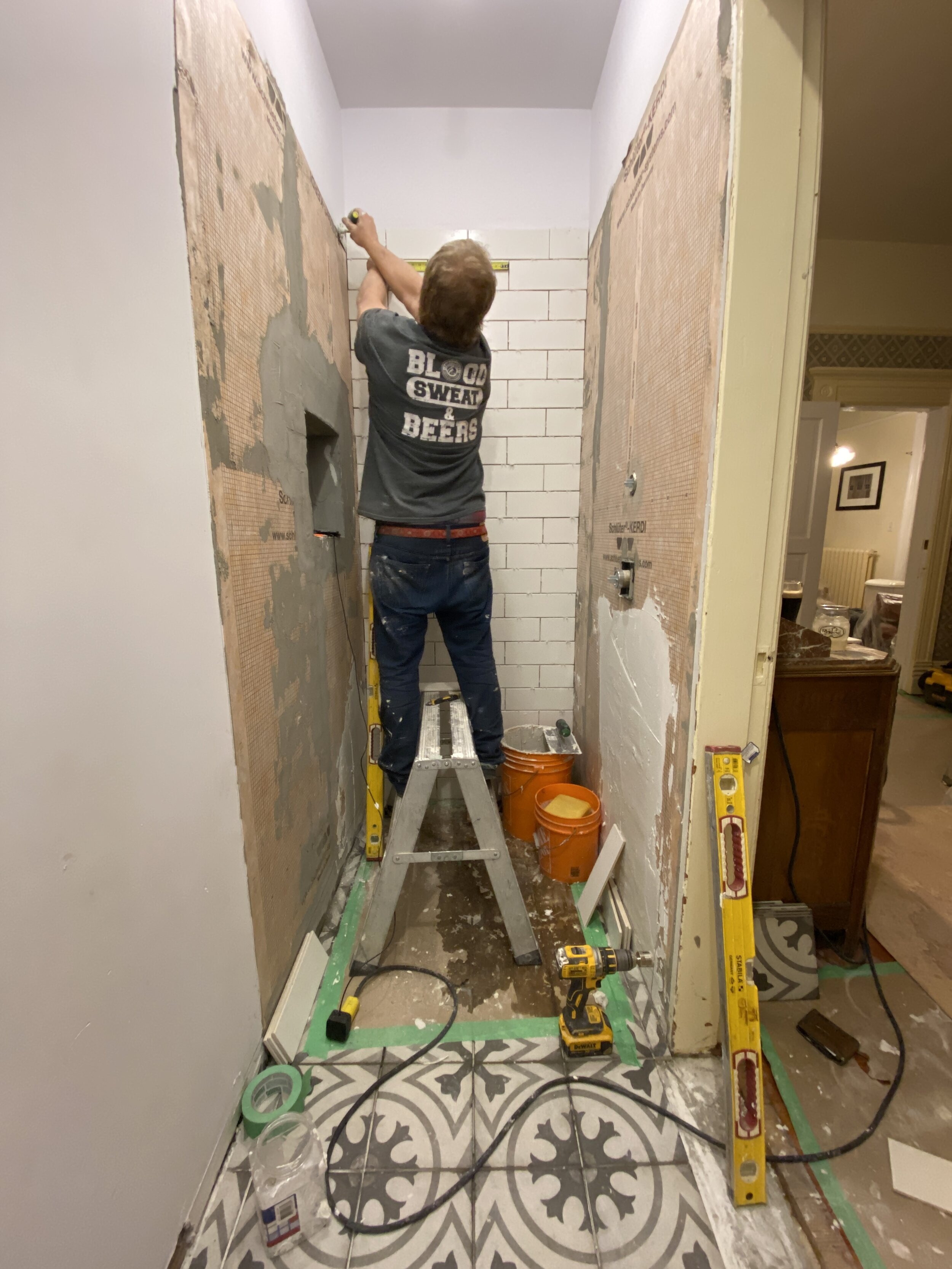
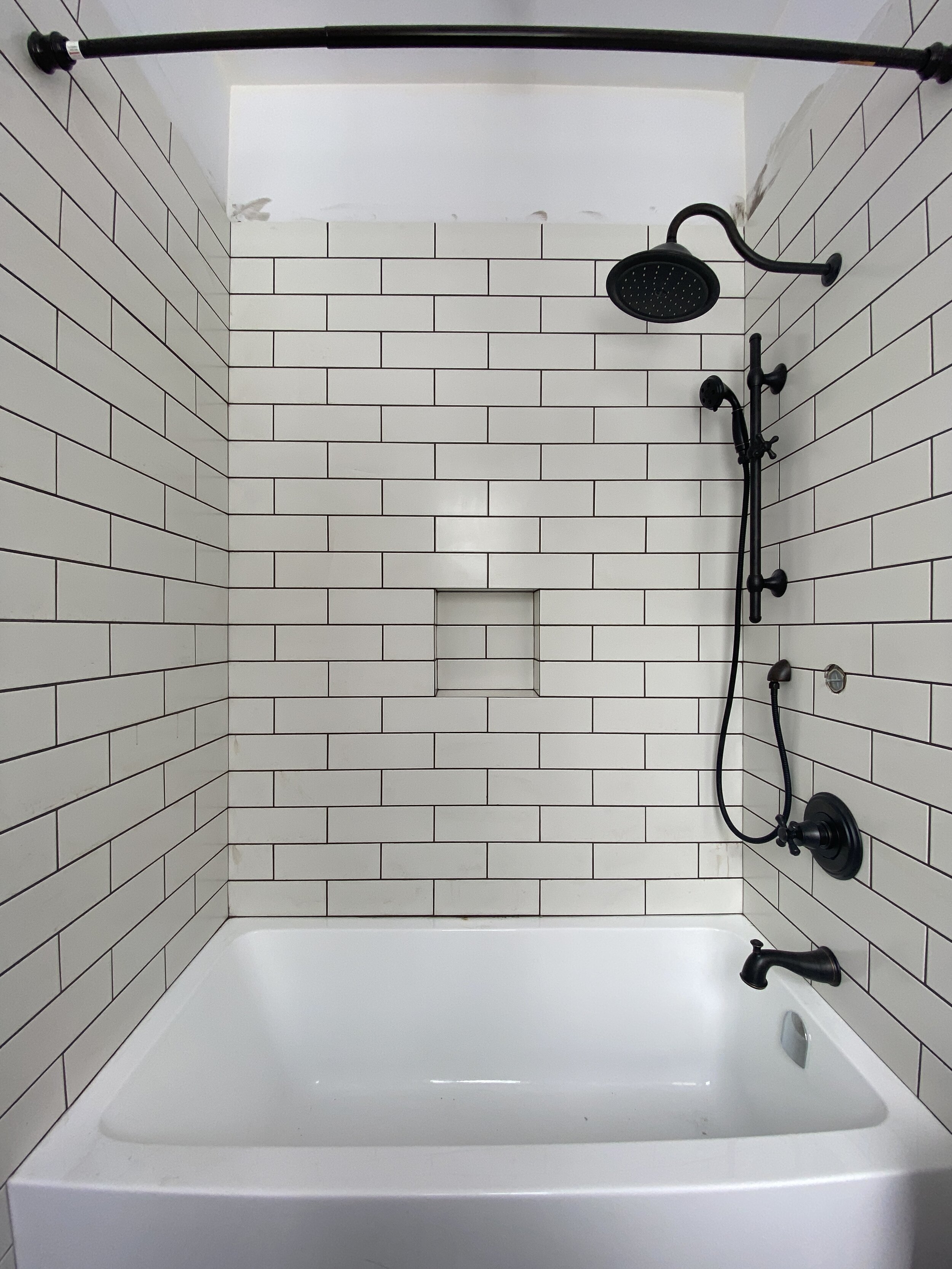
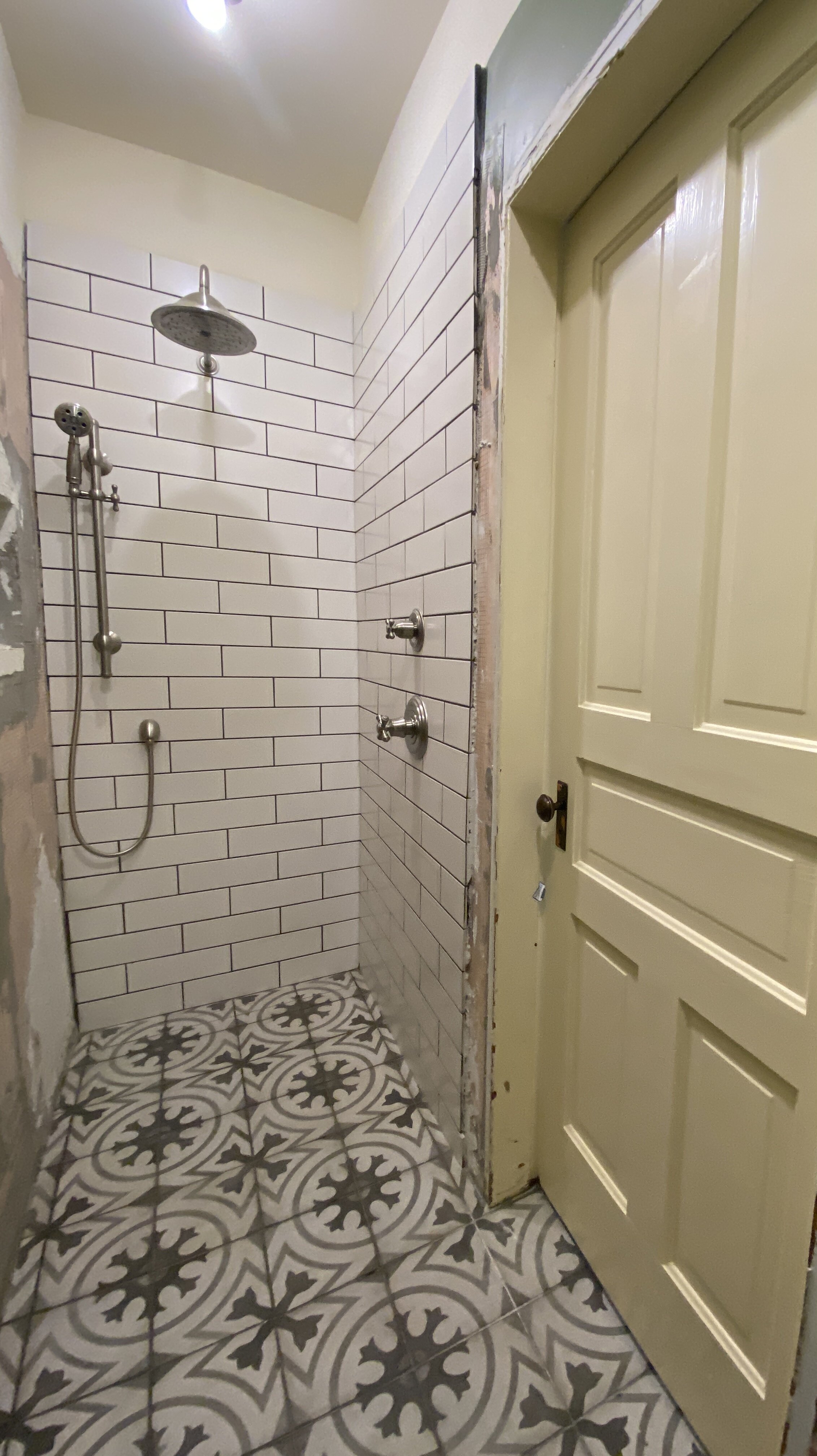
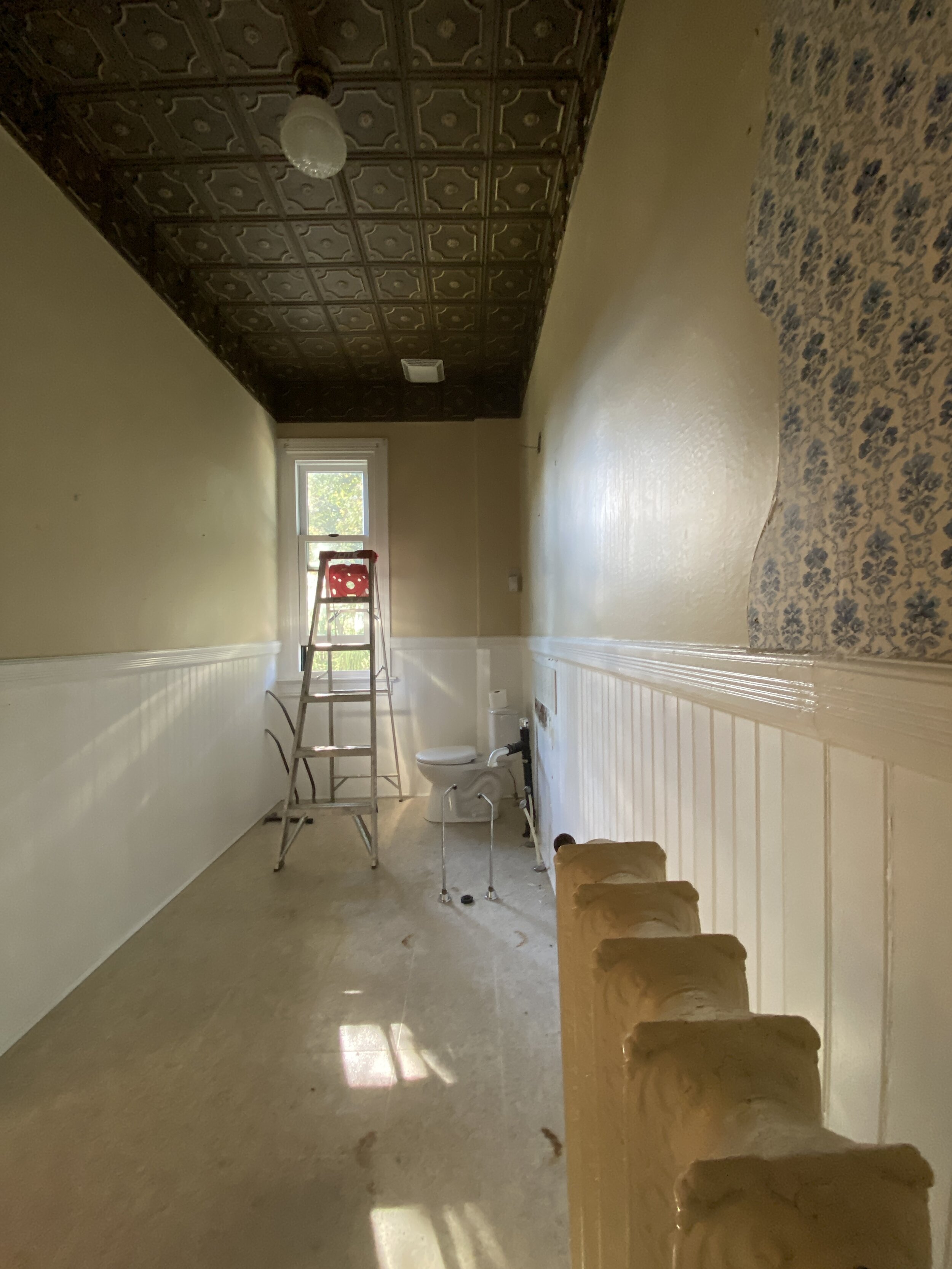
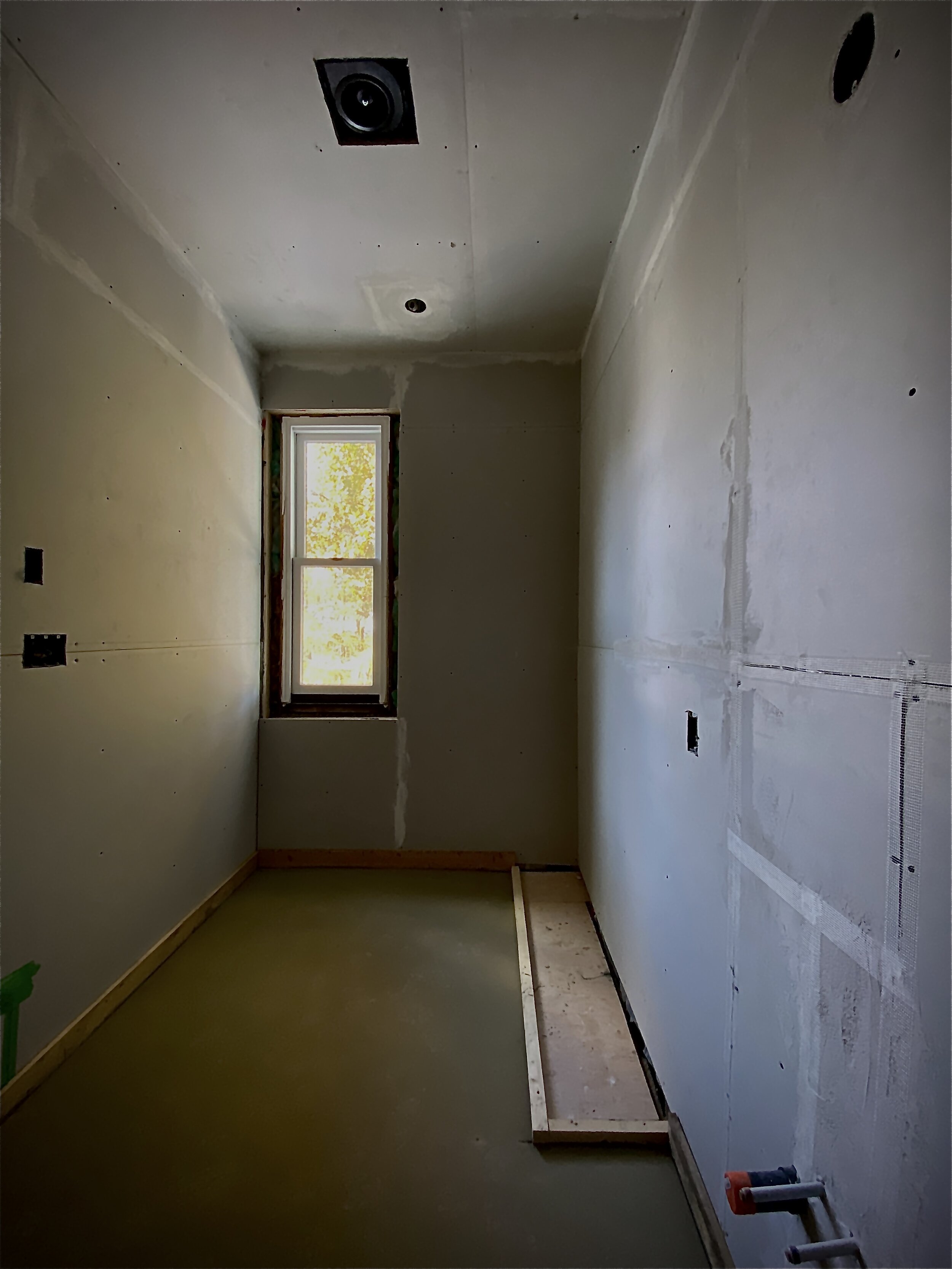
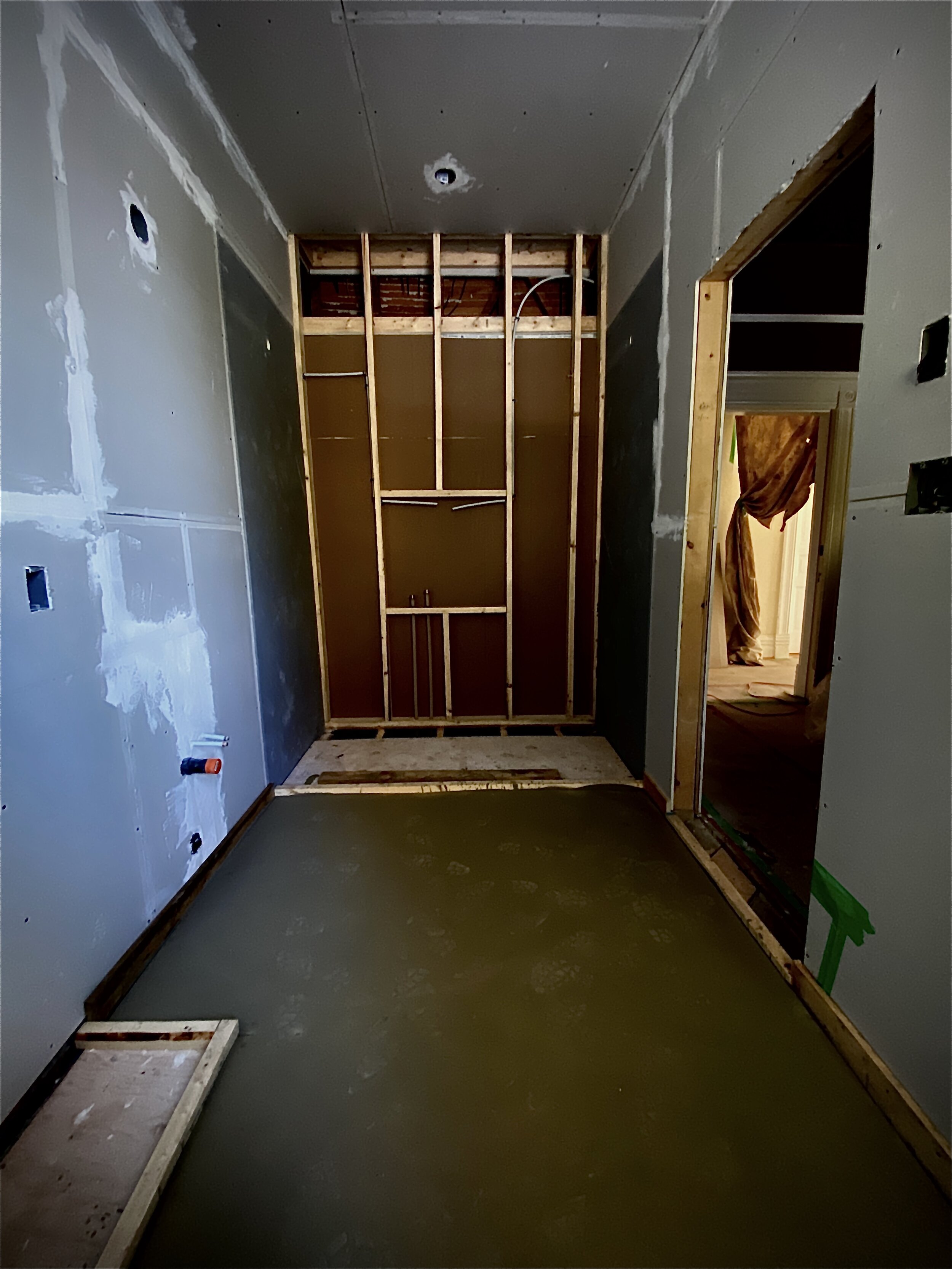
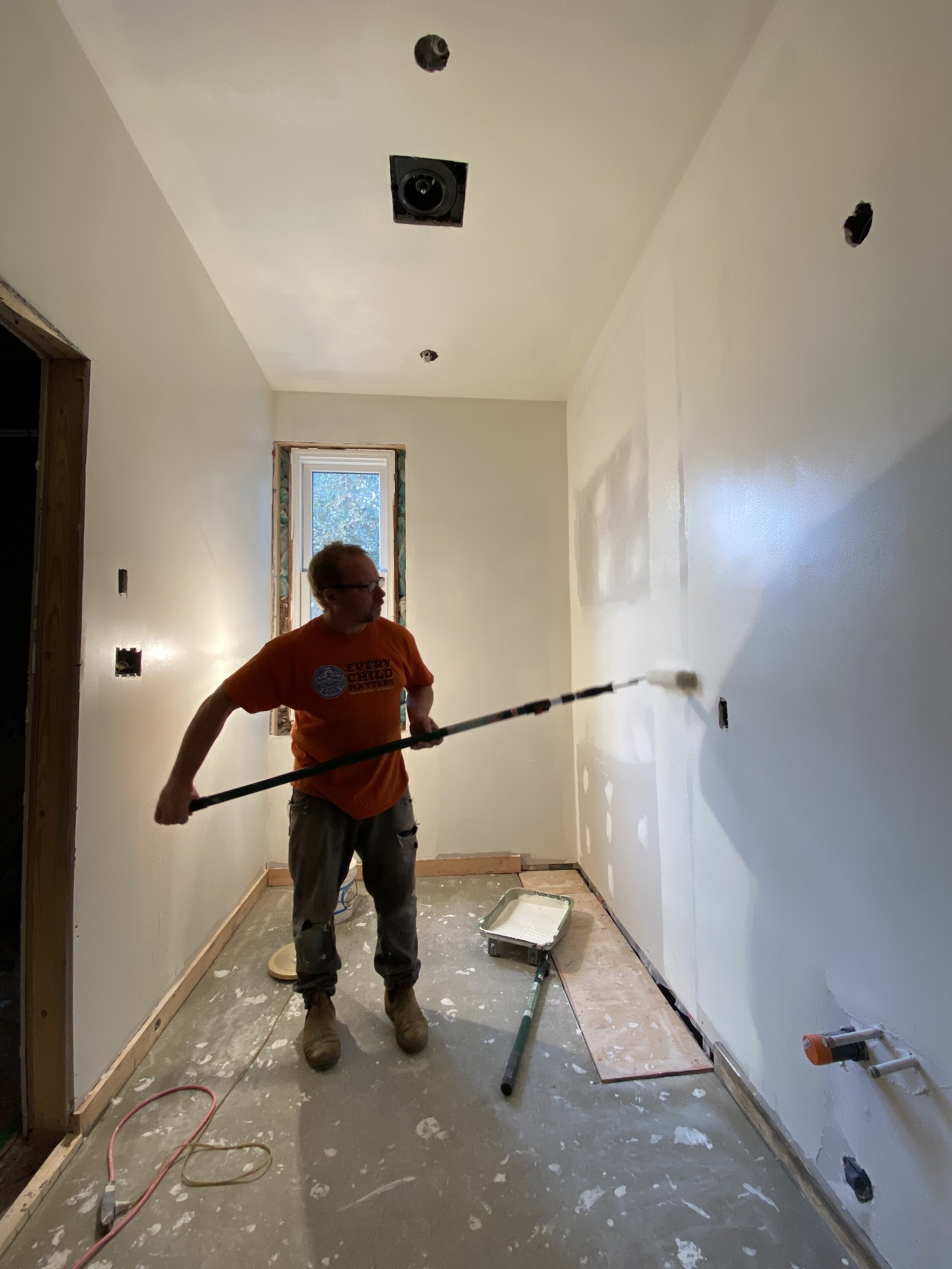
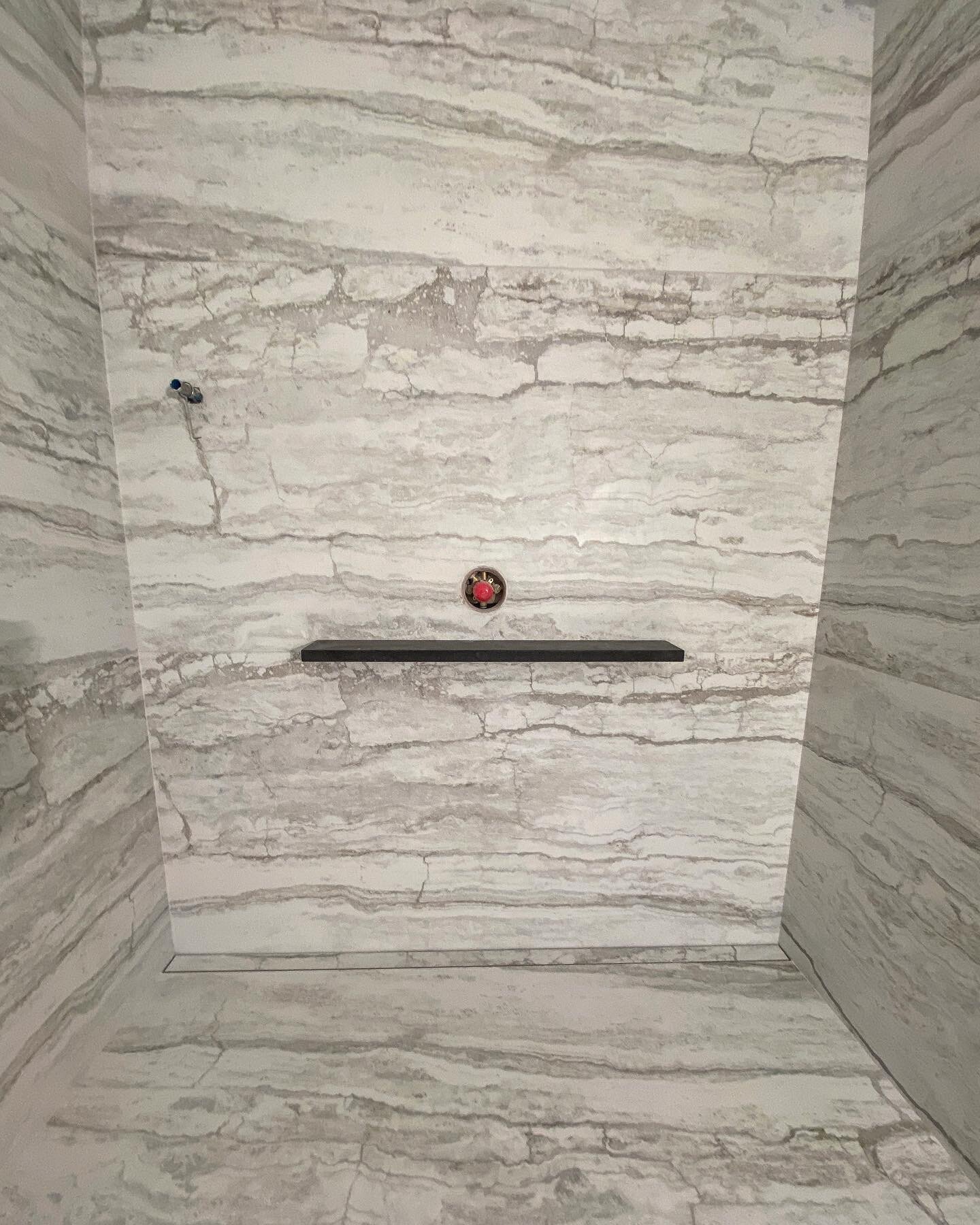
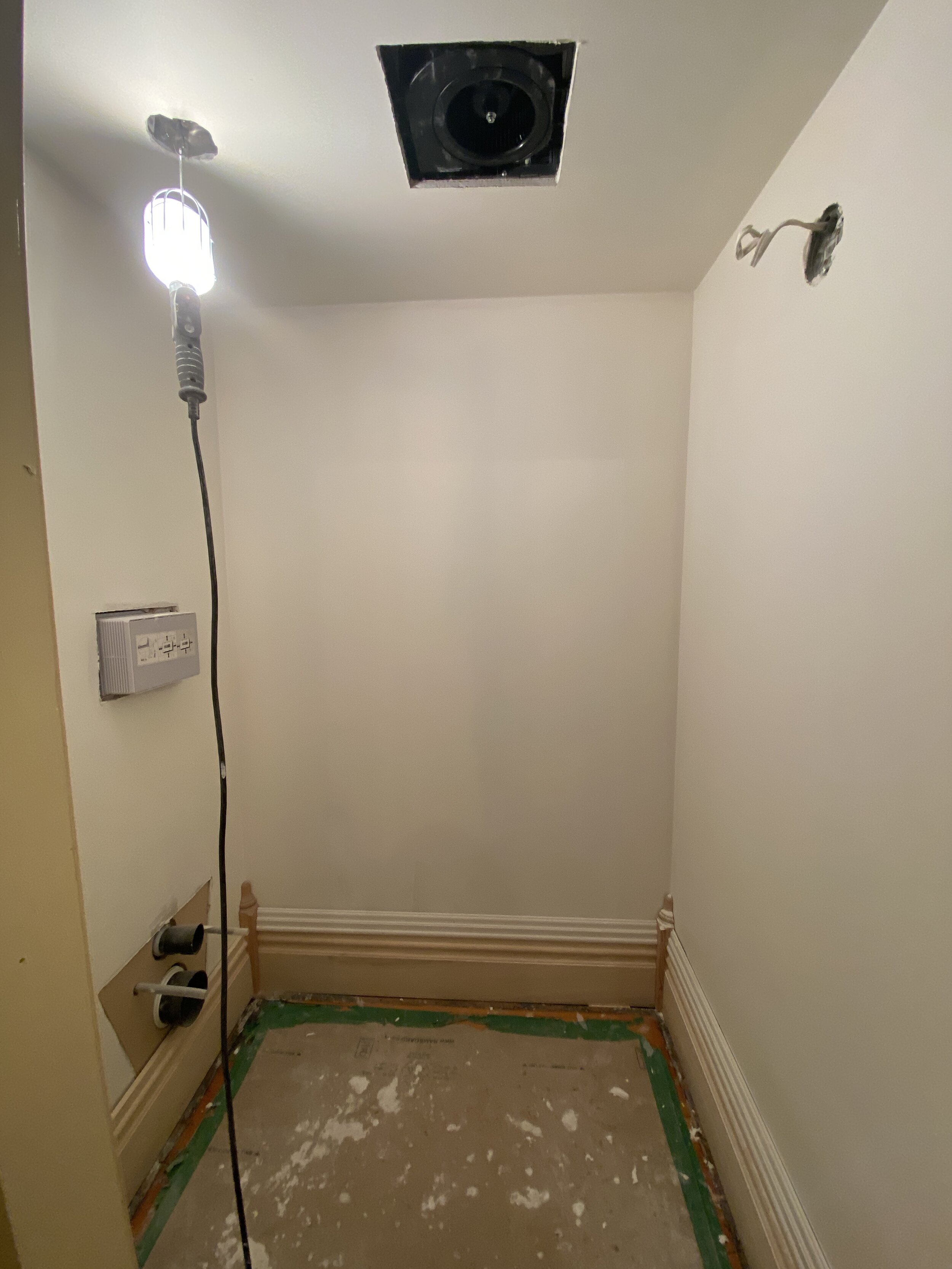
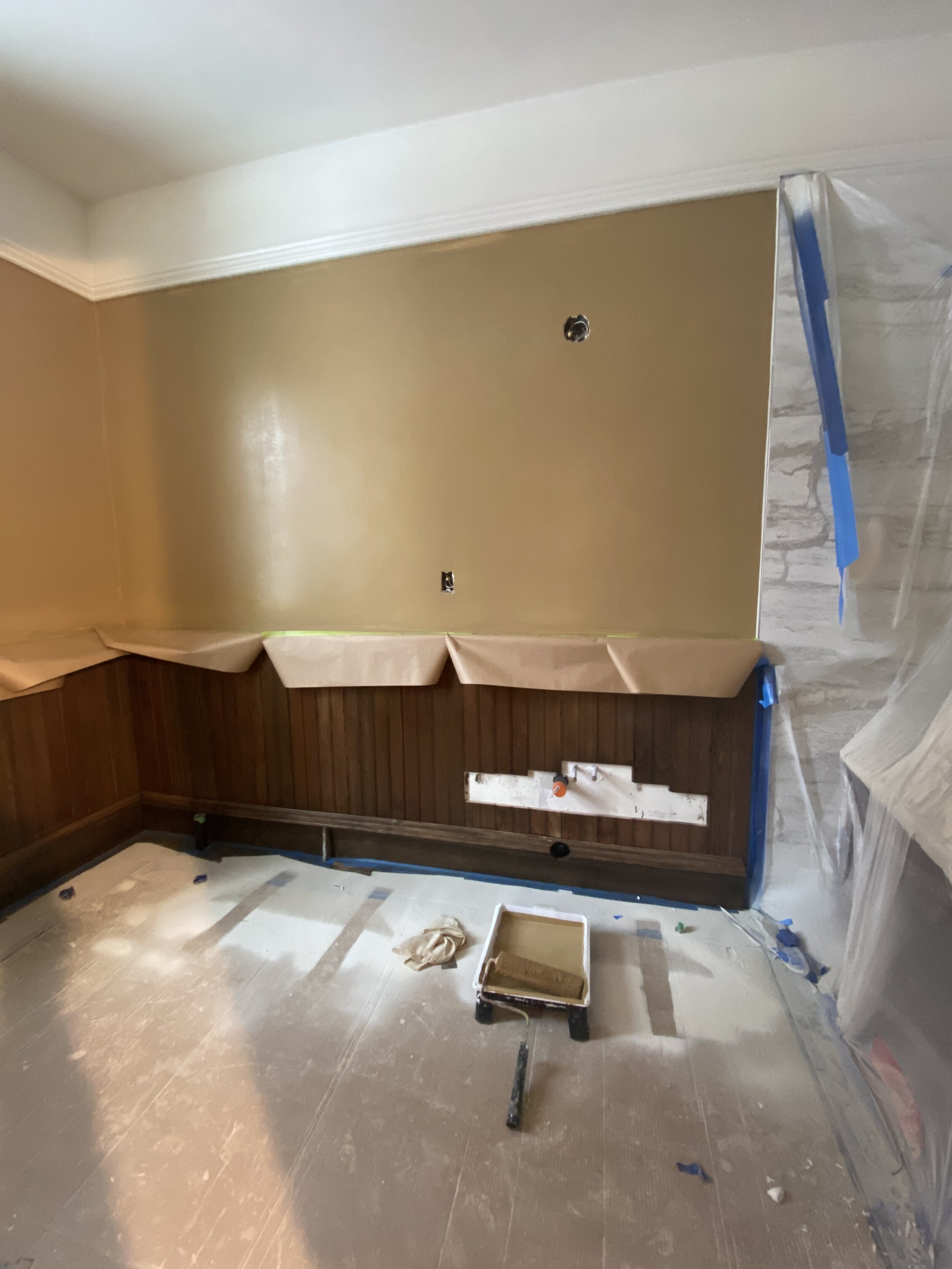
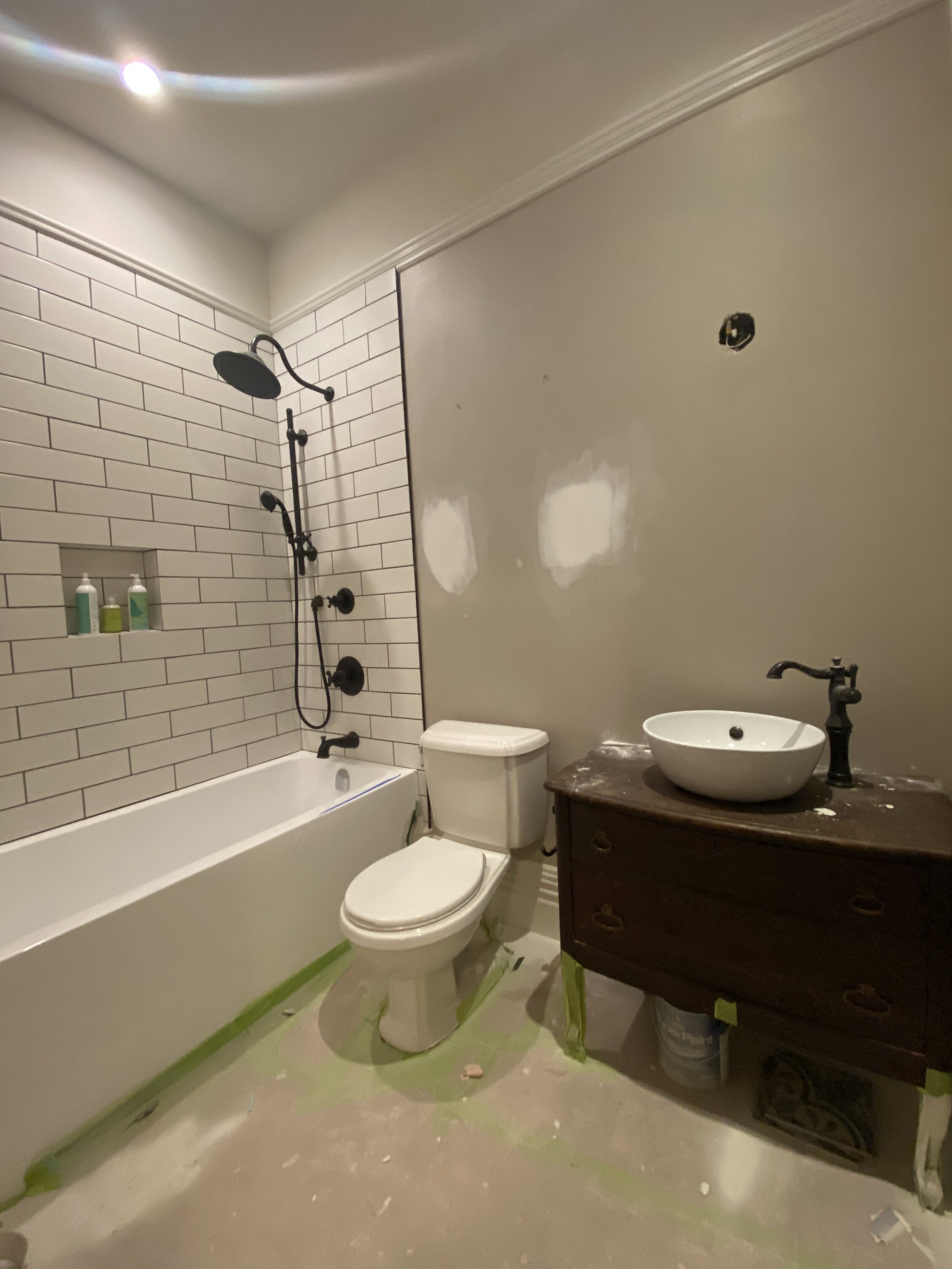
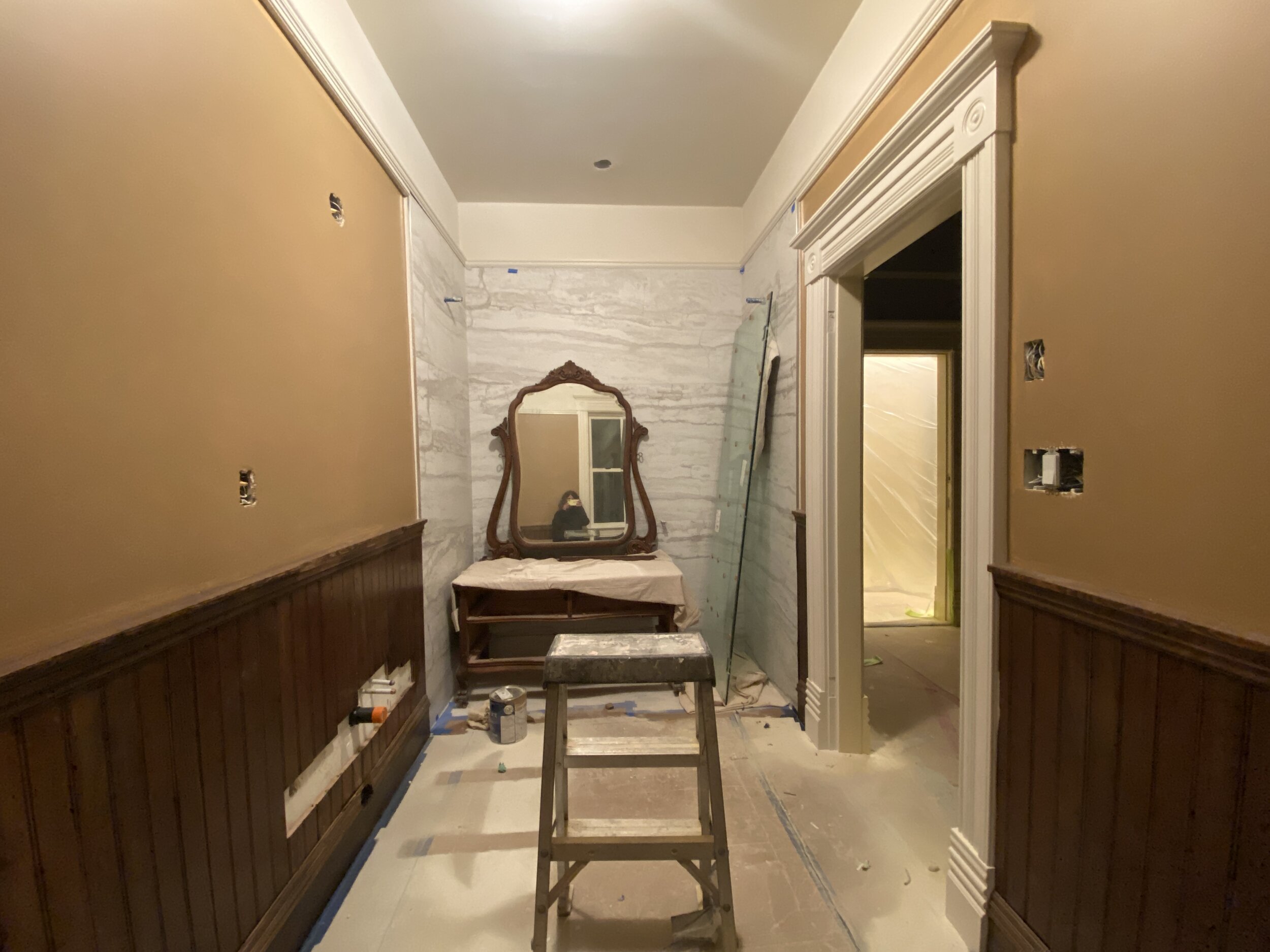
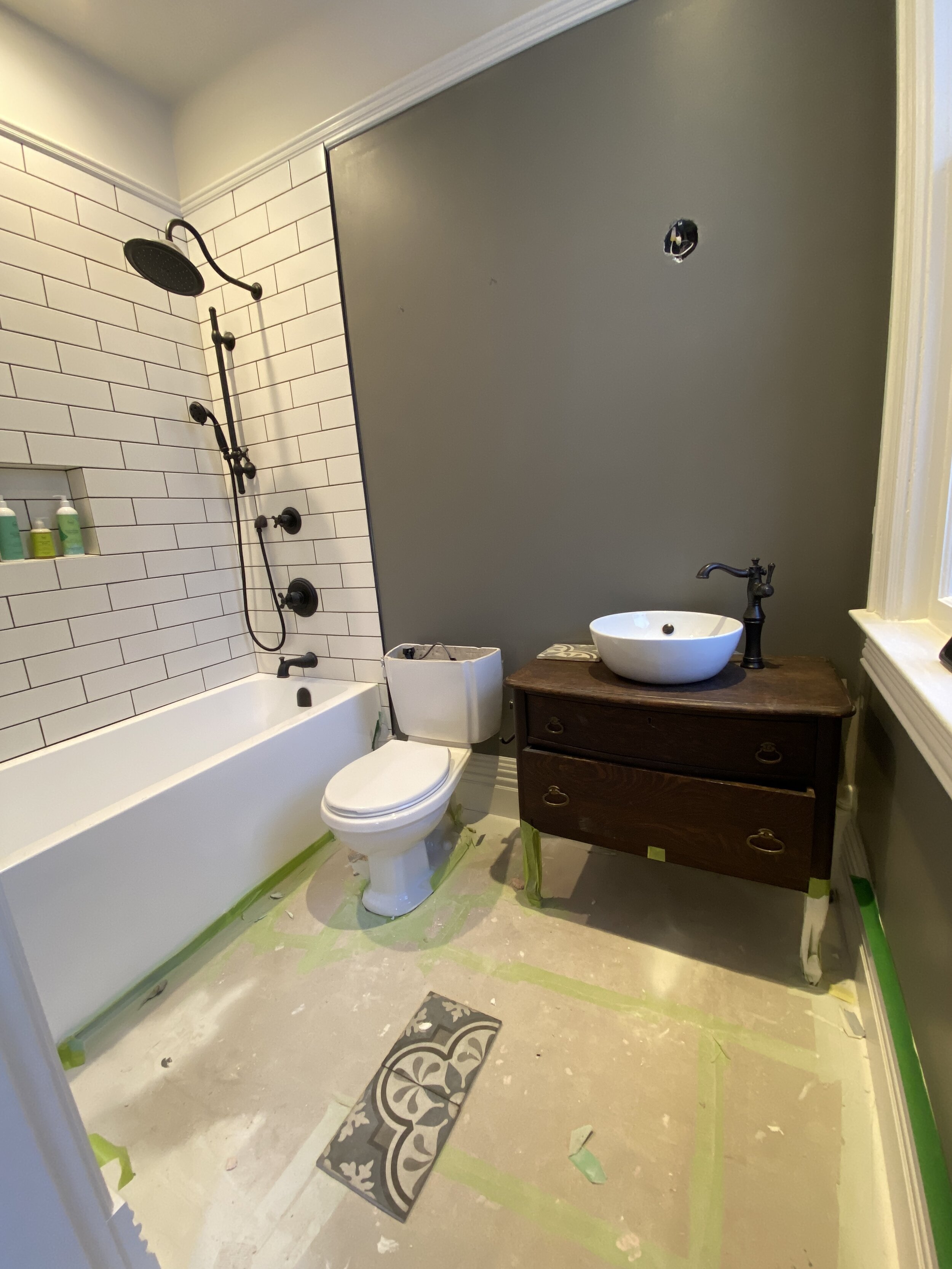
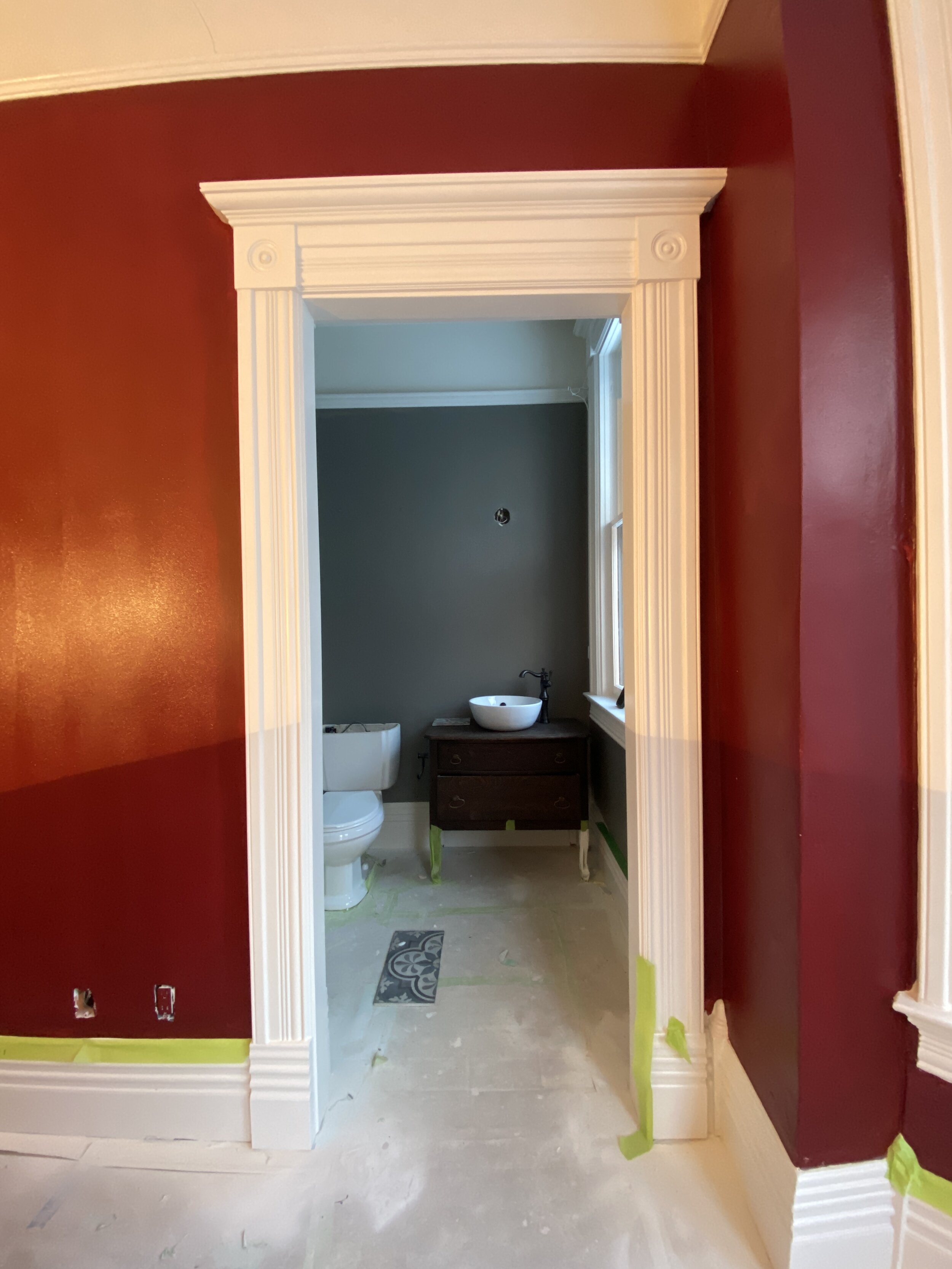
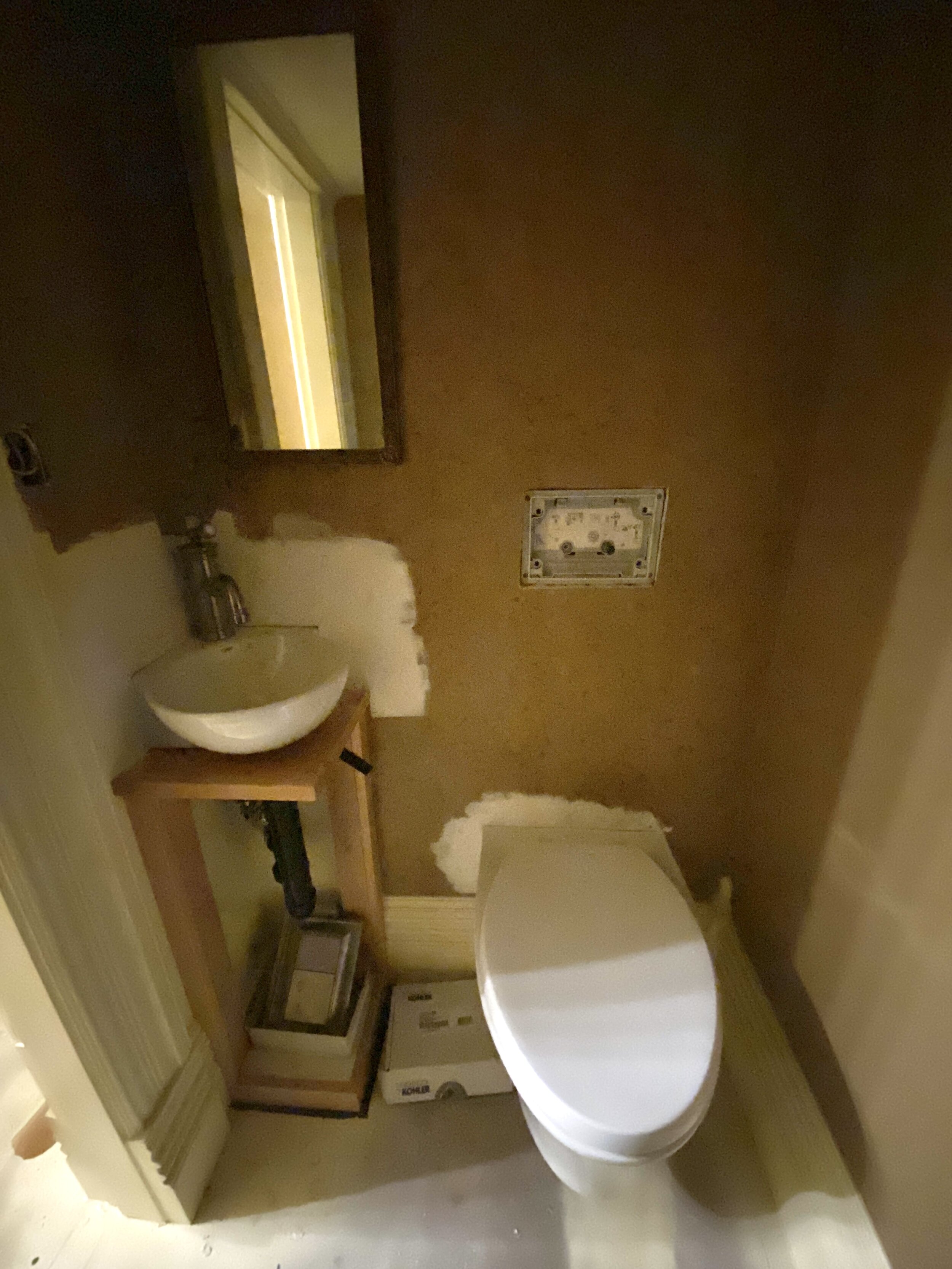
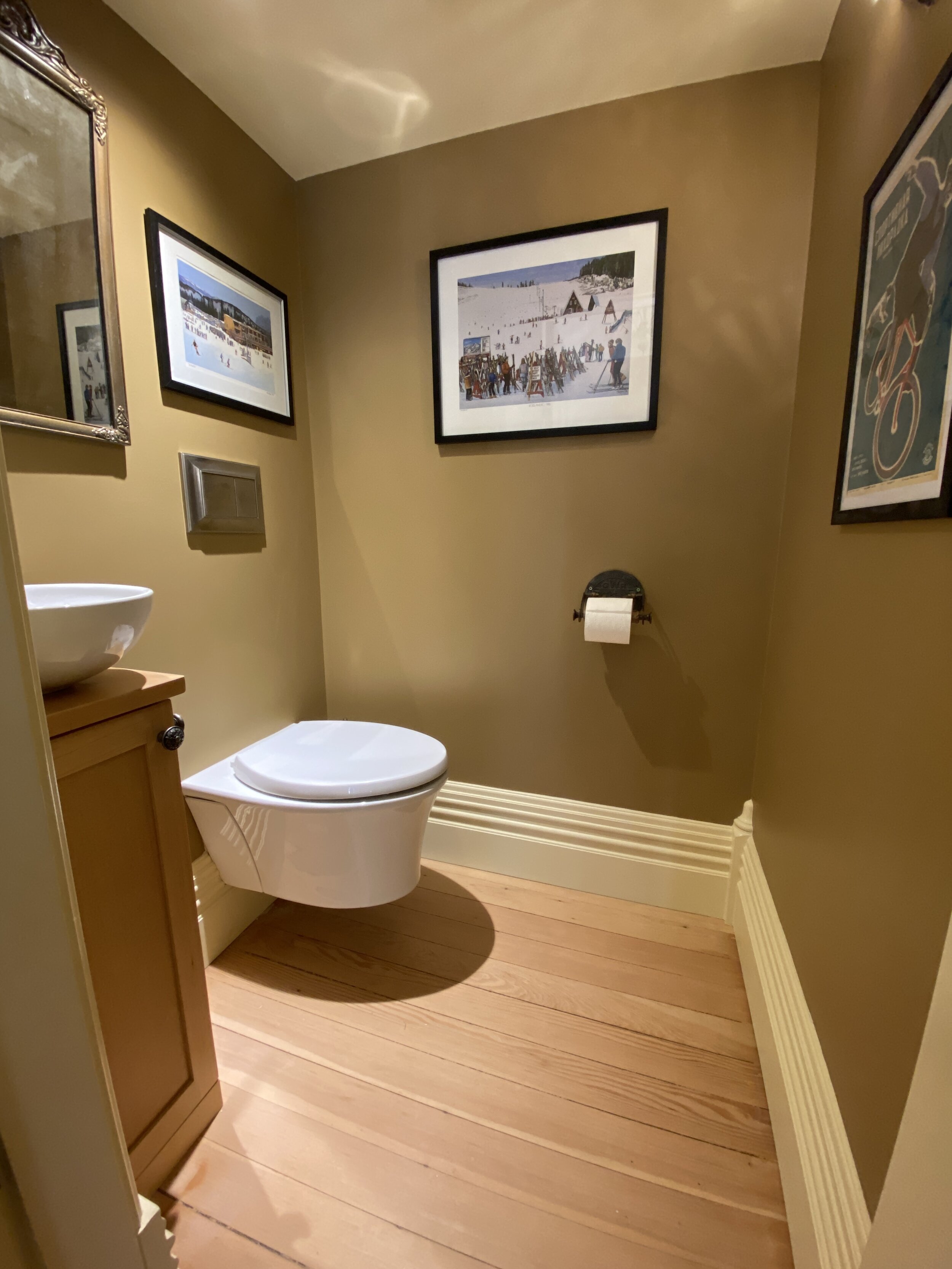
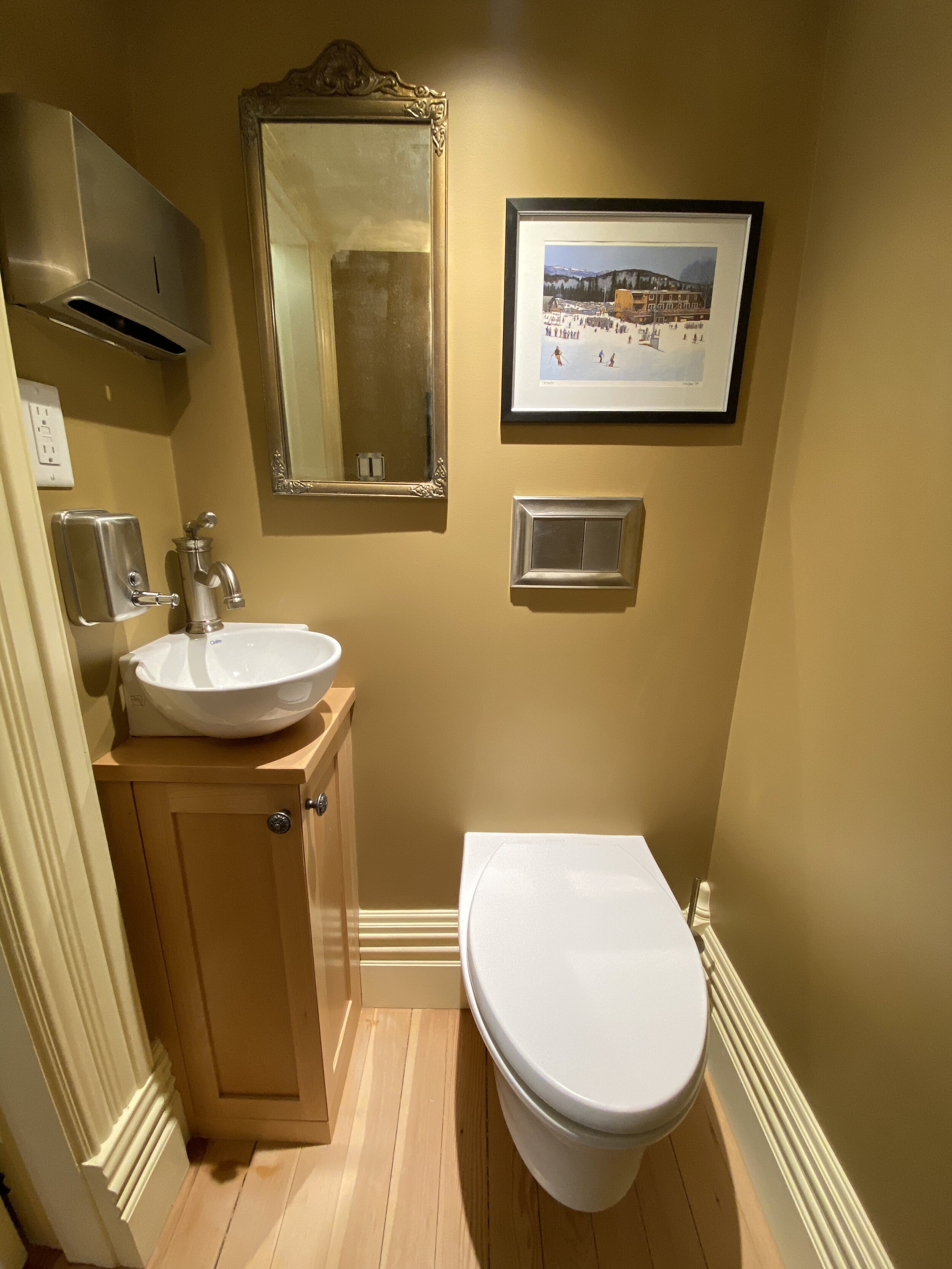
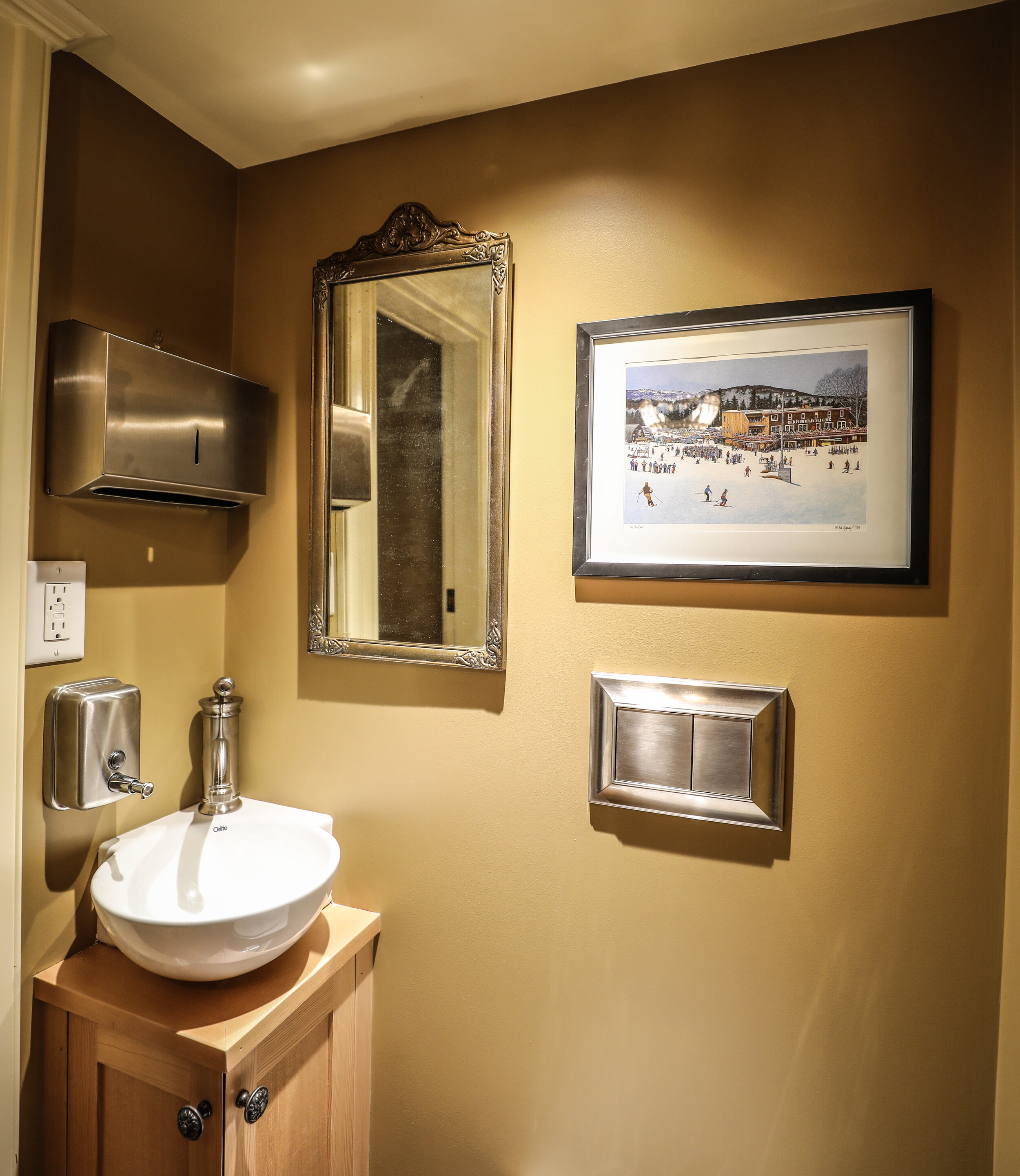
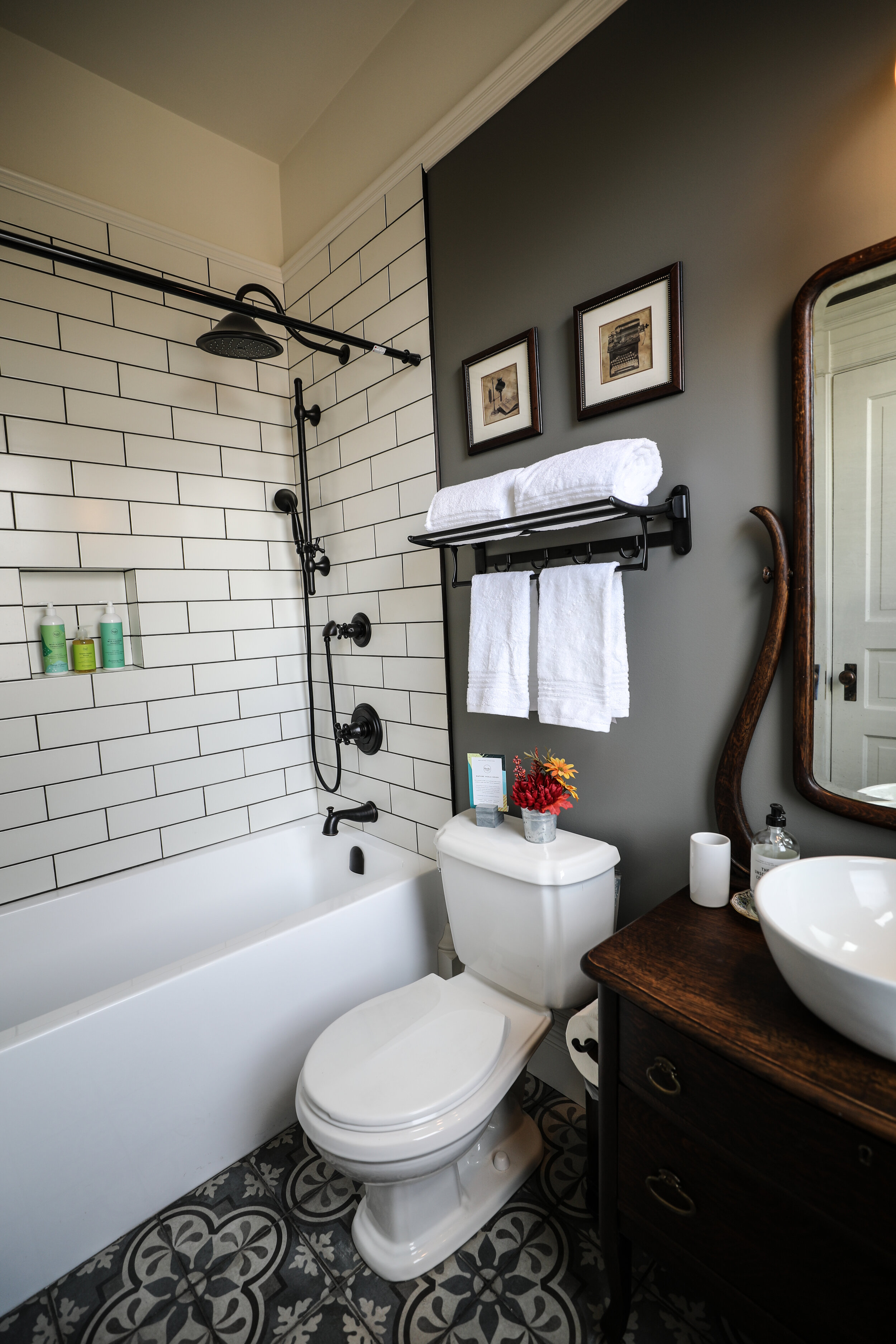
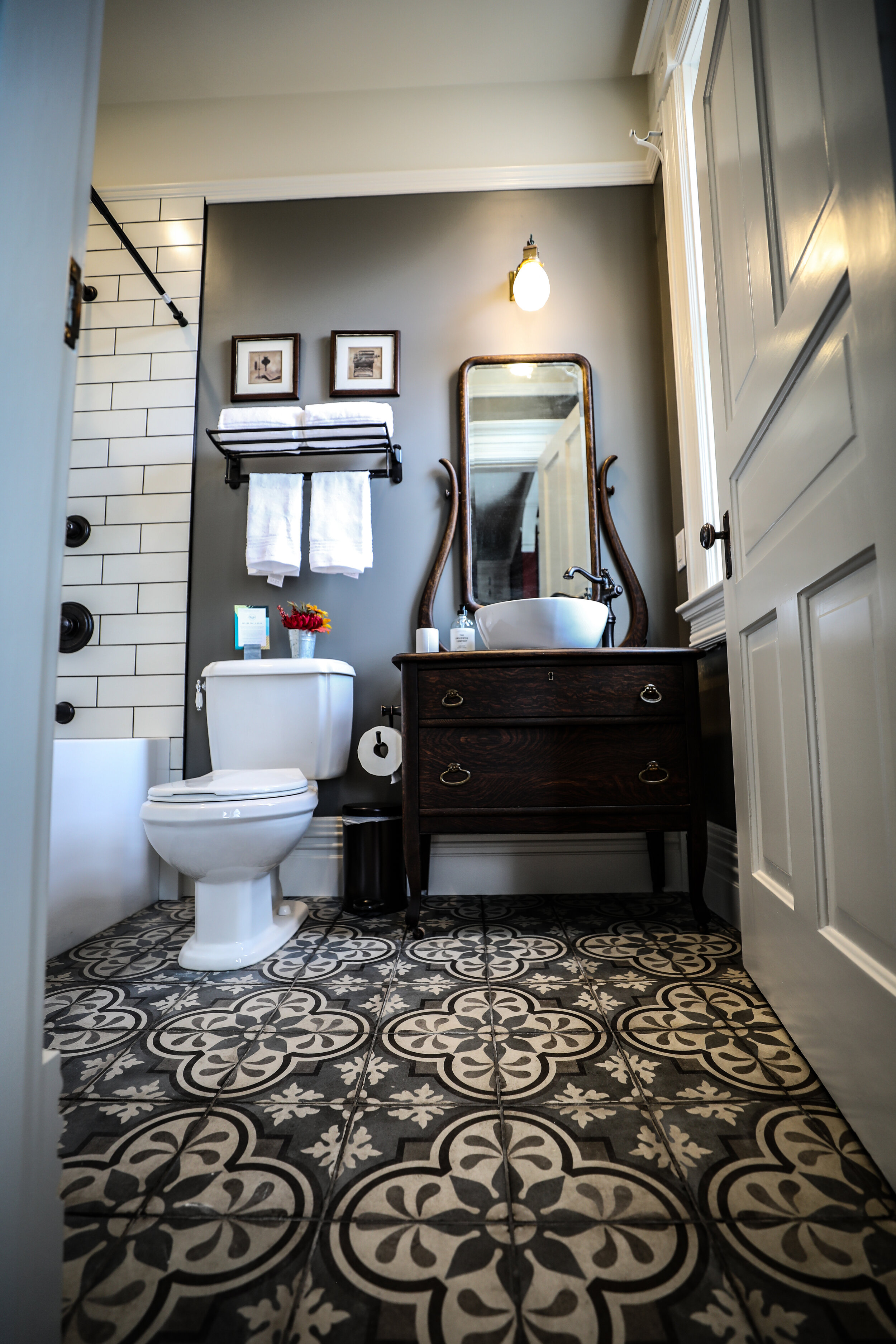
When we took possession, all three guest ensuites needed attention, and we also wanted to add a powder room on the main floor.
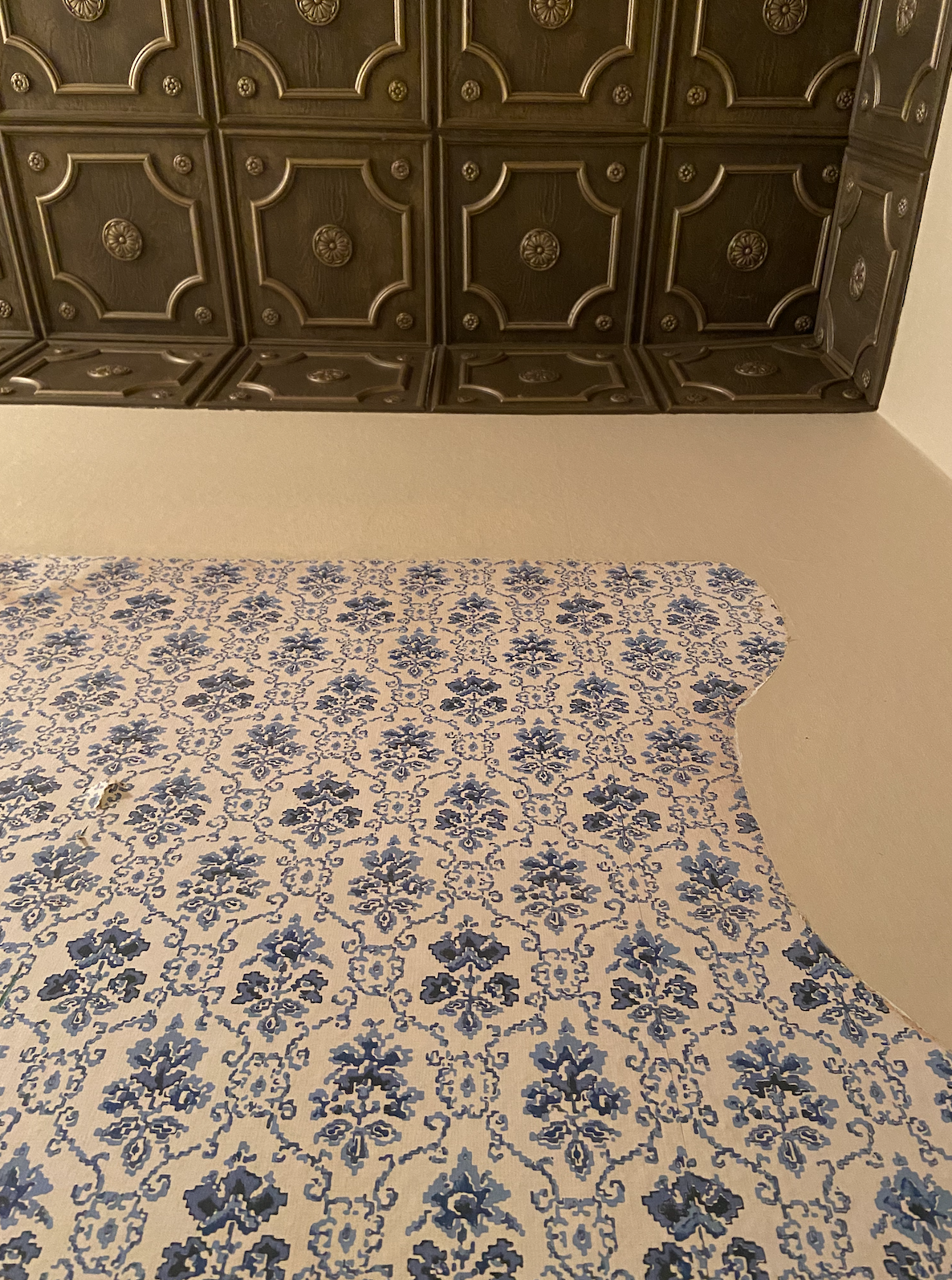
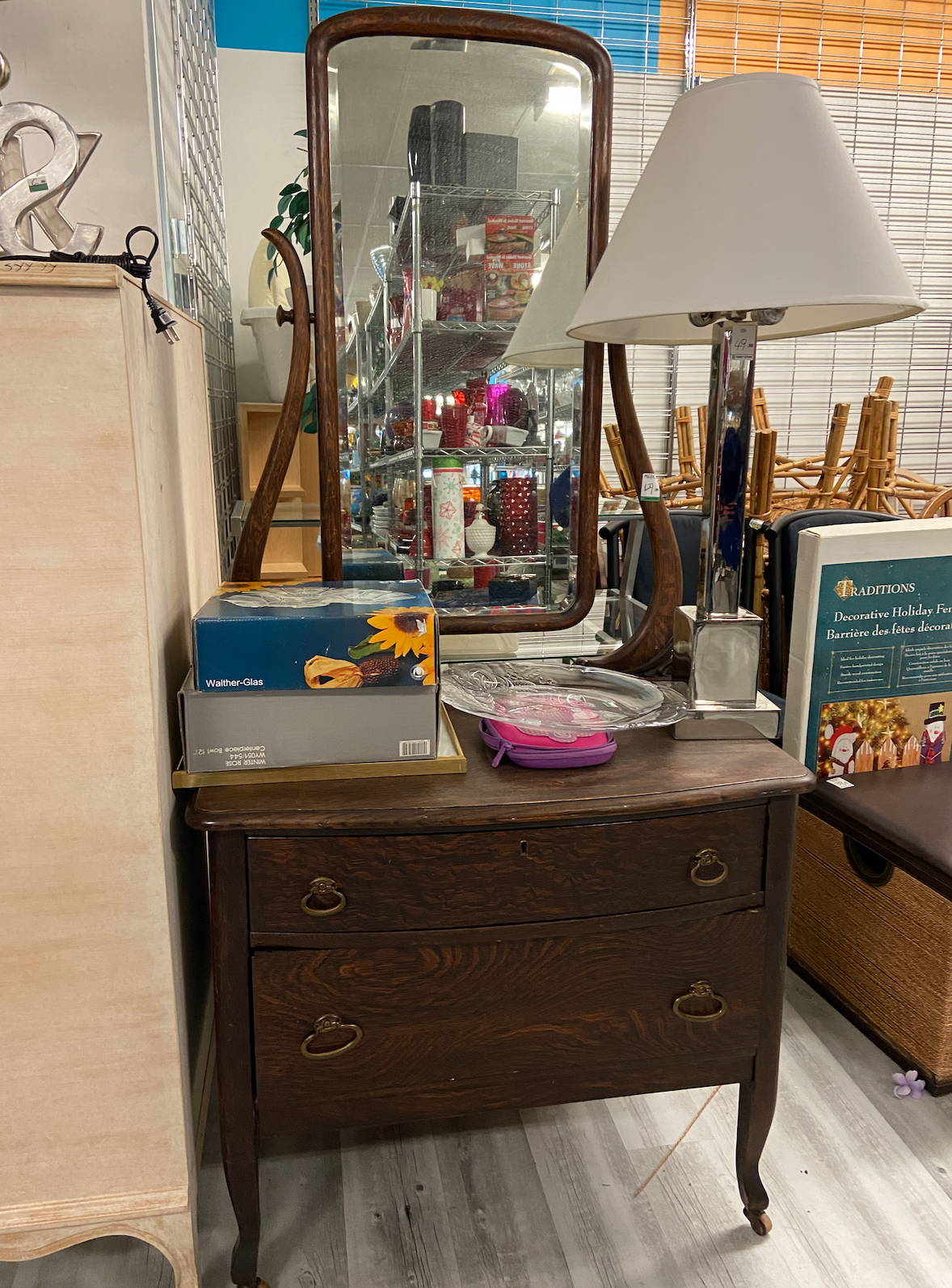
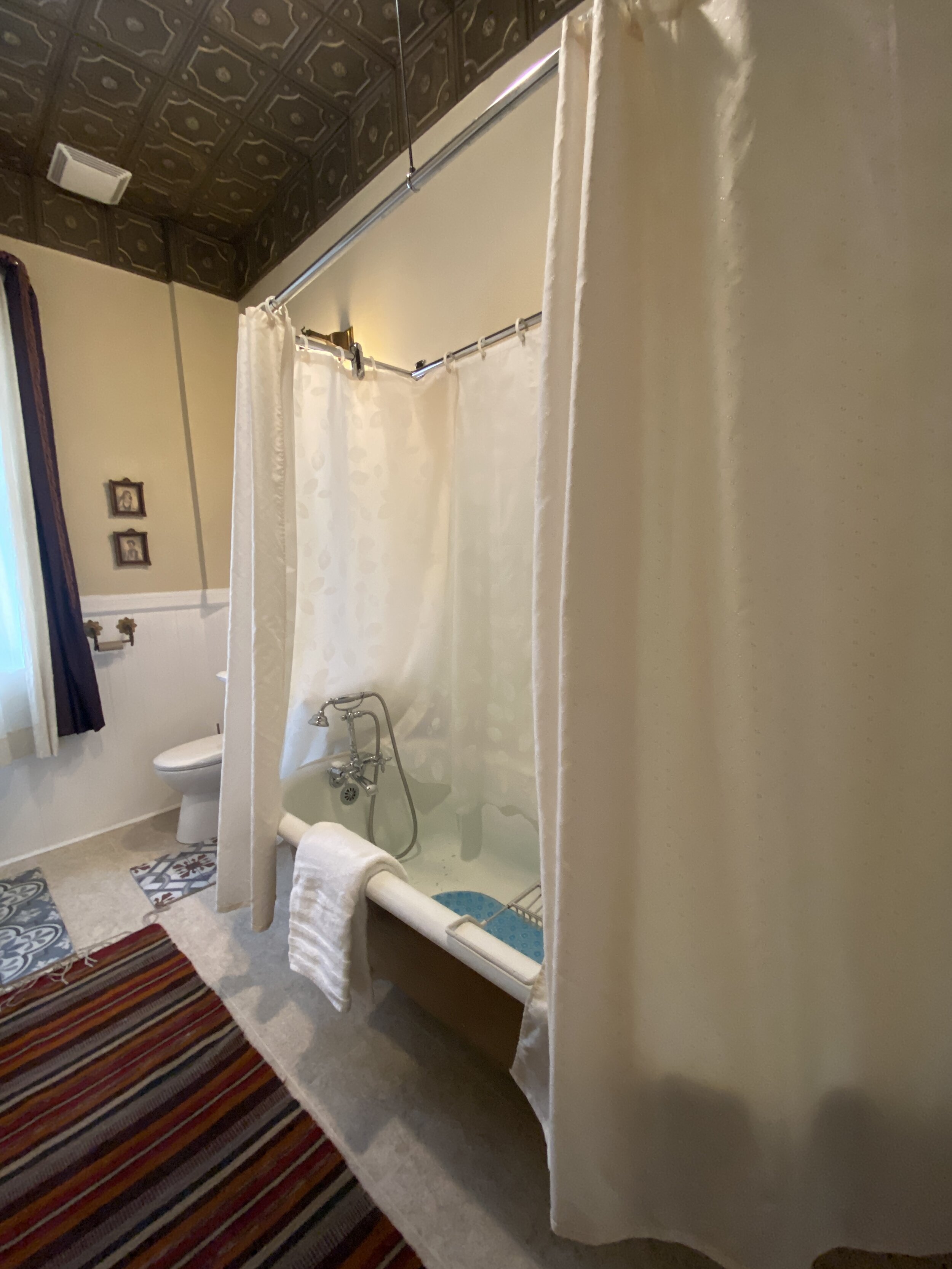
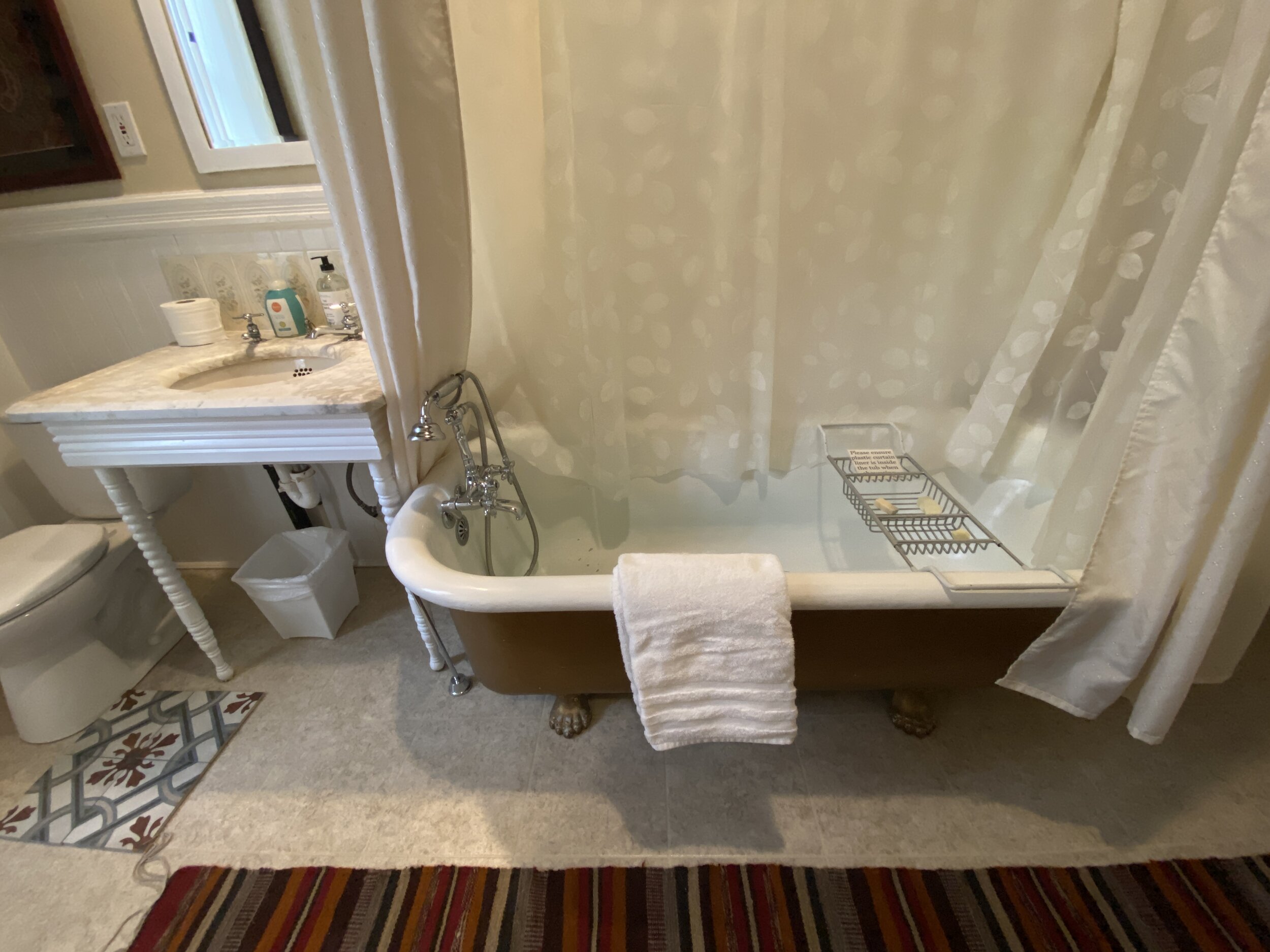
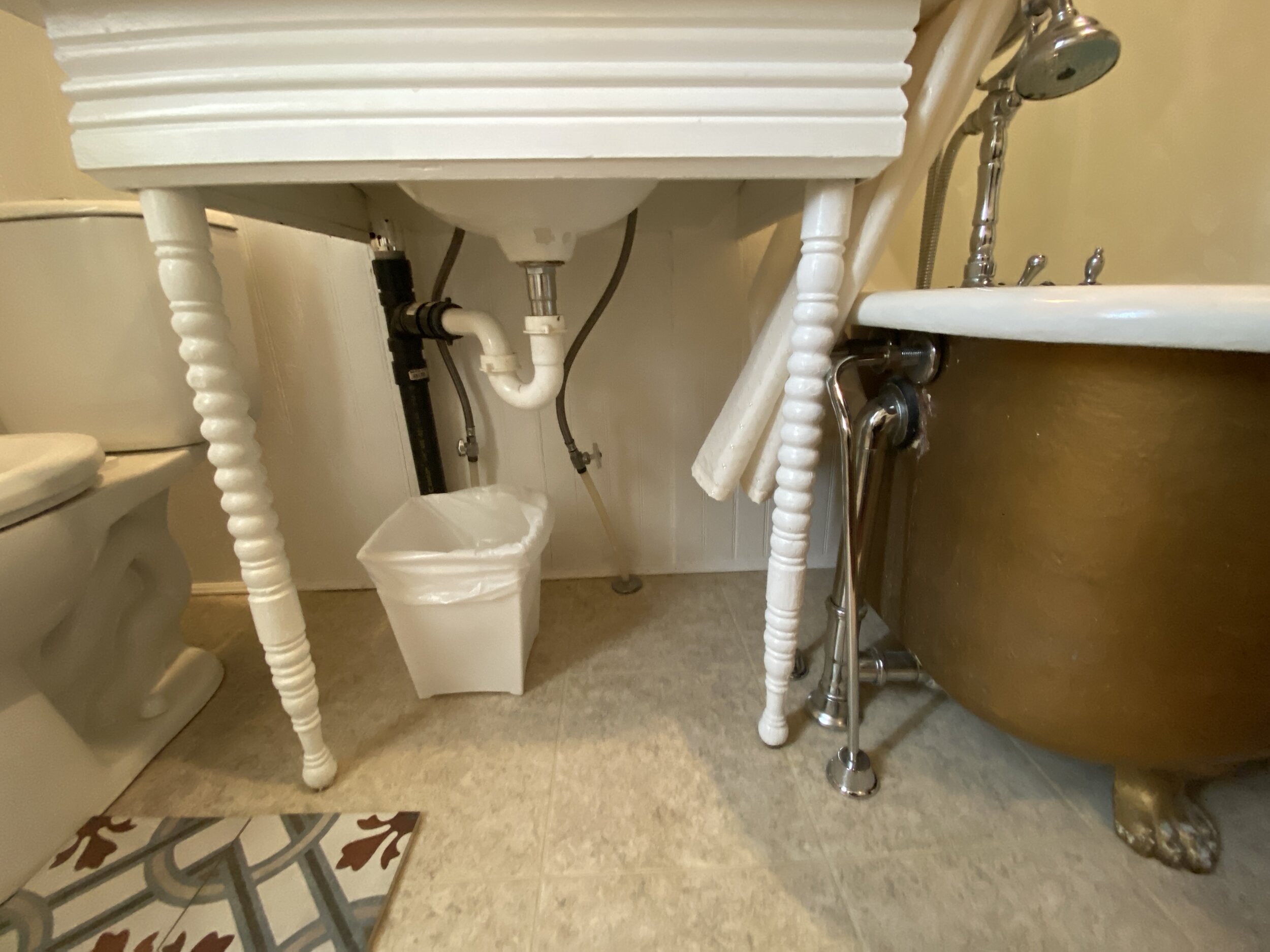
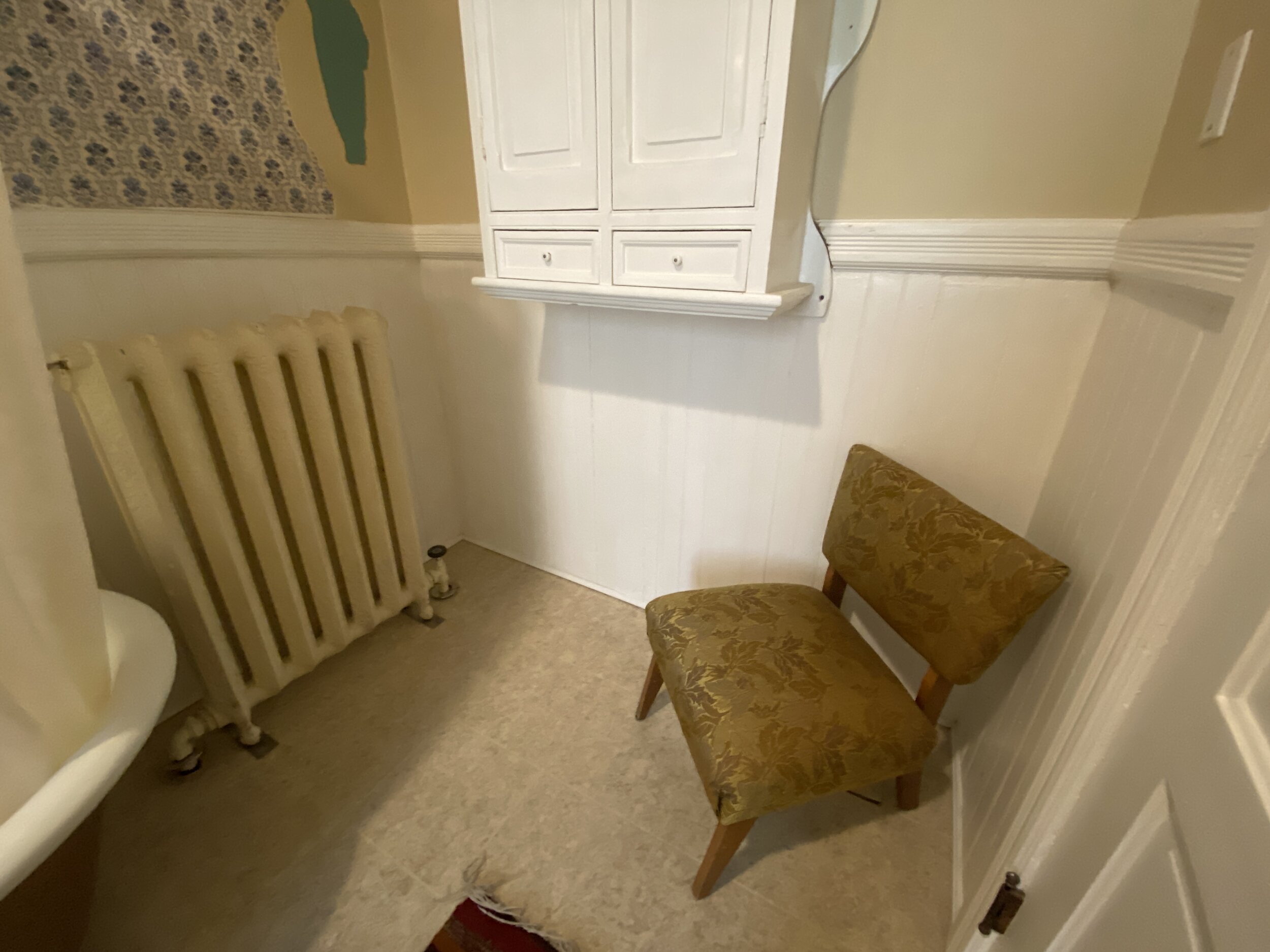
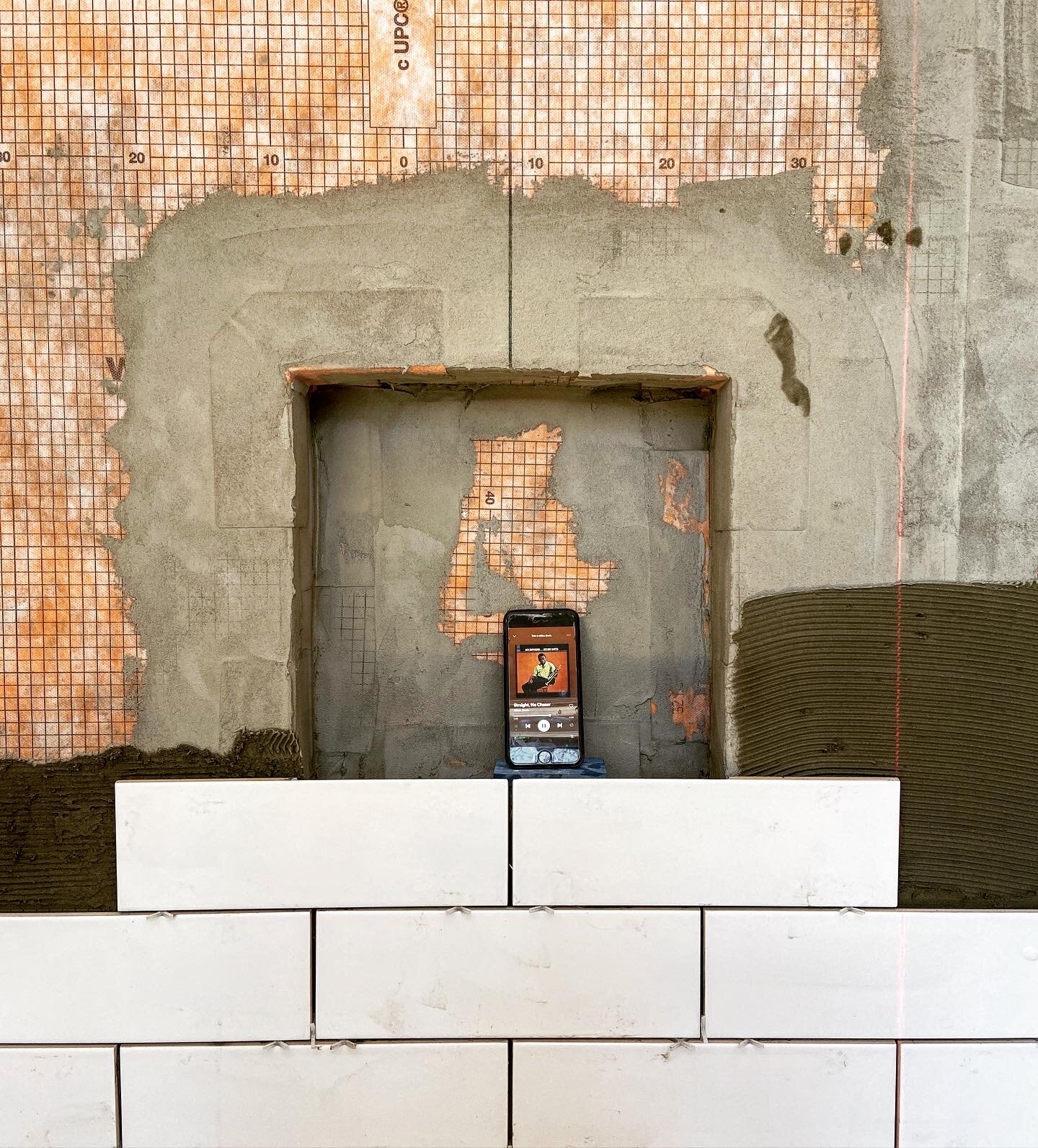
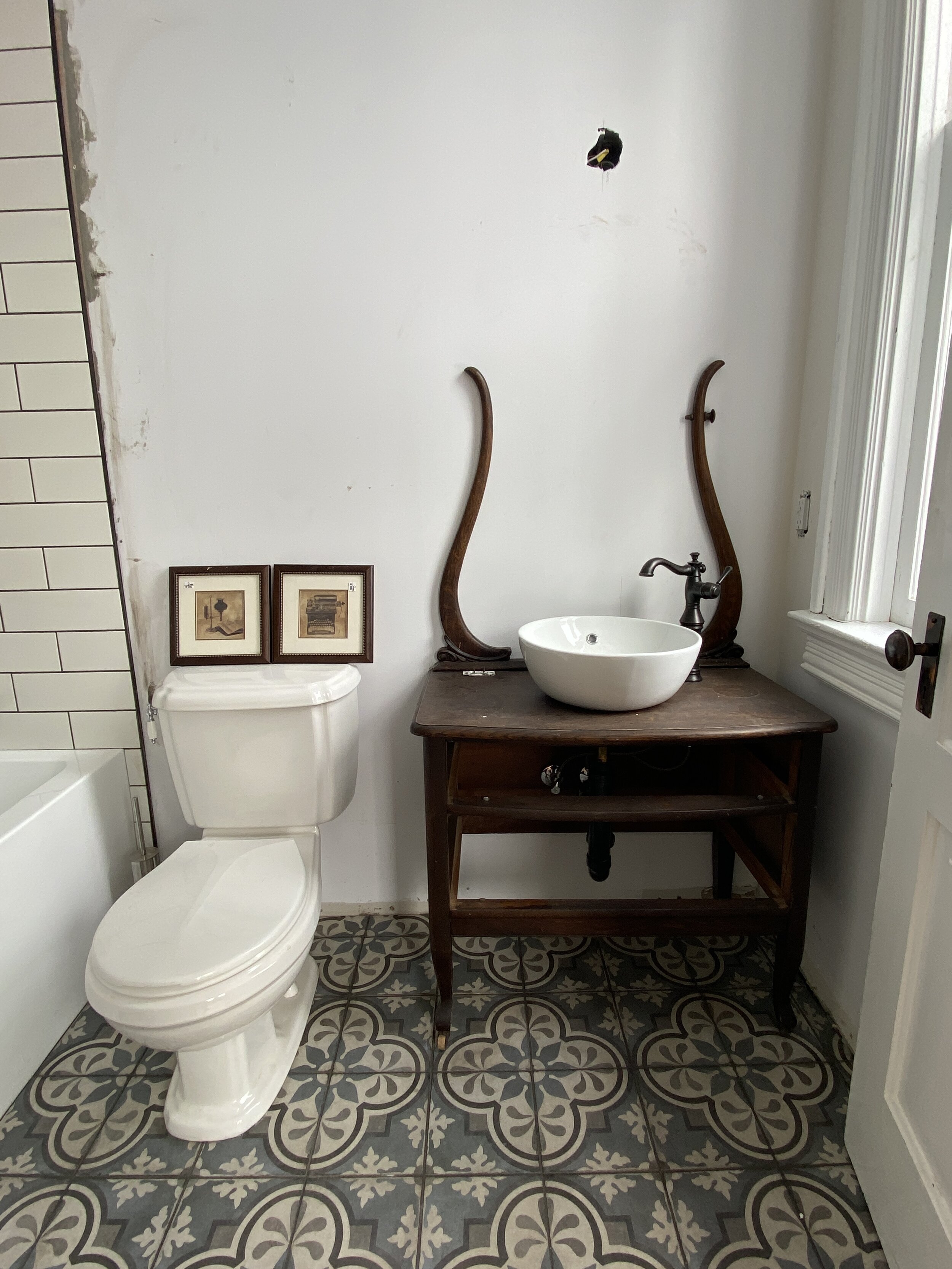
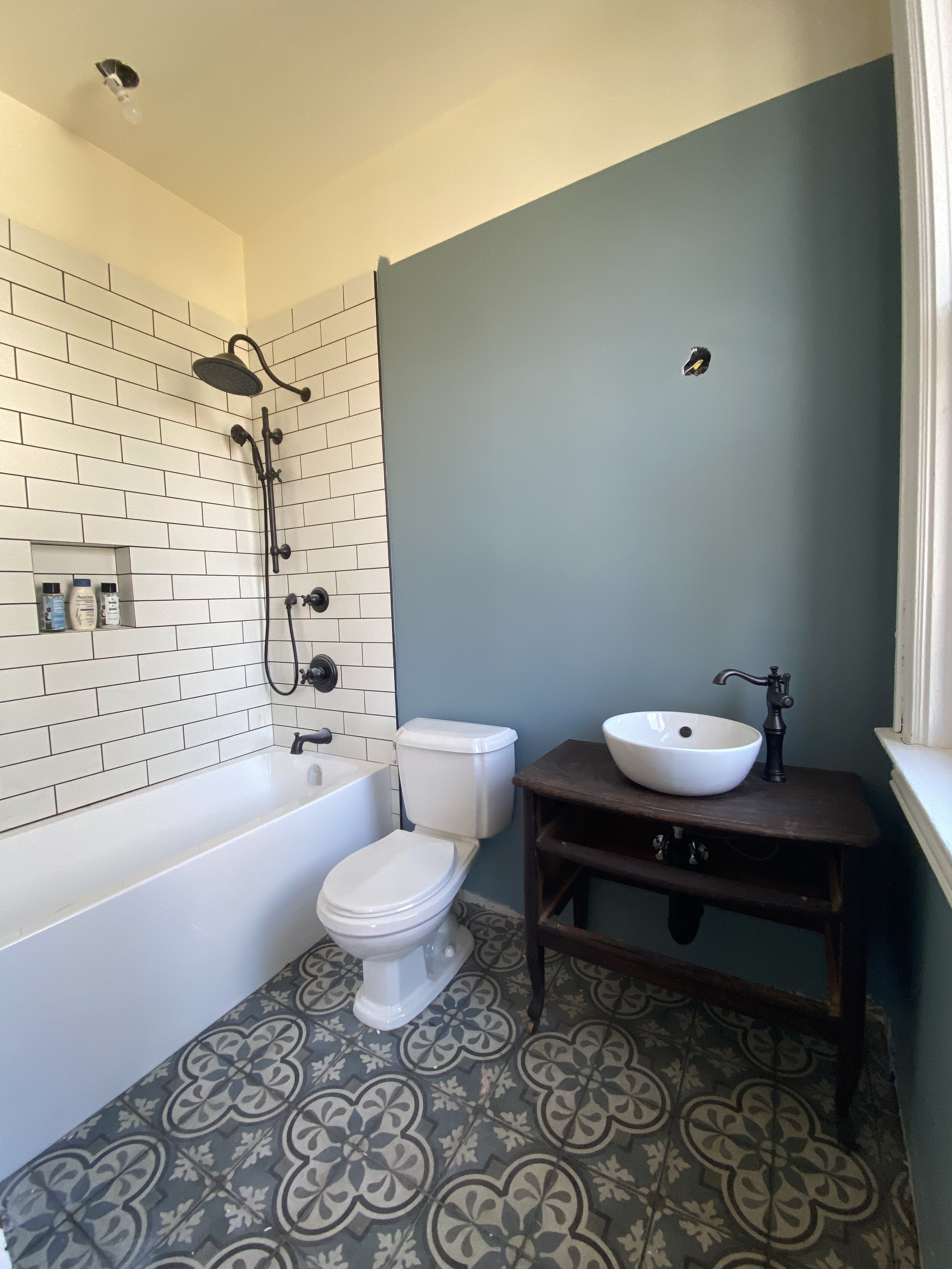
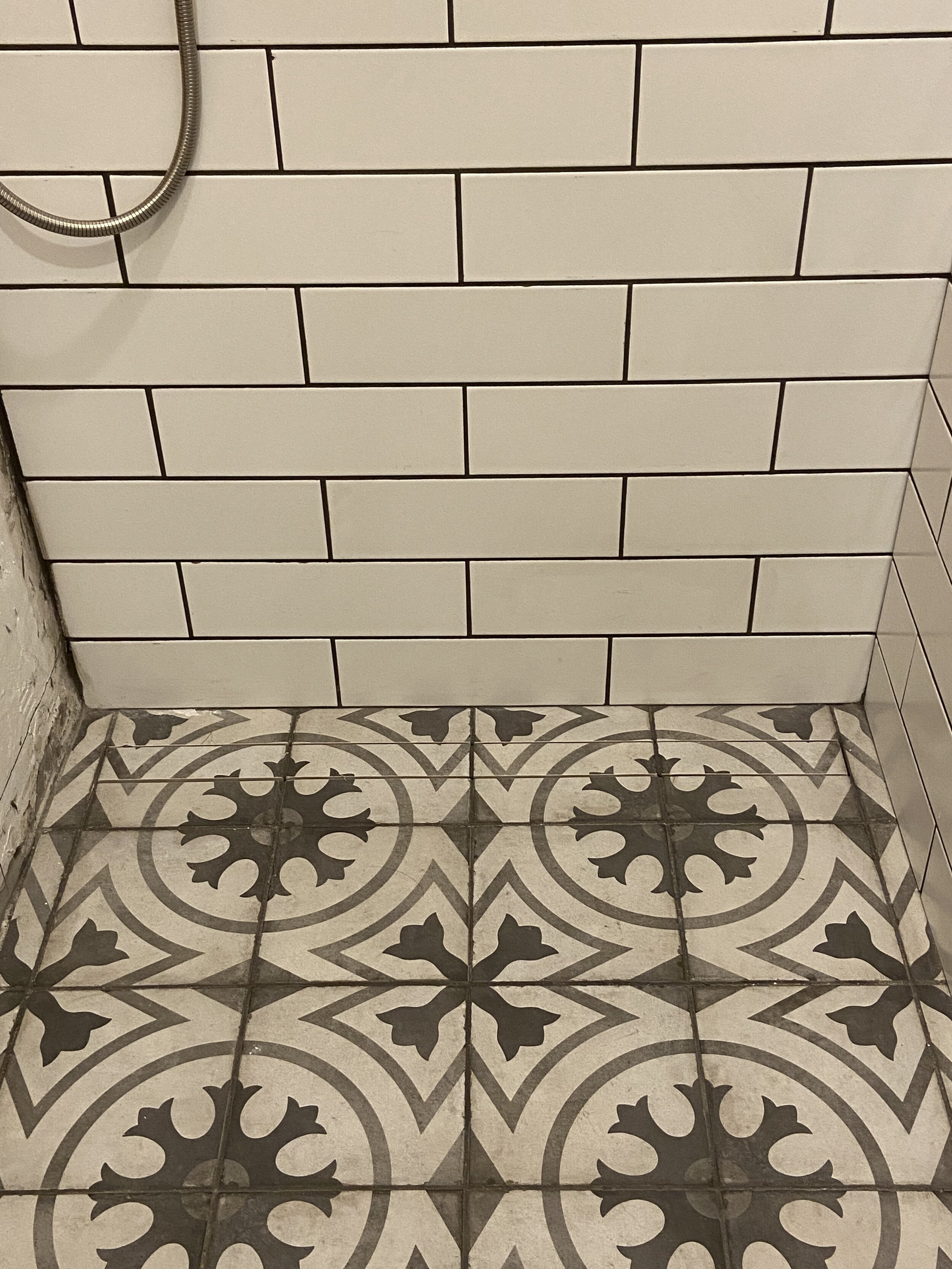
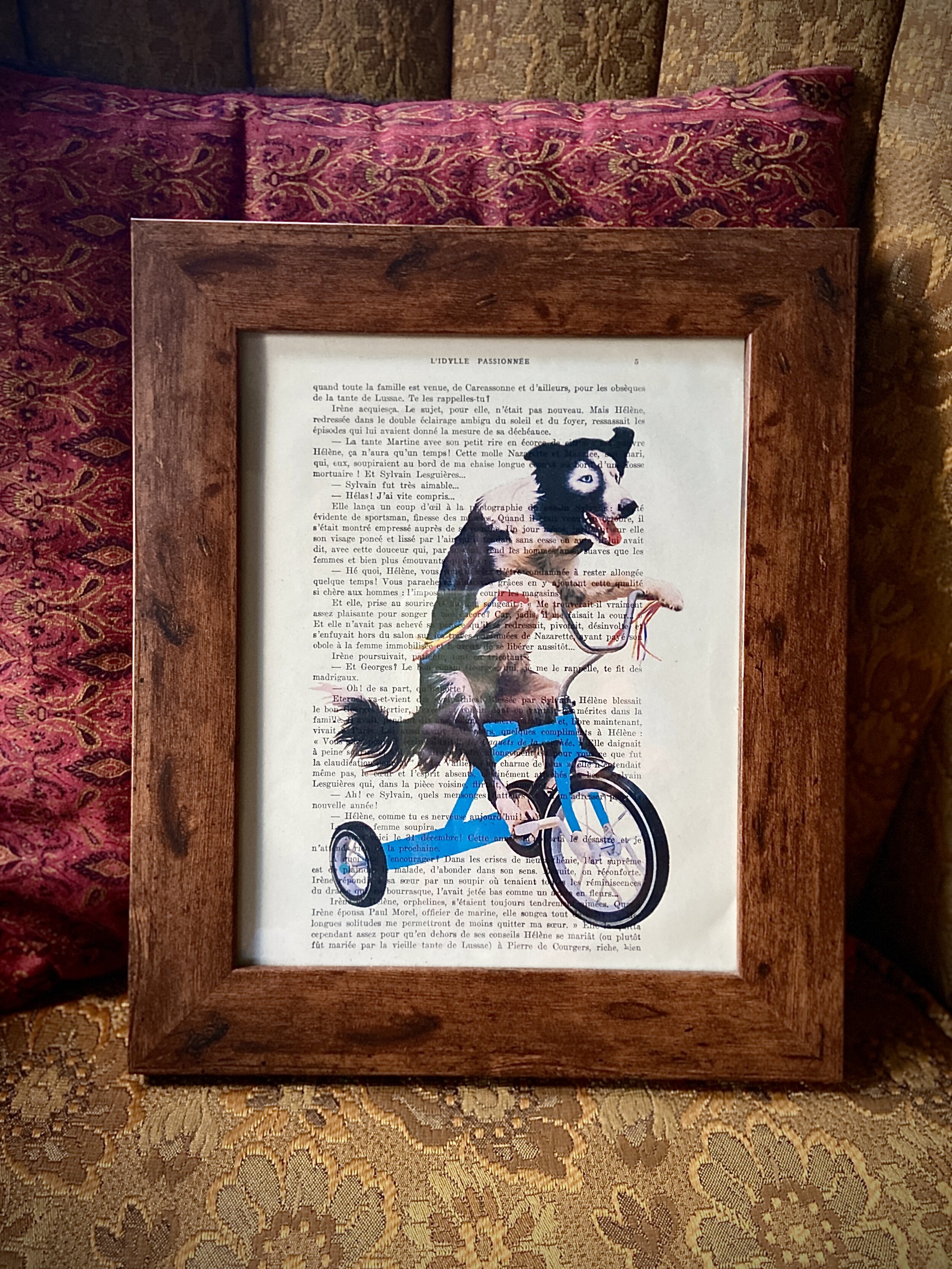
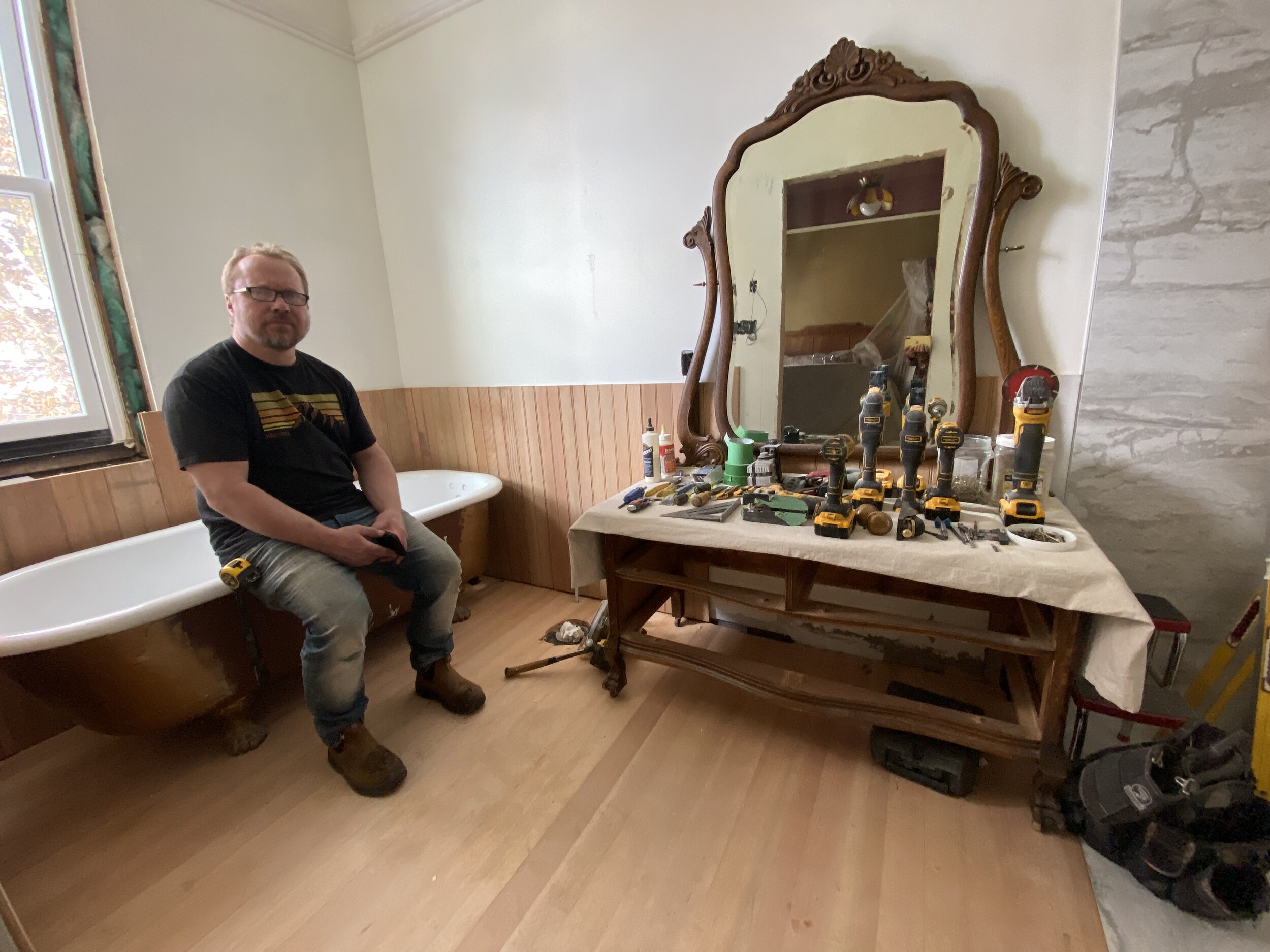
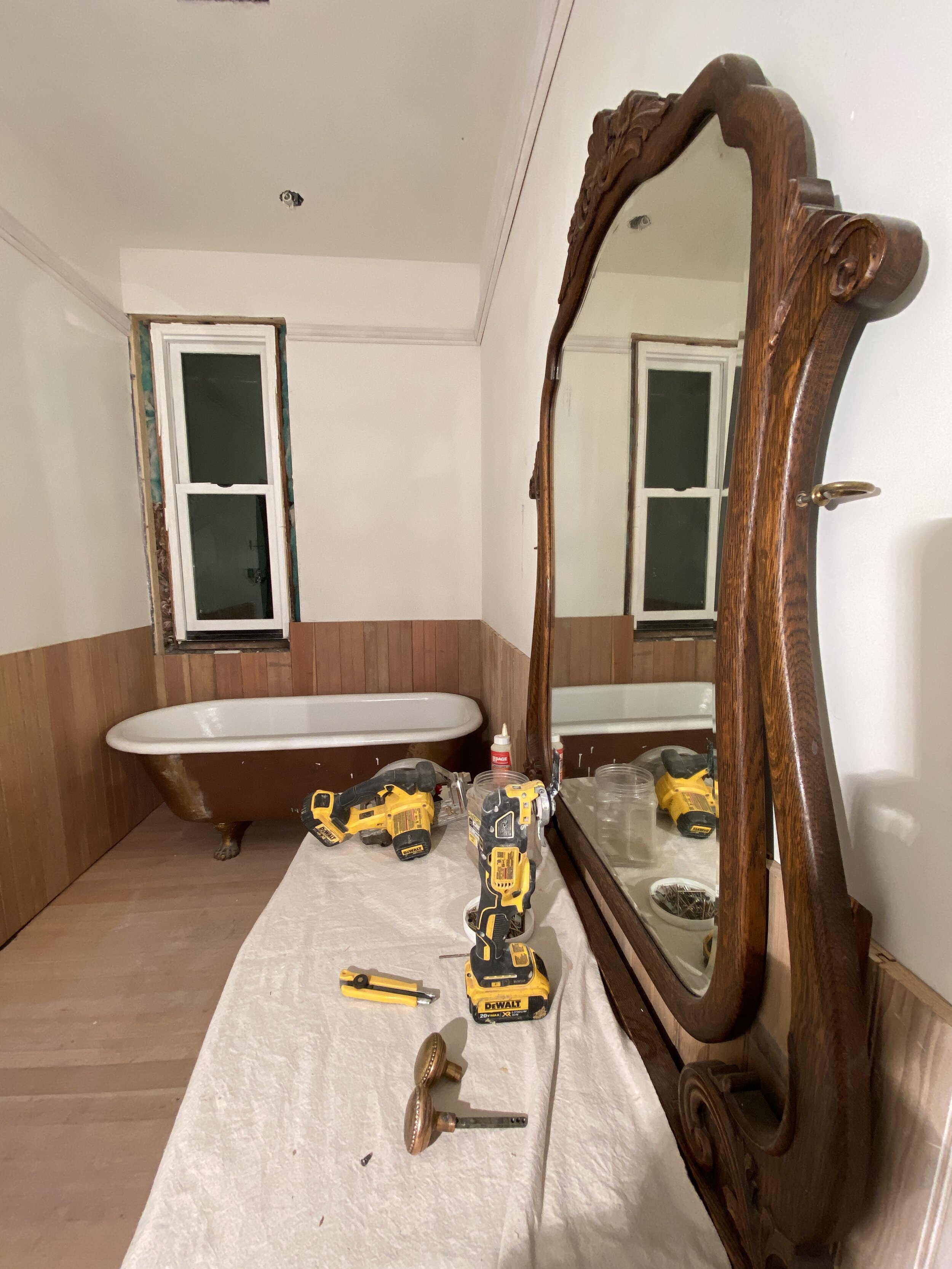
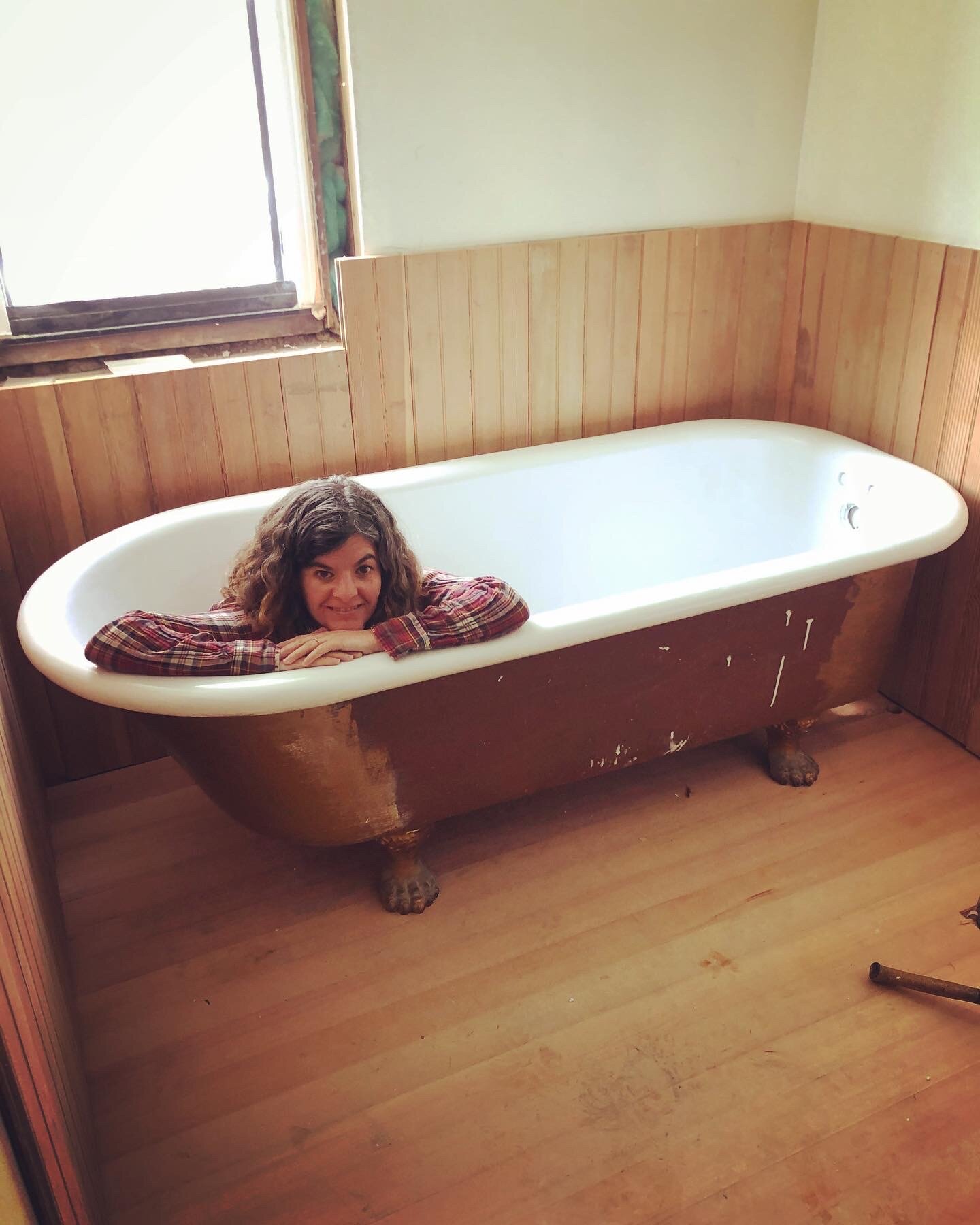
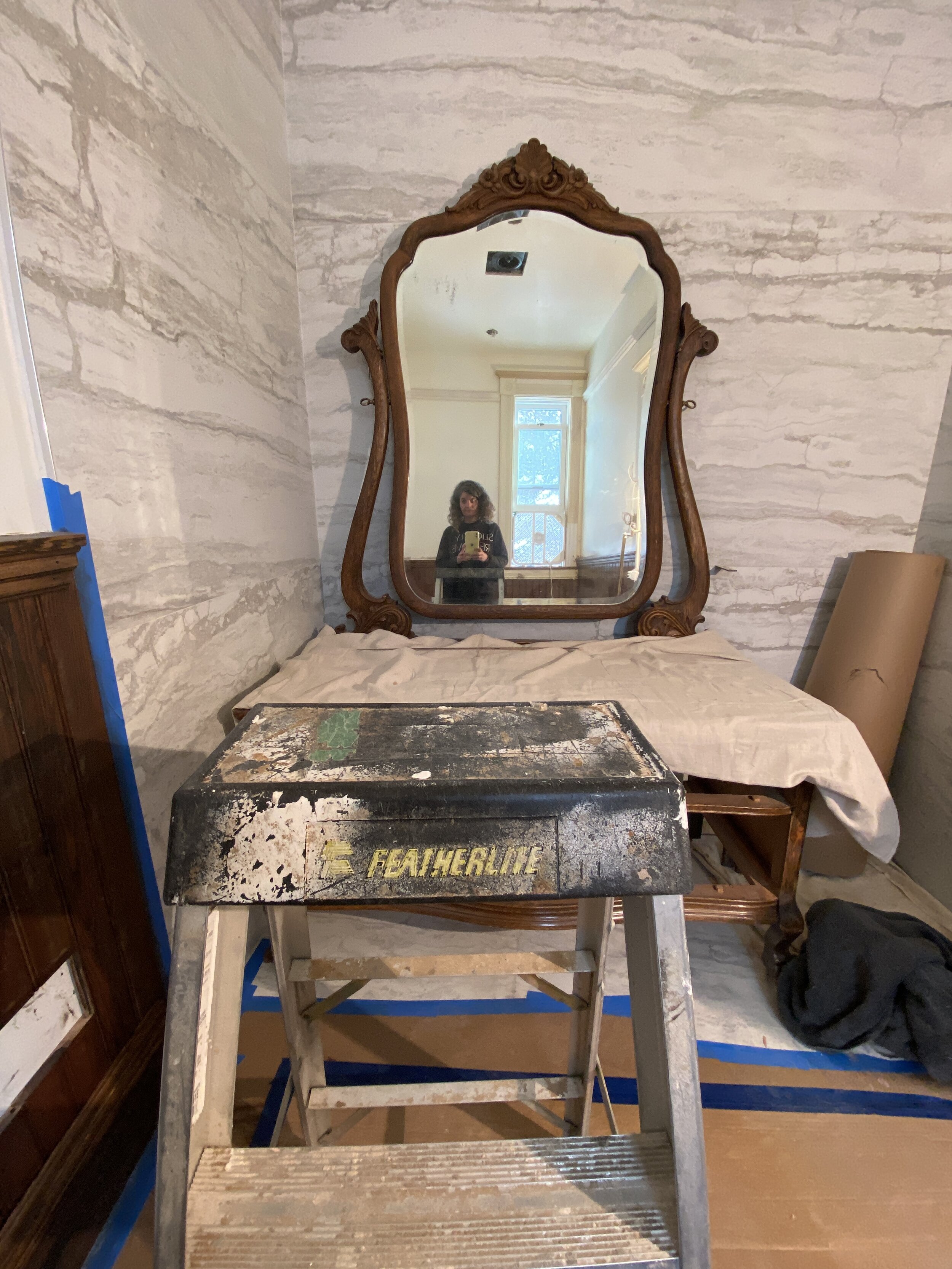
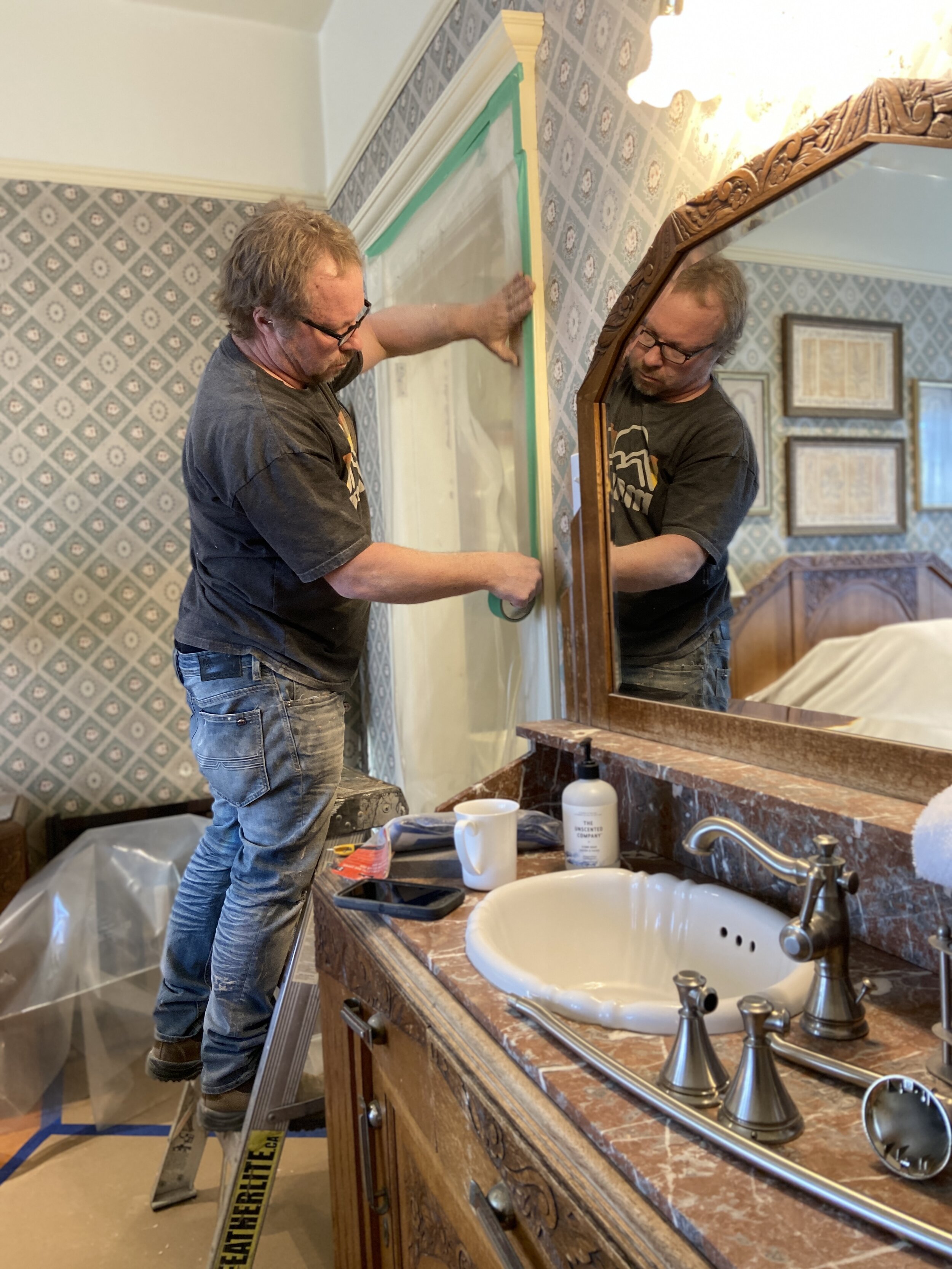
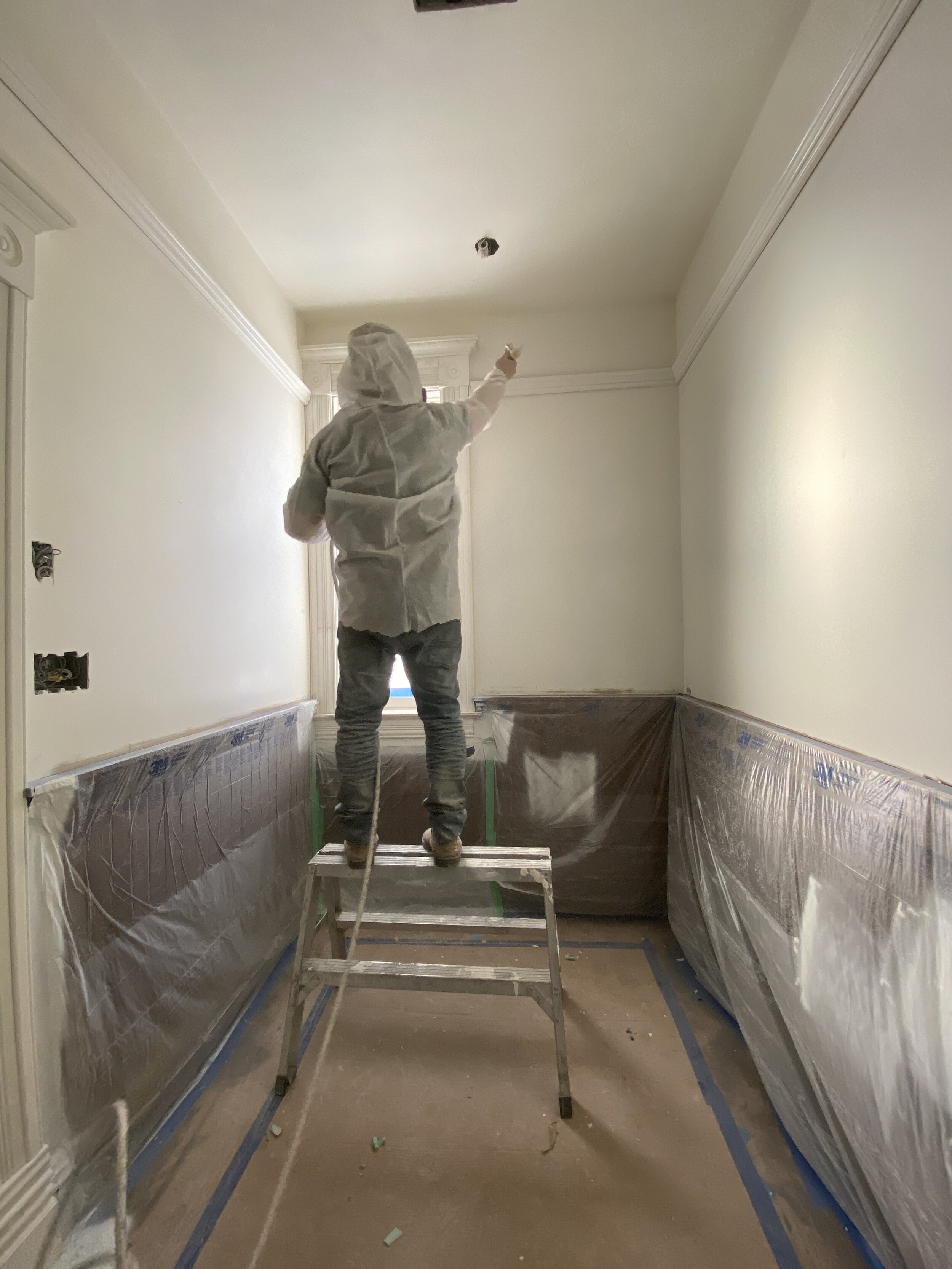
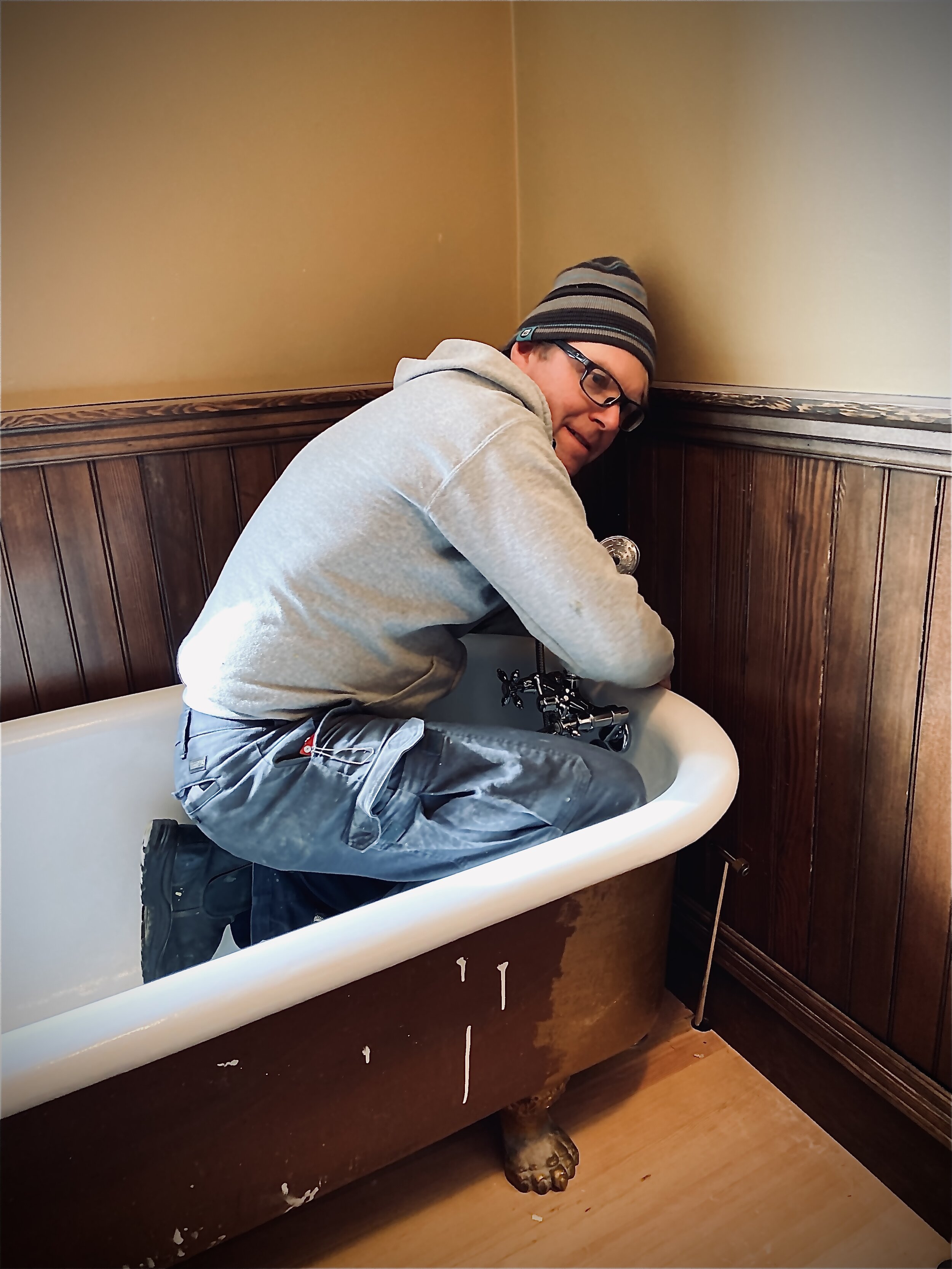
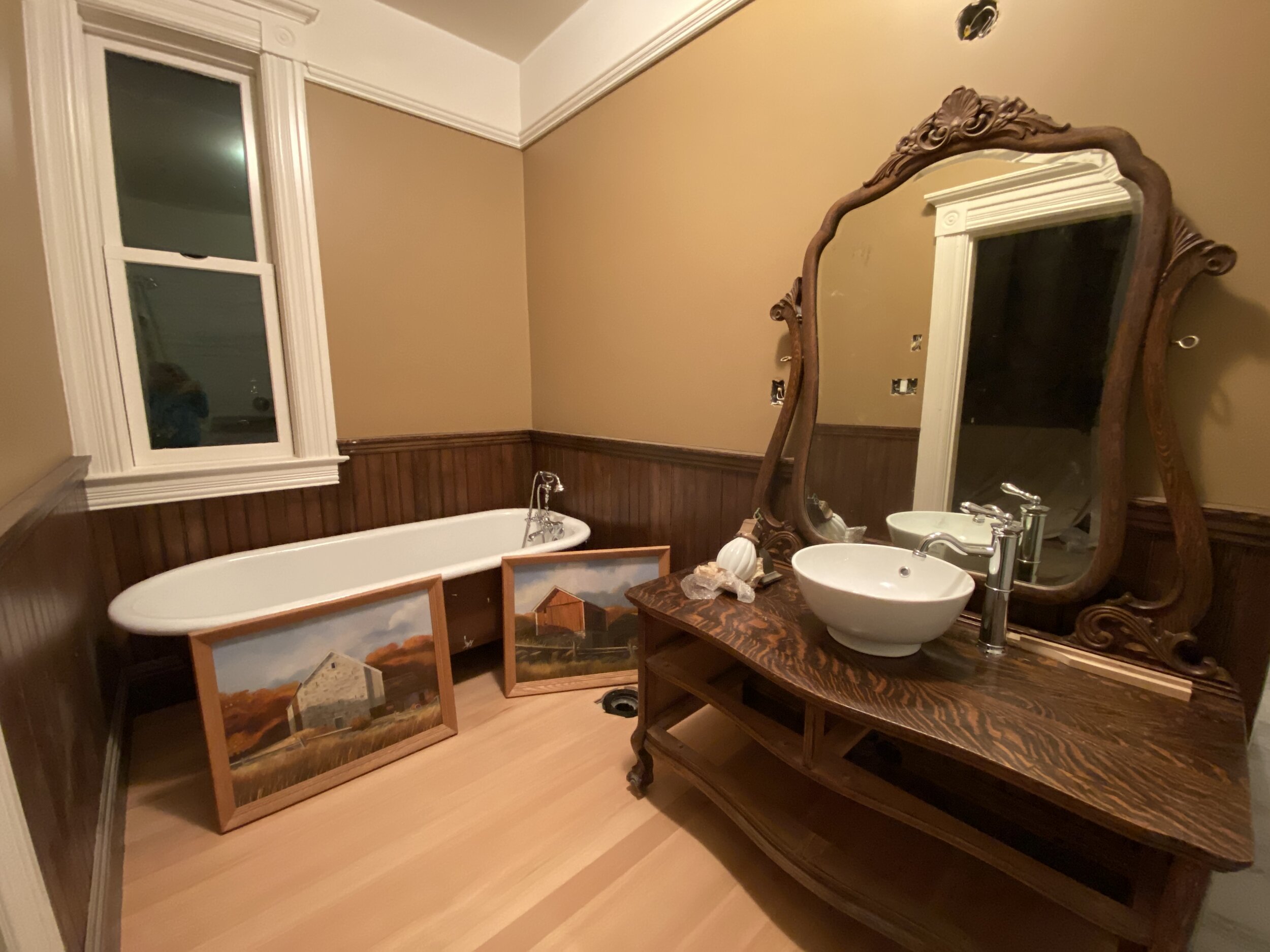
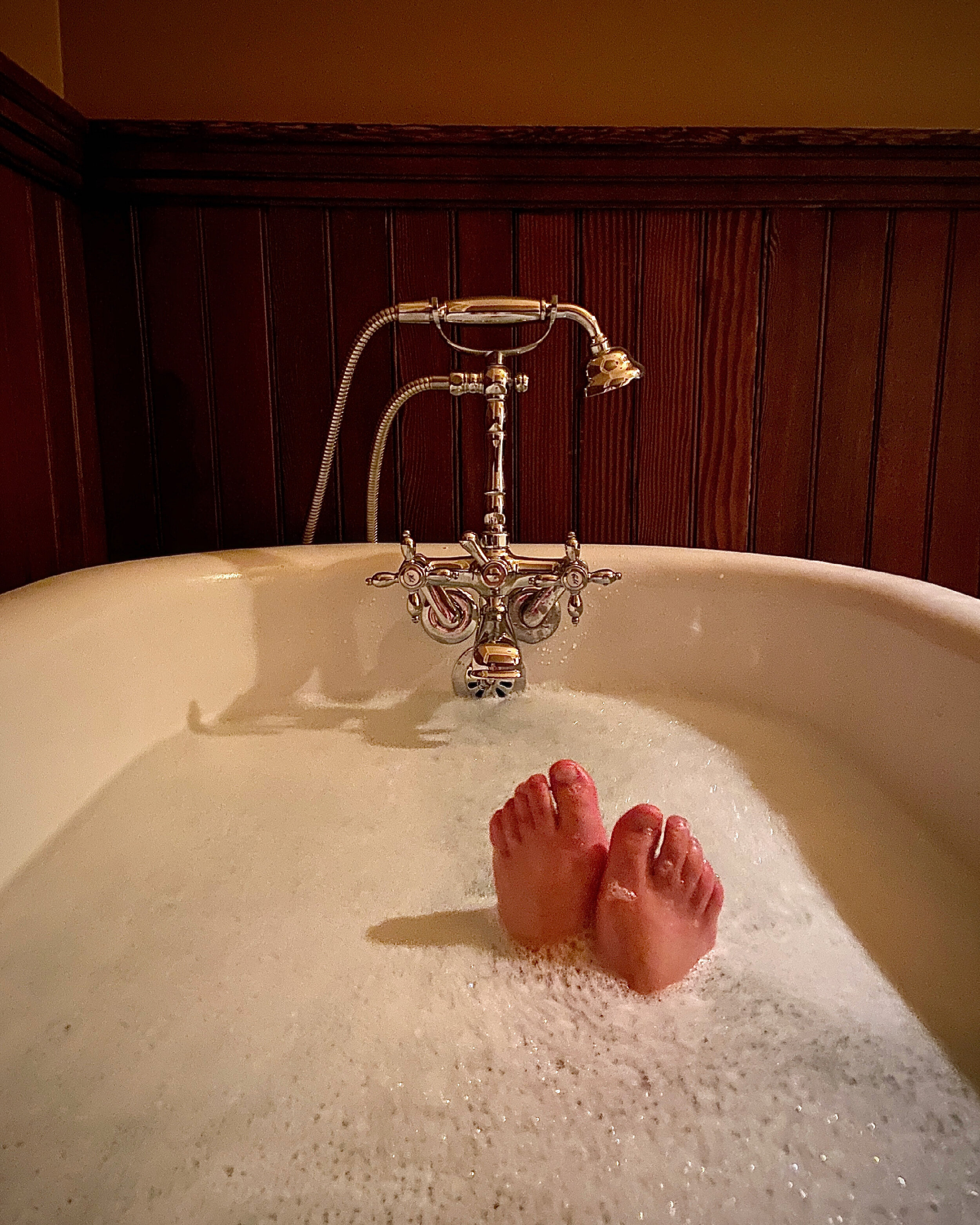
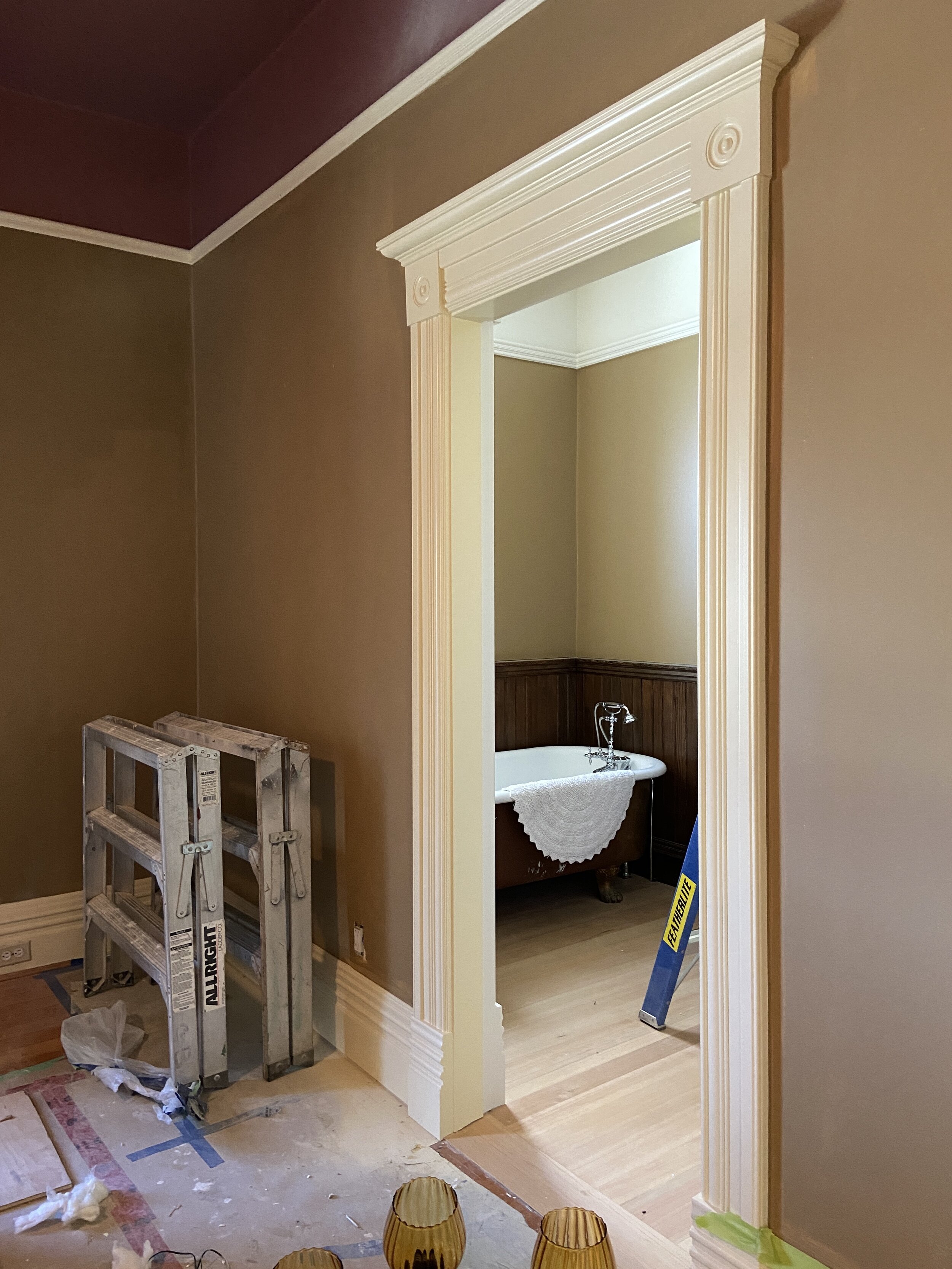
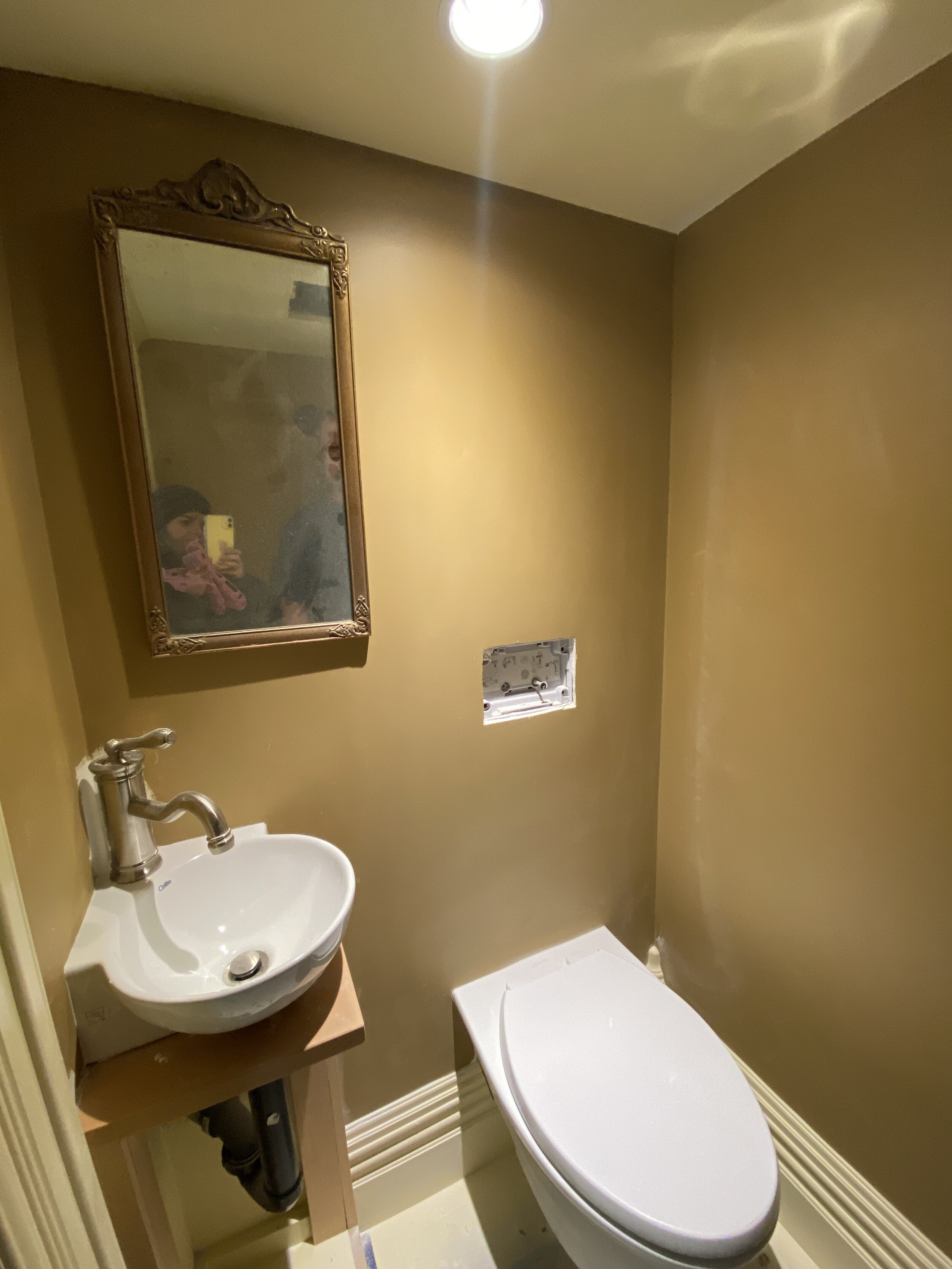
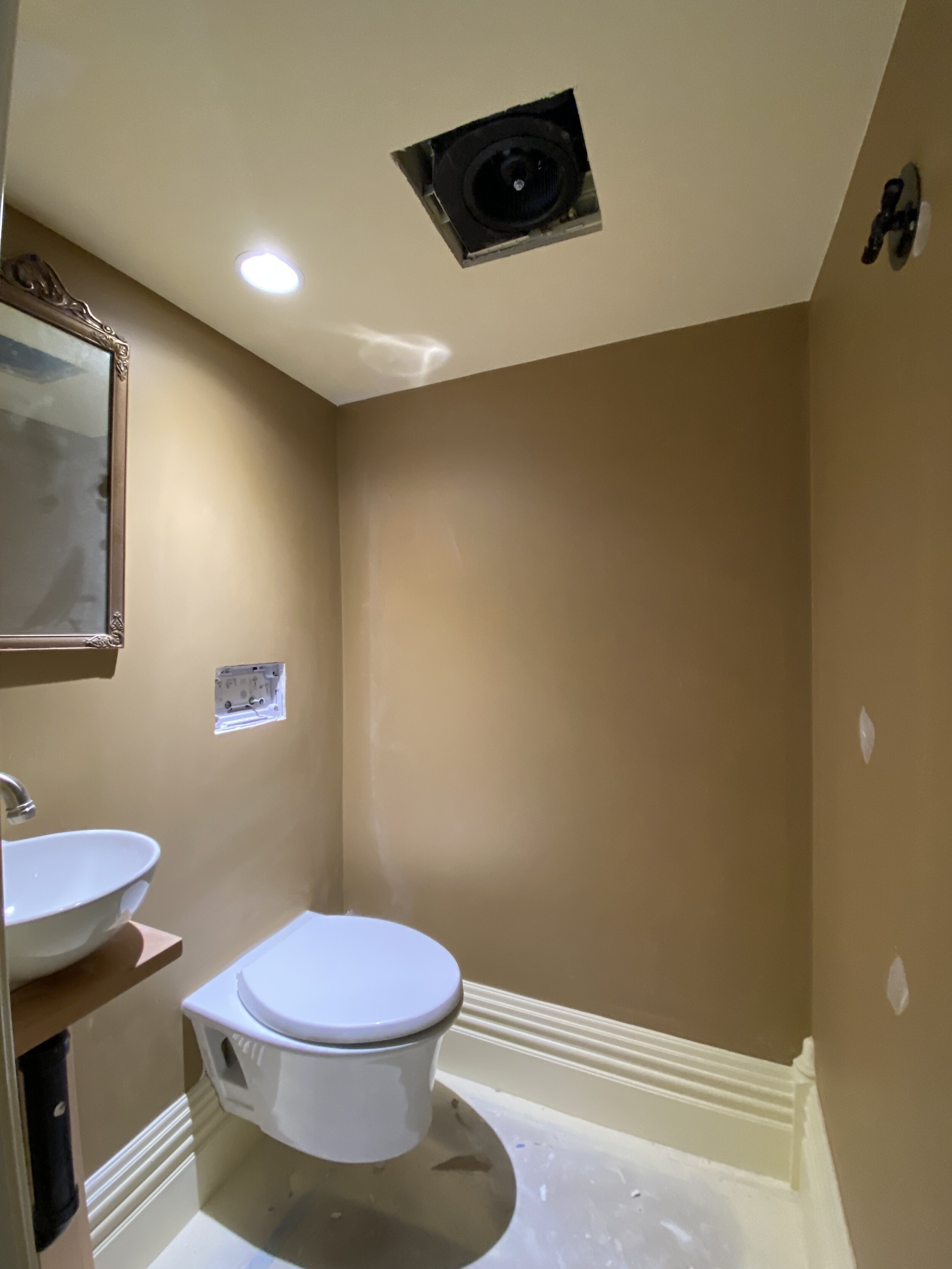
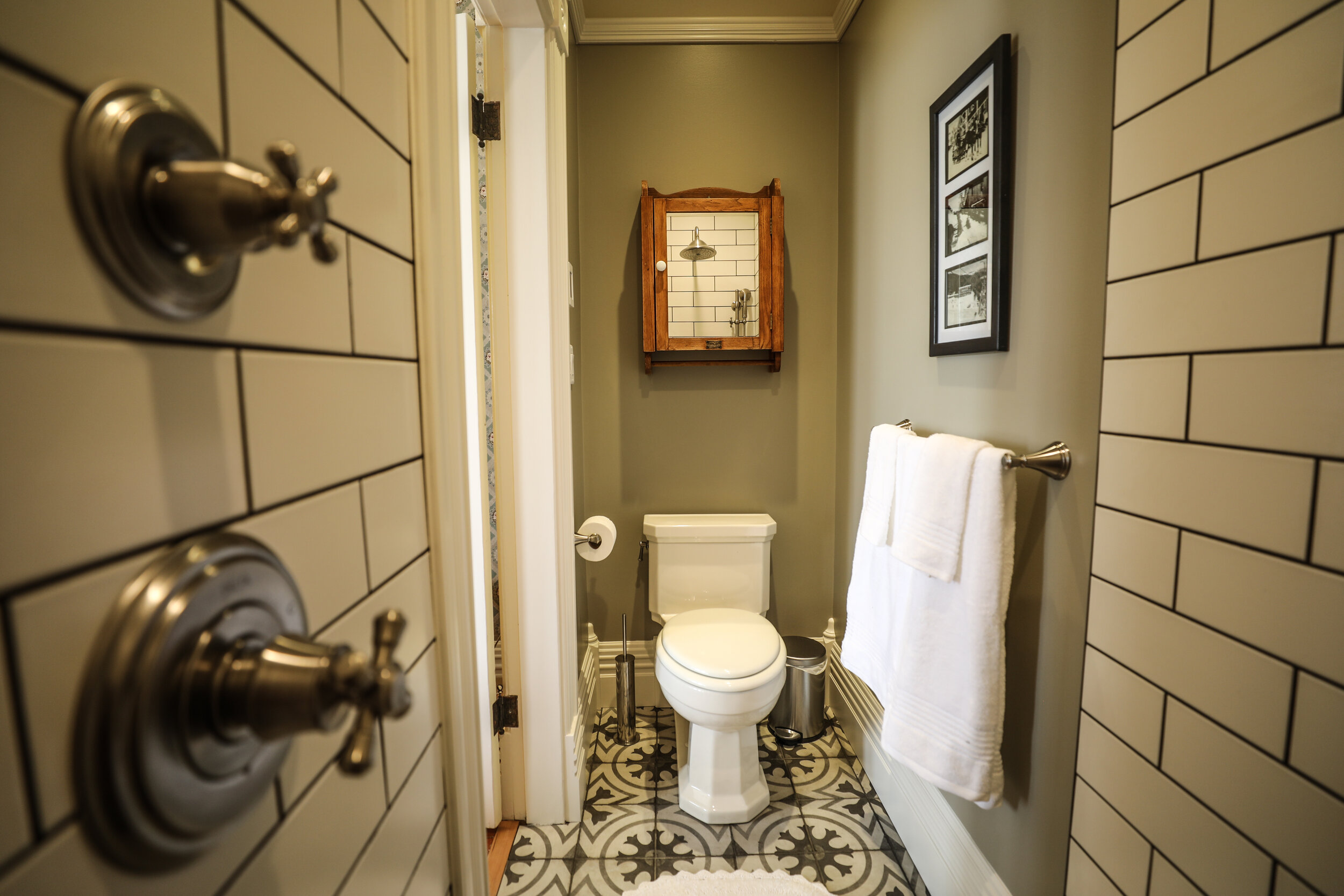
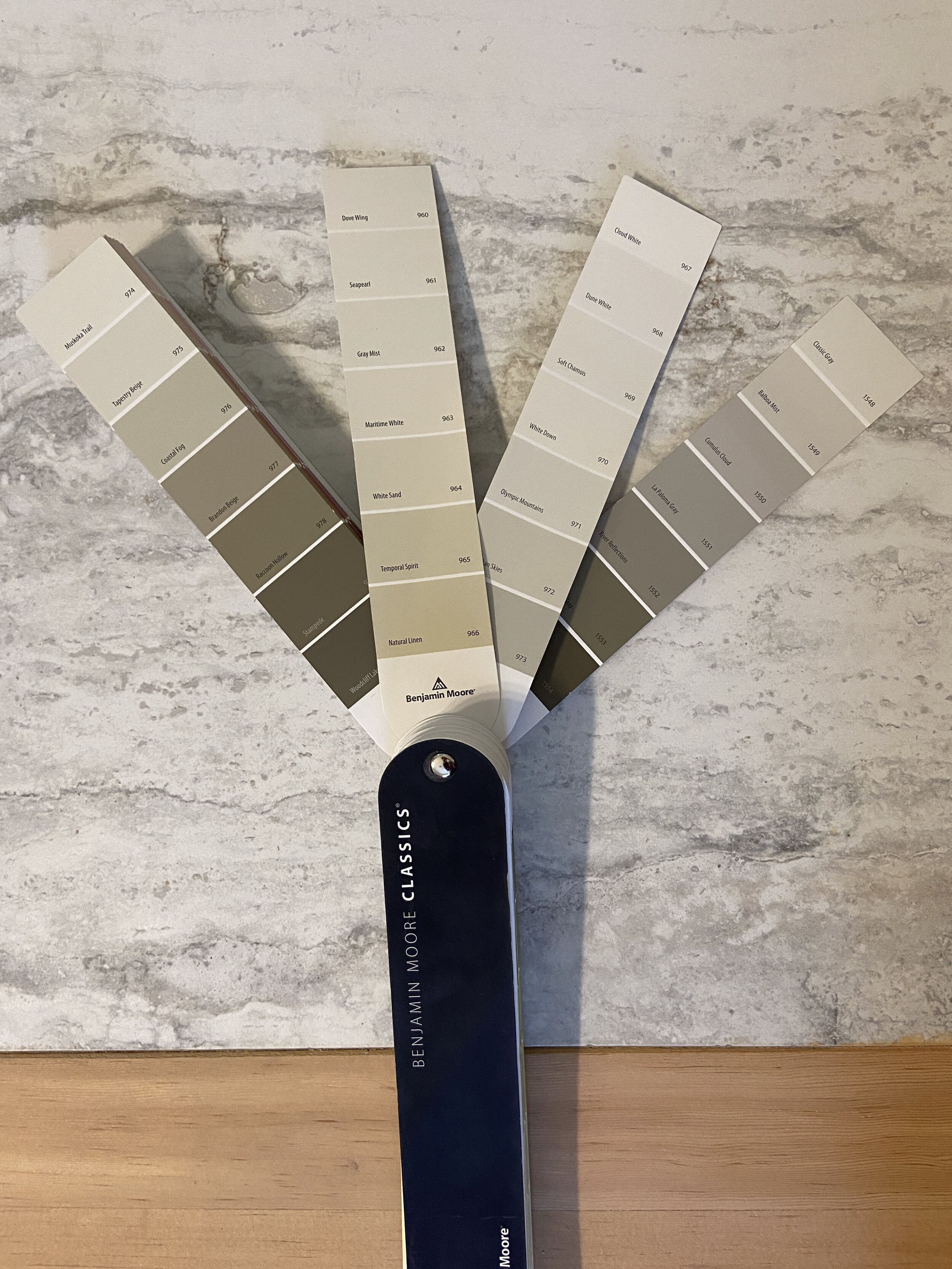
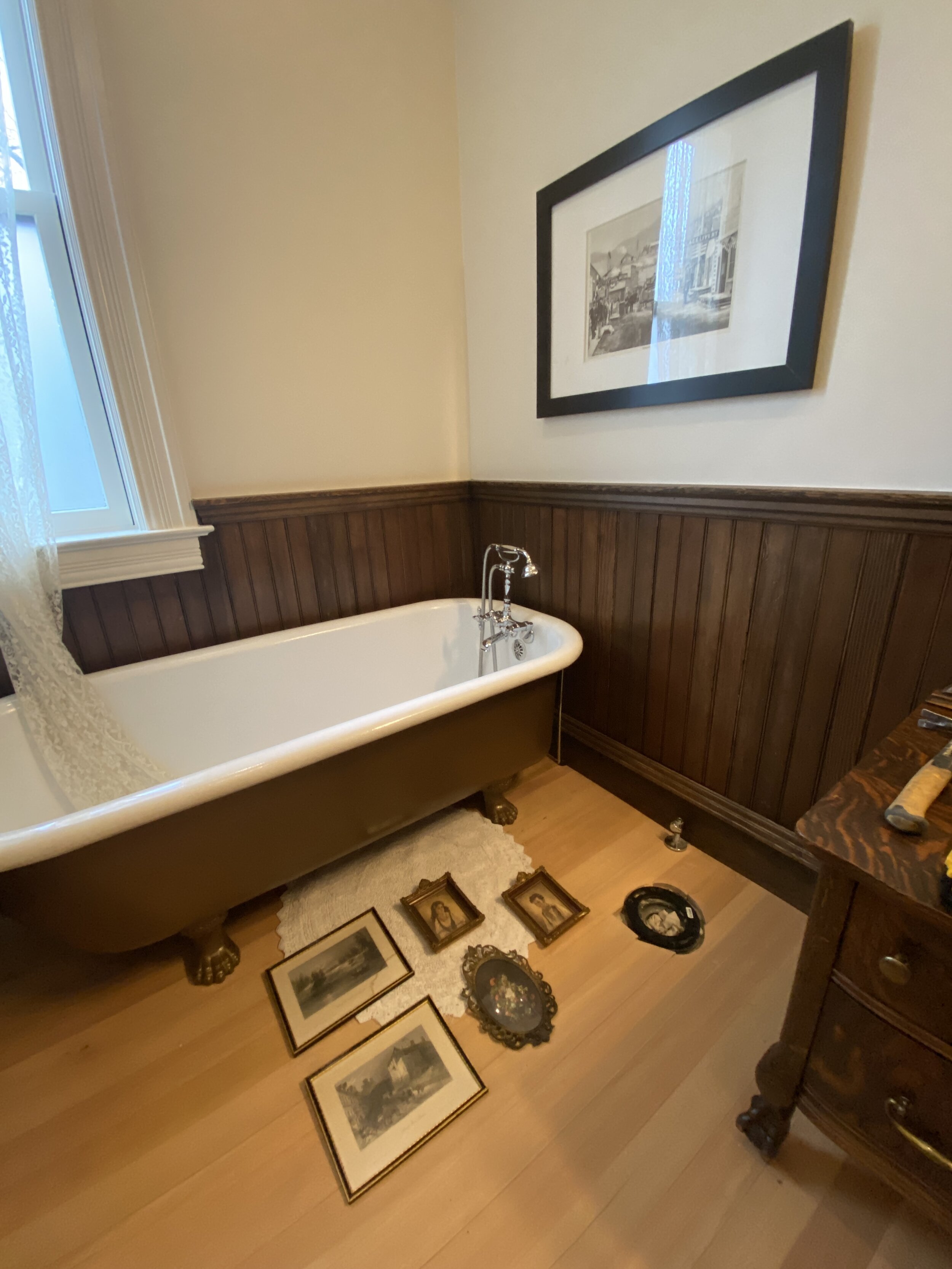
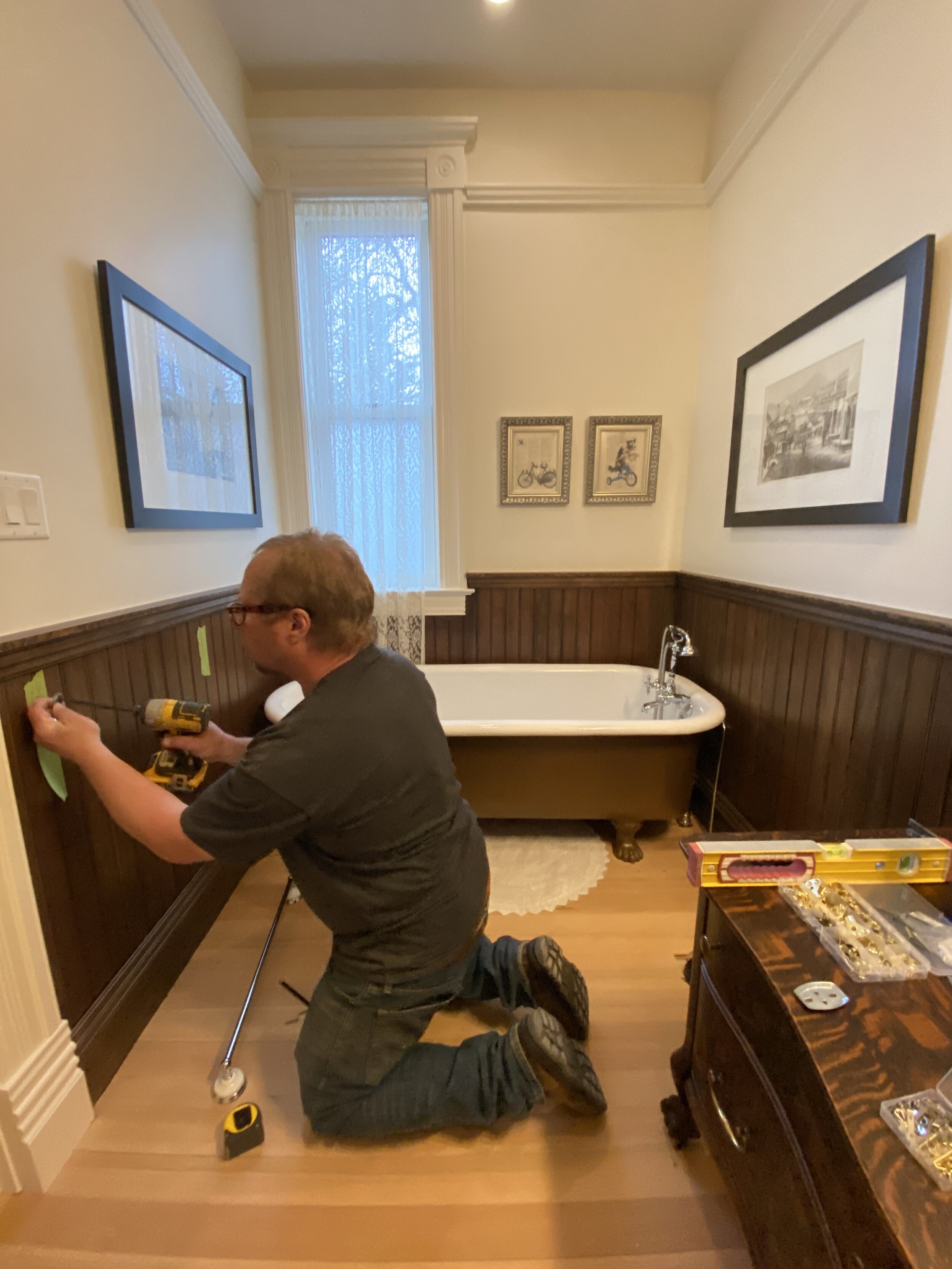
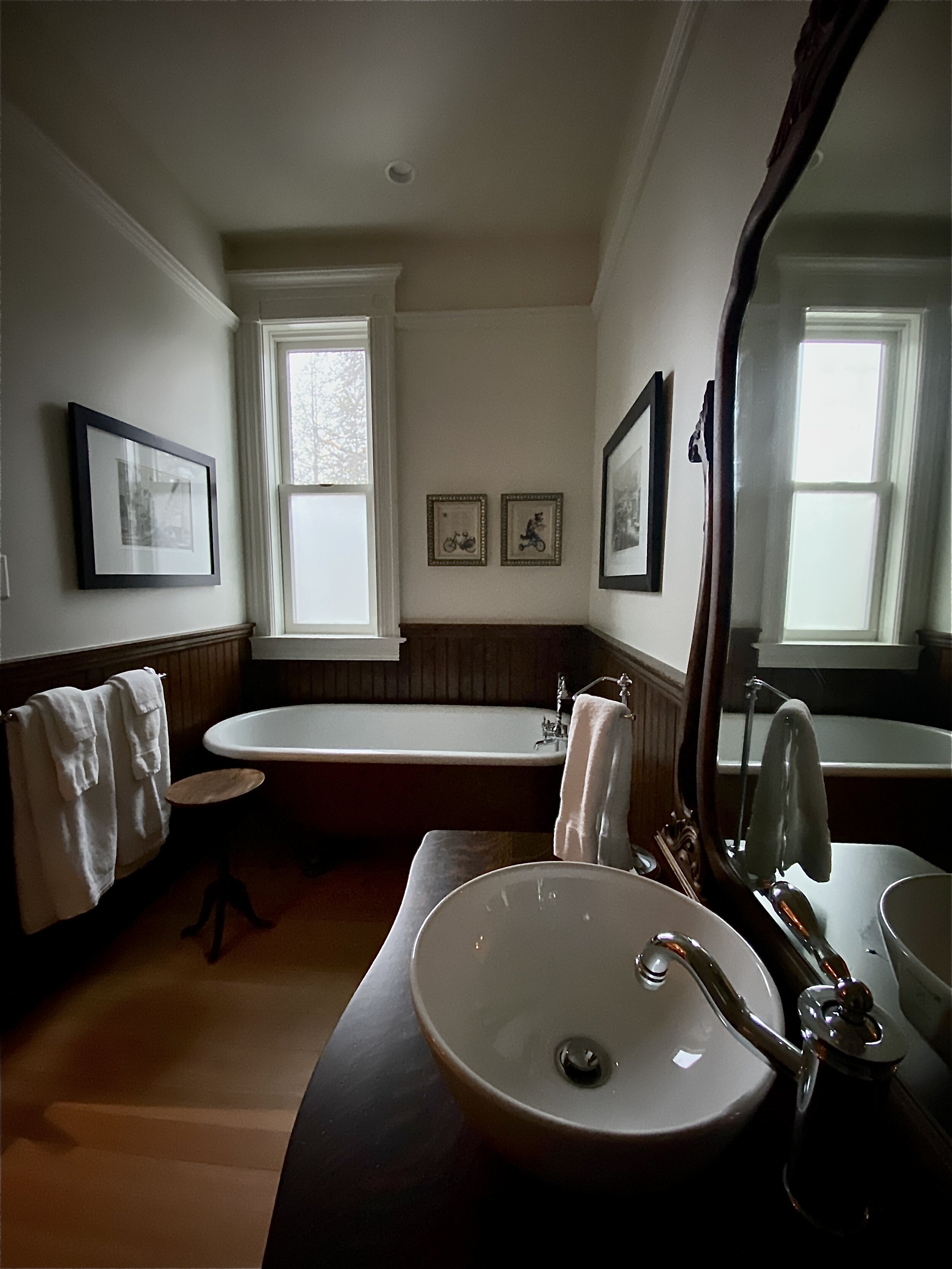
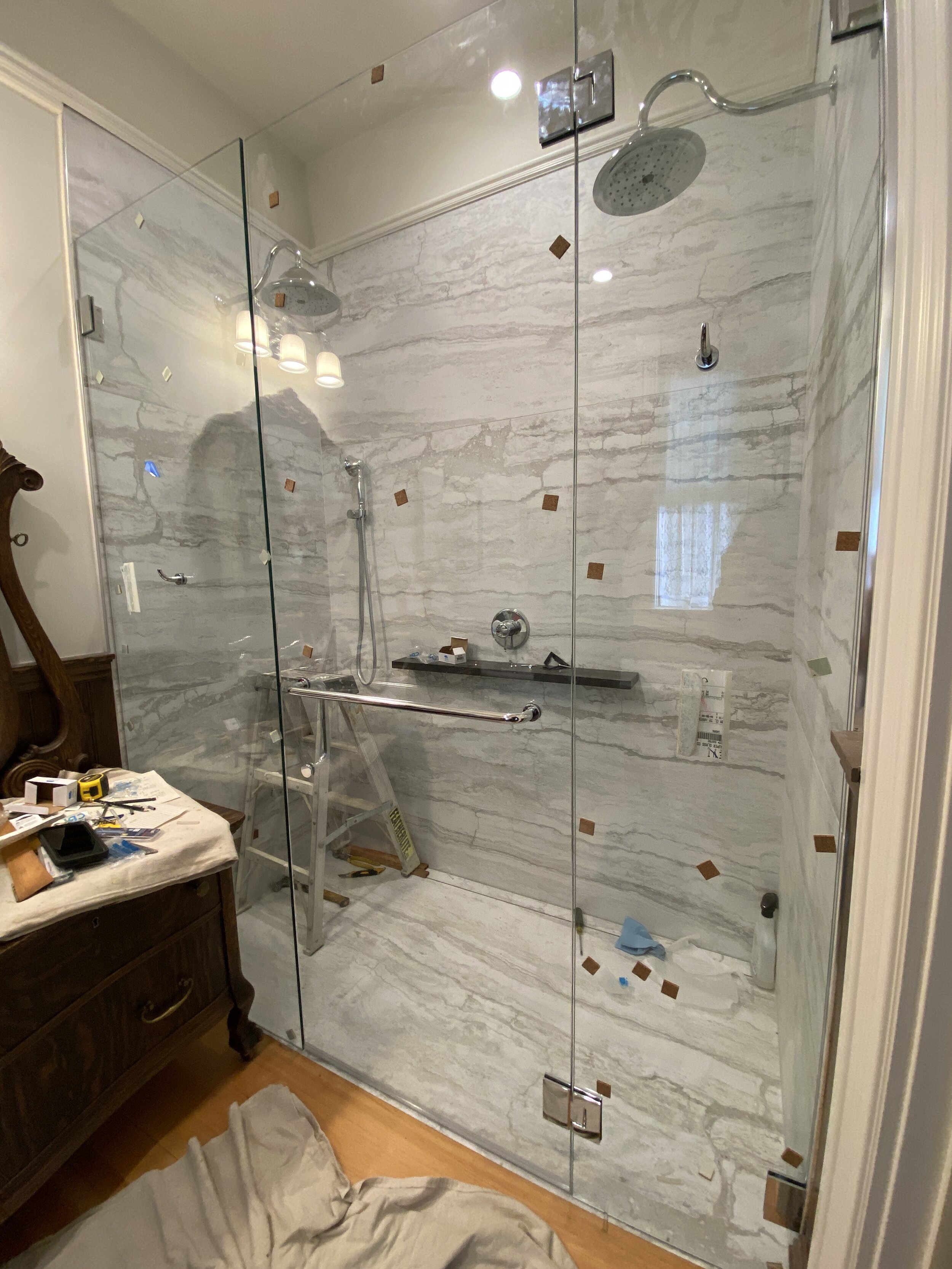
Rather than make the new bathrooms look newly inserted into an old house, we tried to let each one borrow something from the building around it. Patterned tile, antique pieces converted into vanities, old-style fixtures and a few slightly eccentric details helped them feel at home.
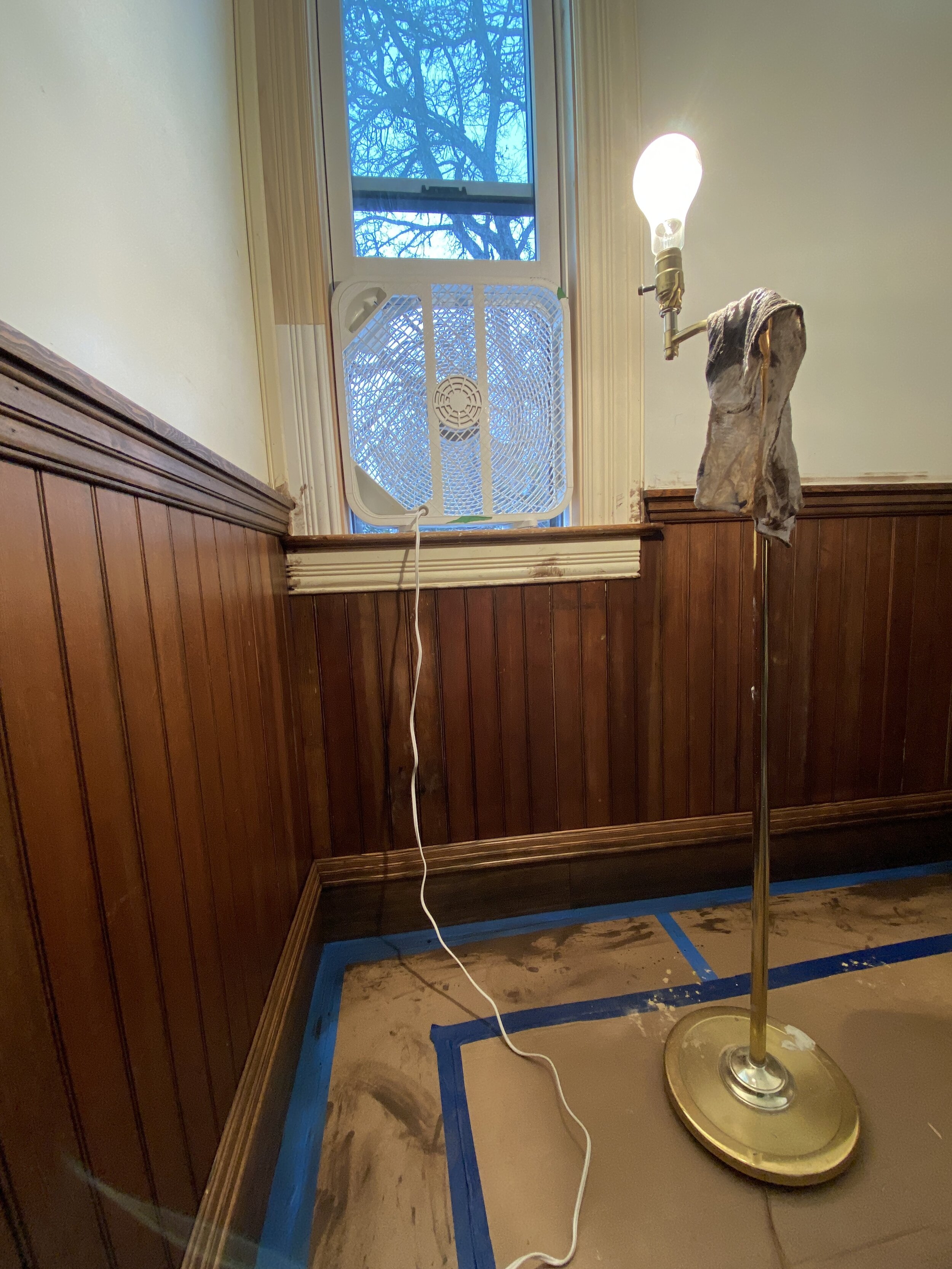
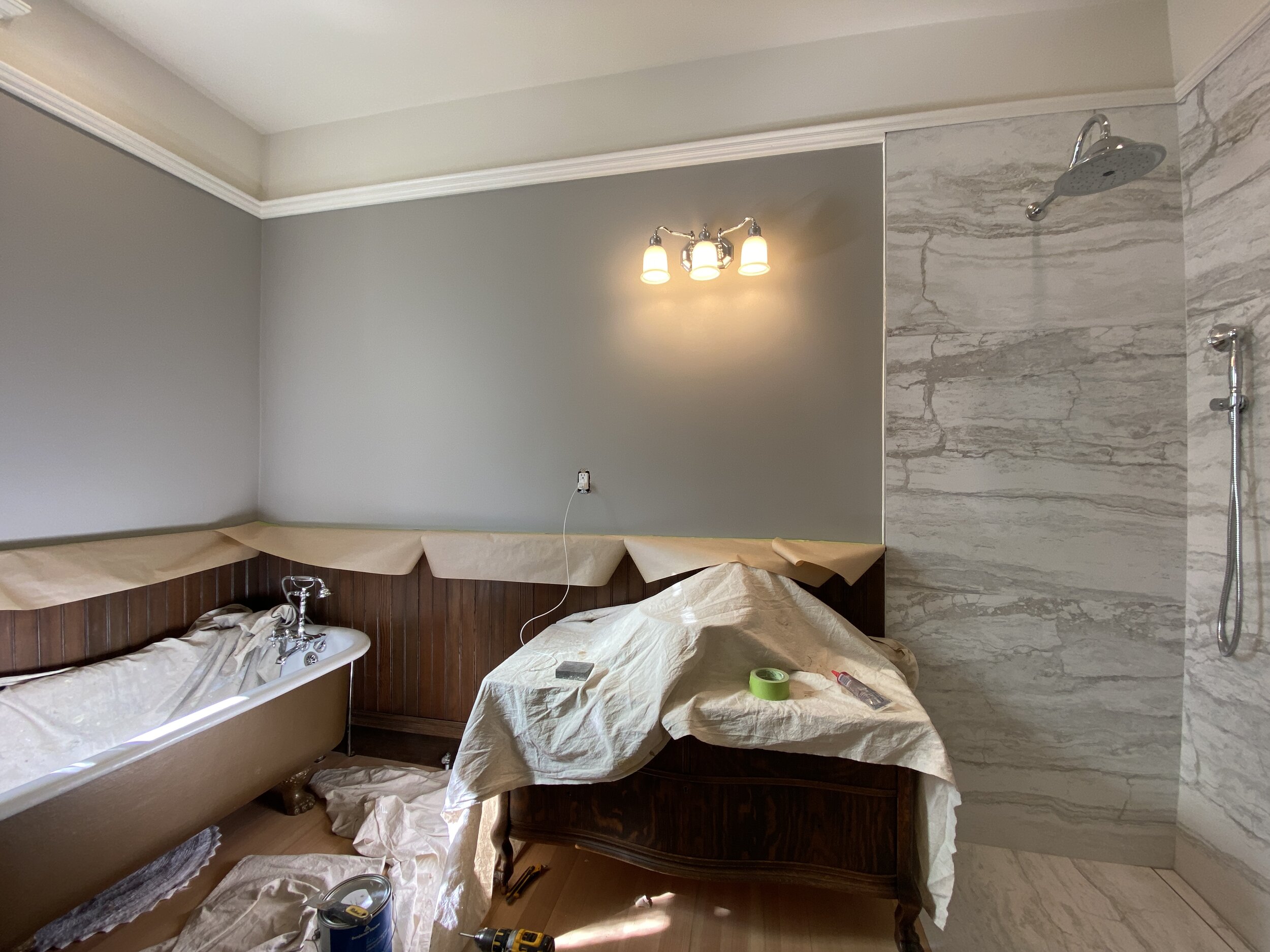
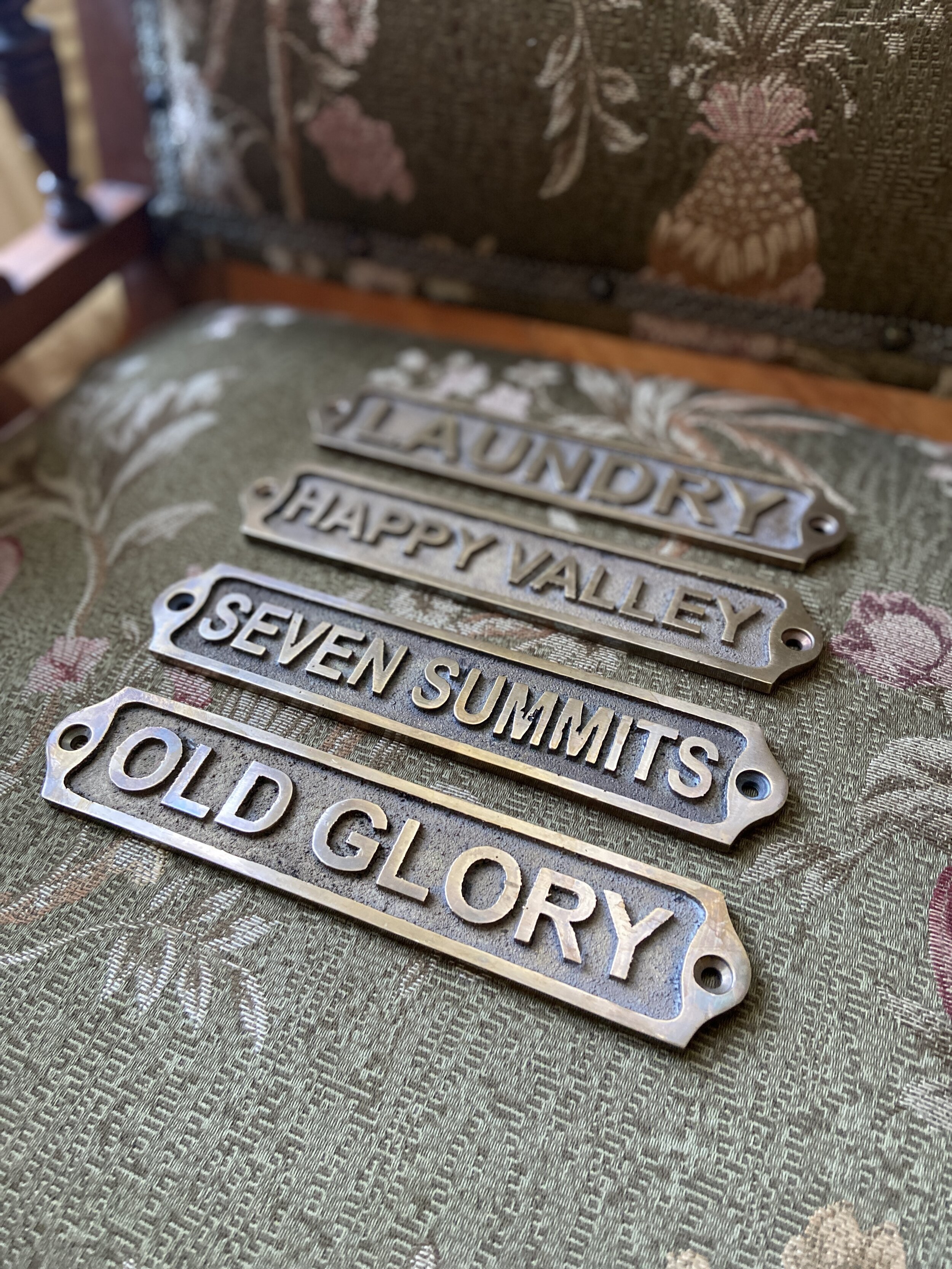
In the Old Glory ensuite, we stripped and reused the original wainscotting and restored the original clawfoot tub. Elsewhere, curbless showers and heated floors quietly brought the rooms into the present.
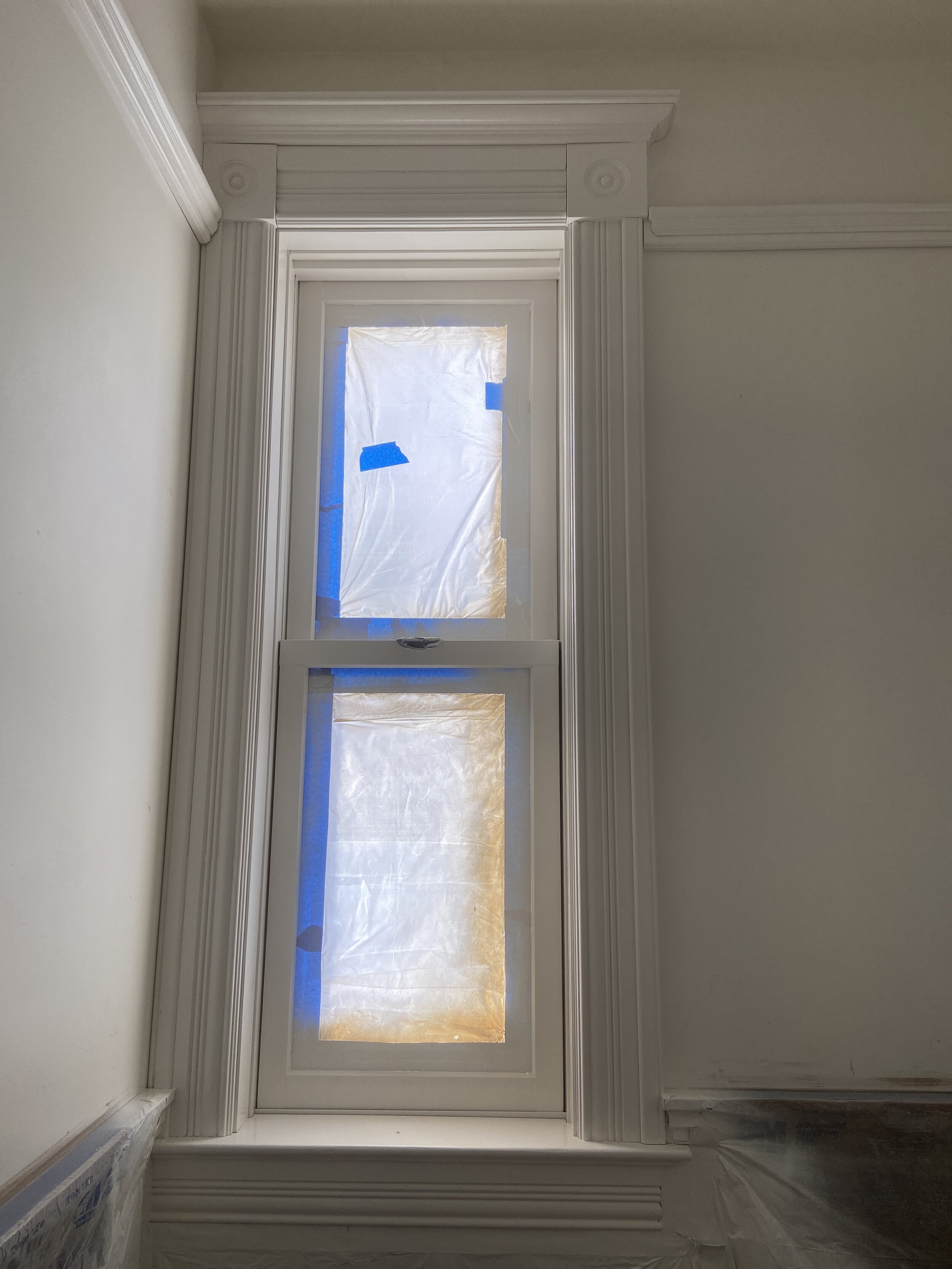
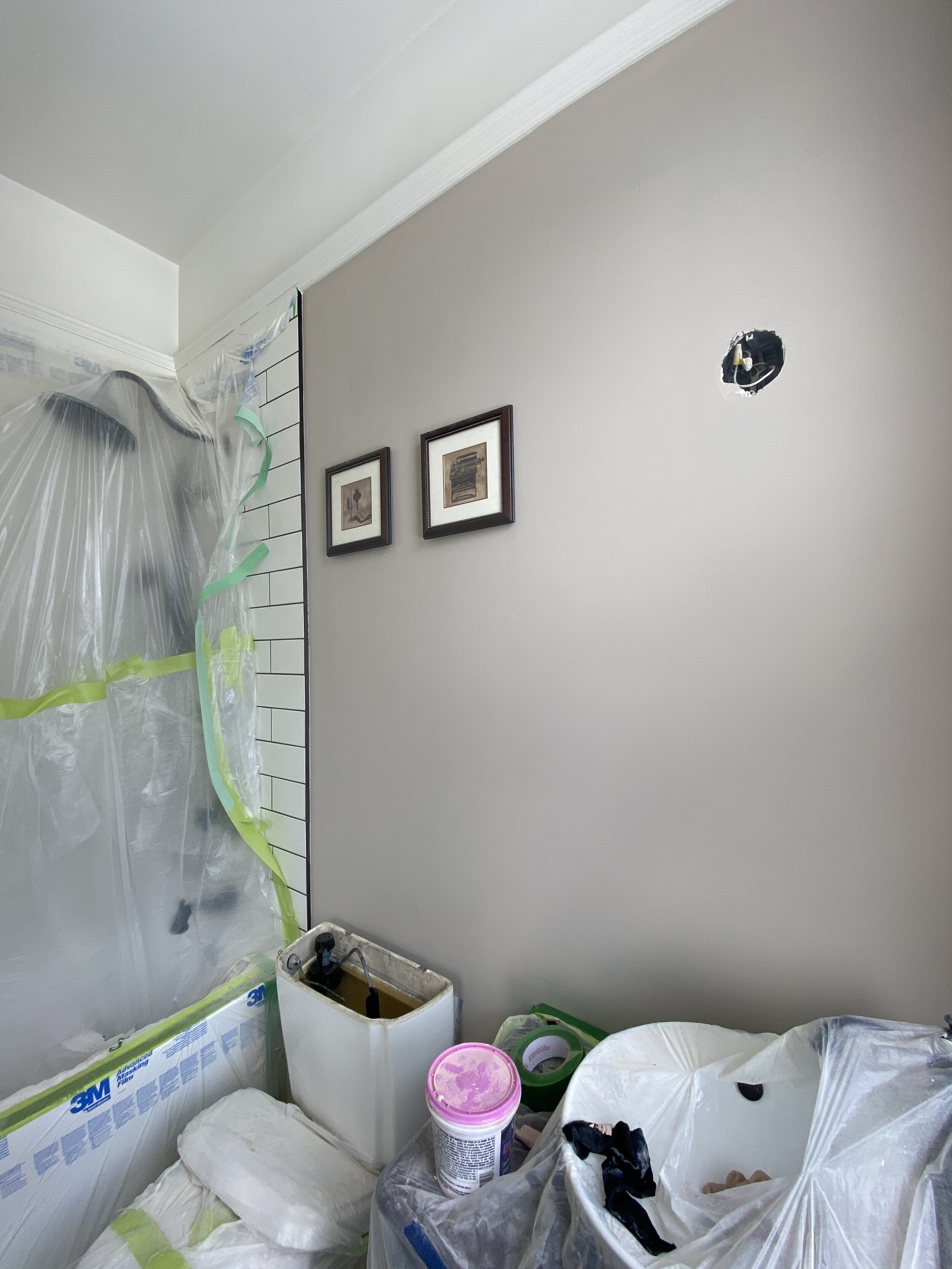
And then there is the tiny powder room, which somehow became one of our favourite little spaces in the house.


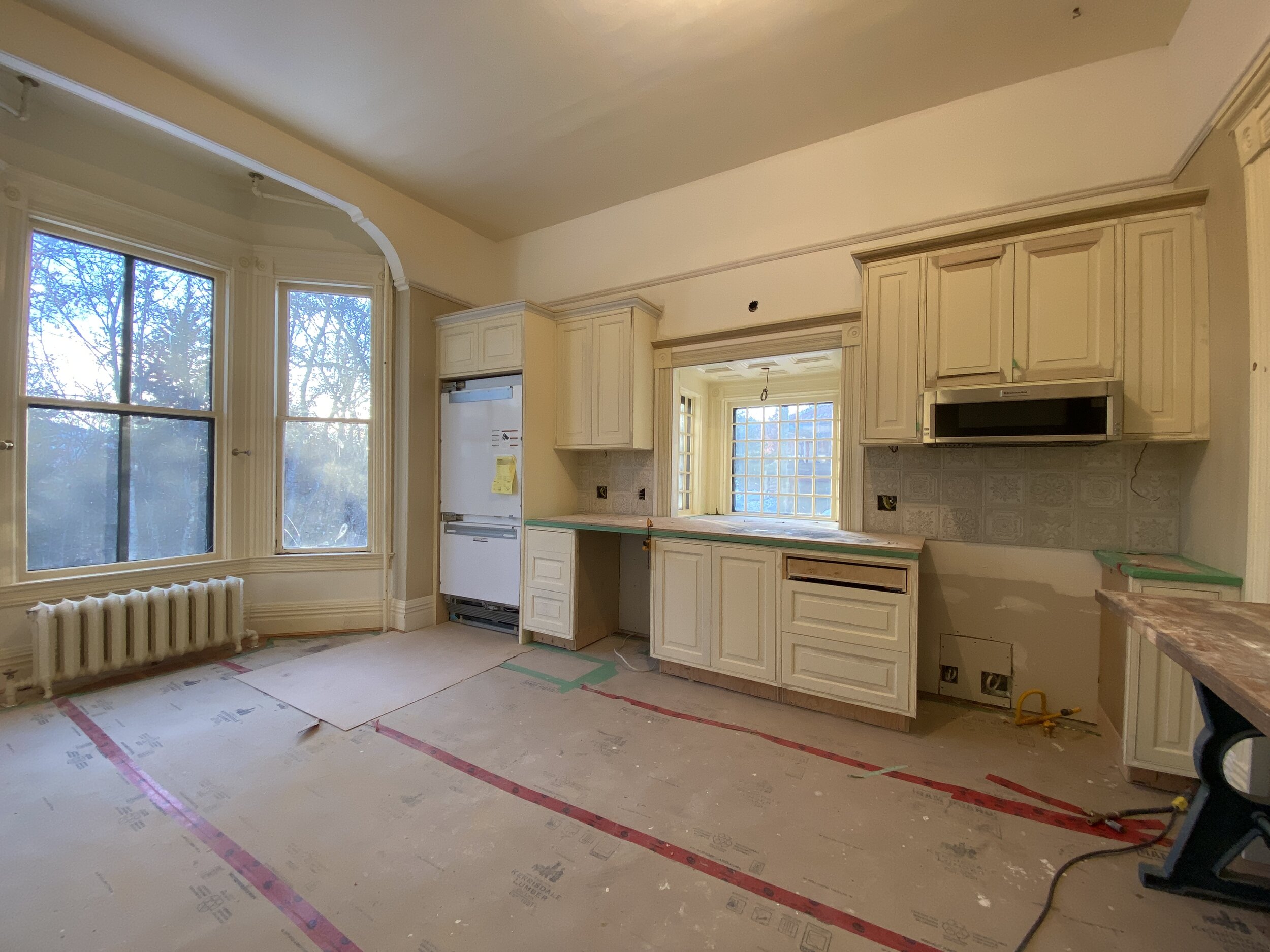
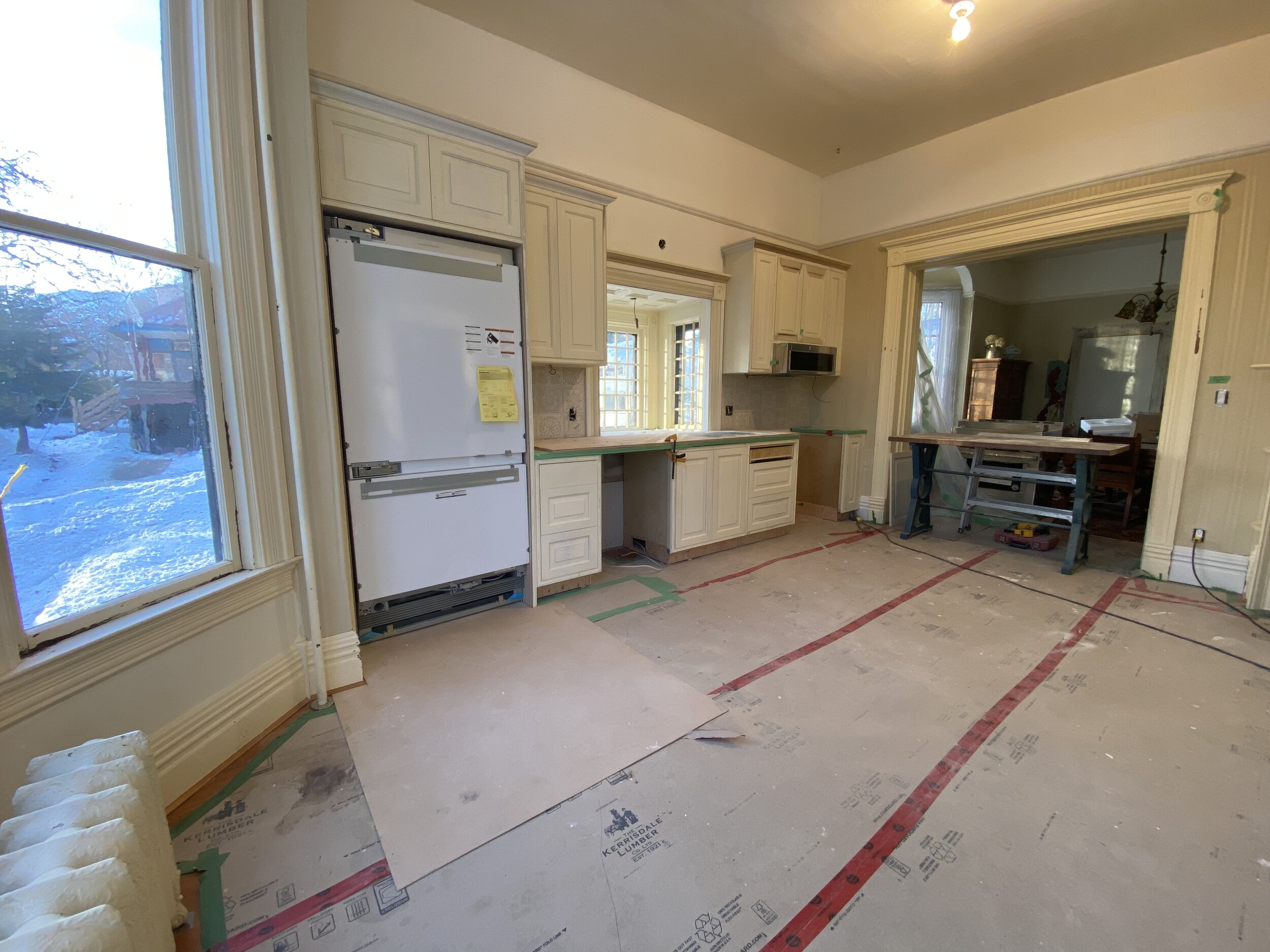
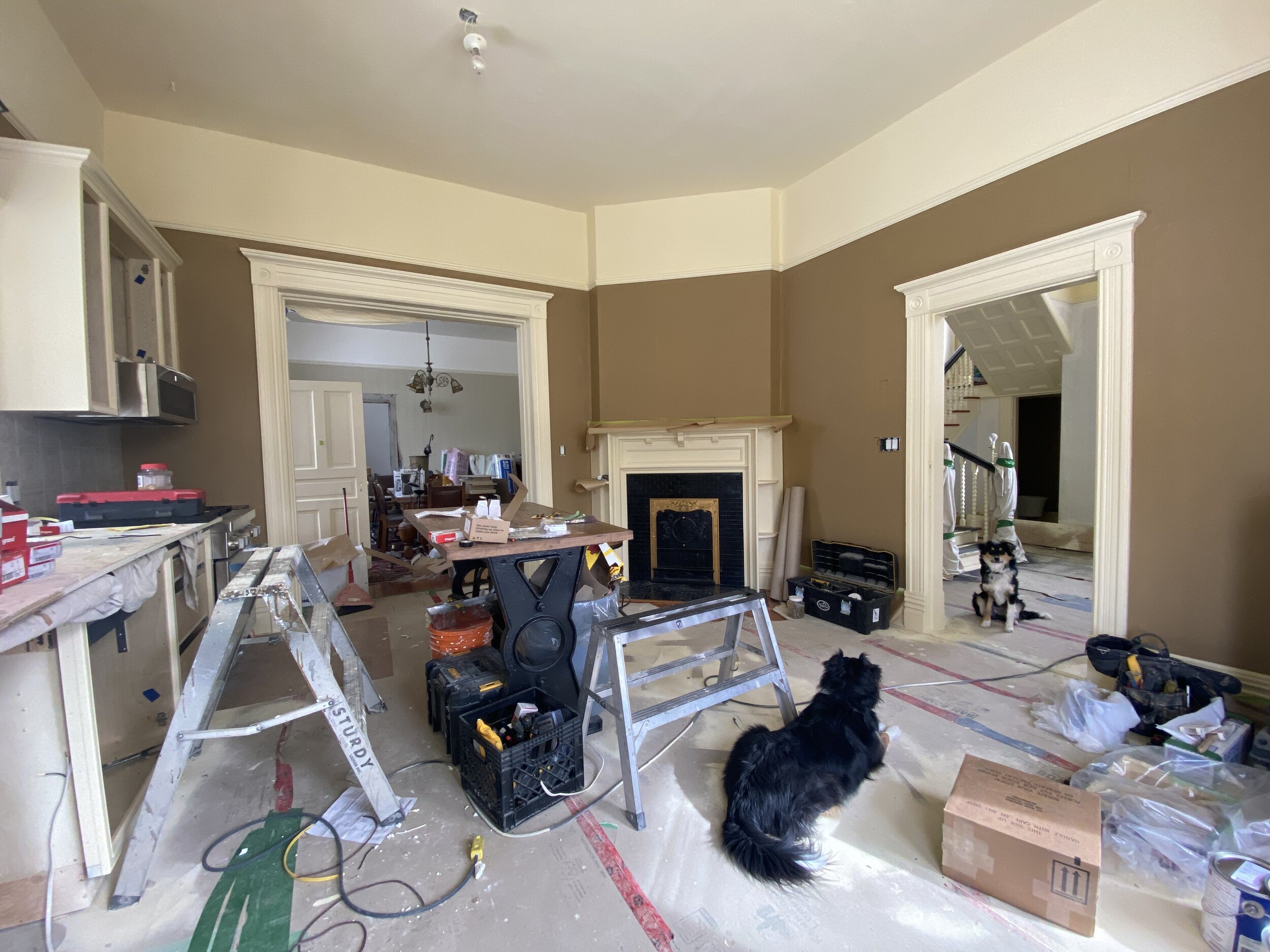
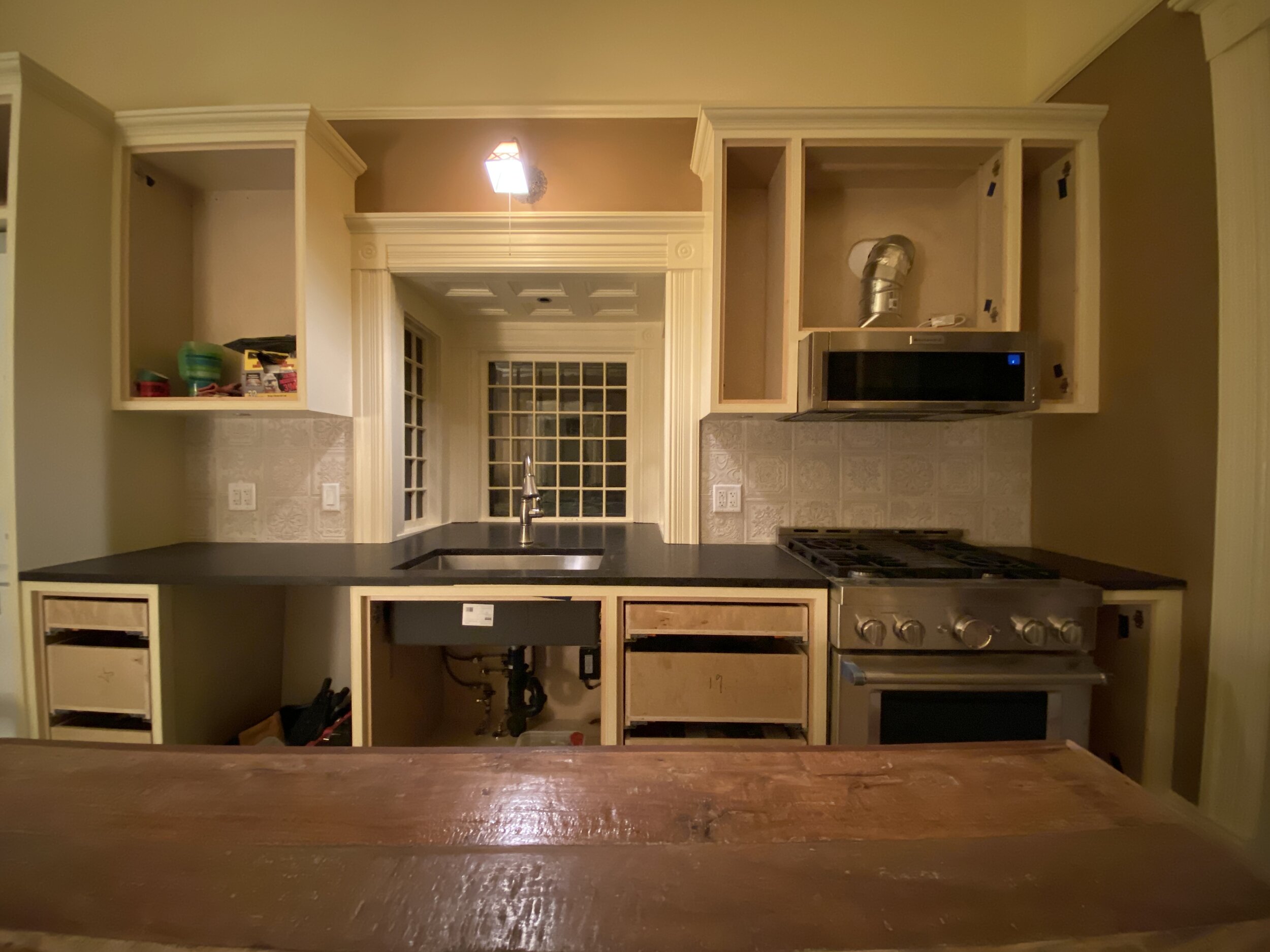
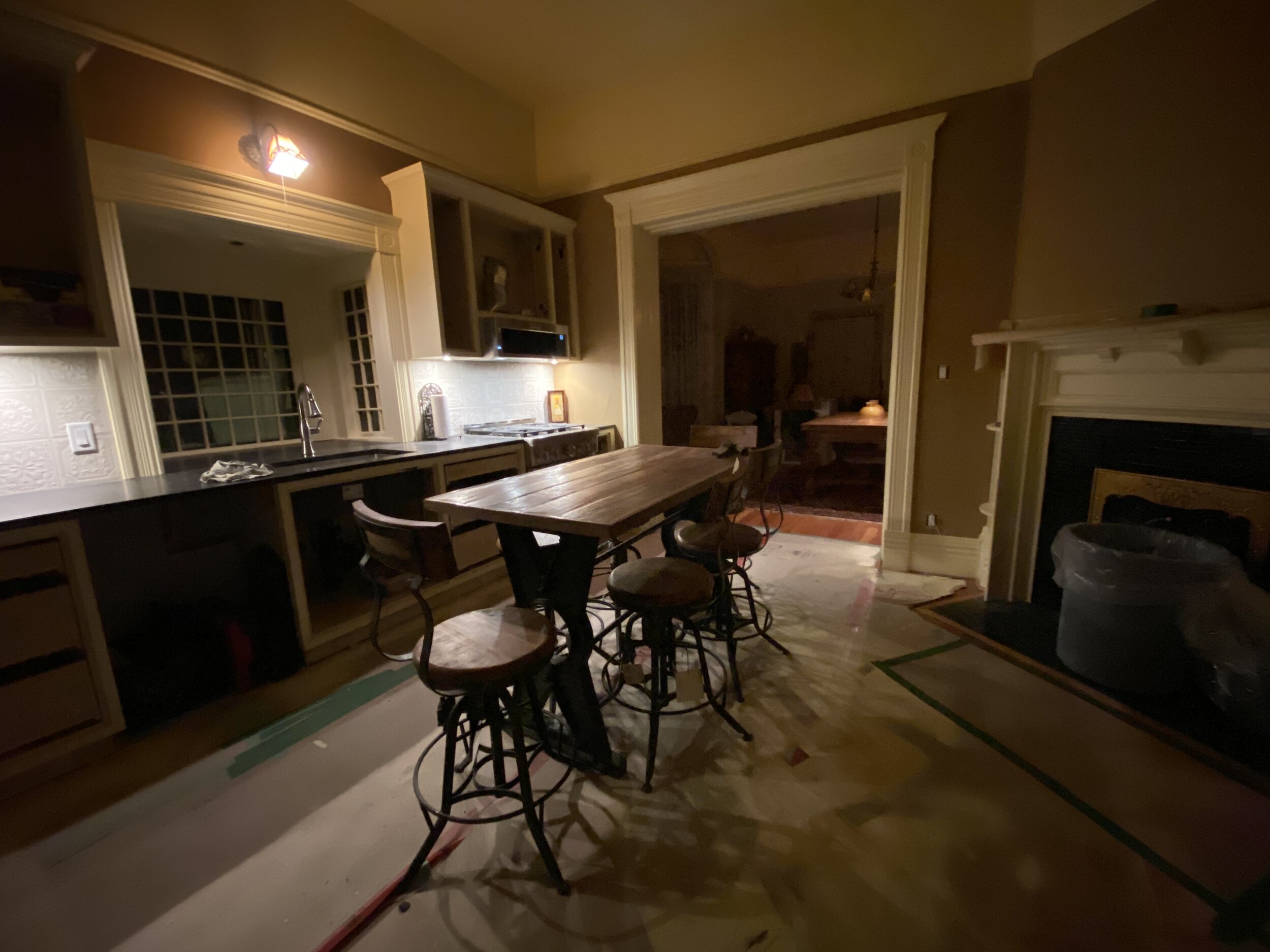
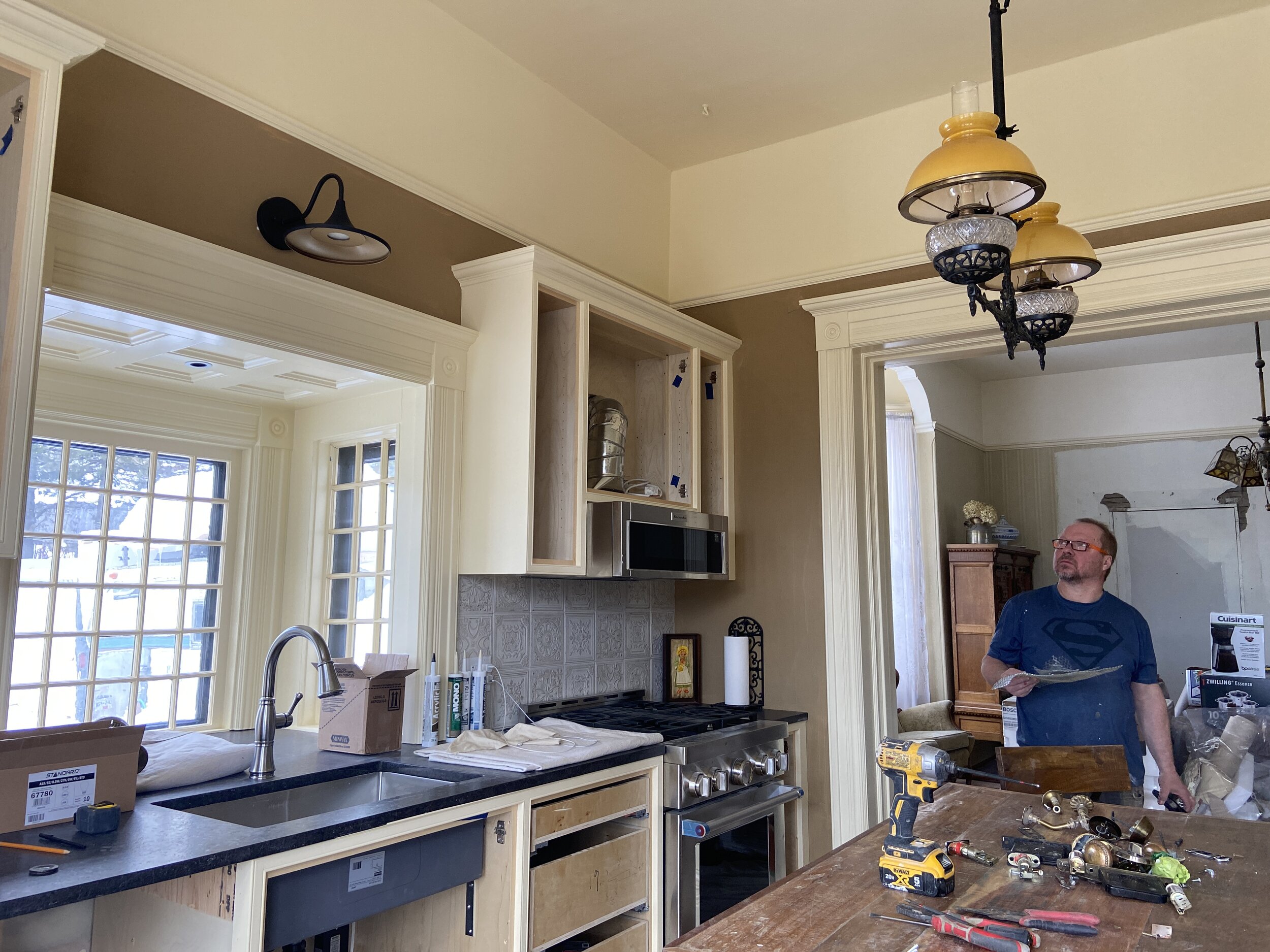
The Guest Kitchen
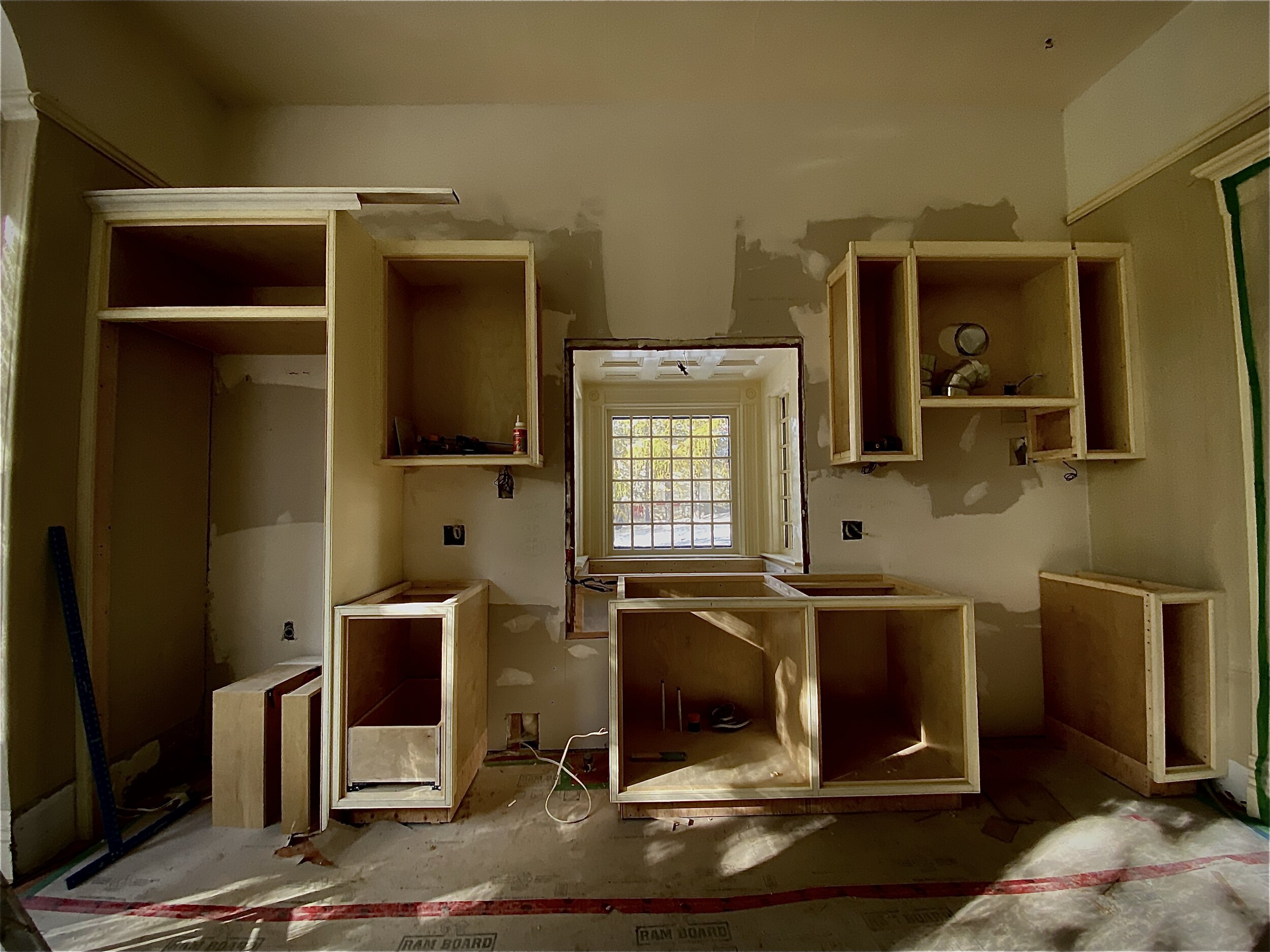
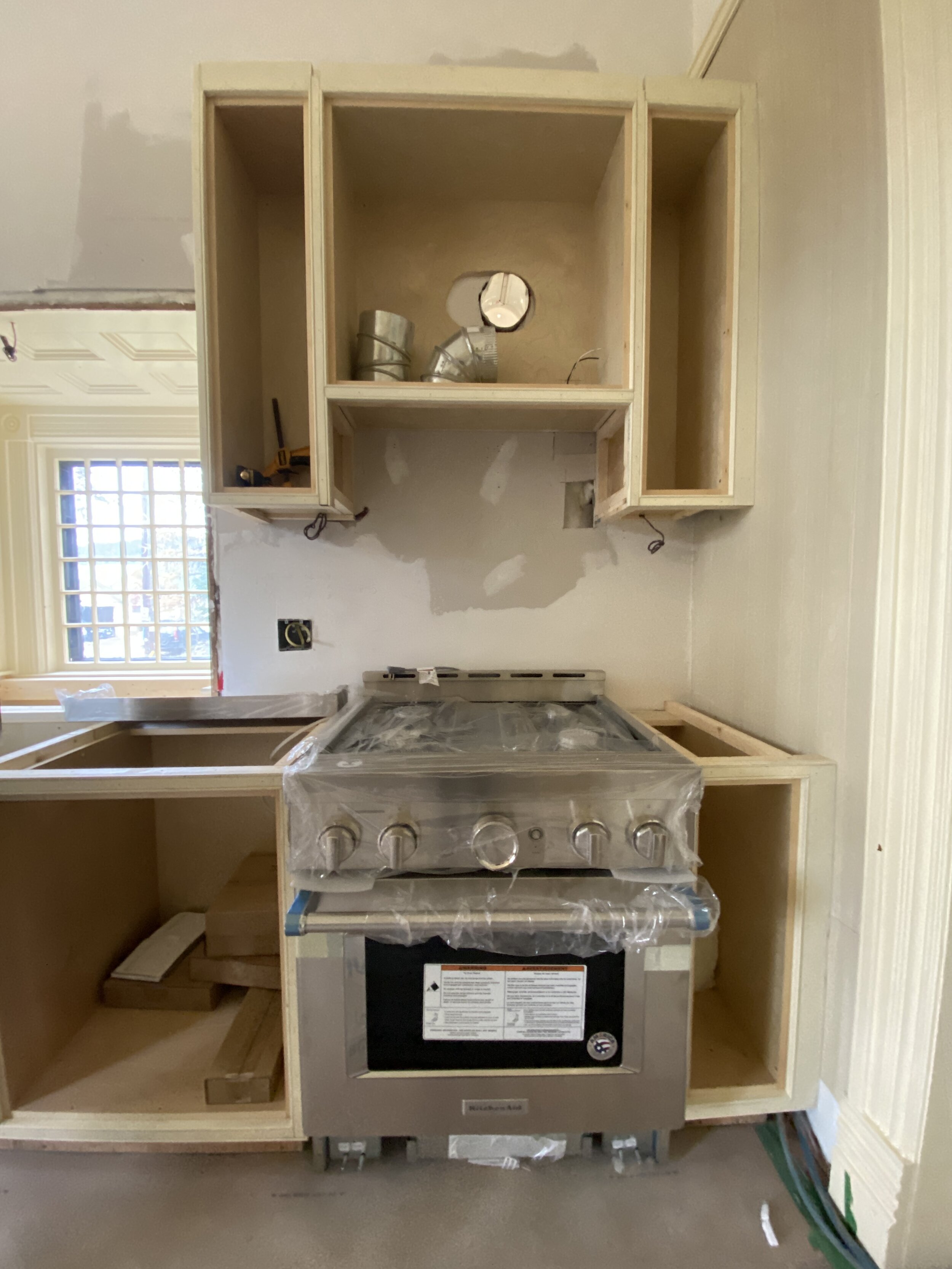
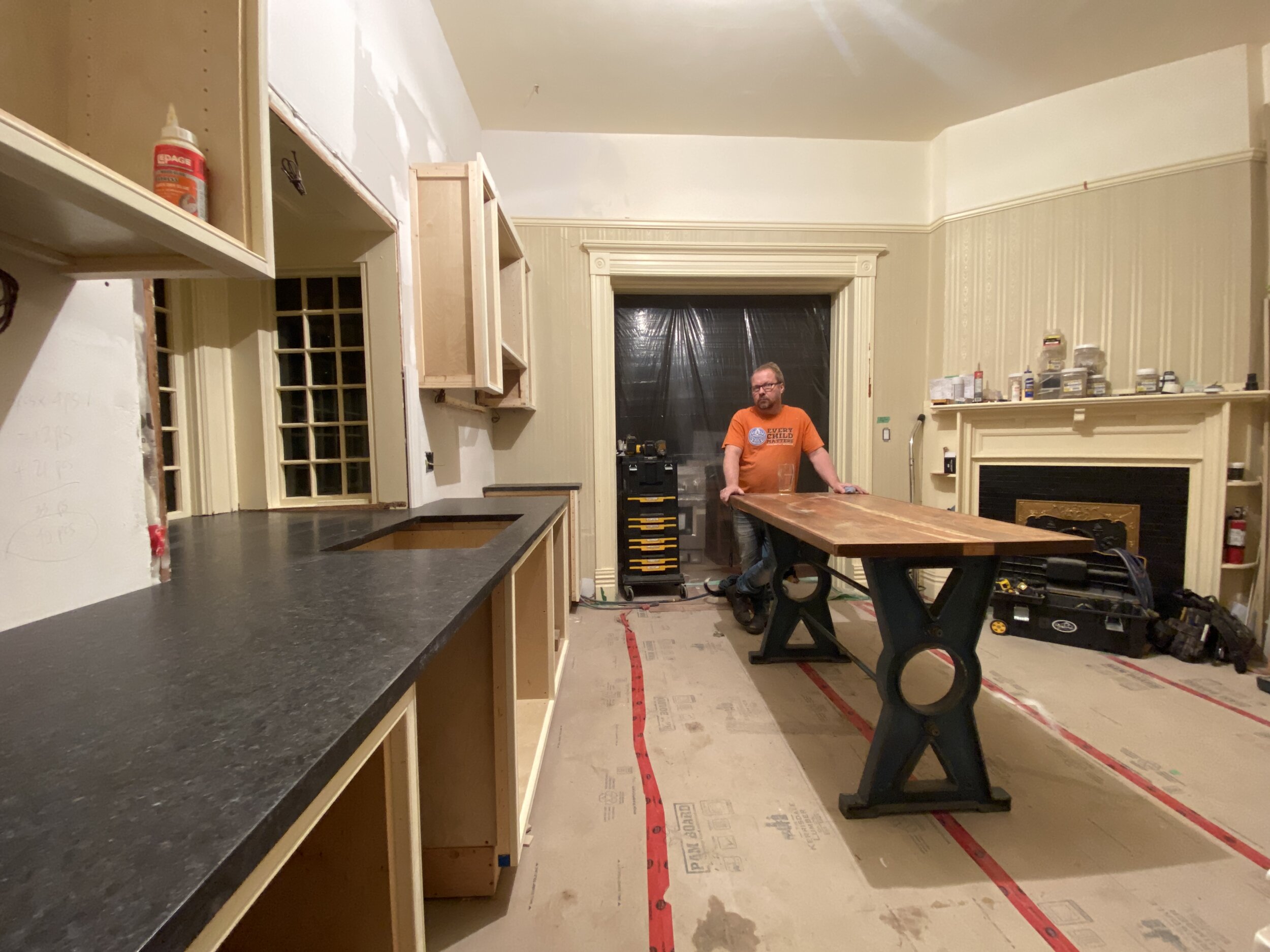
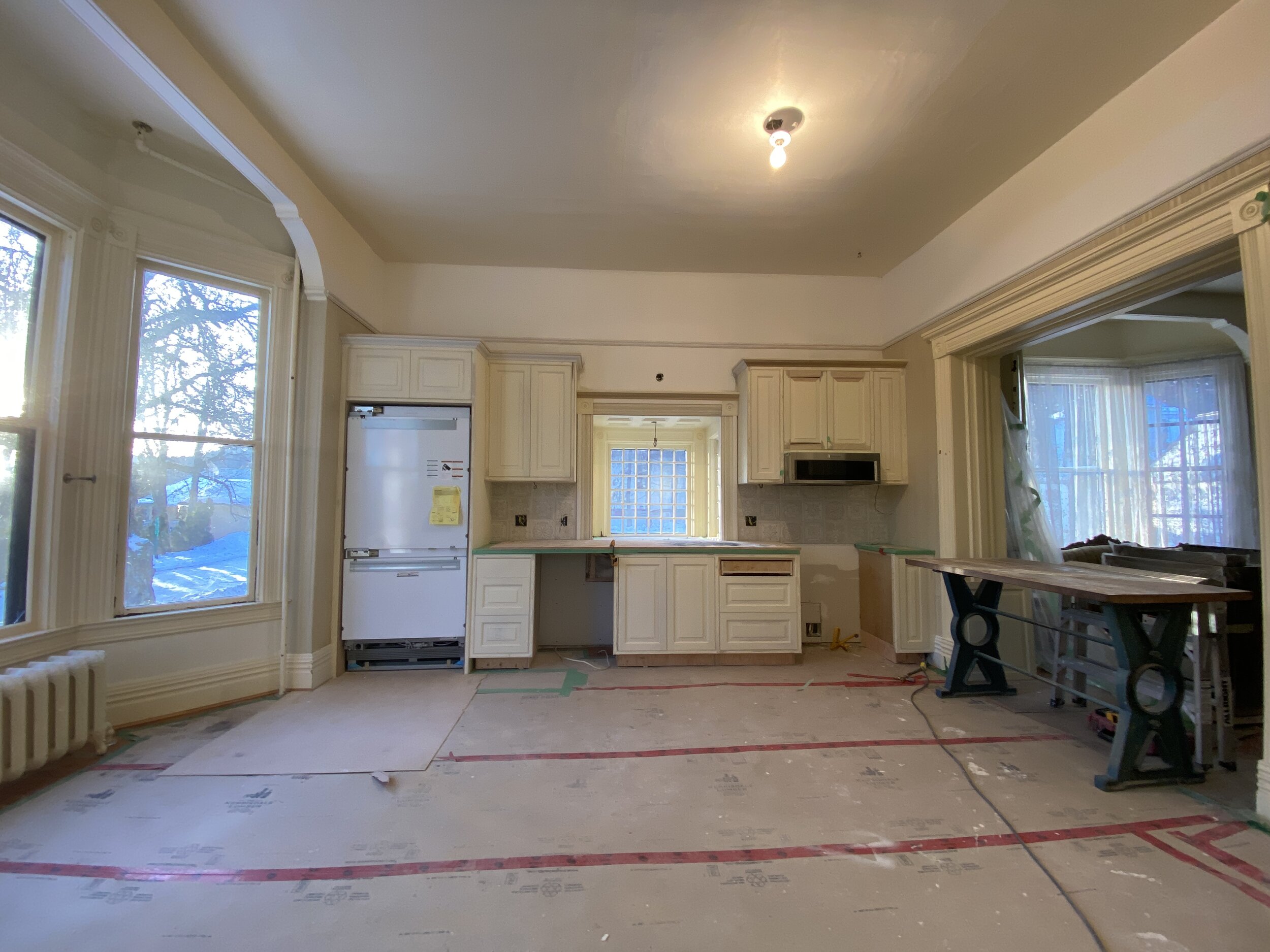
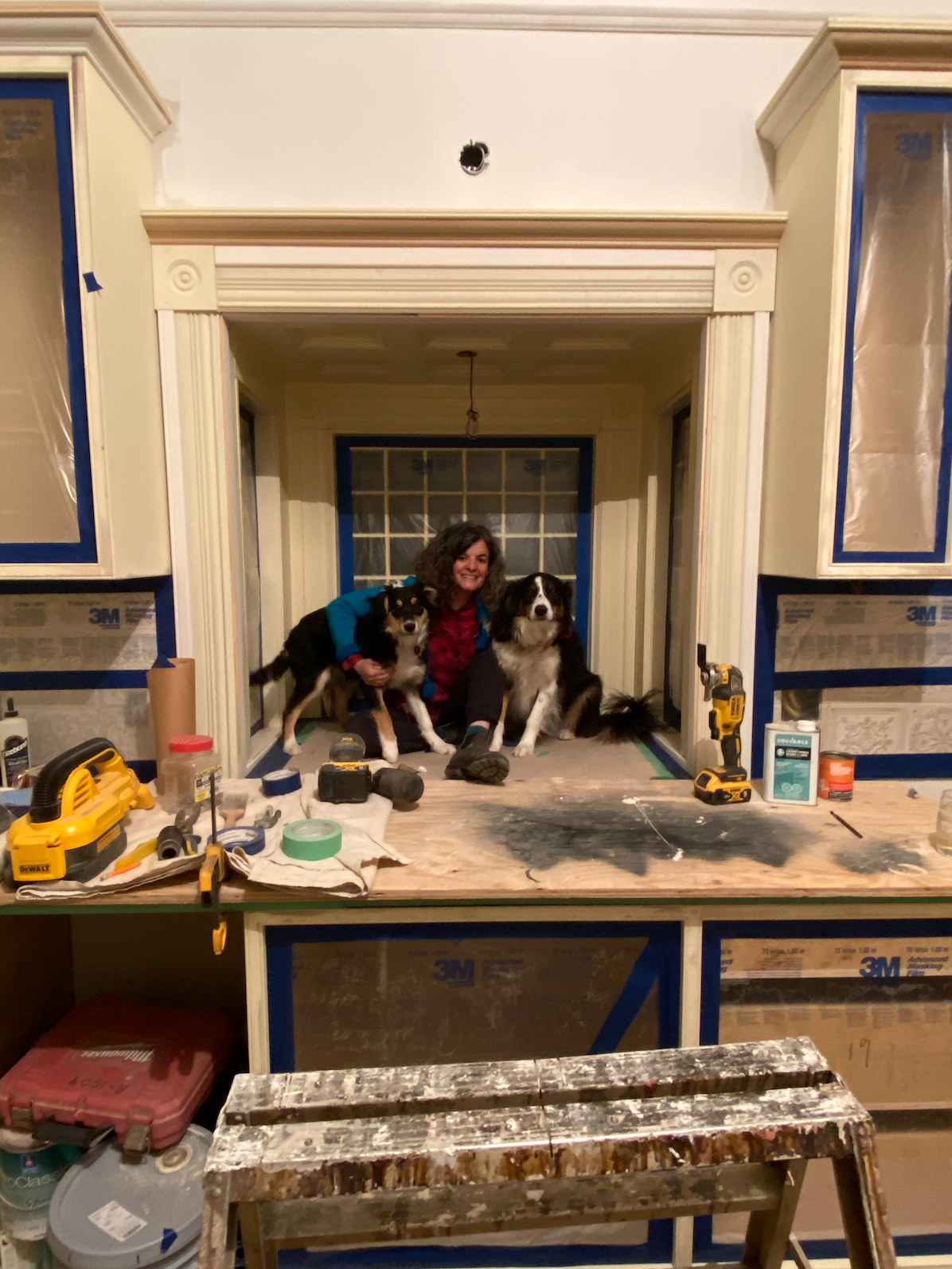
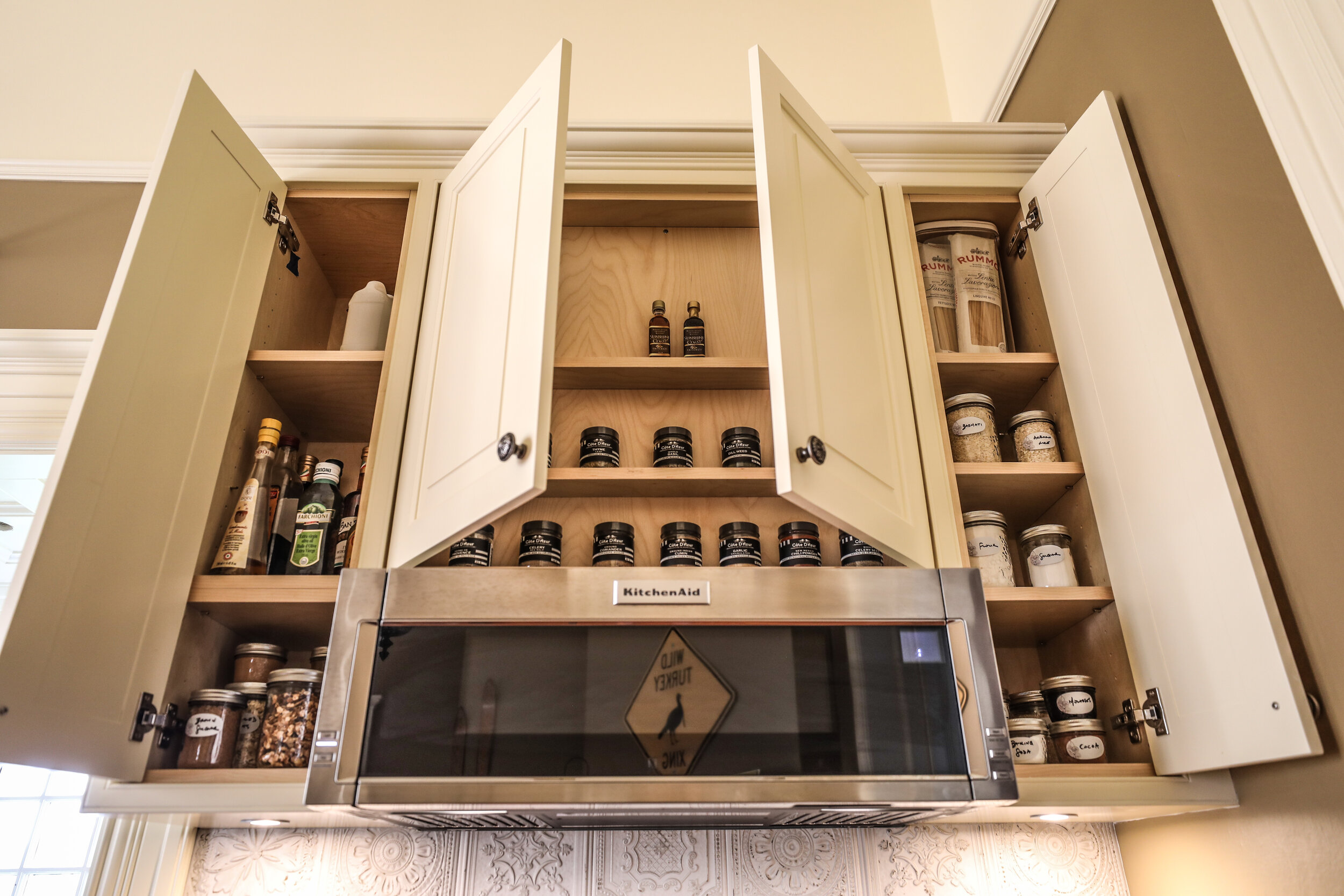
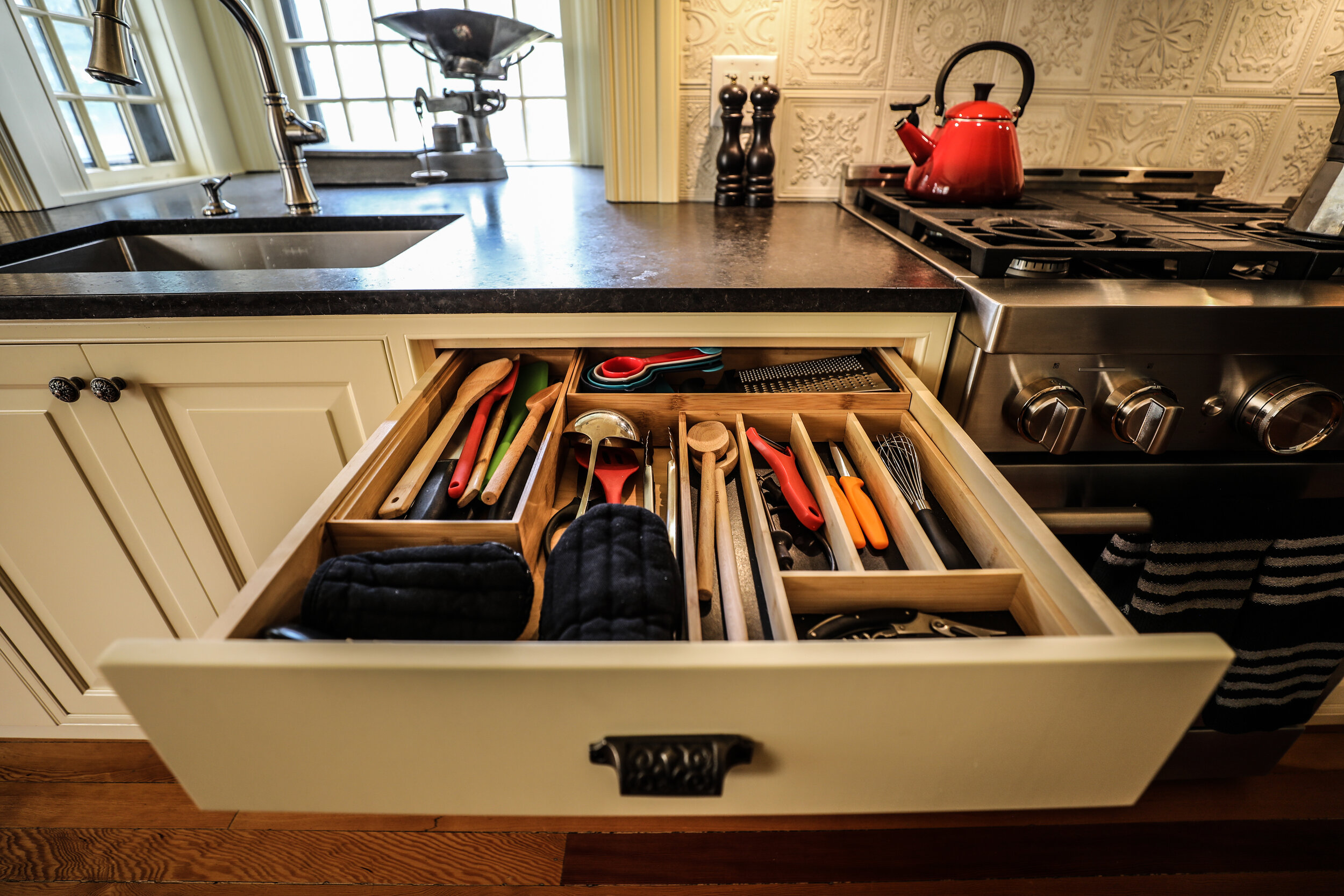
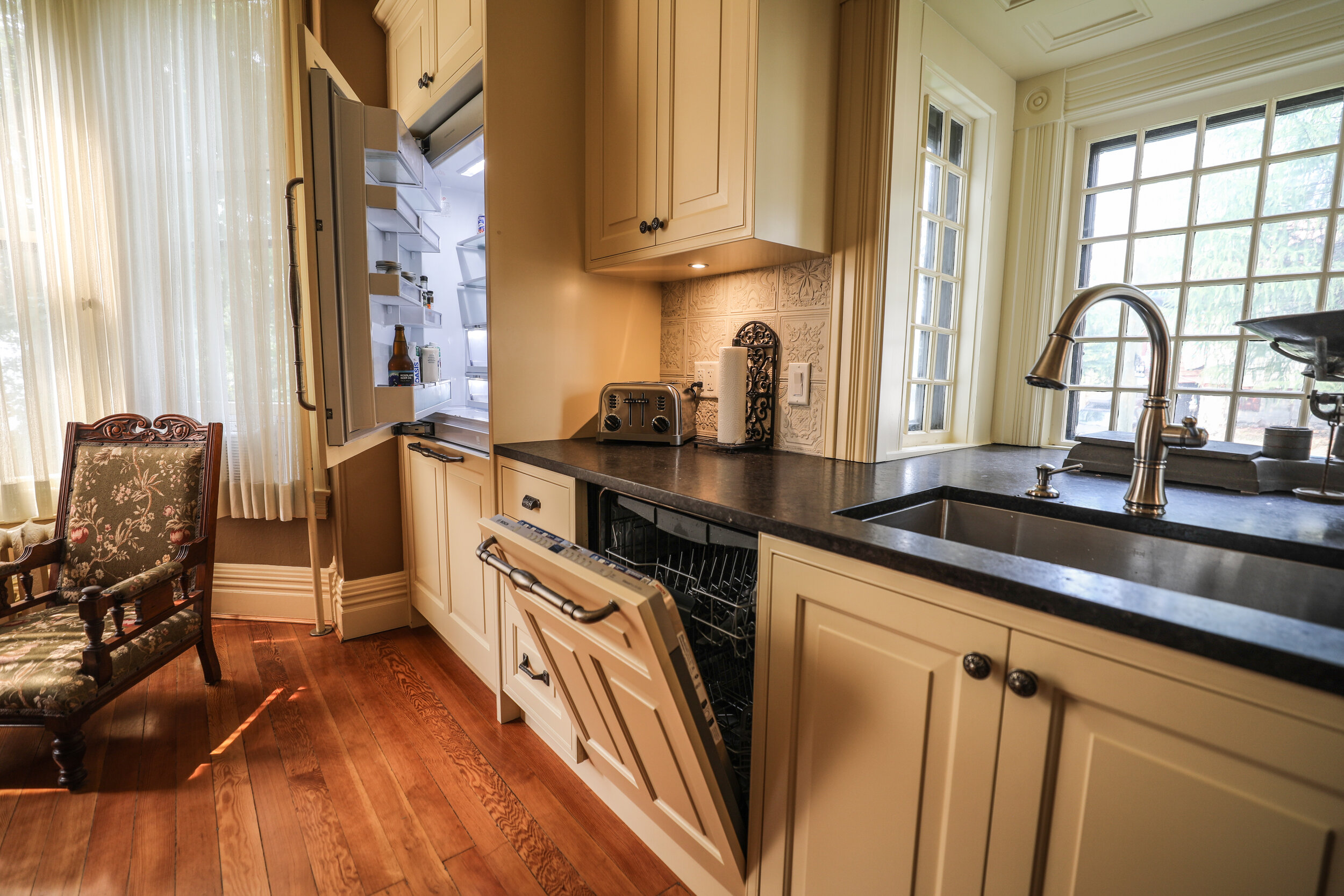
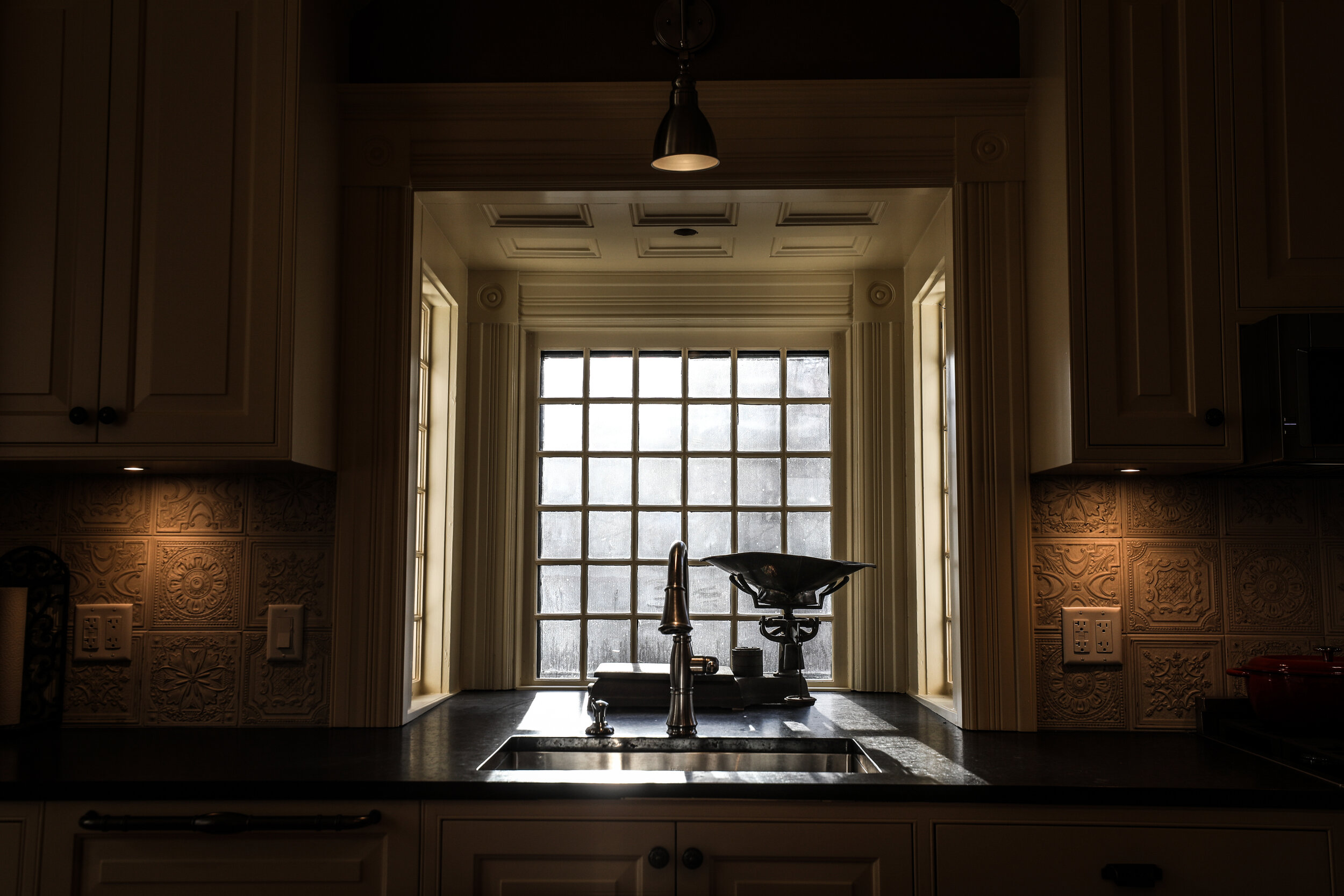
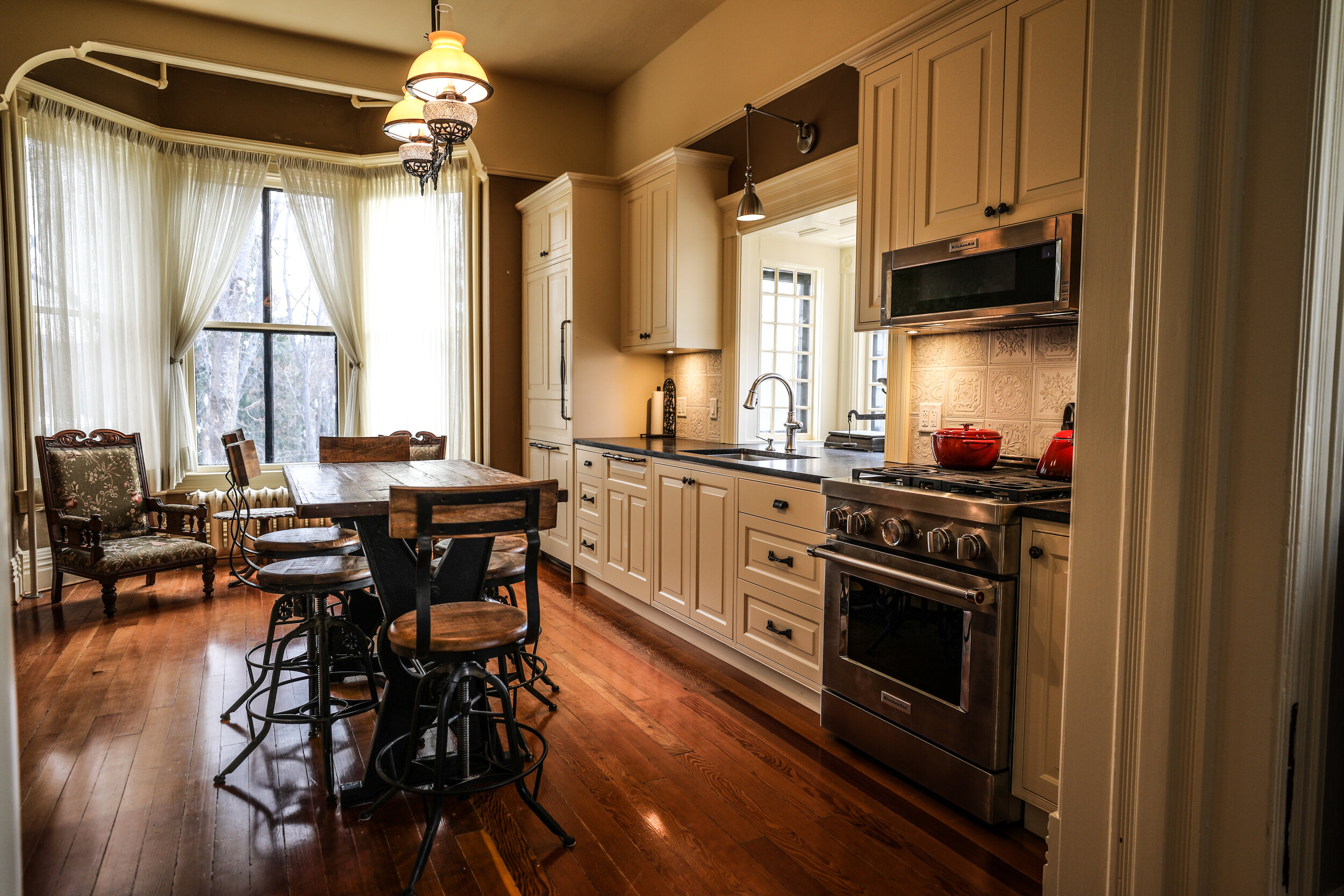
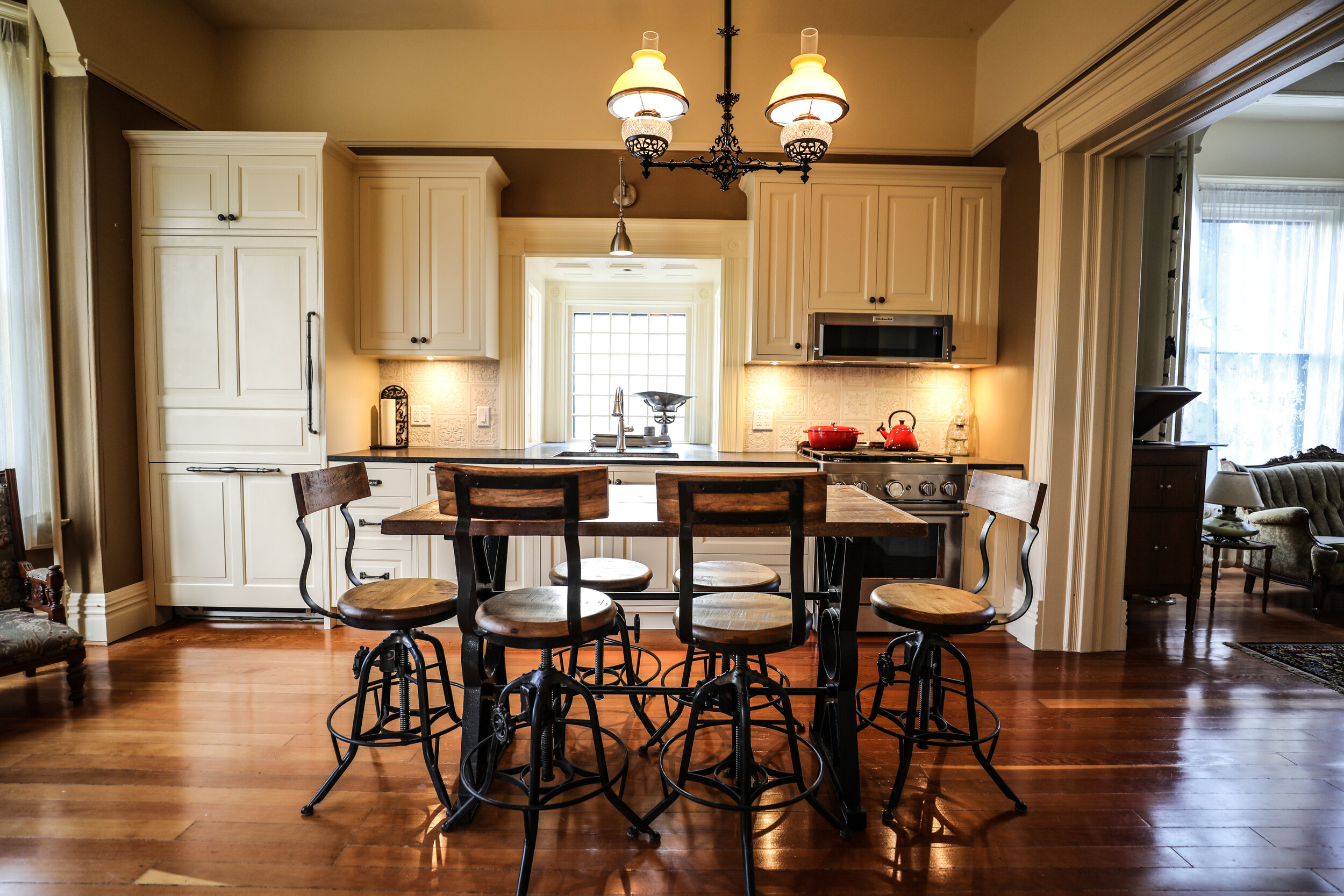
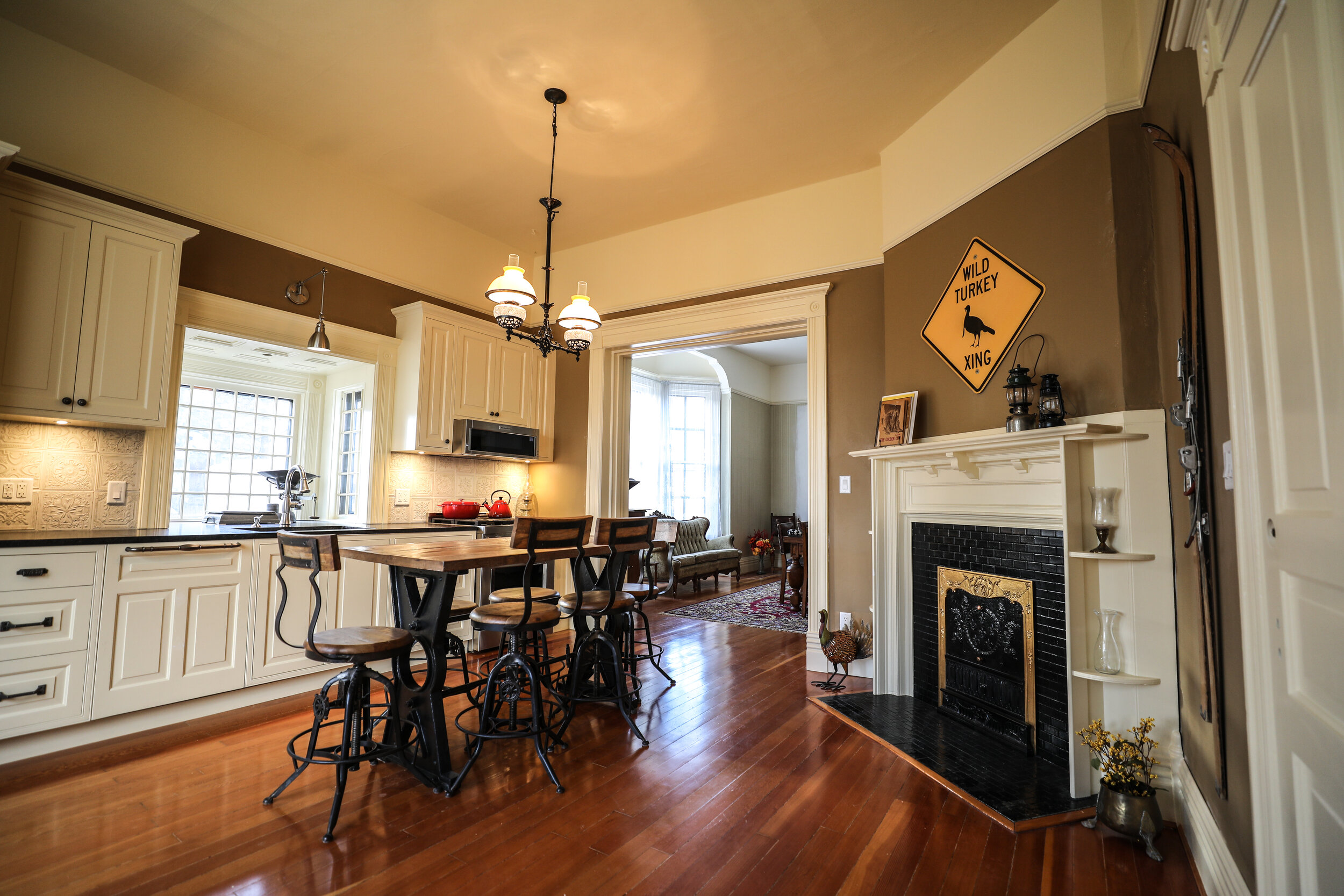
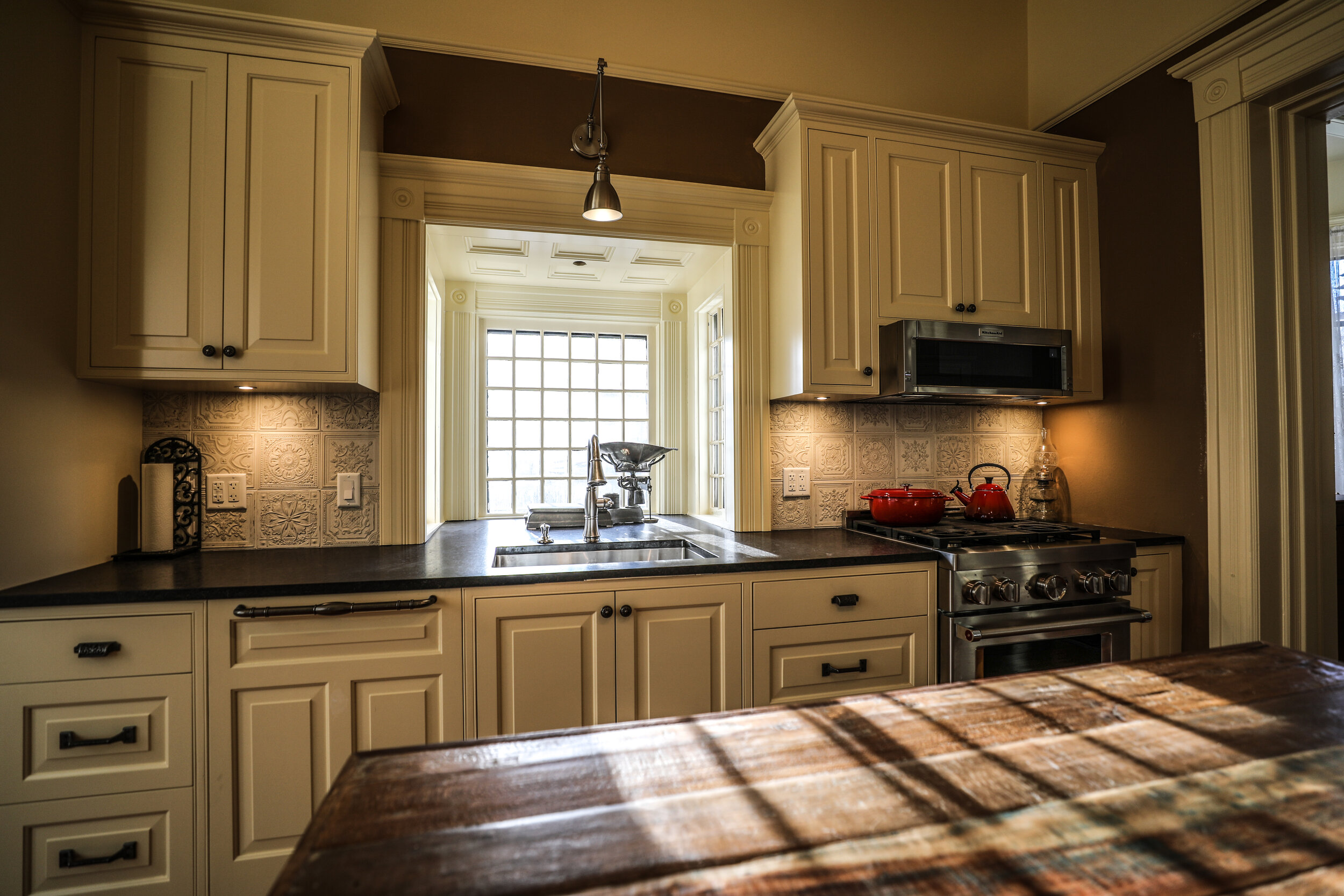
From the beginning, we knew we did not want to run a traditional bed and breakfast. We wanted guests to have the independence of a European-style guesthouse, with a proper kitchen of their own.
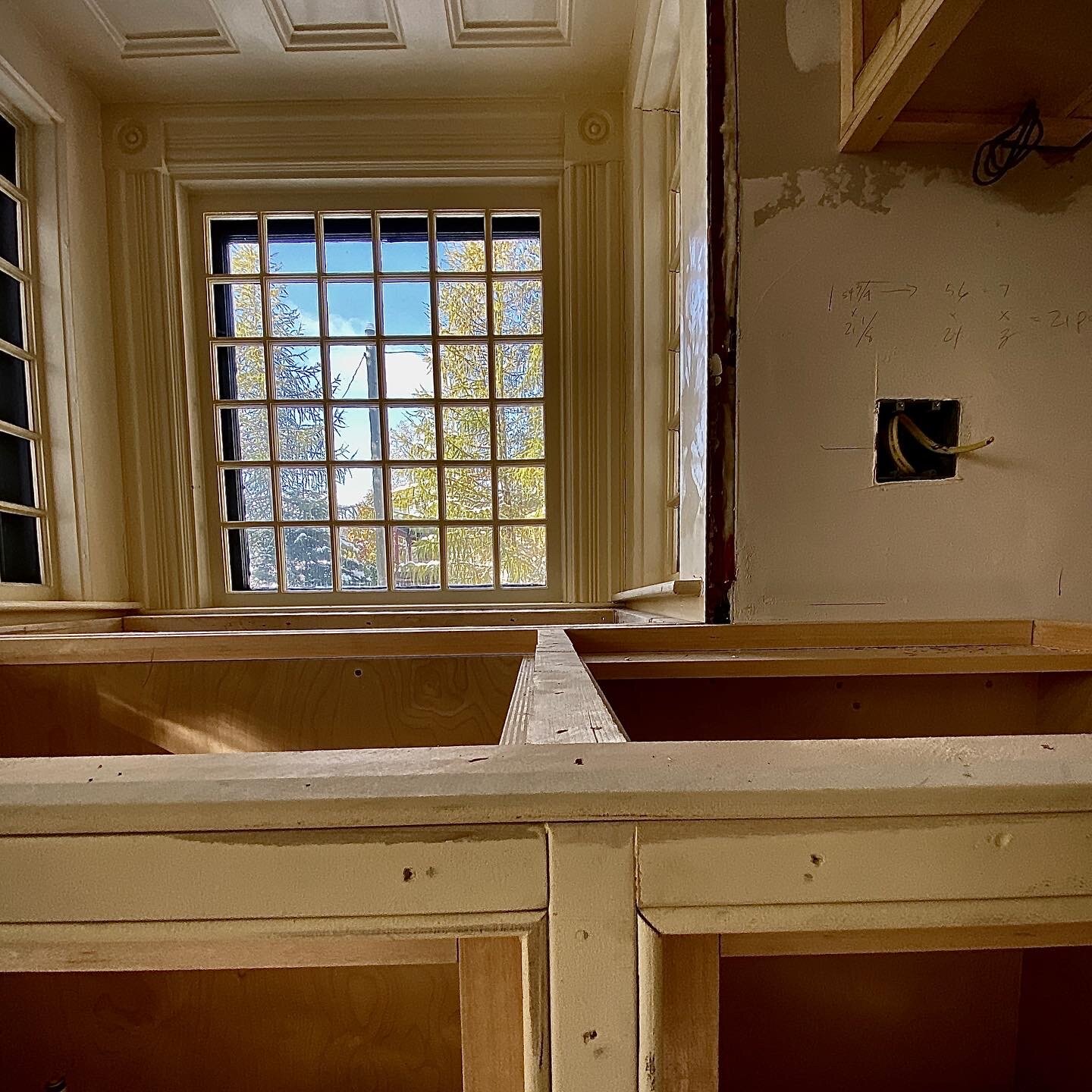
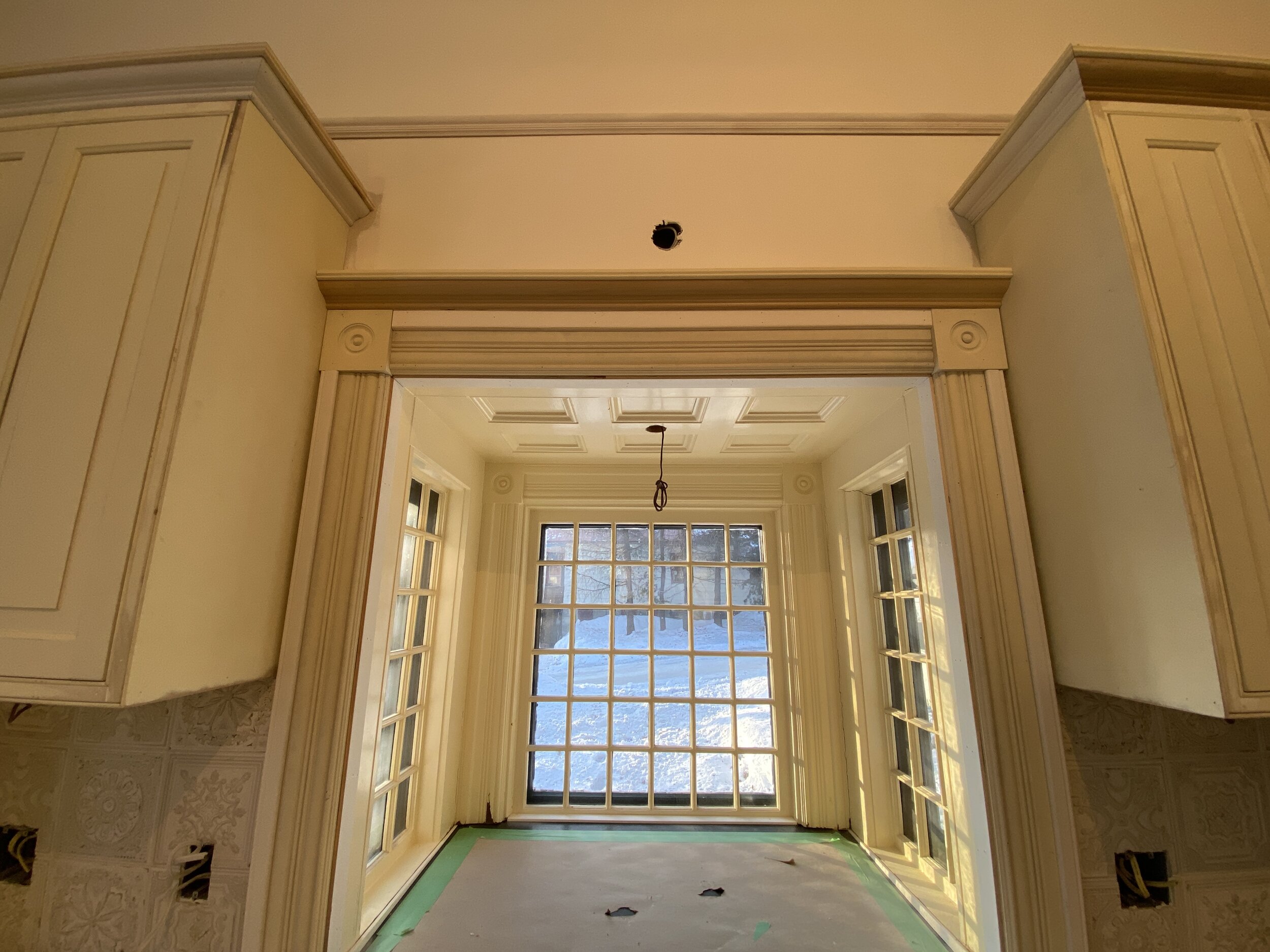
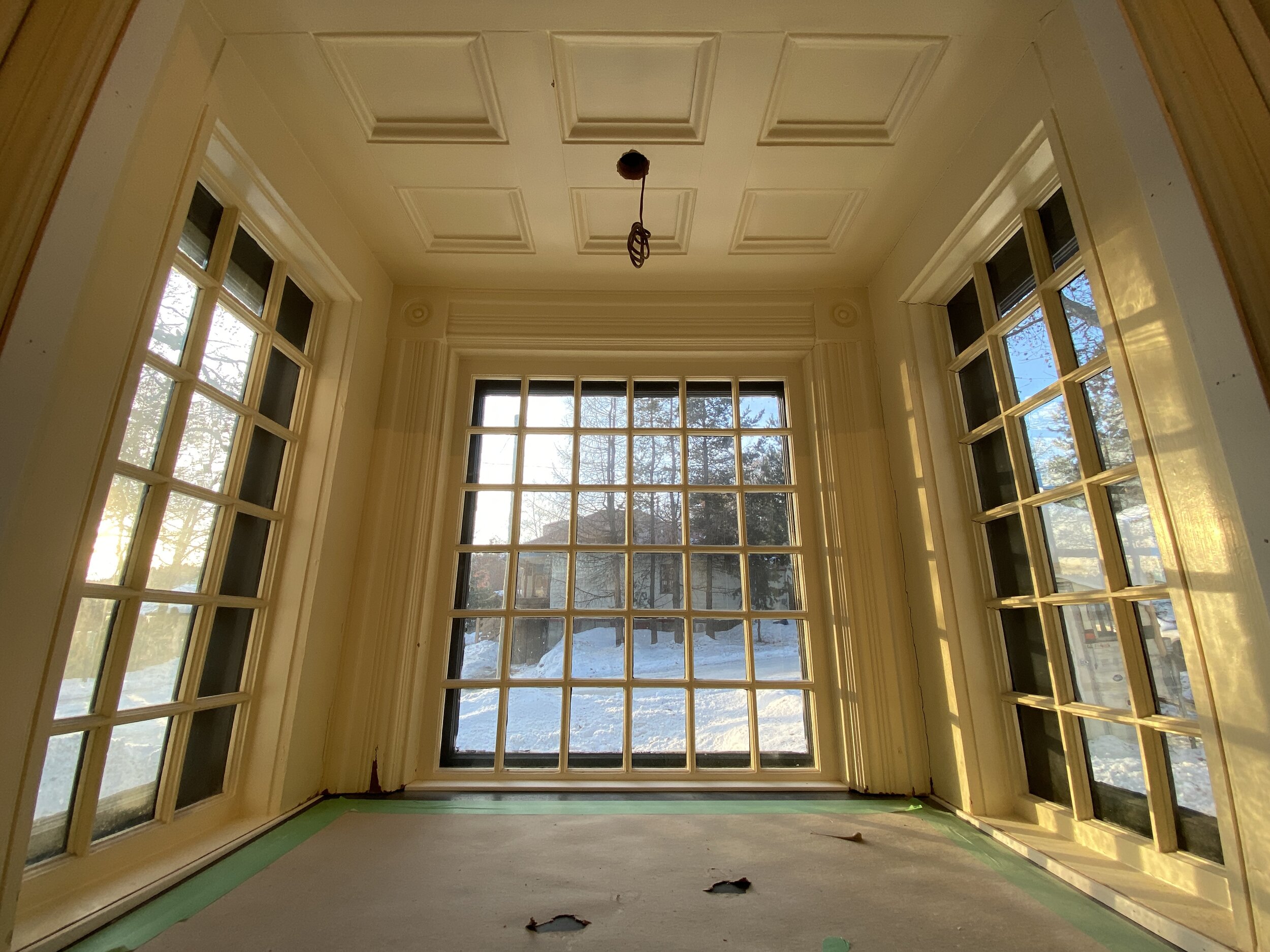
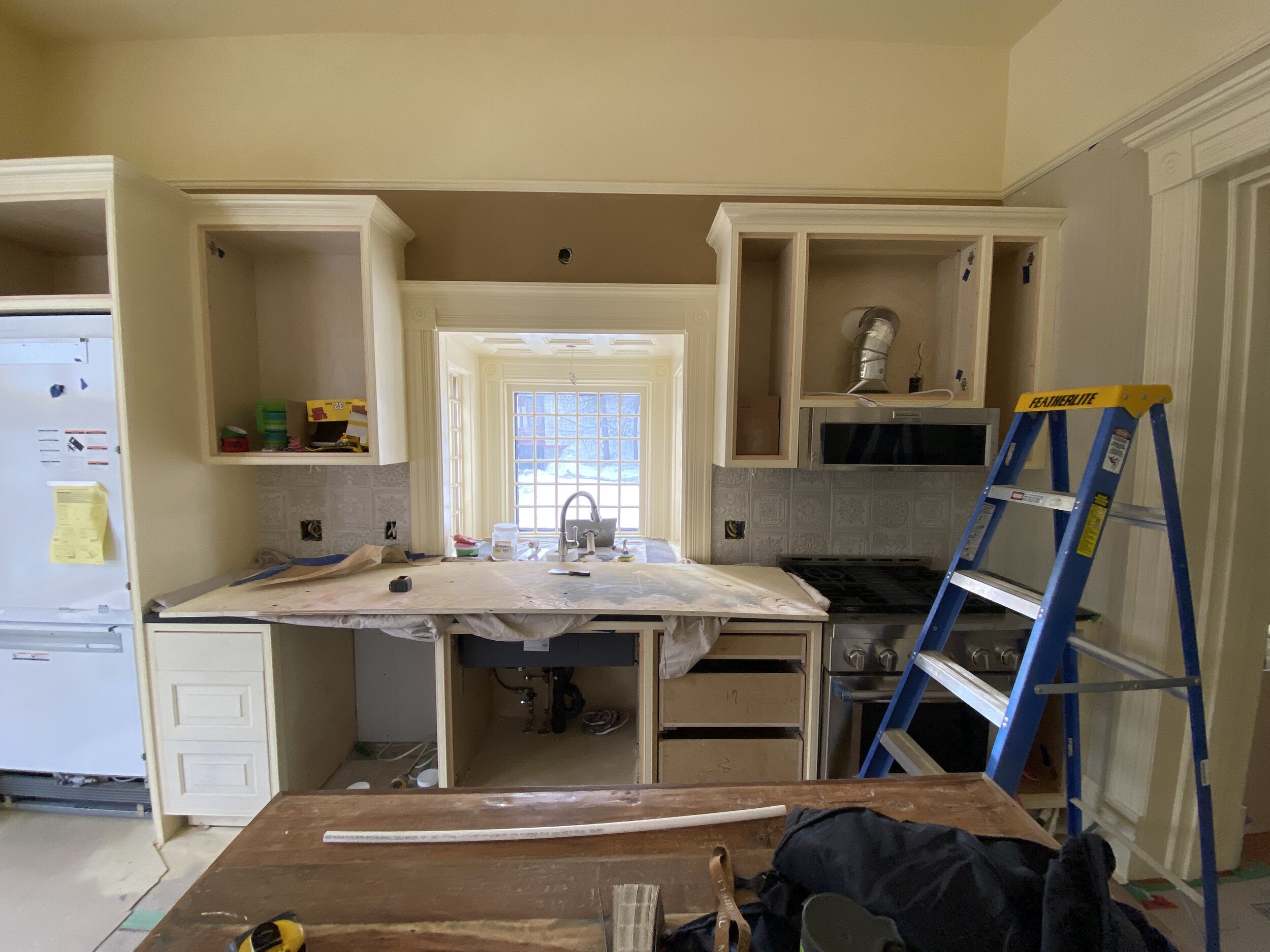
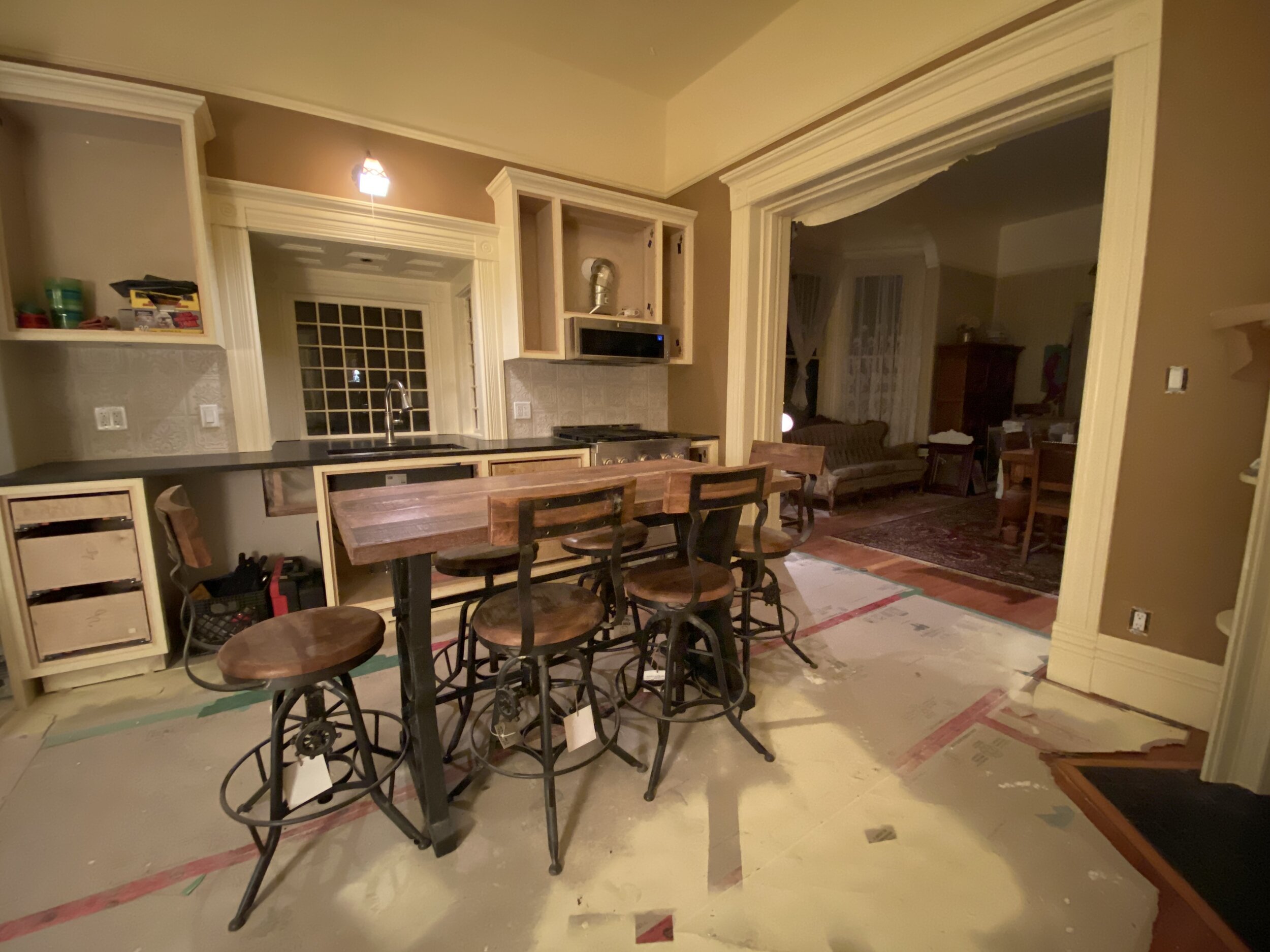
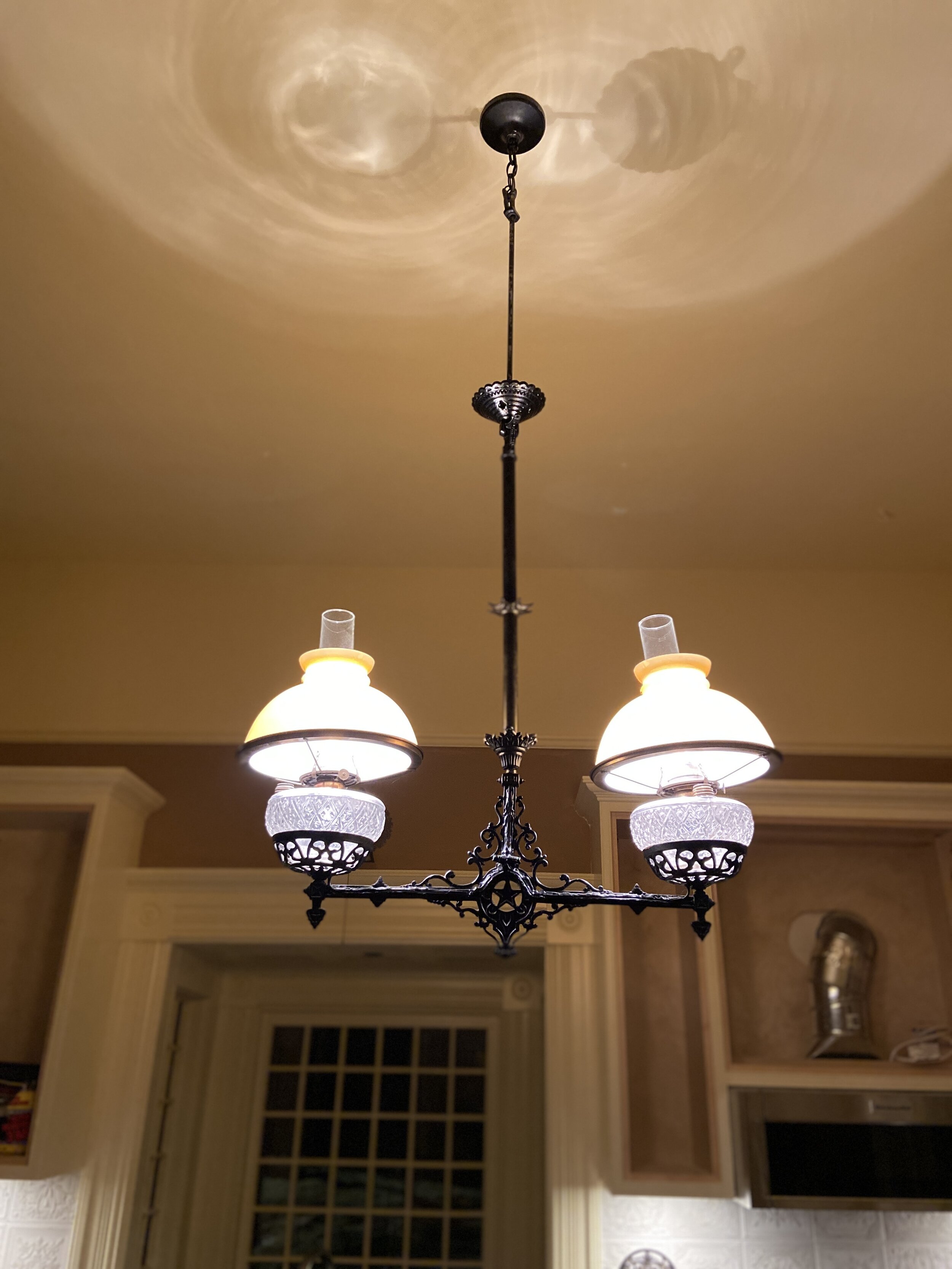
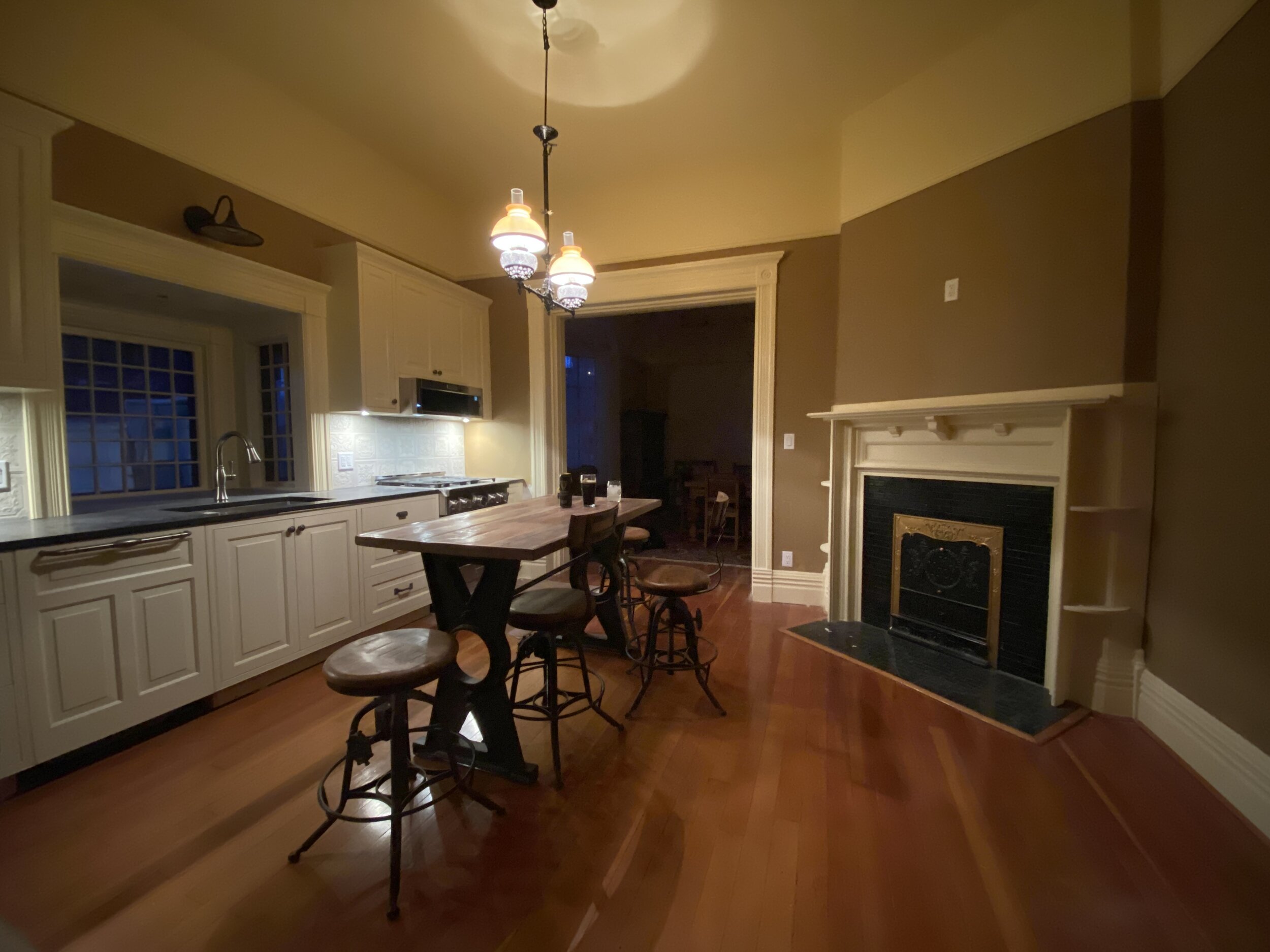
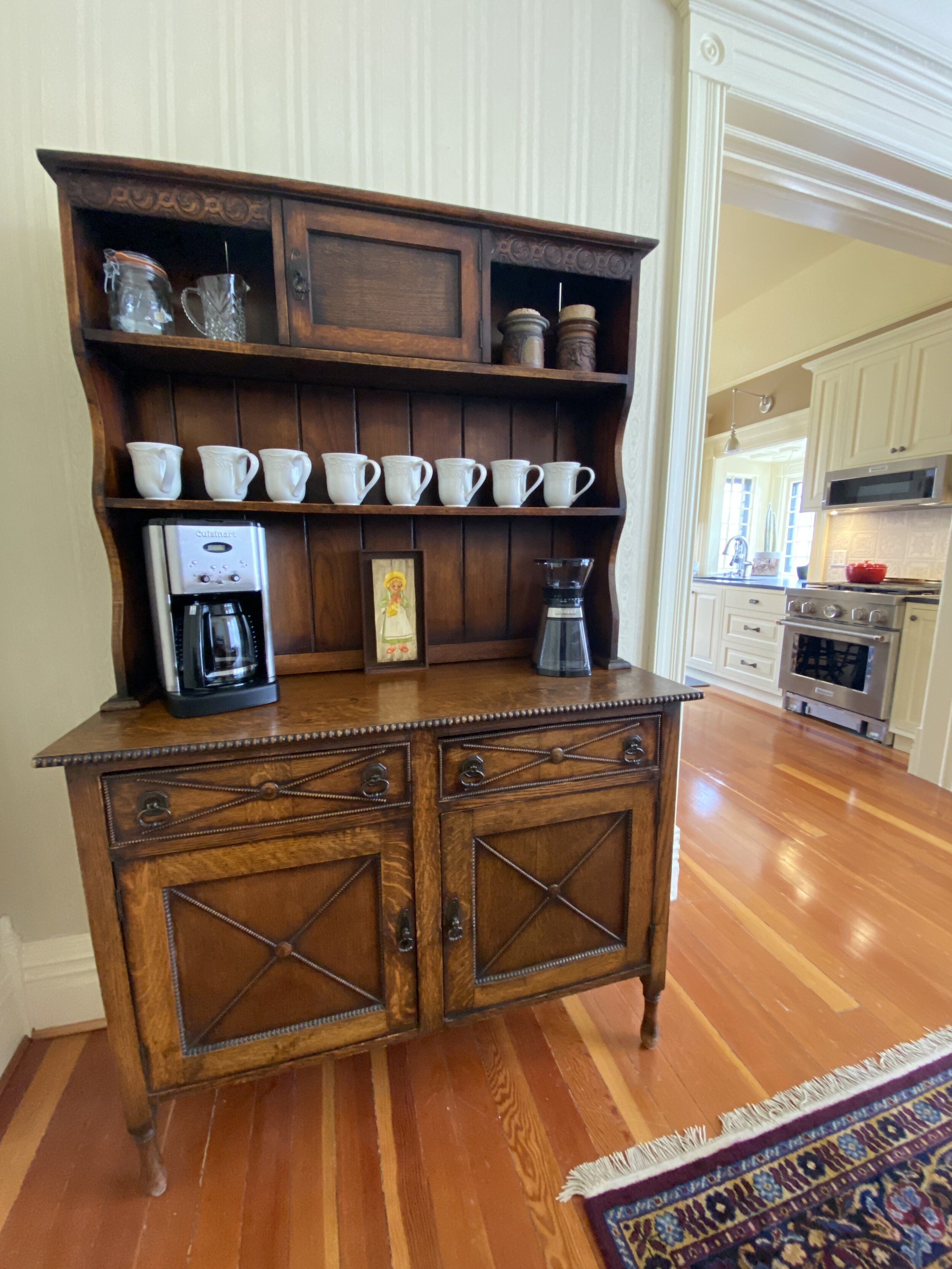
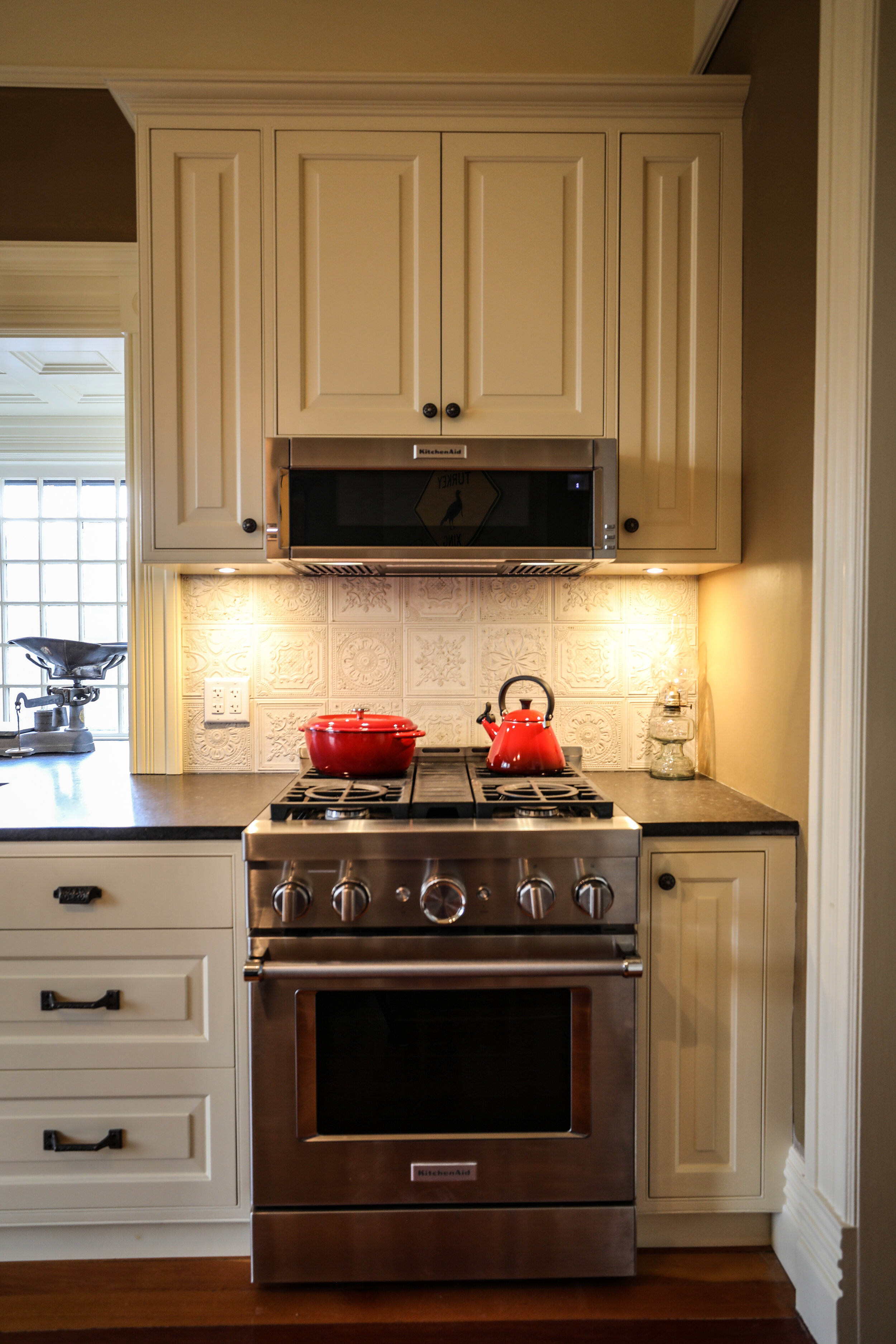
The challenge was making a completely new kitchen feel as though it belonged in the house.
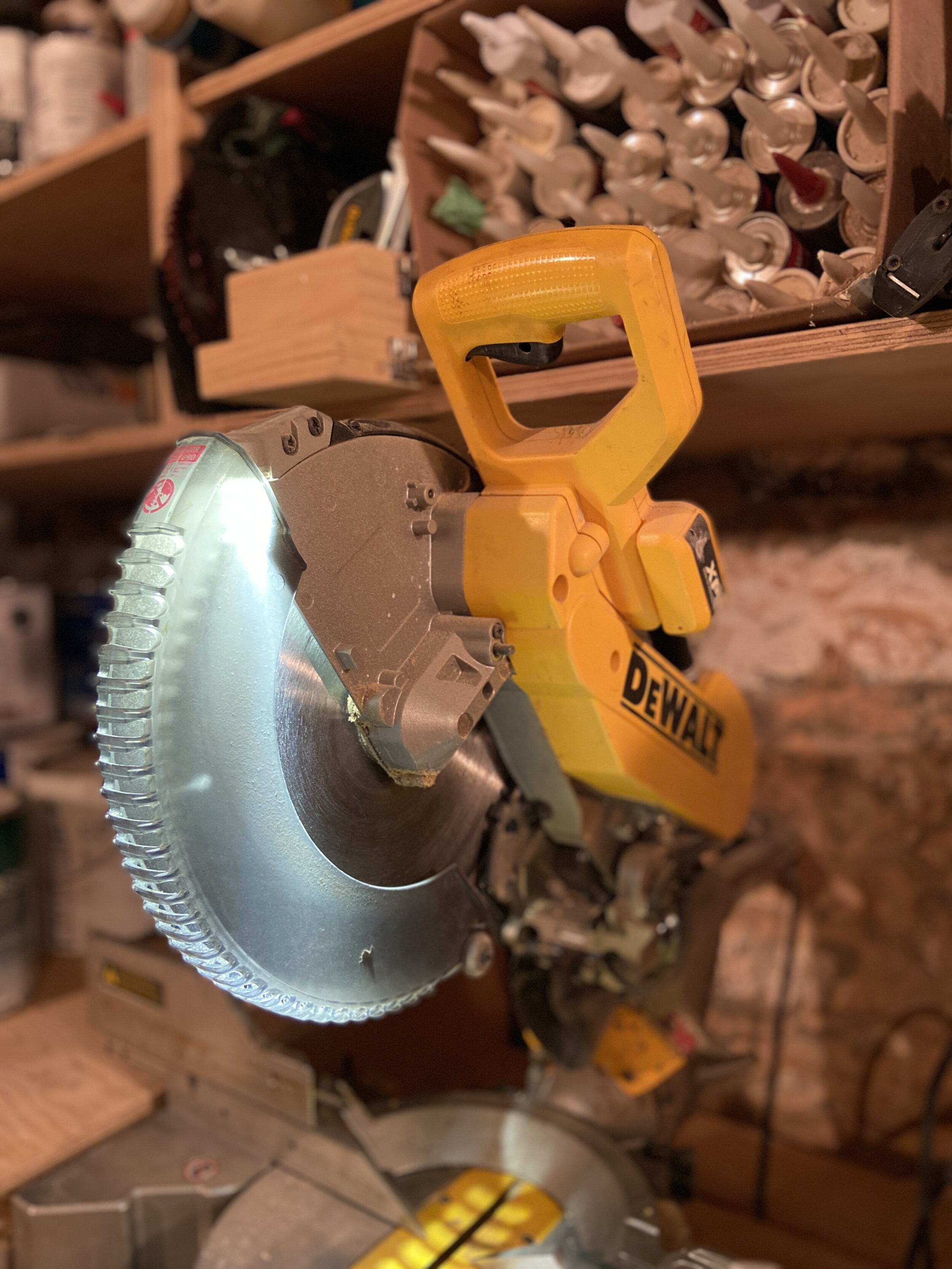
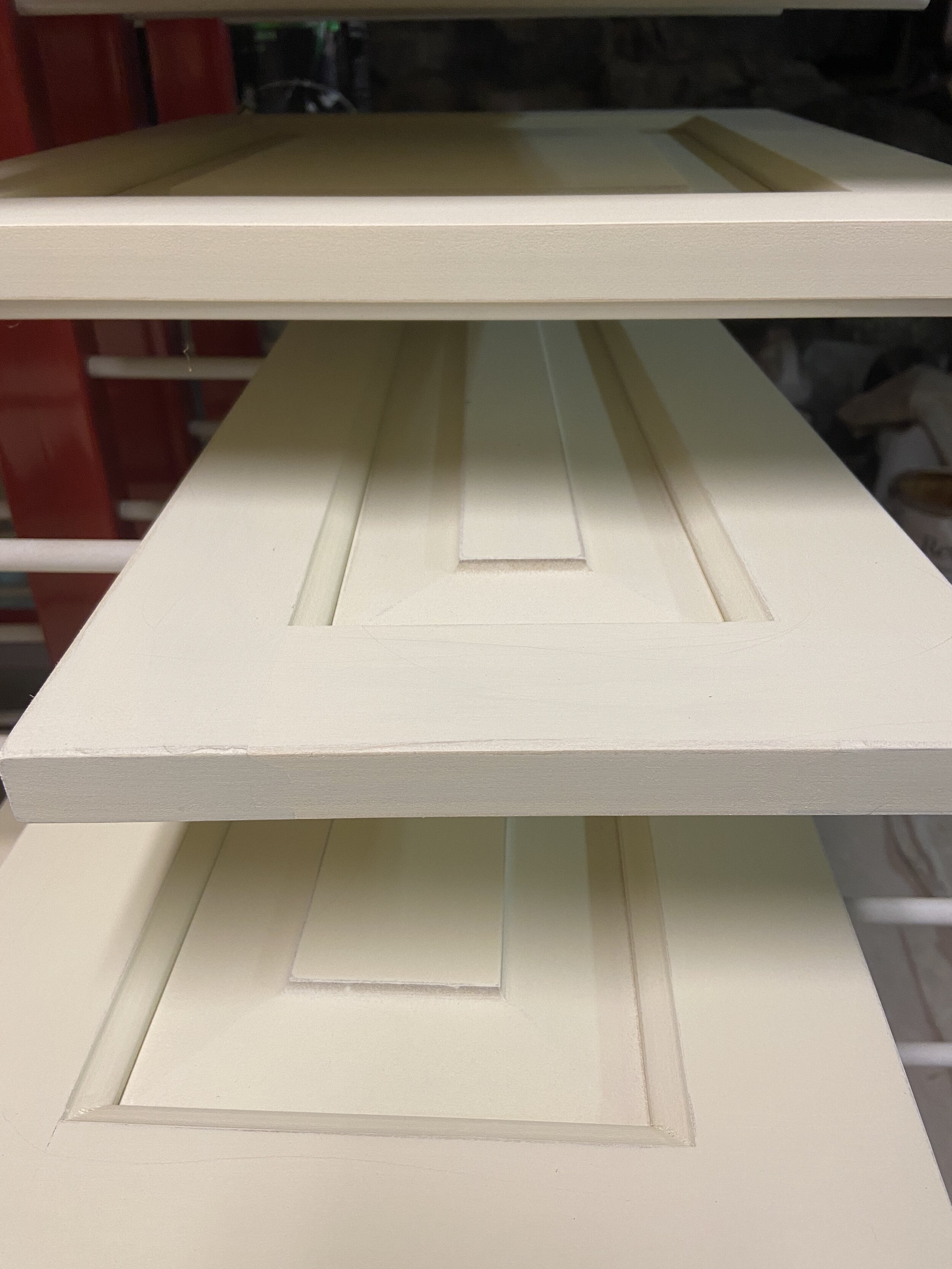
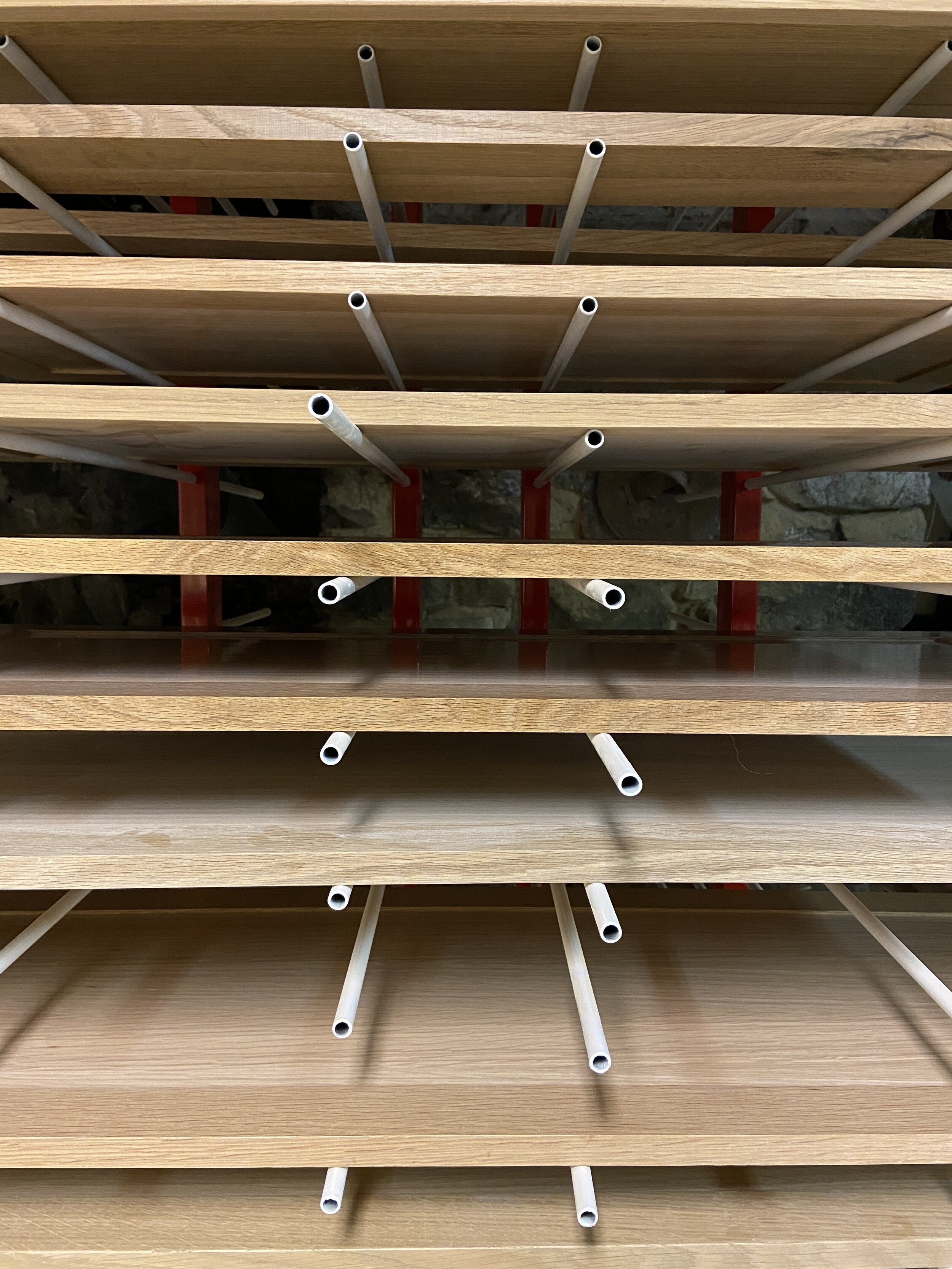
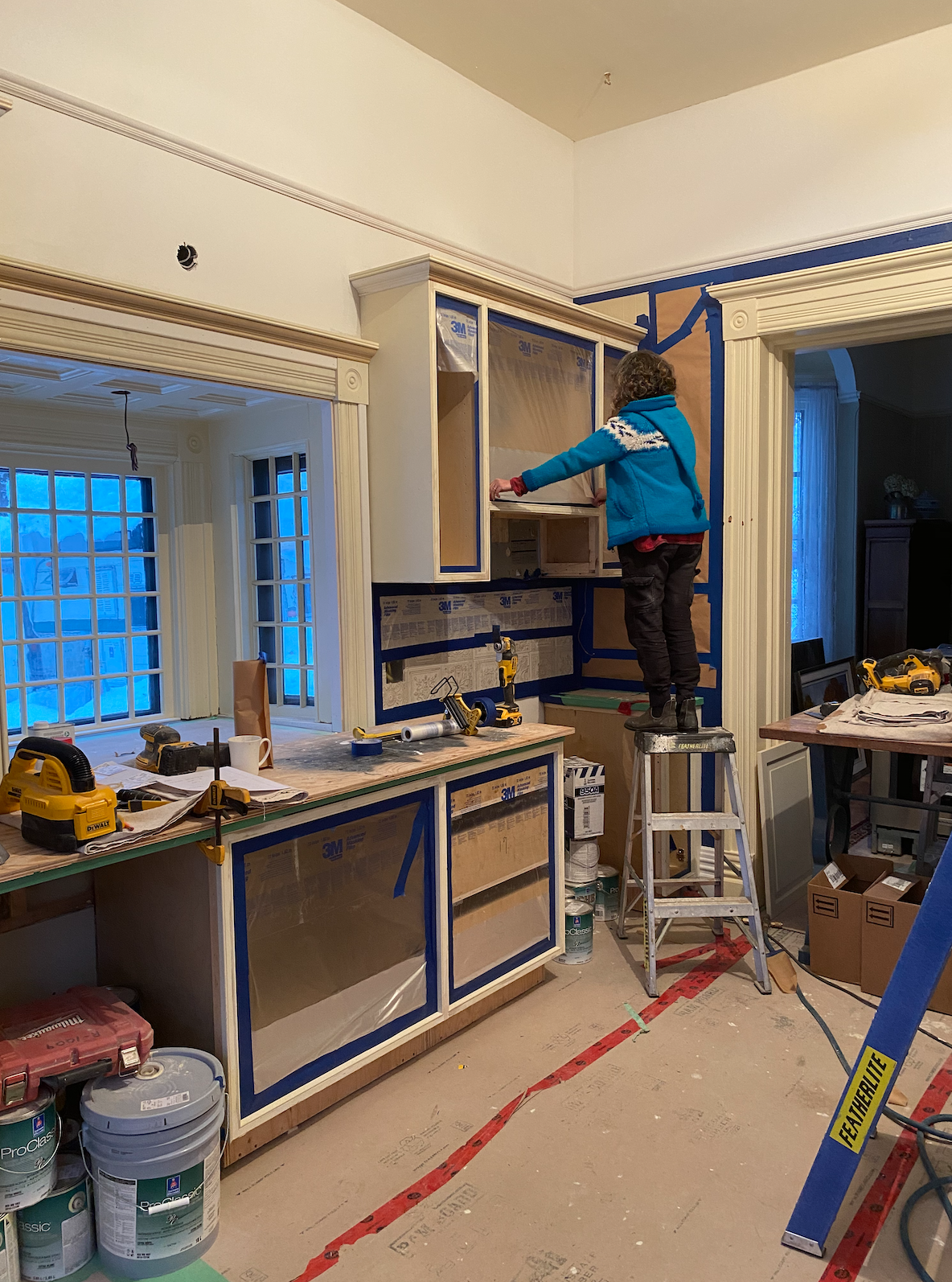
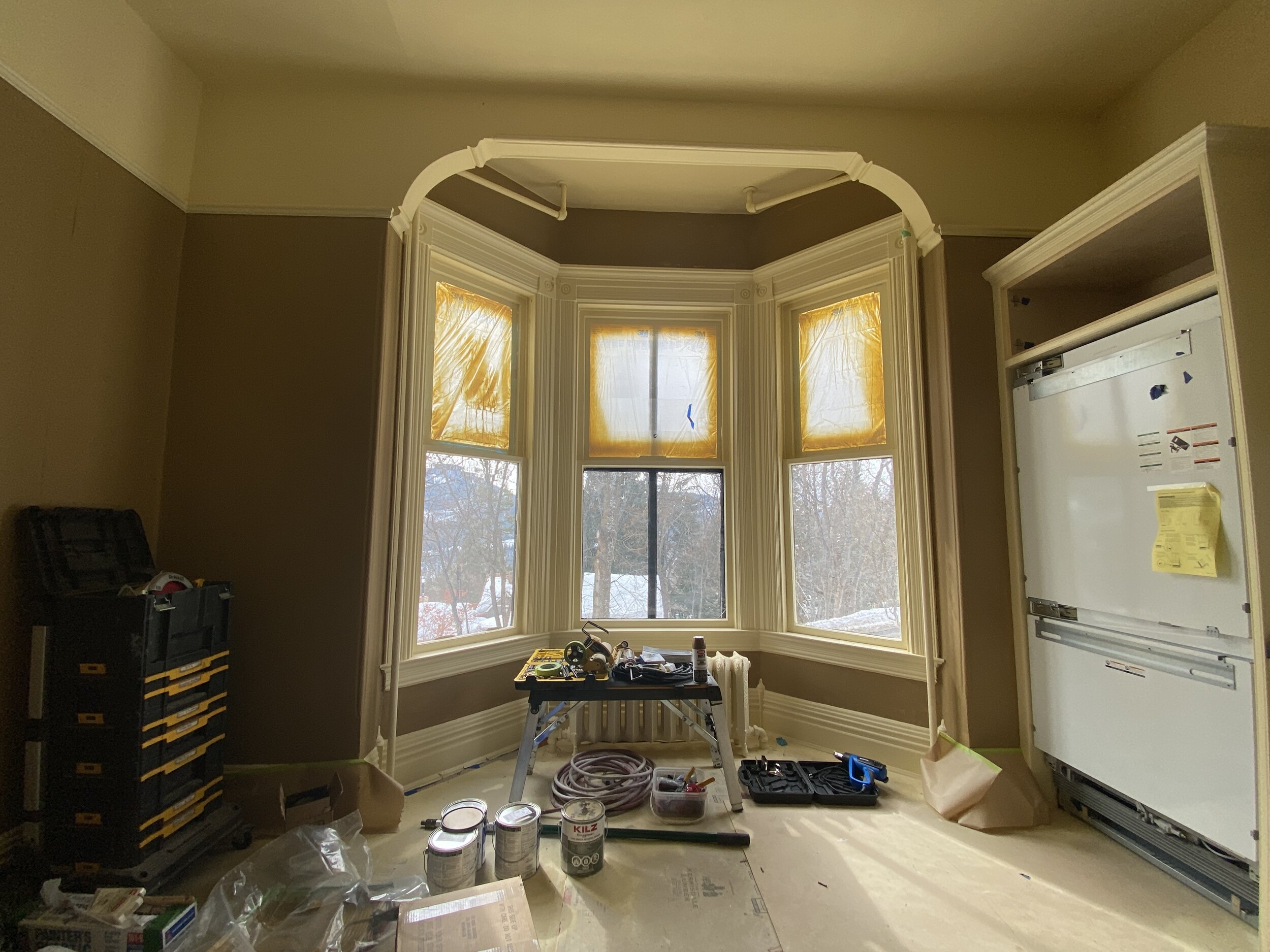
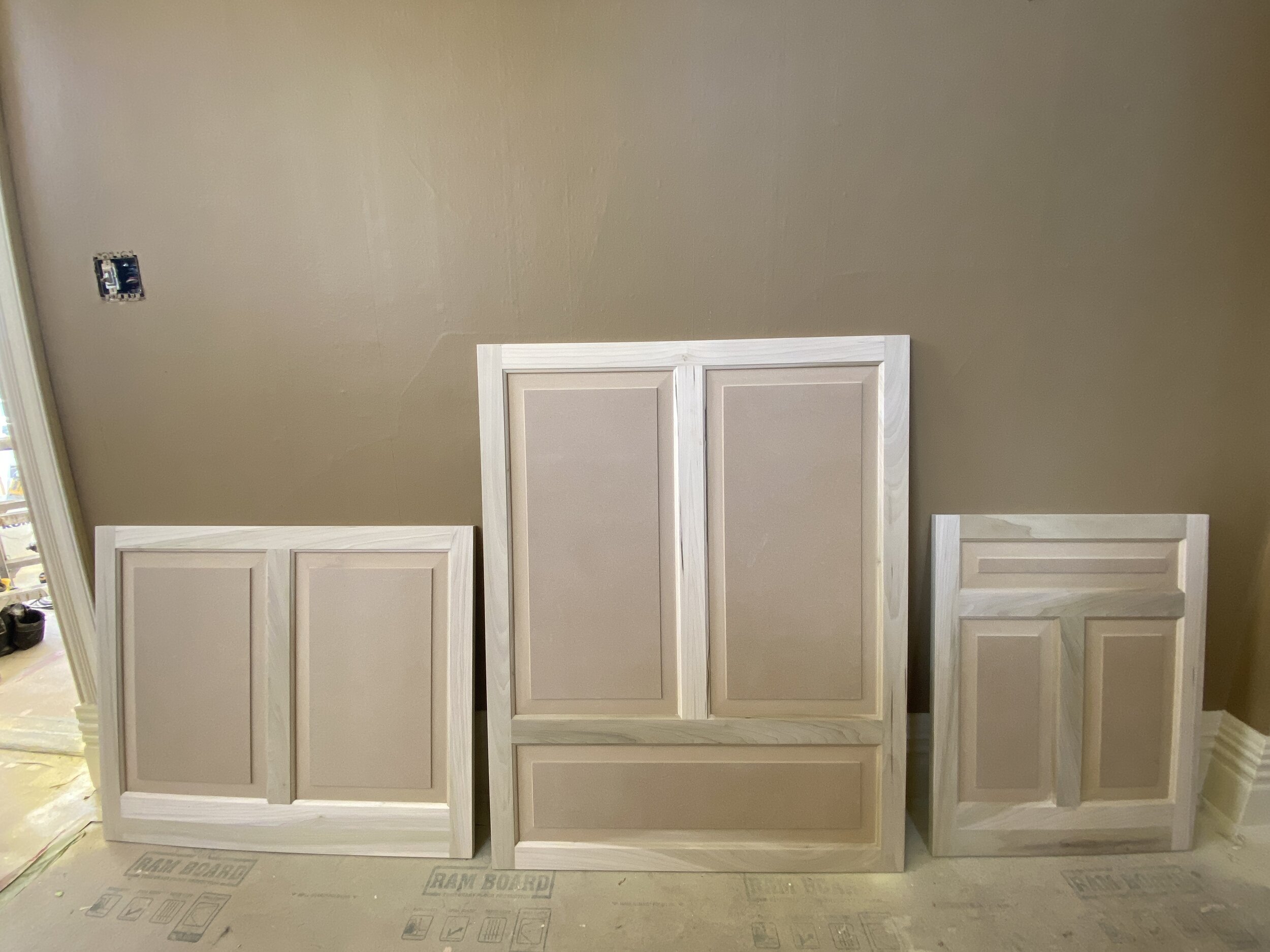
Custom moulding knives were made to reproduce profiles found elsewhere in the building. Cabinet doors, trim and detailing were designed to sit comfortably alongside the original woodwork rather than compete with it.
The result is a fully equipped guest kitchen built for modern use, but one that does its best not to announce exactly when it arrived.

One Thing Leads to Another
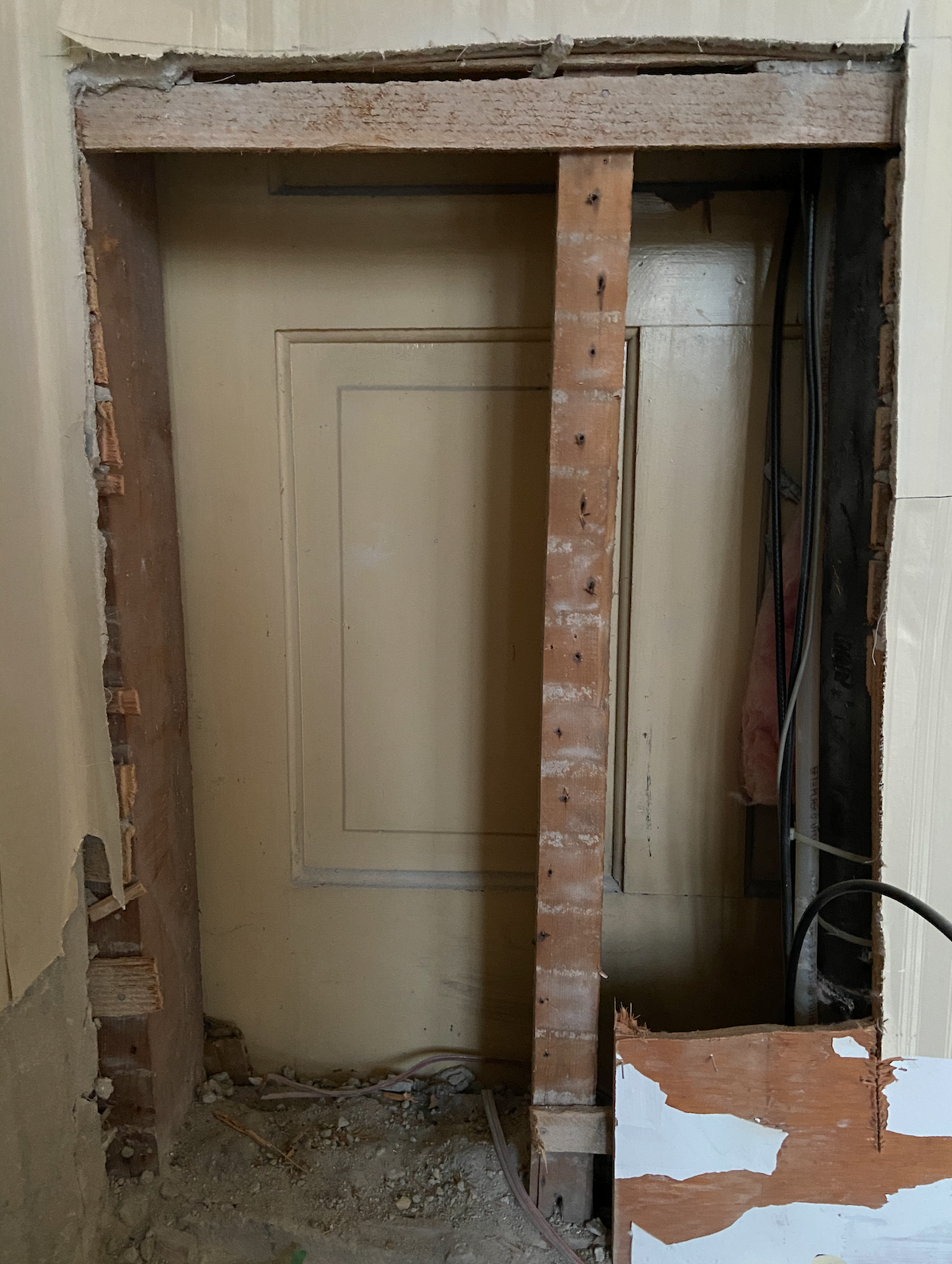
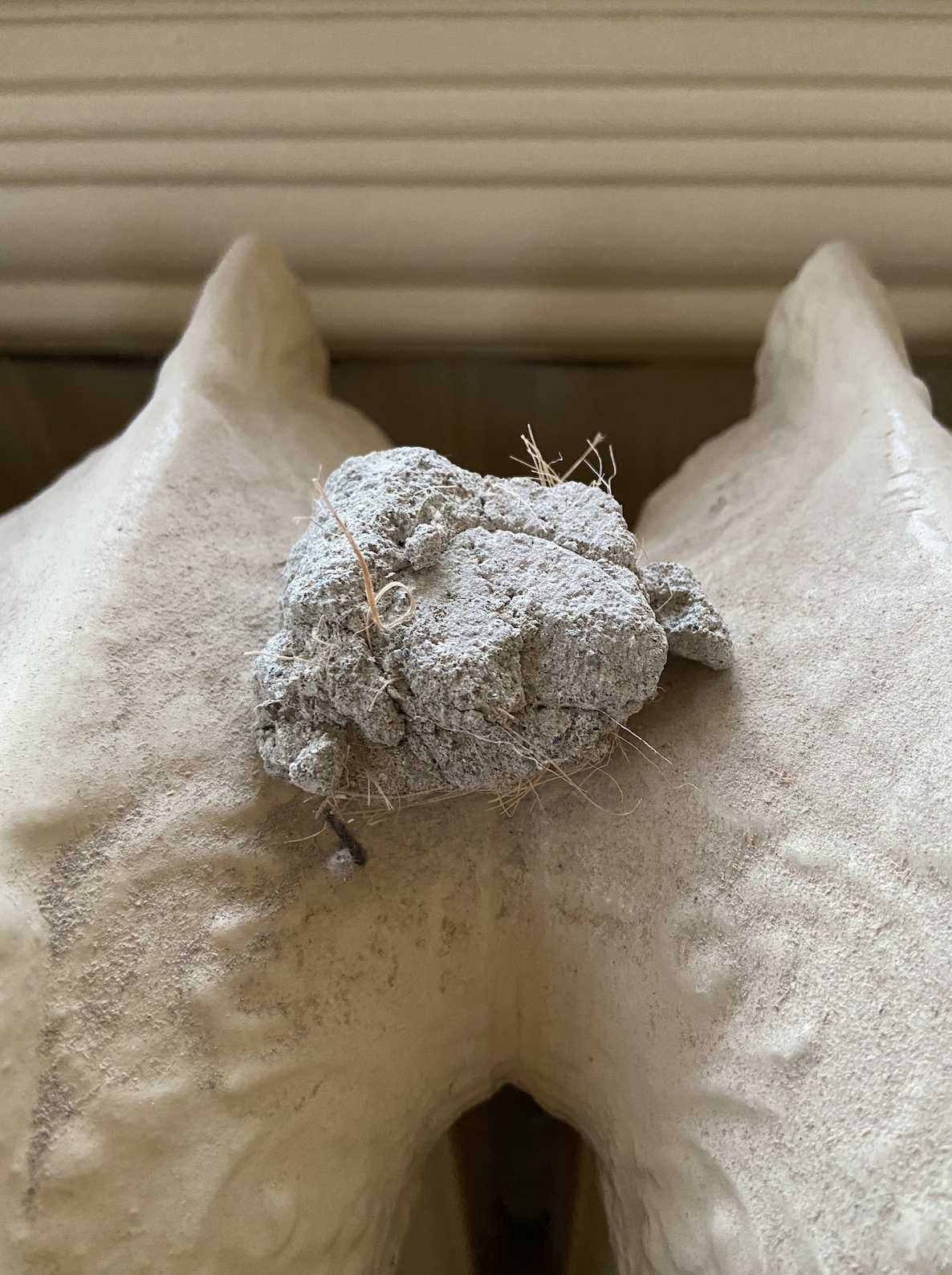
Anyone who has renovated an old house knows the problem. One job exposes another.
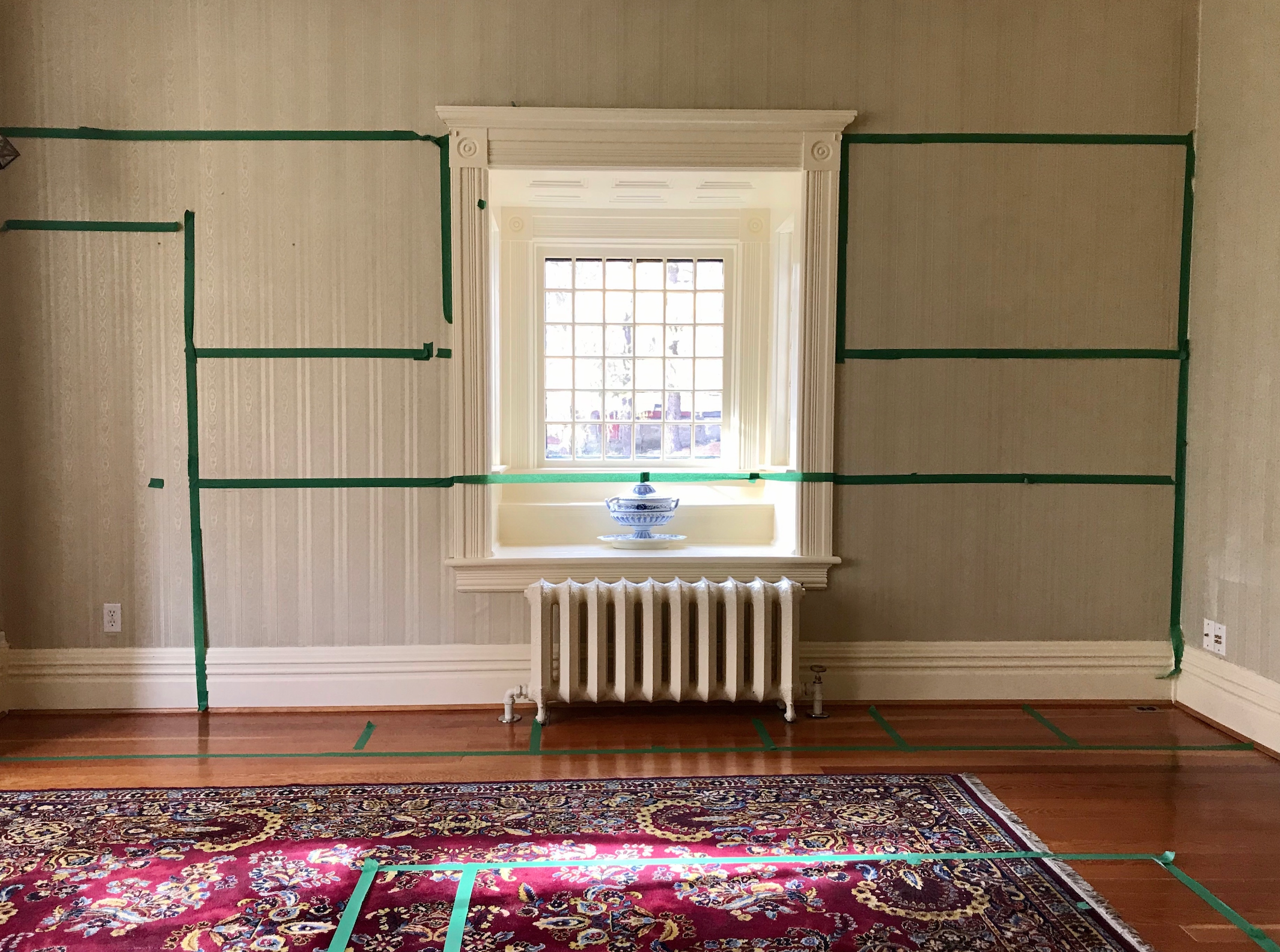
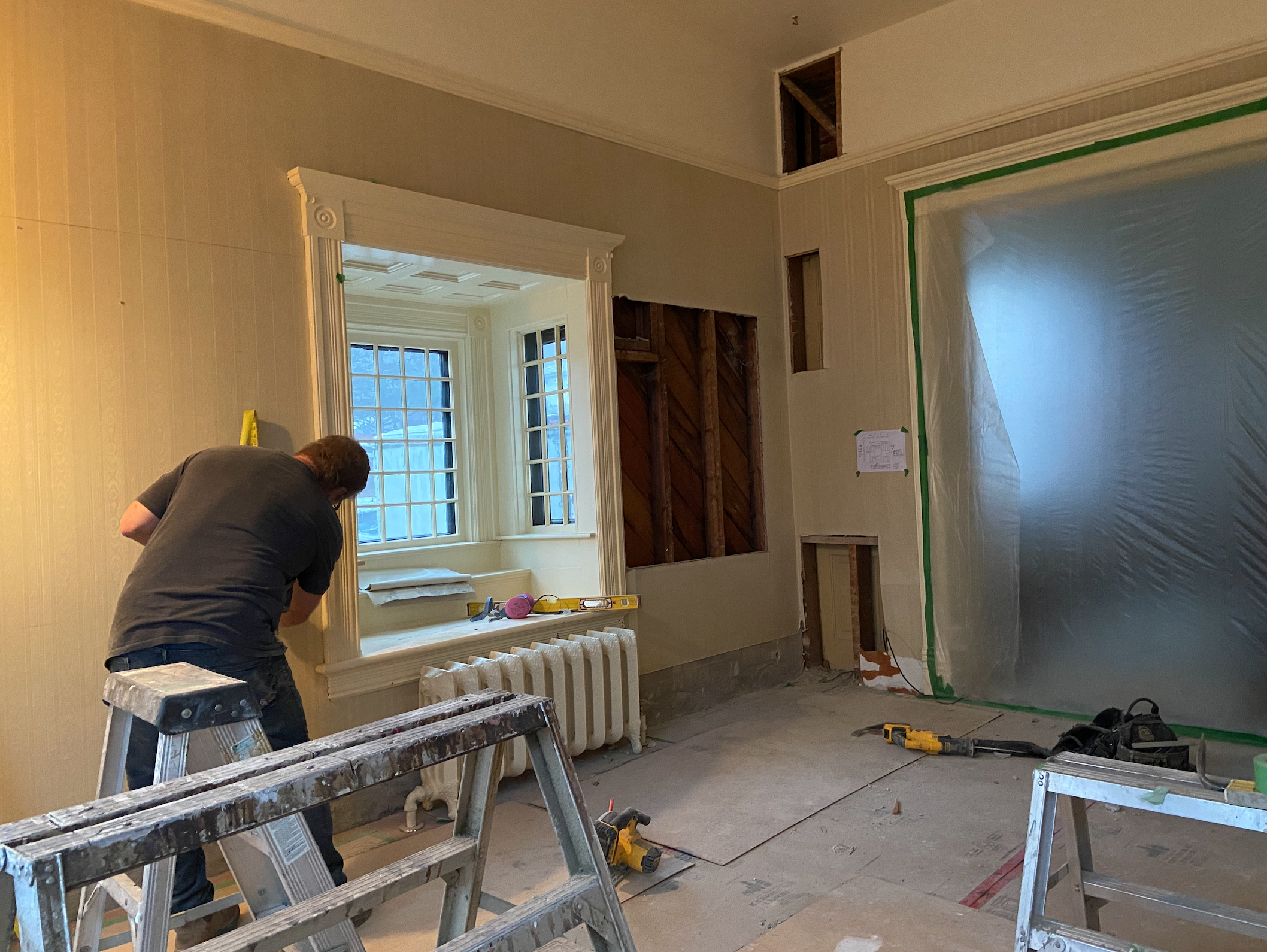
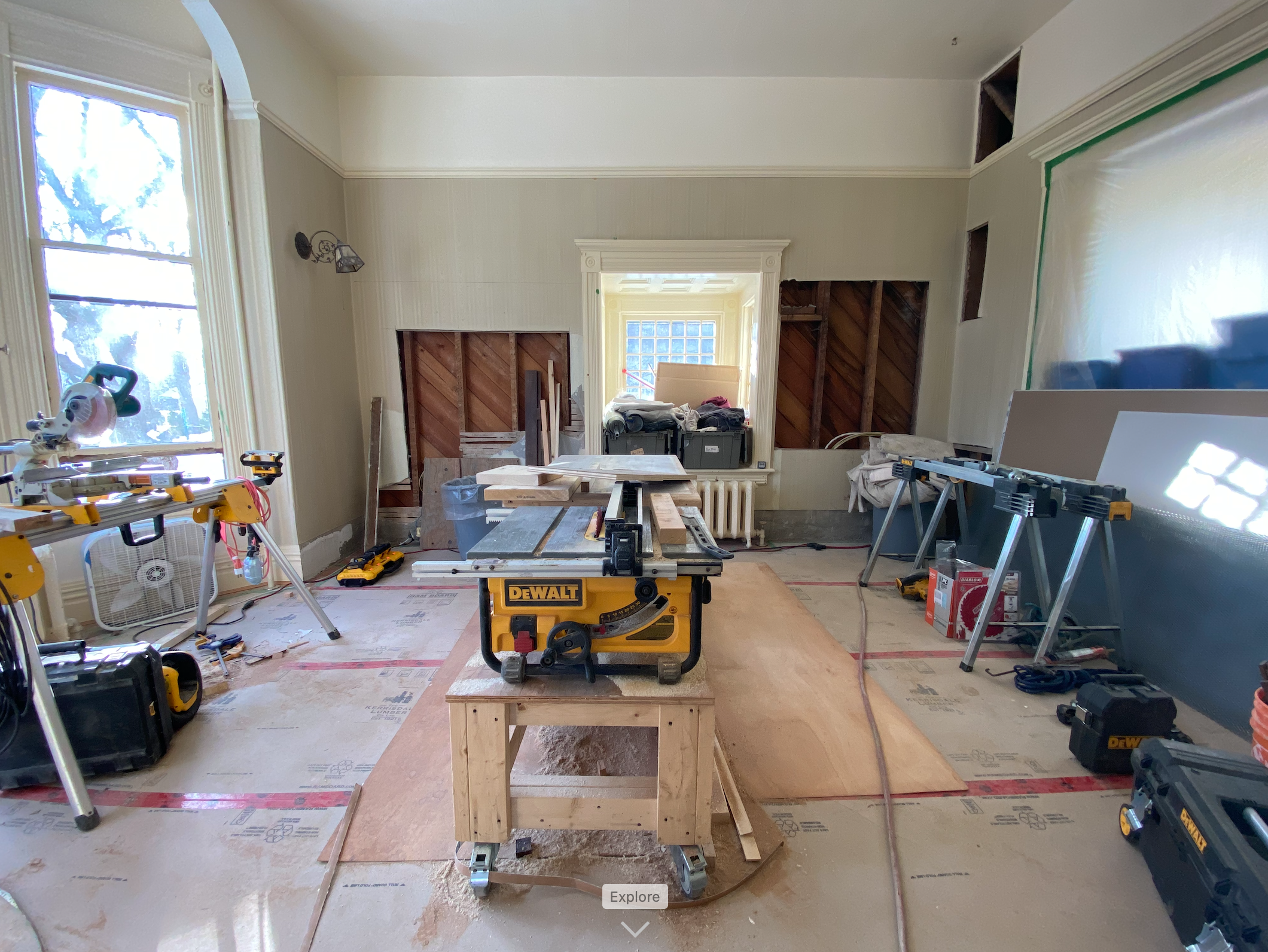
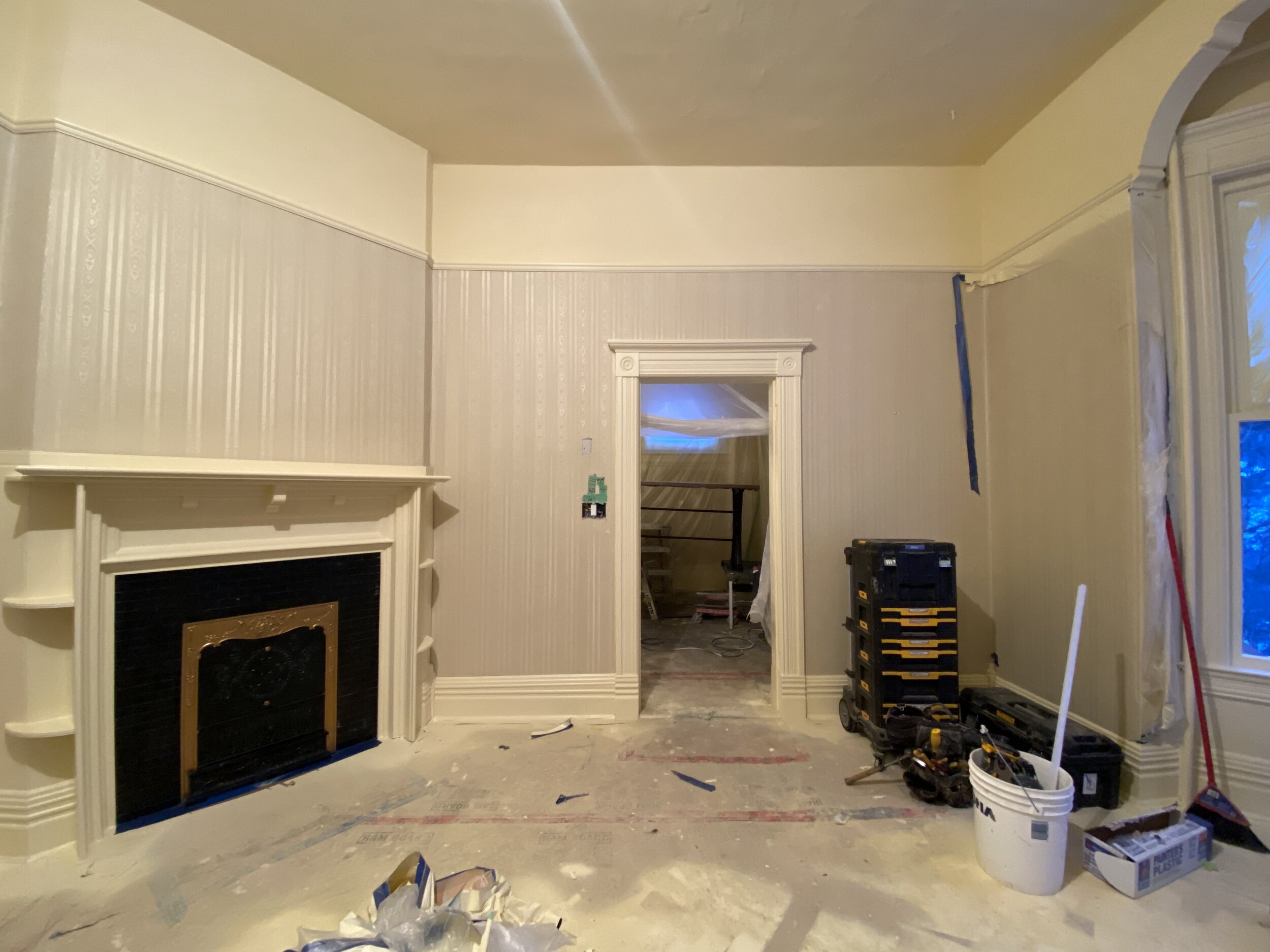
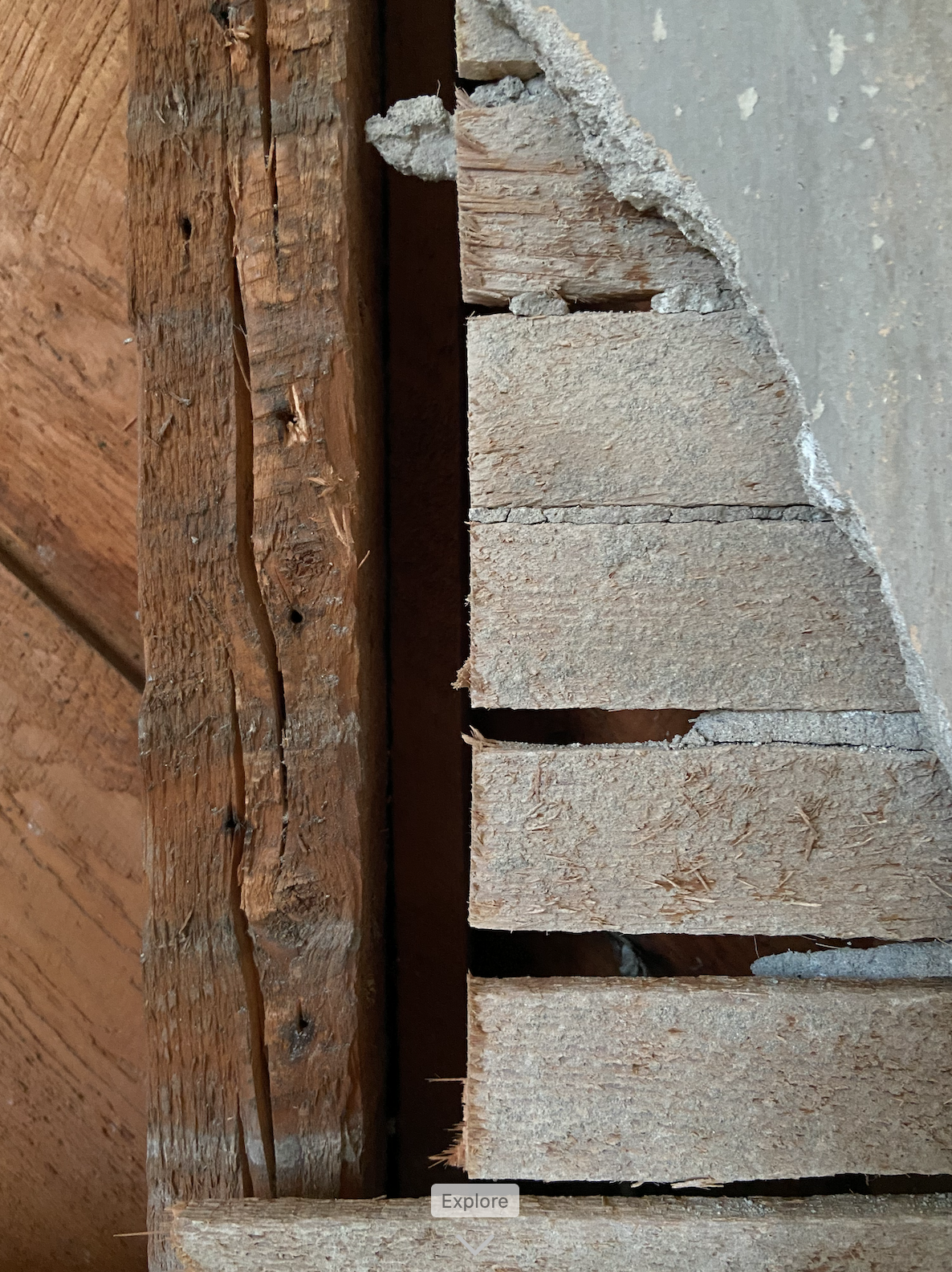
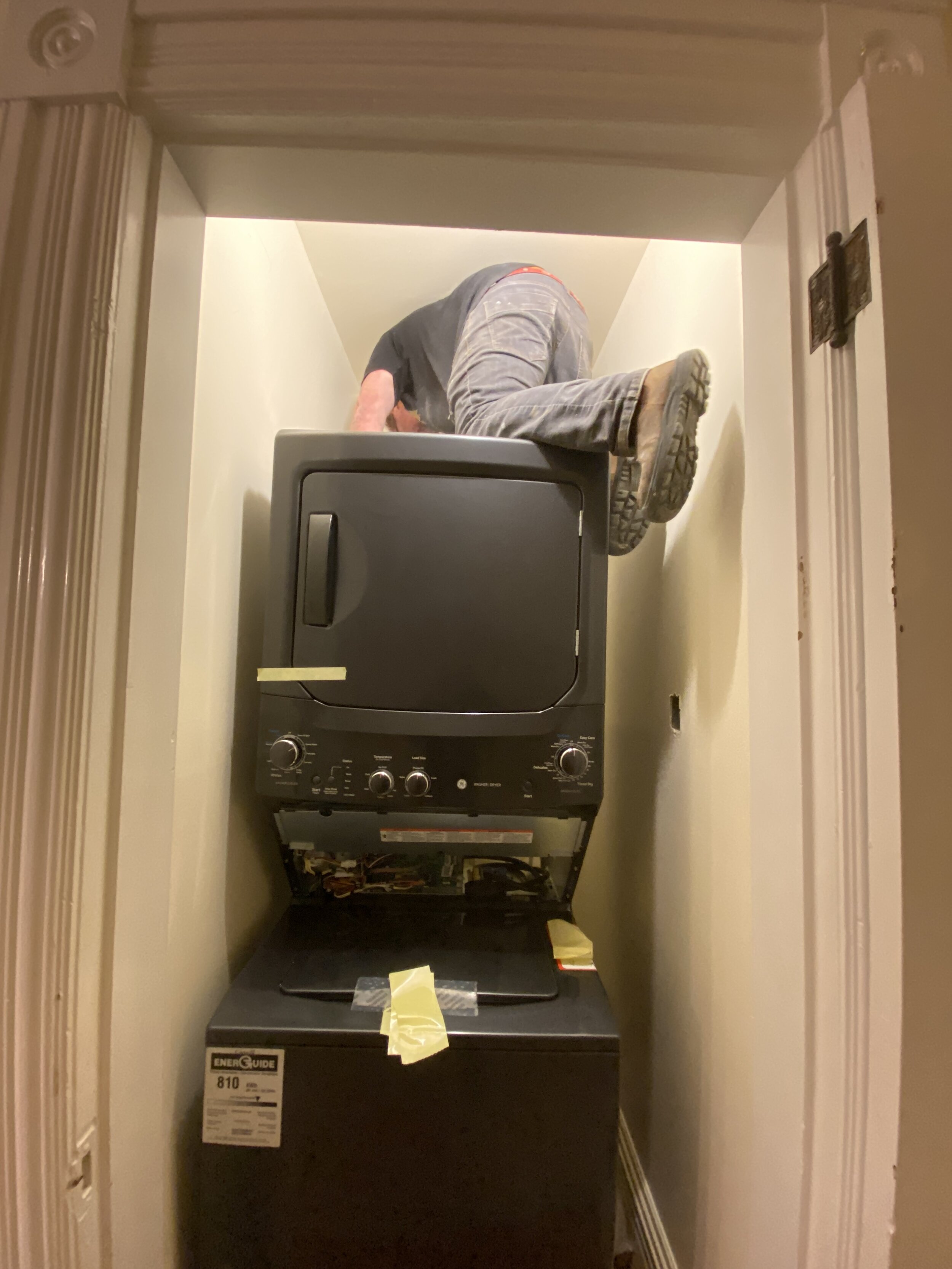
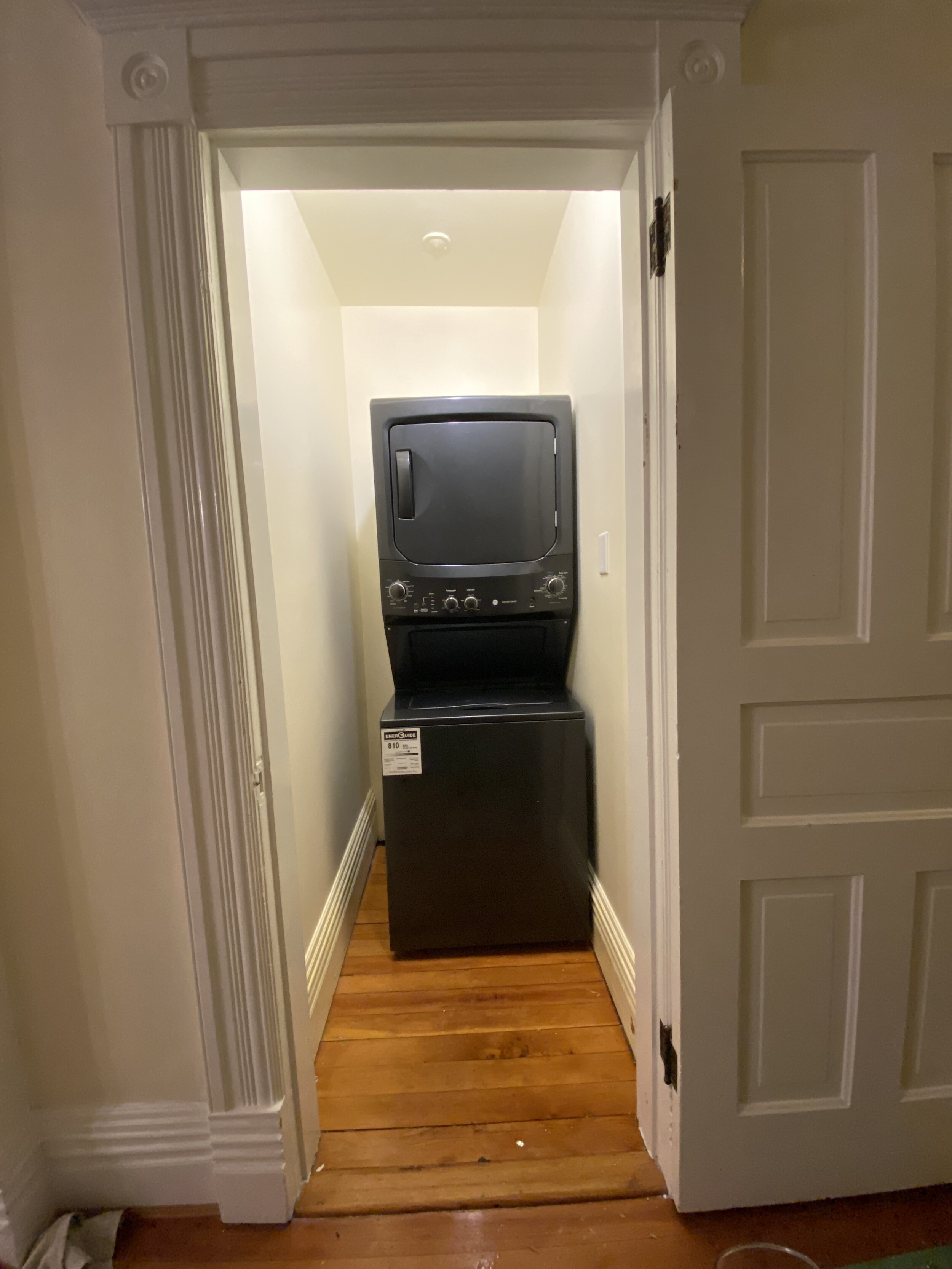
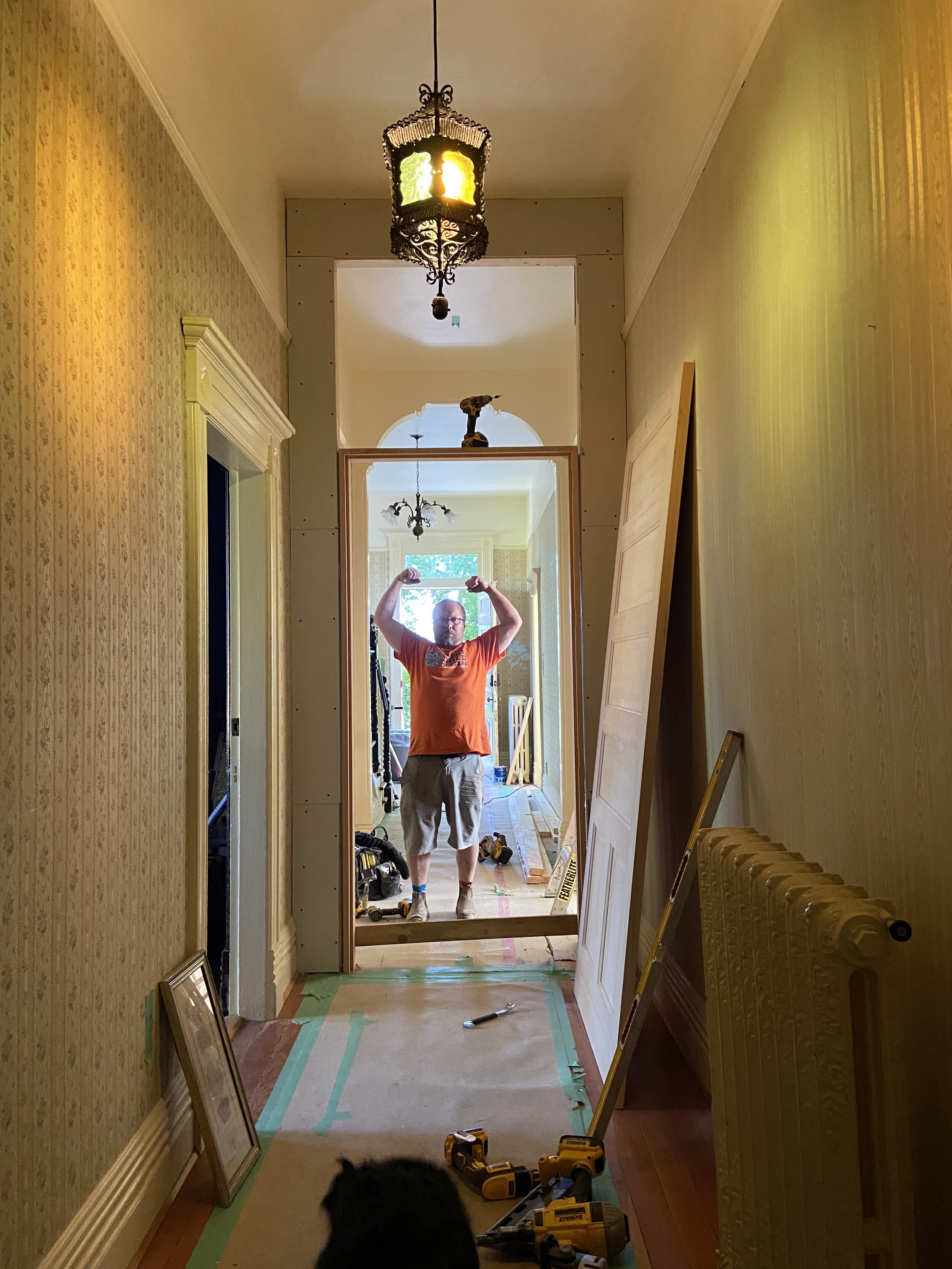
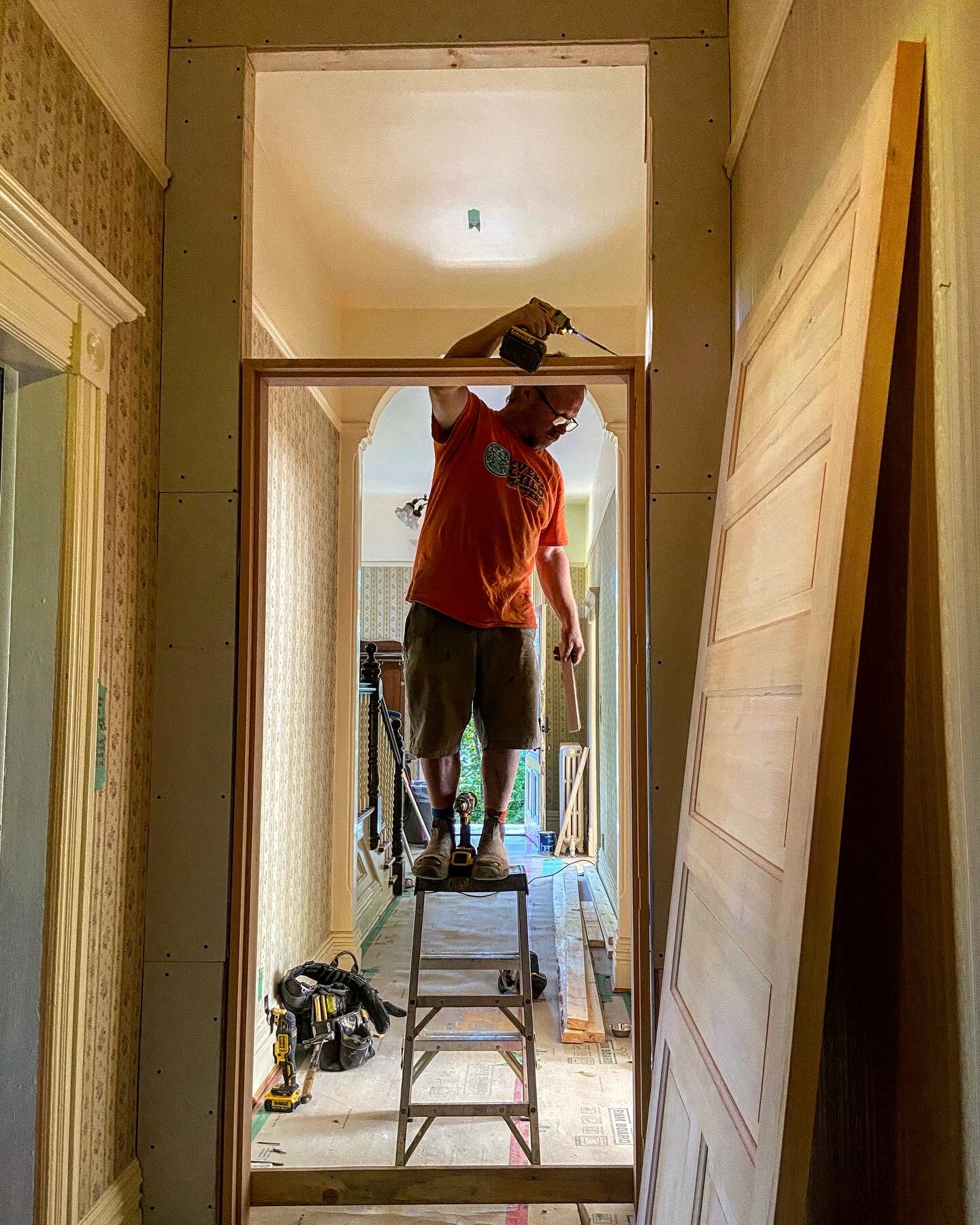
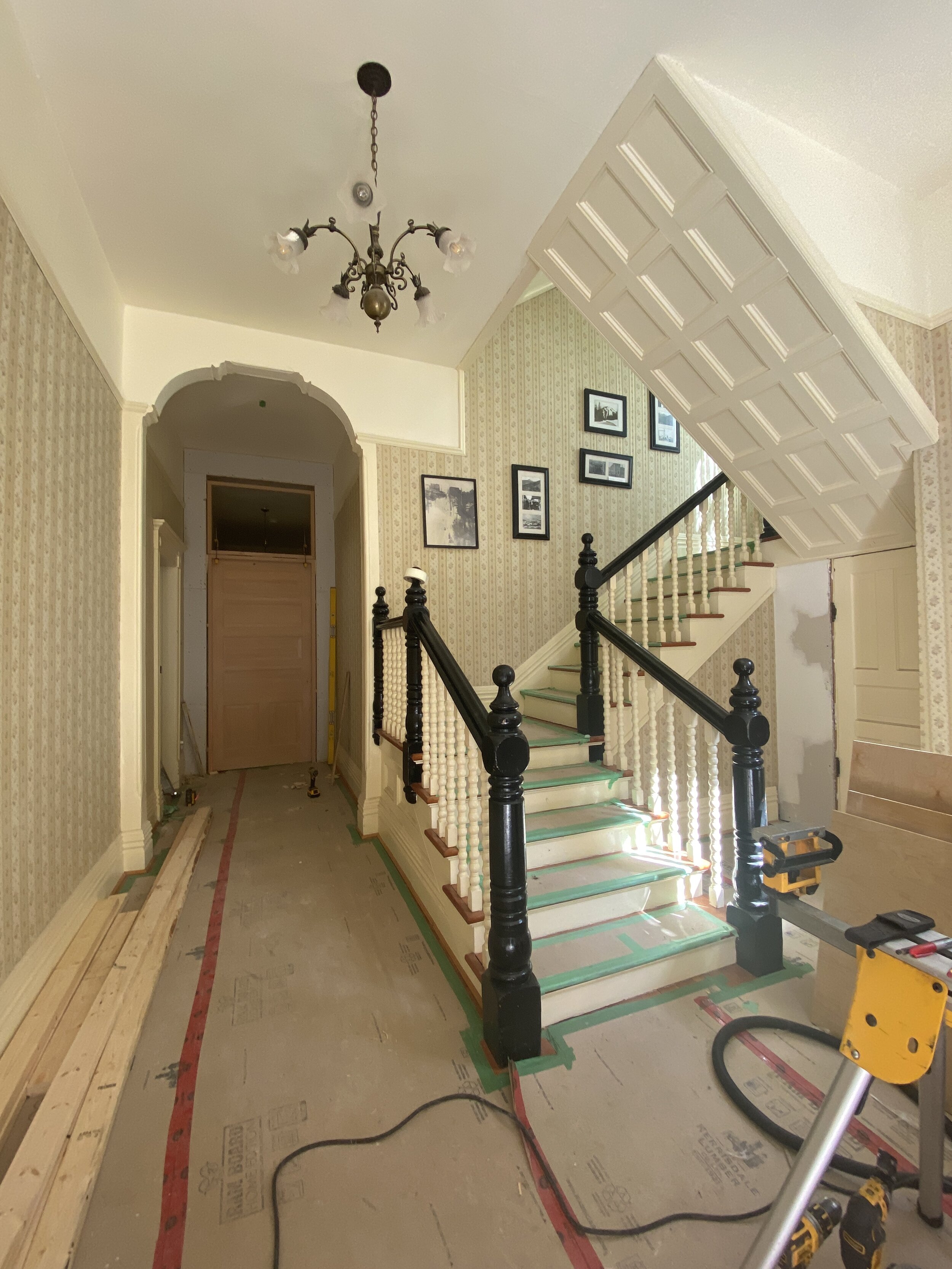
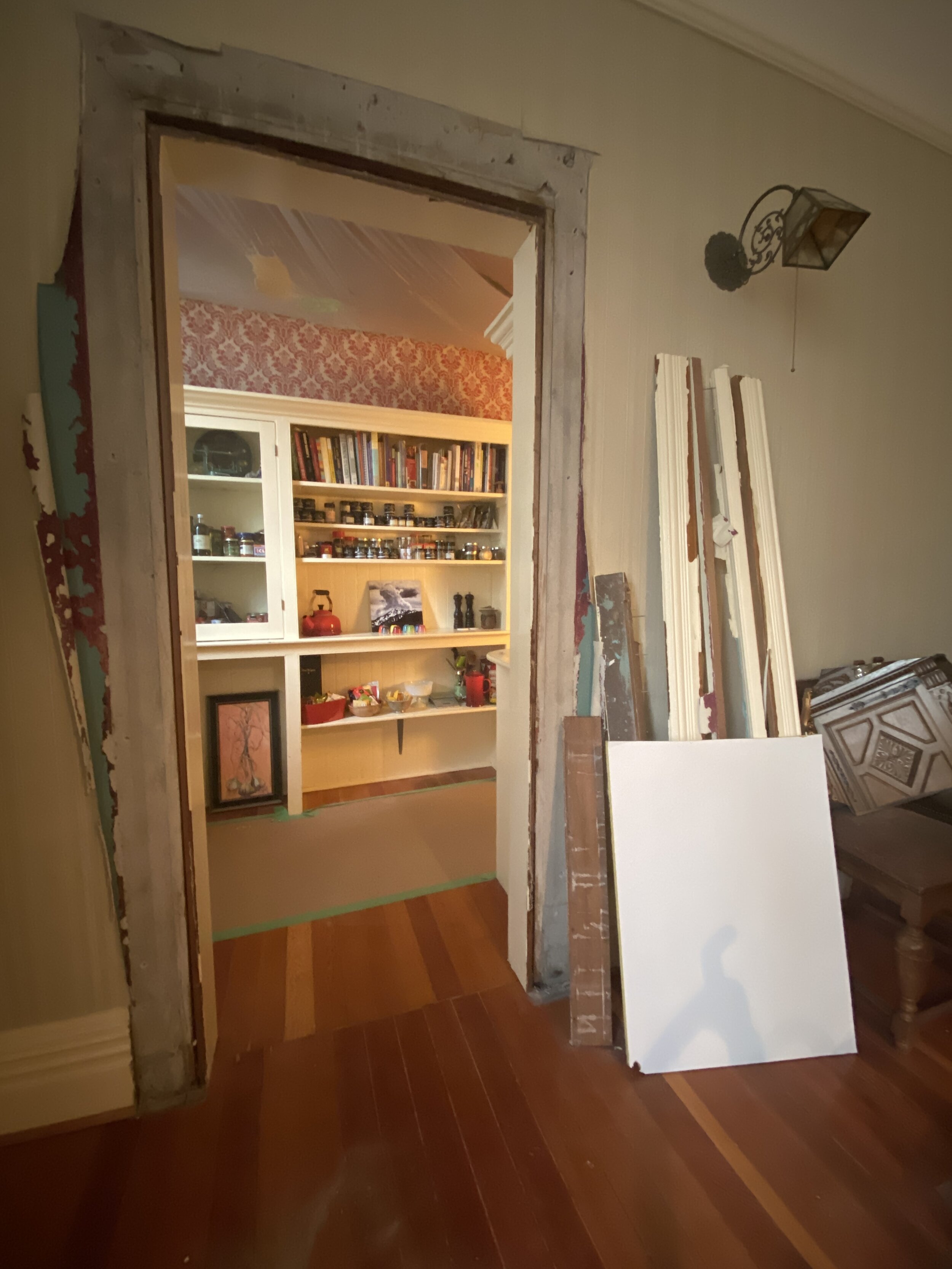
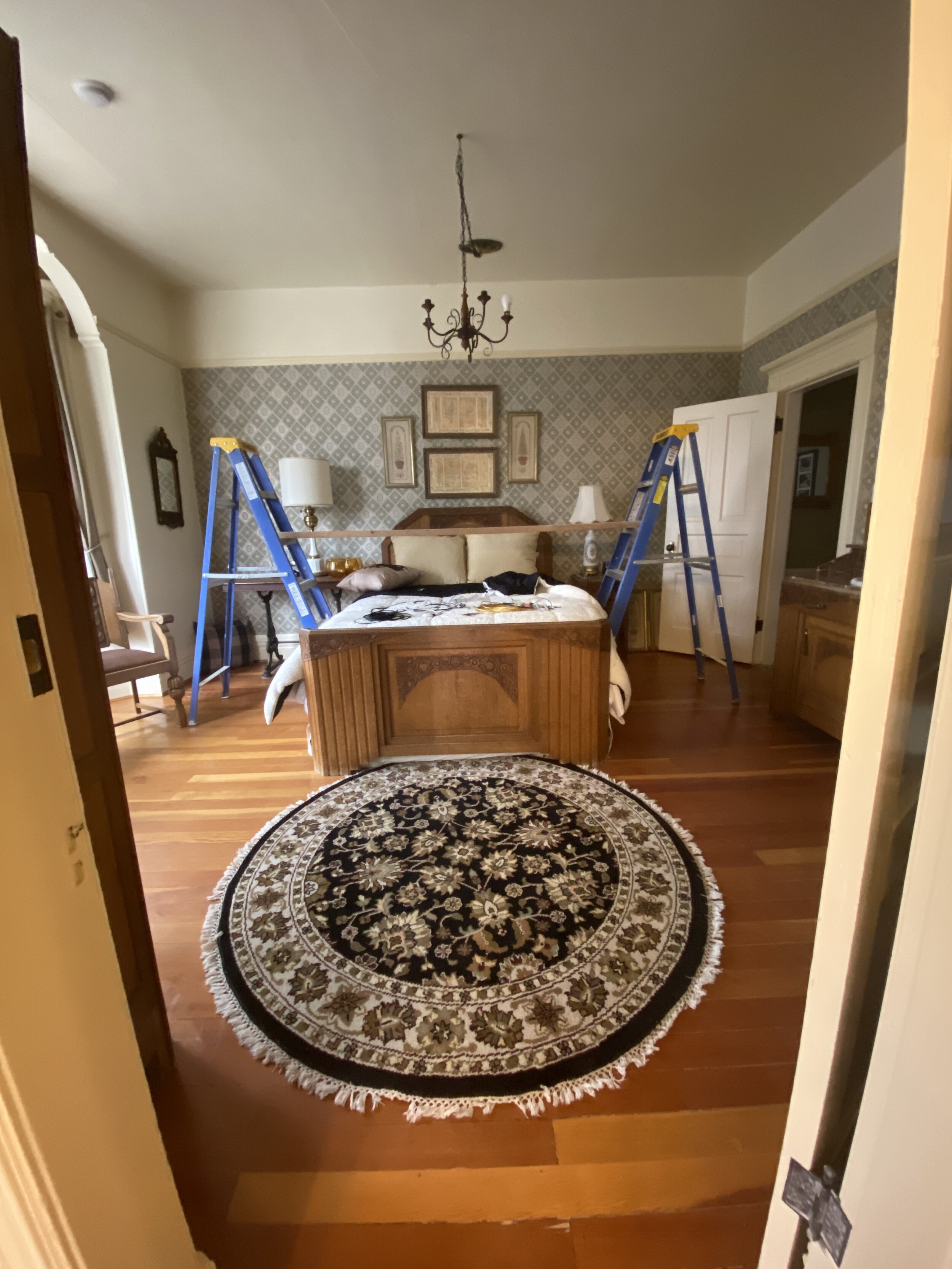
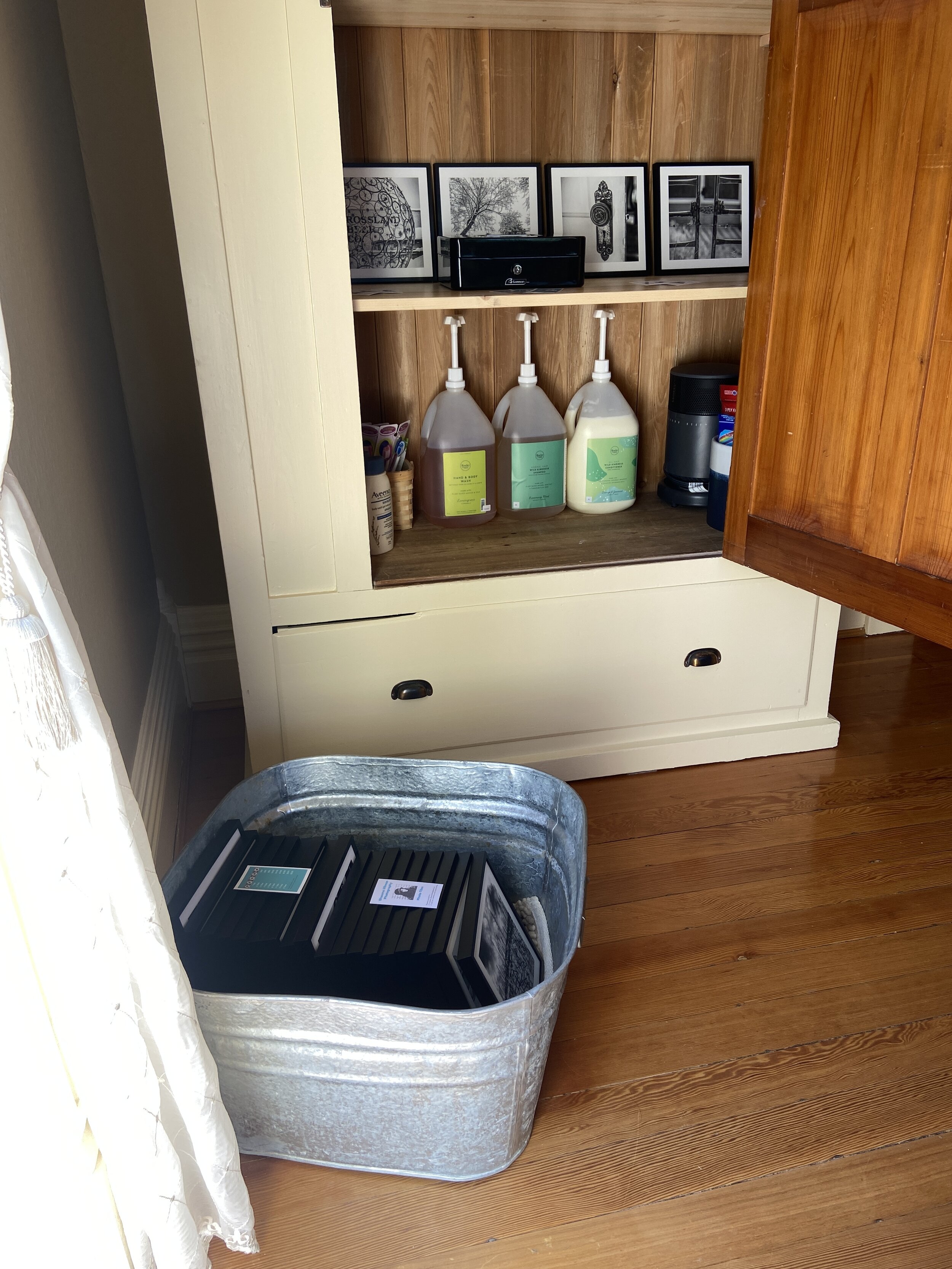
Some changes were planned: a guest laundry, better storage and a doorway separating the guest and owners’ spaces. Others appeared as soon as walls were opened or old finishes were removed.
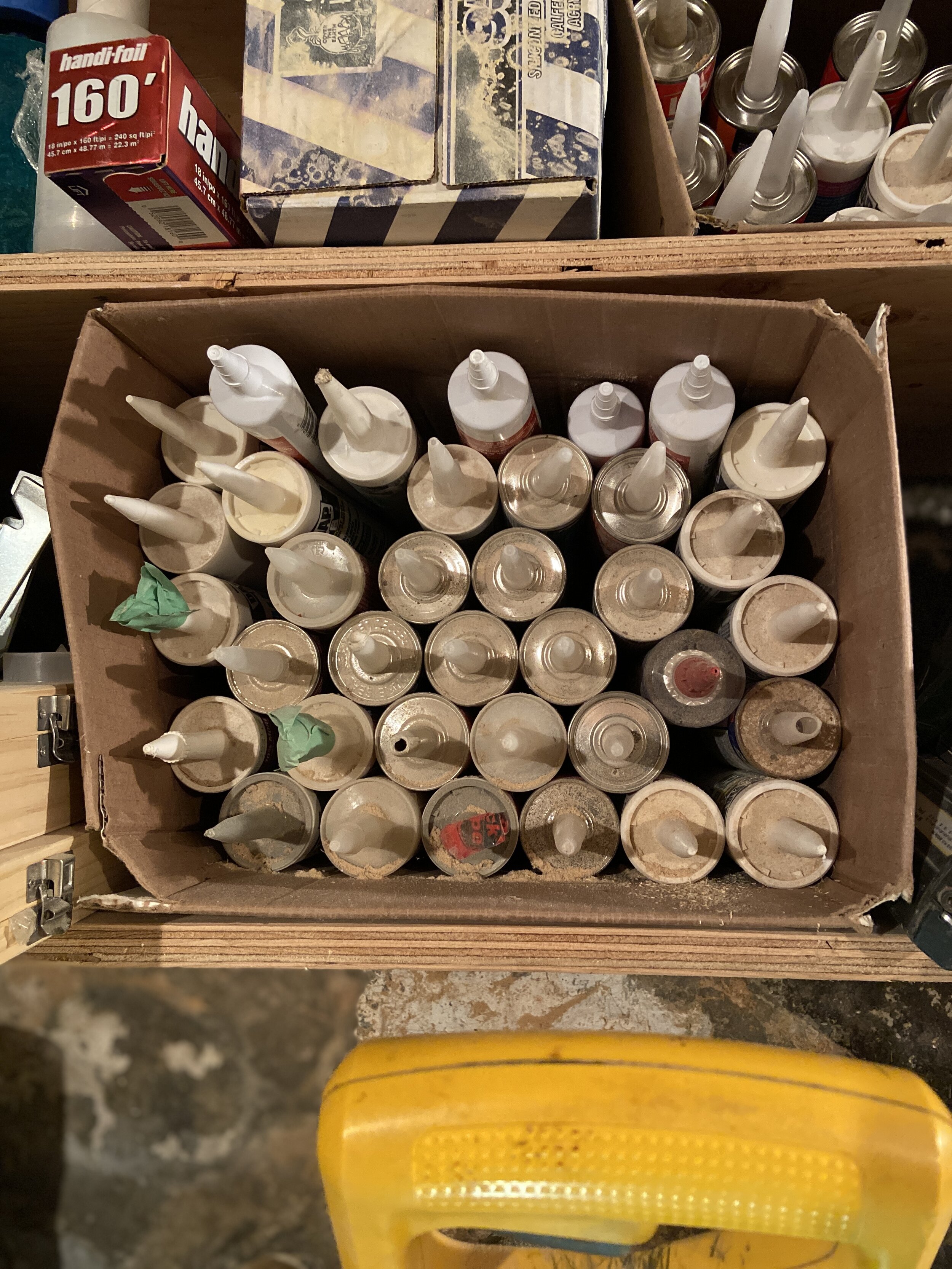
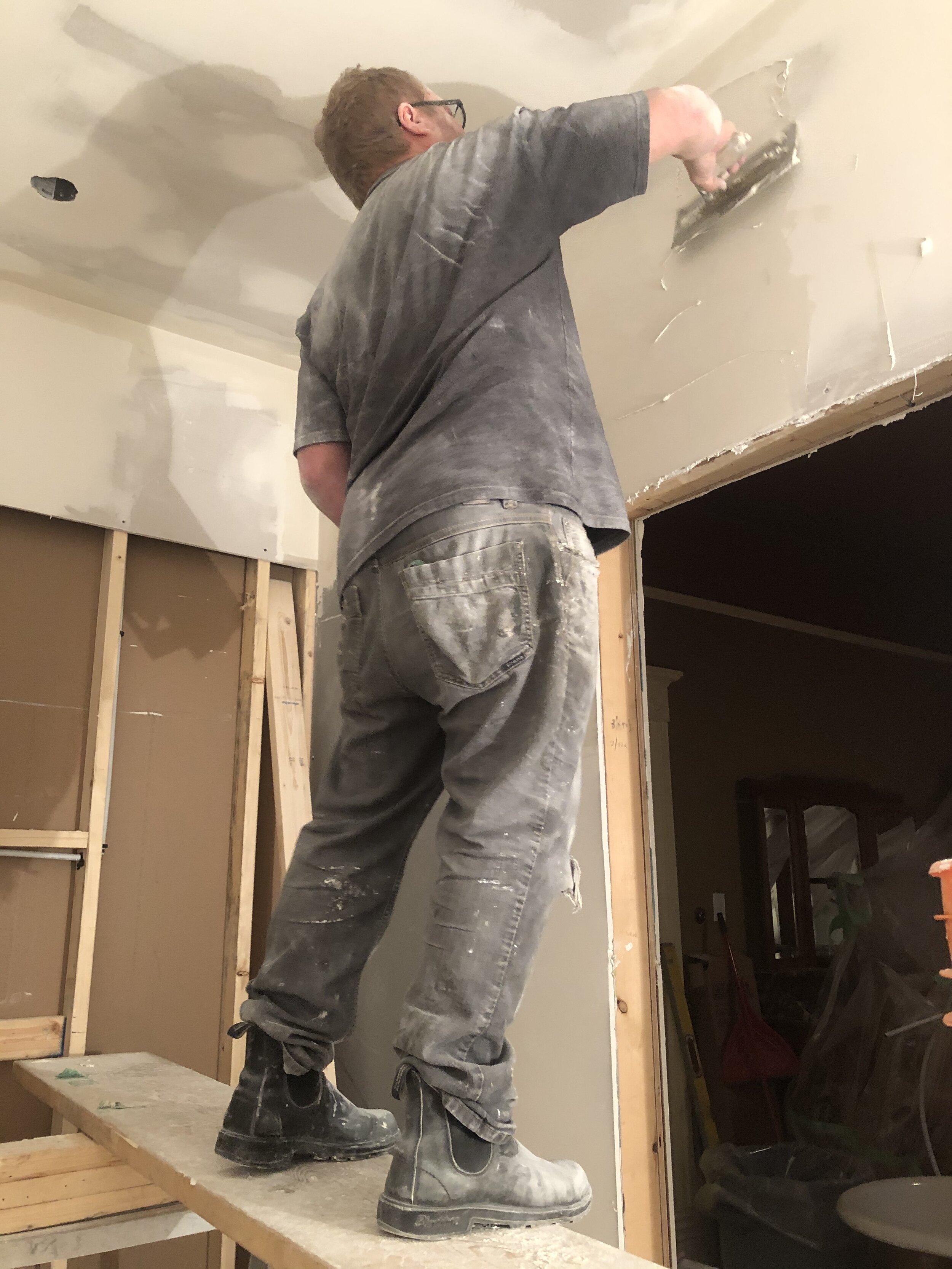
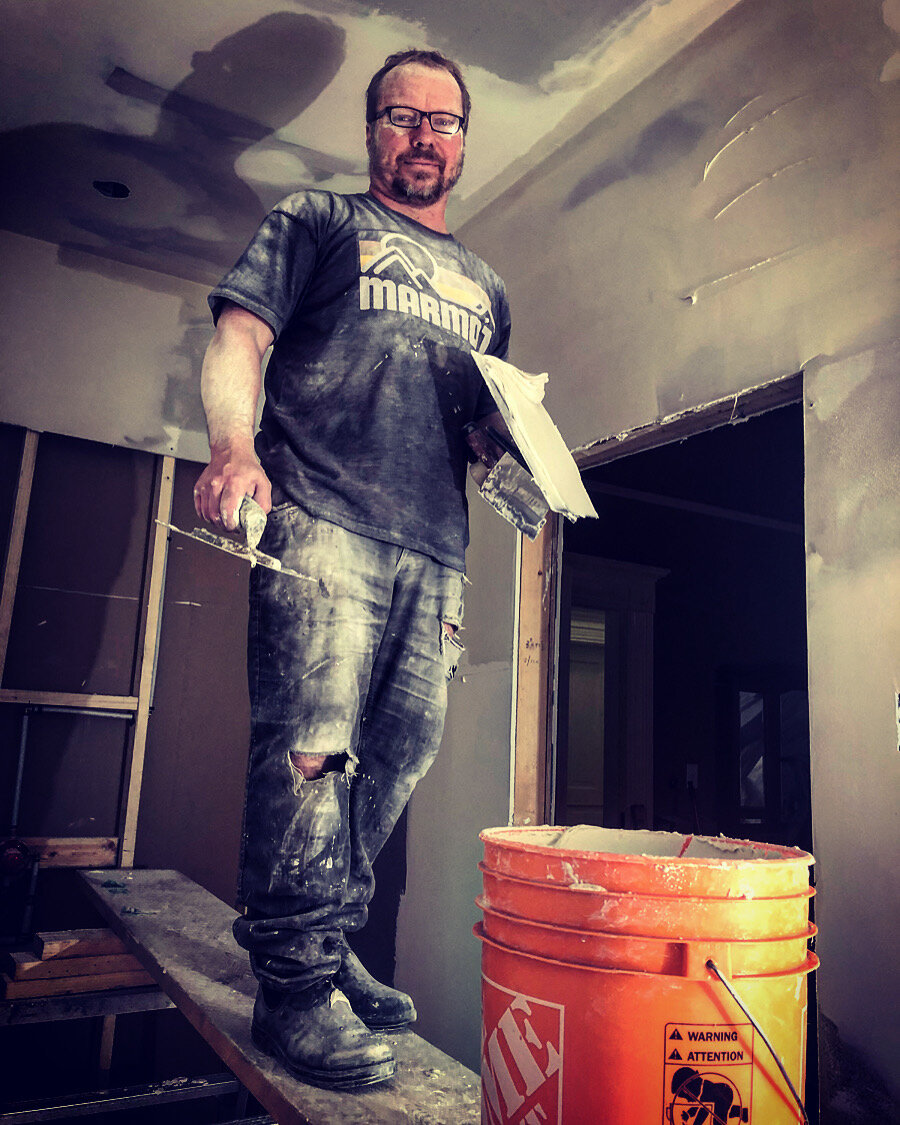
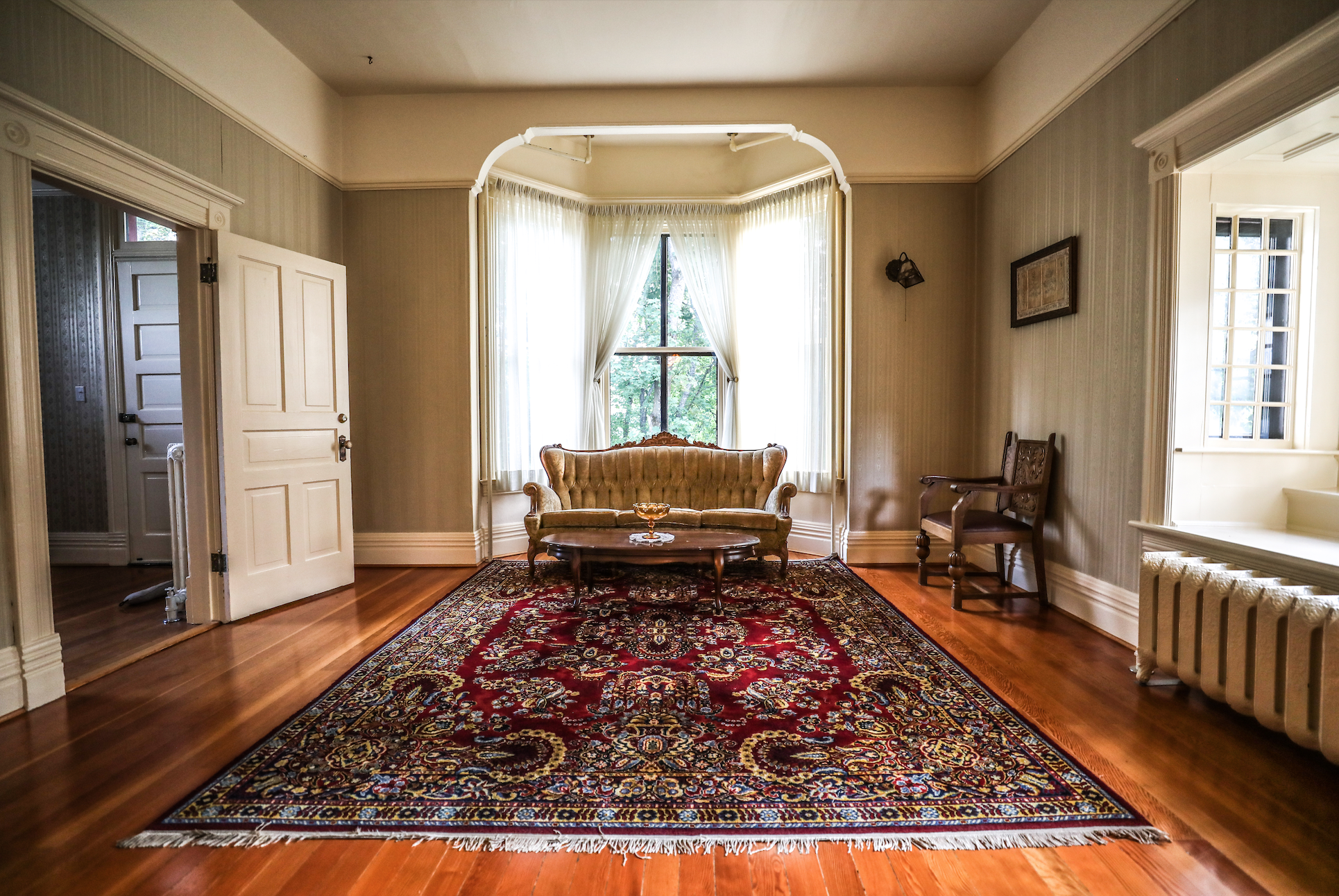
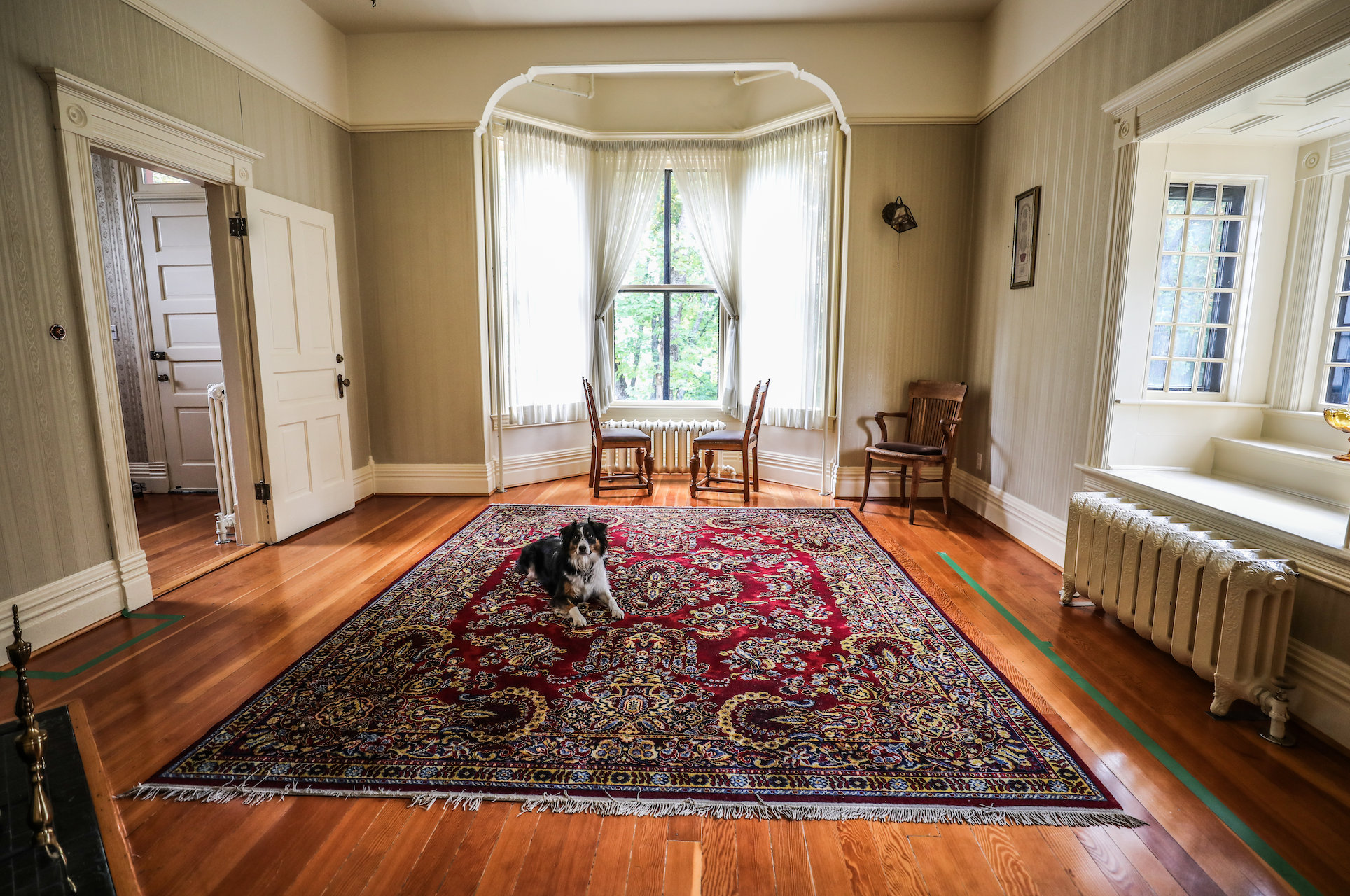
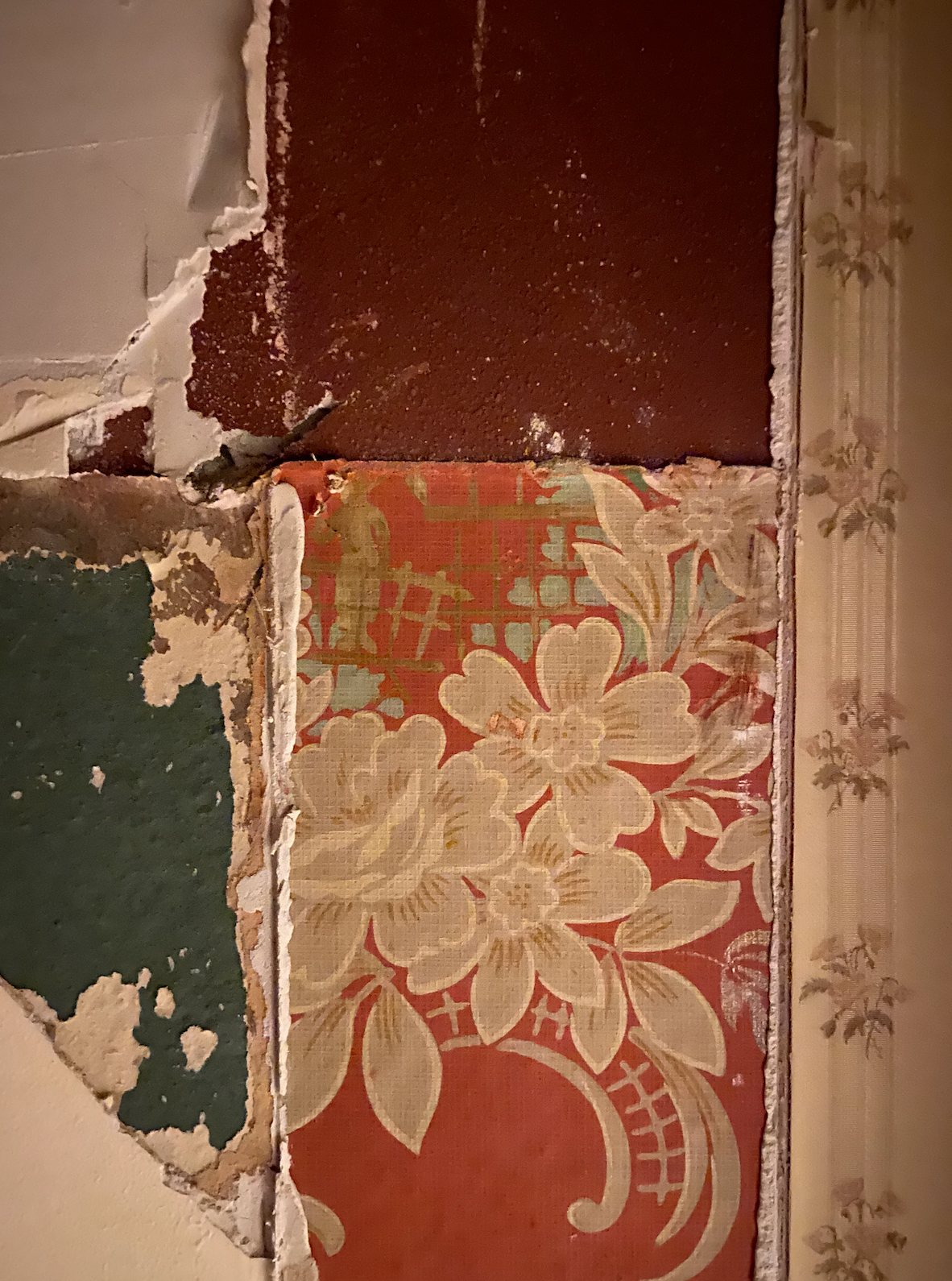
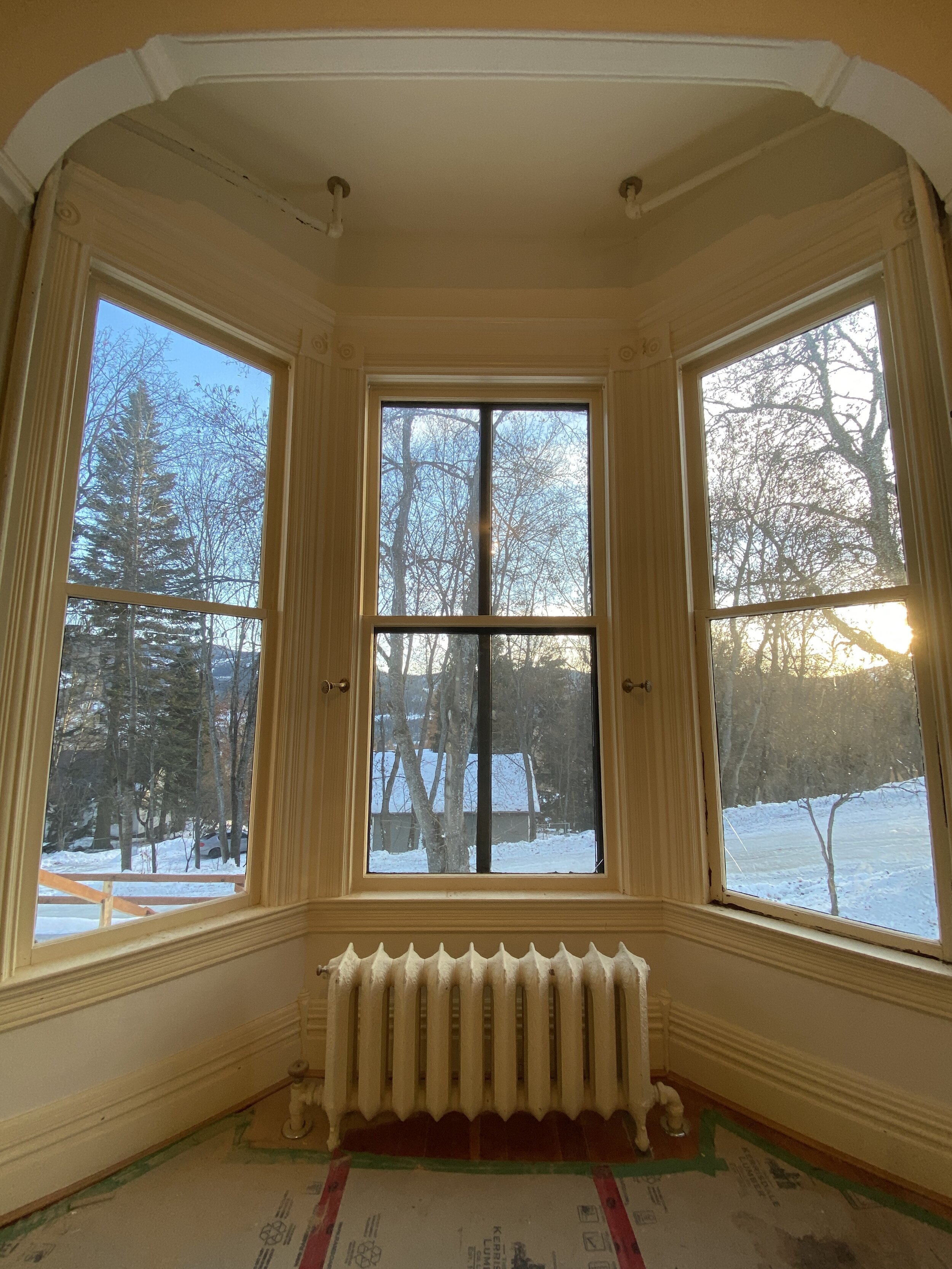
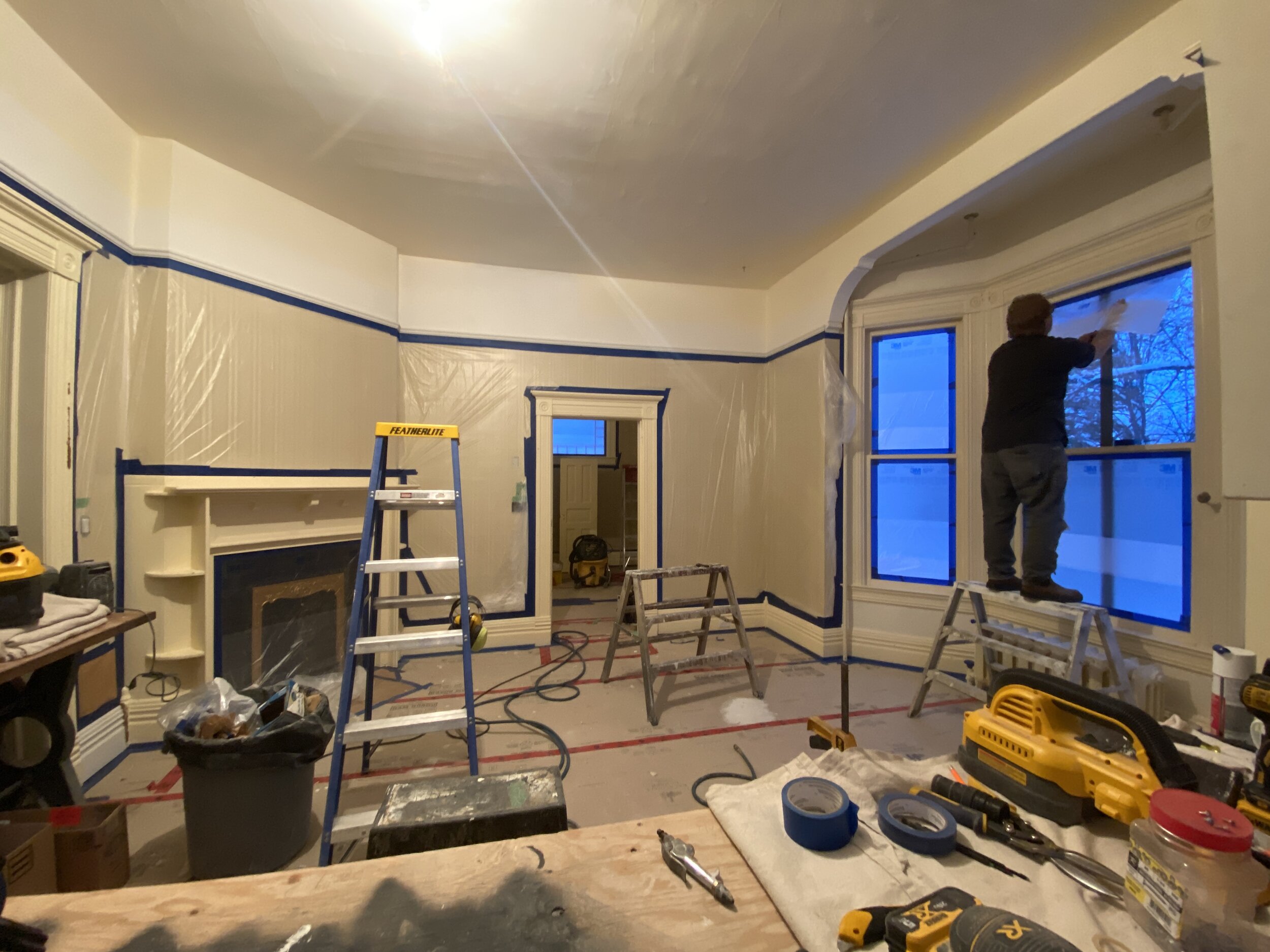
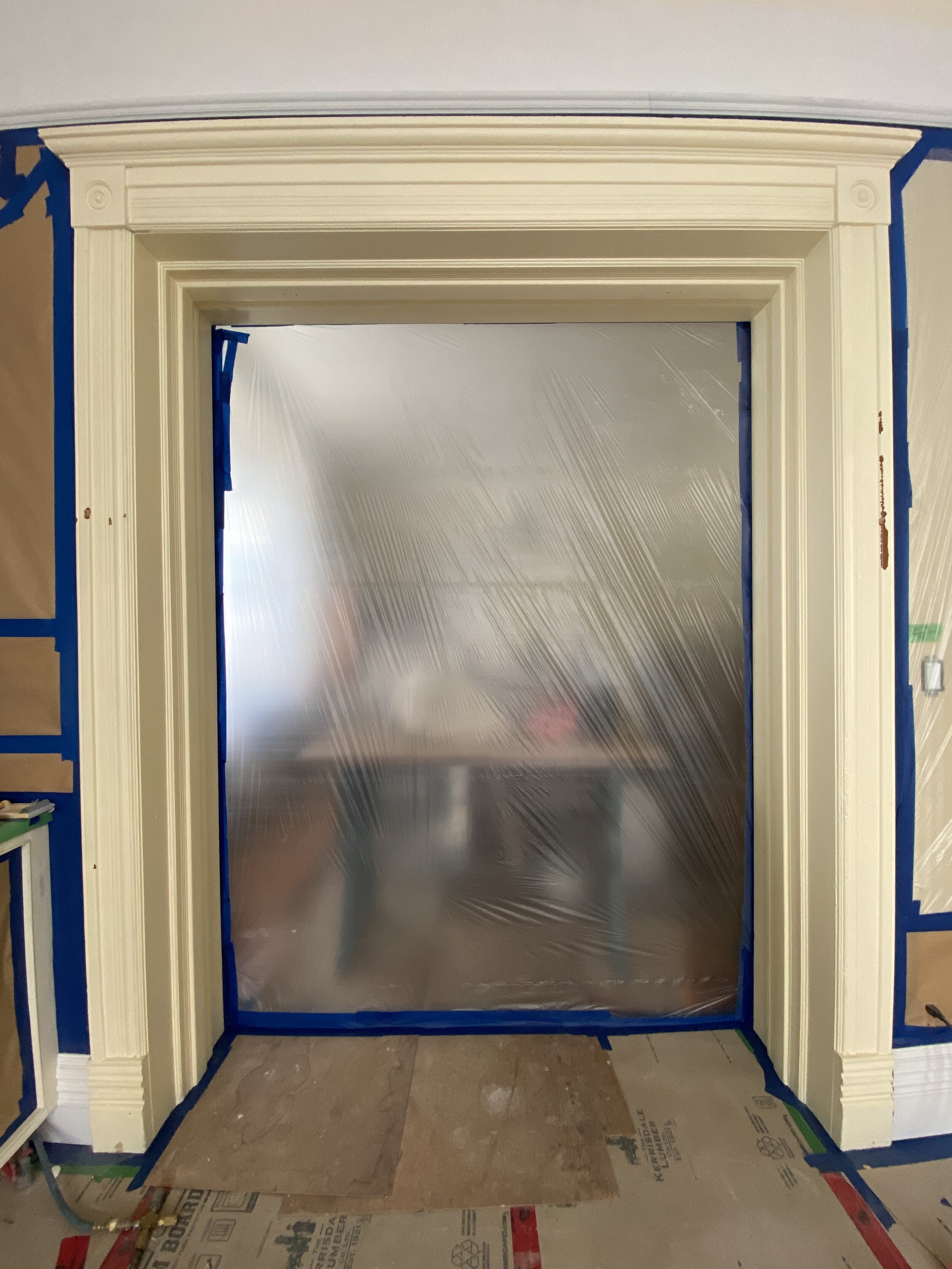
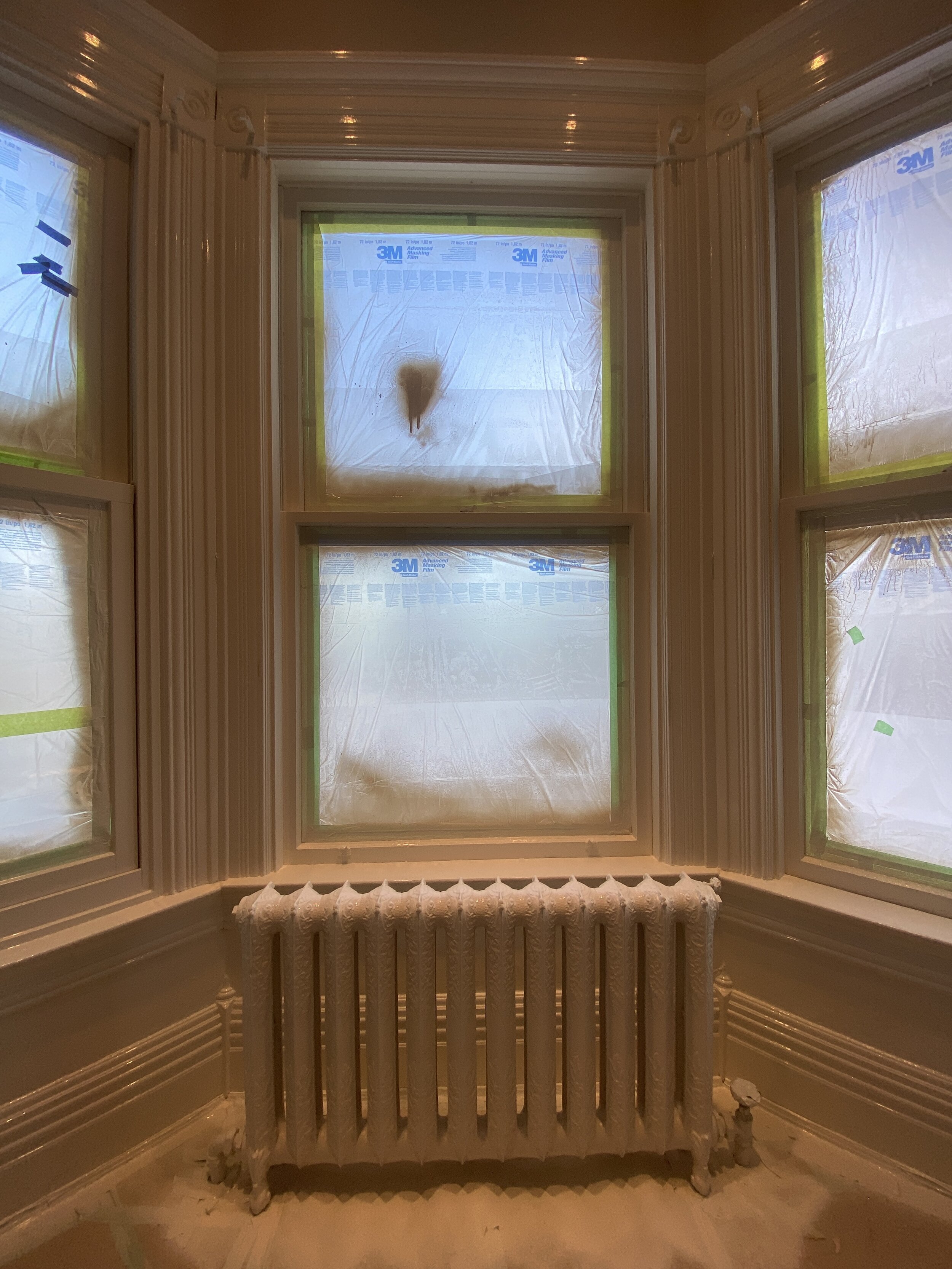
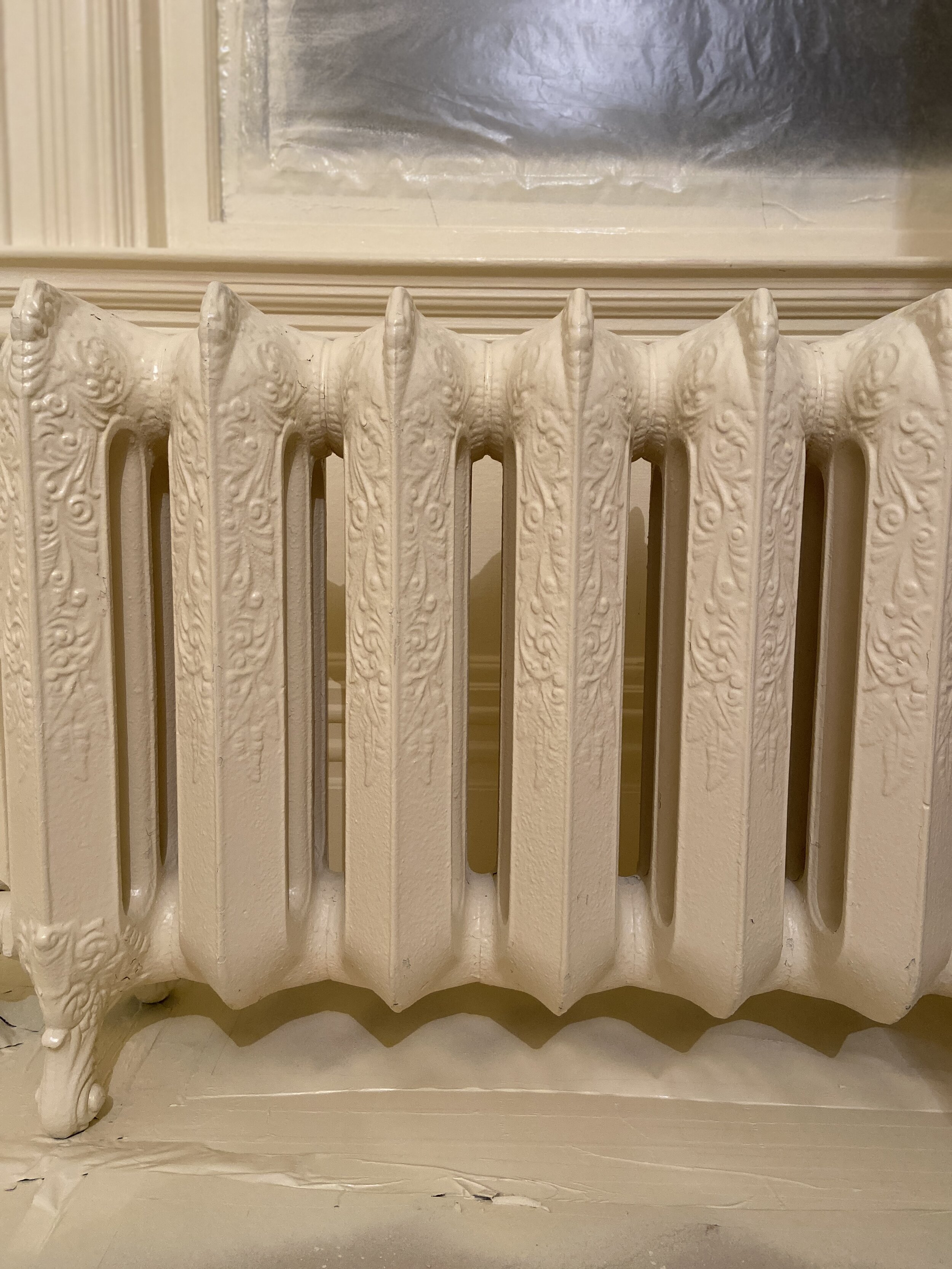
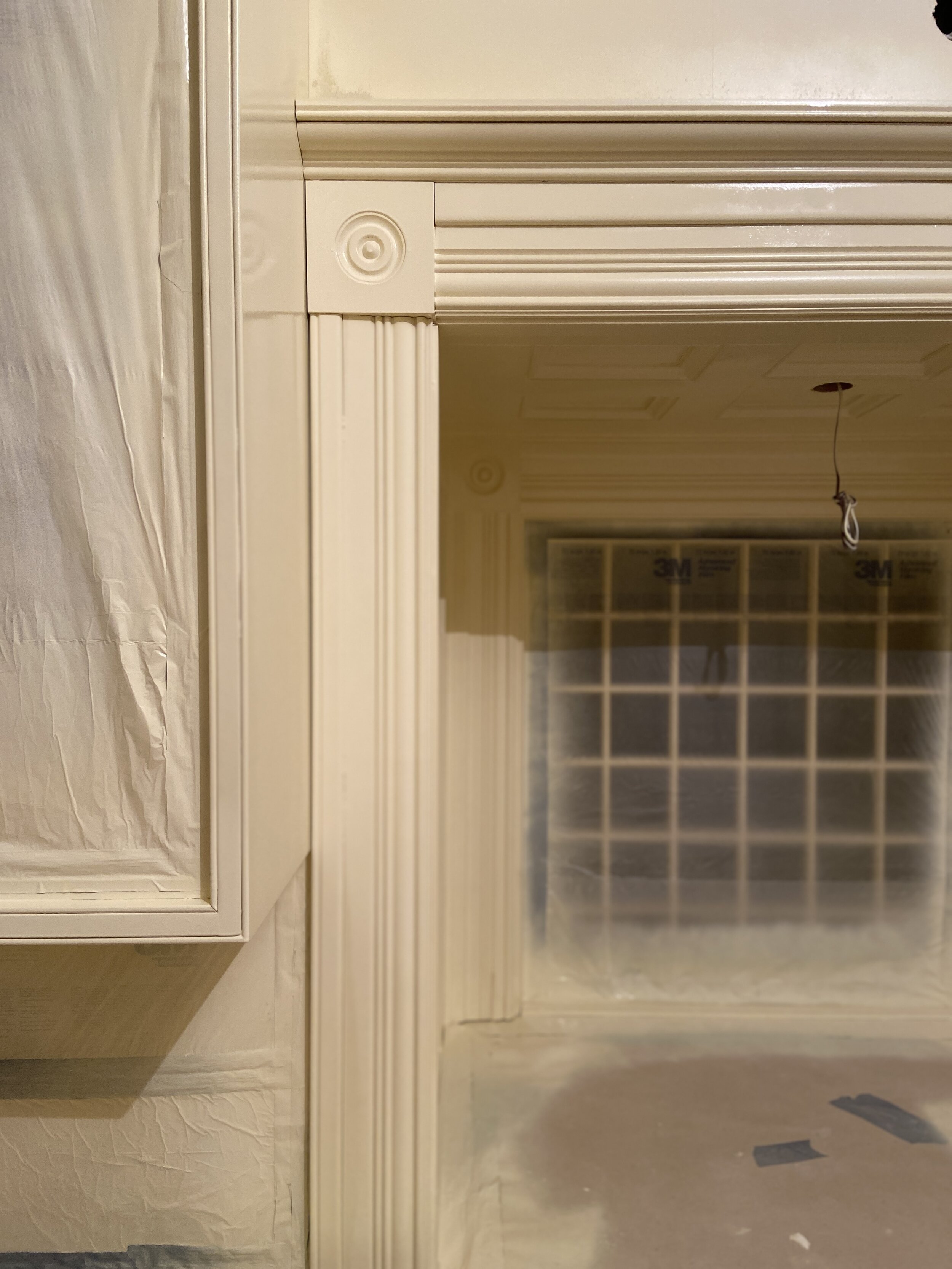
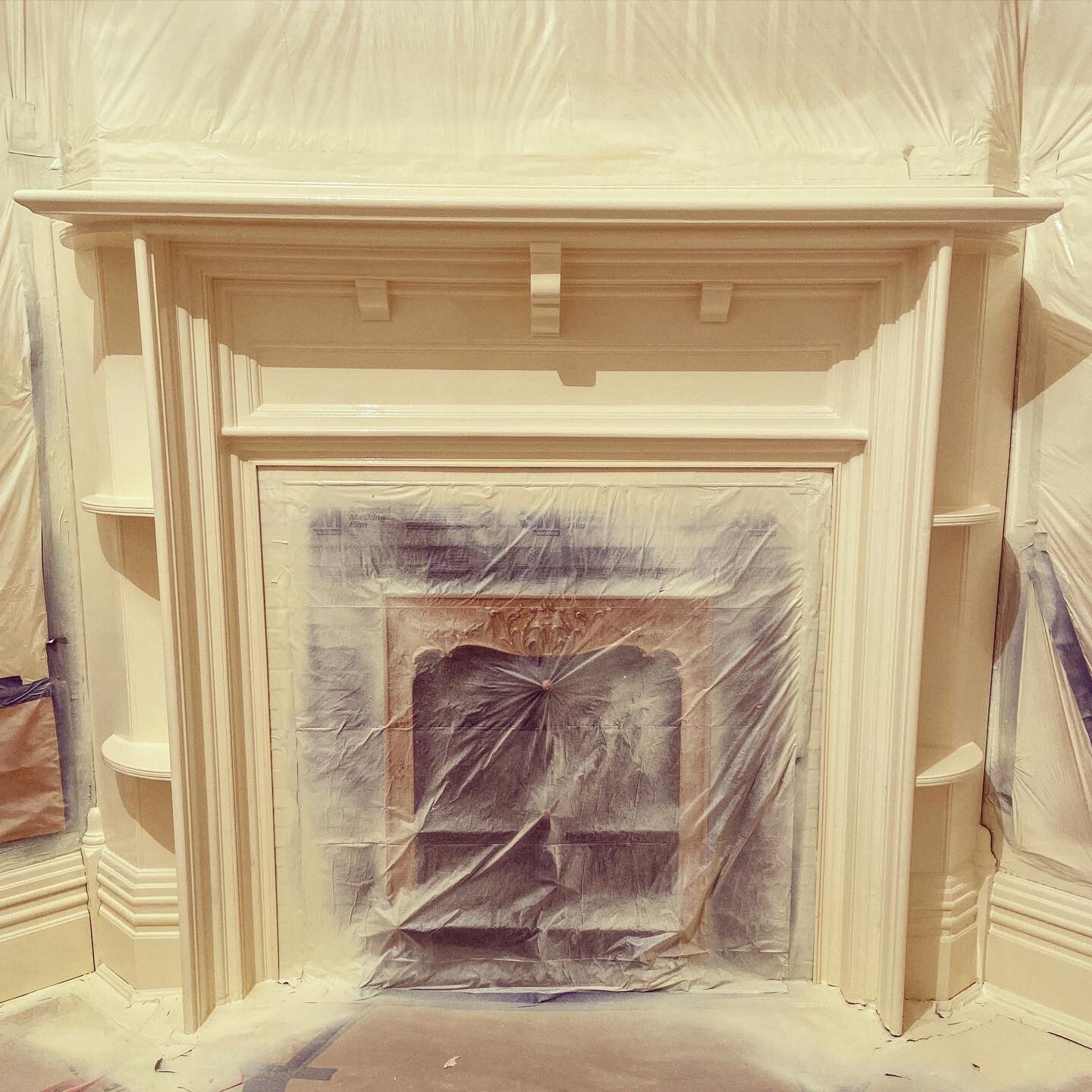
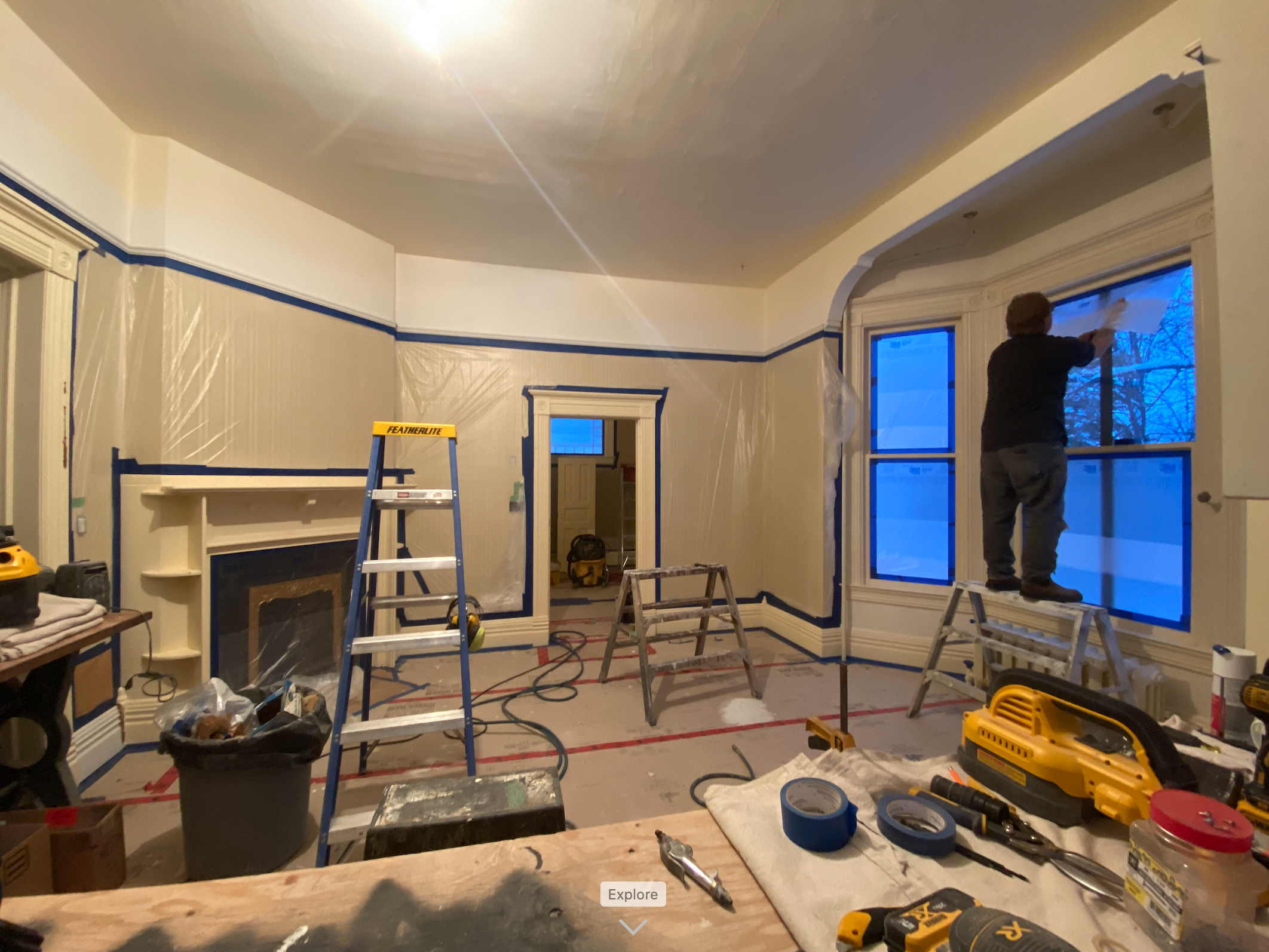
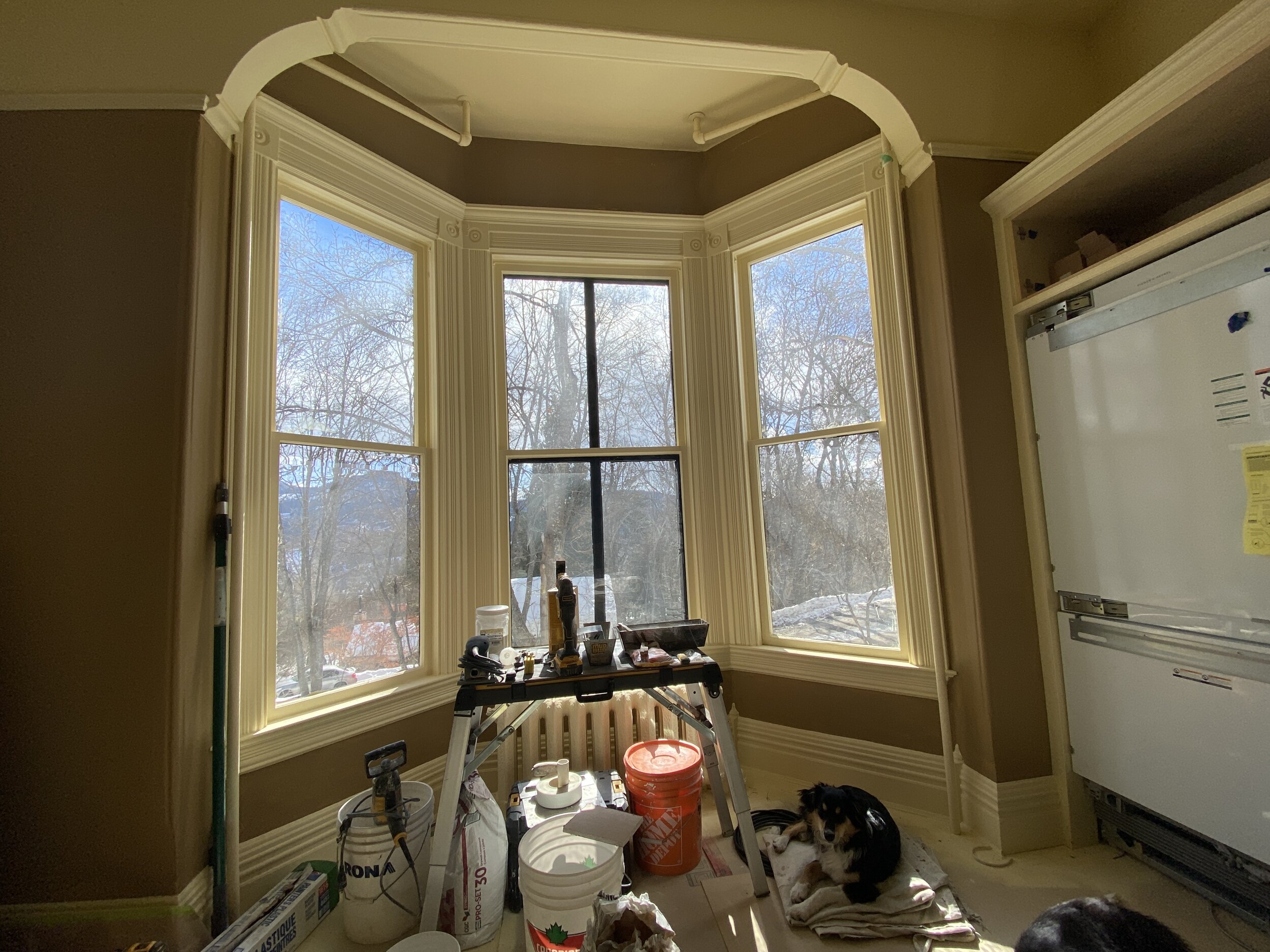
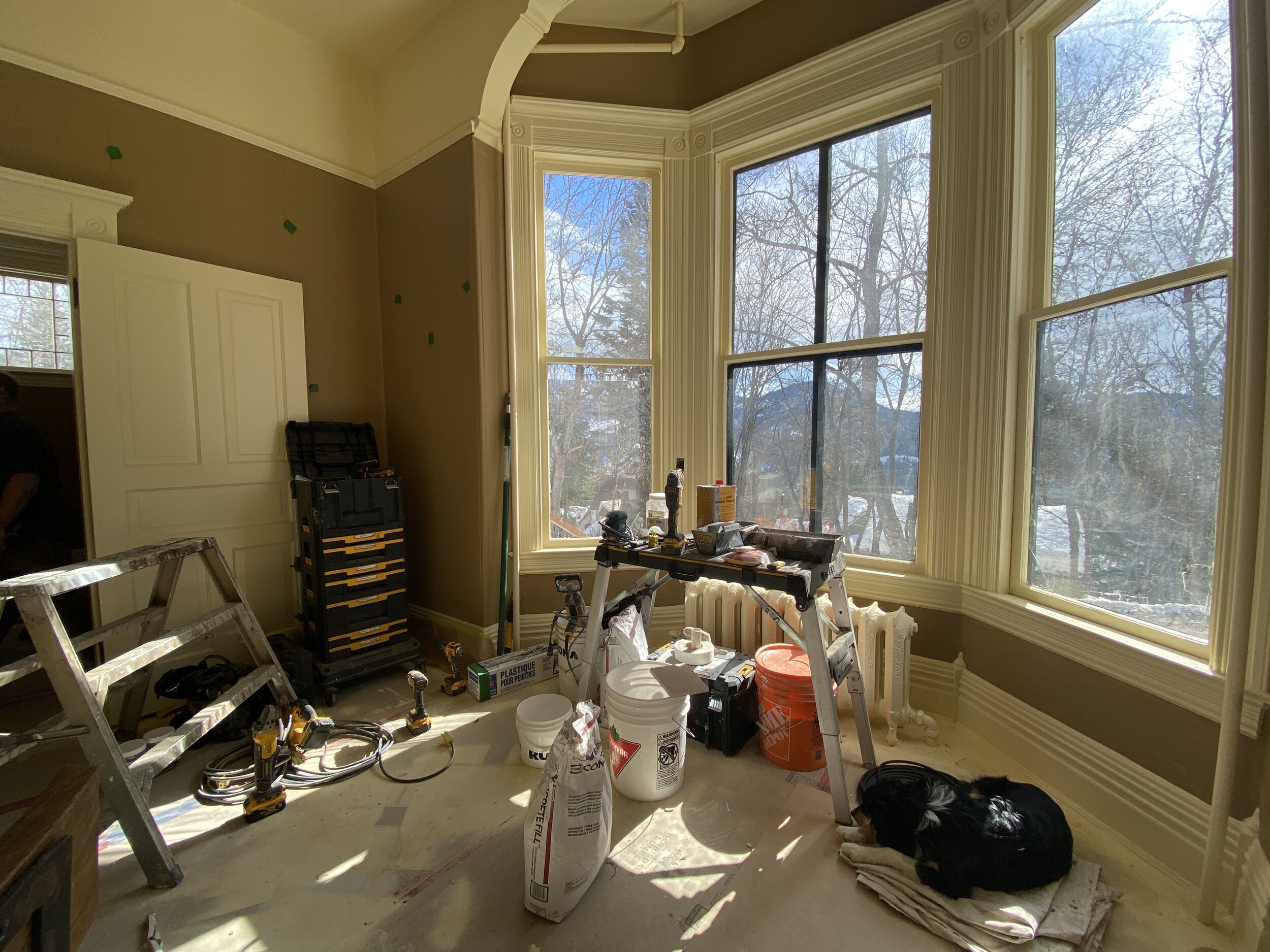
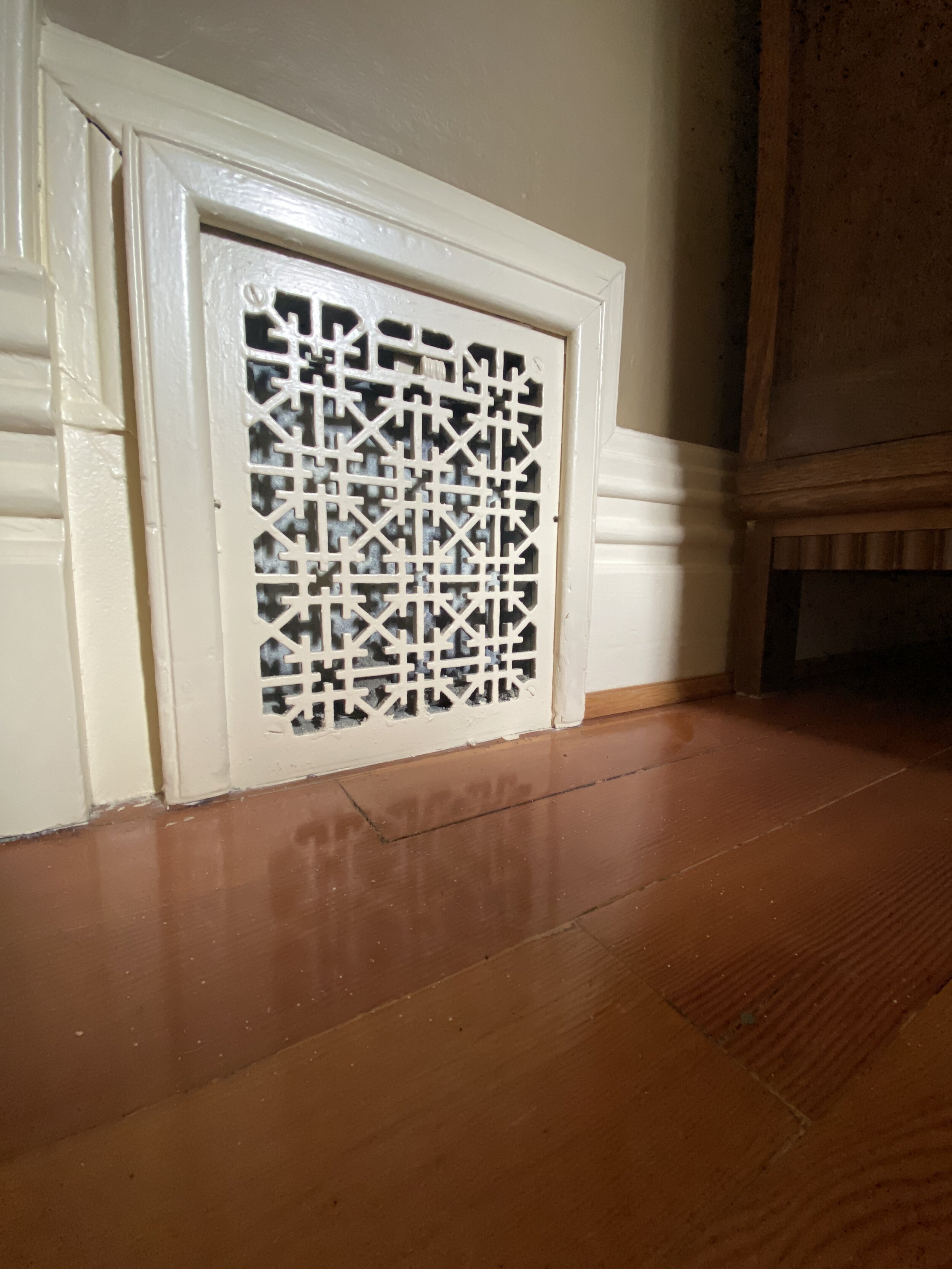
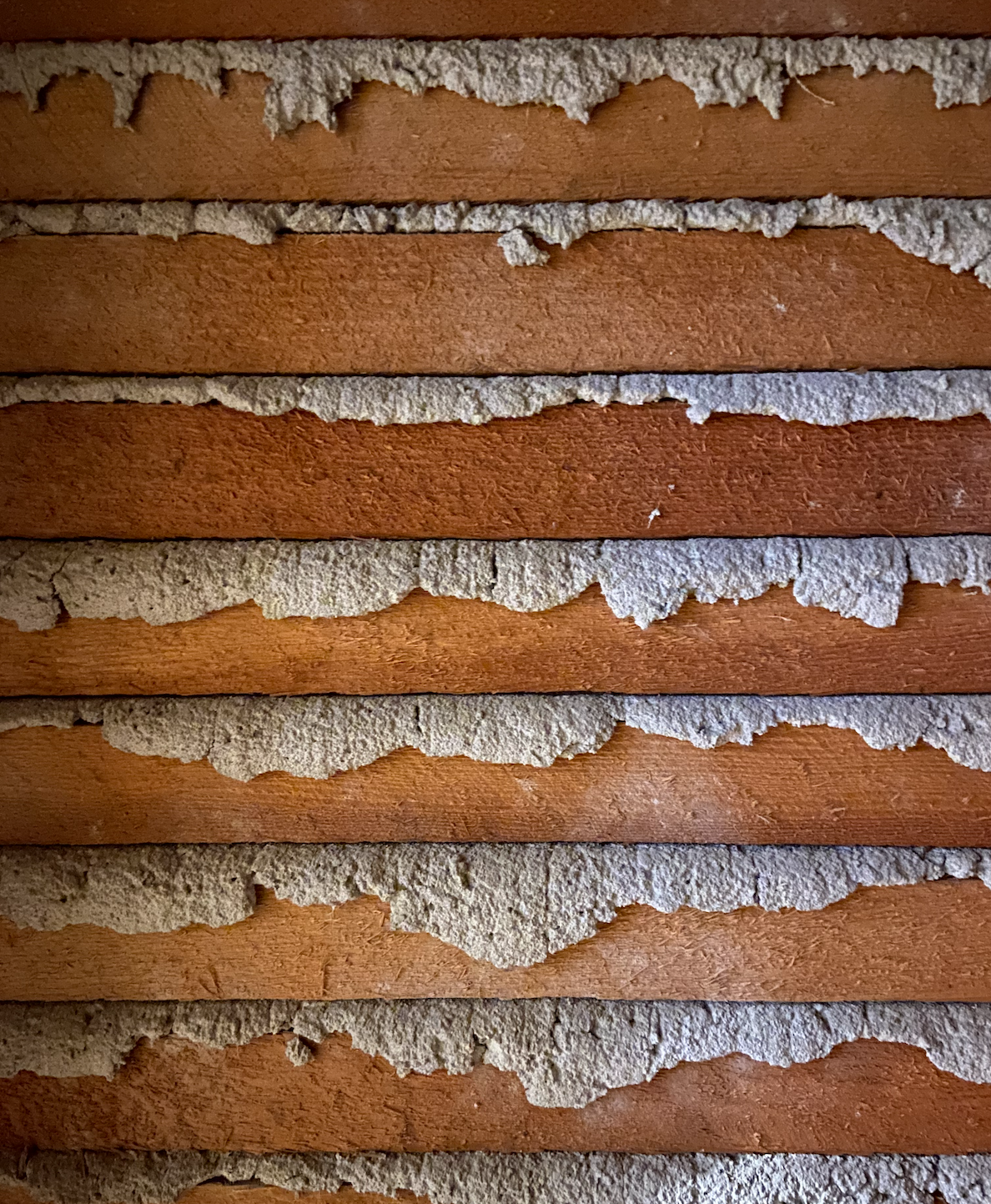
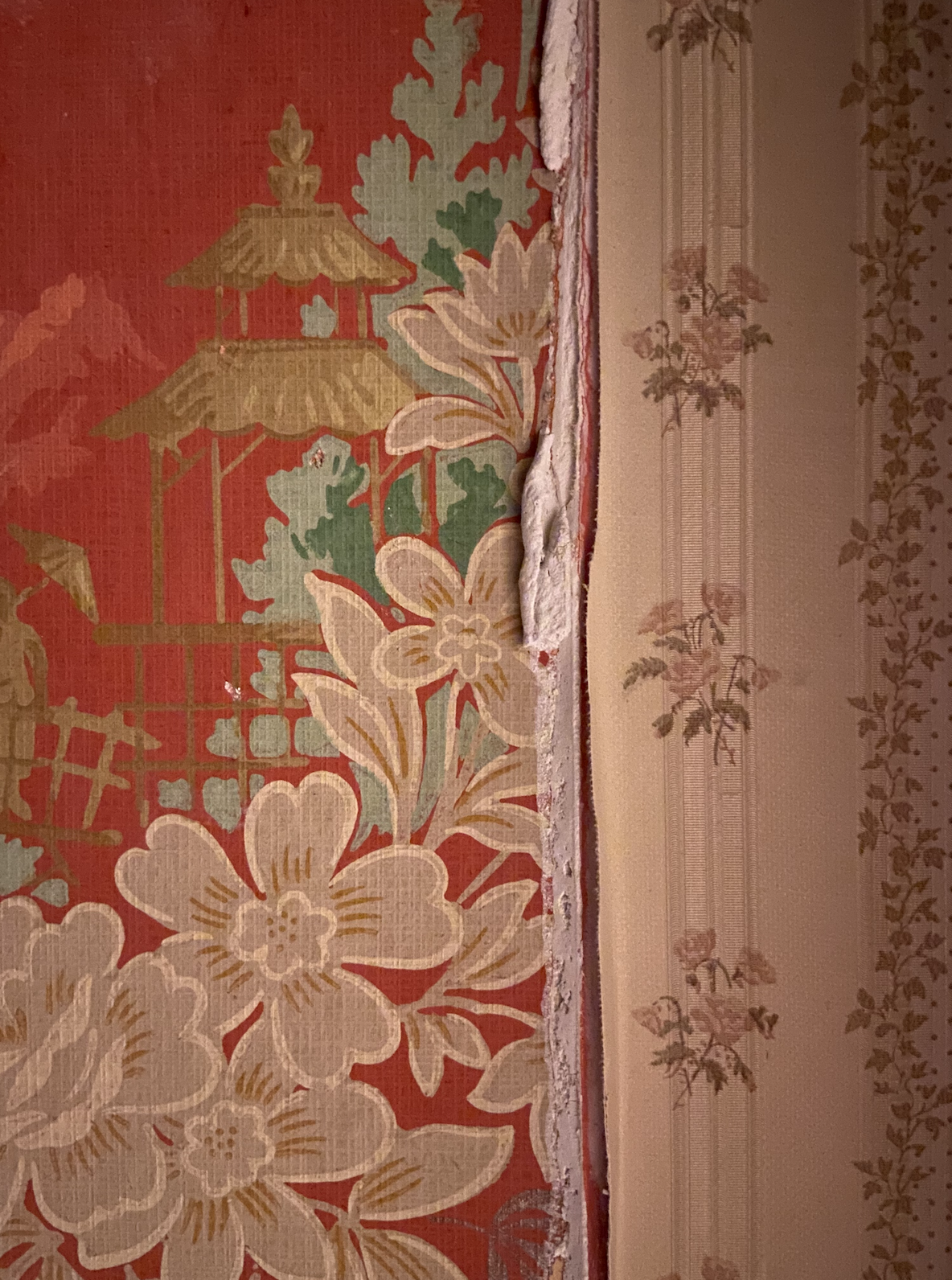
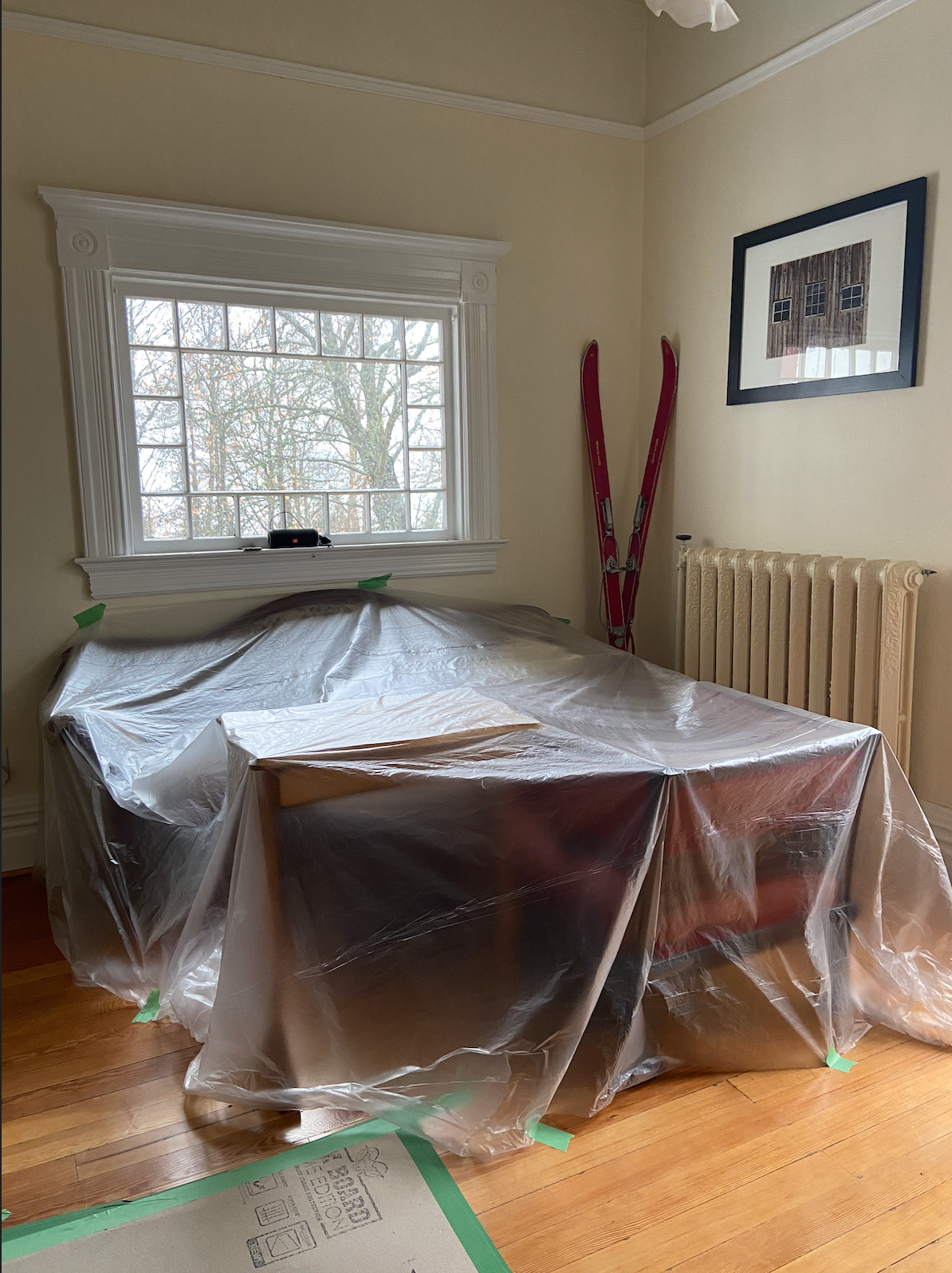
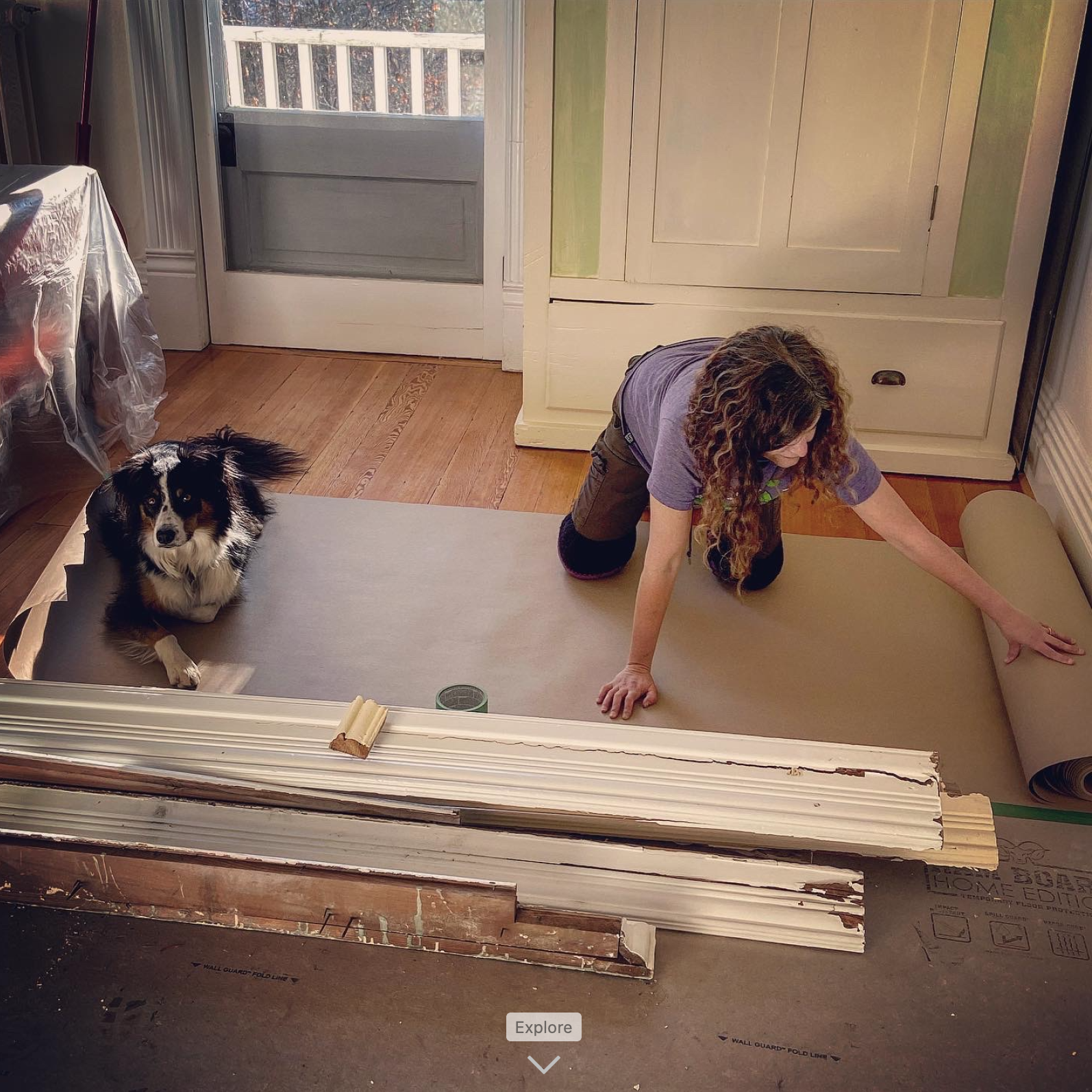
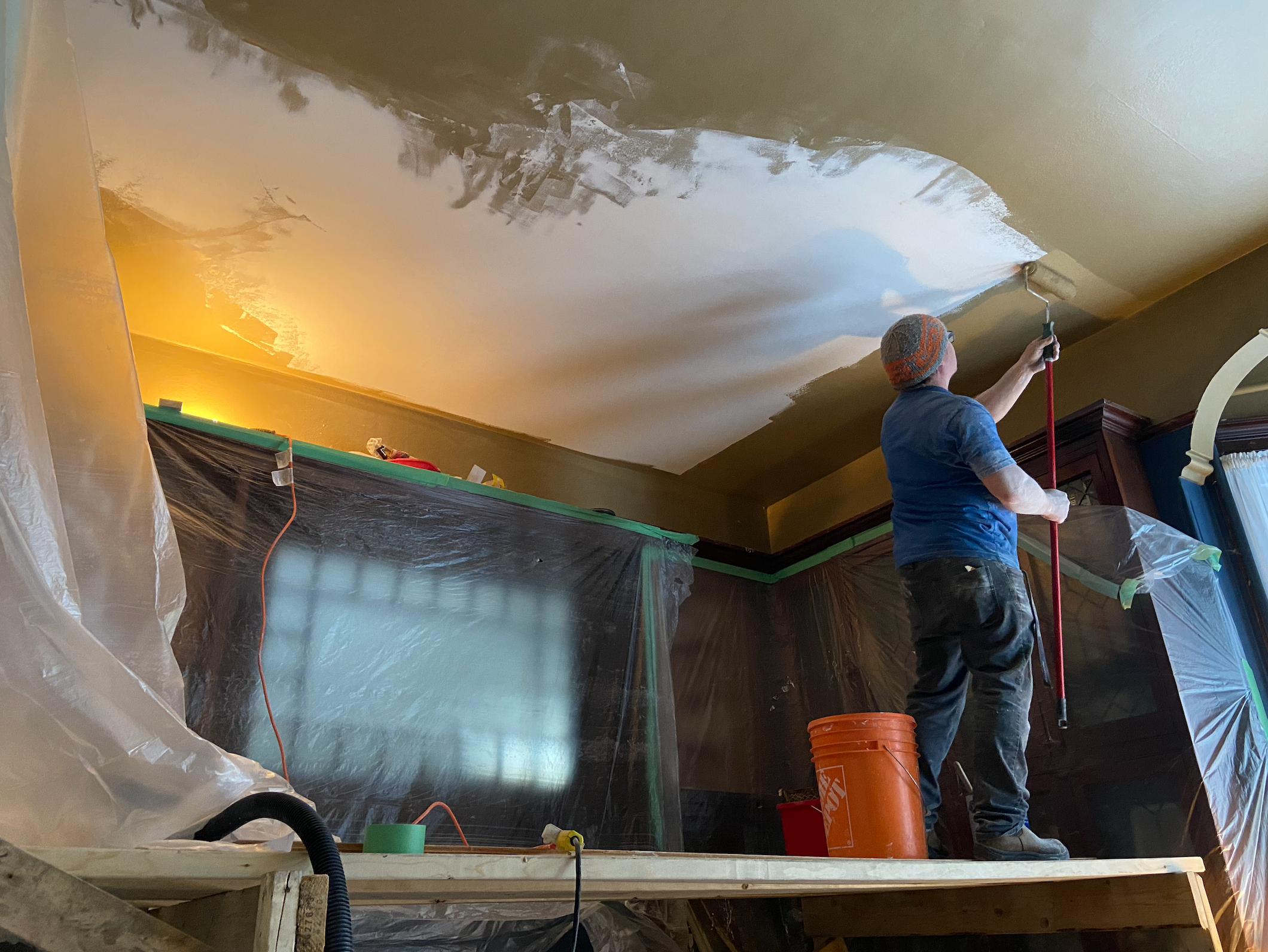
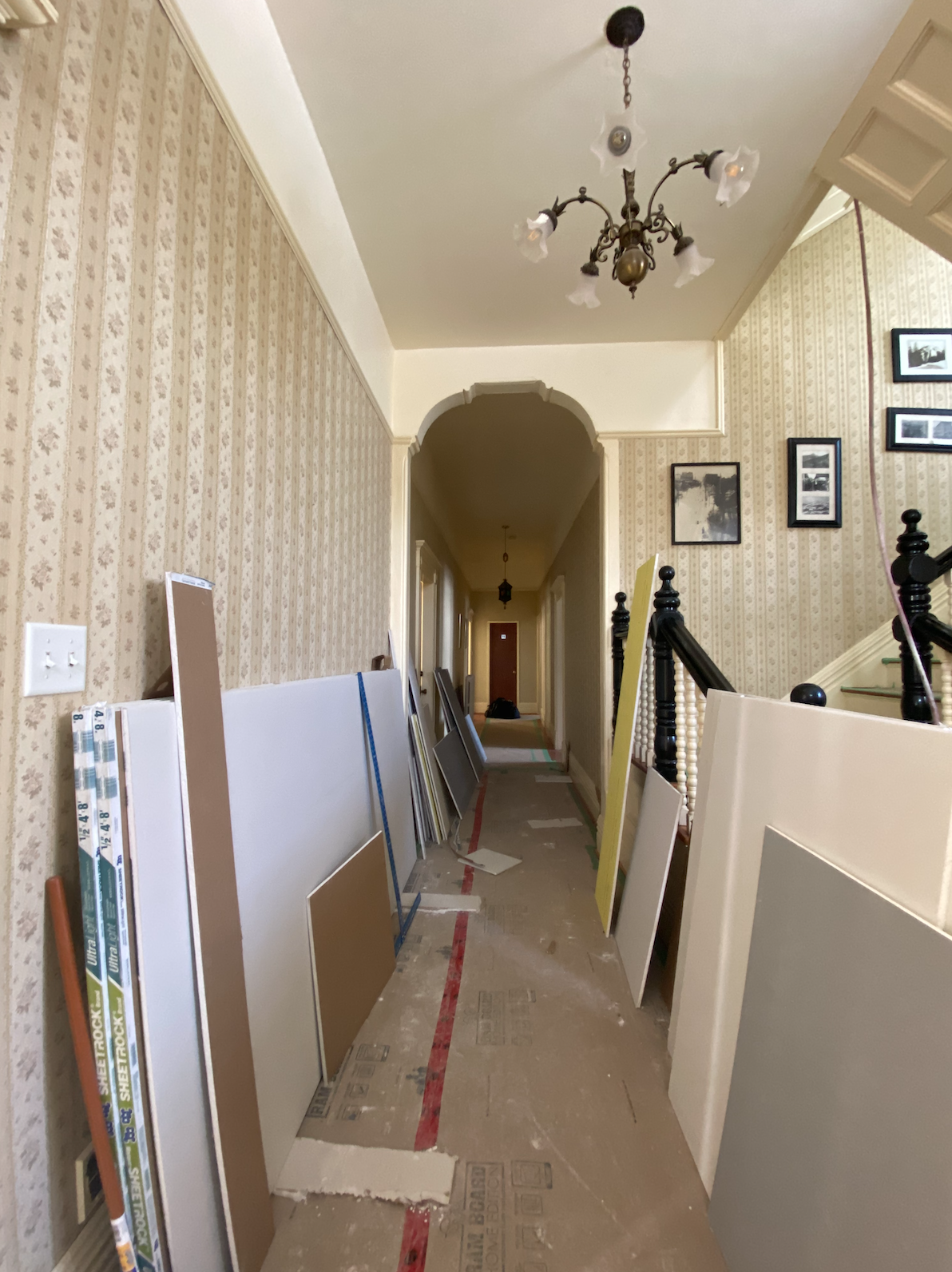
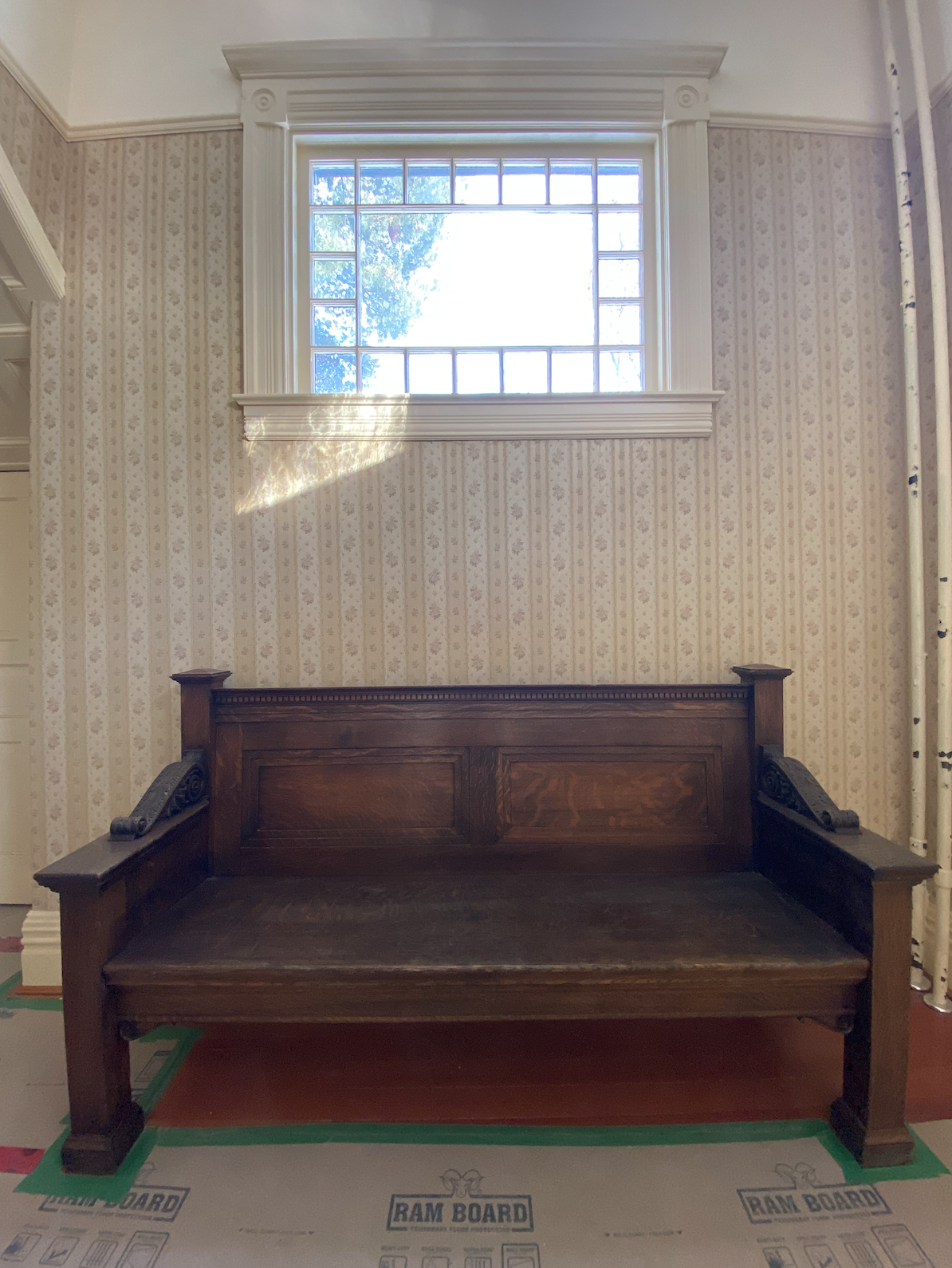
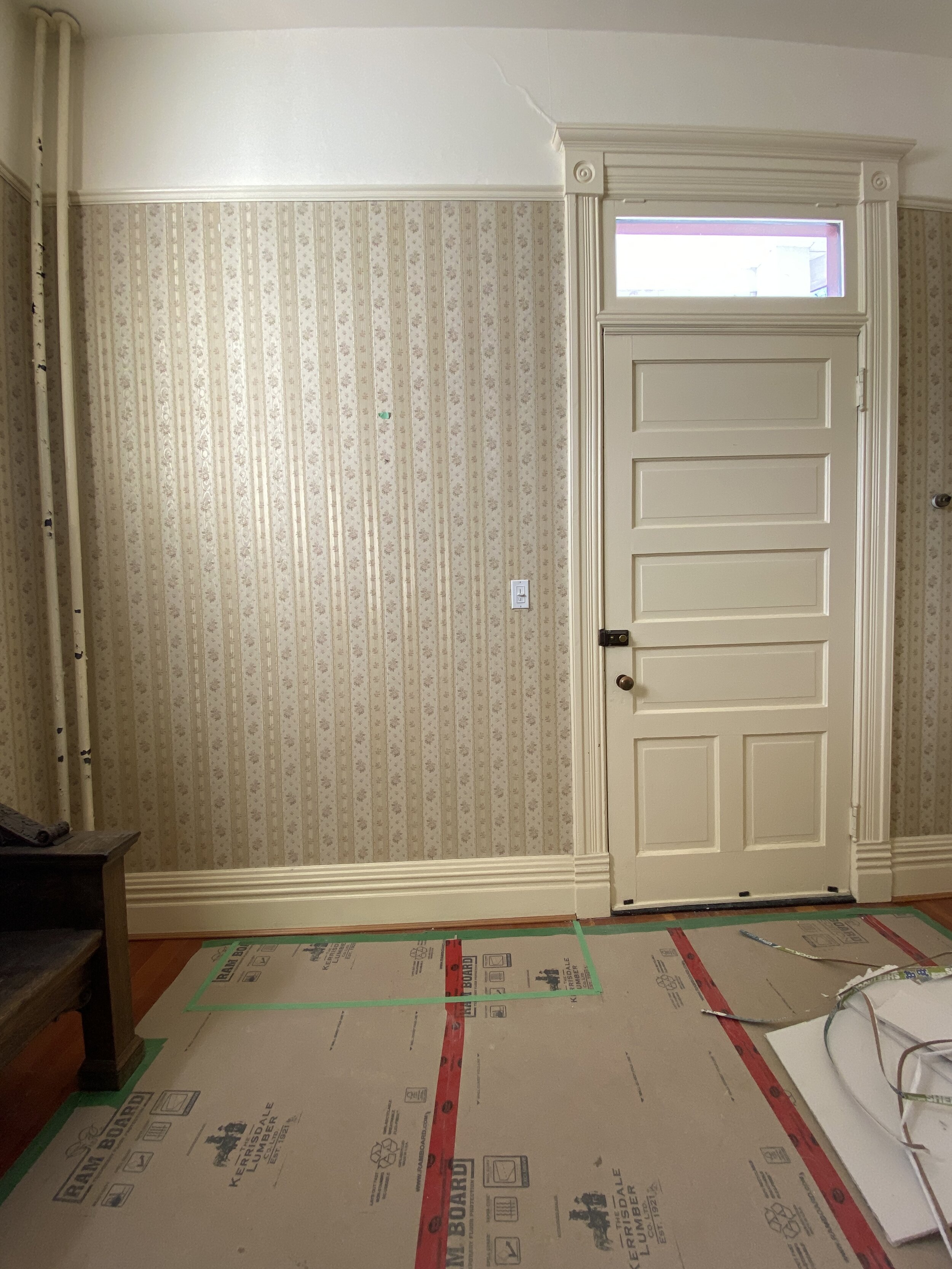
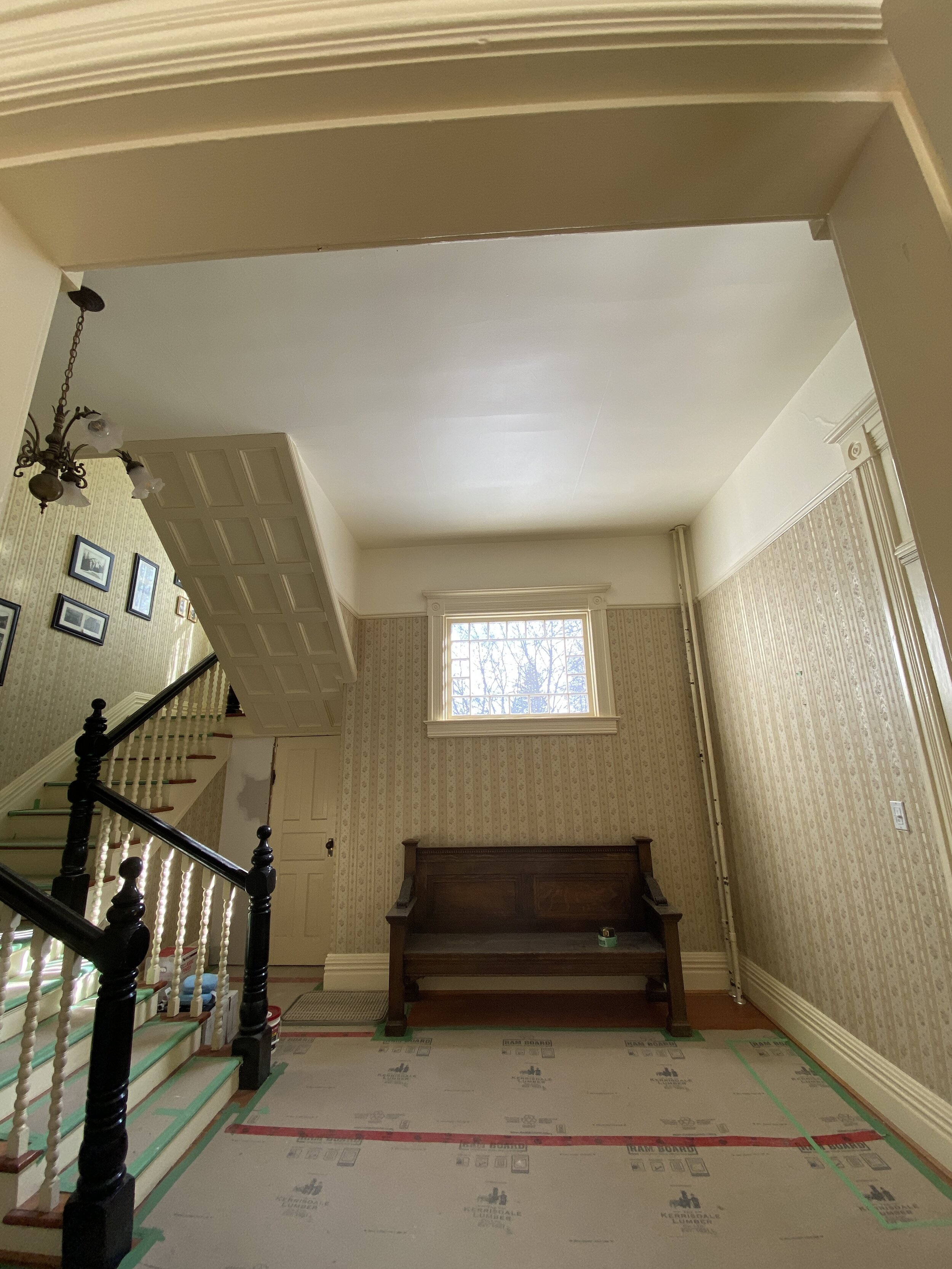
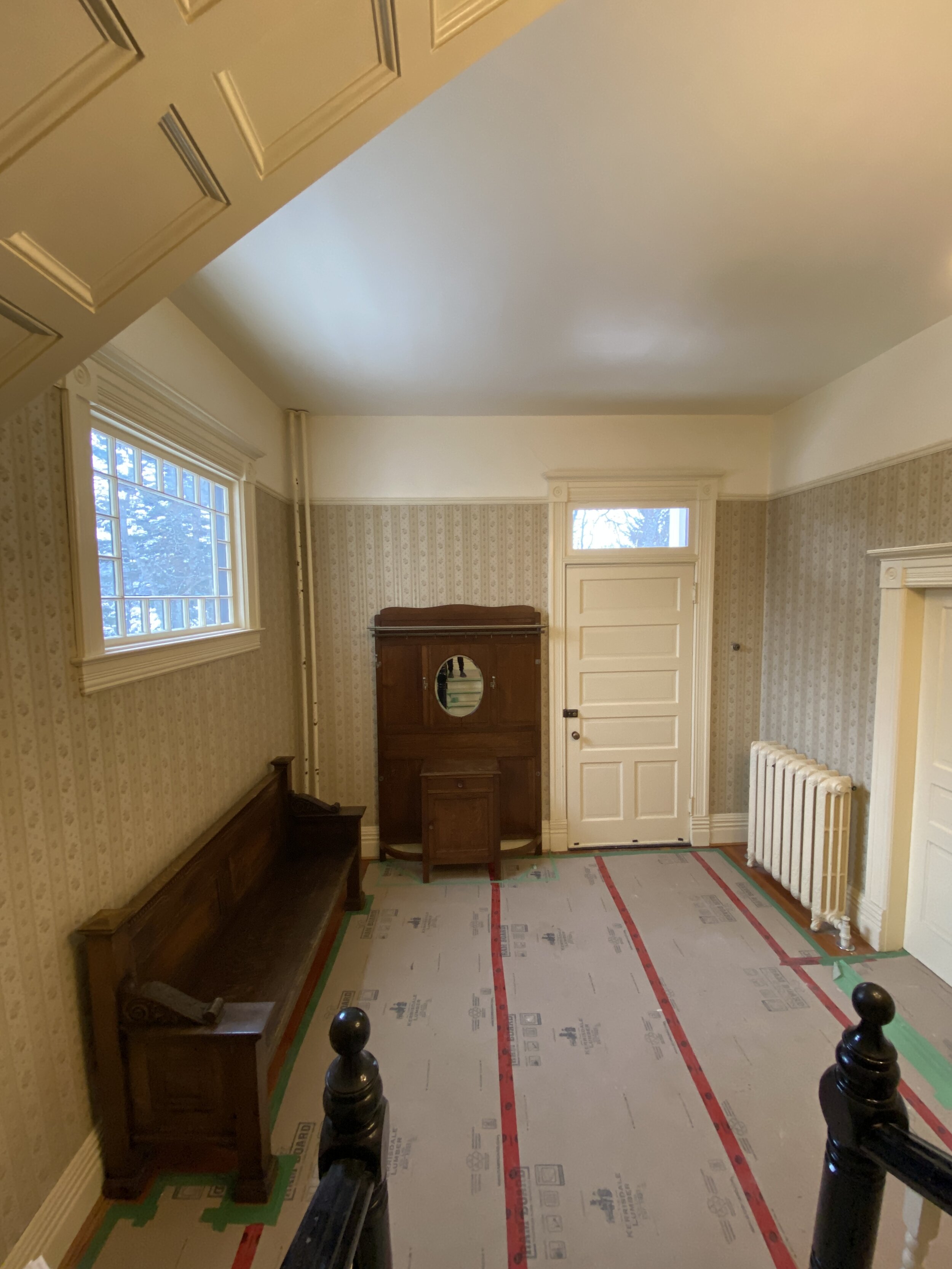
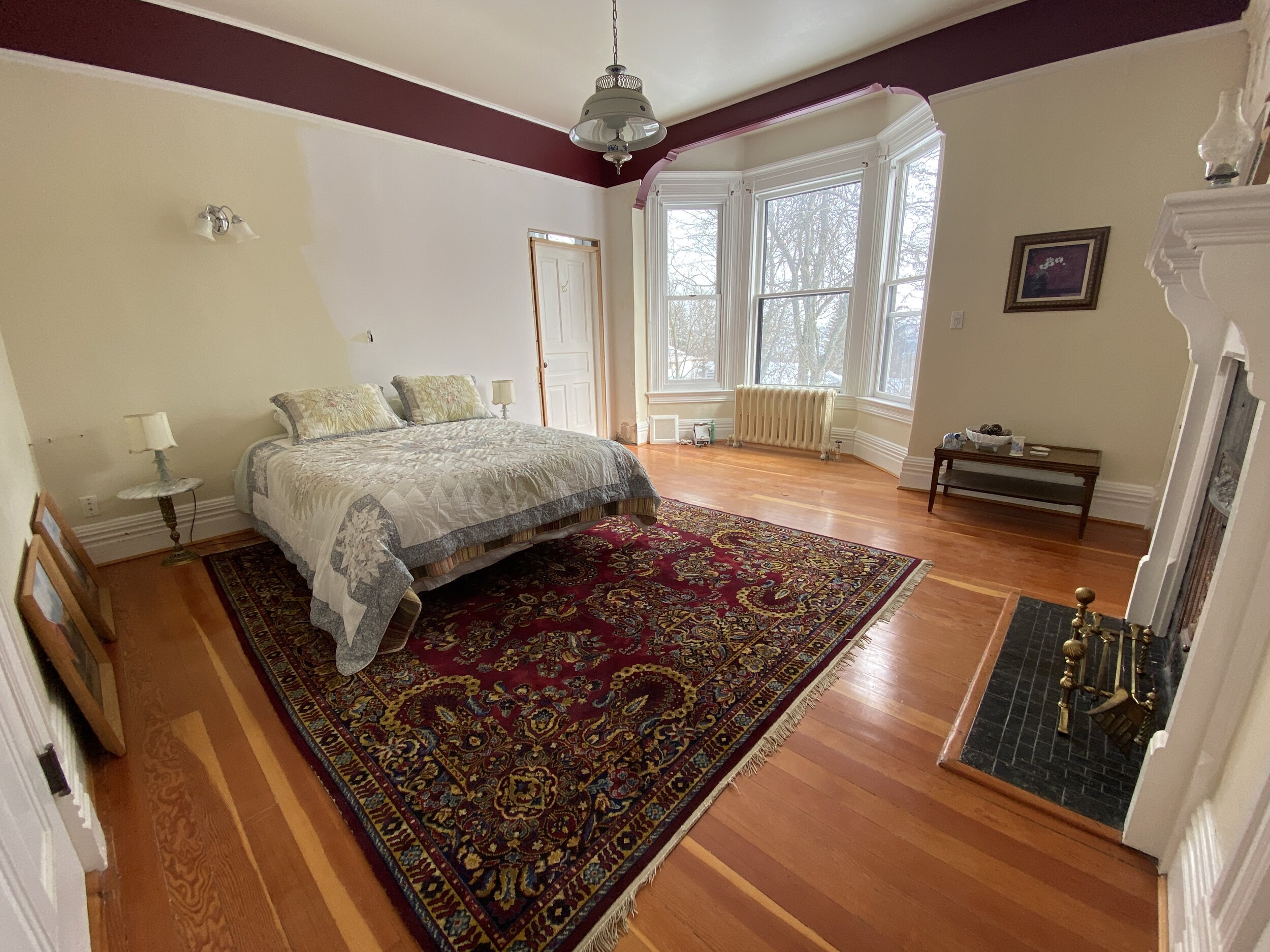
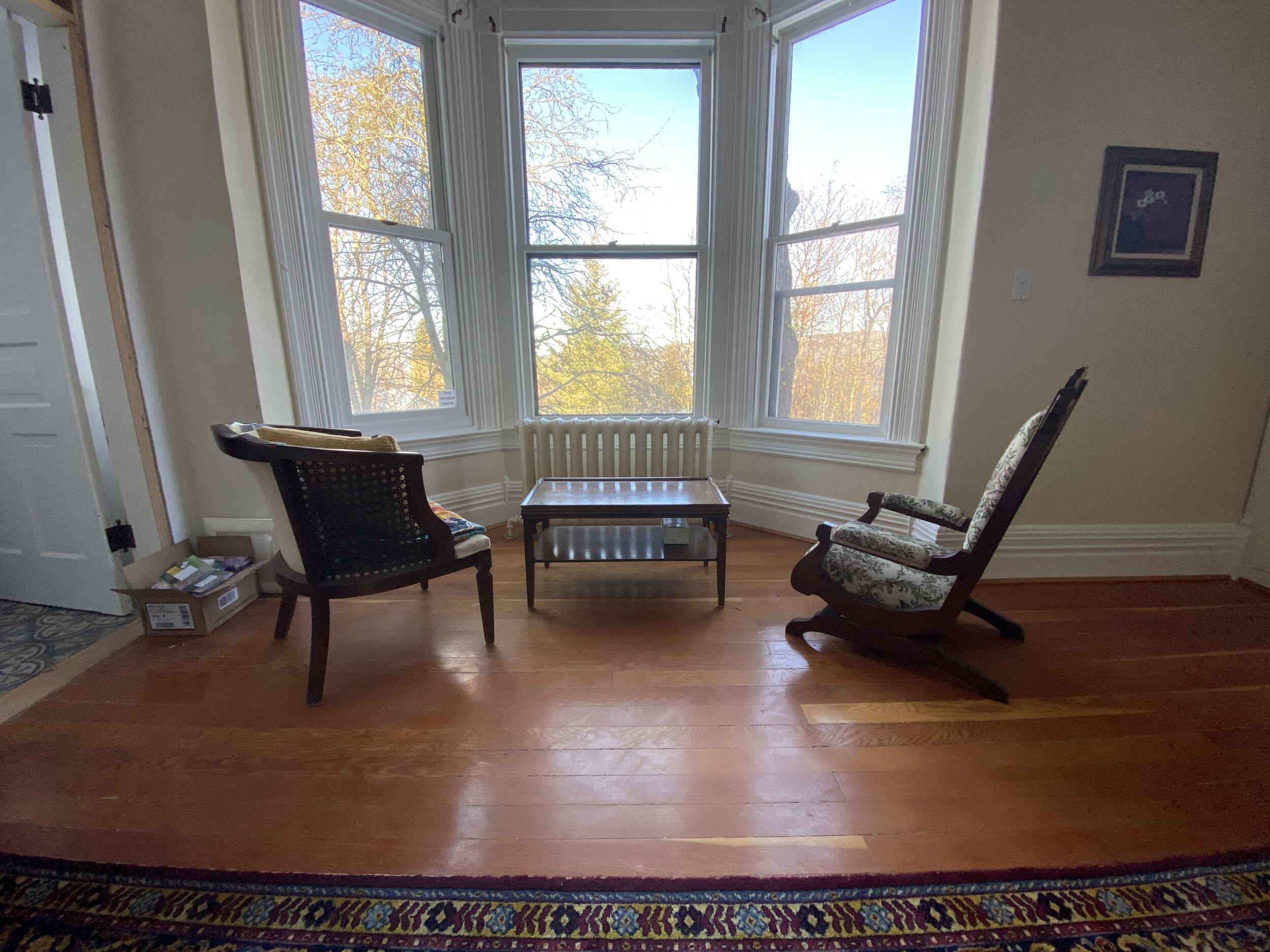
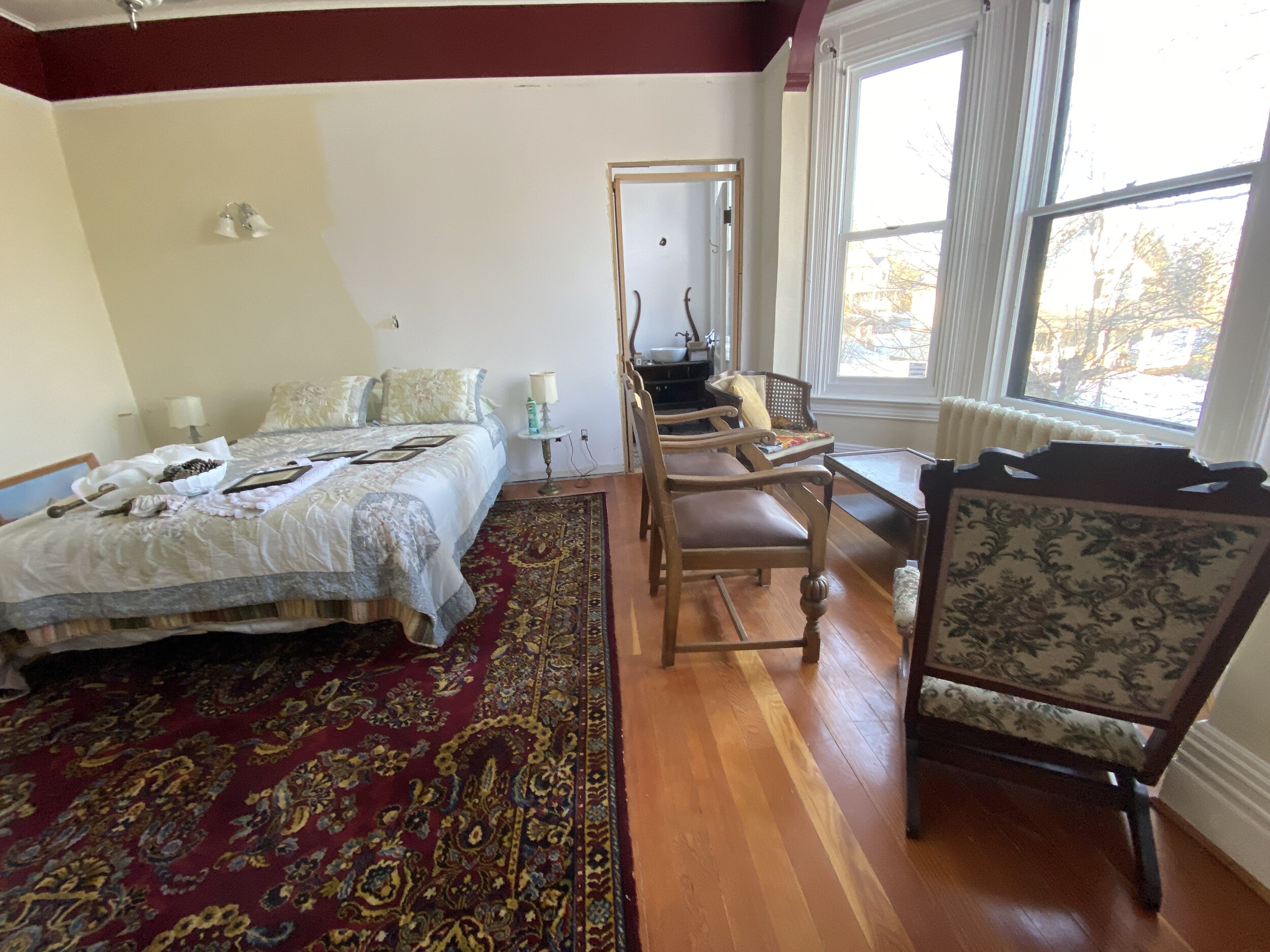
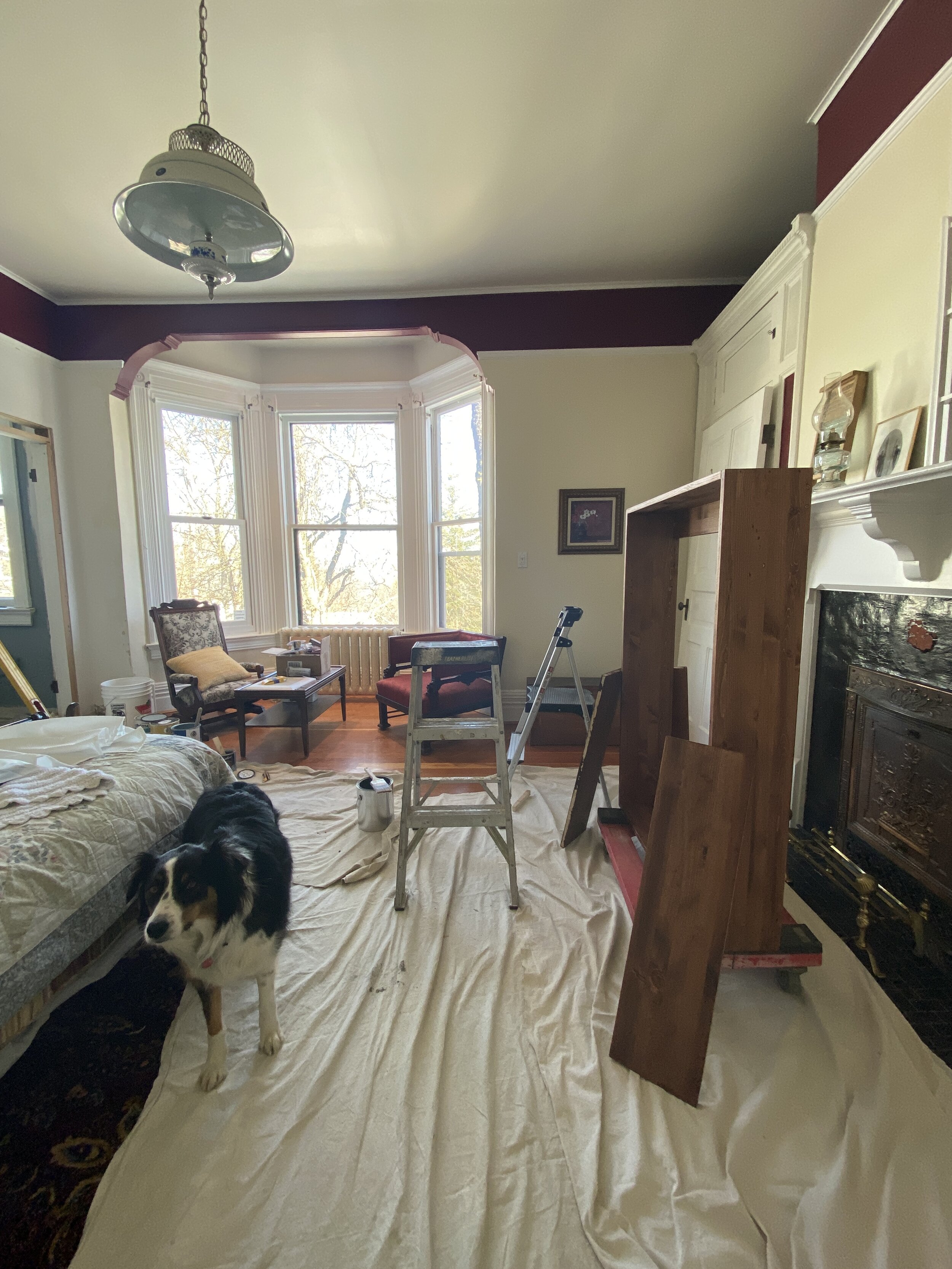
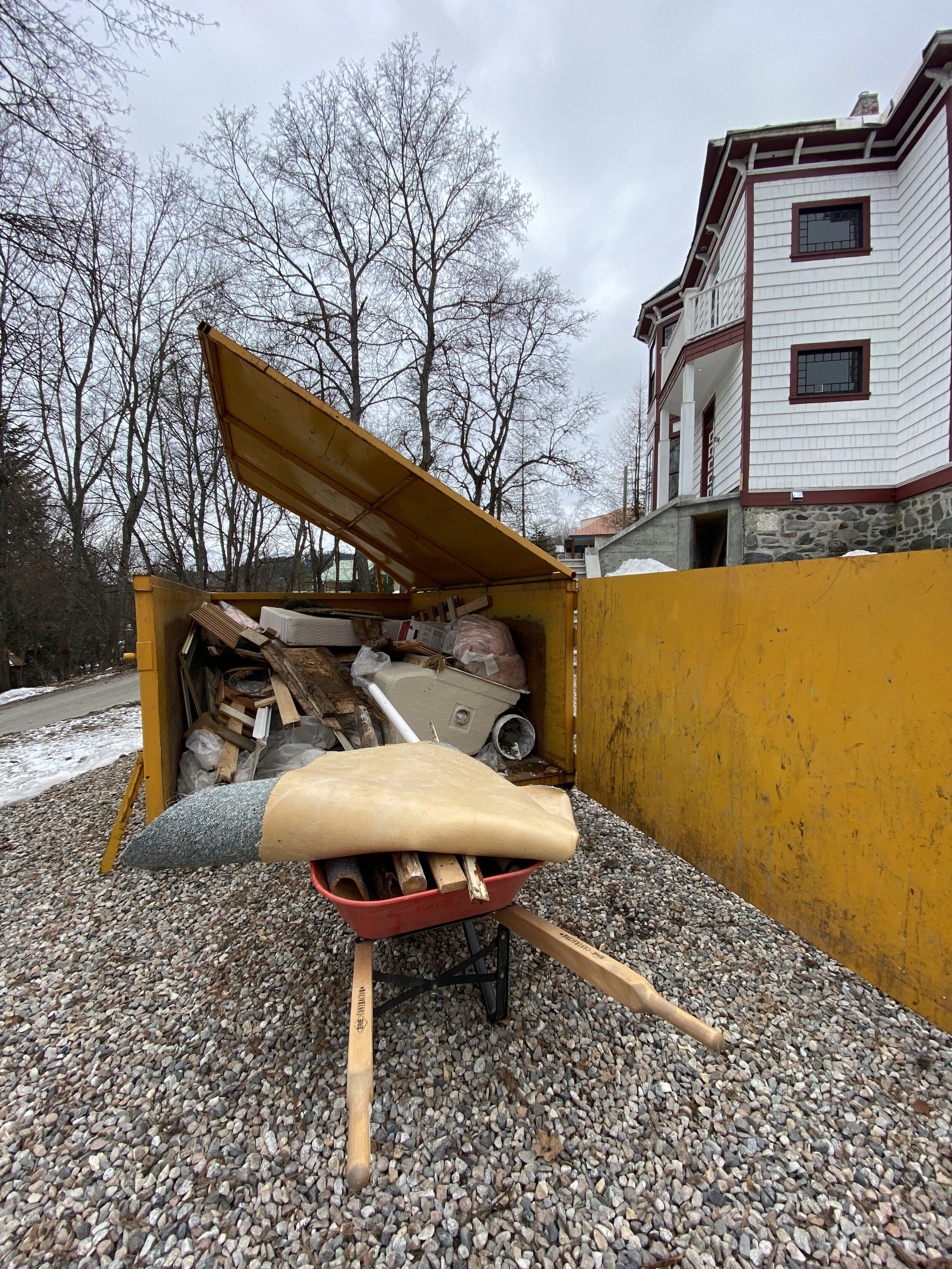
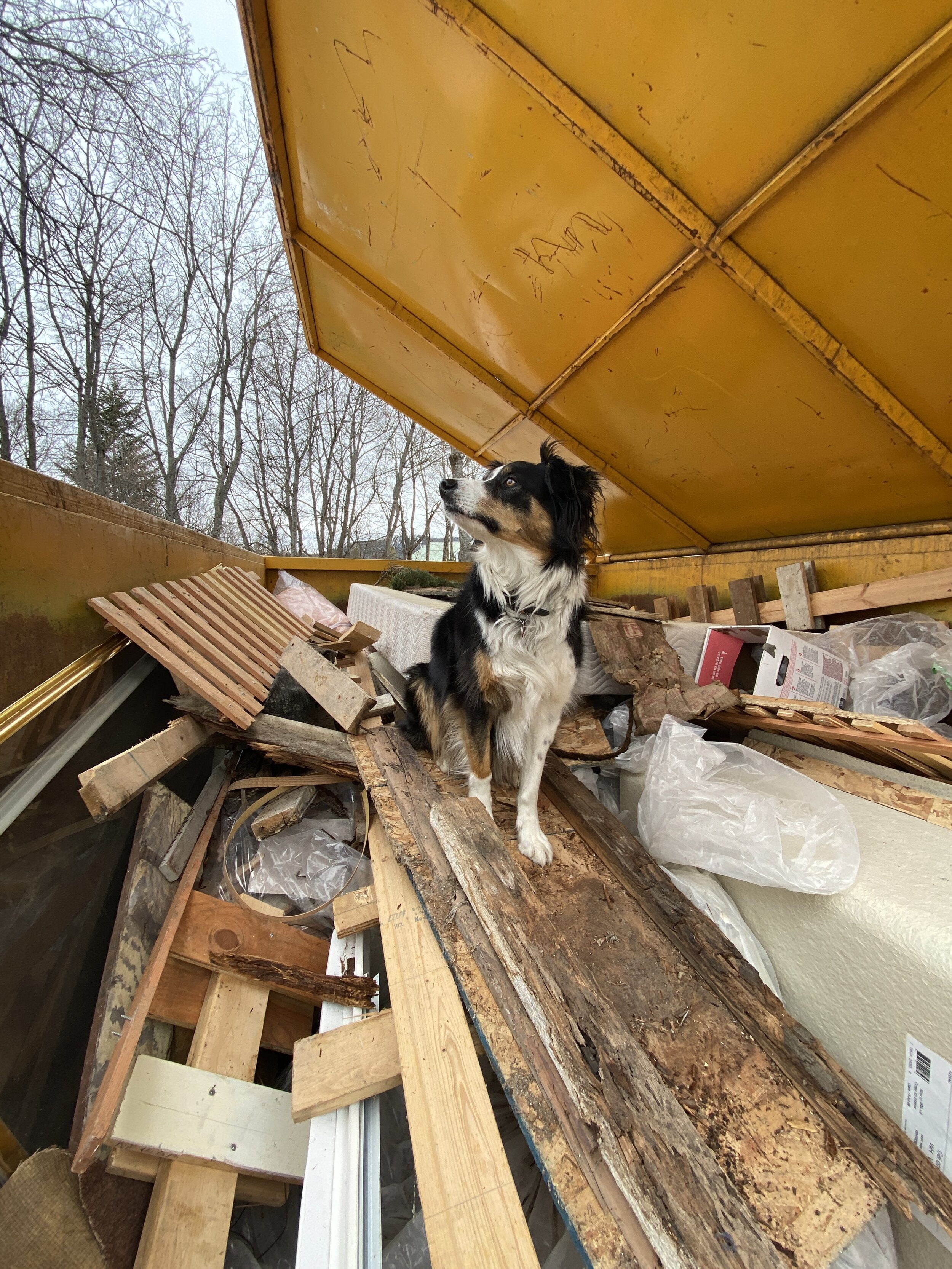
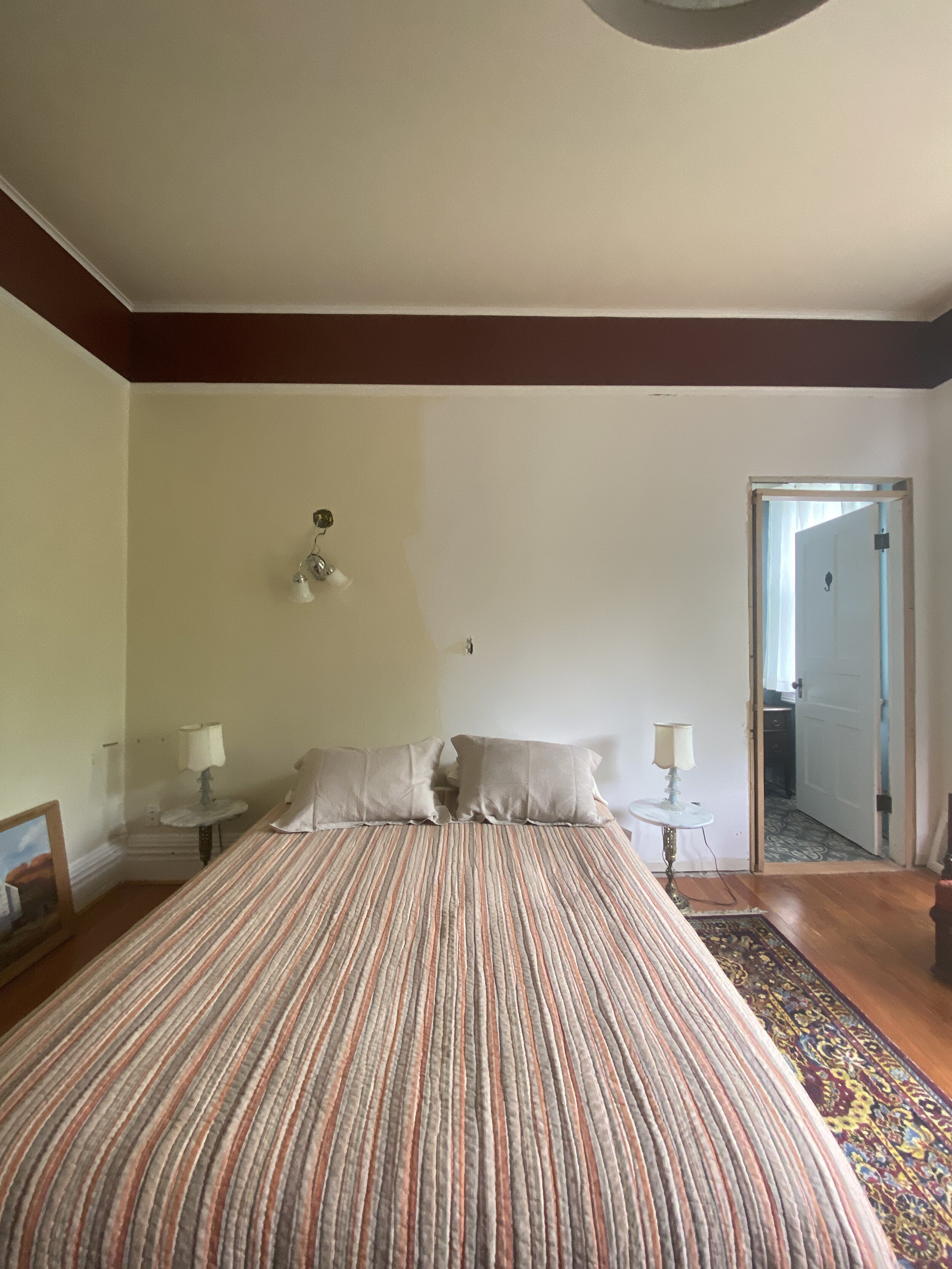
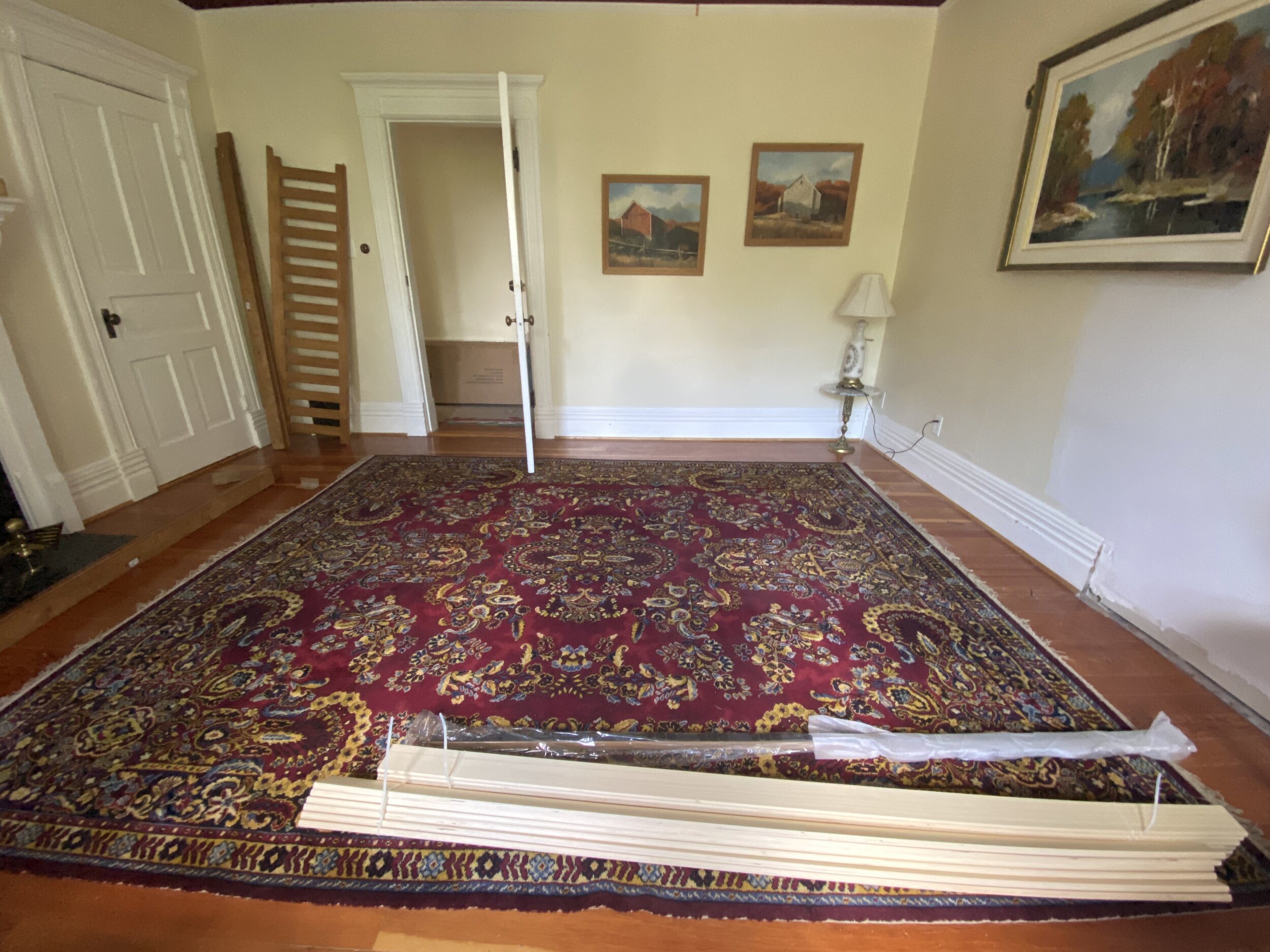
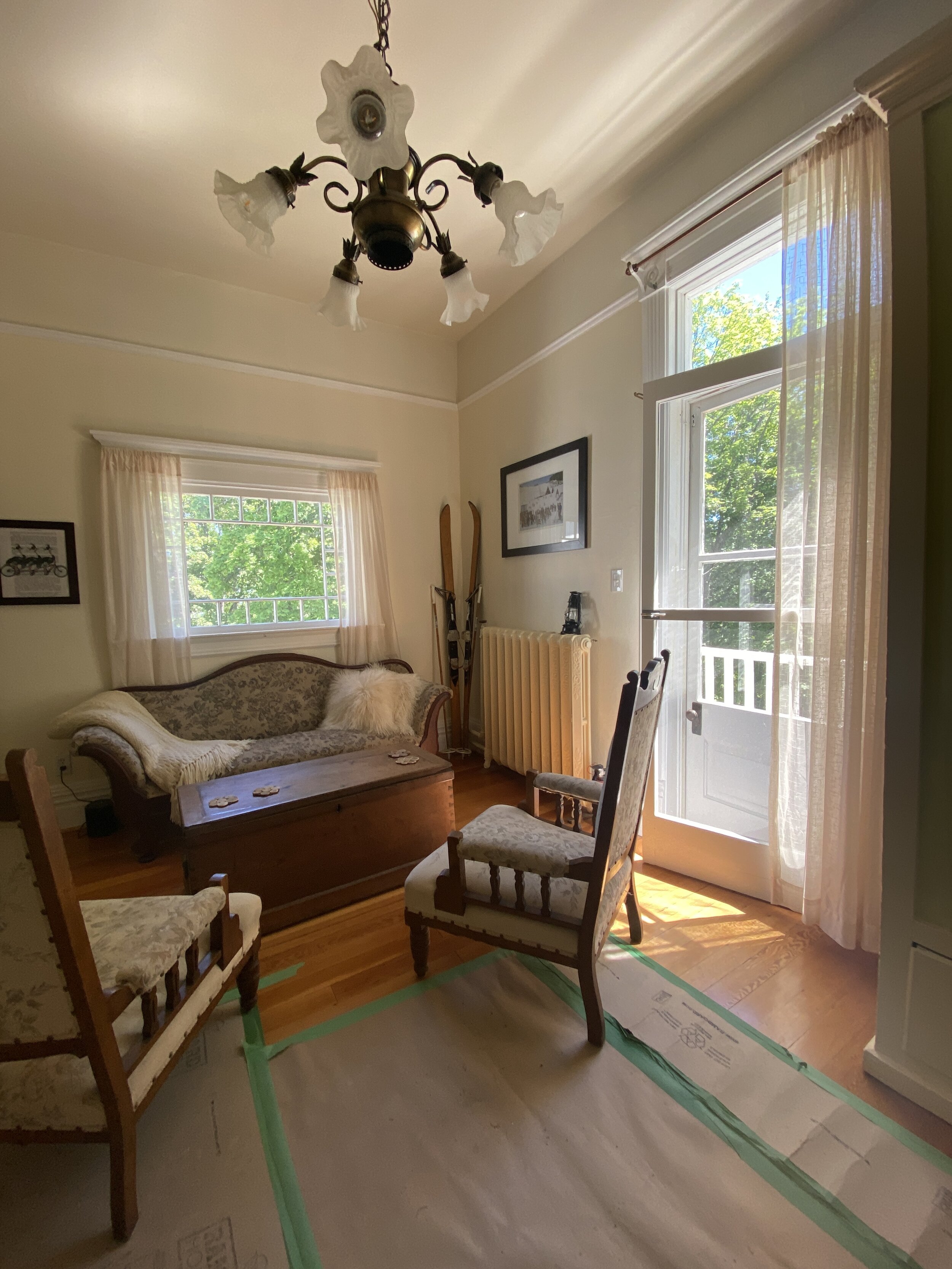
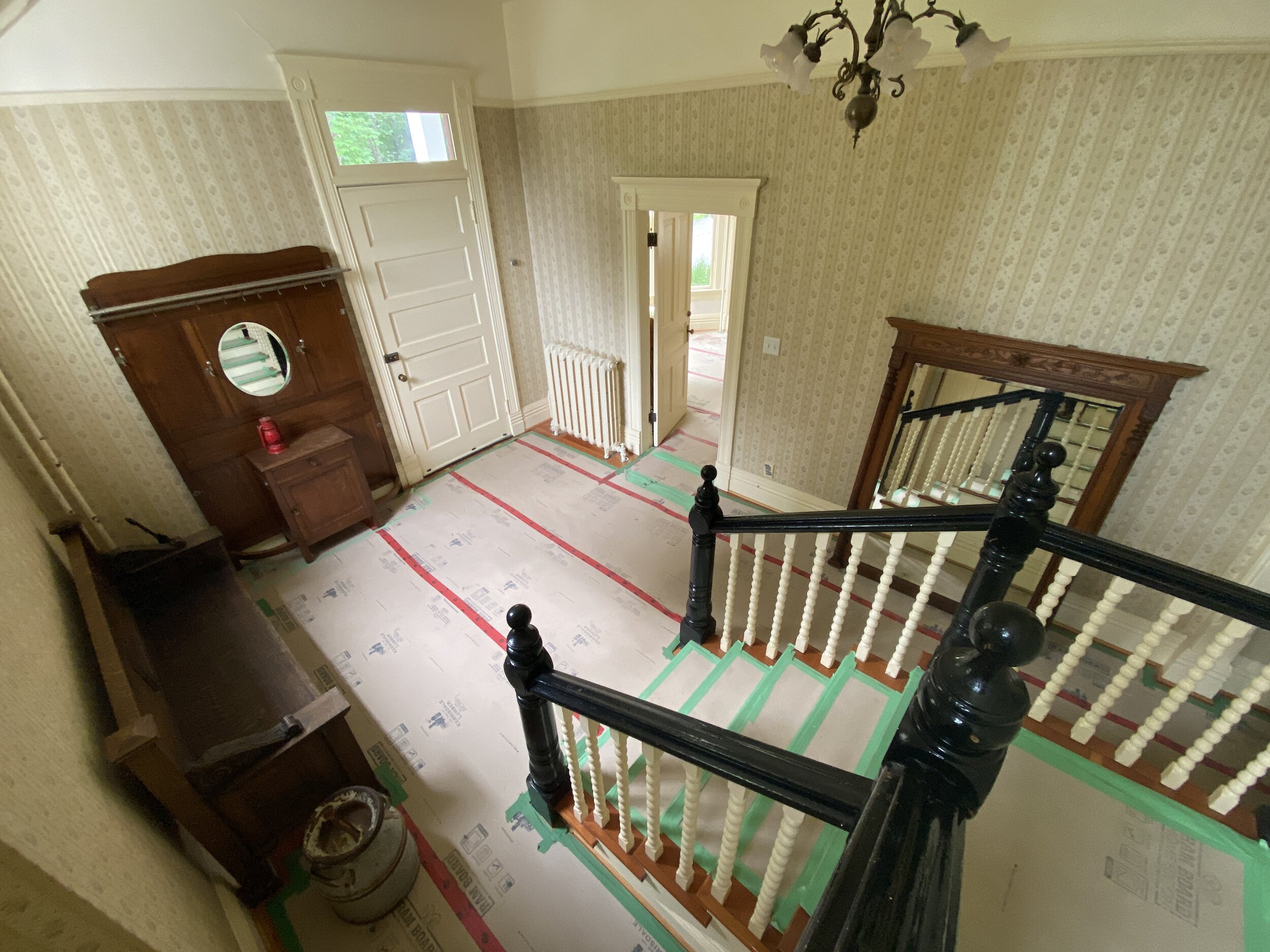
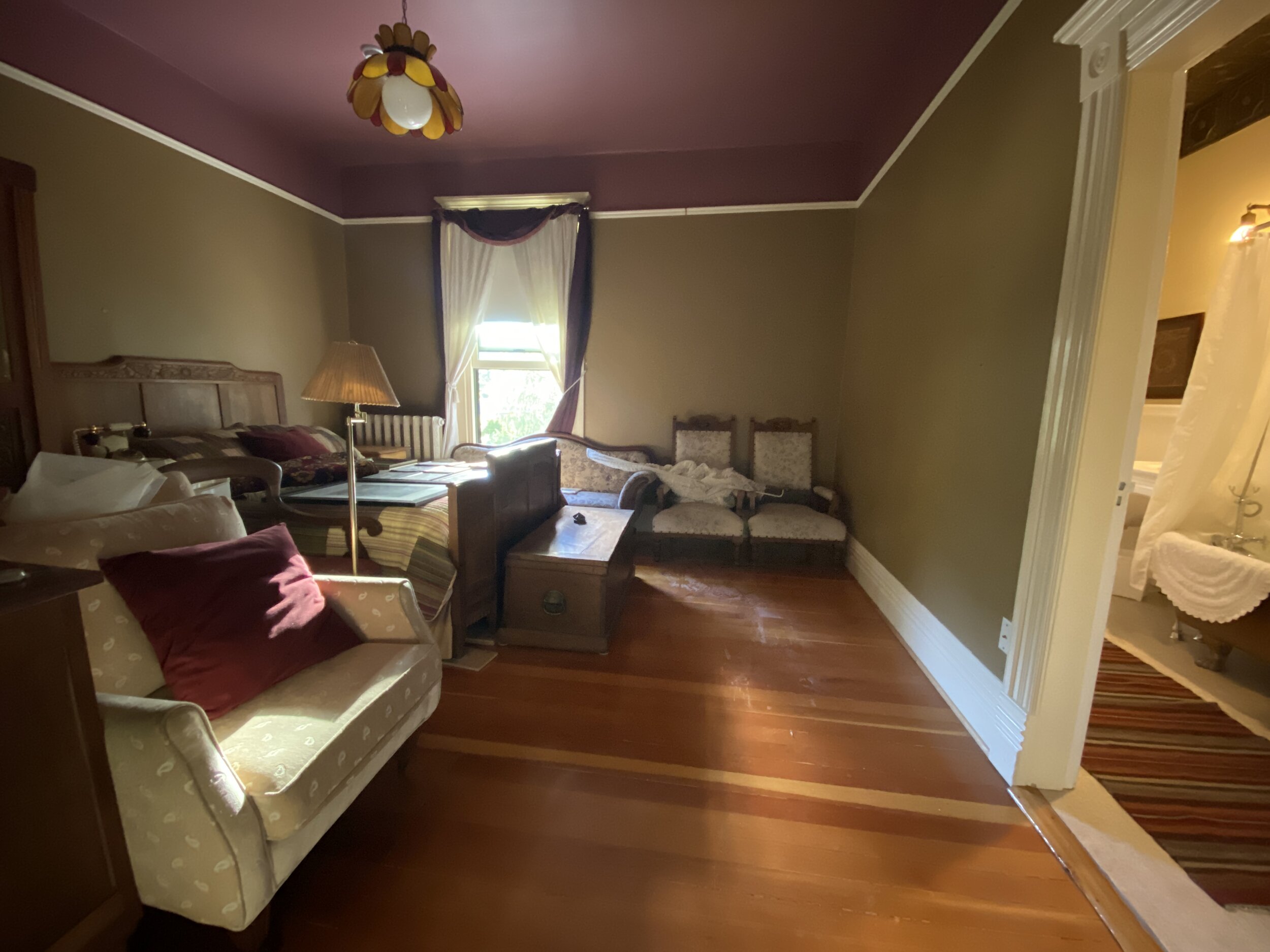
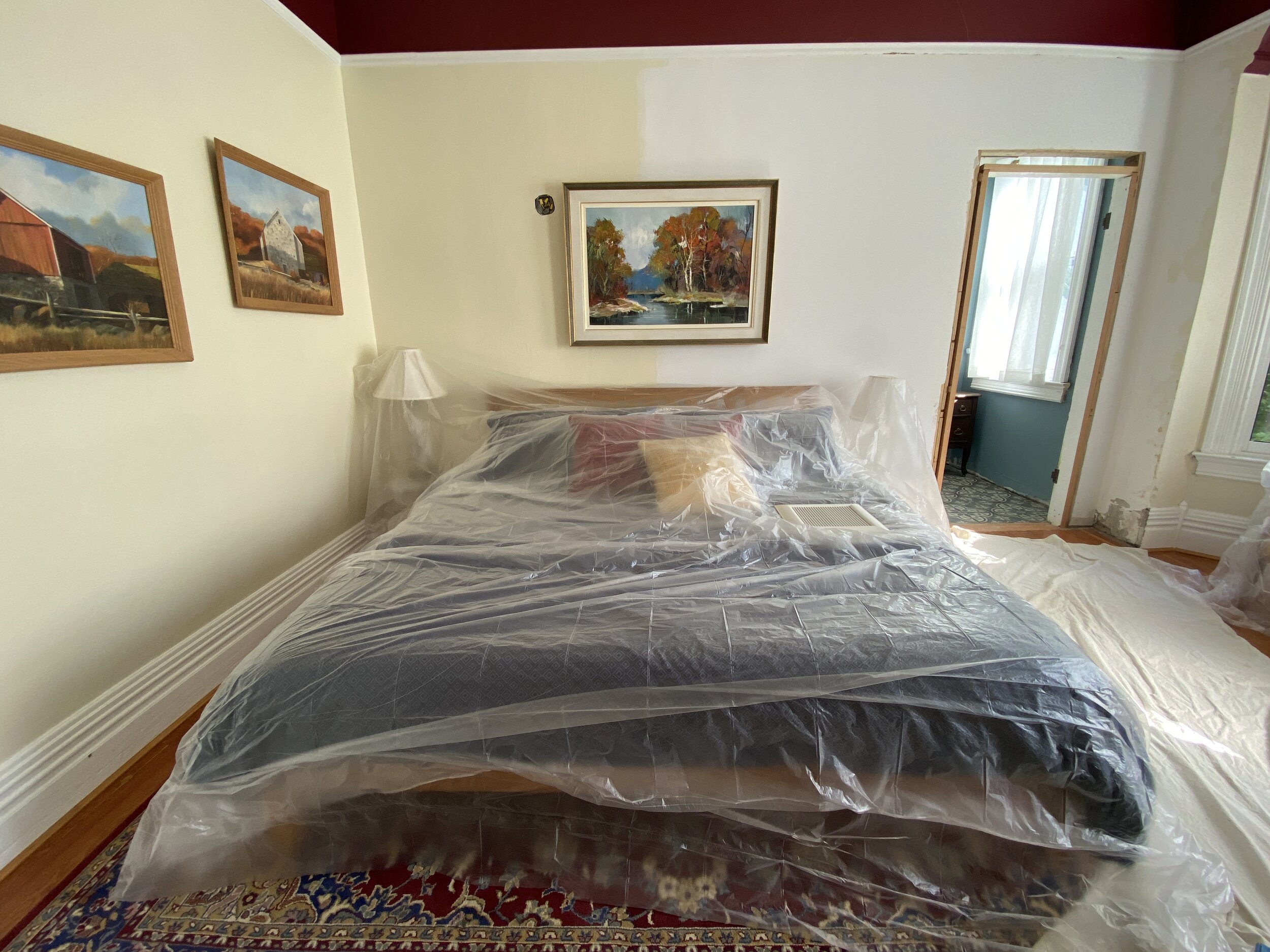
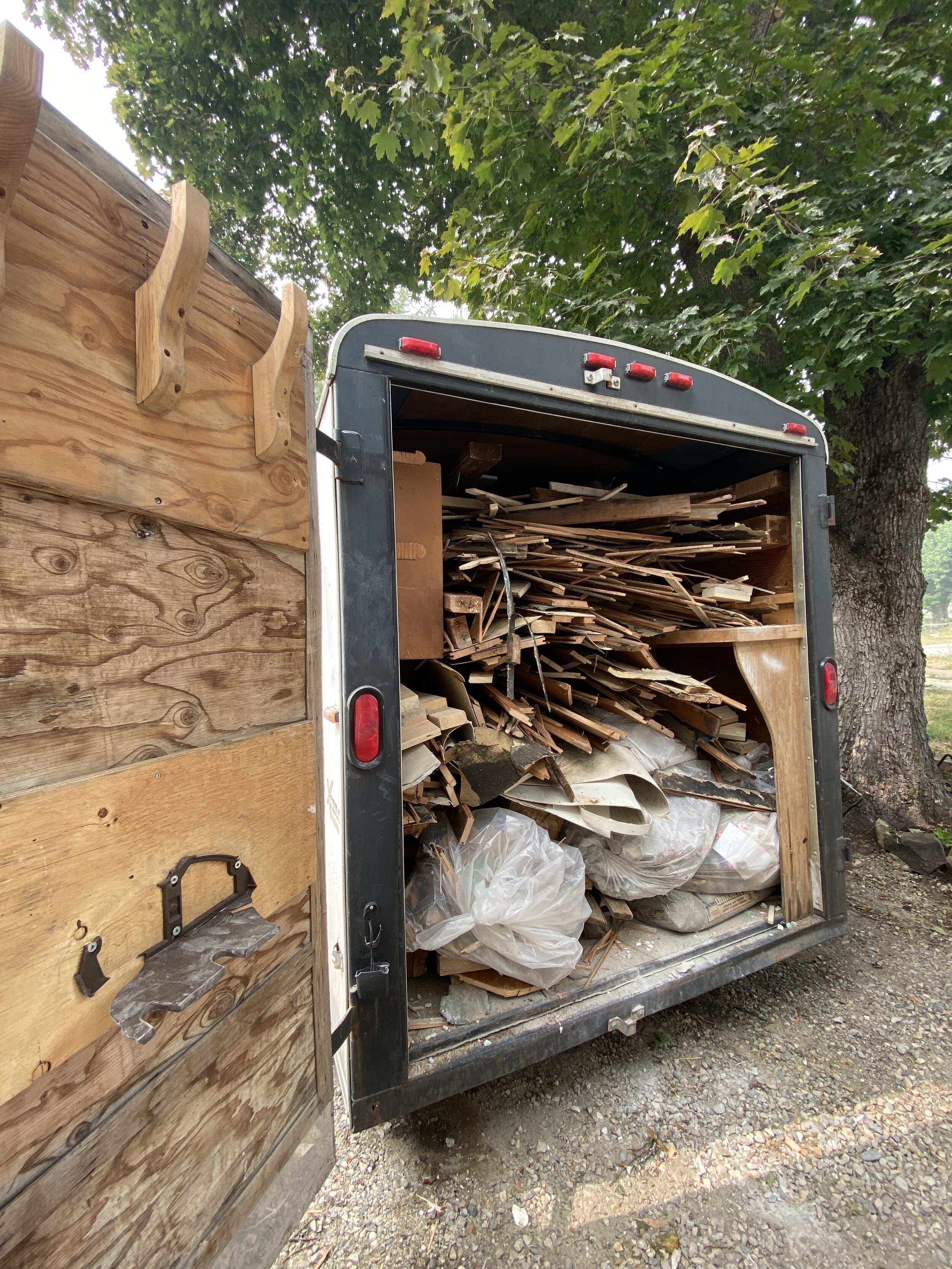
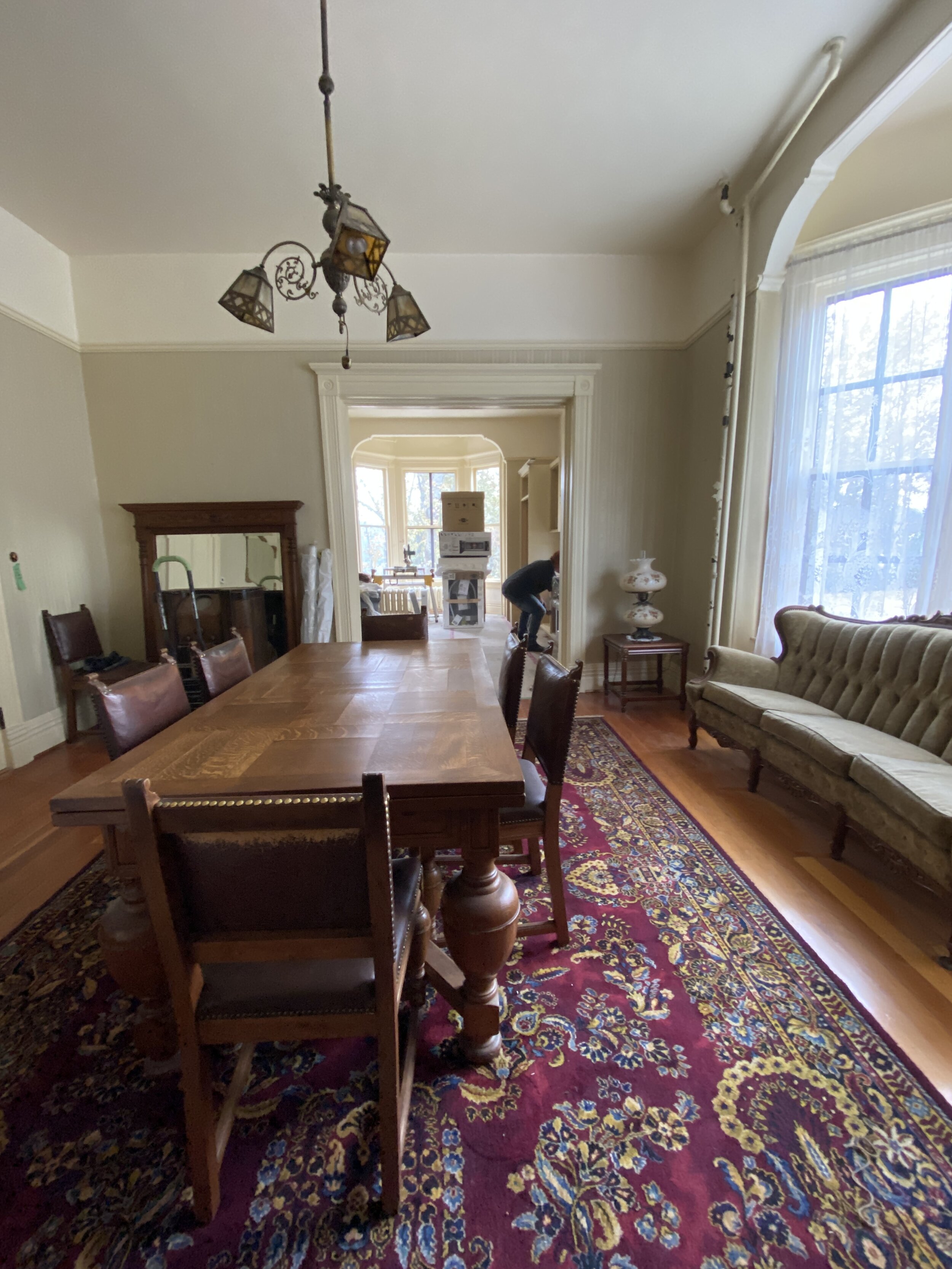
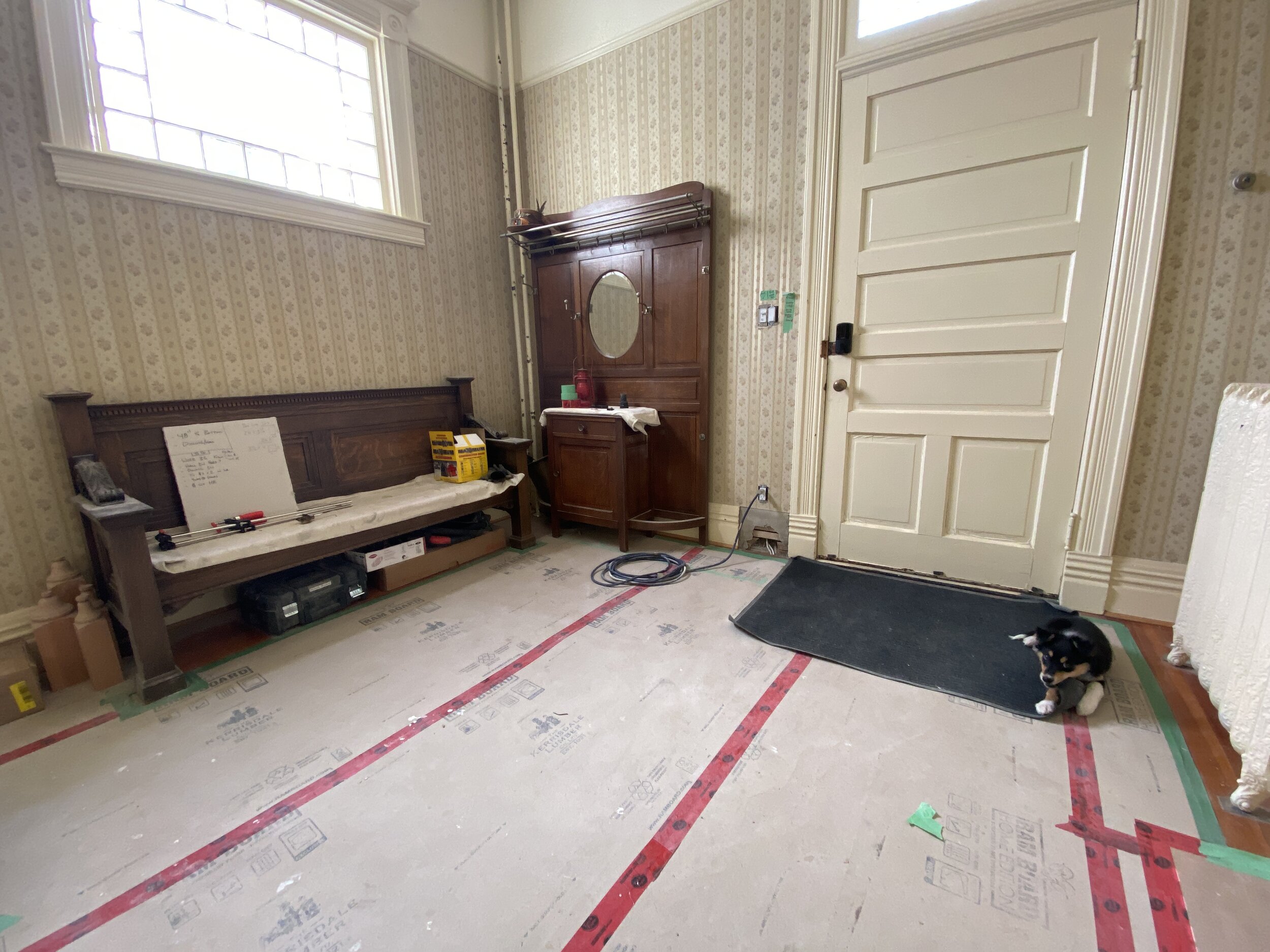
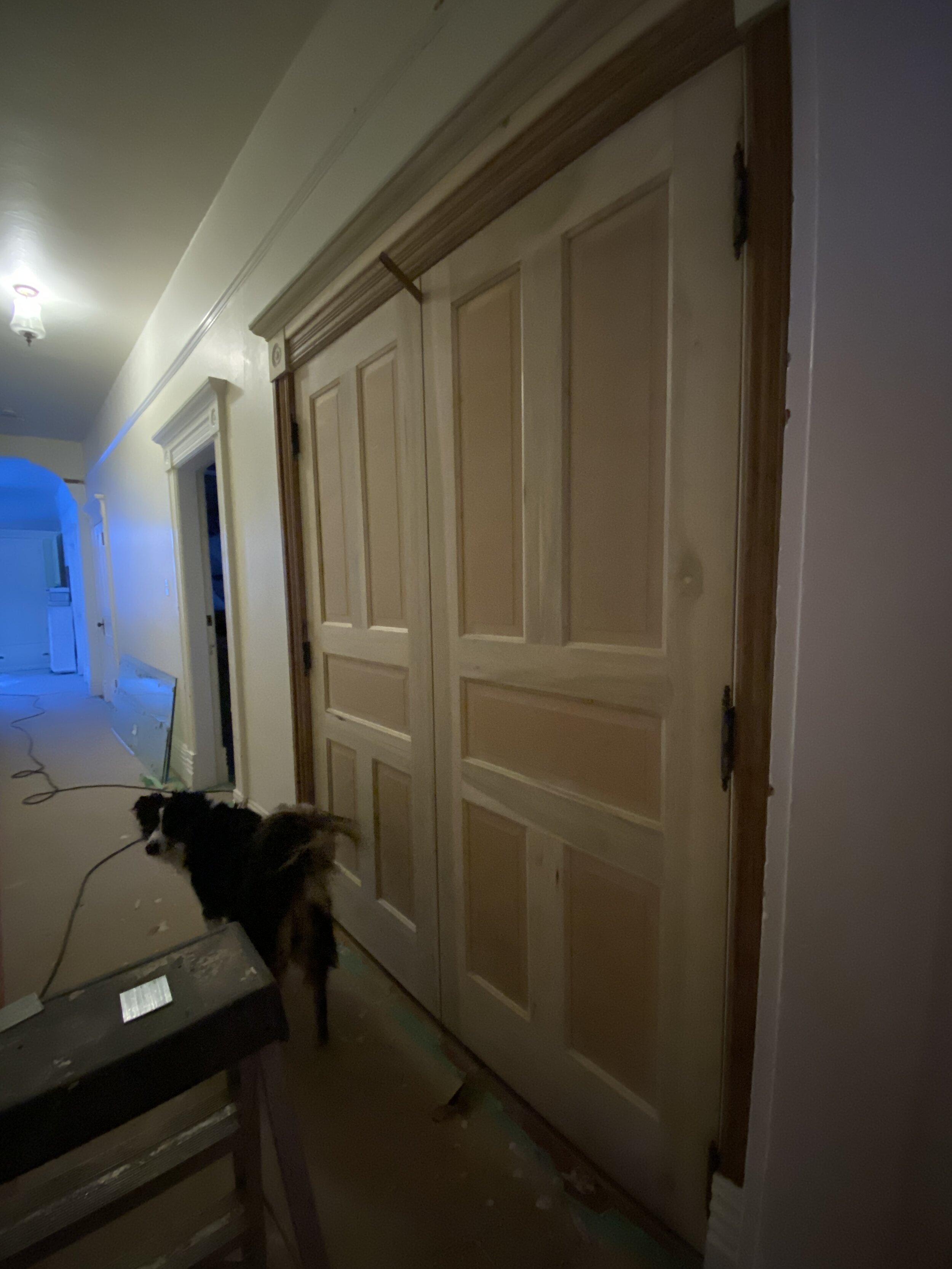
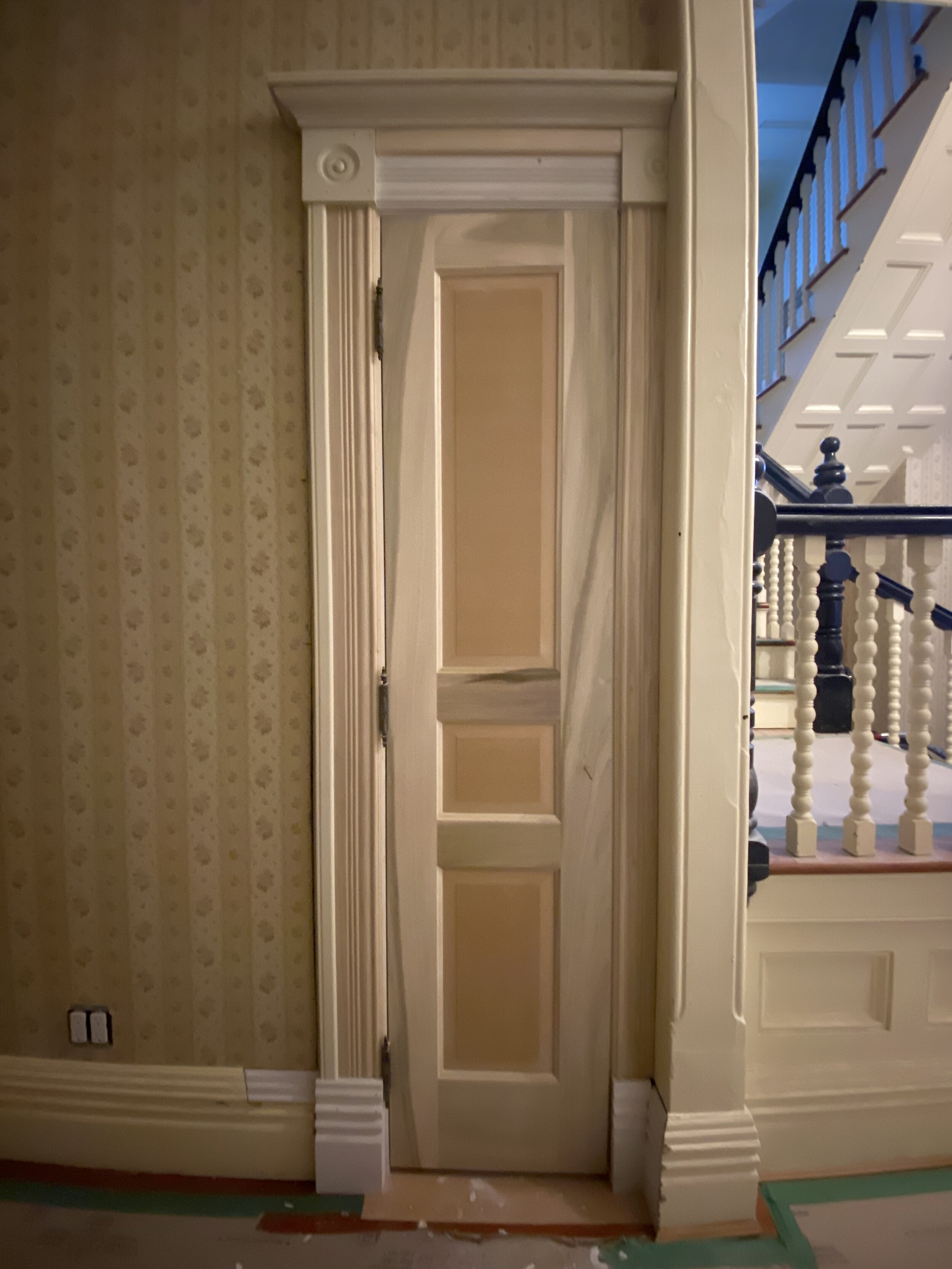
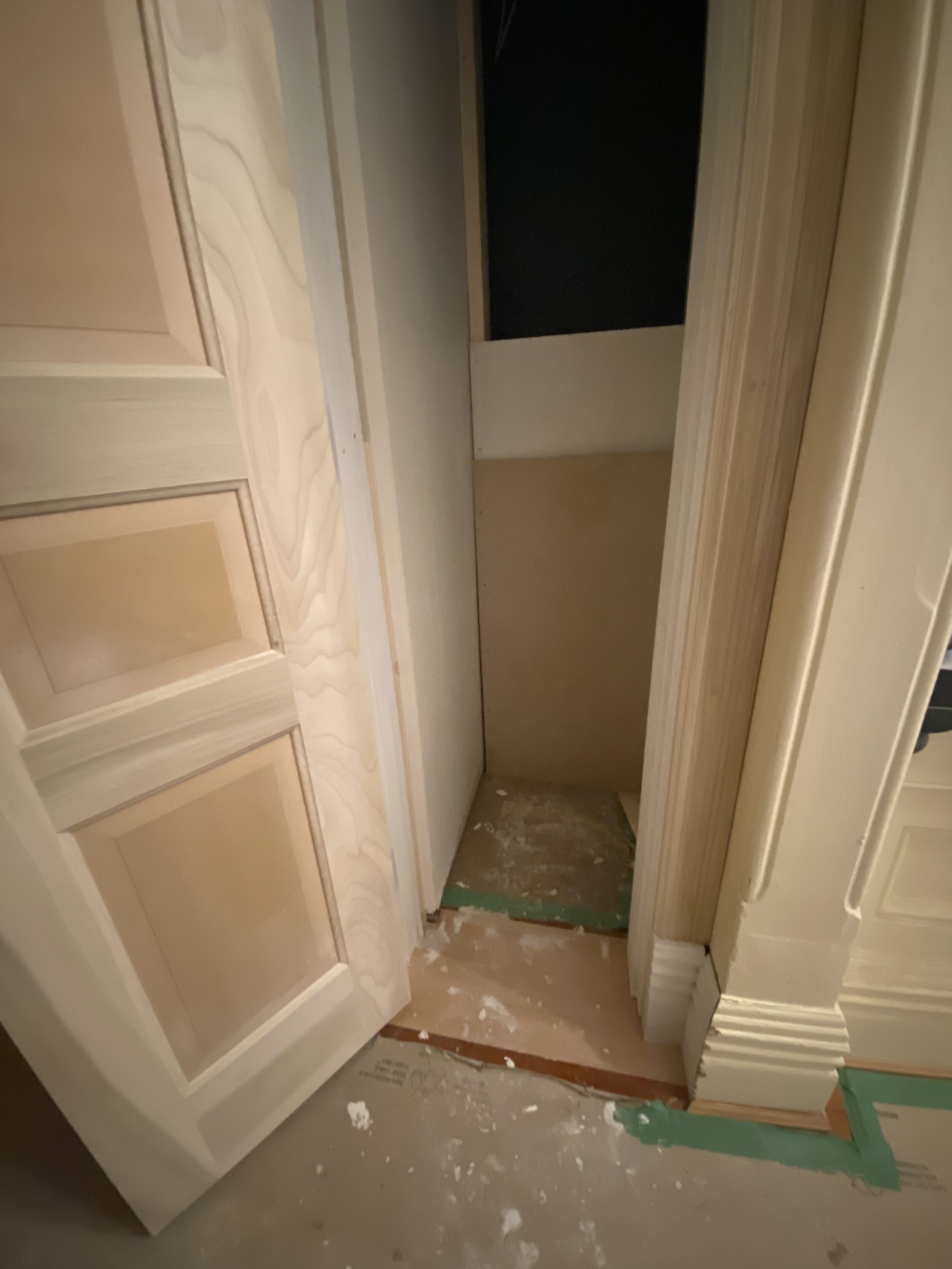
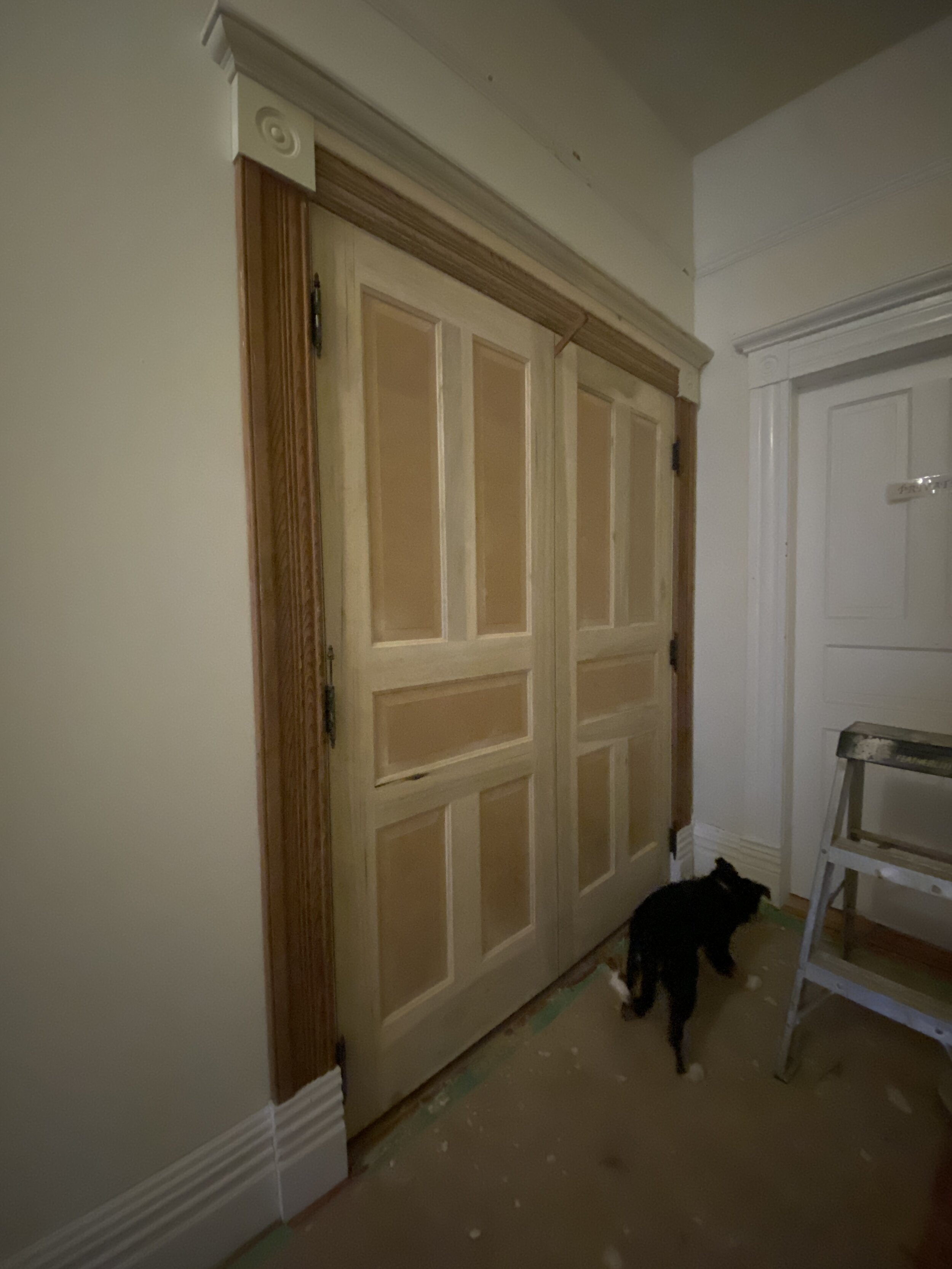
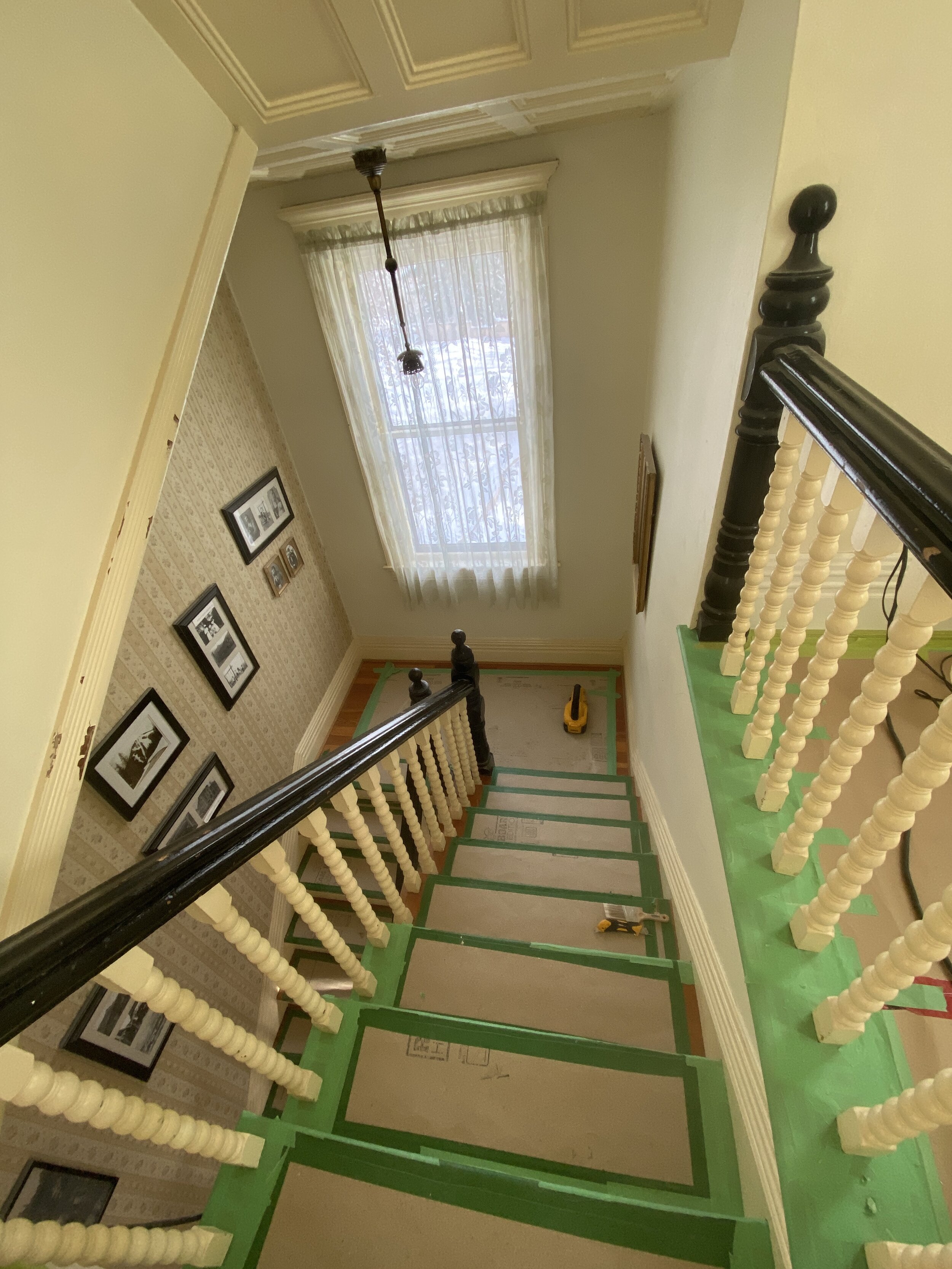
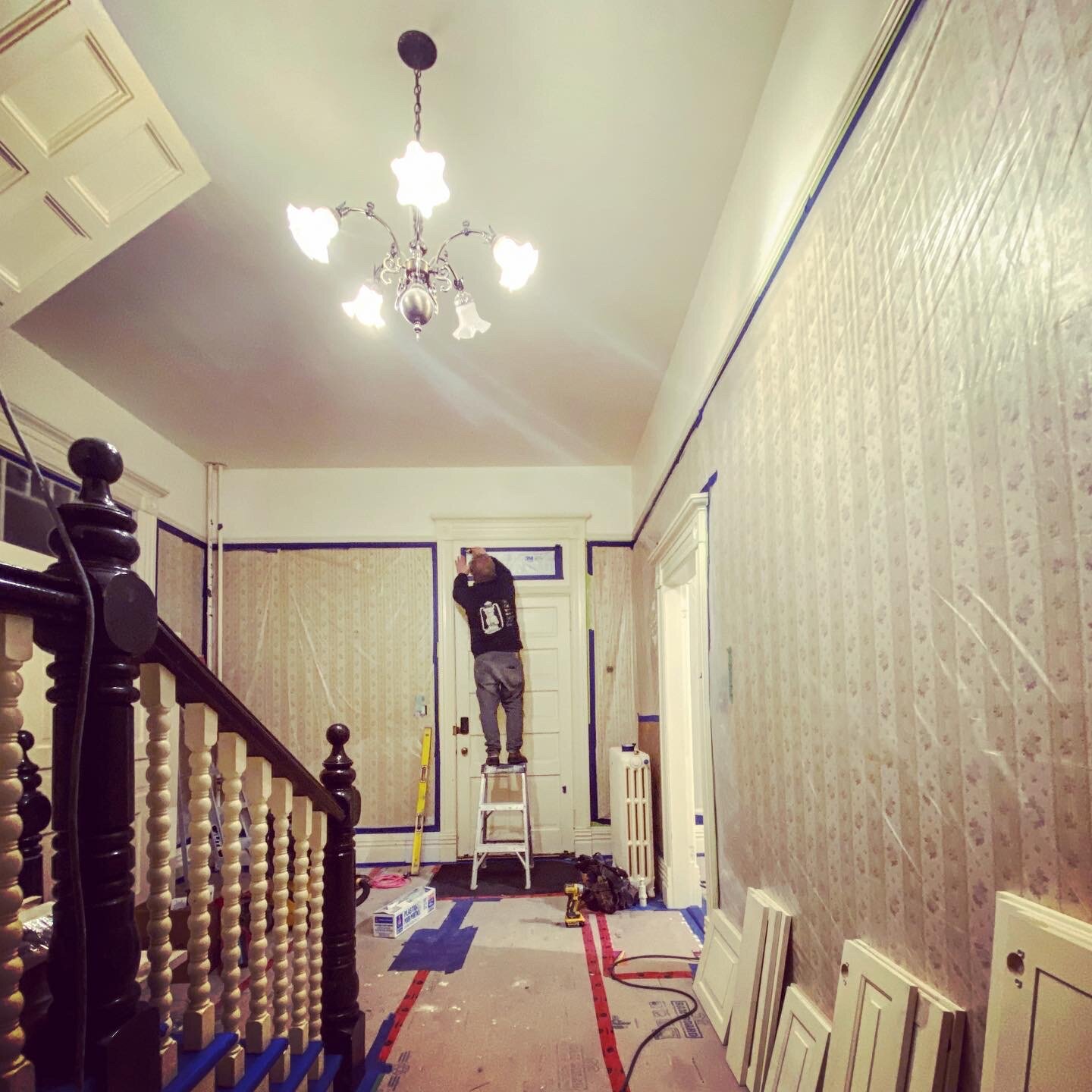
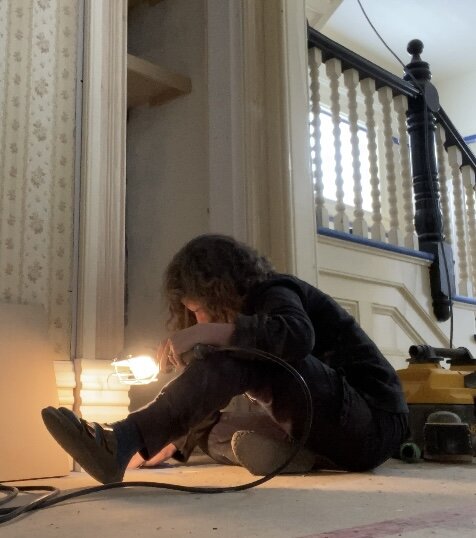
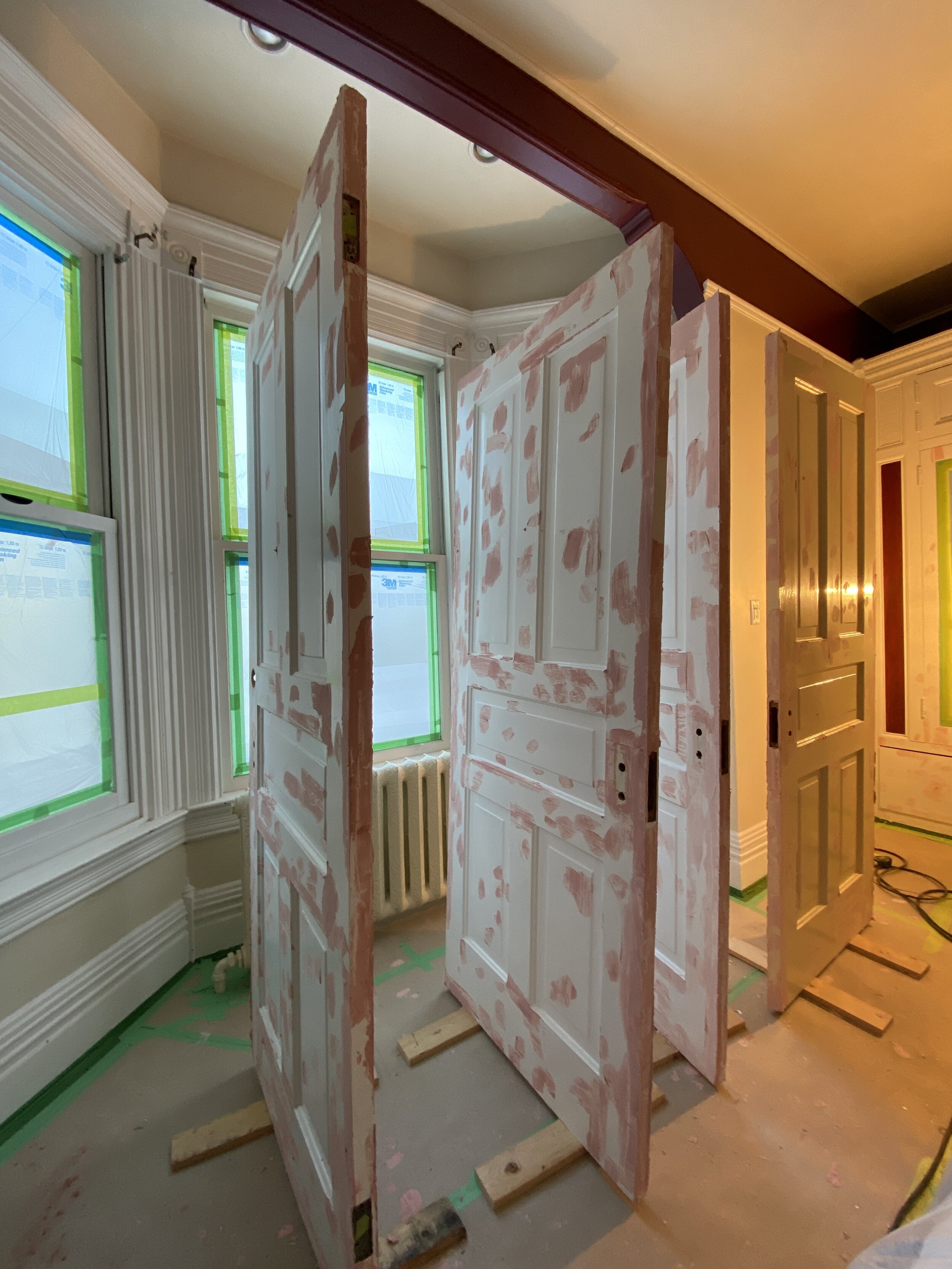
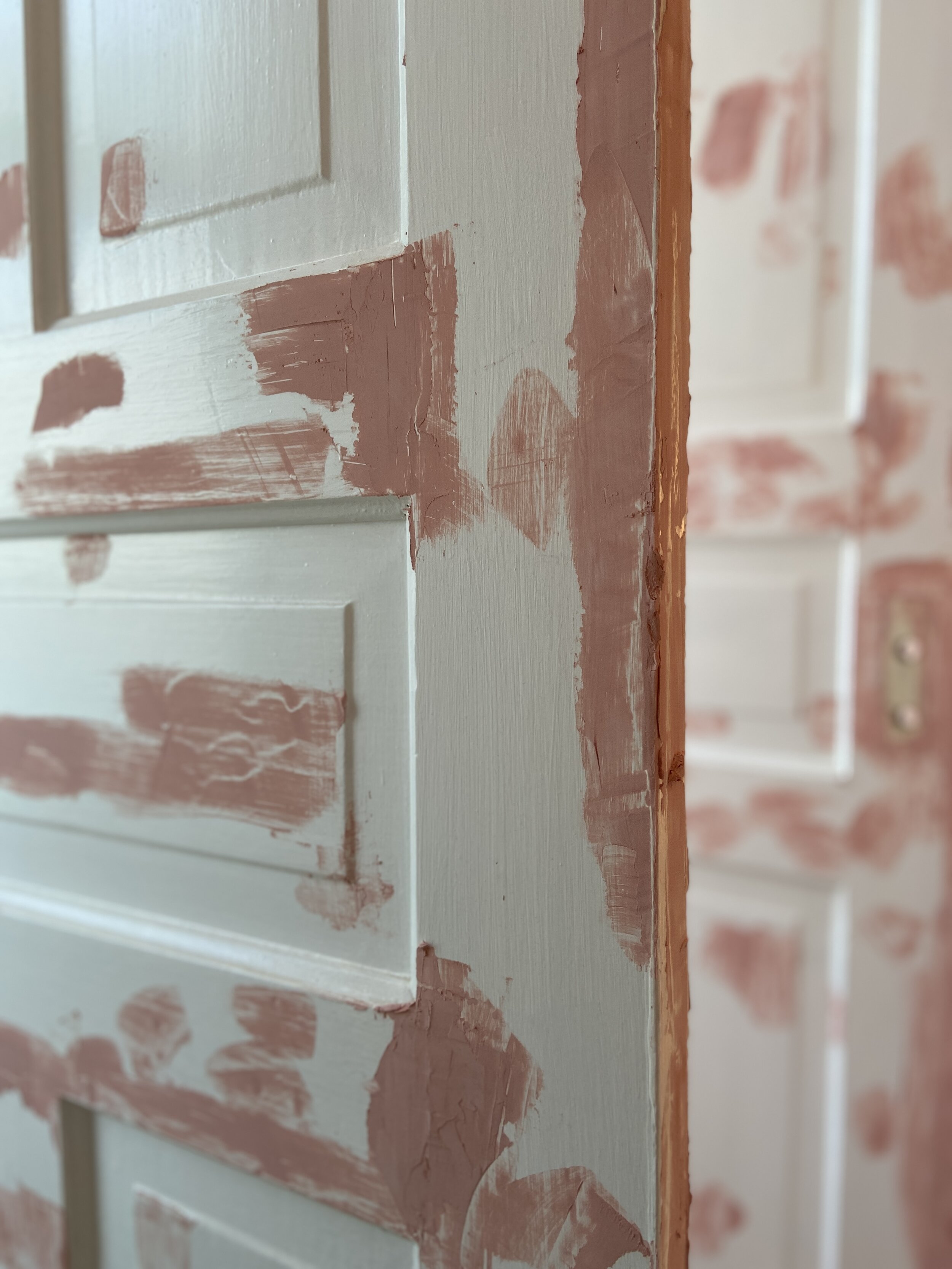
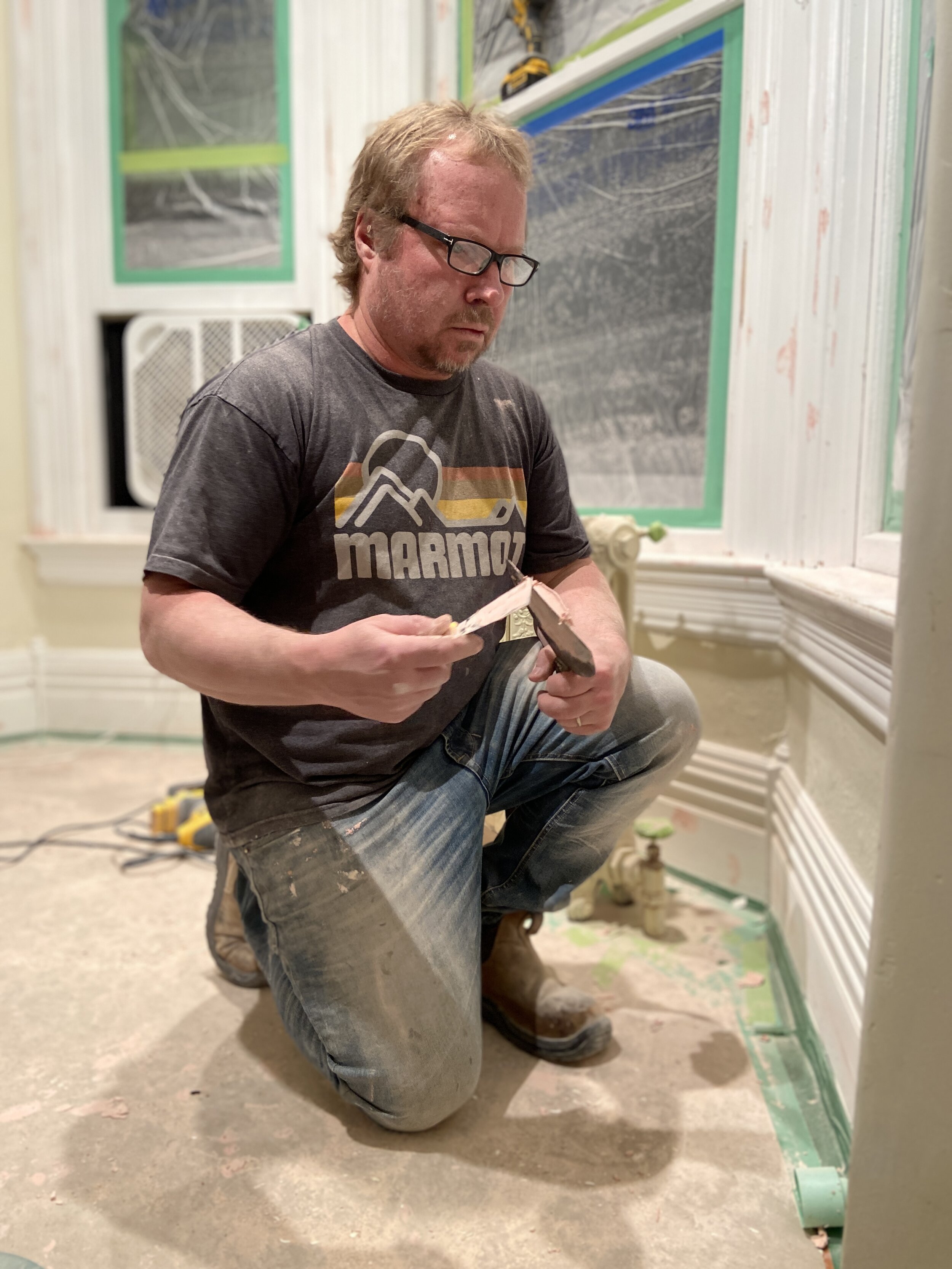
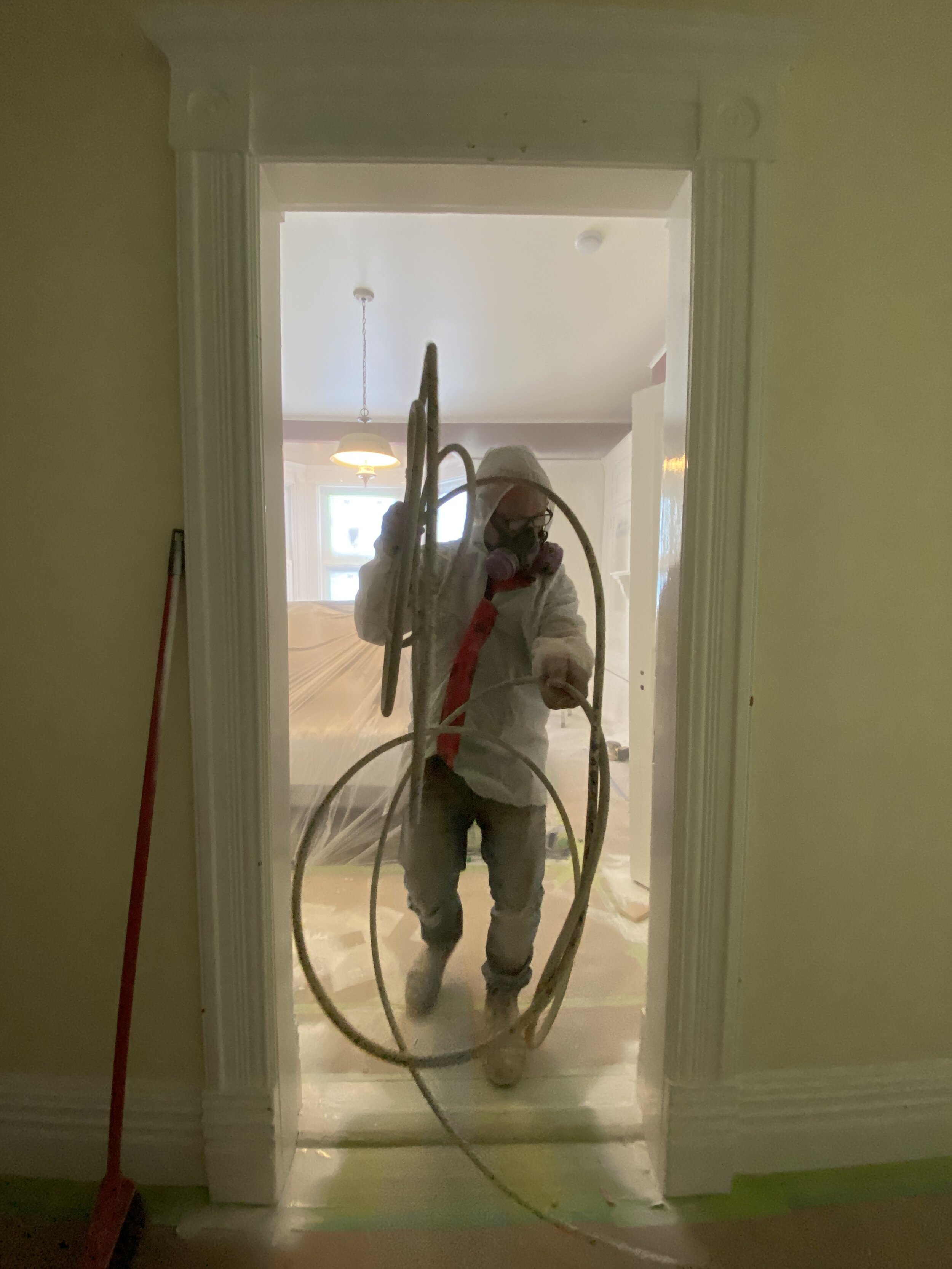
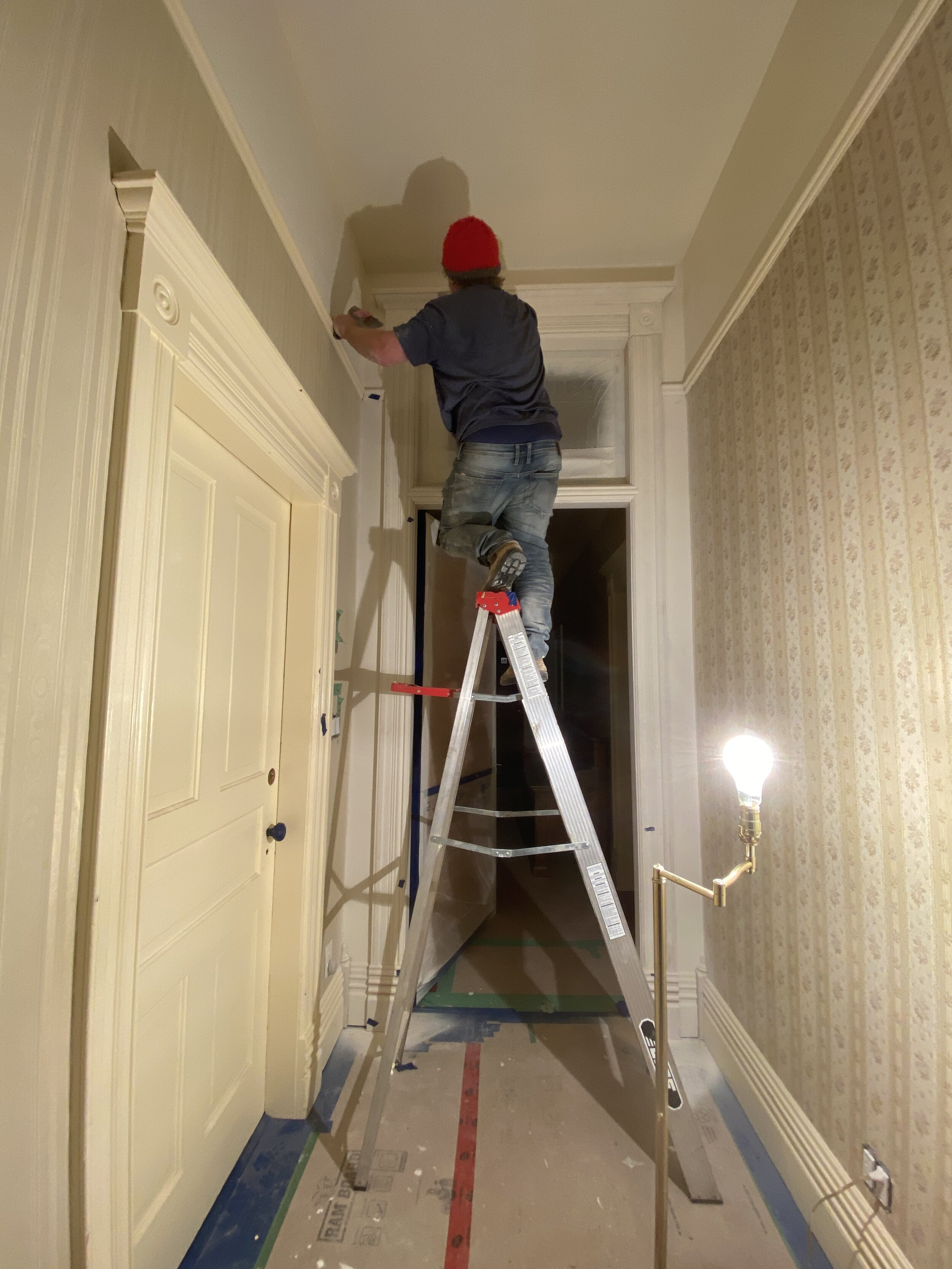
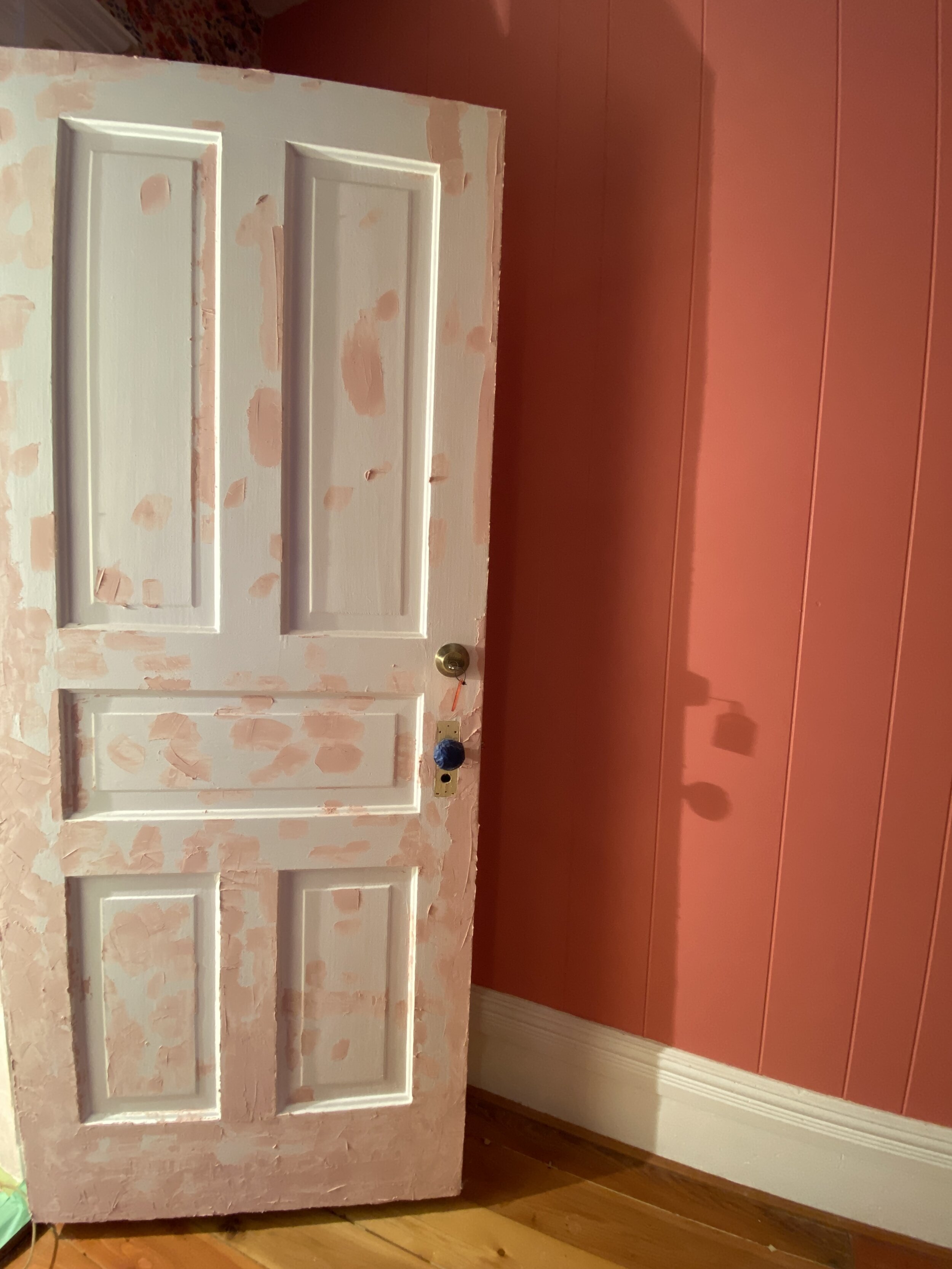
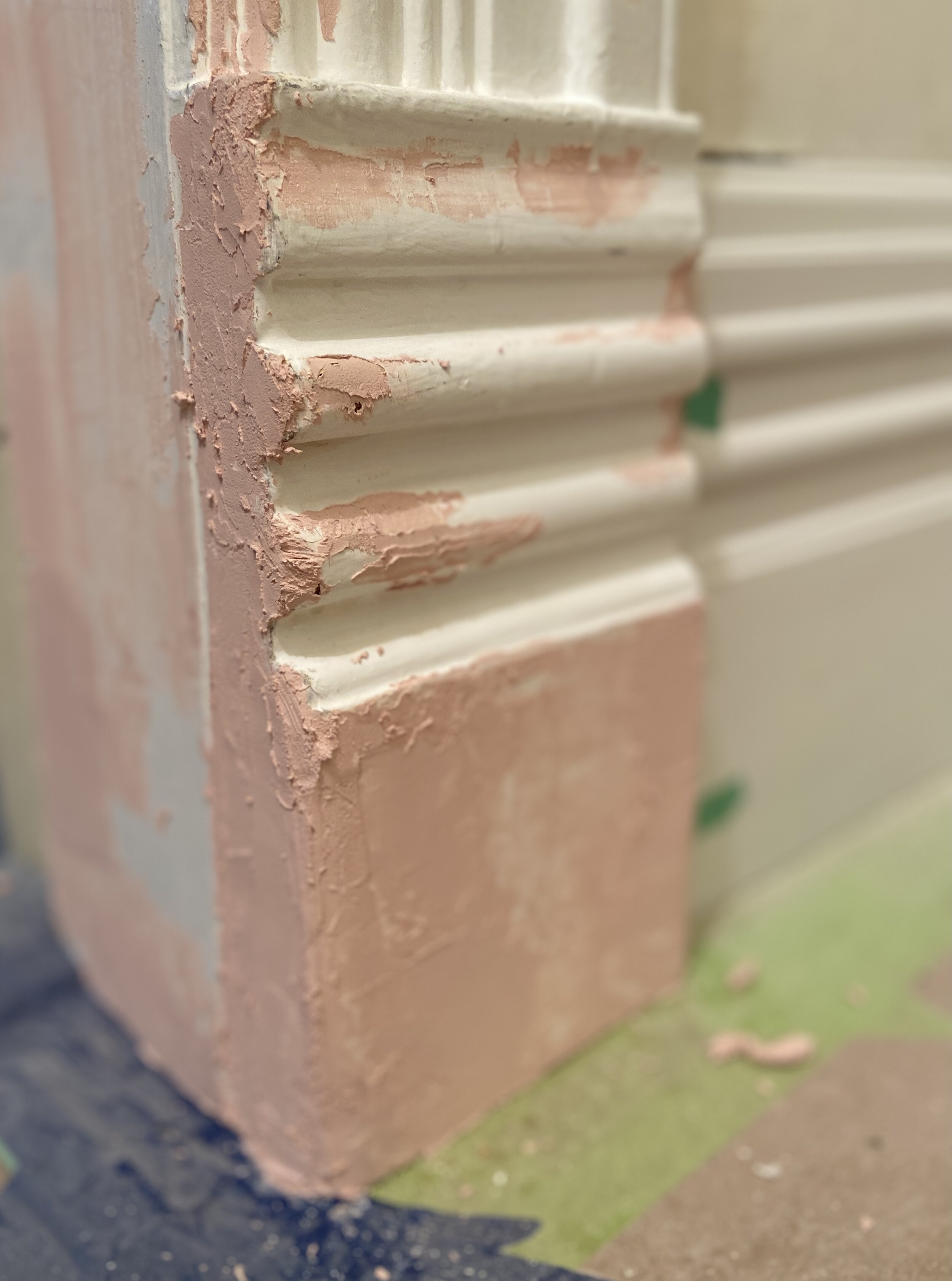
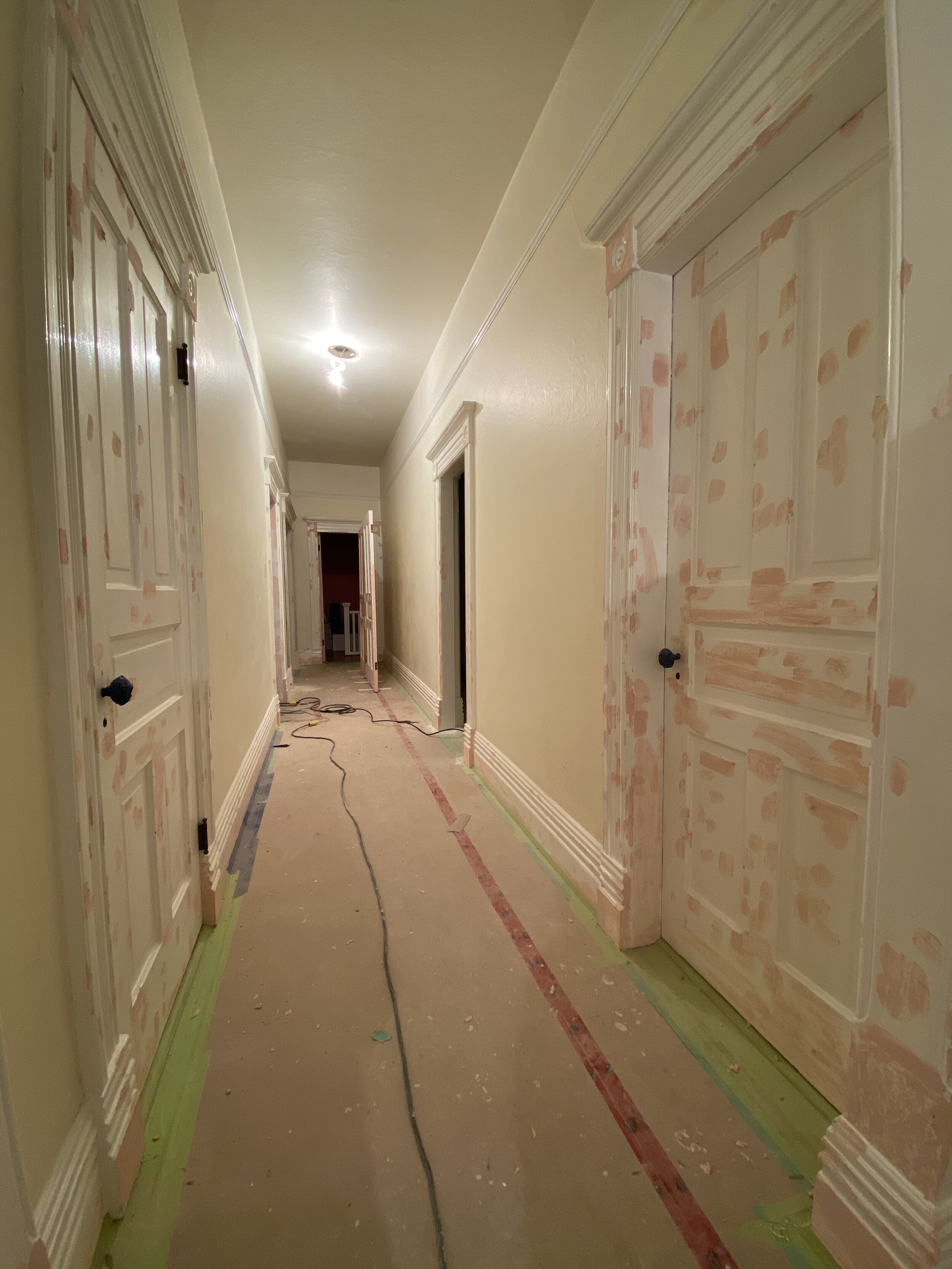
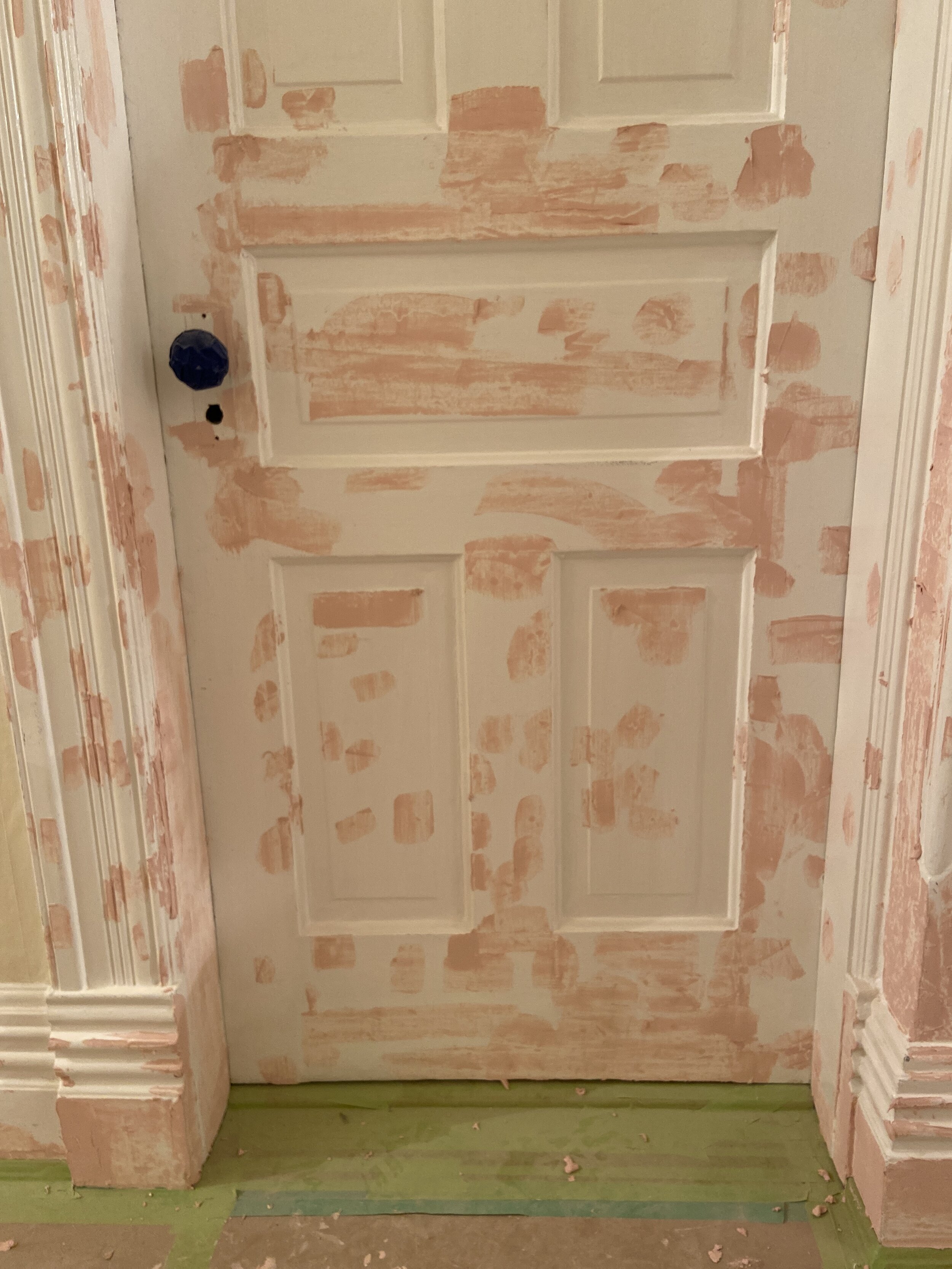
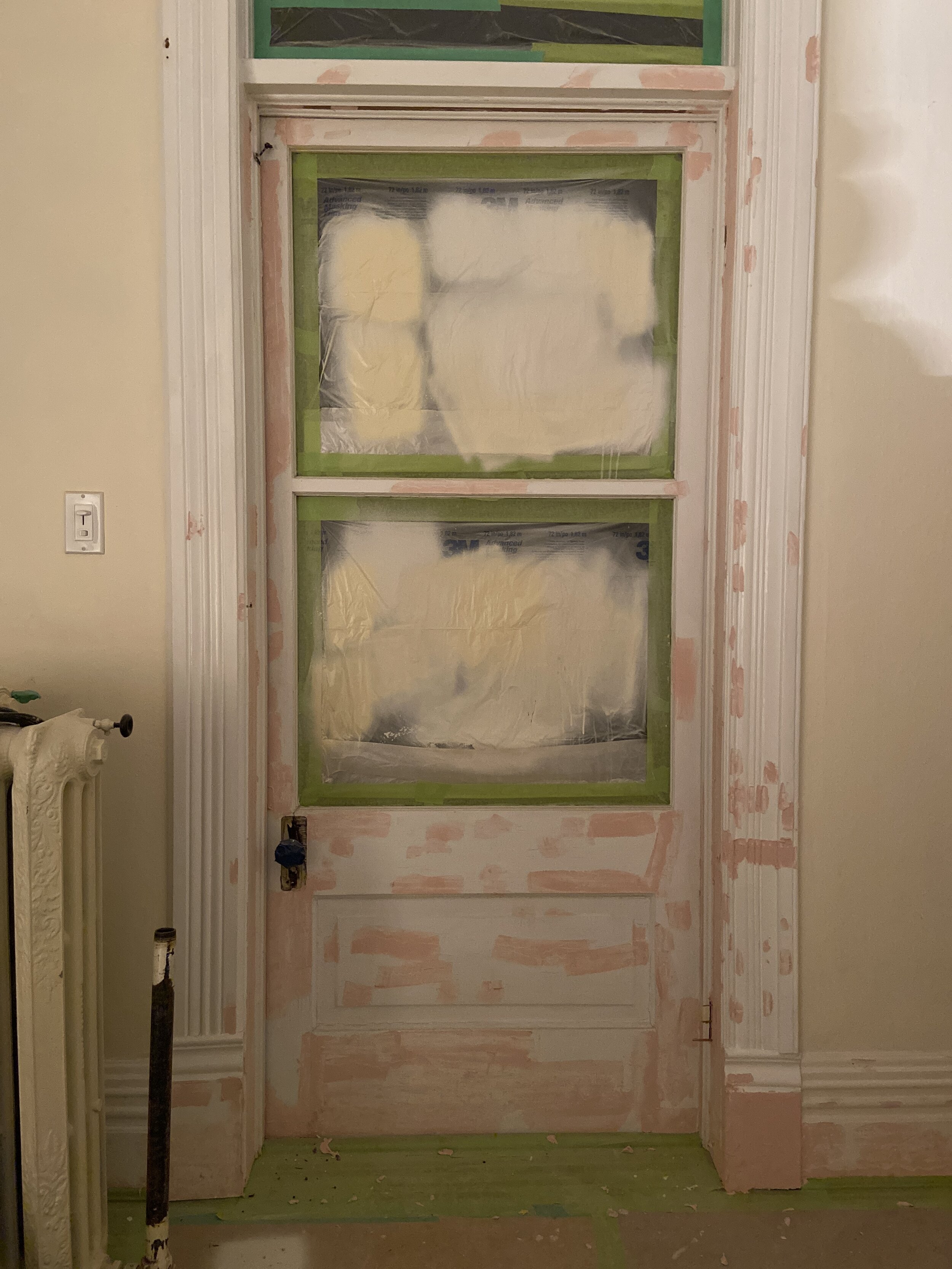
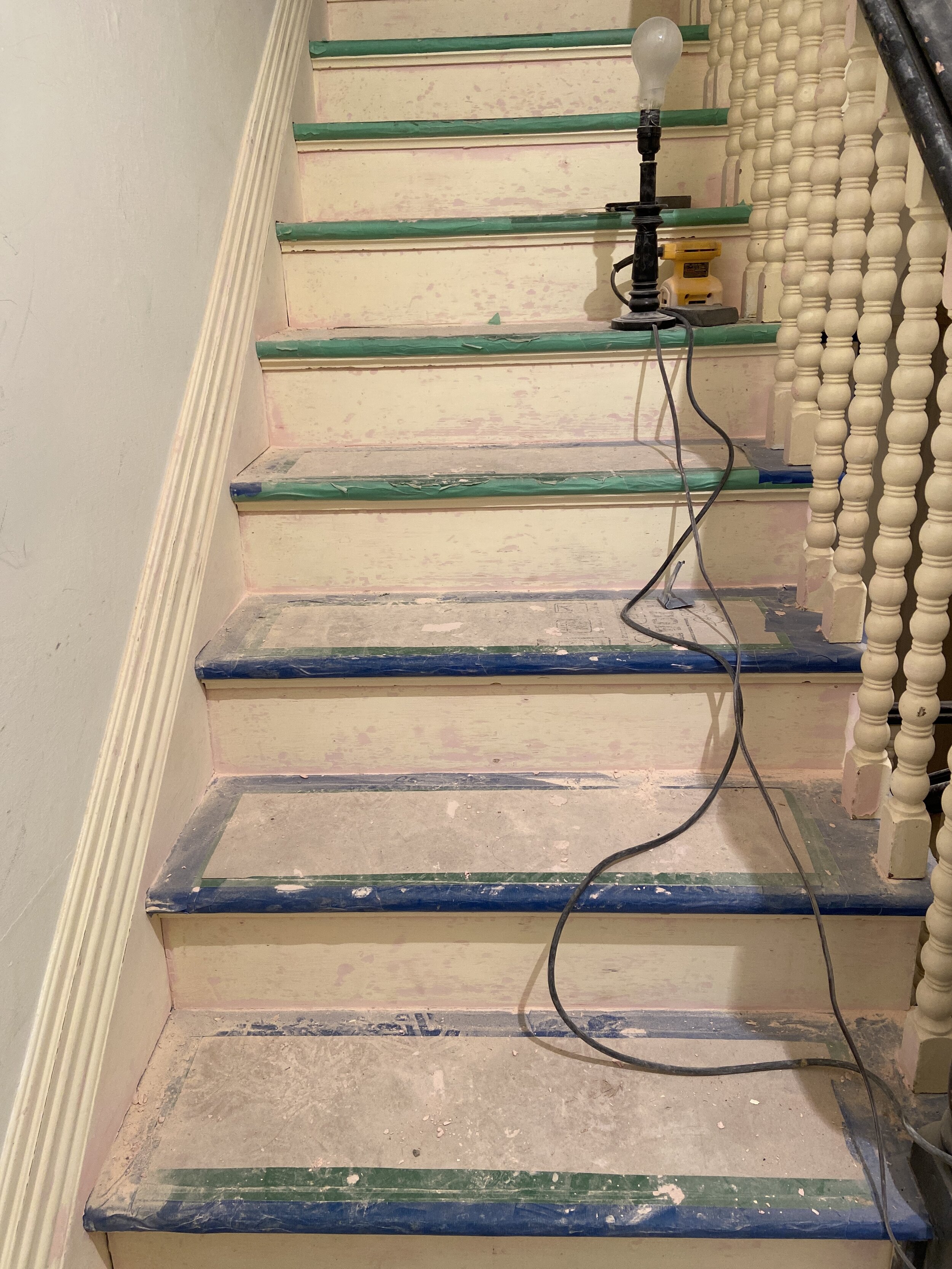
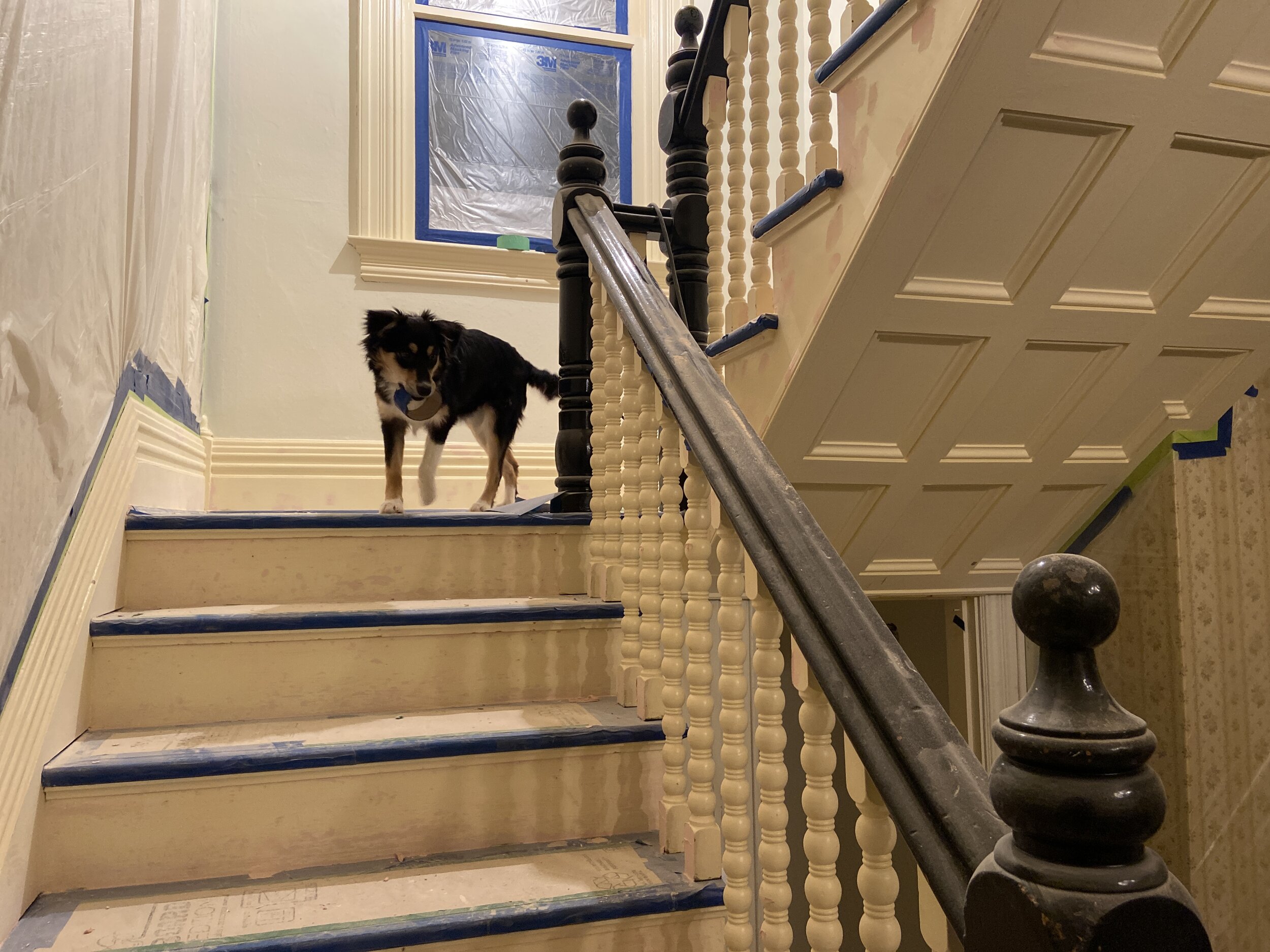
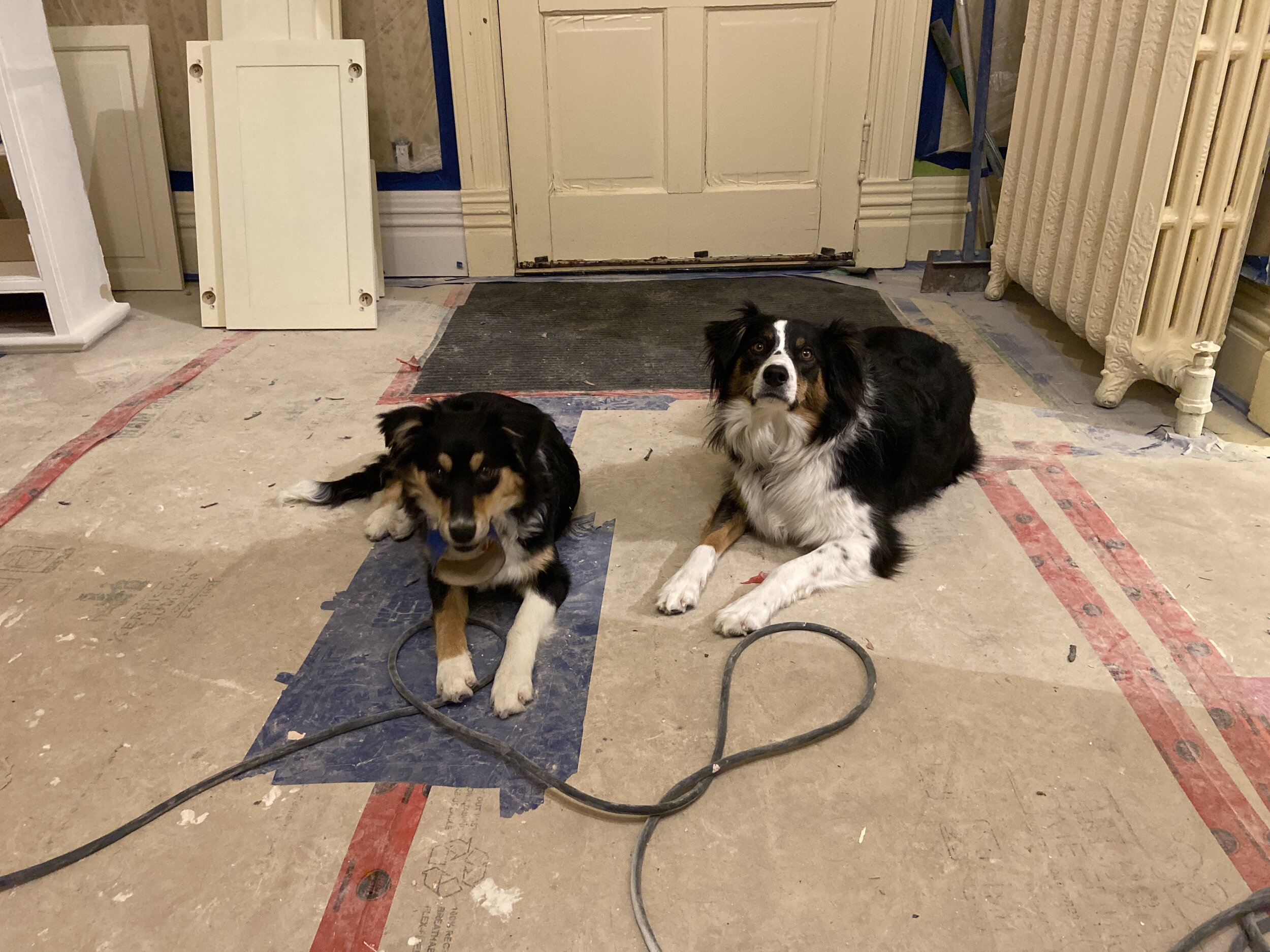
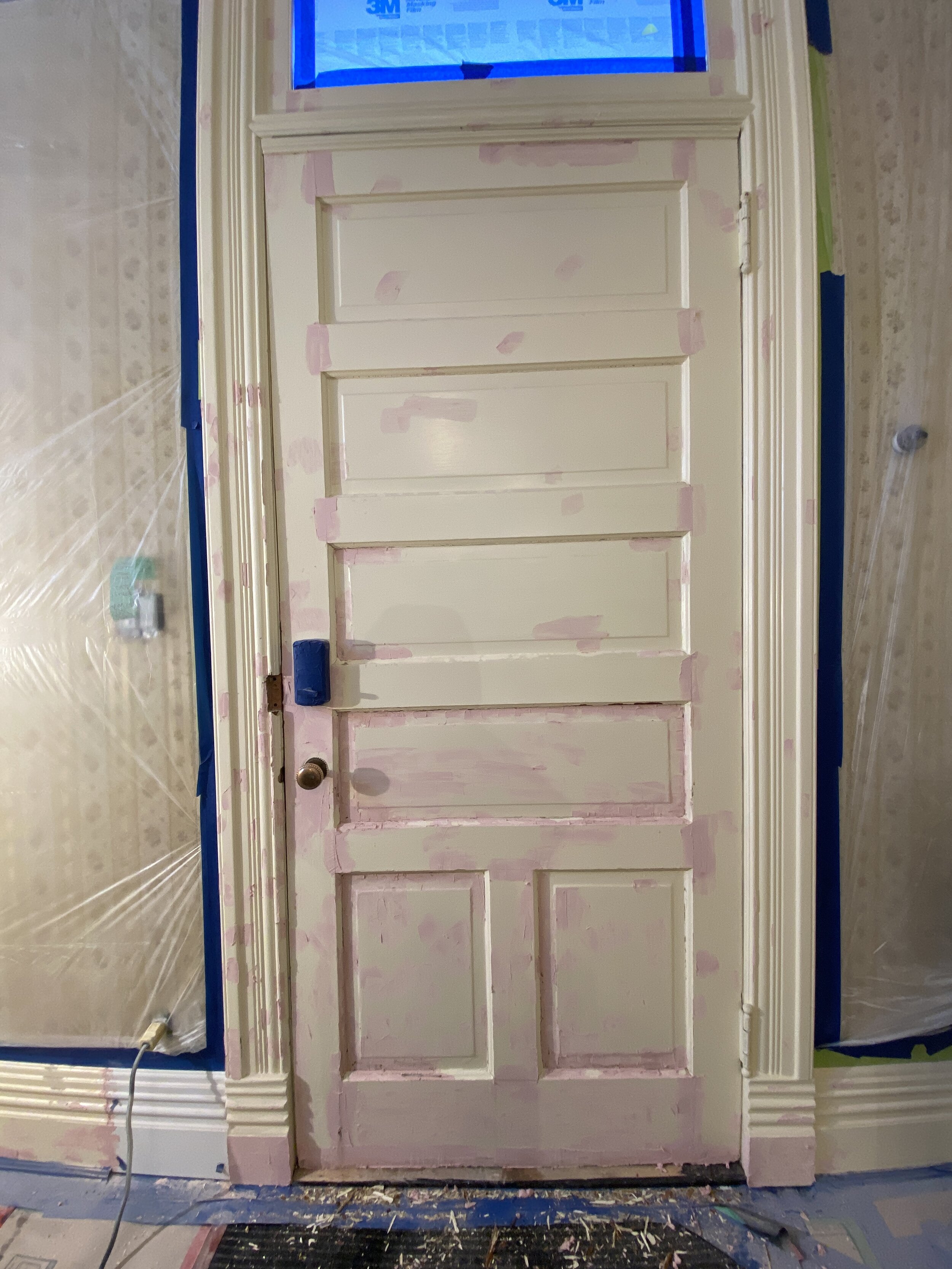
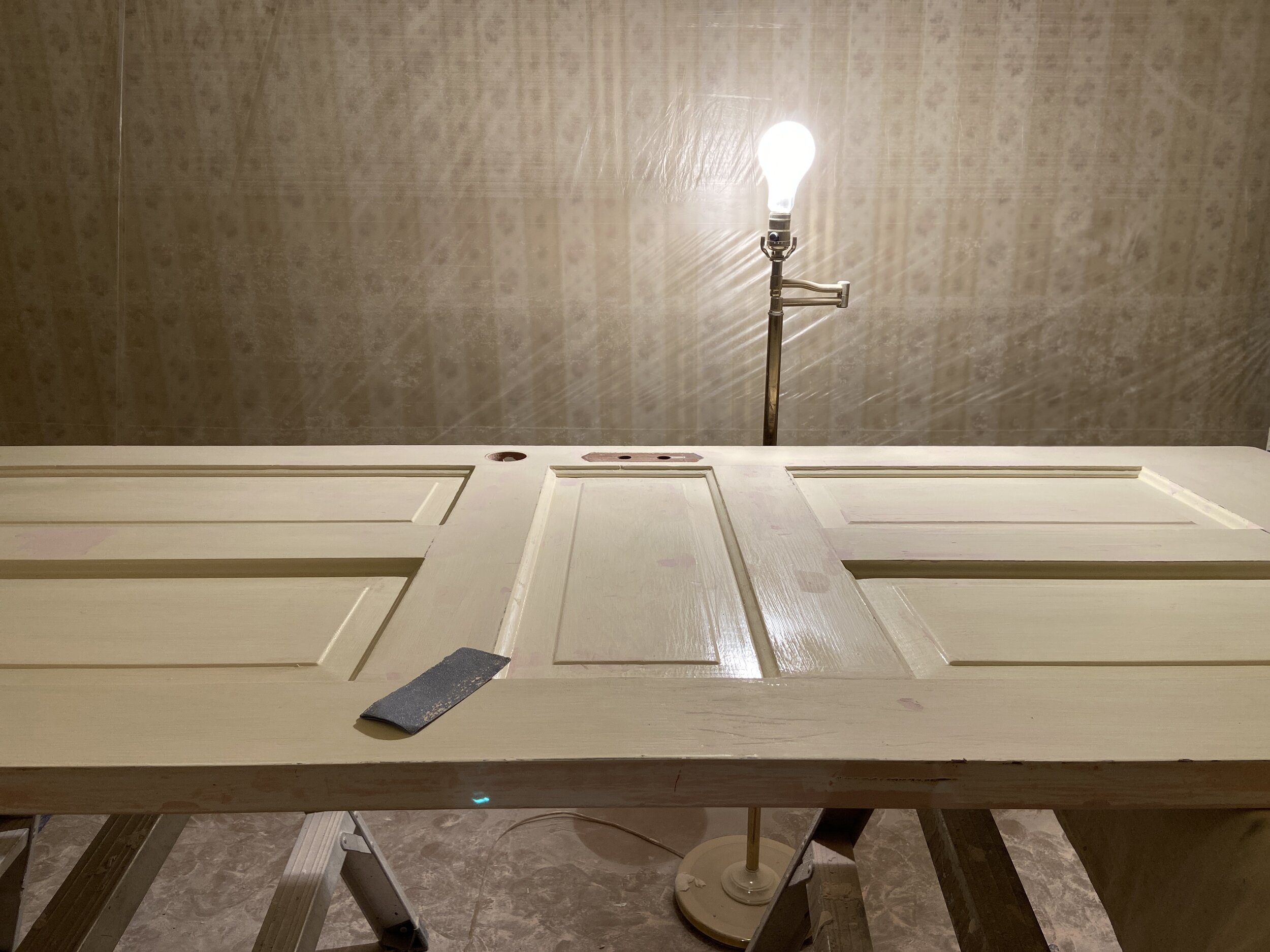
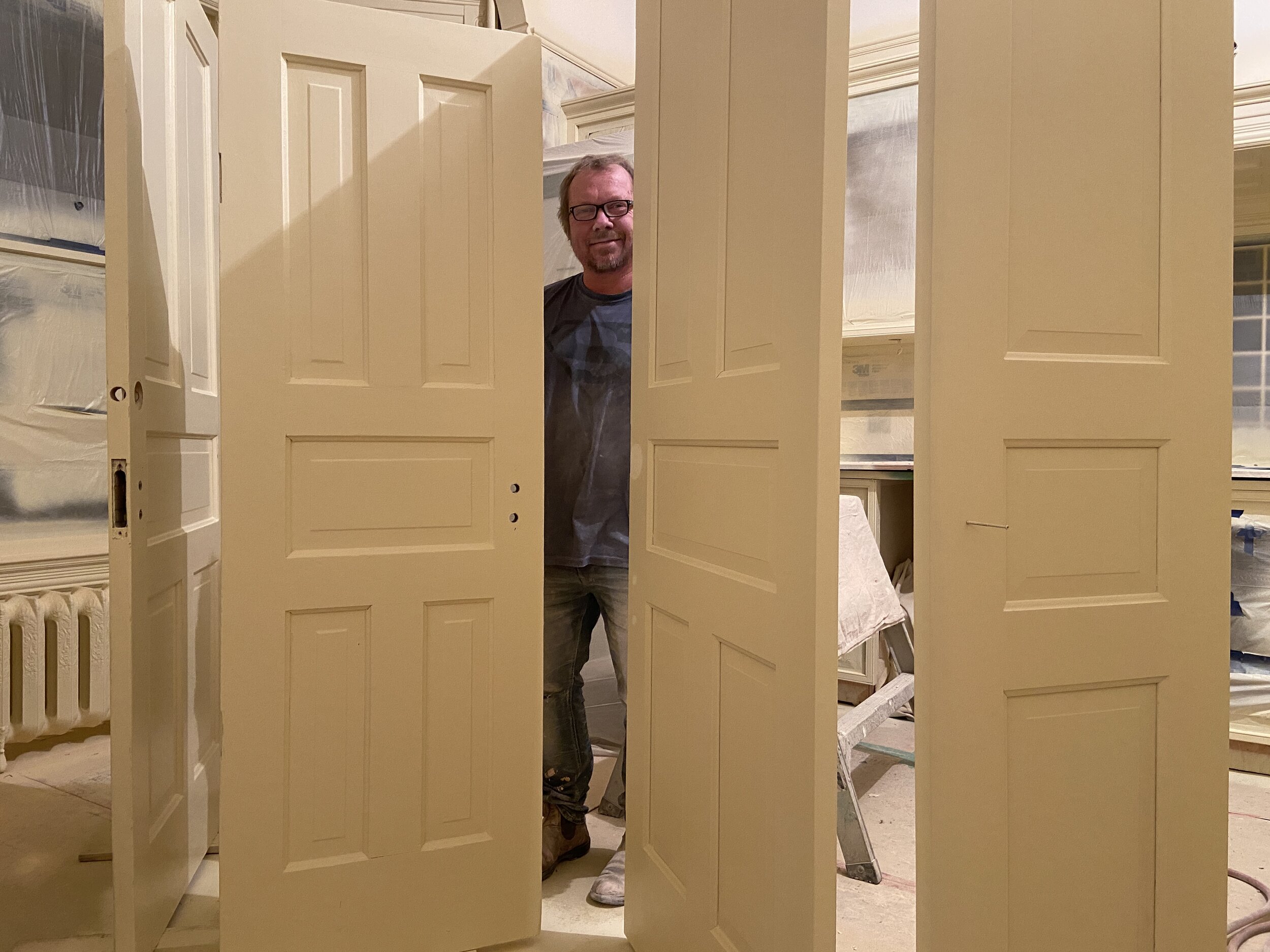
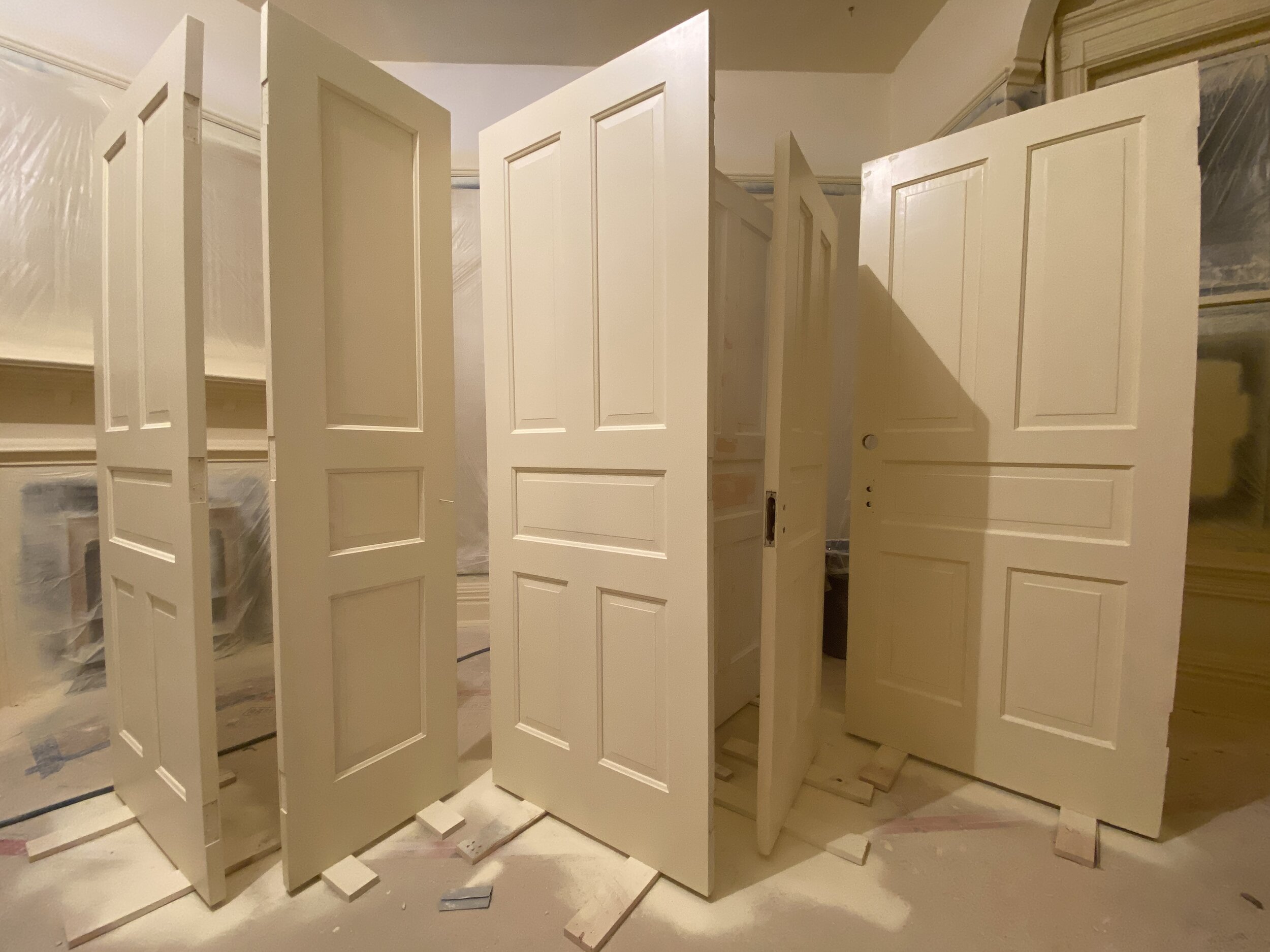
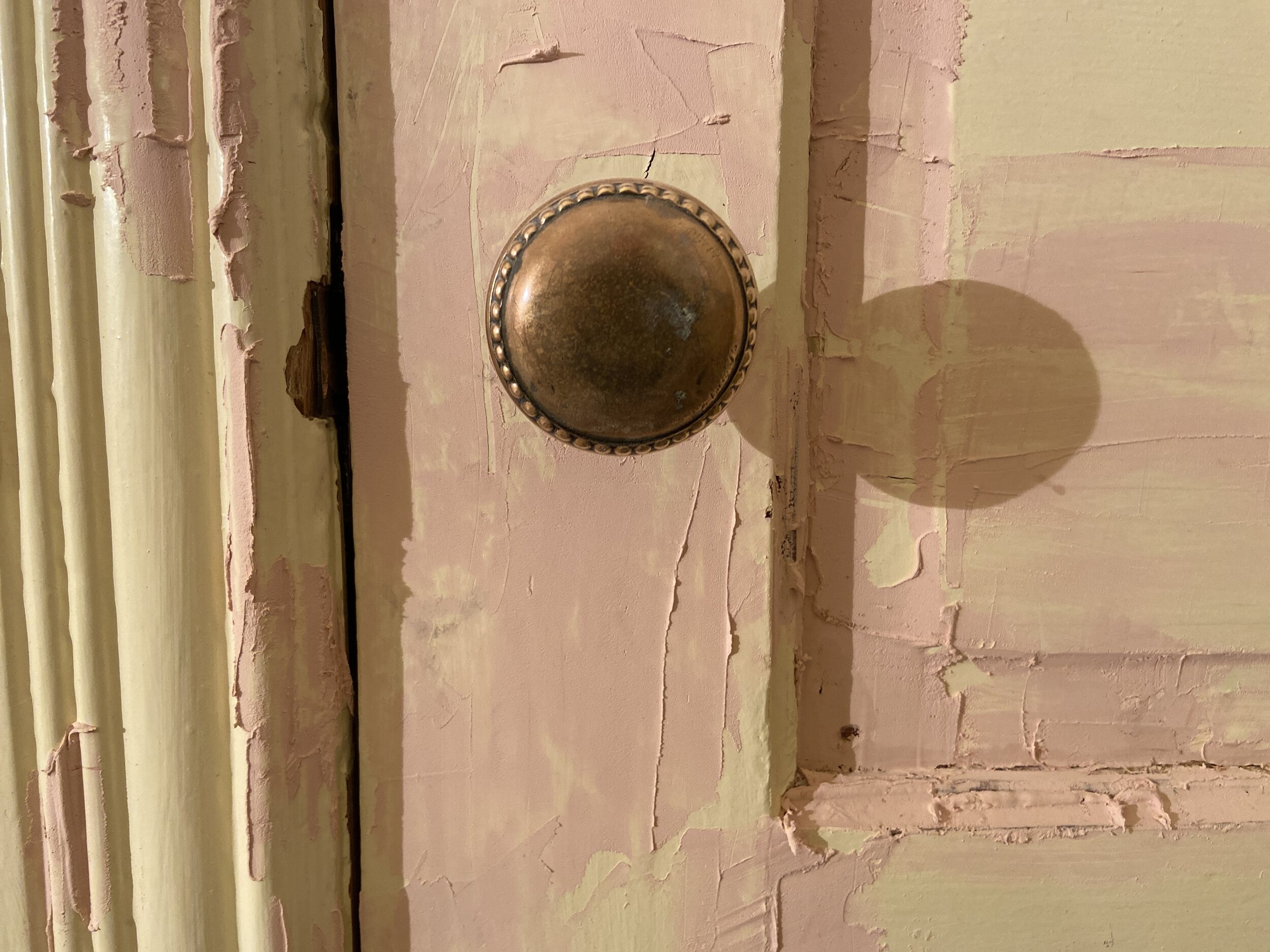
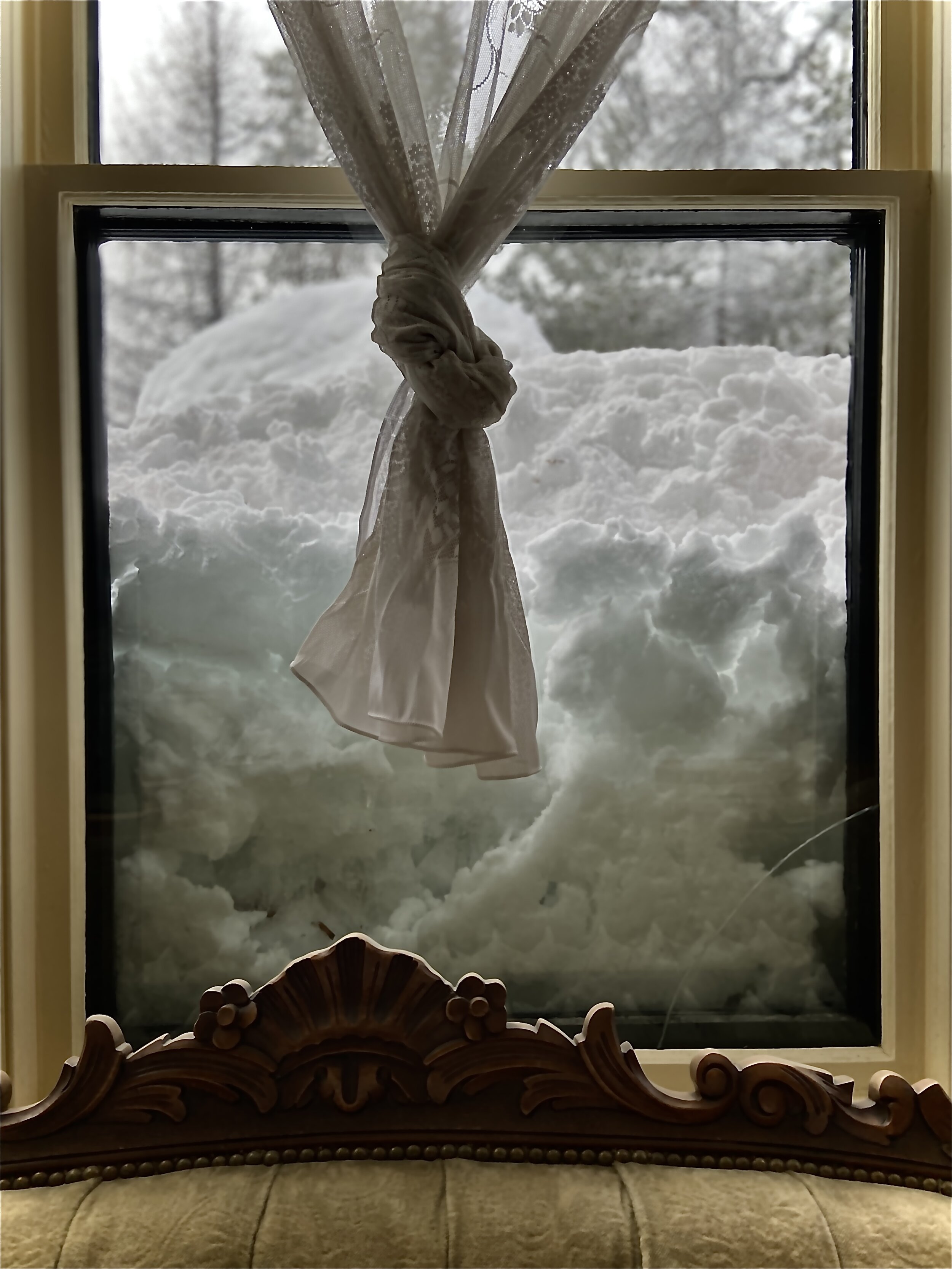
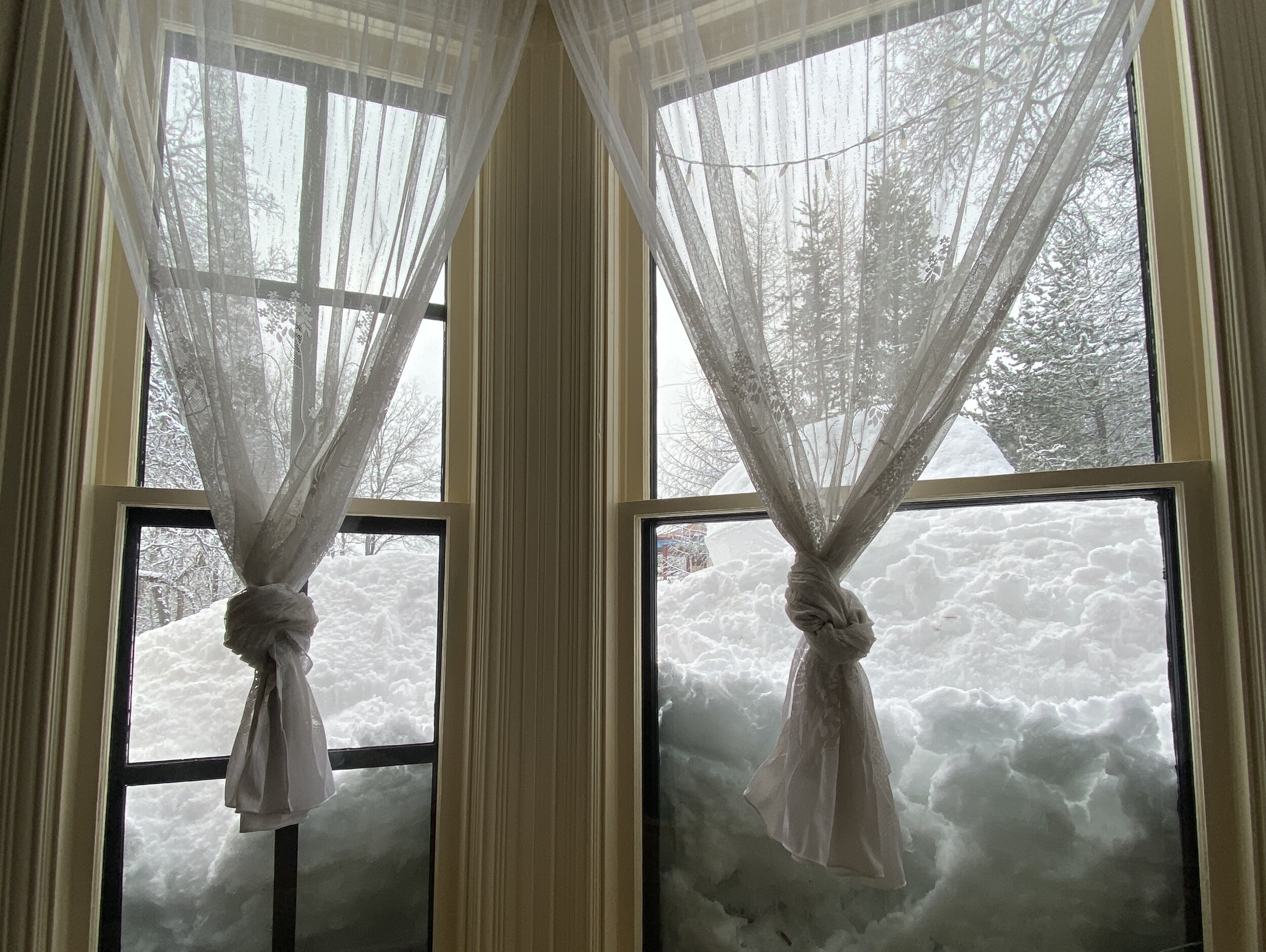
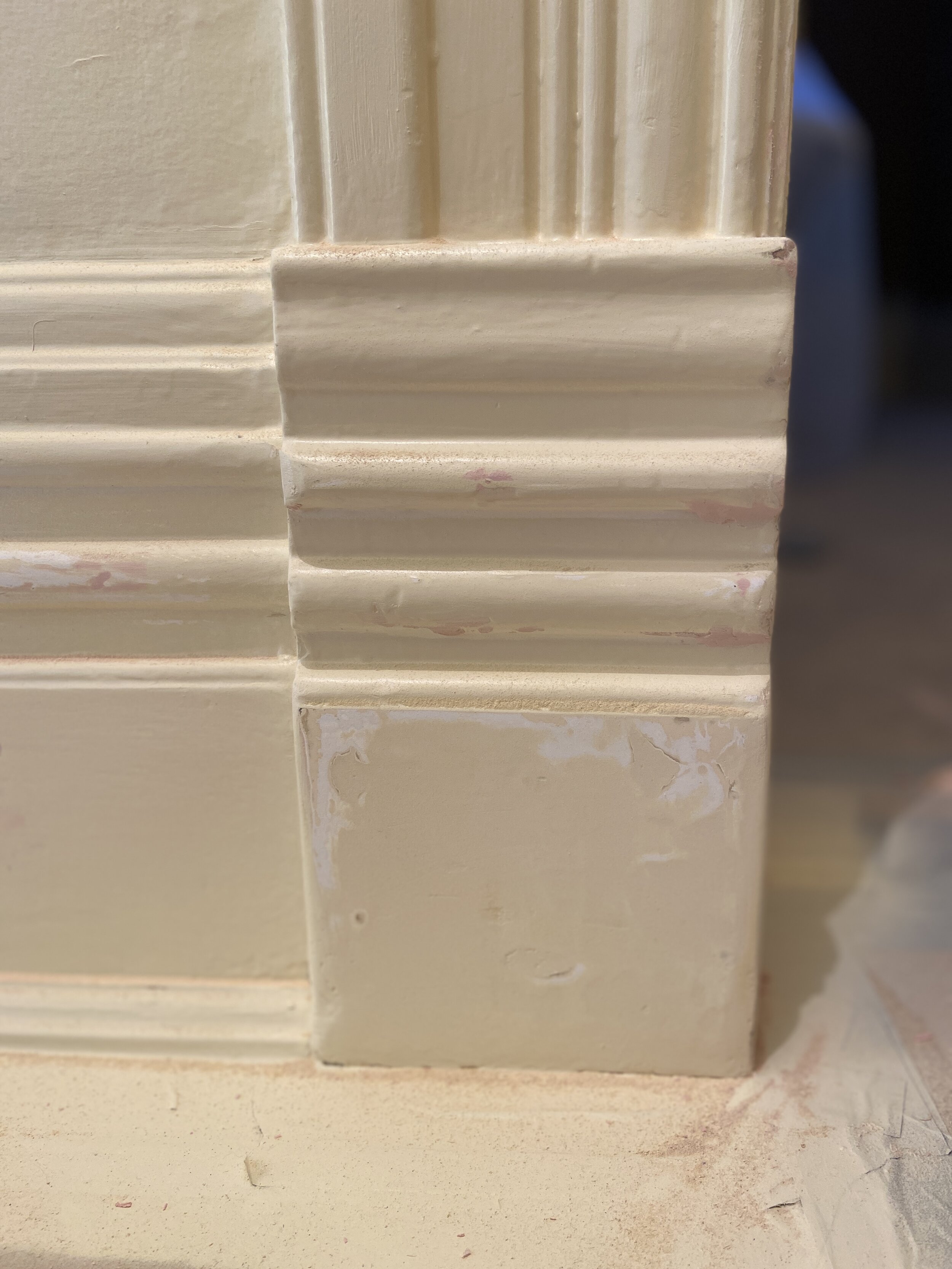
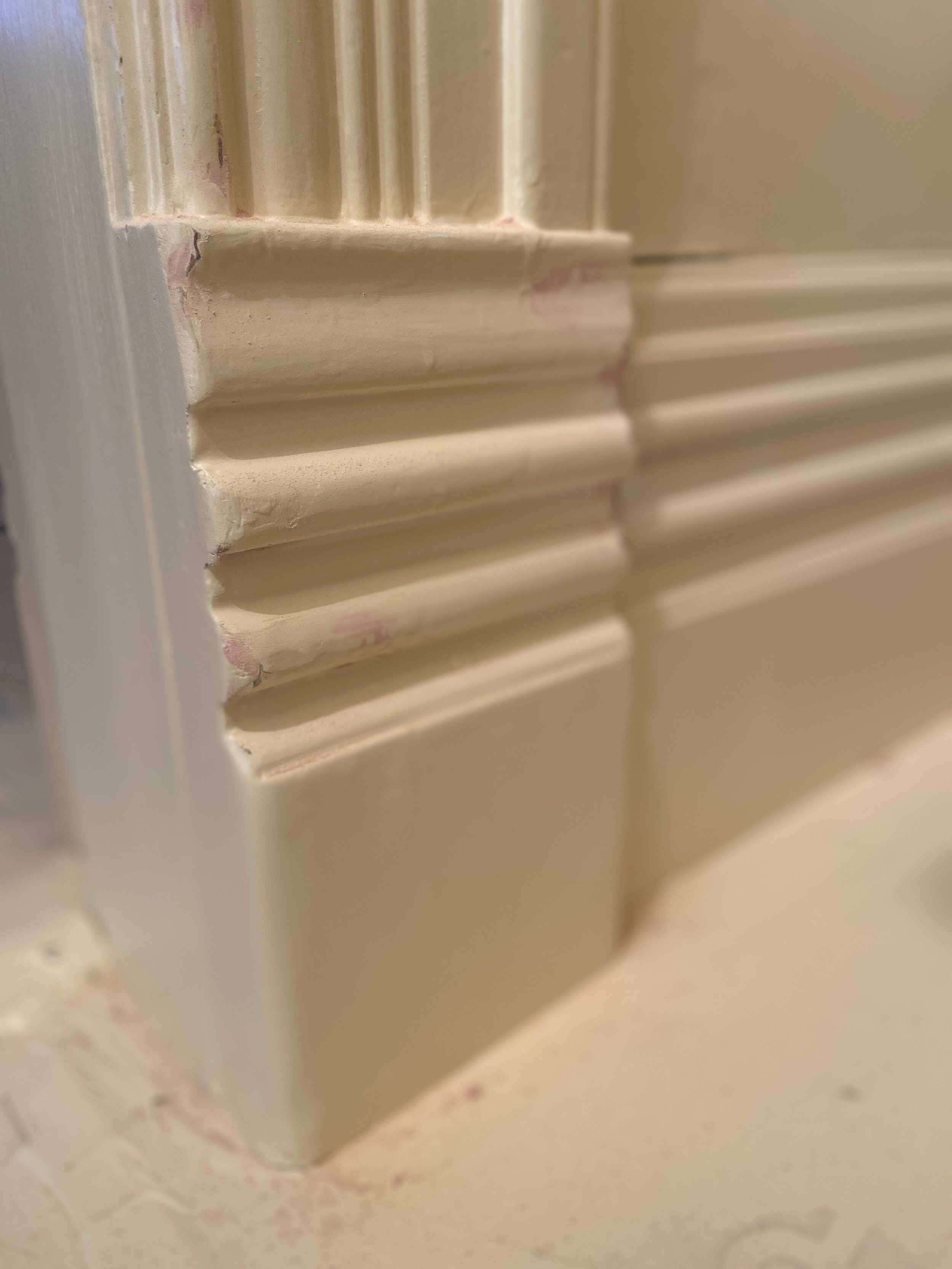
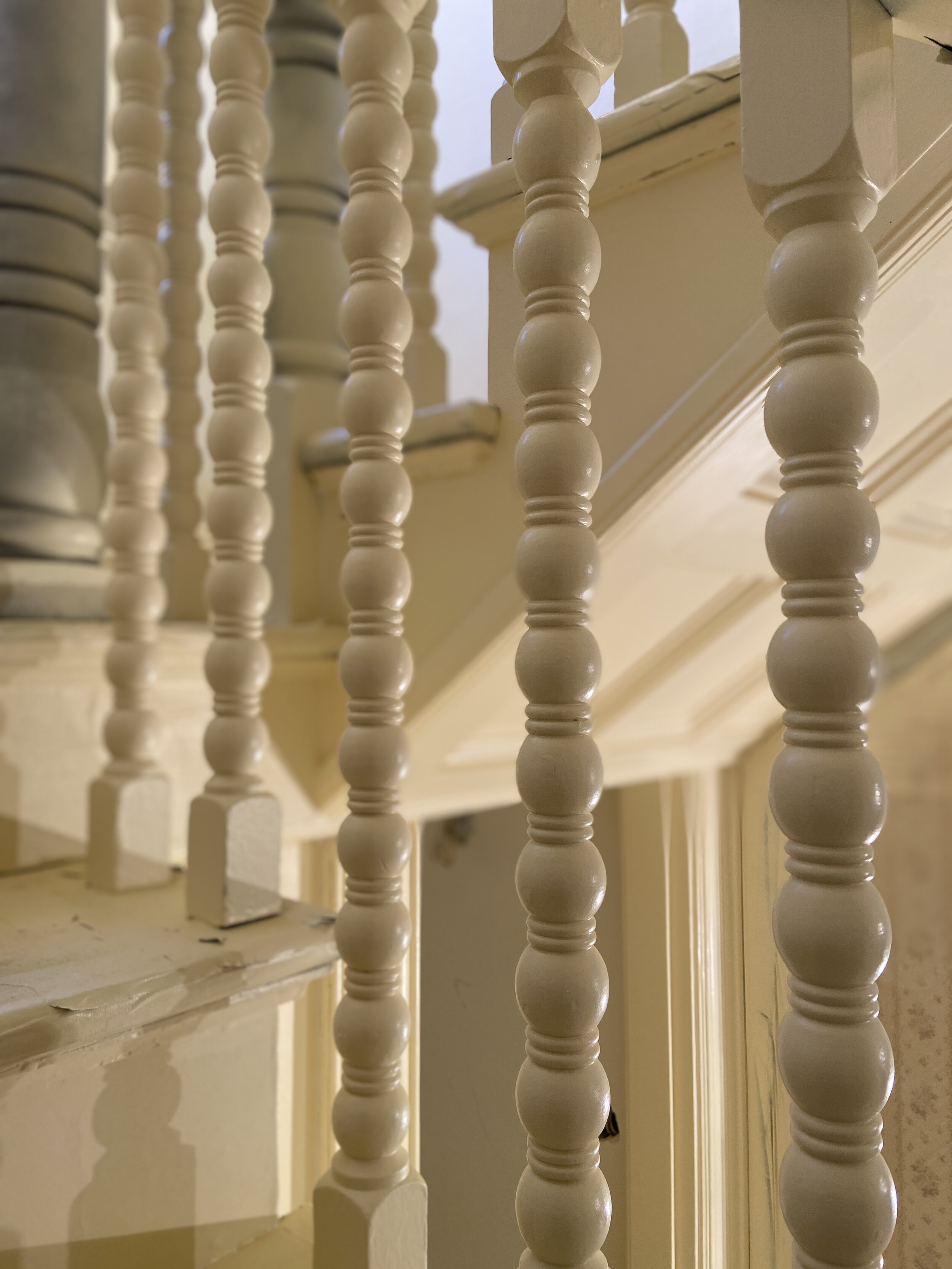
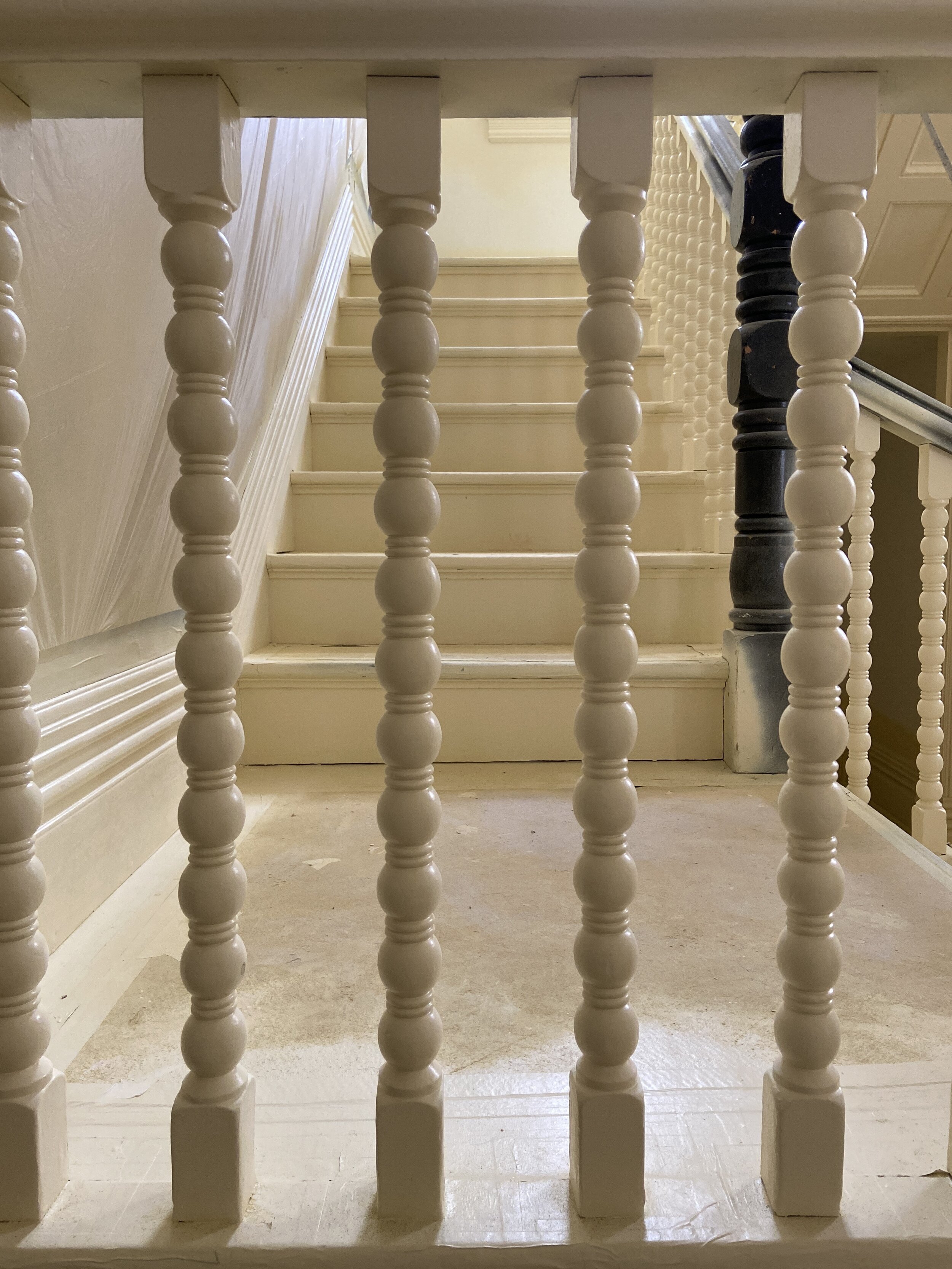
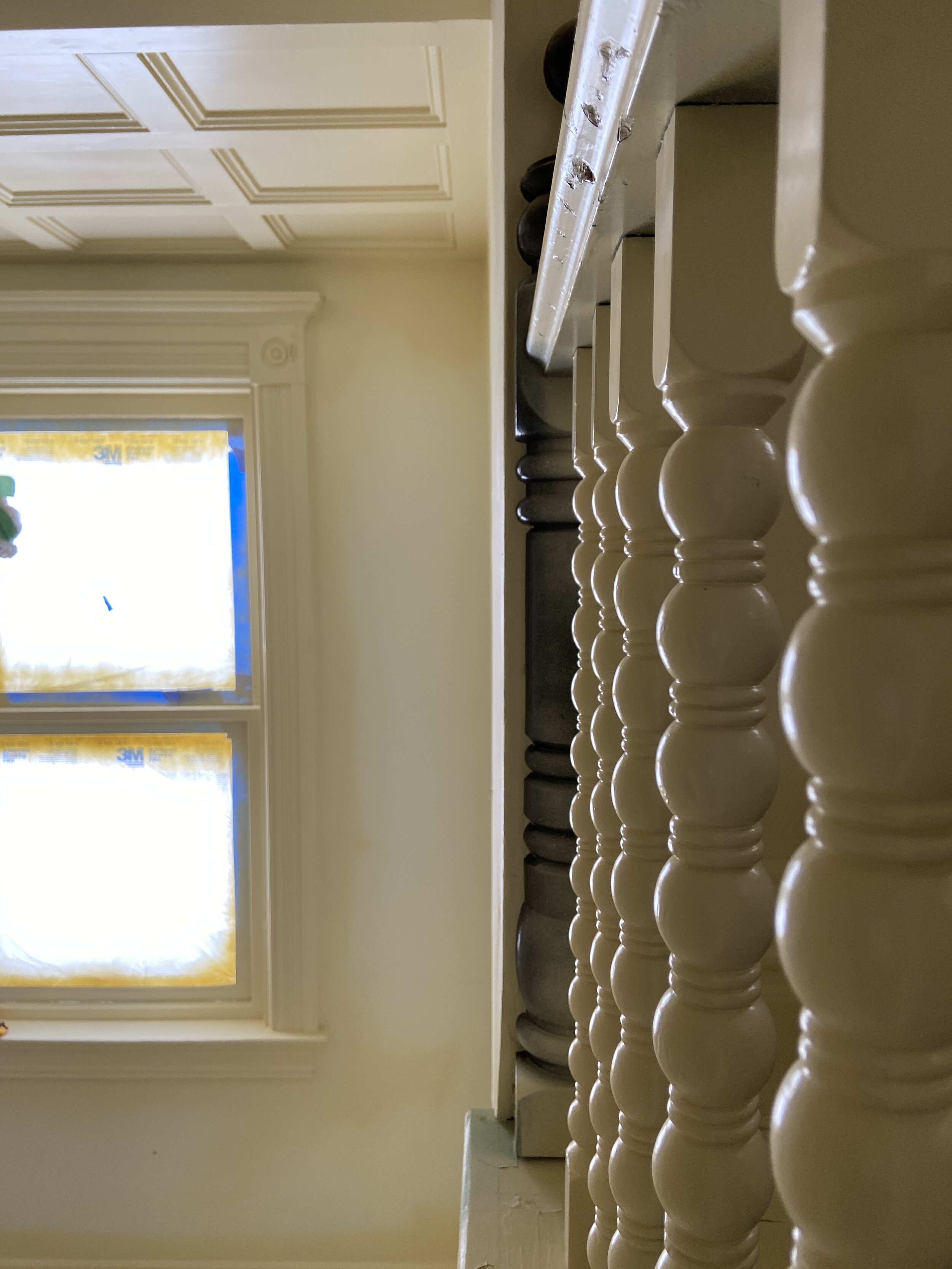
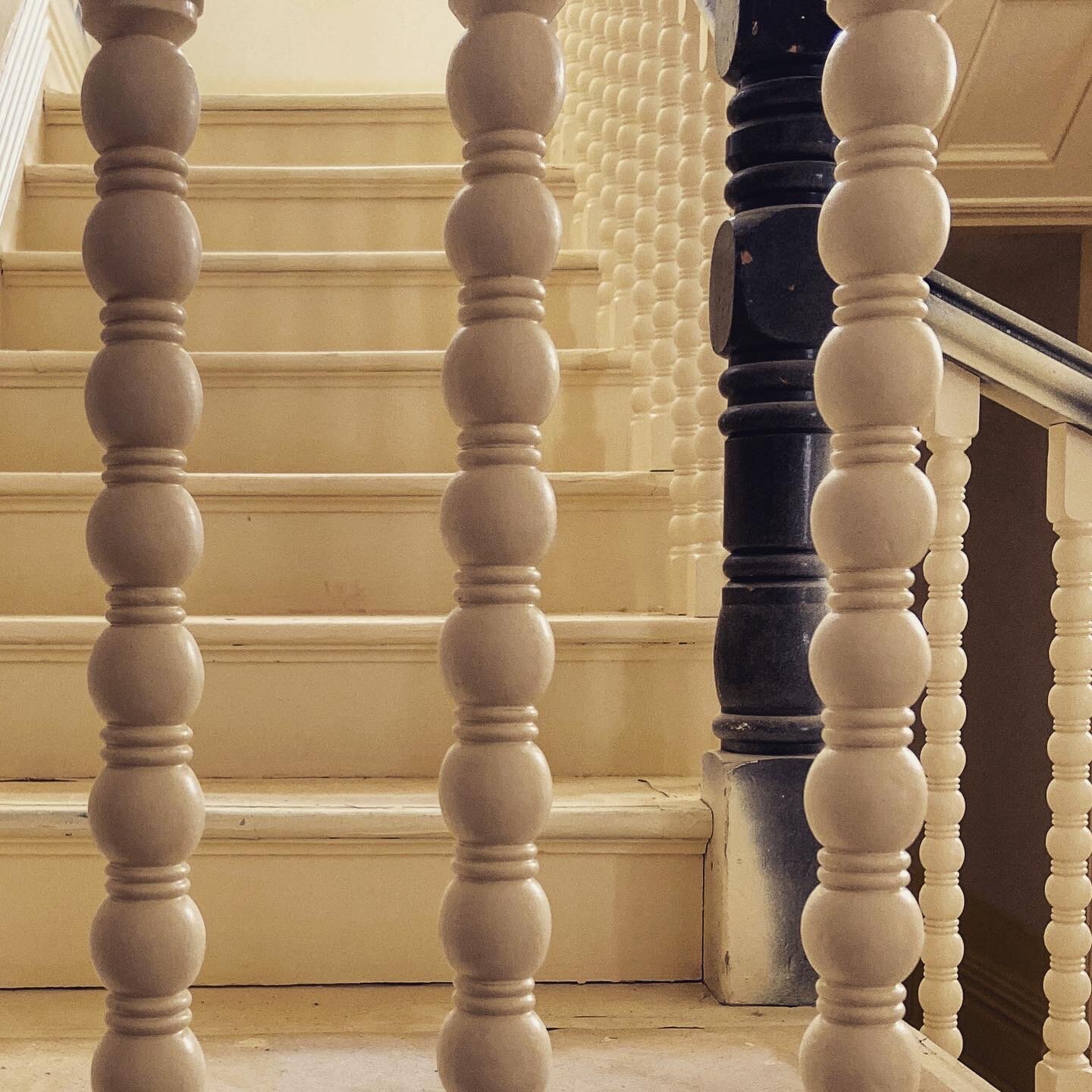
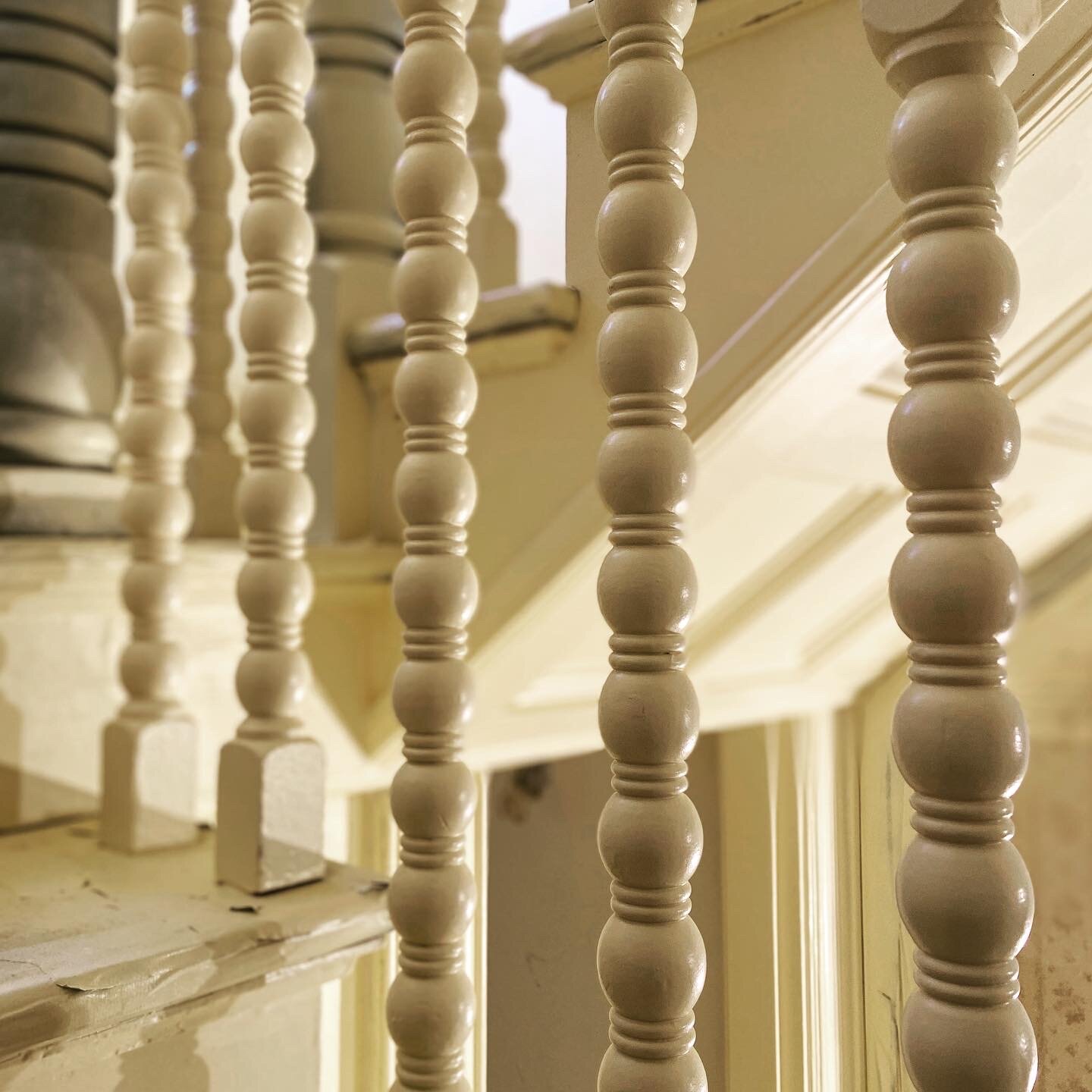
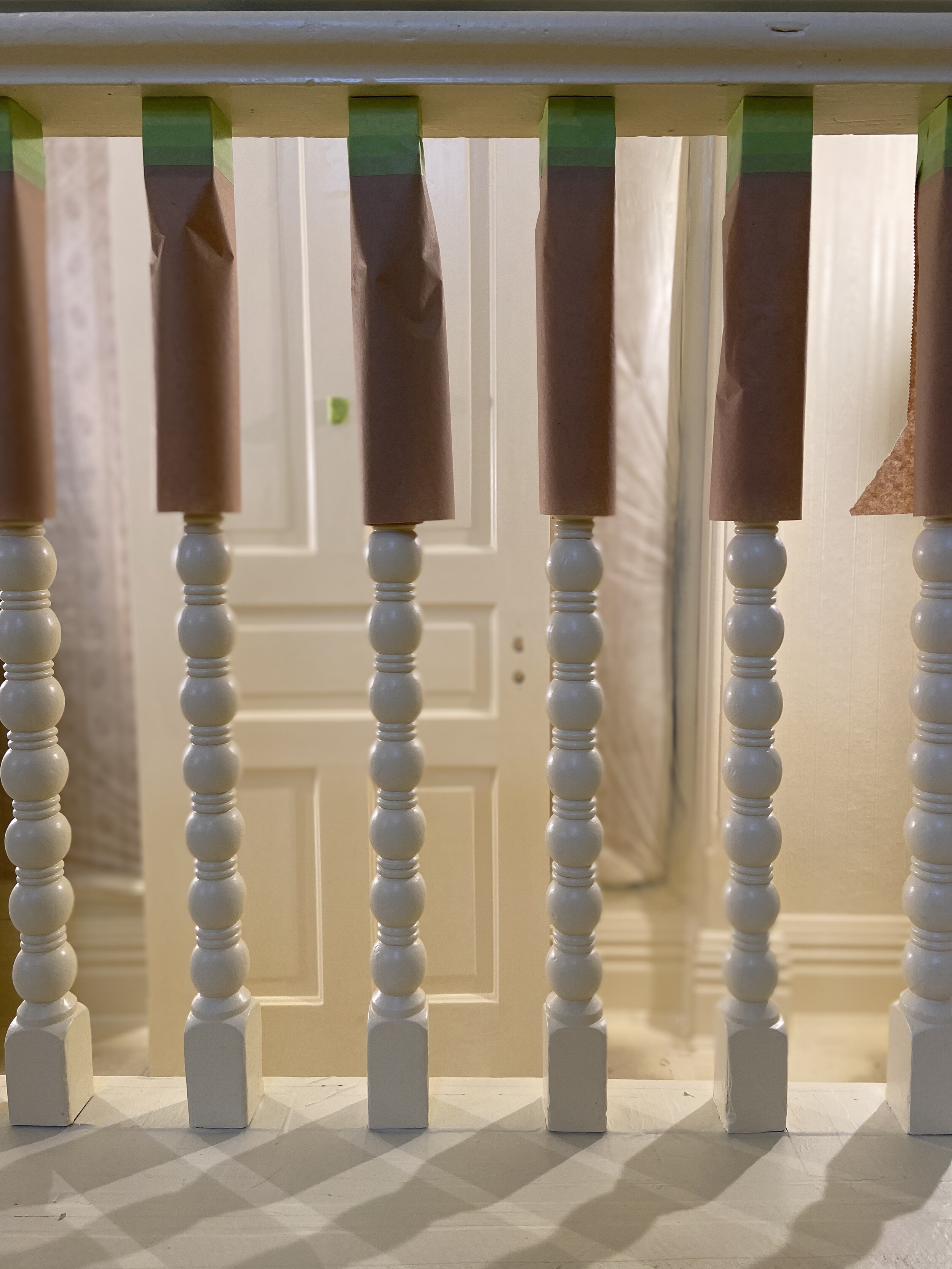
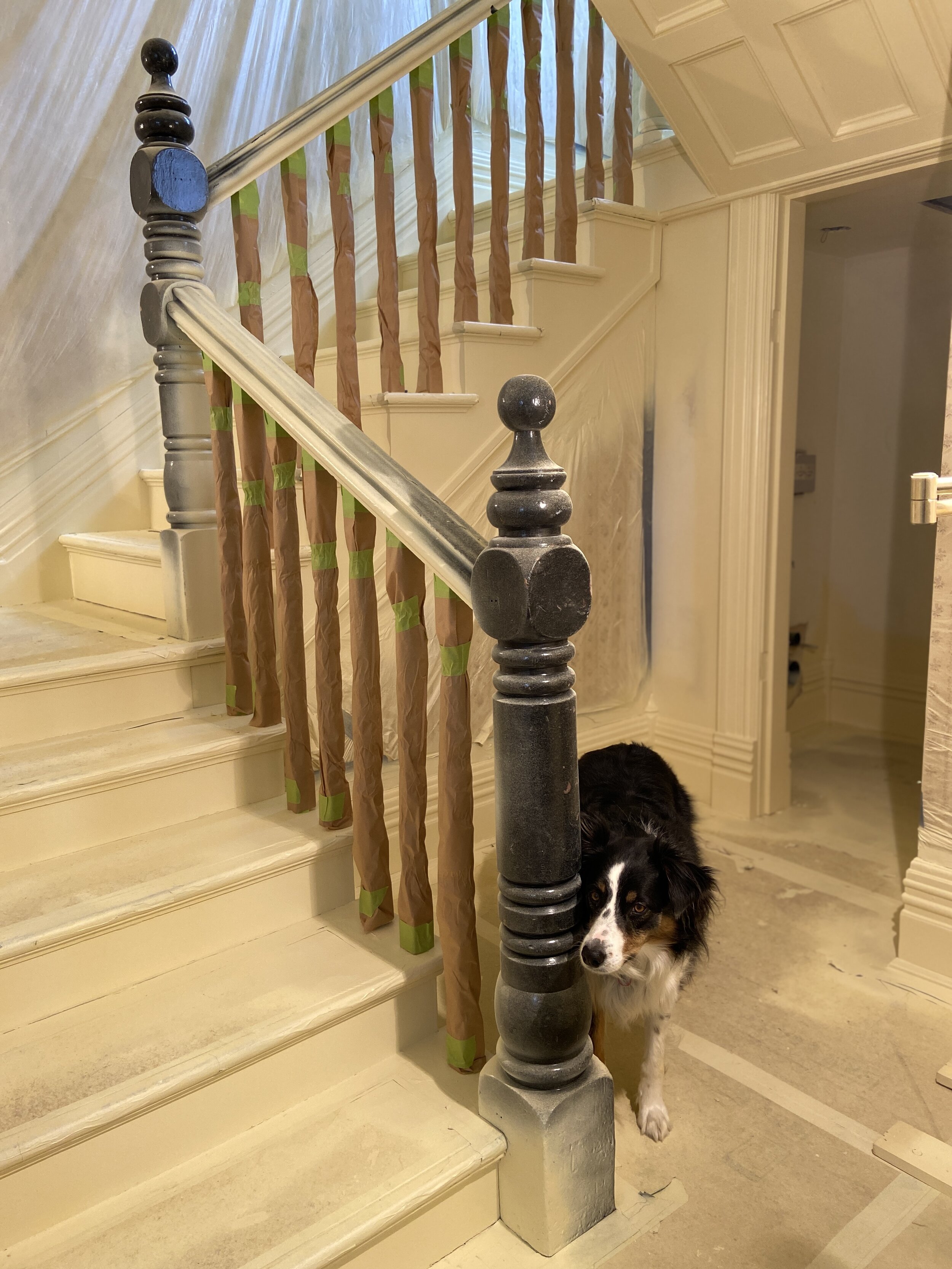
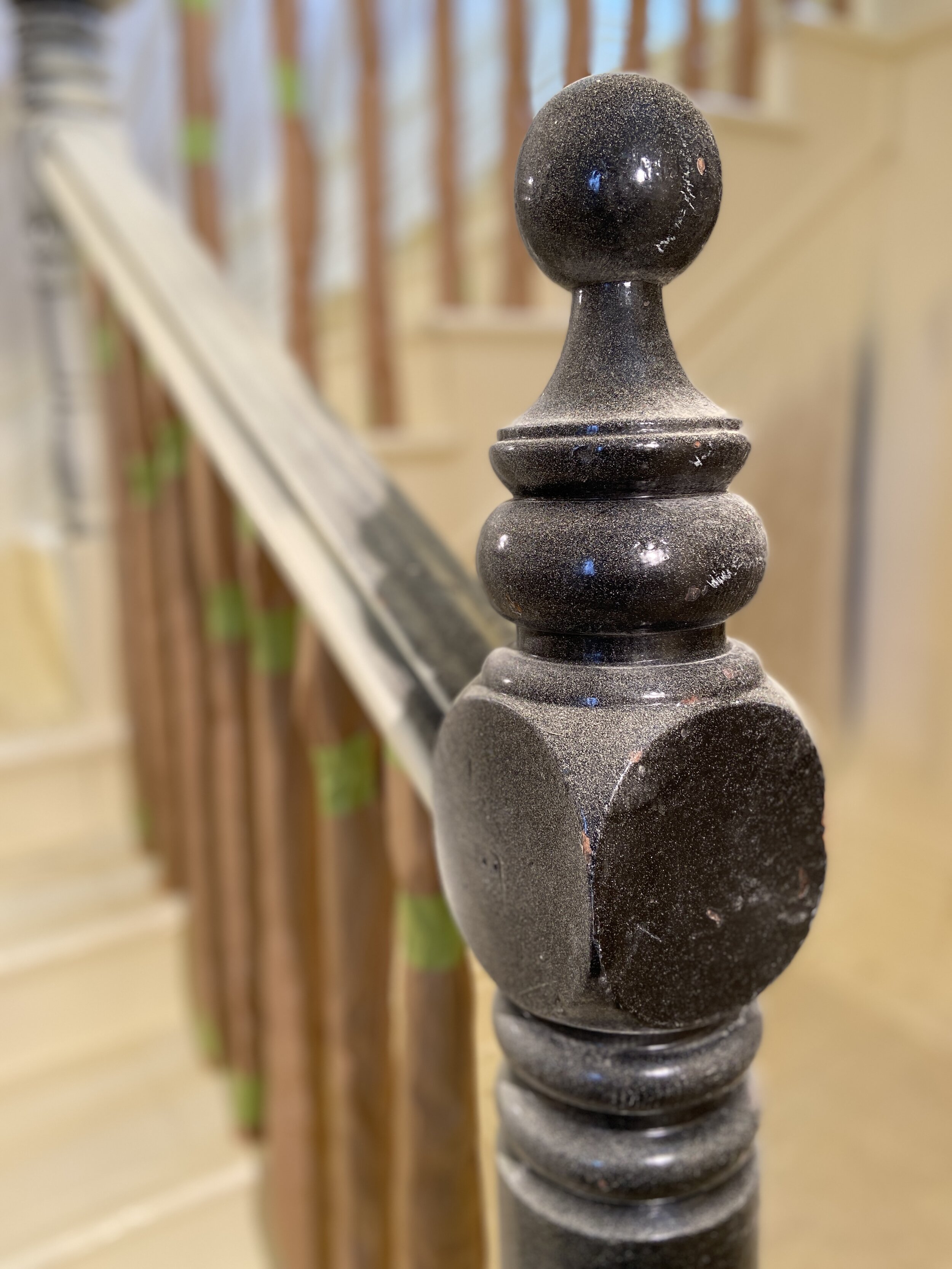
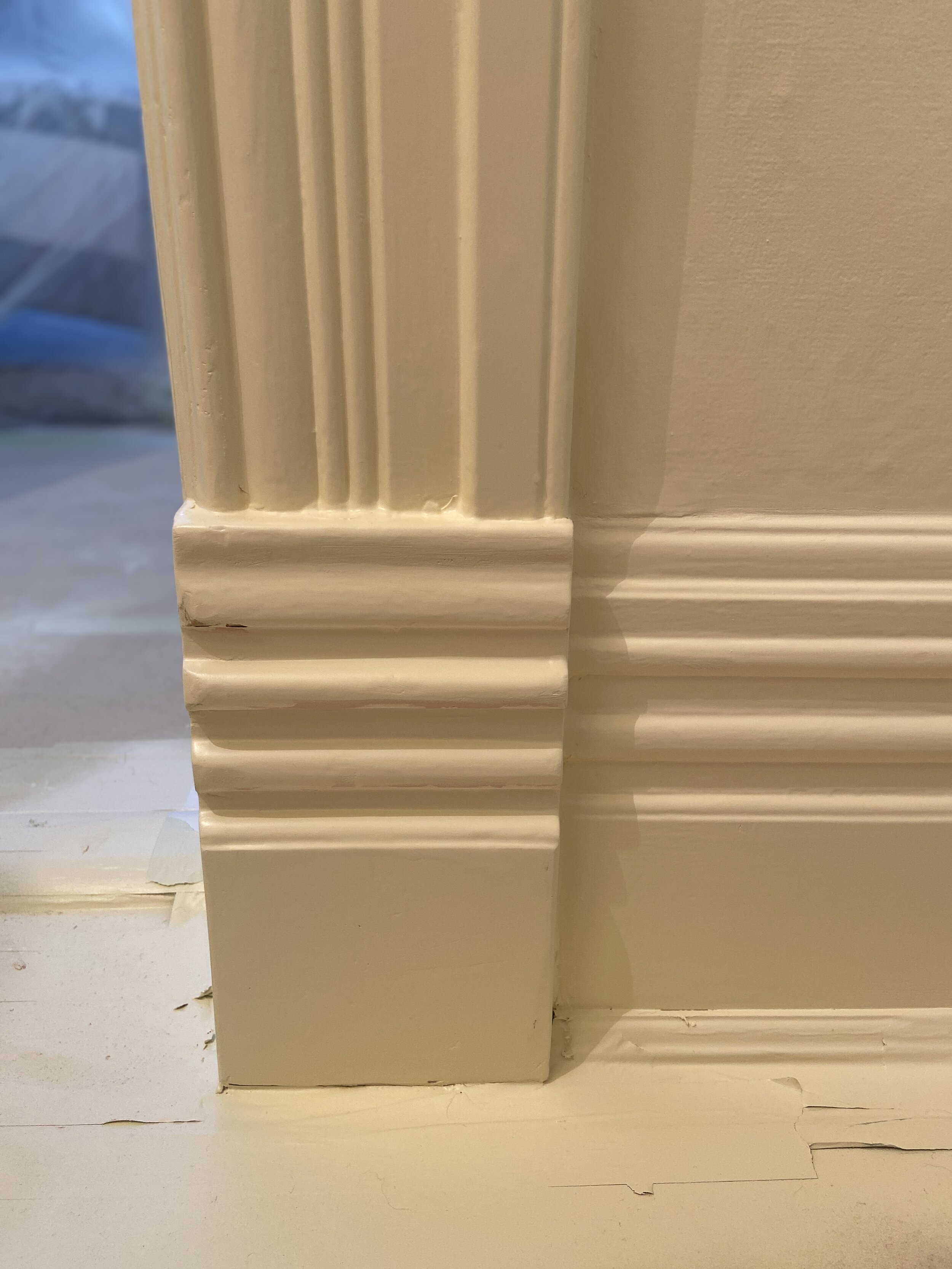
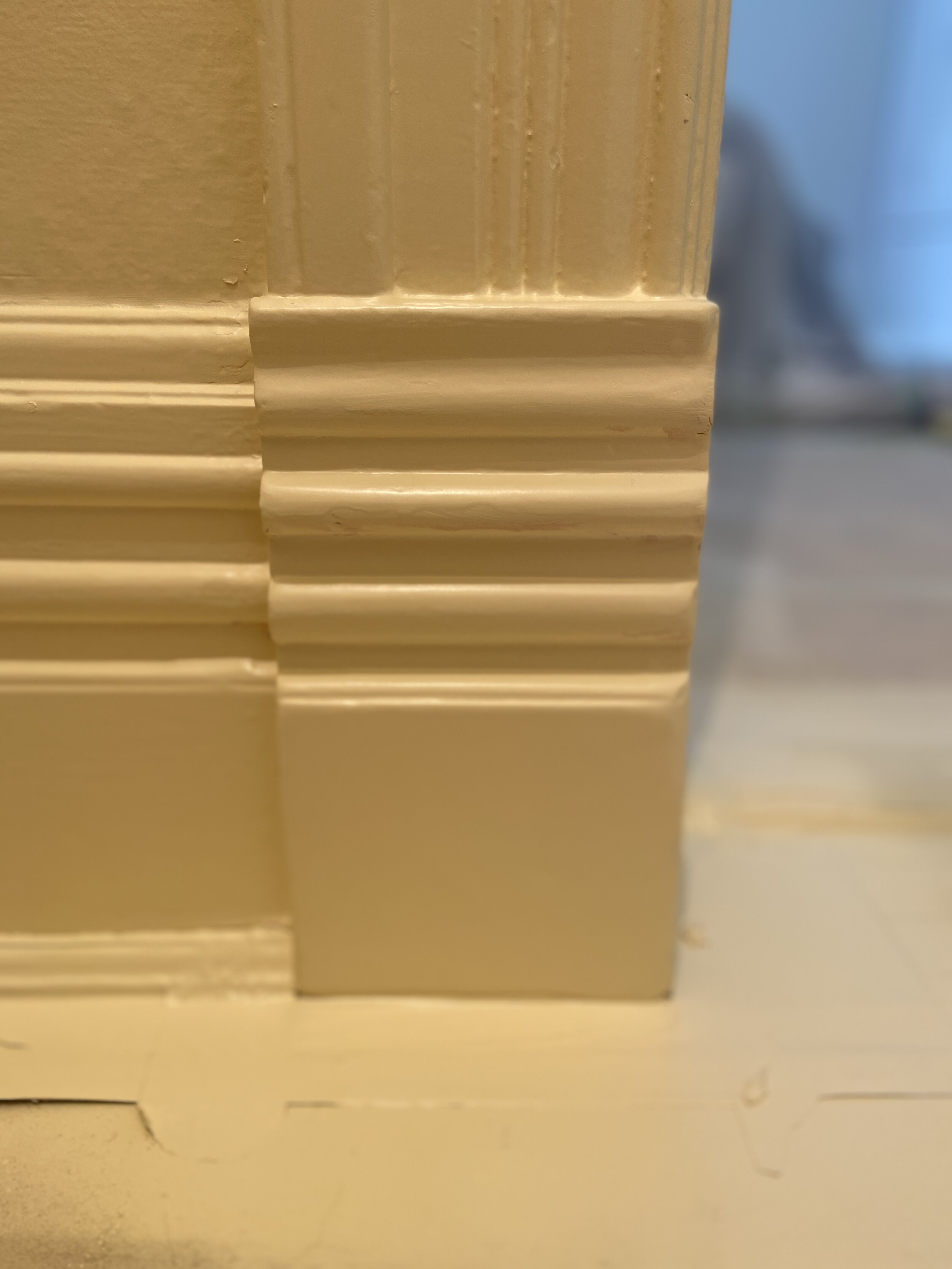
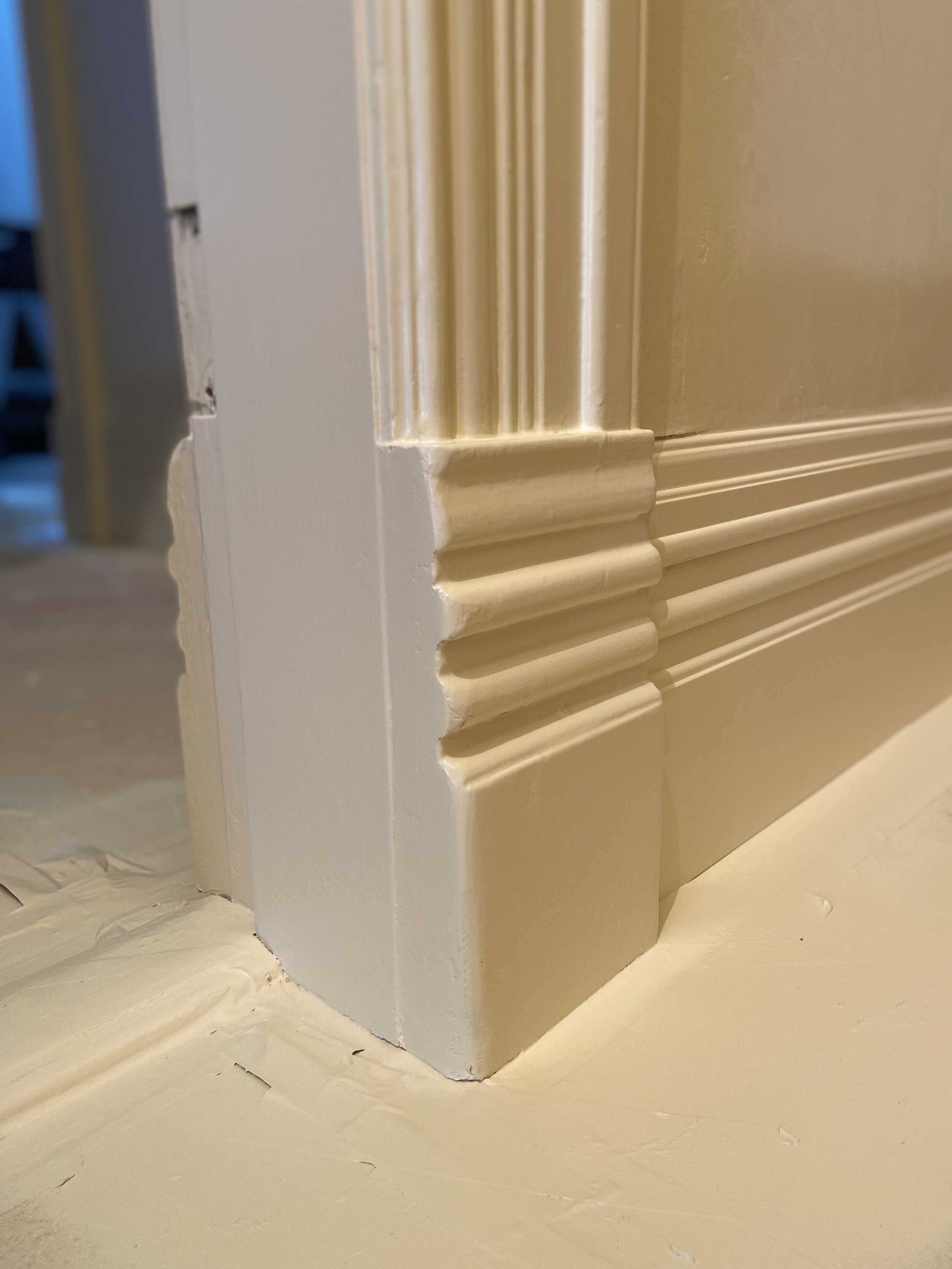
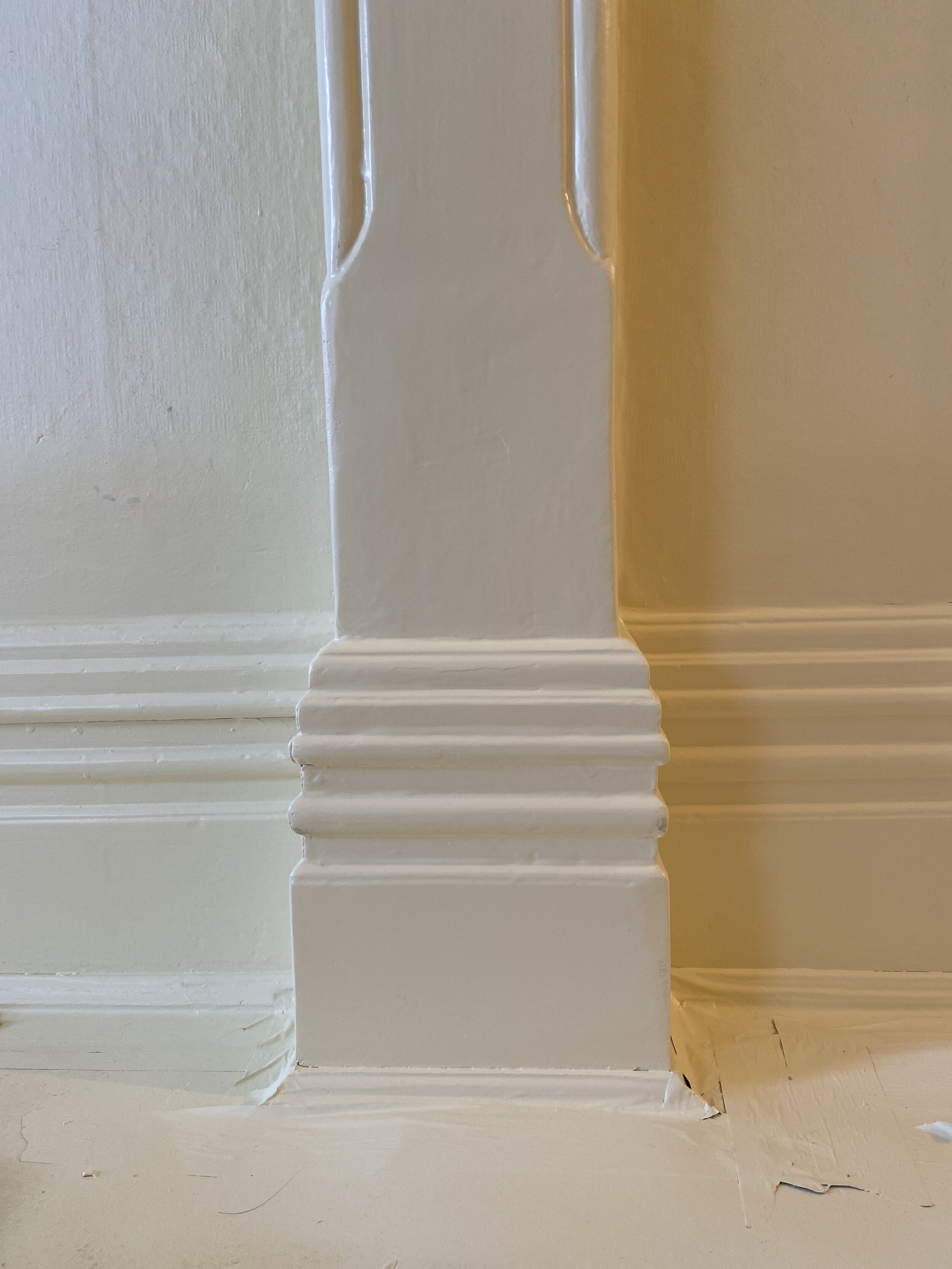
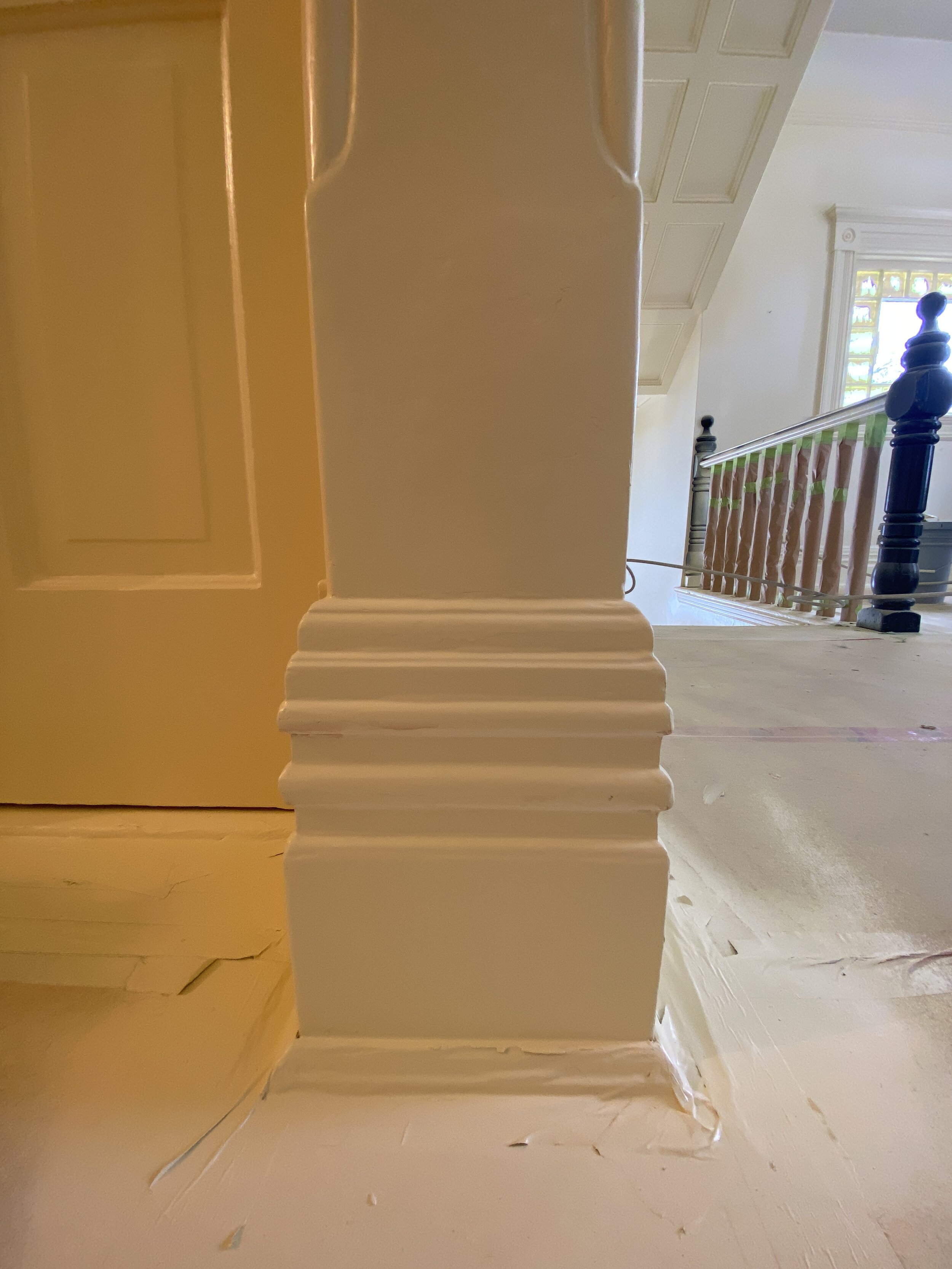
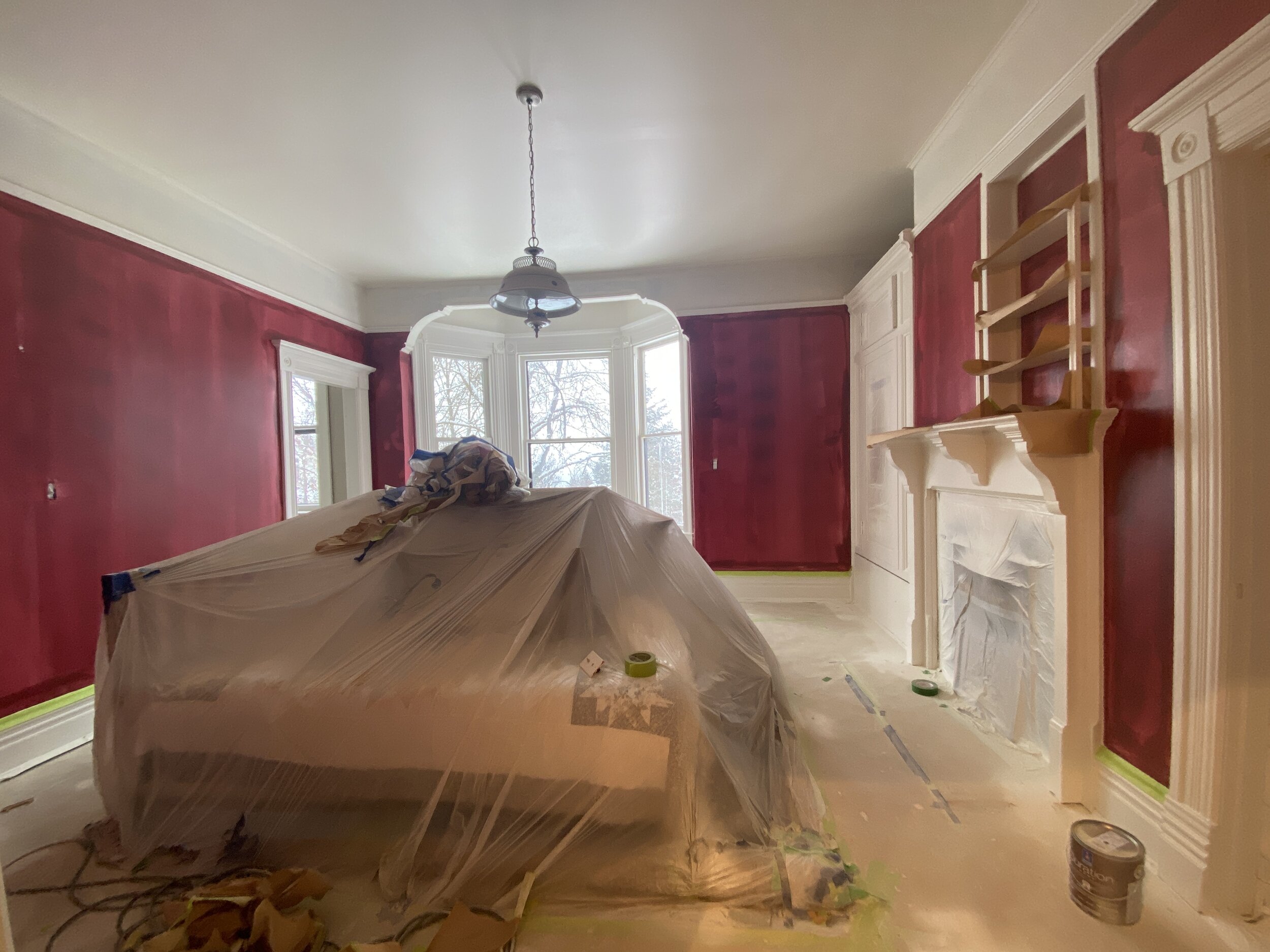
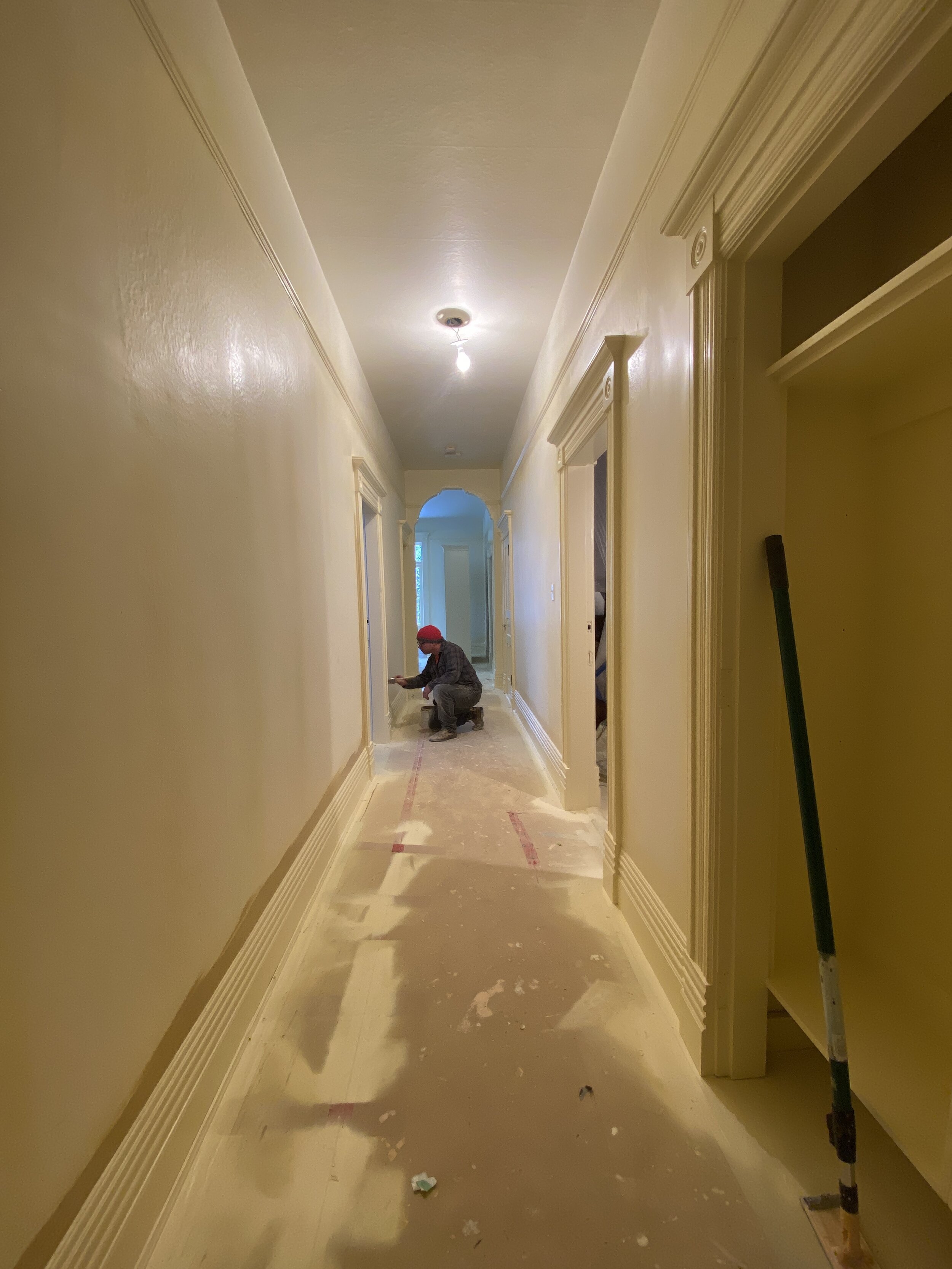
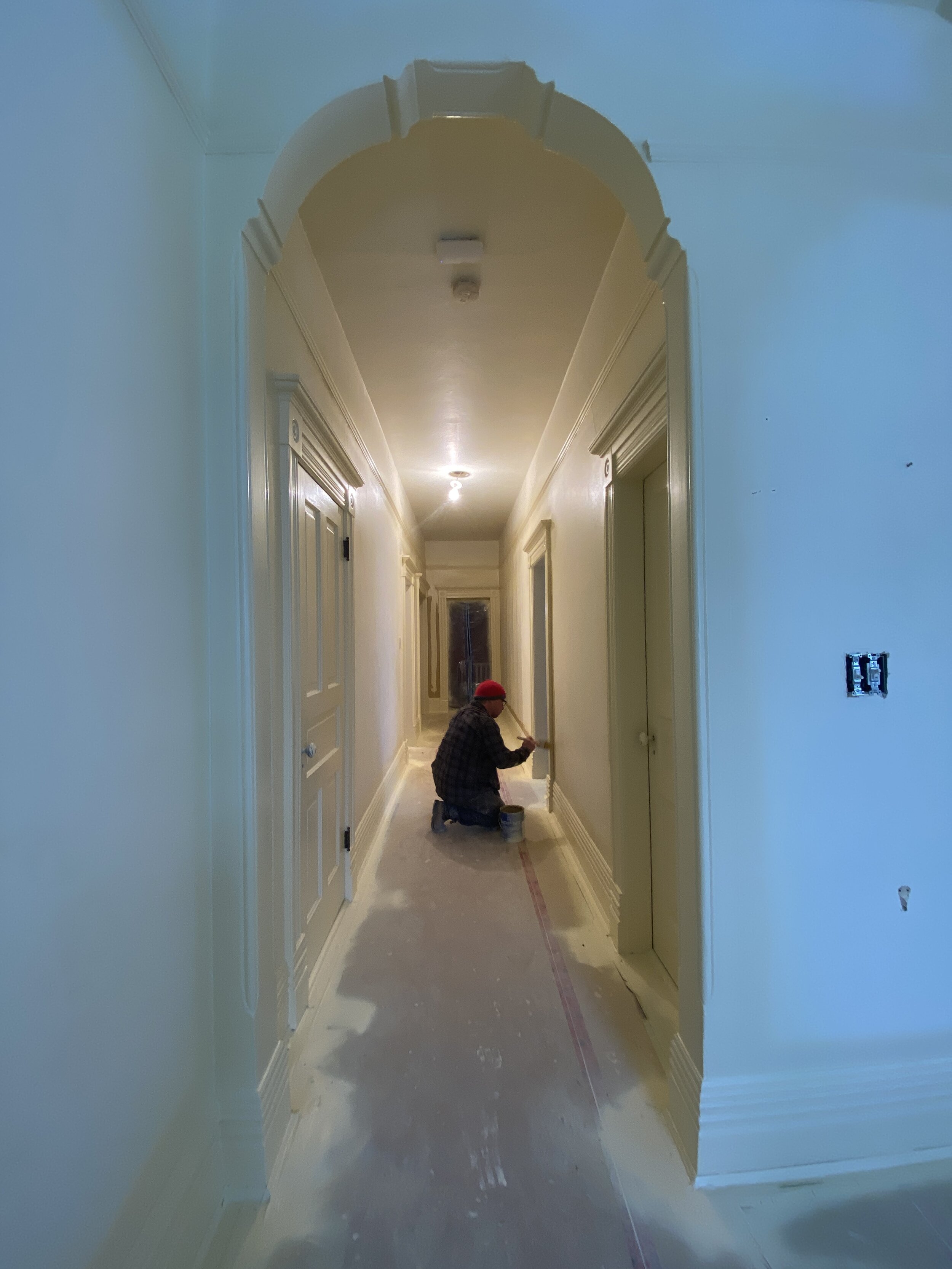
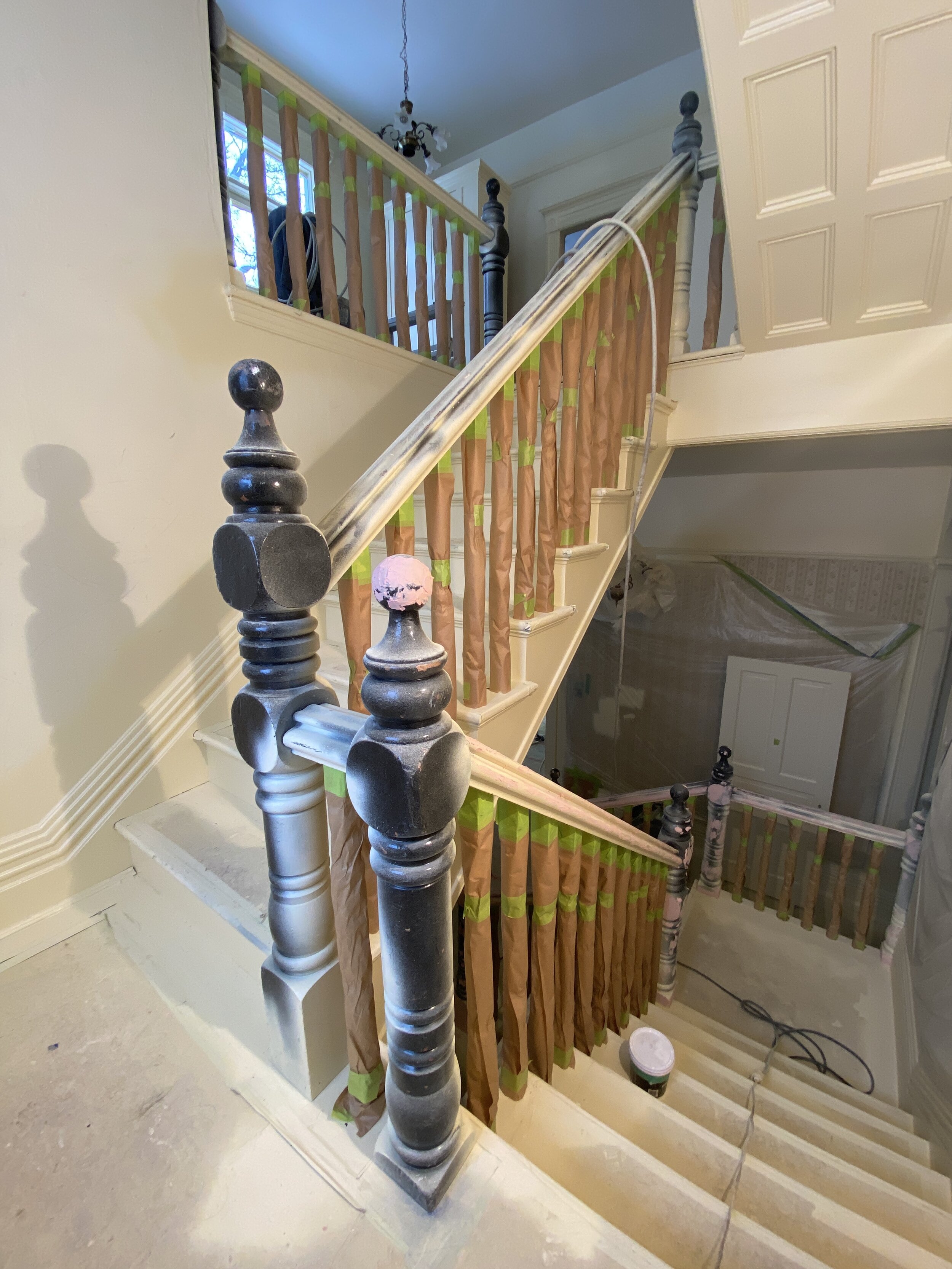
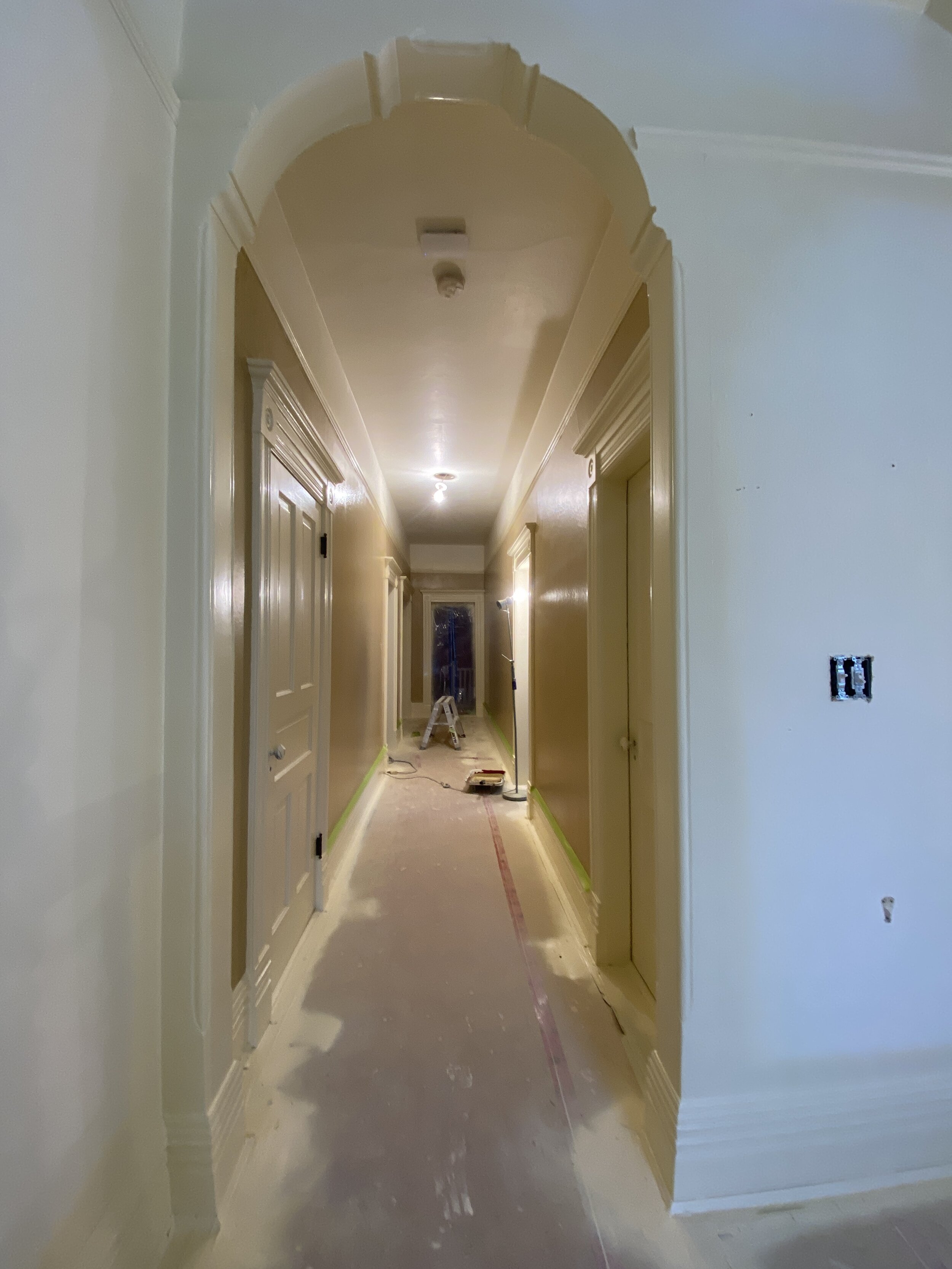
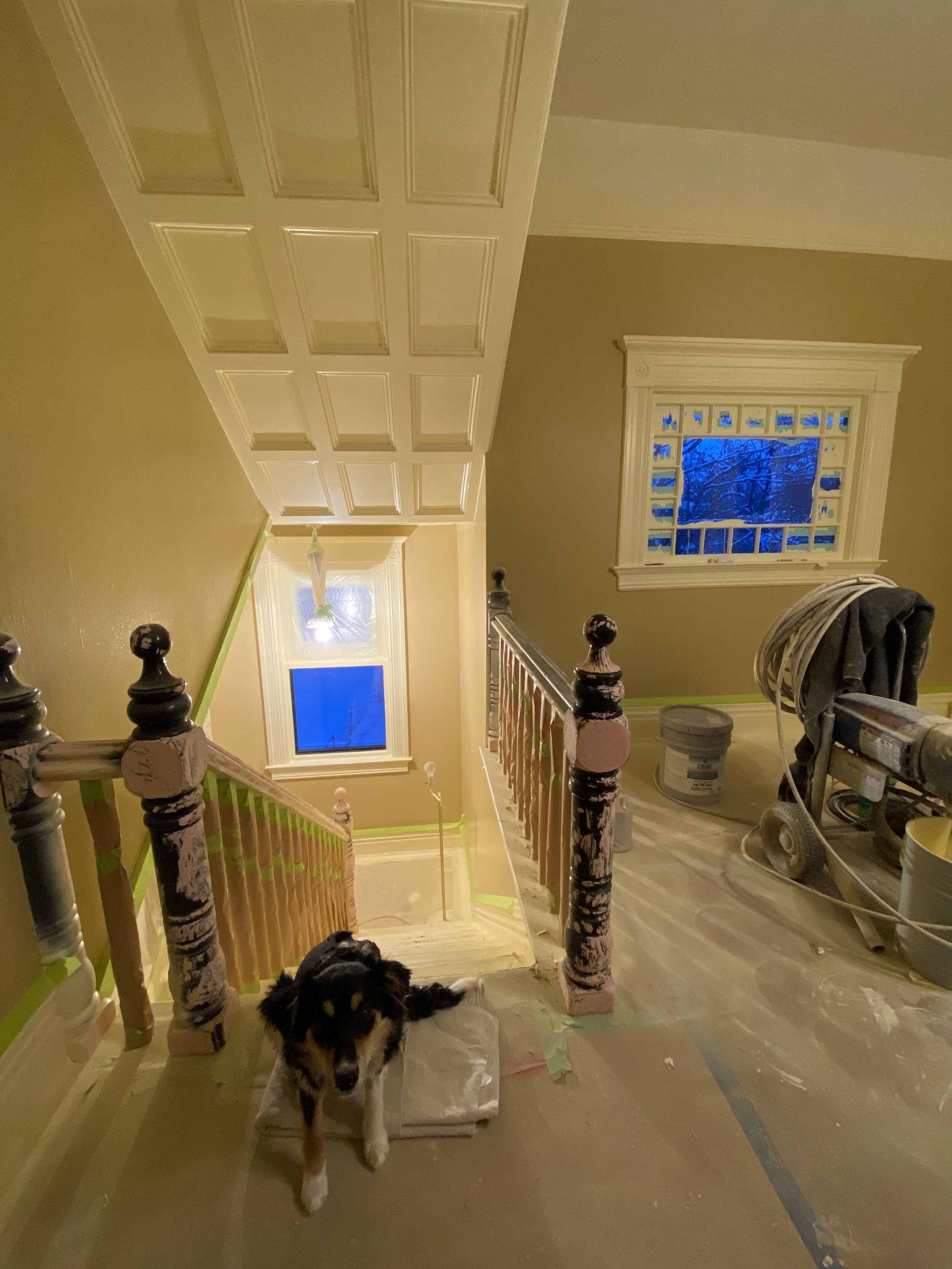
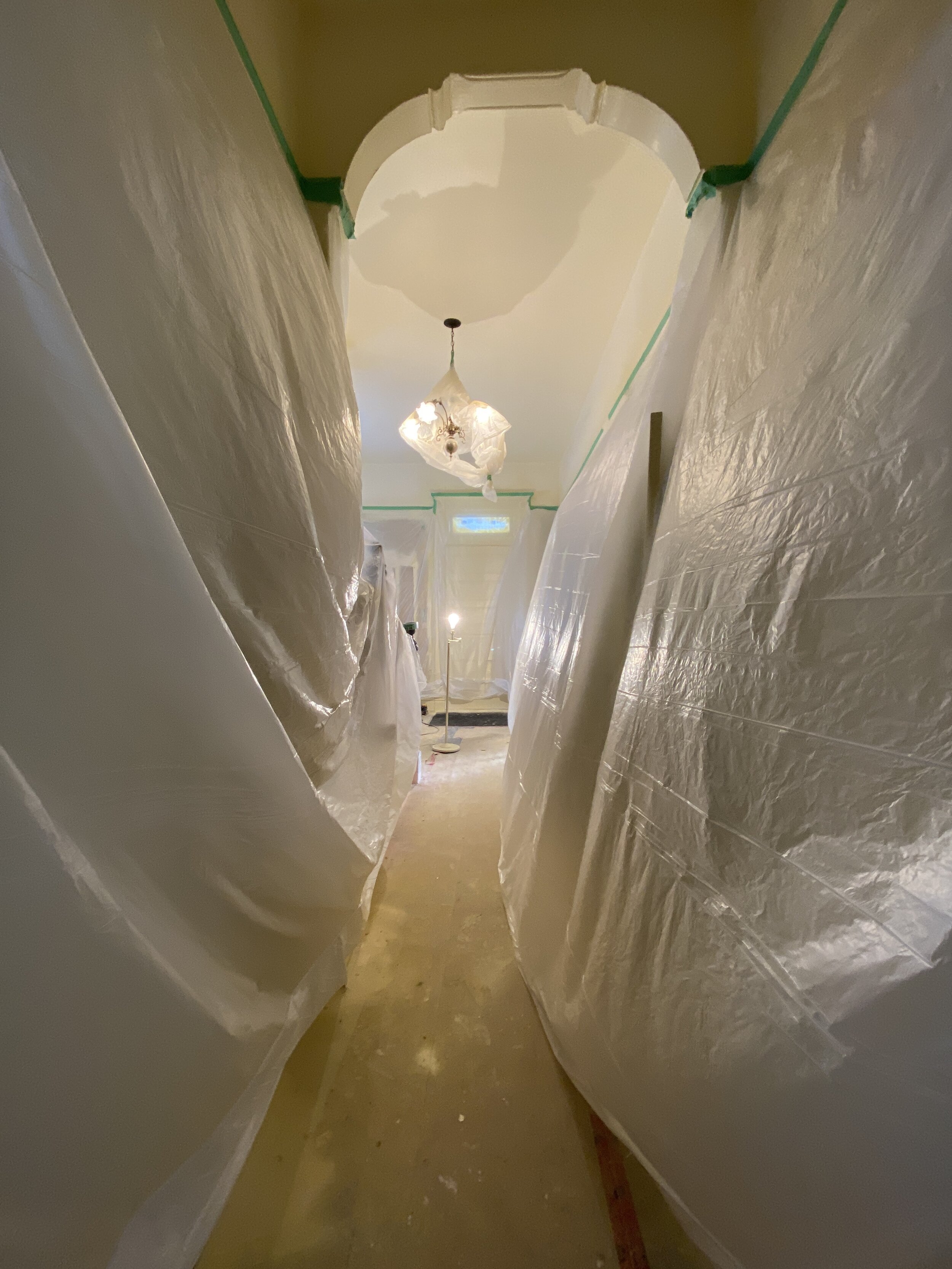
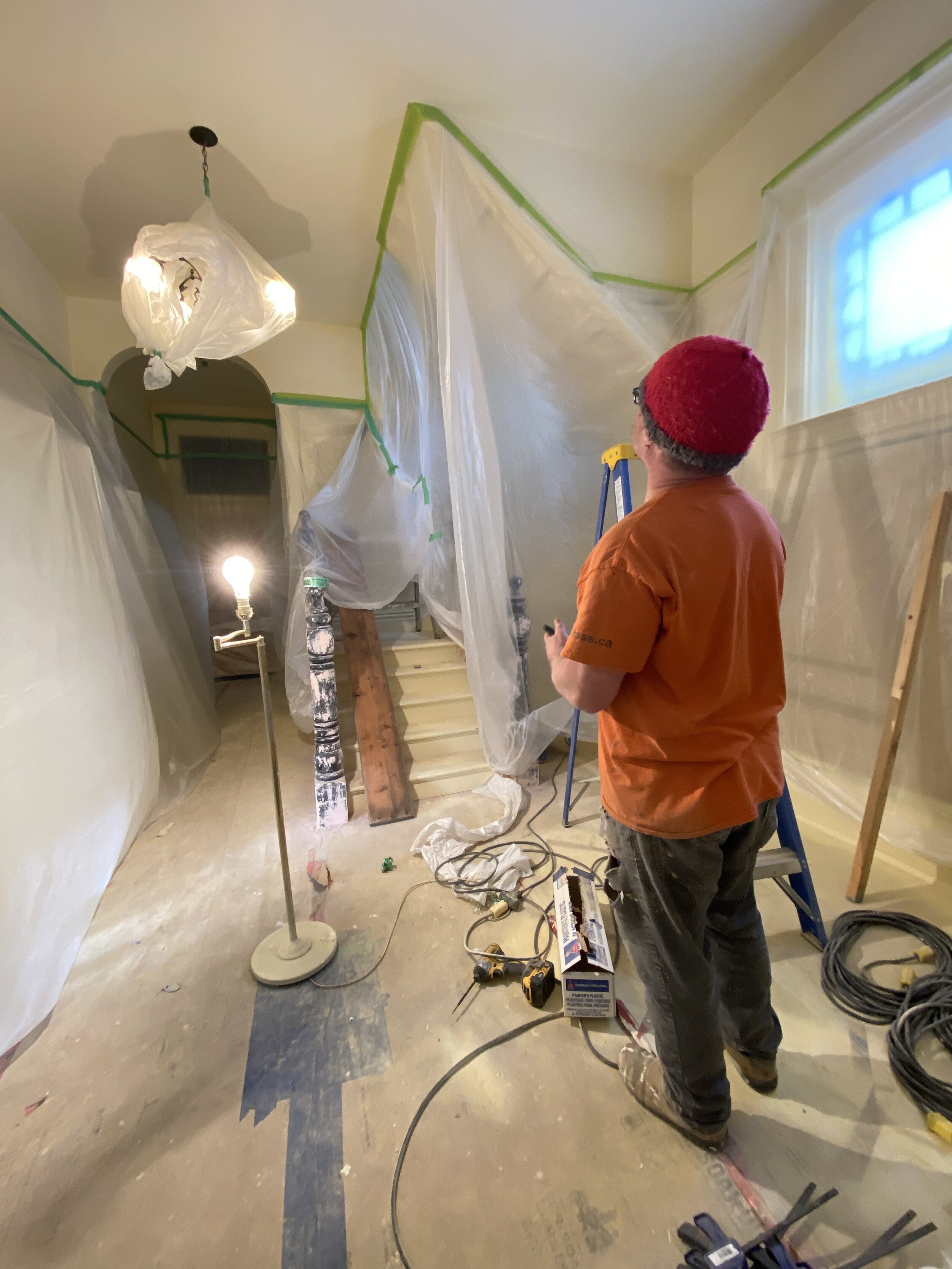
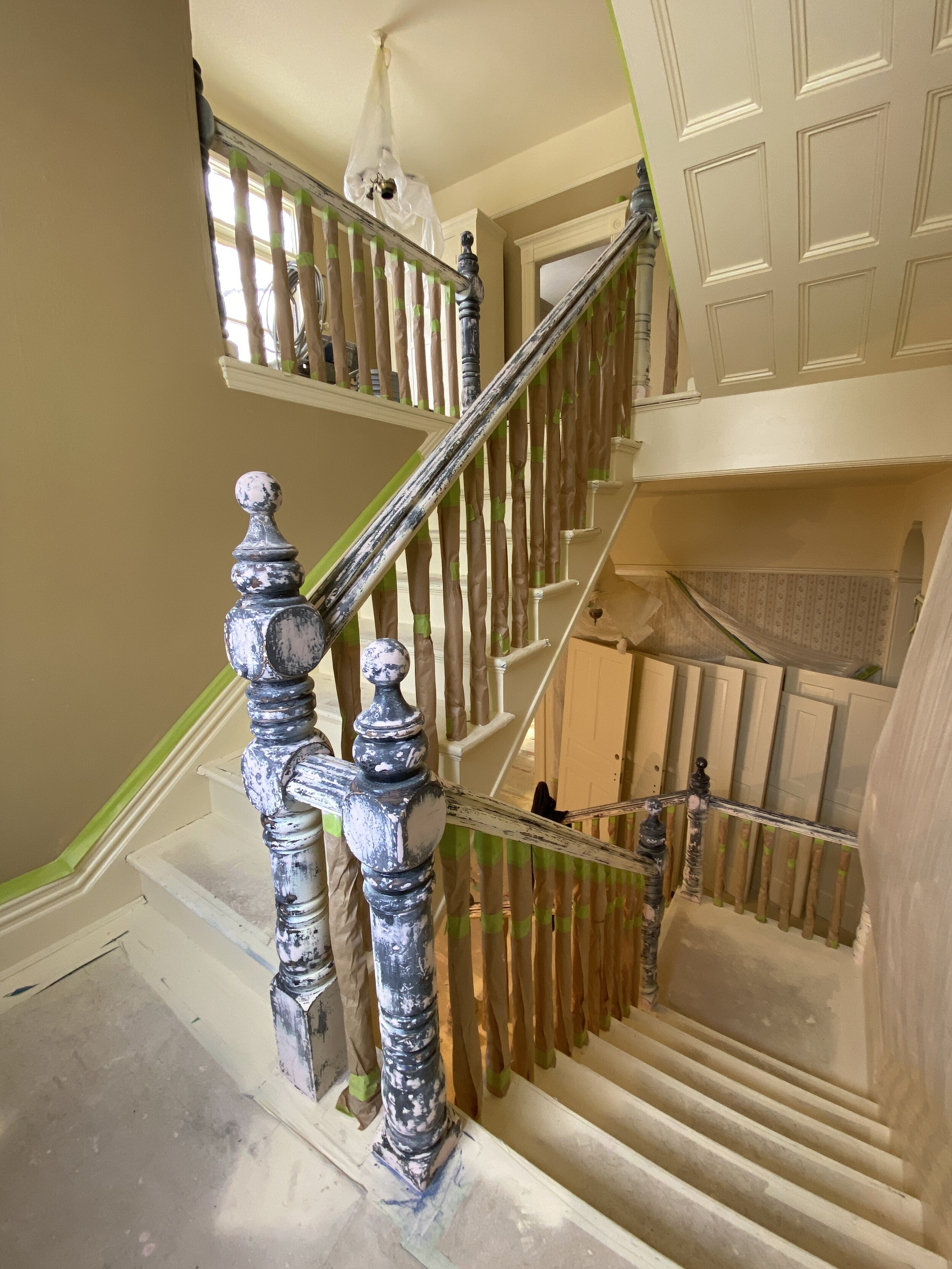
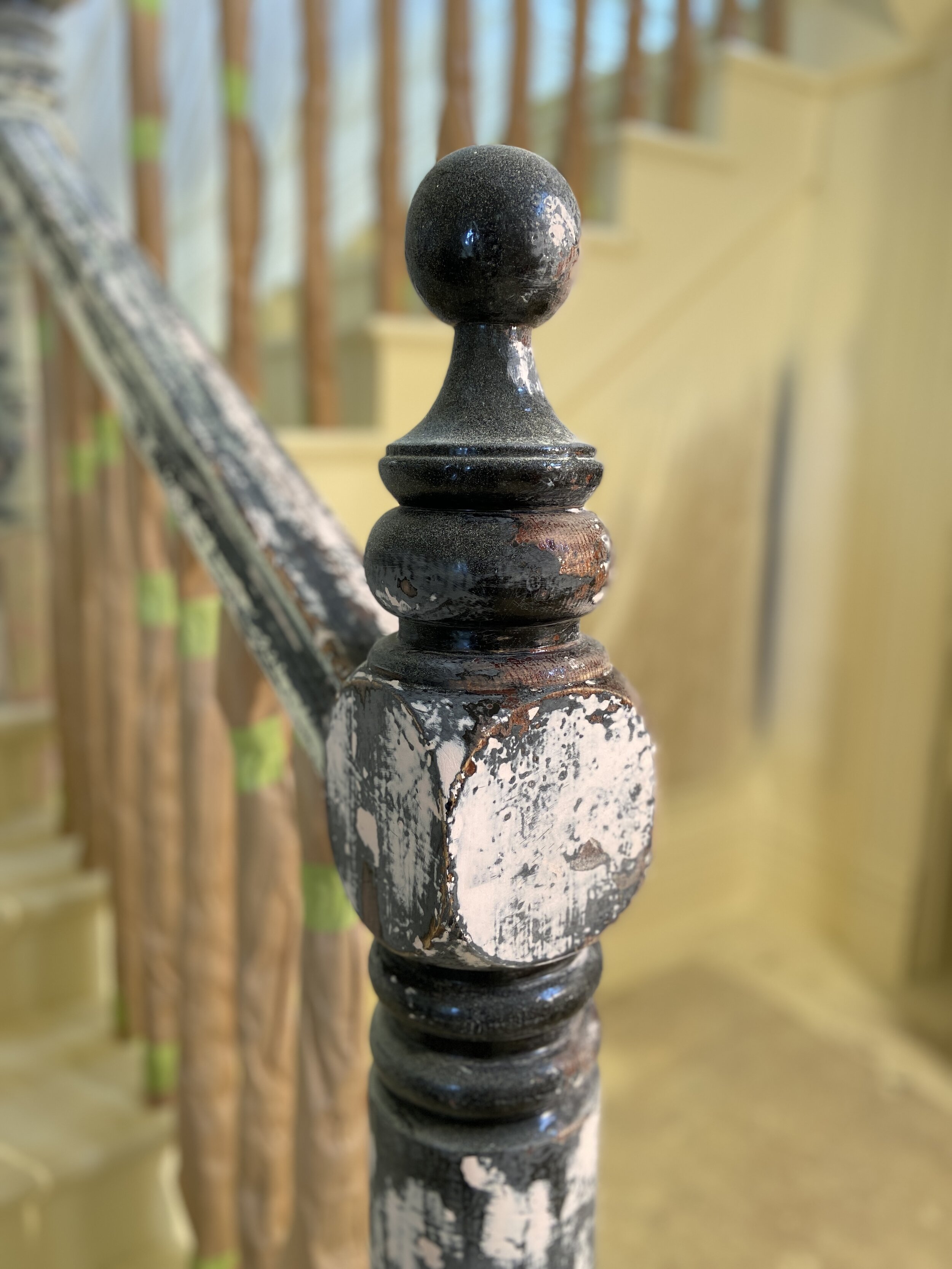
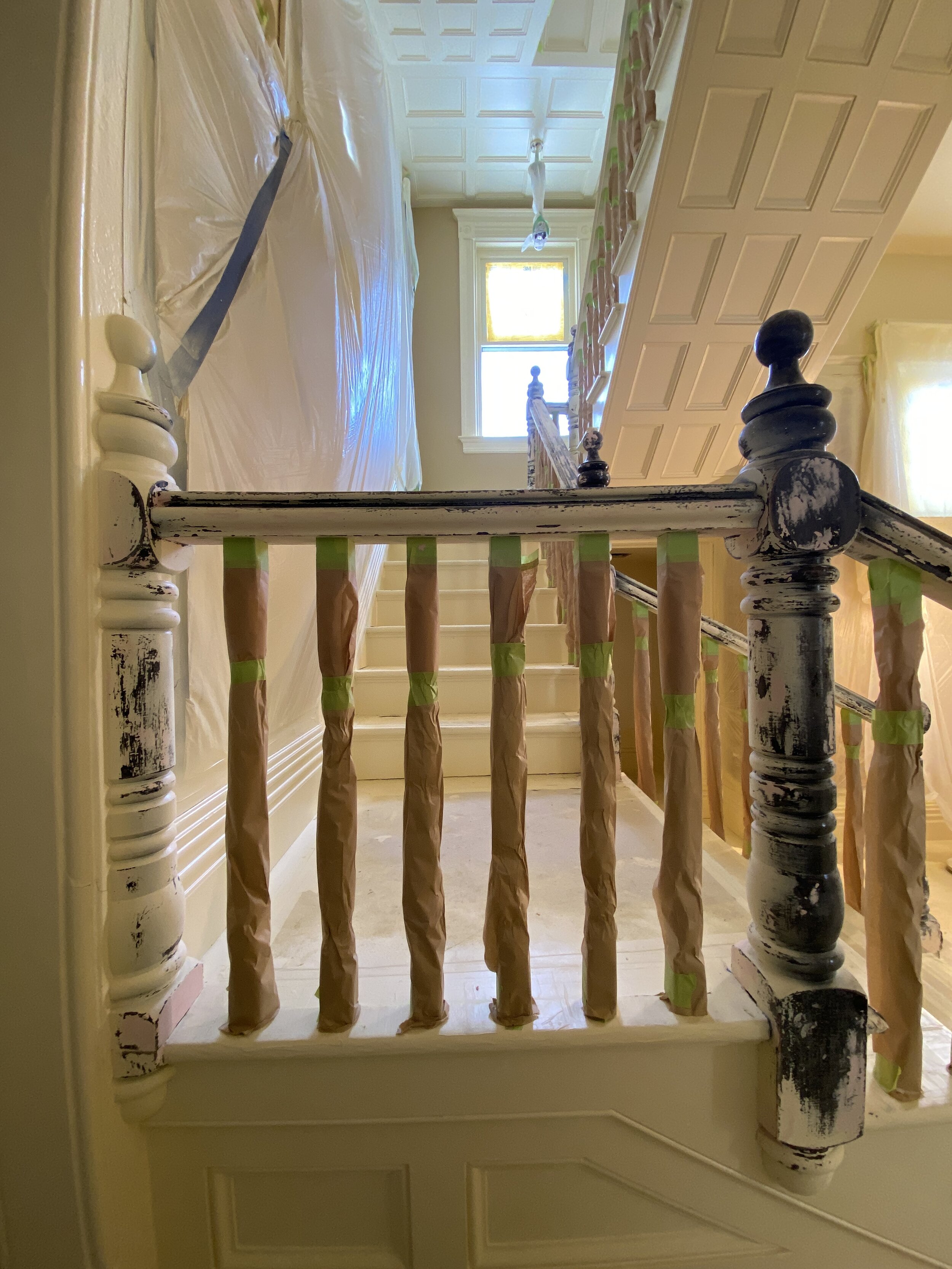
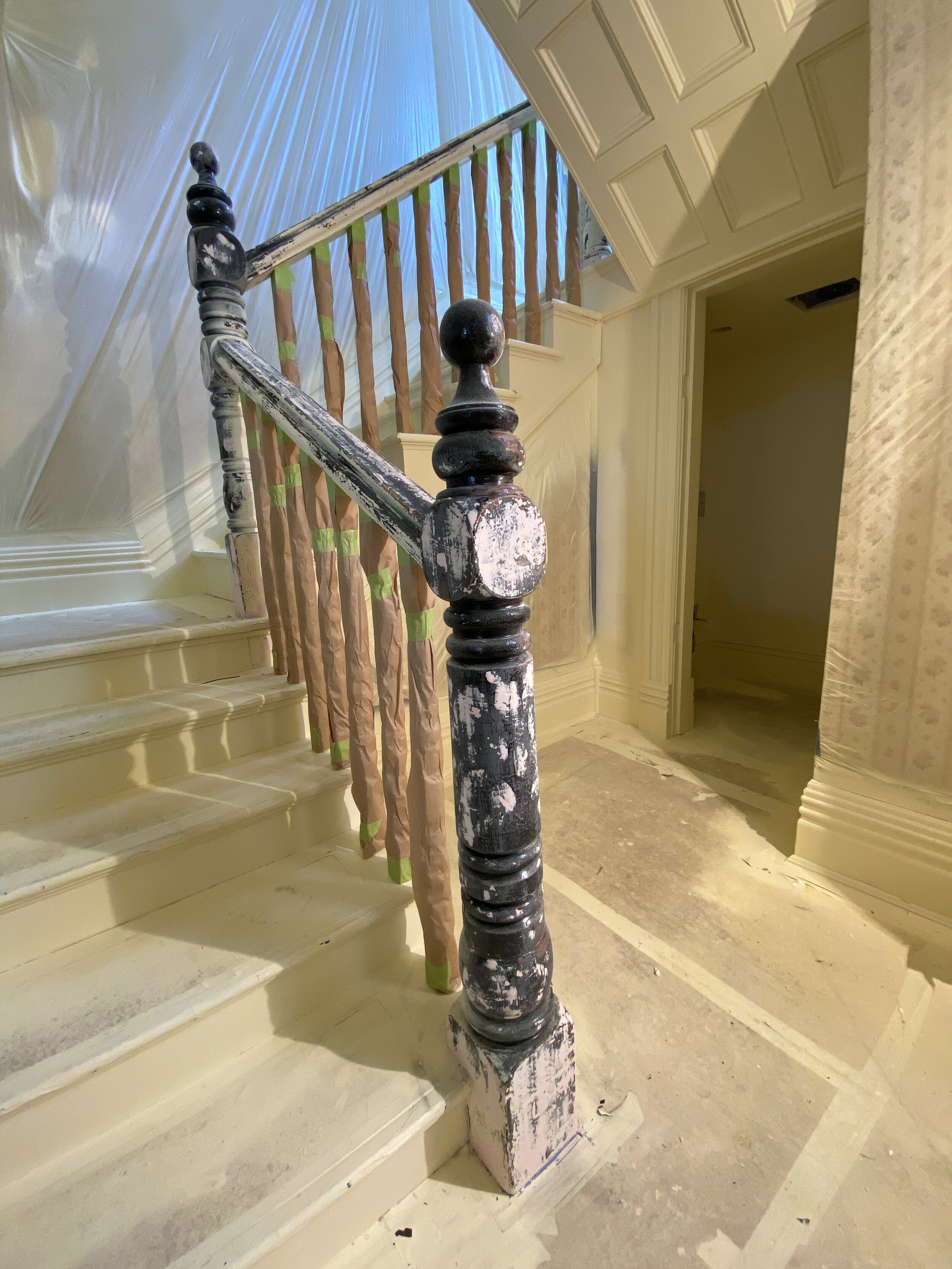
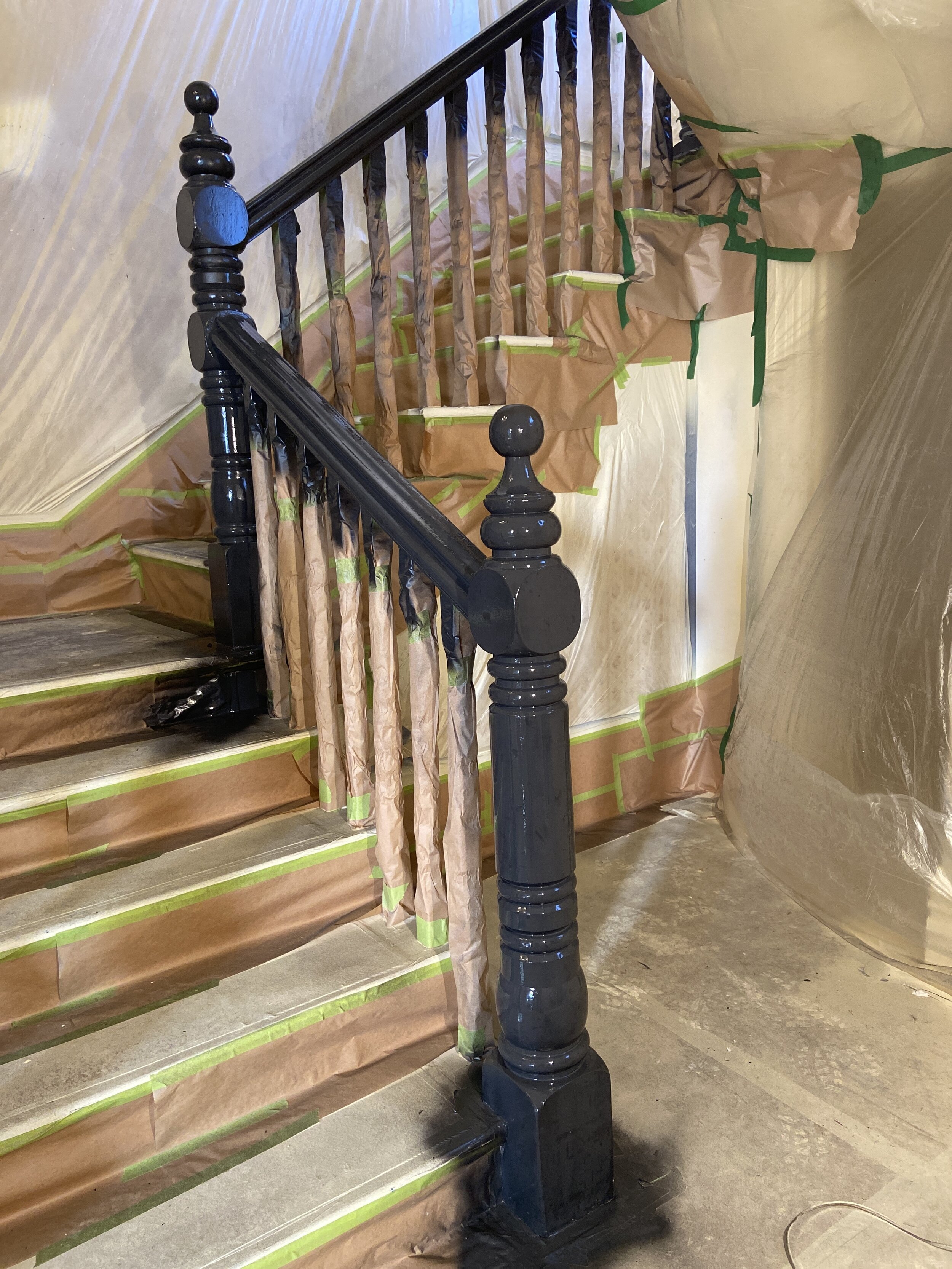
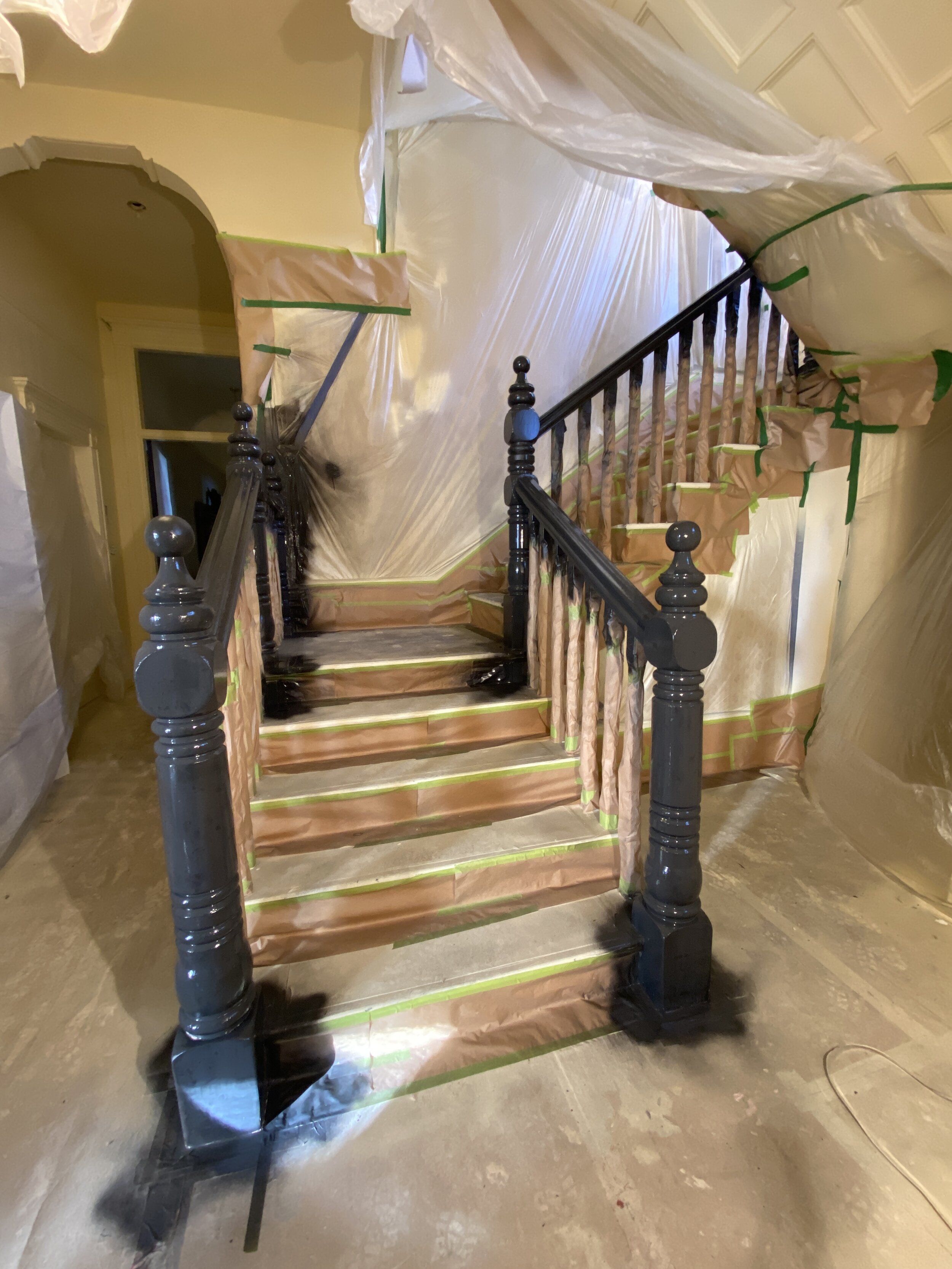
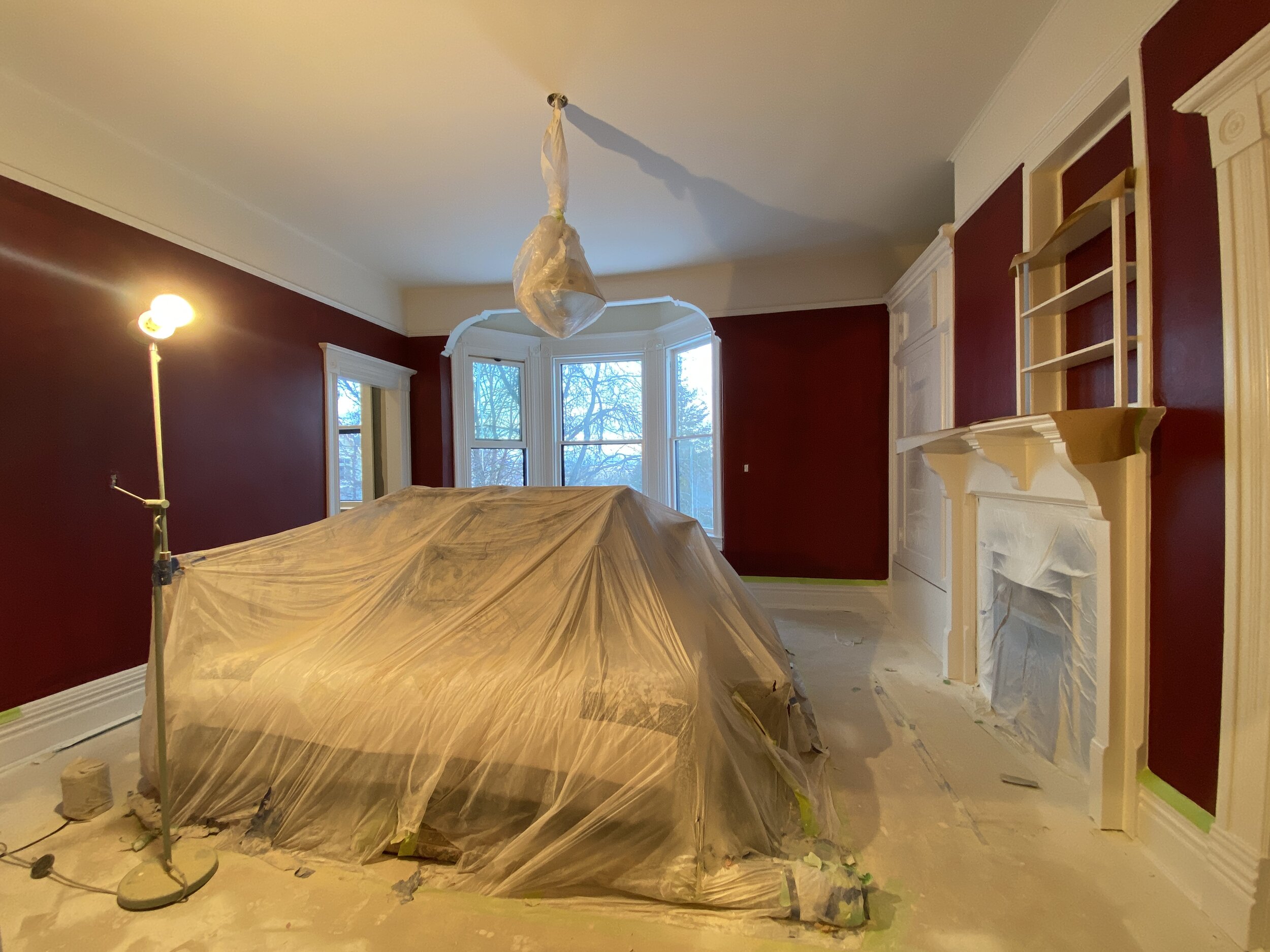
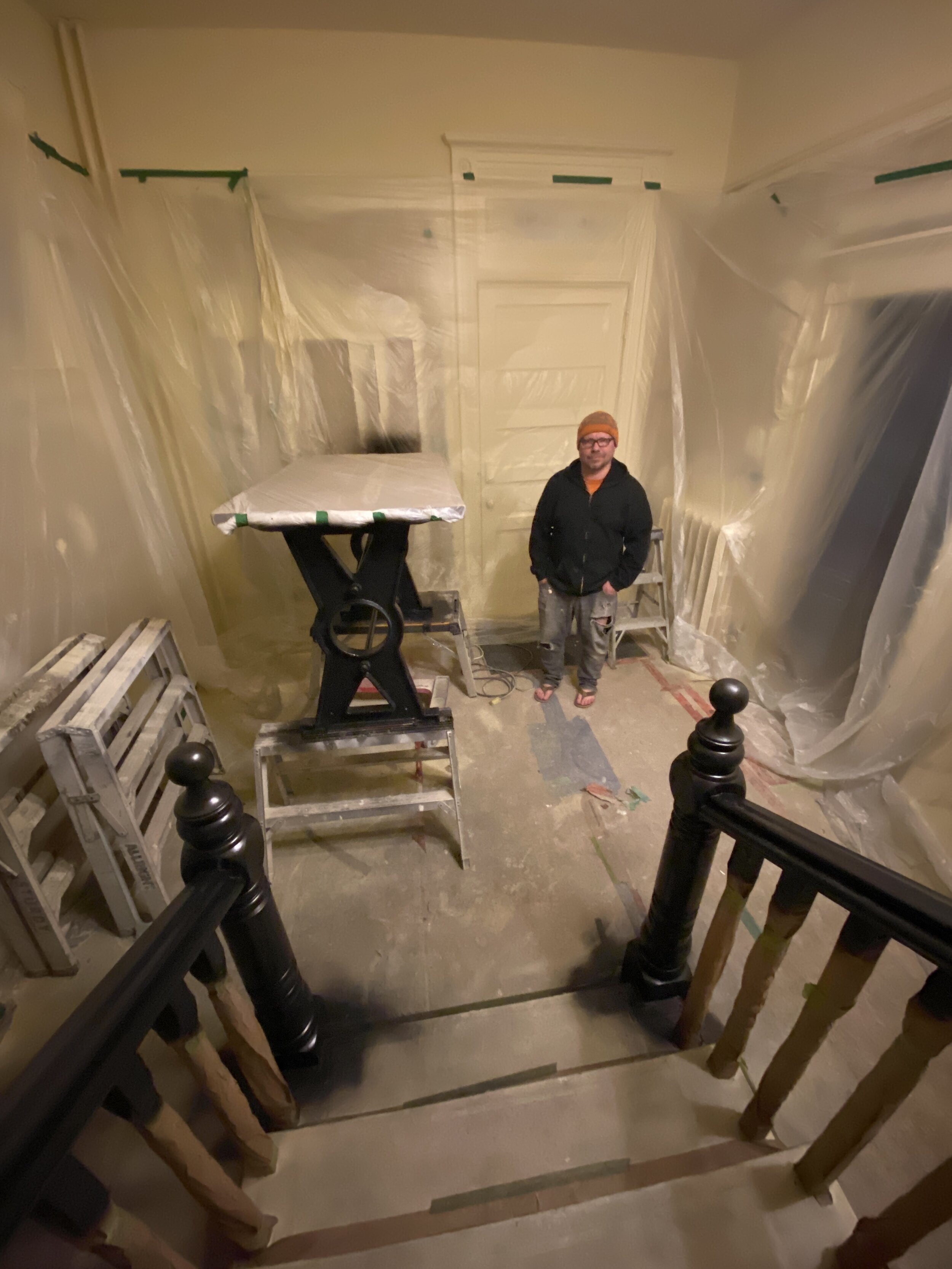
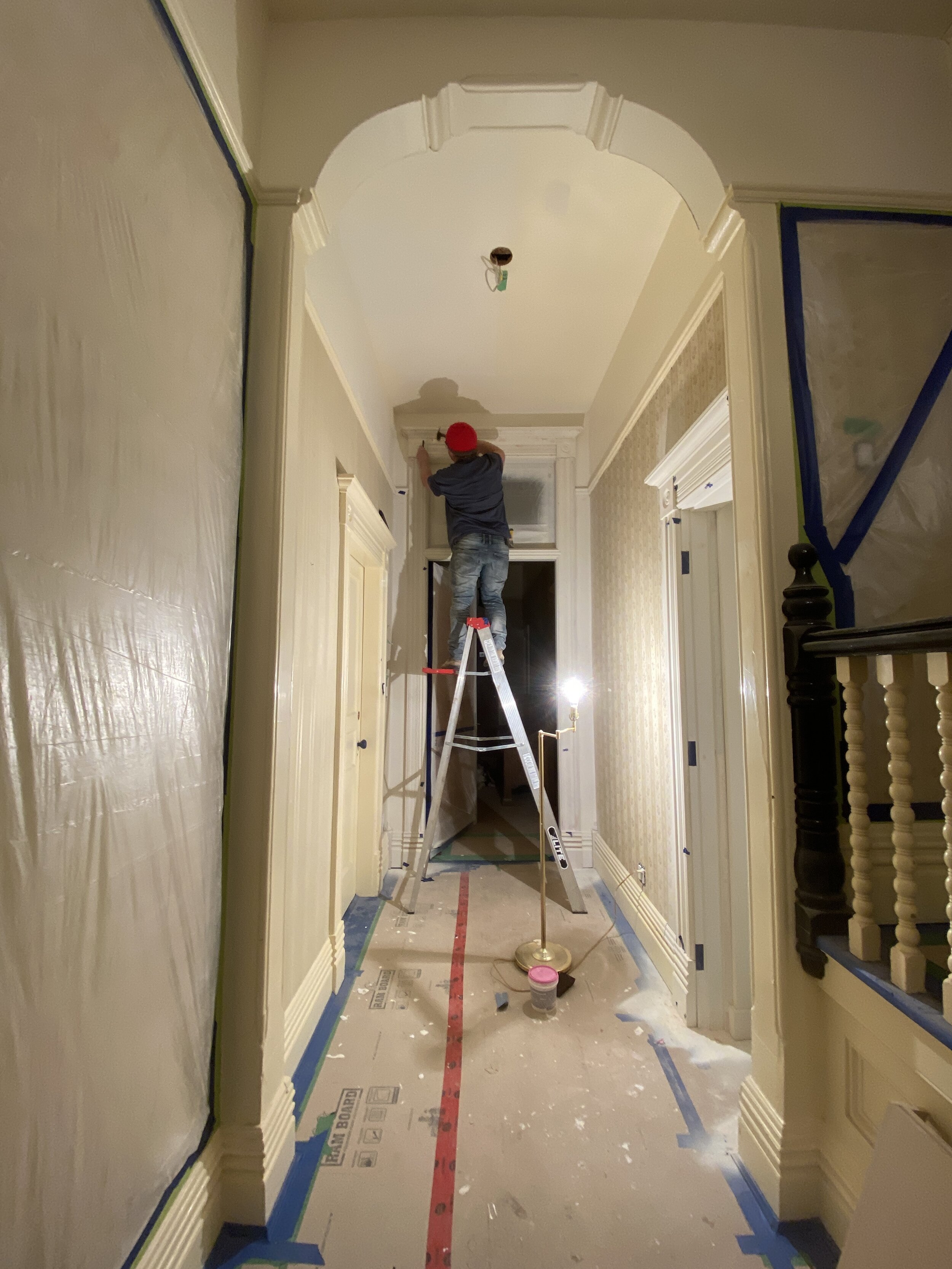
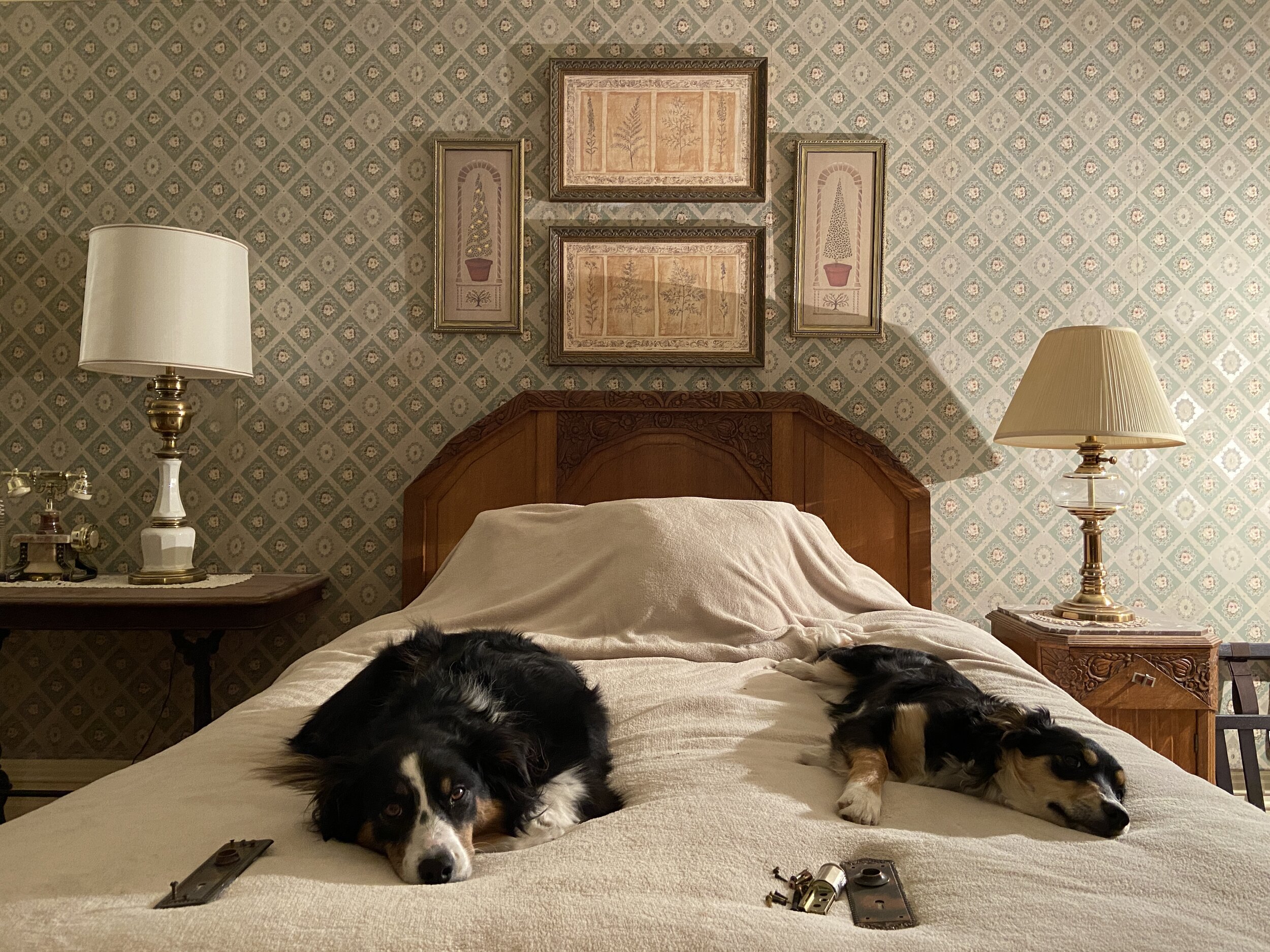
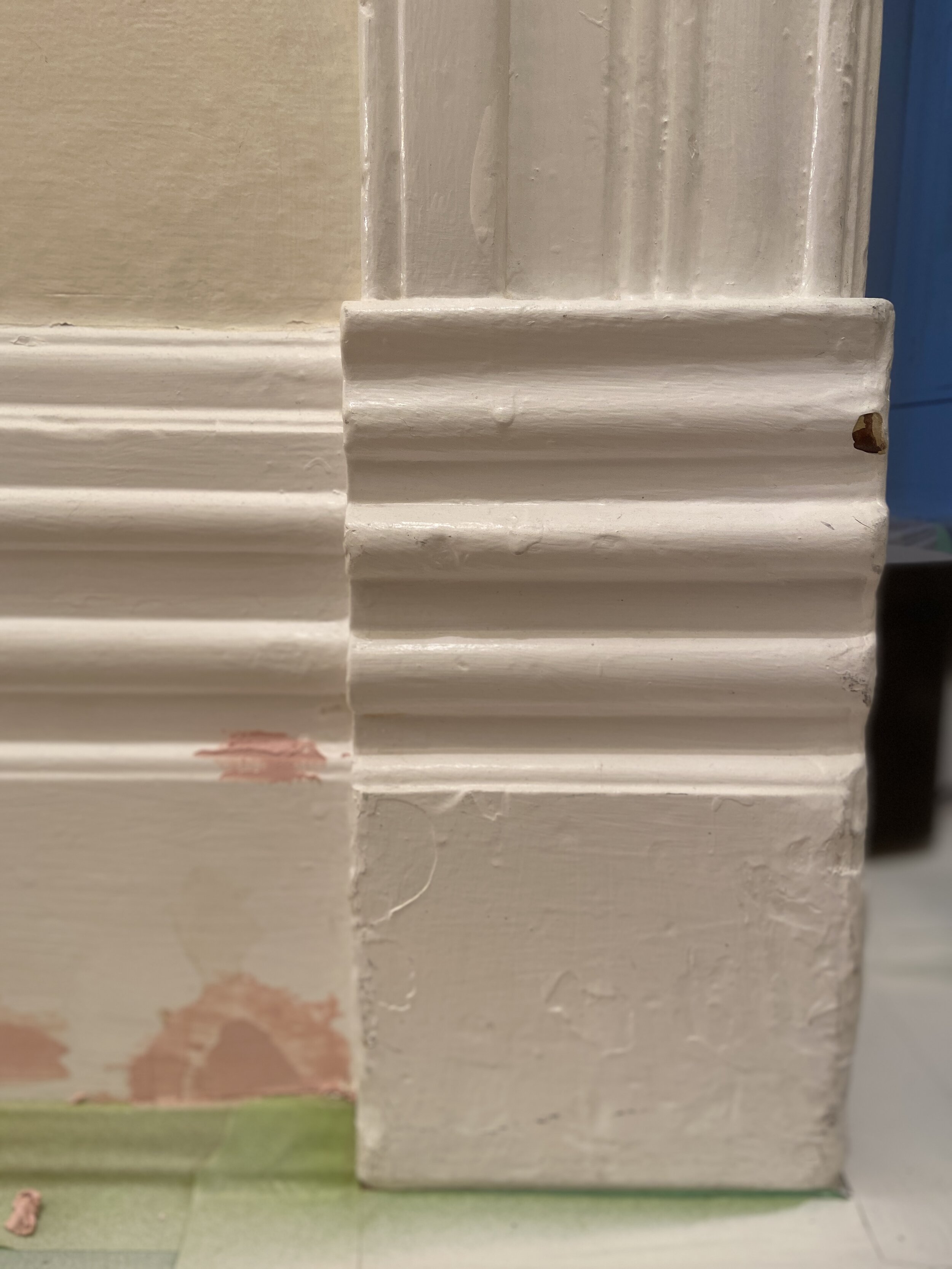
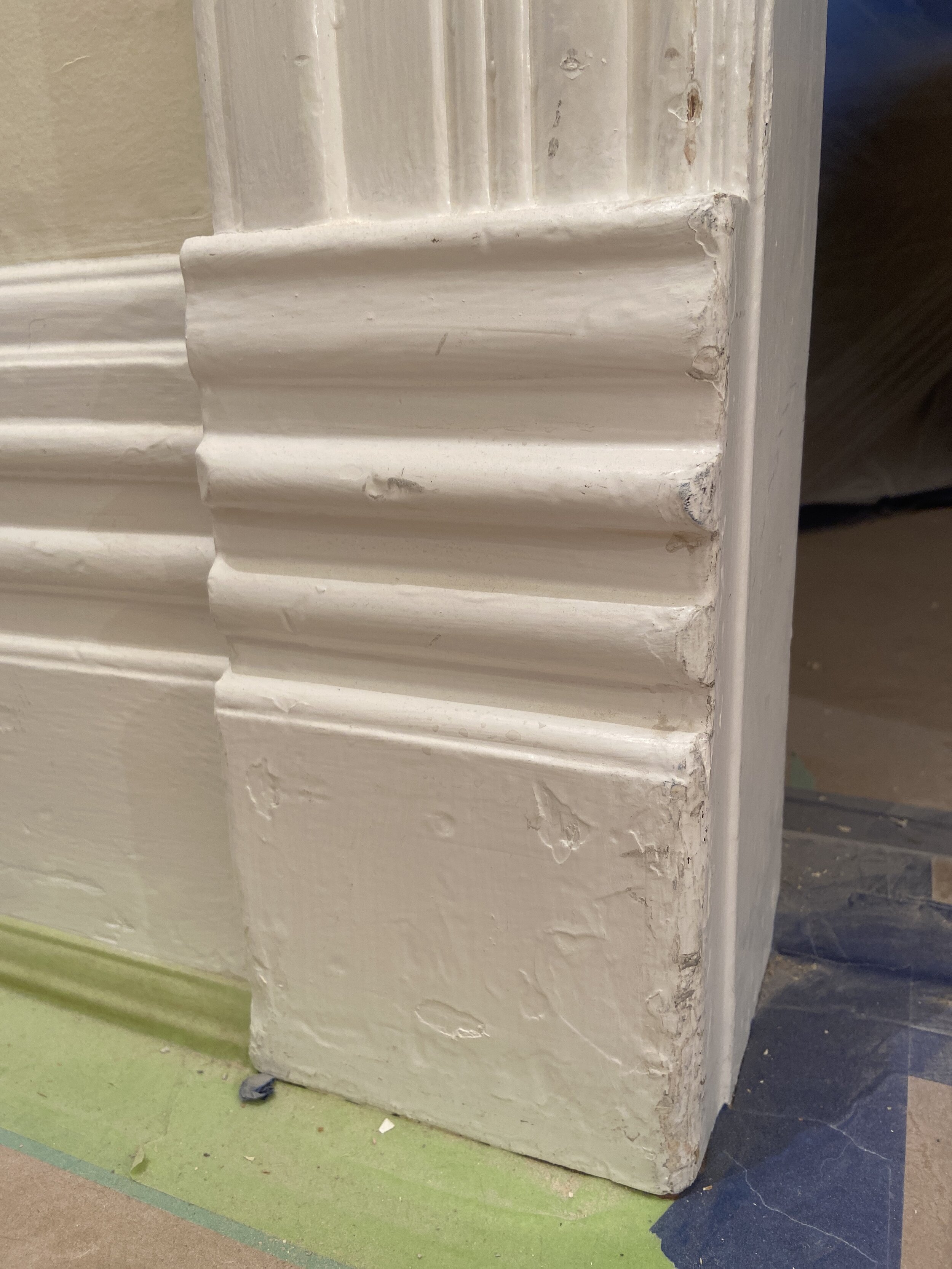
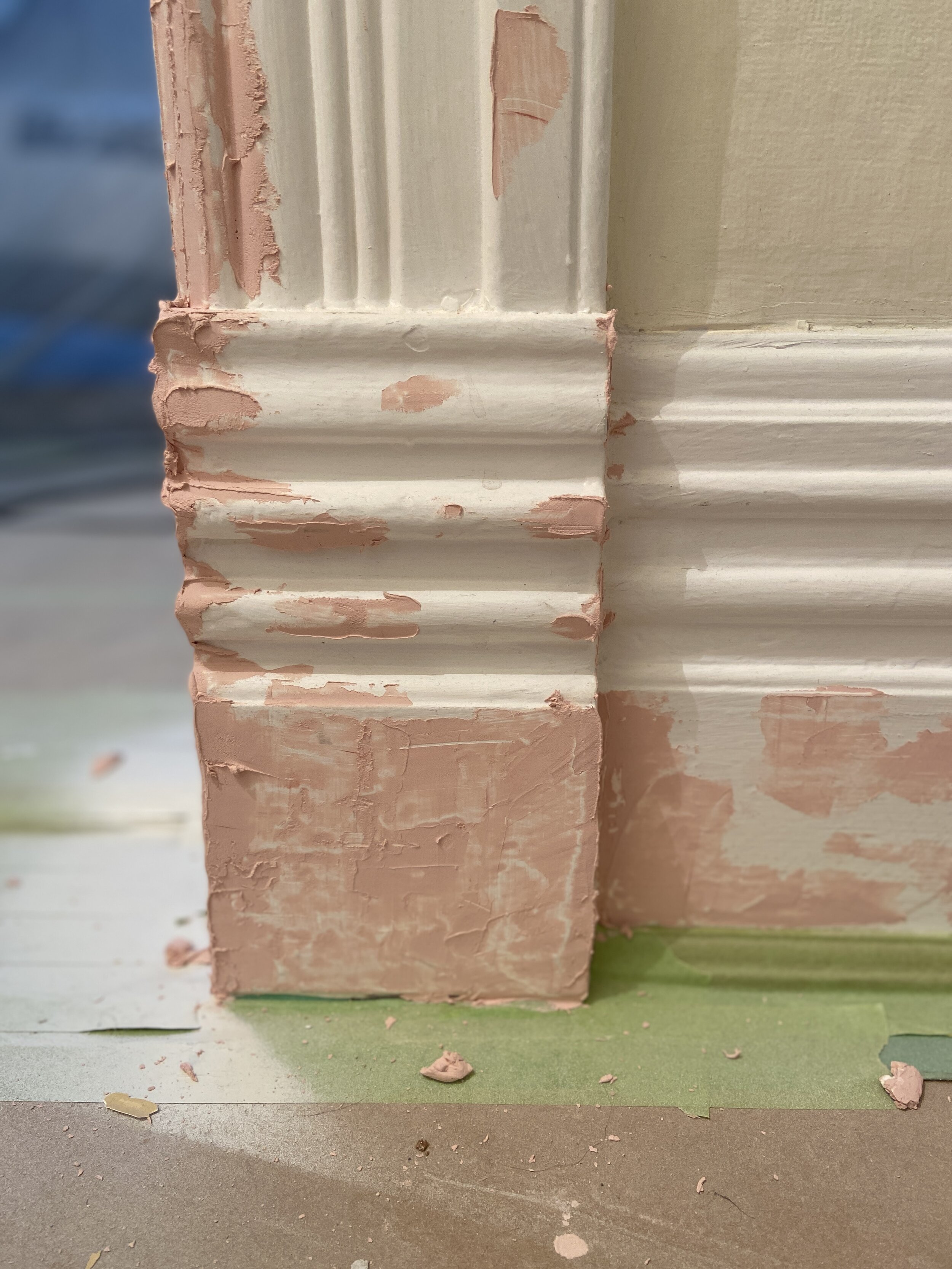
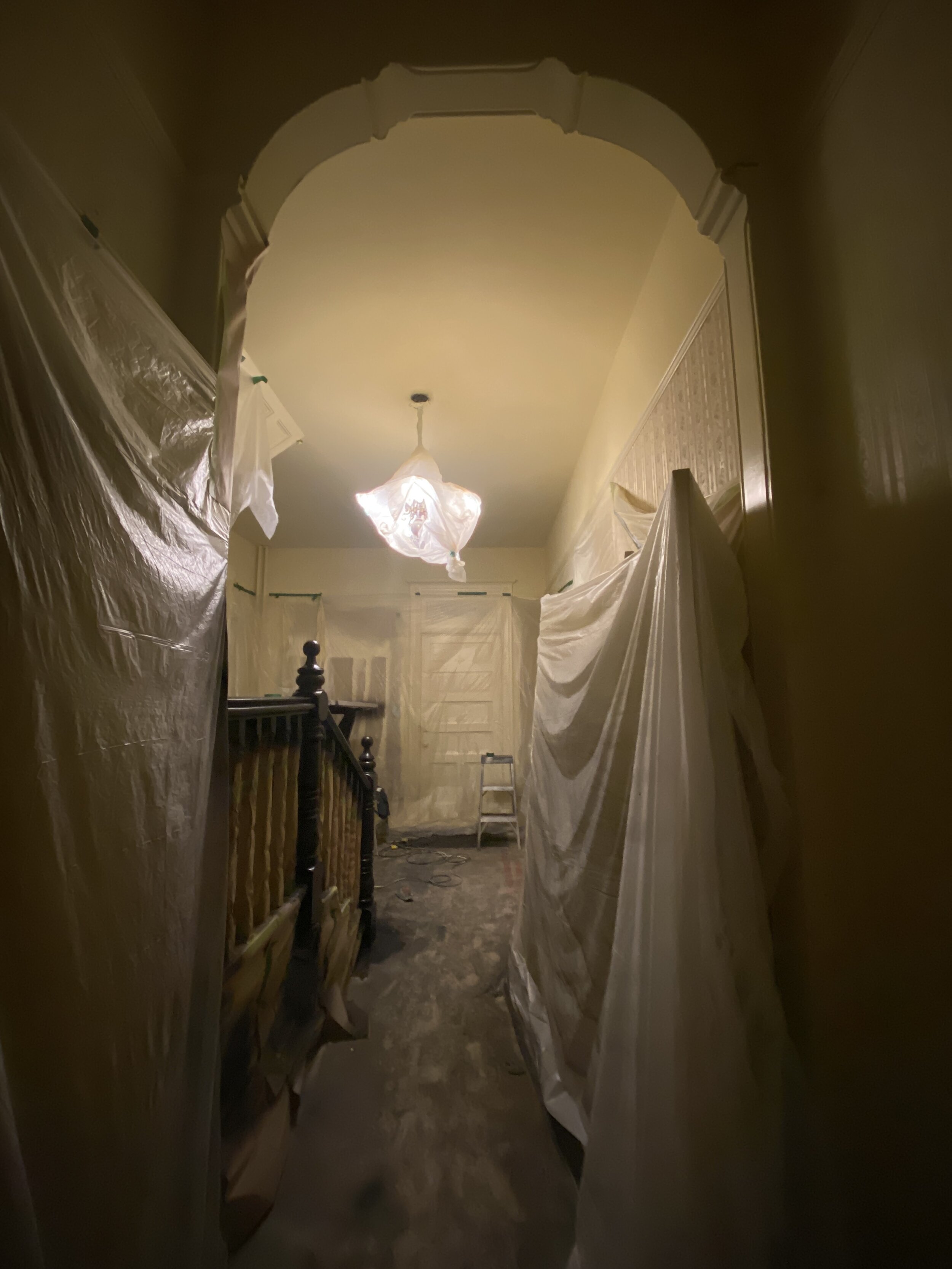
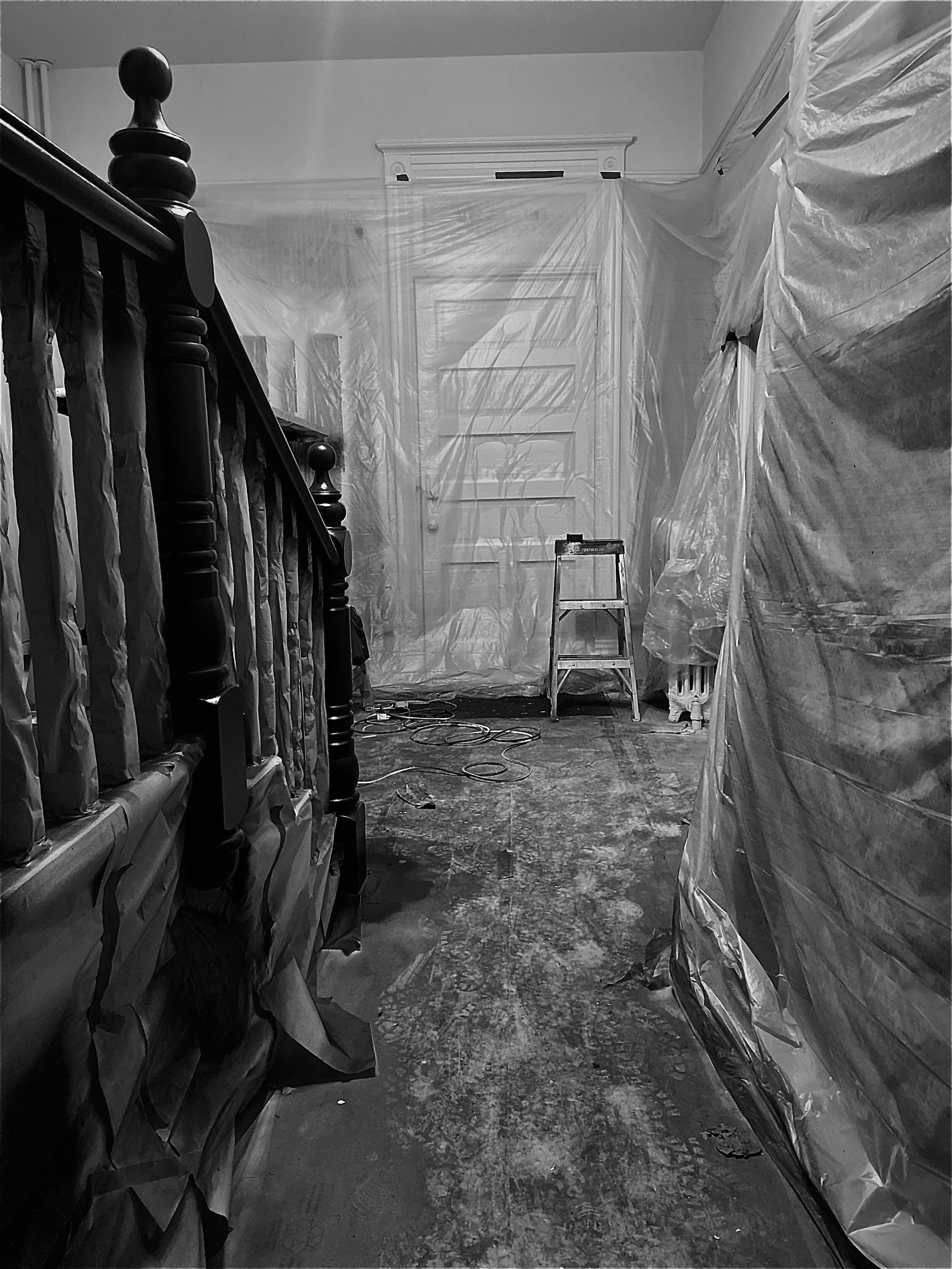
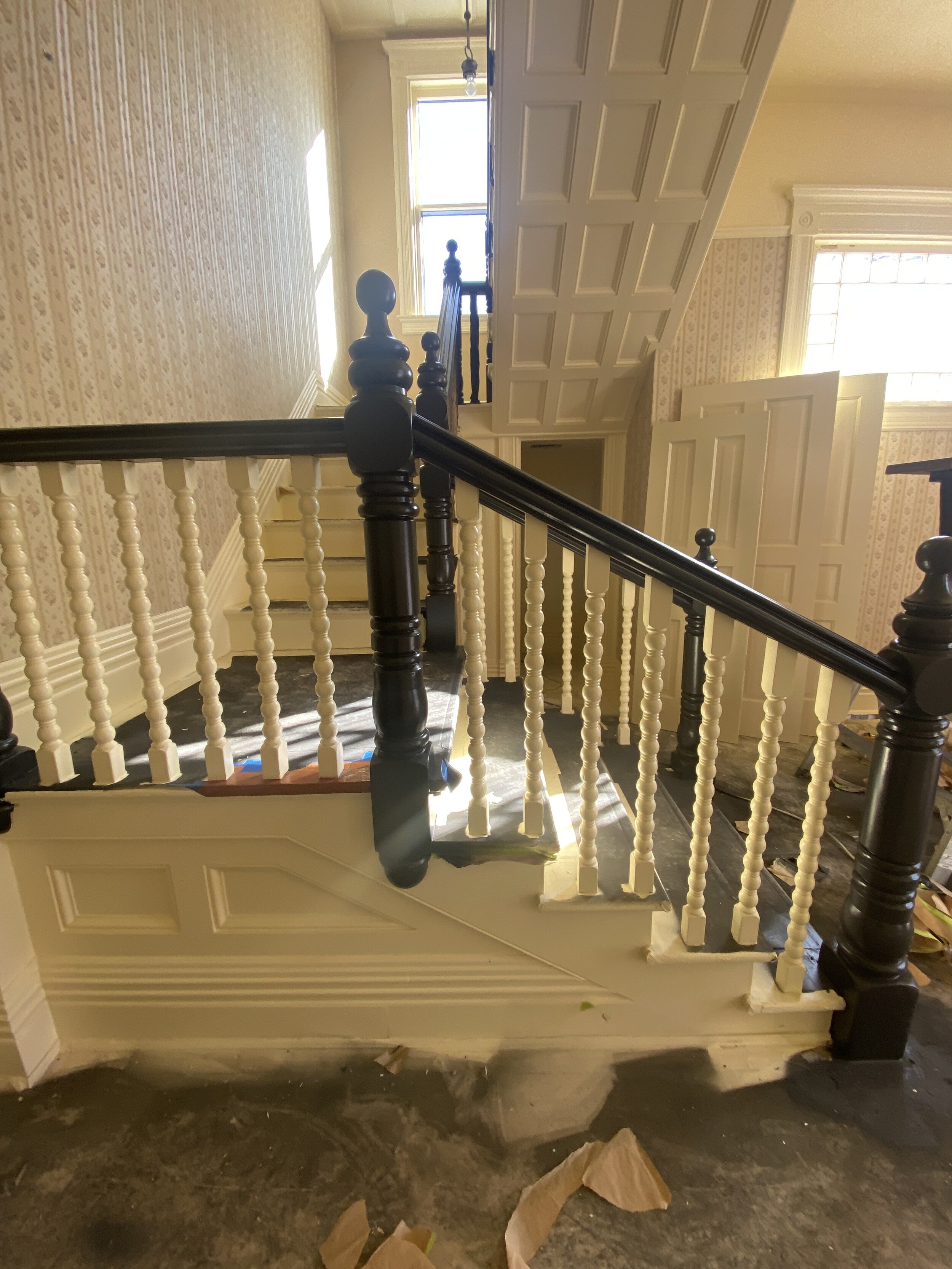
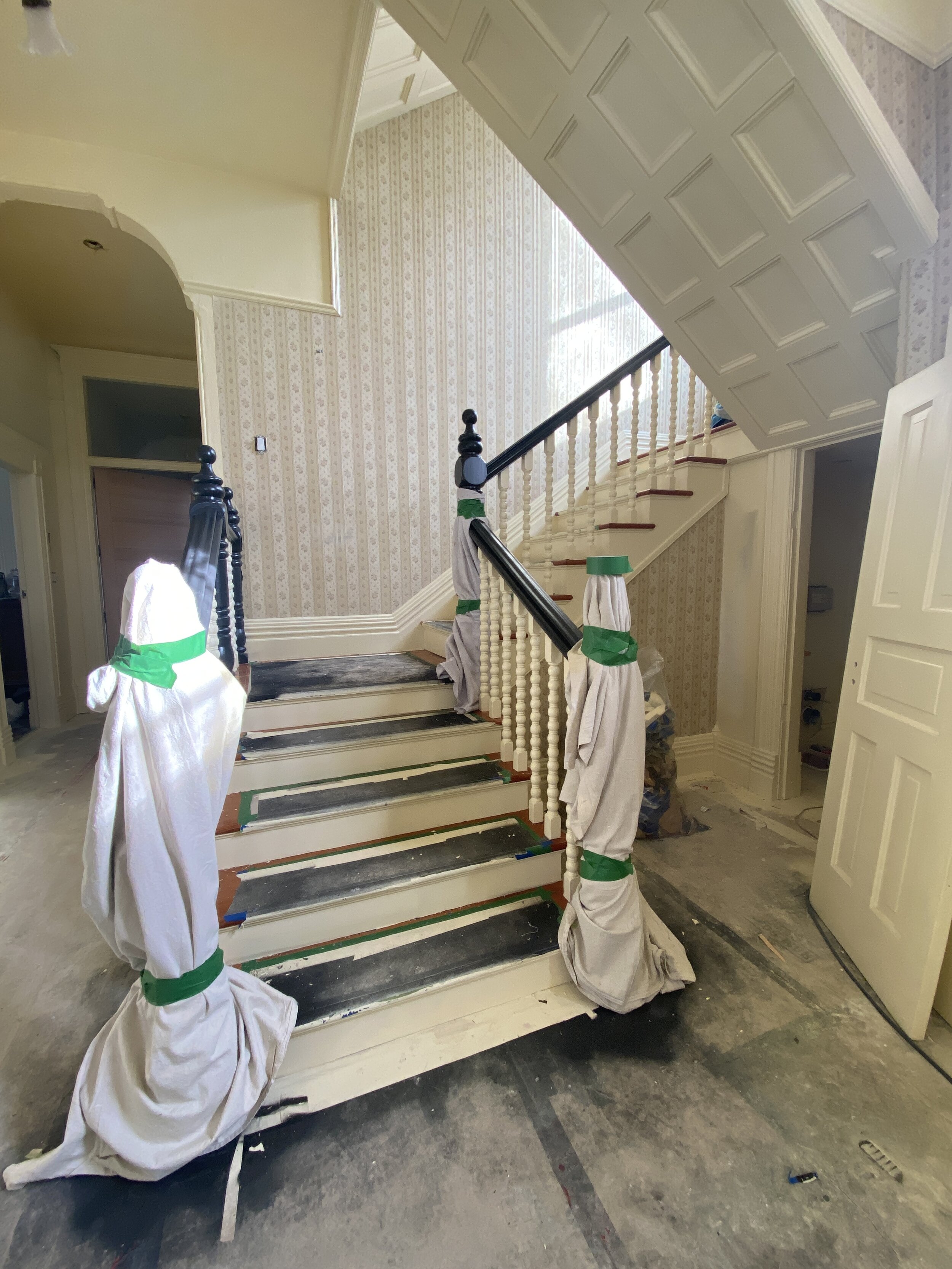
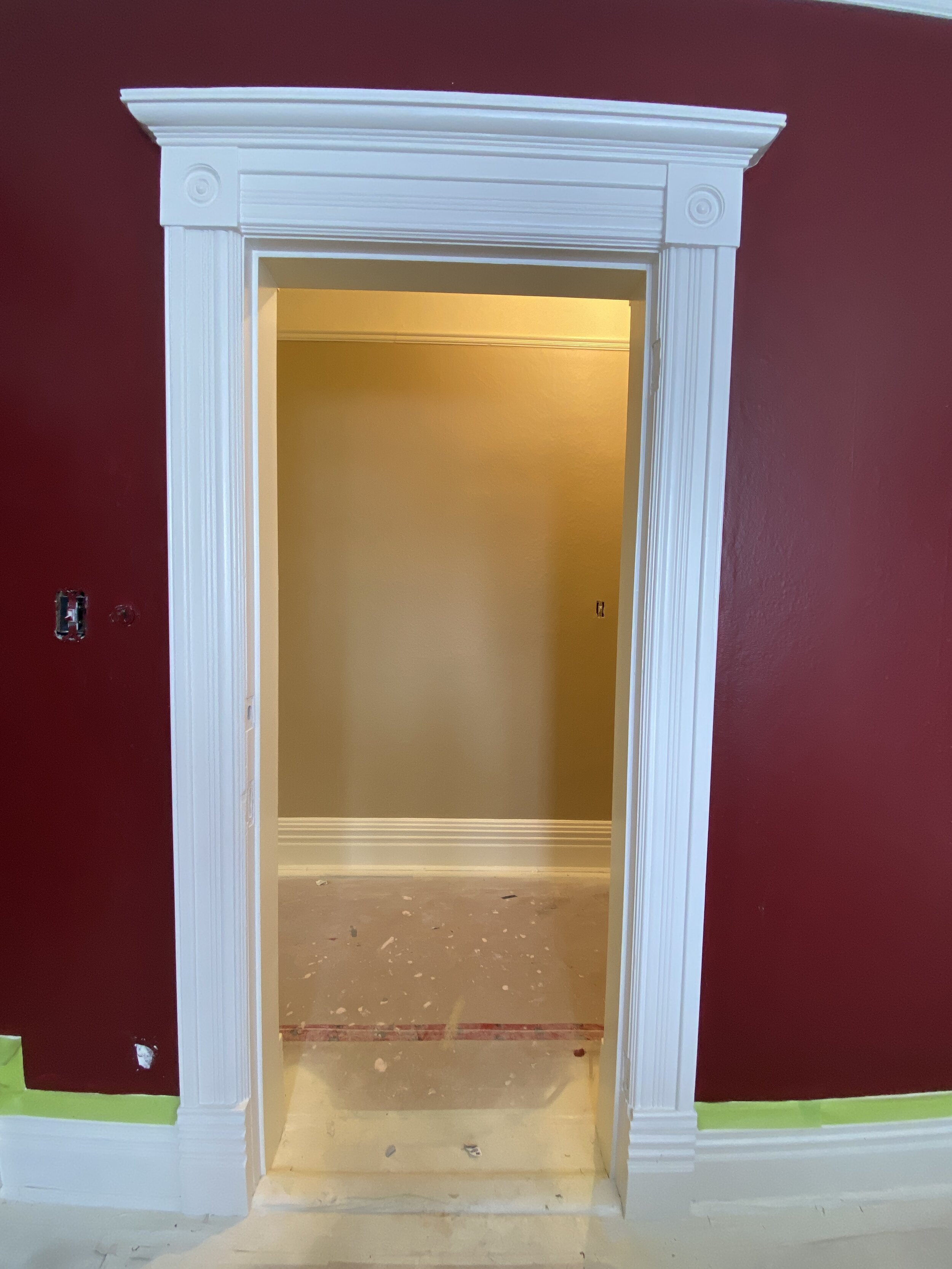
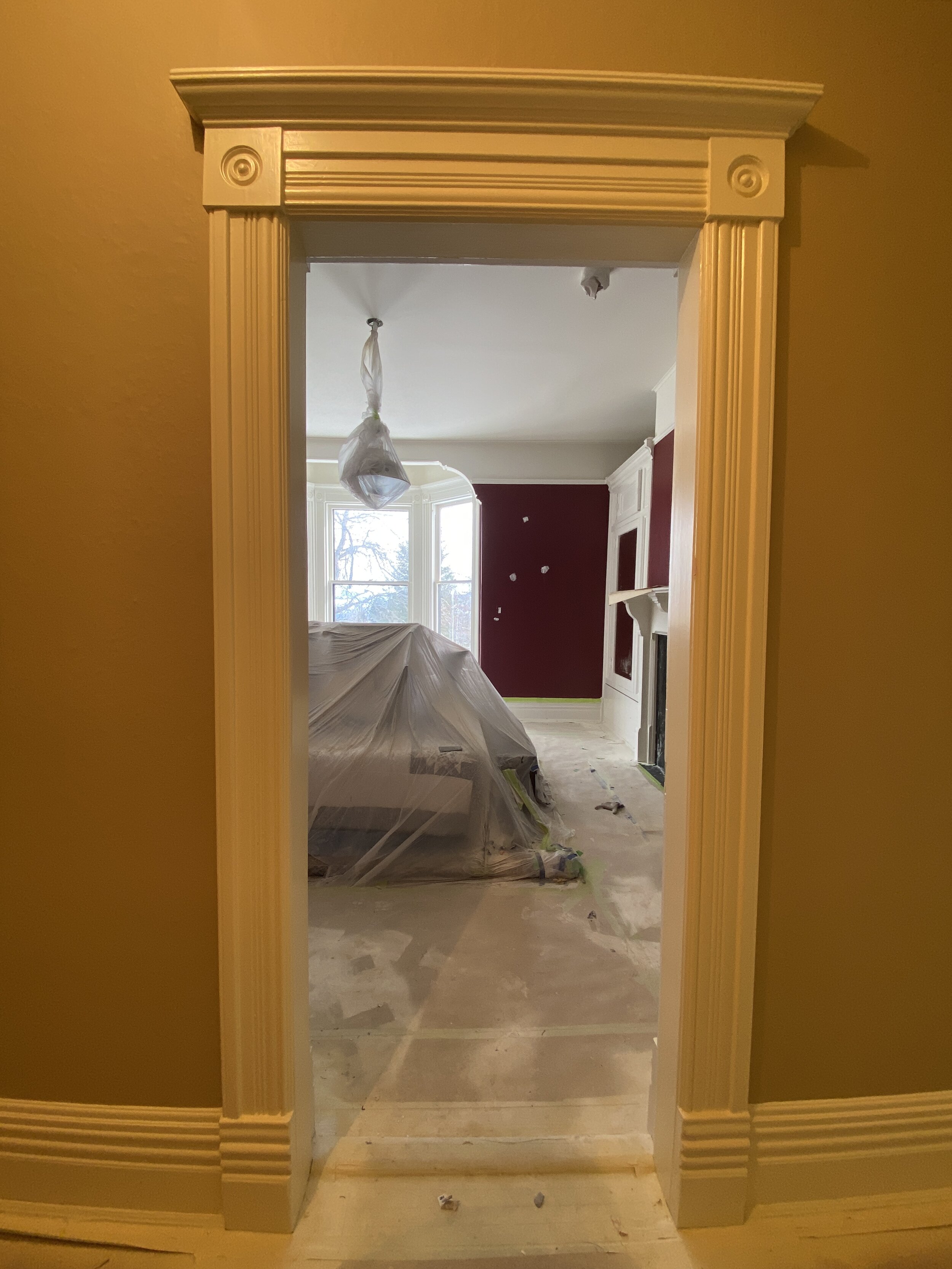
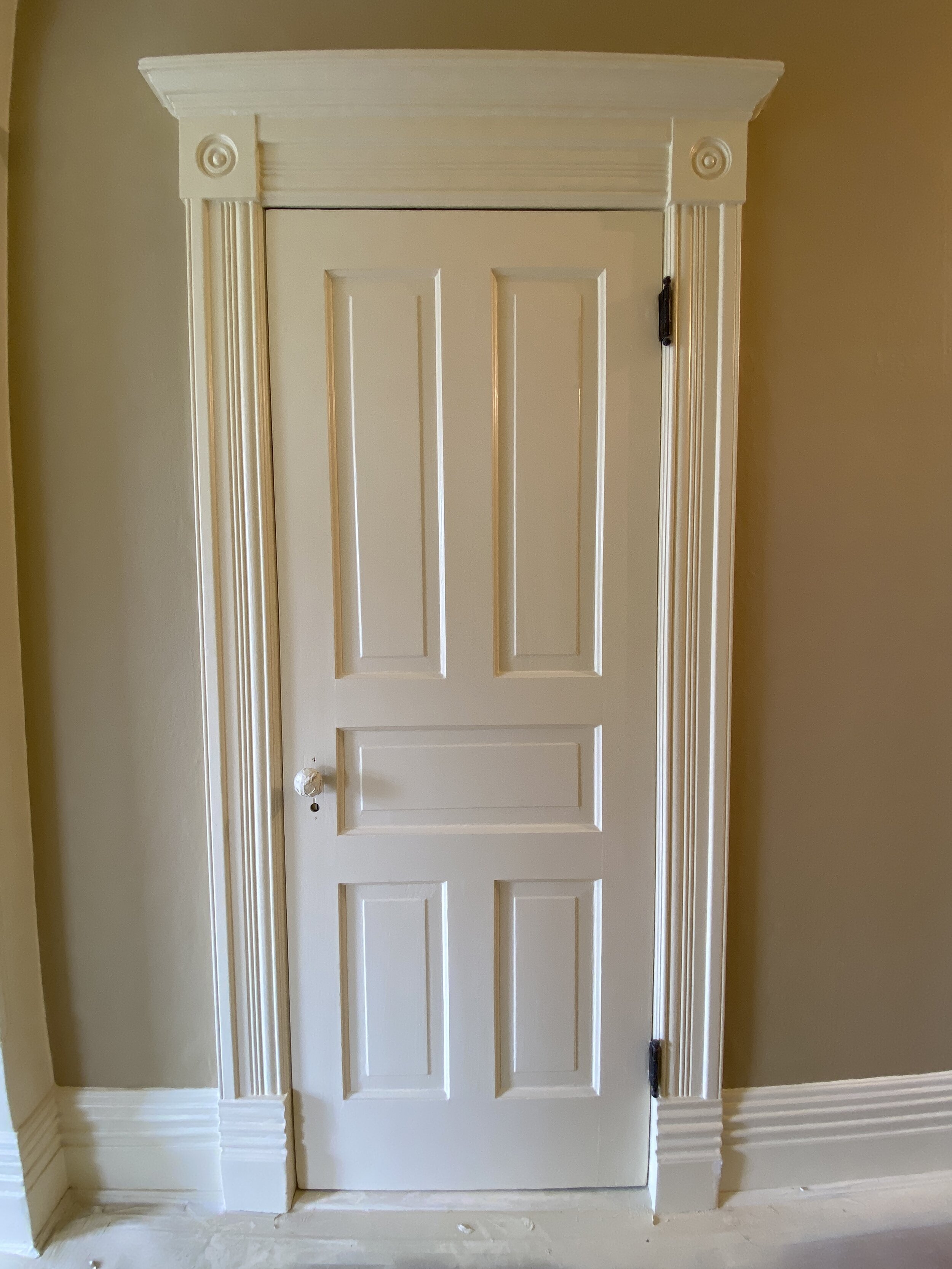
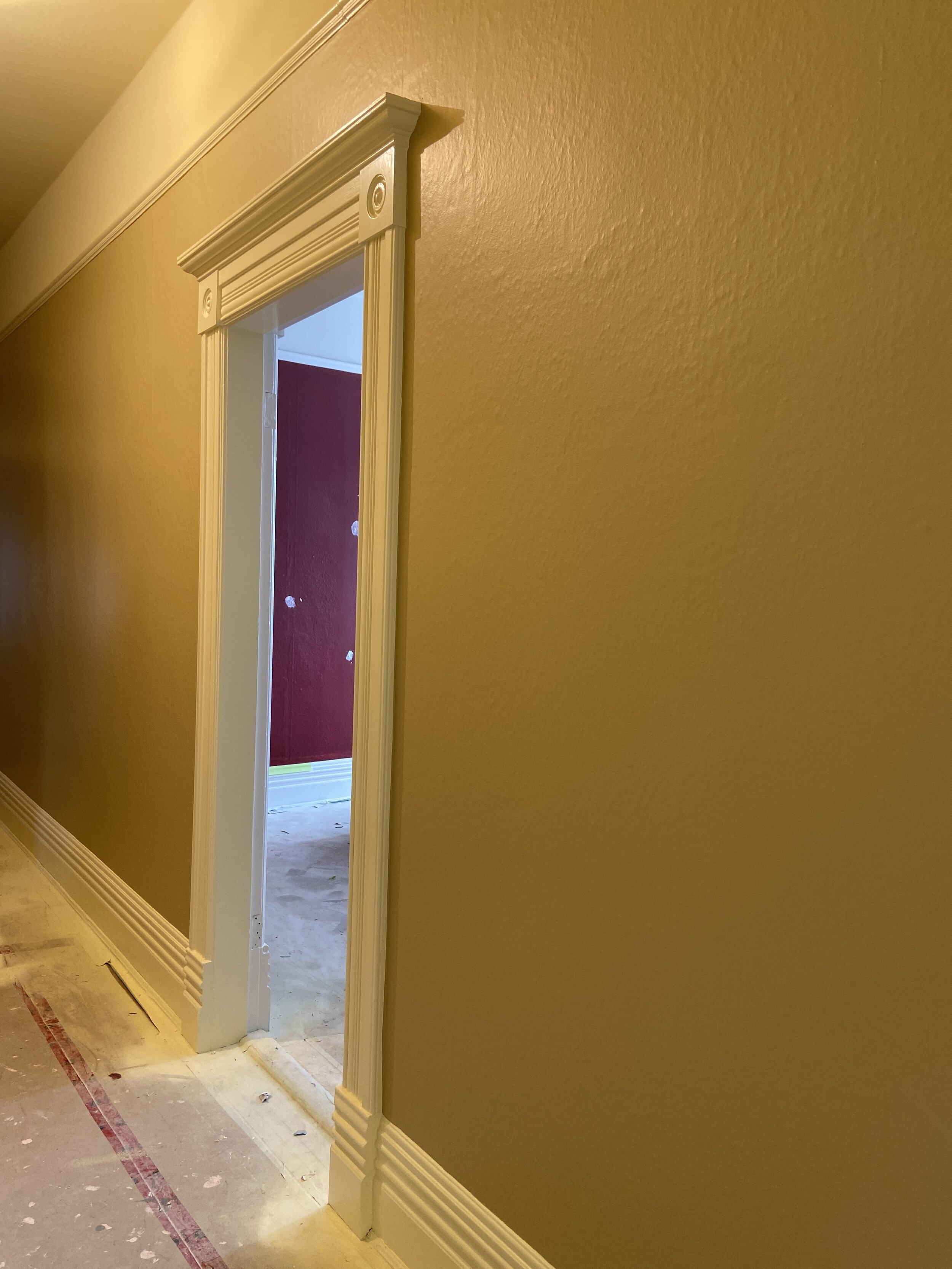
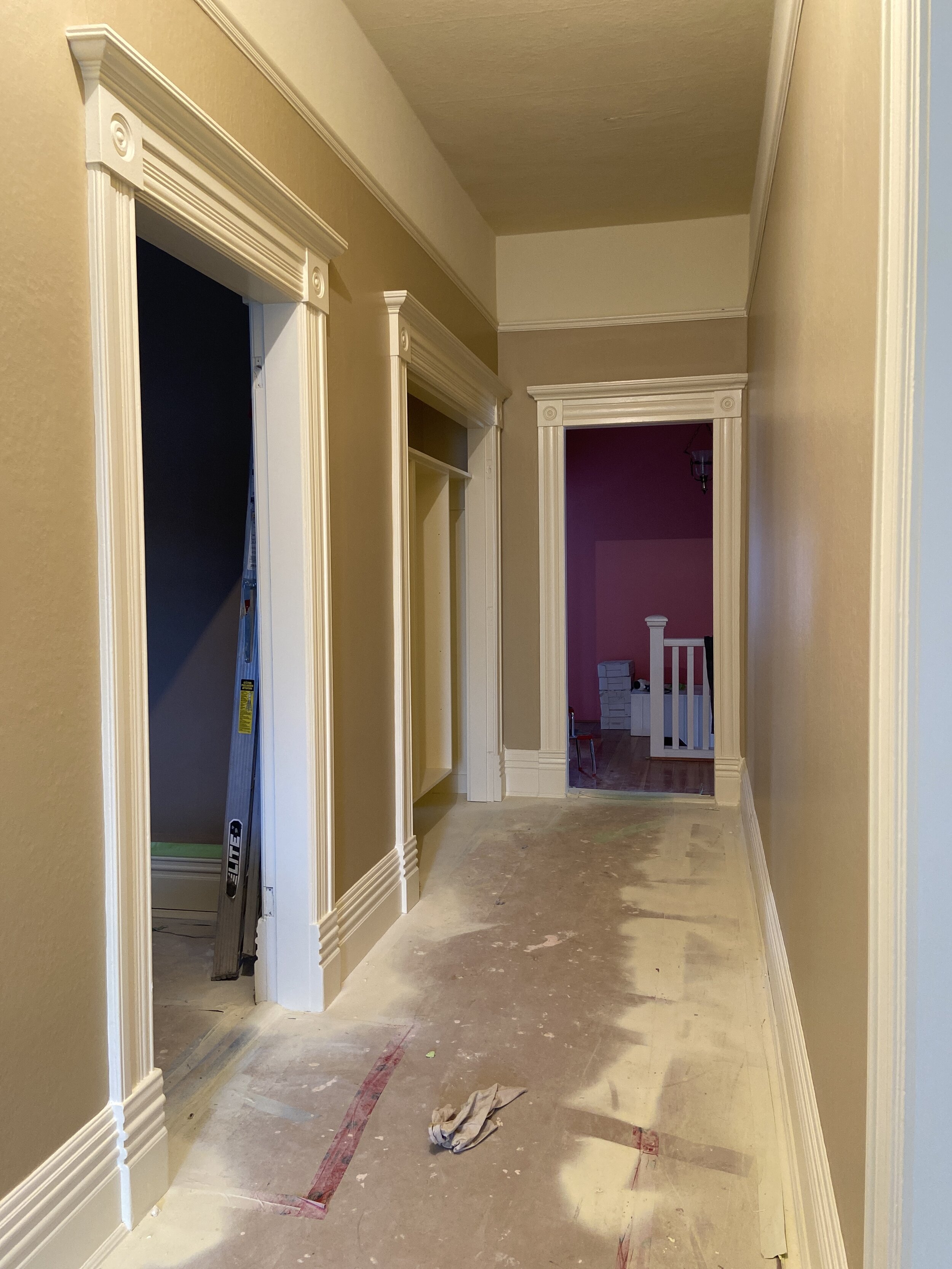
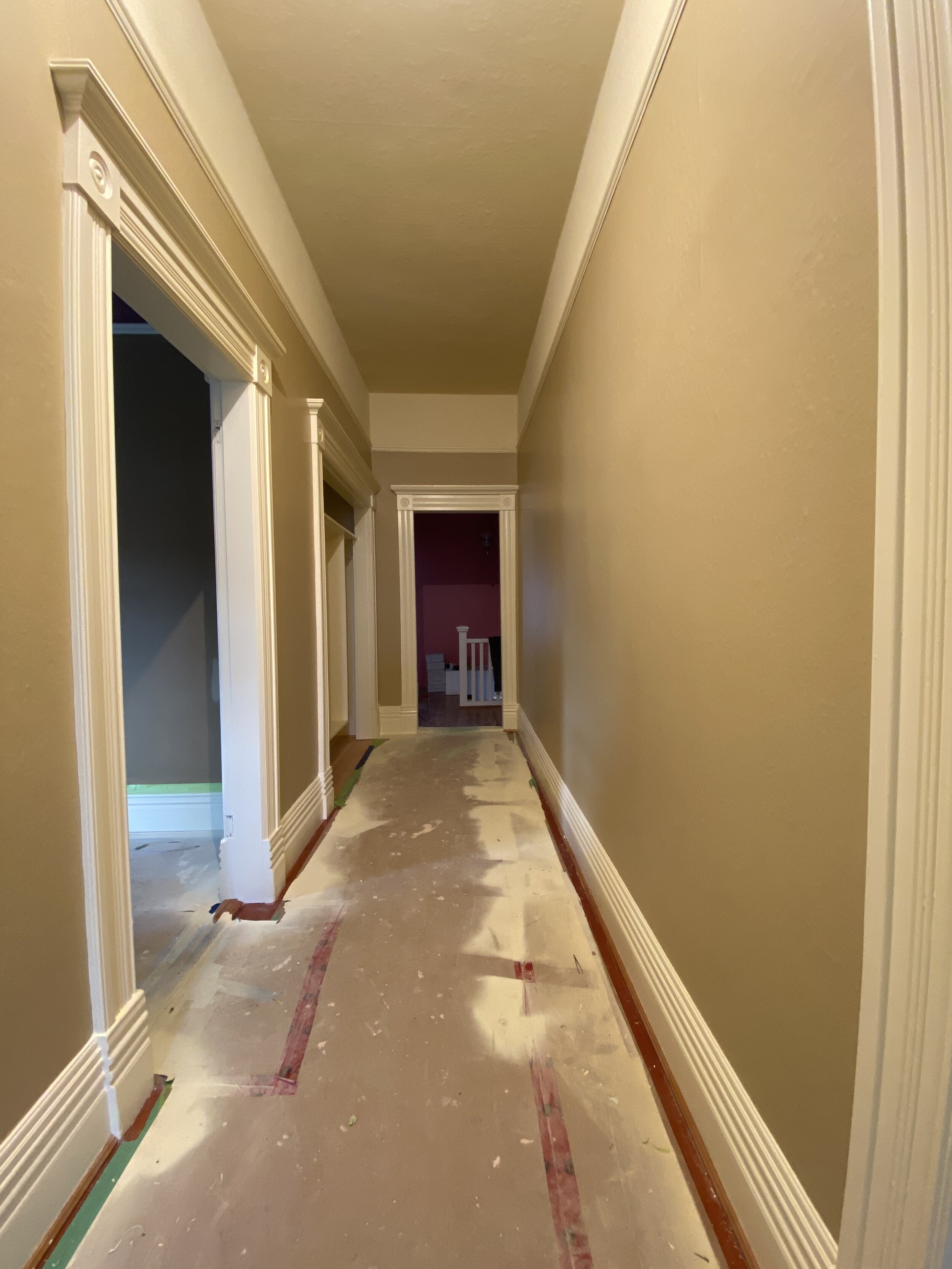
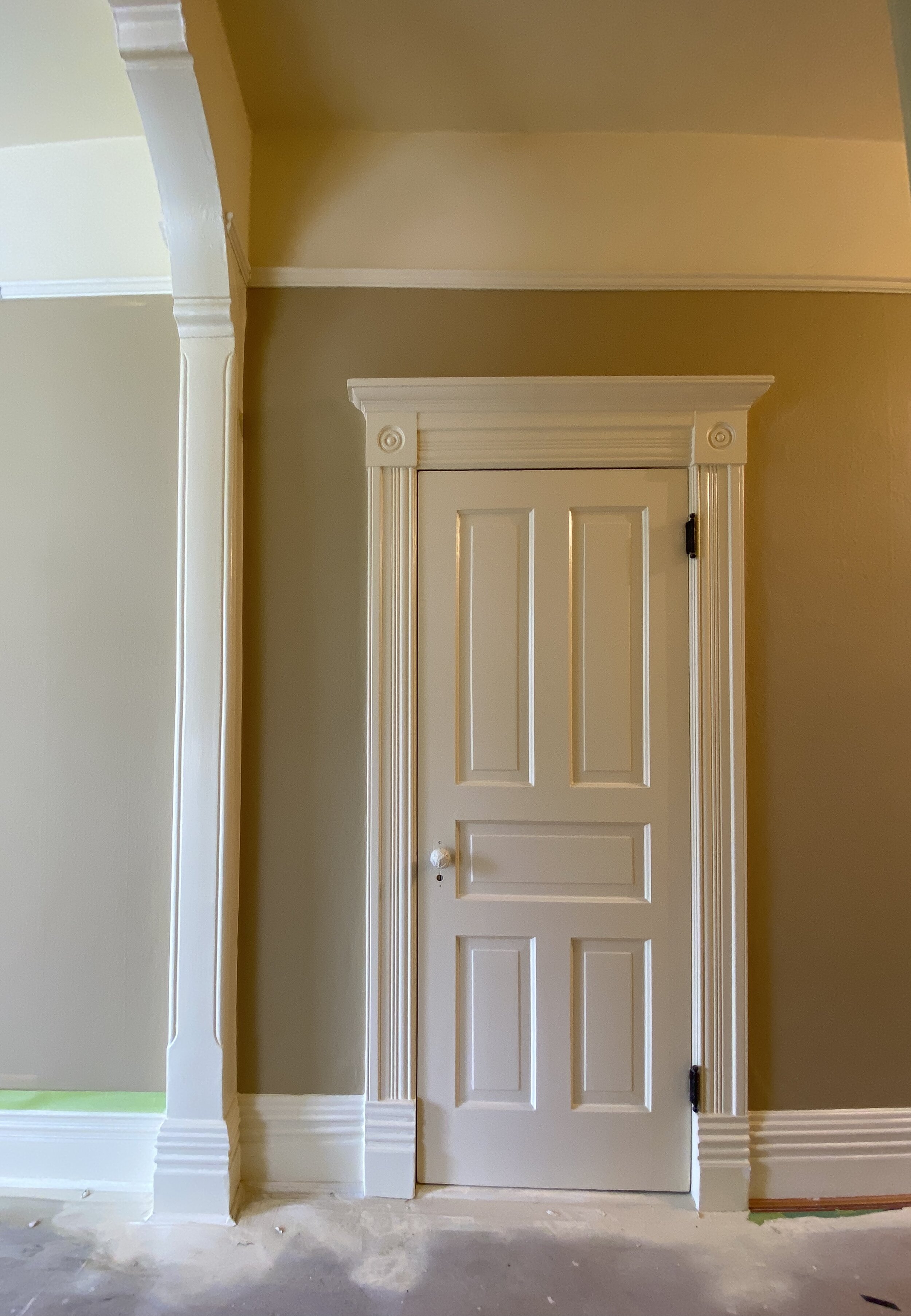
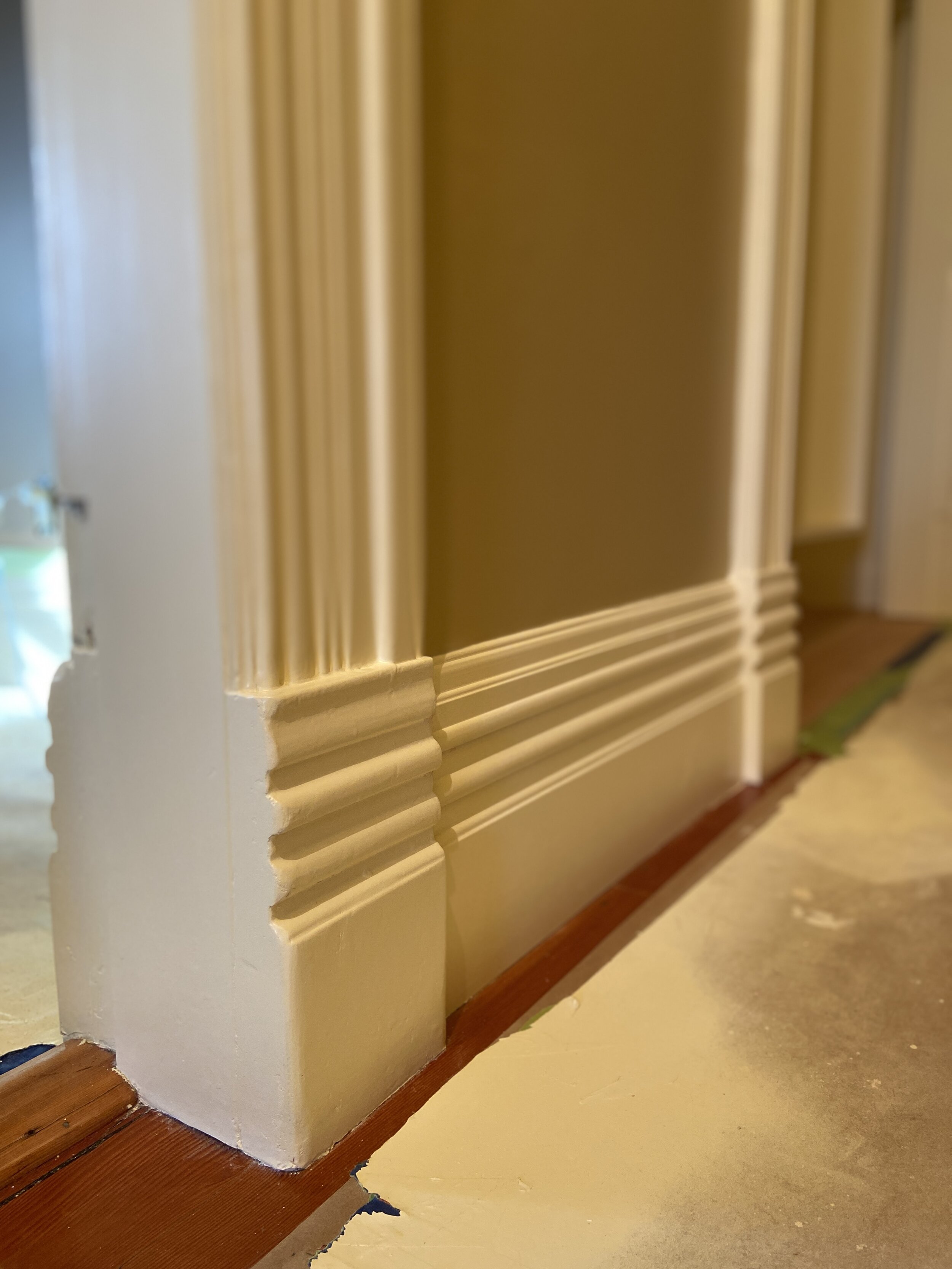
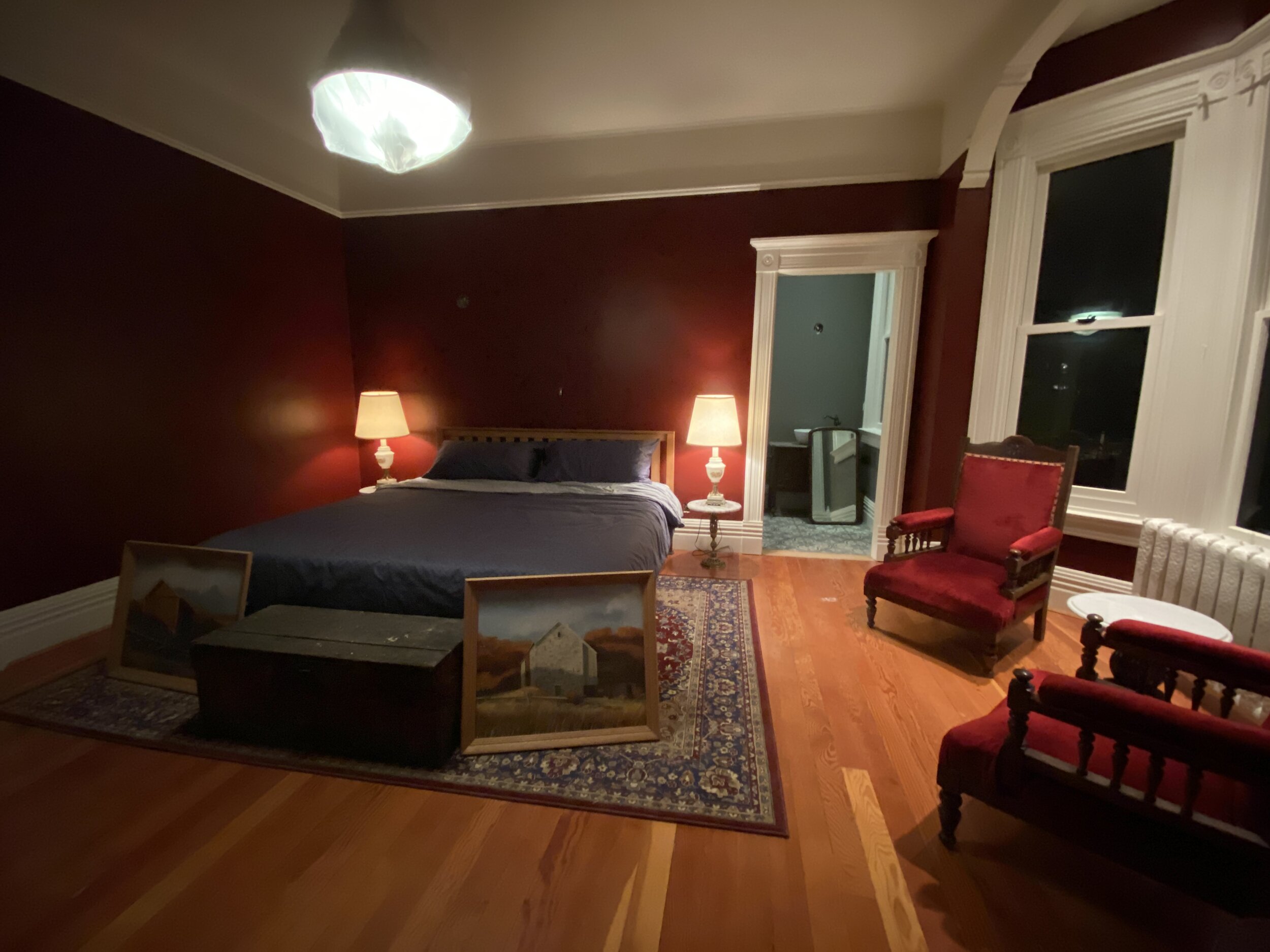
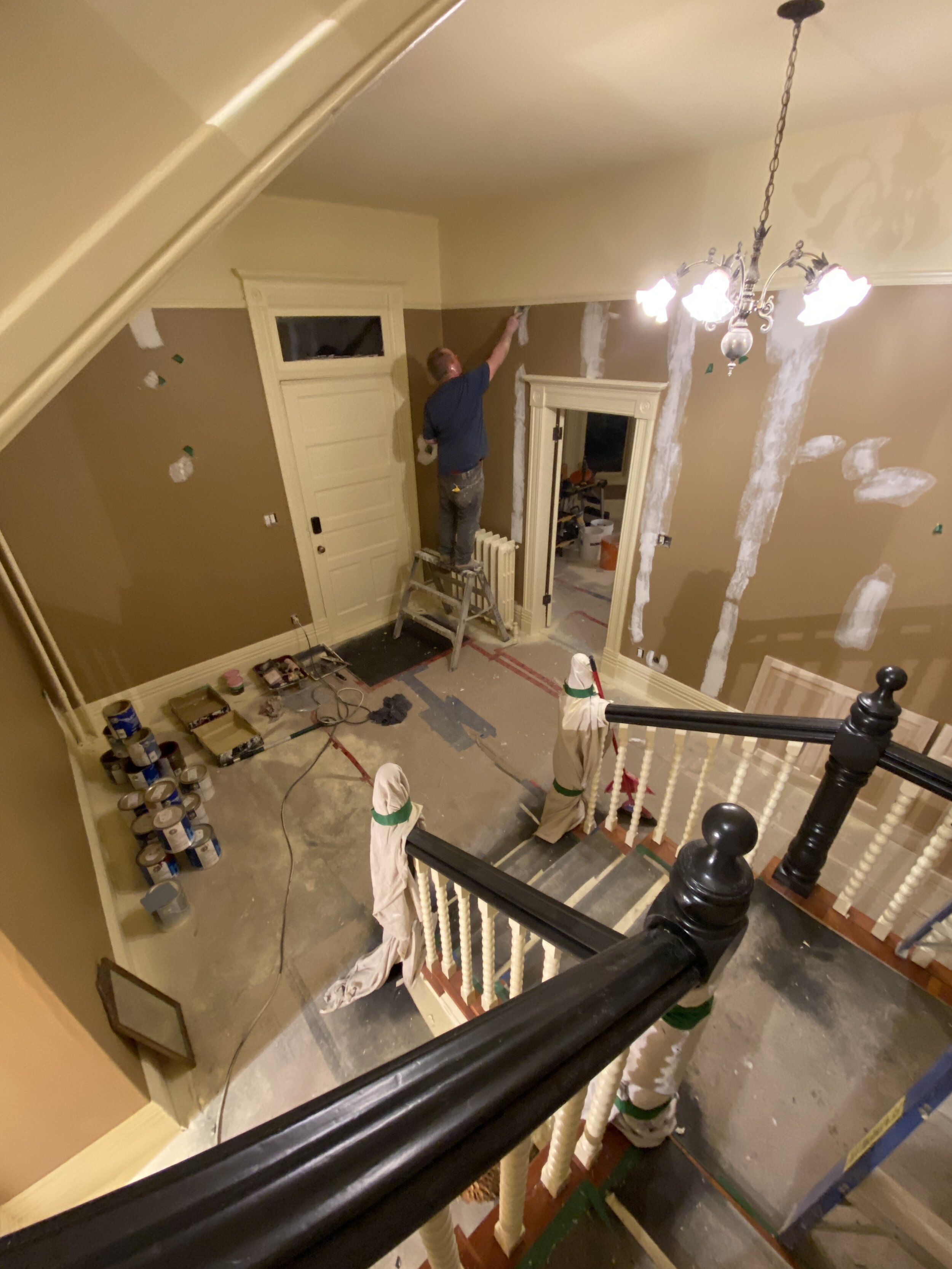
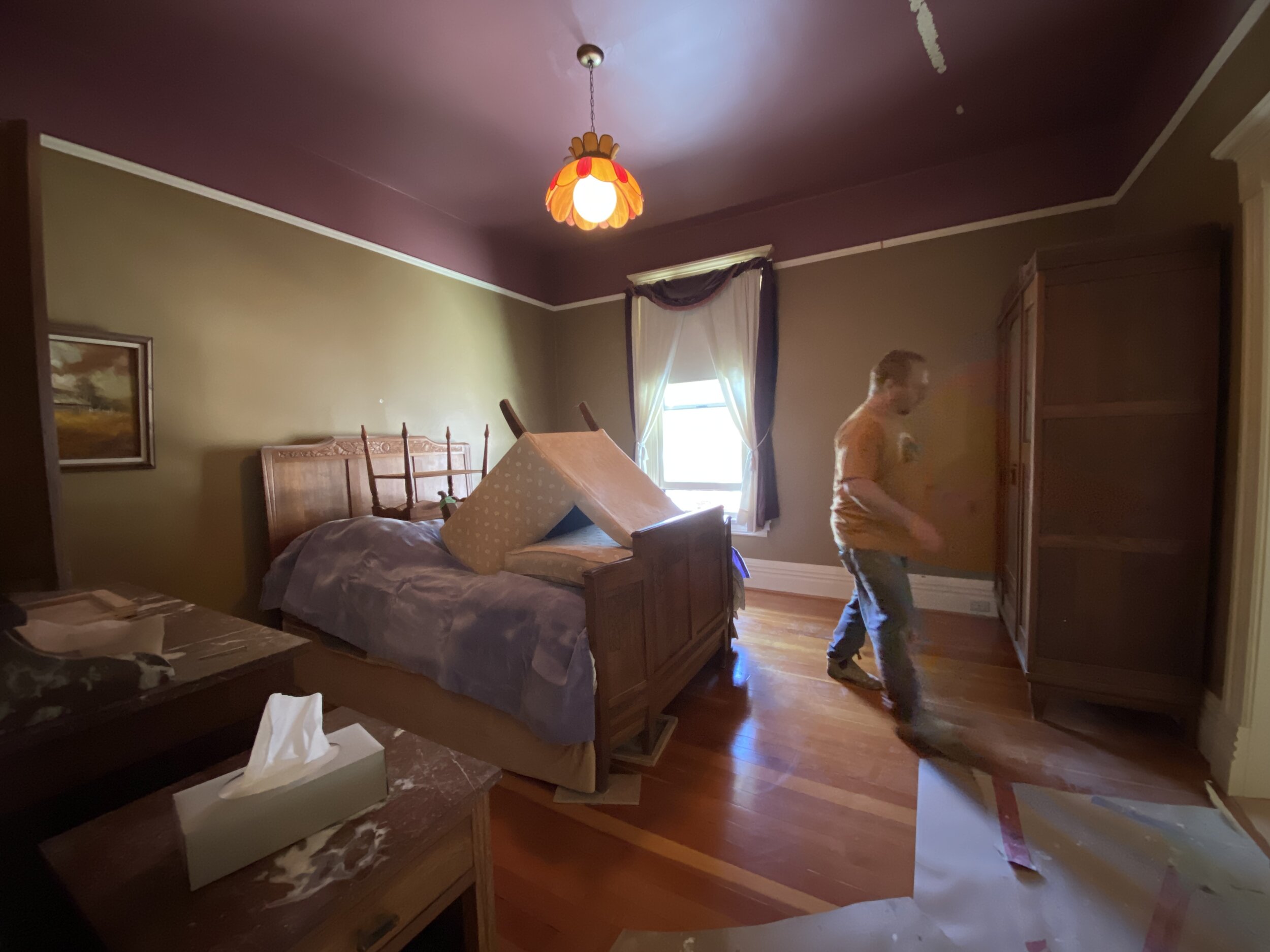
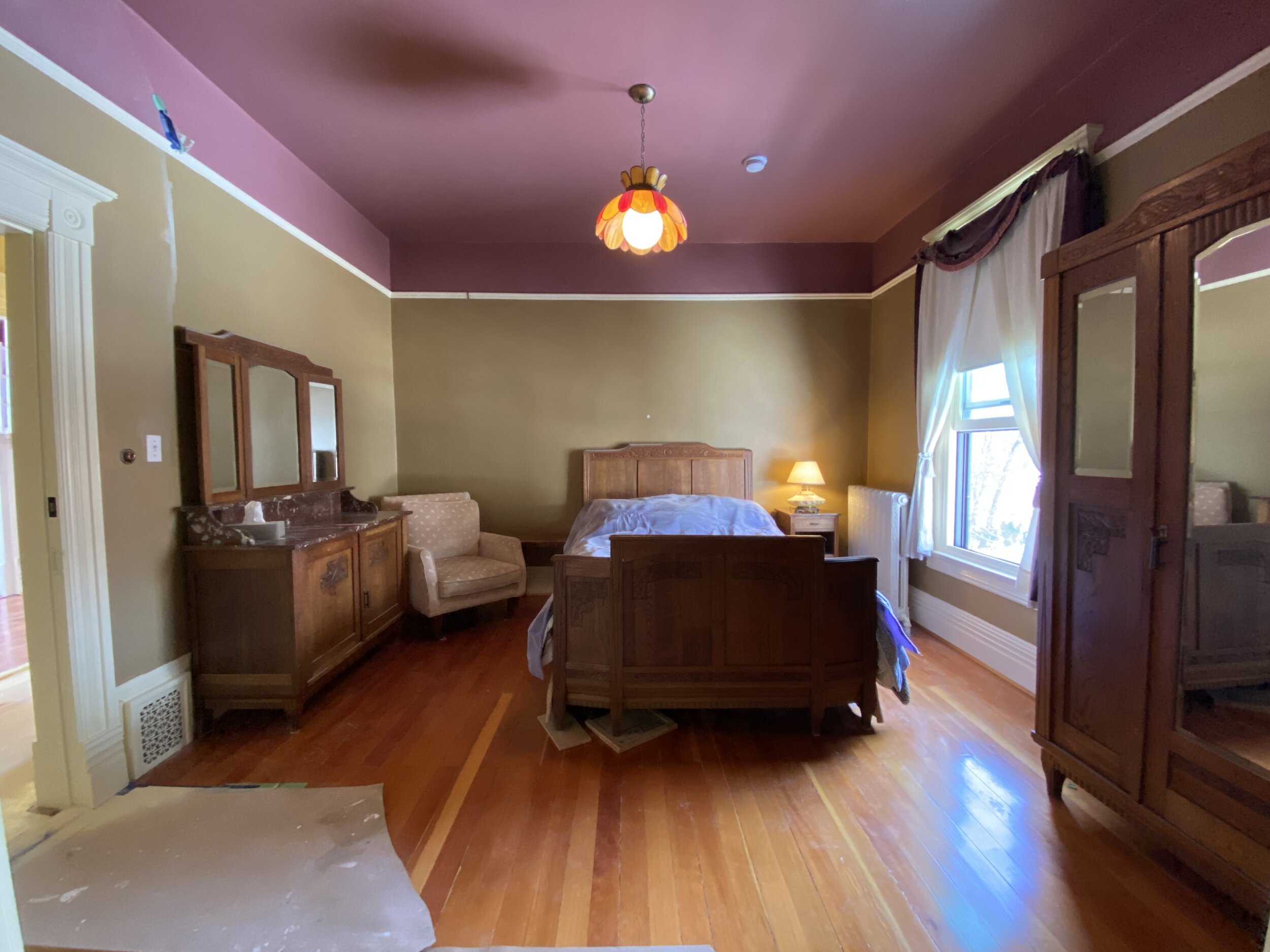
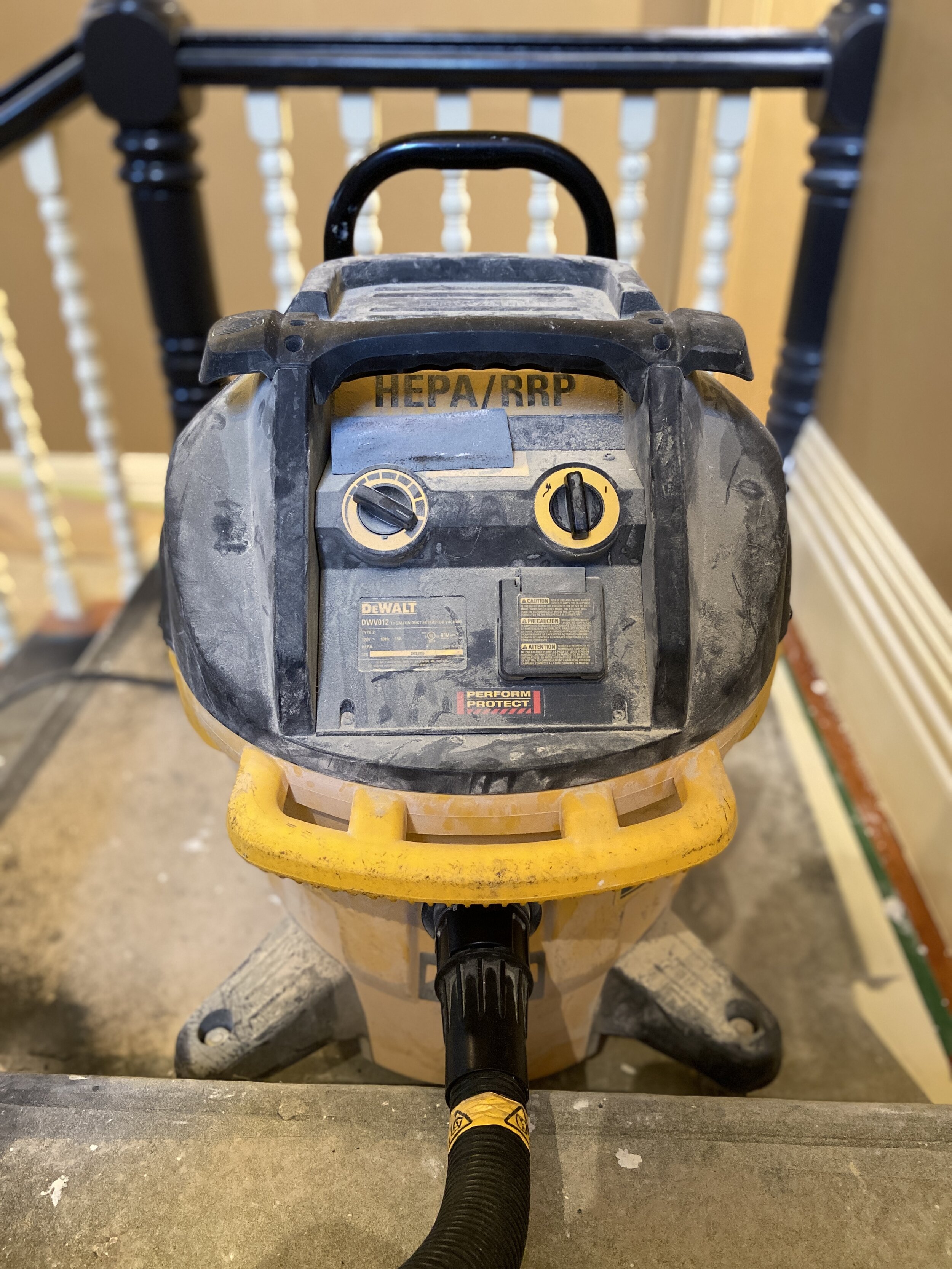
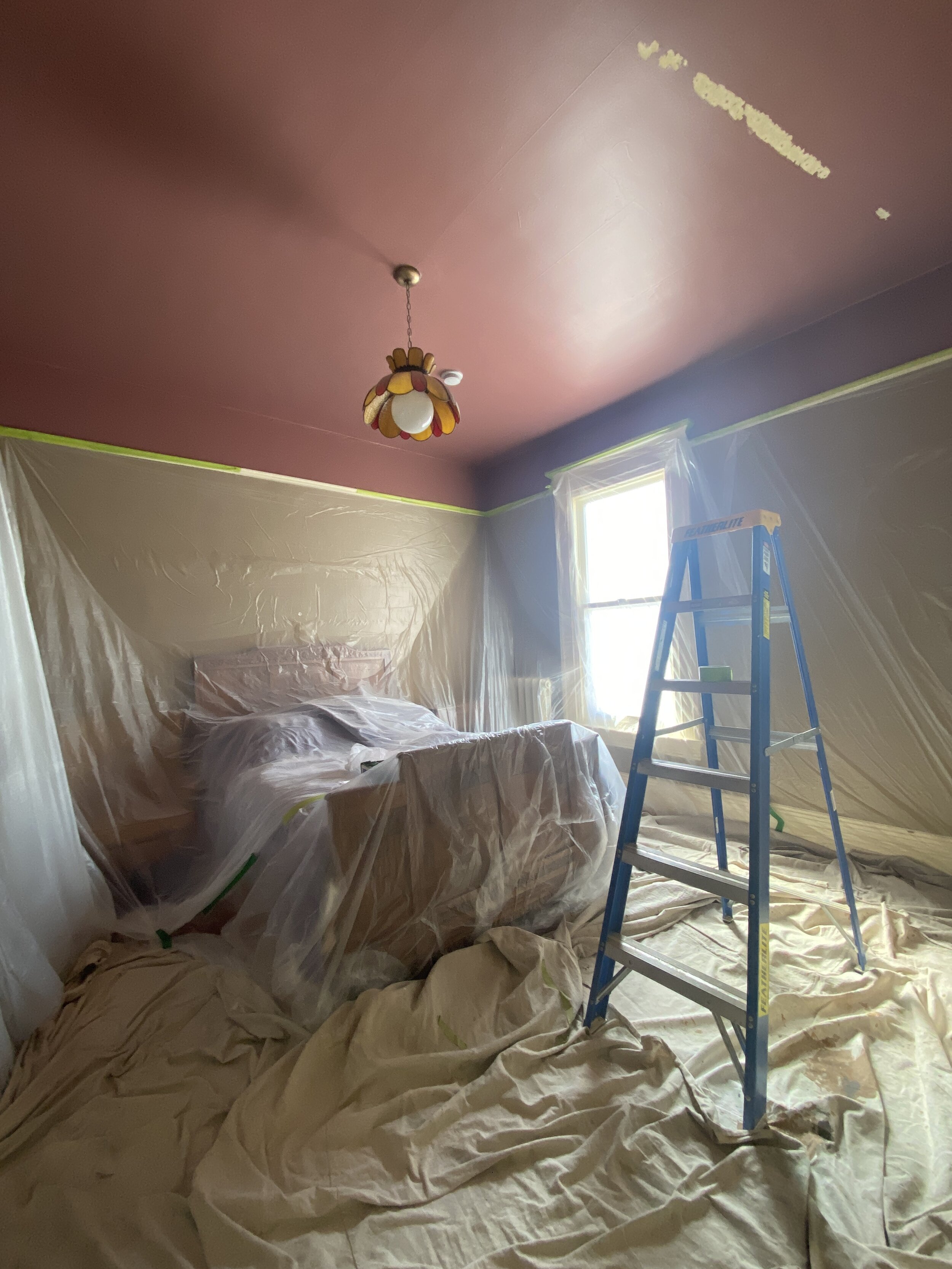
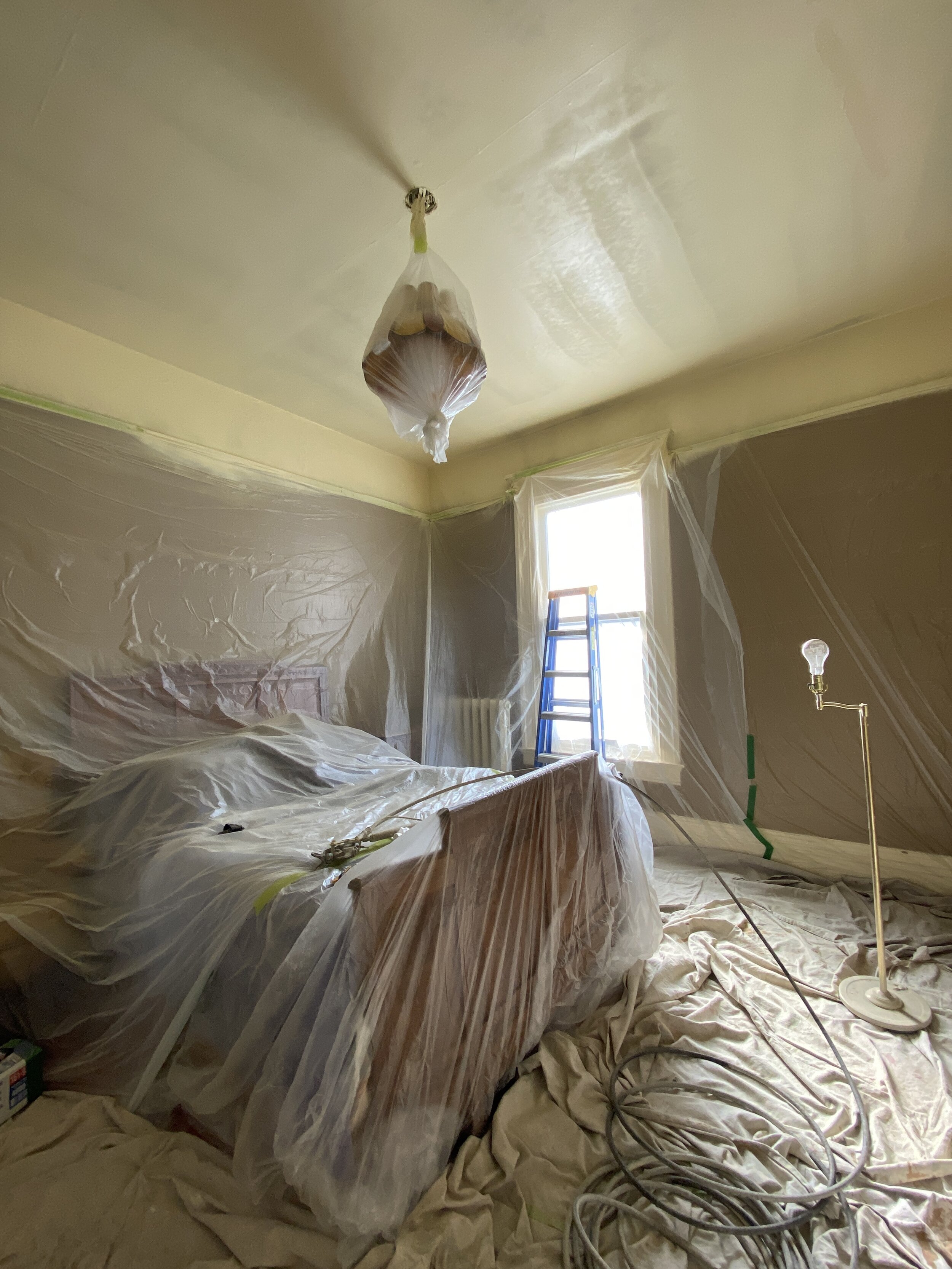
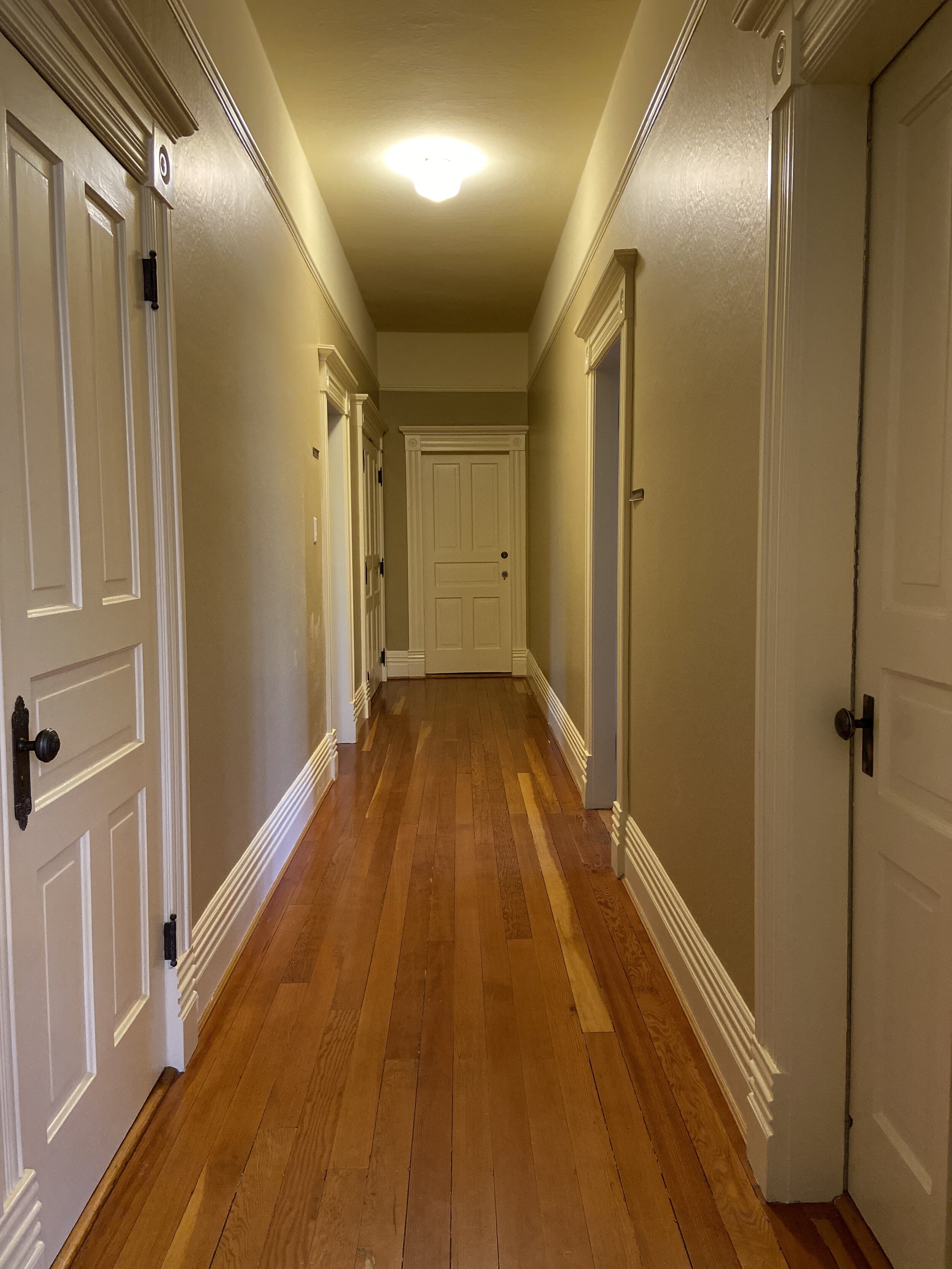
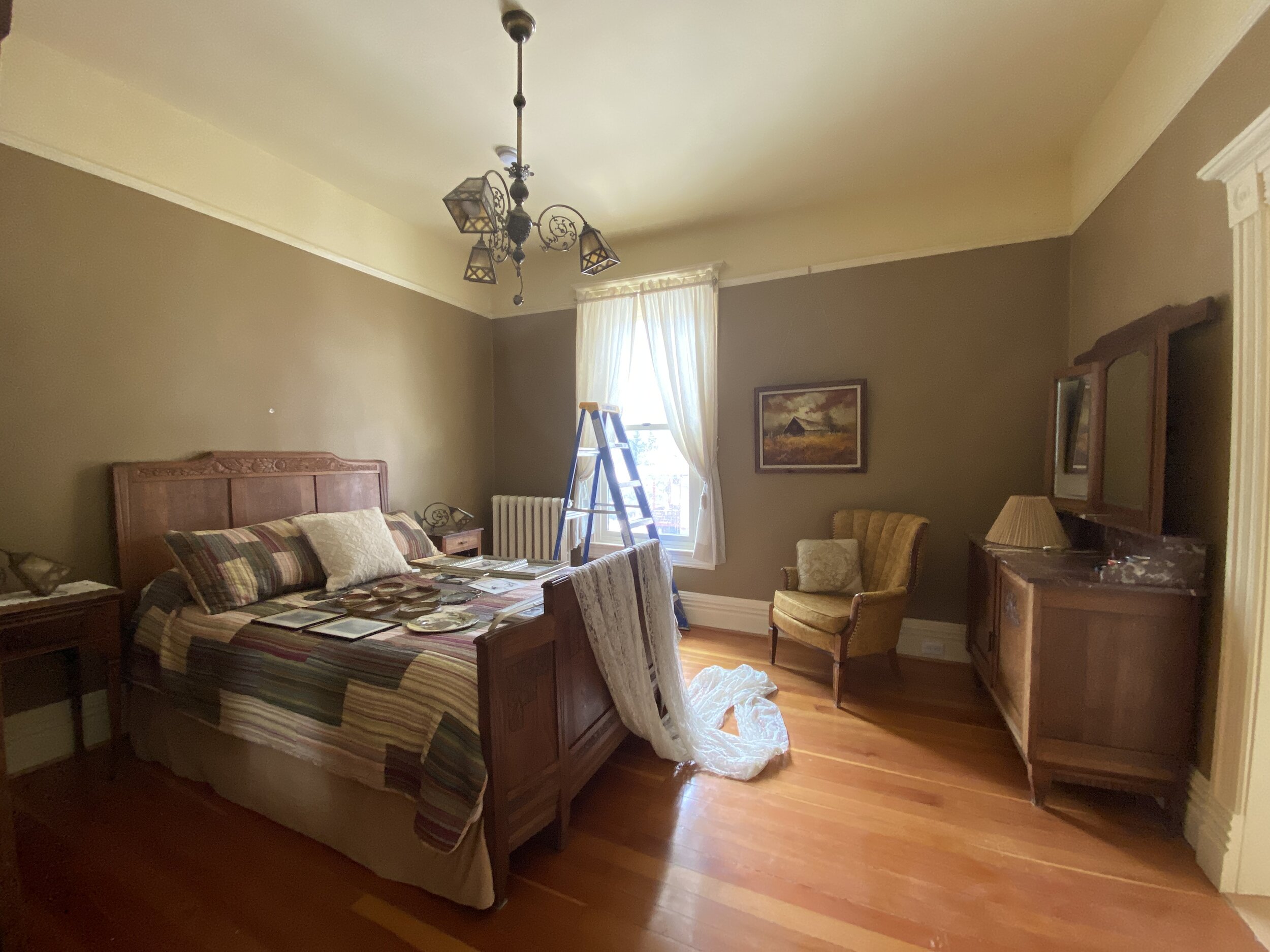
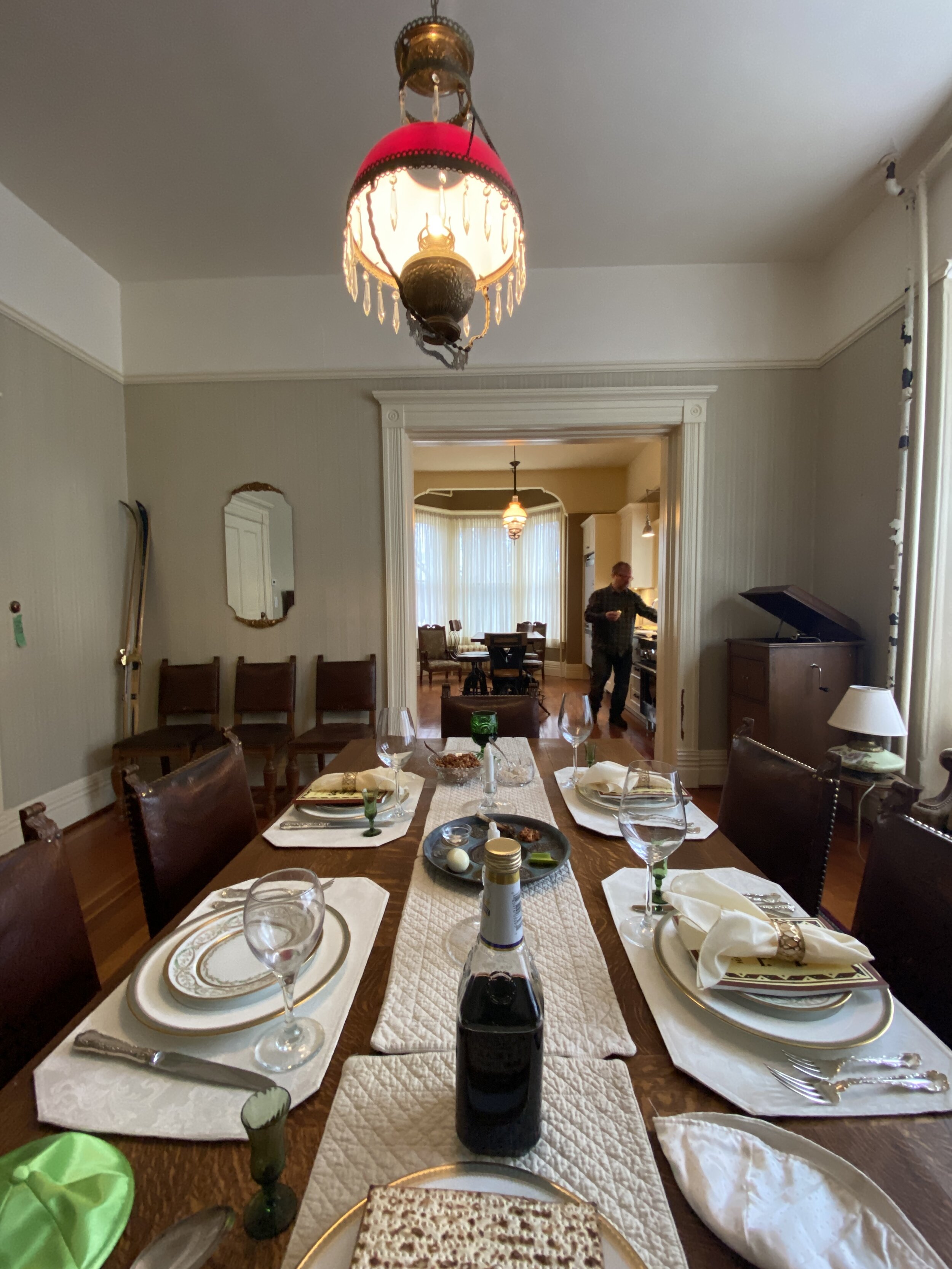
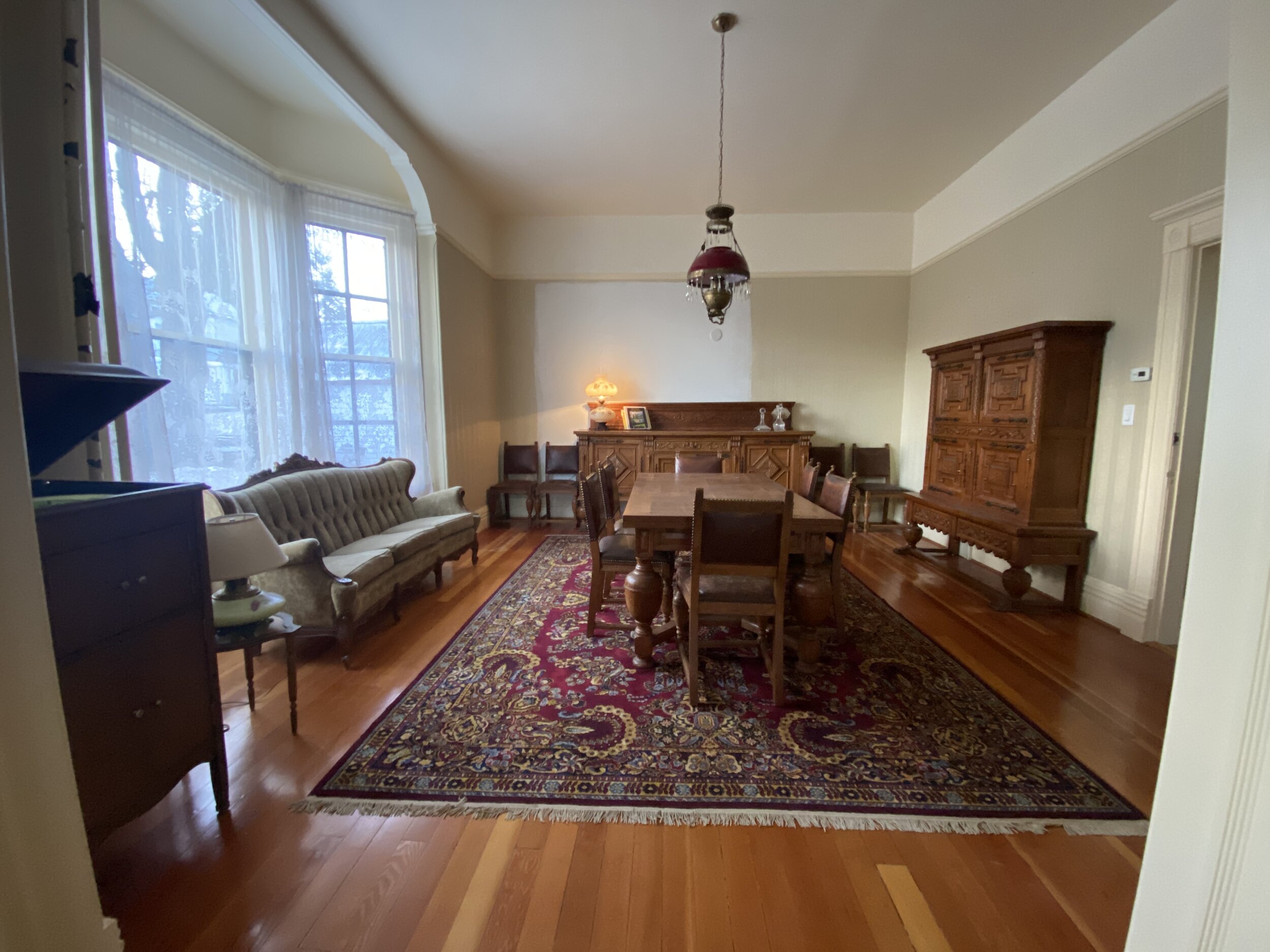
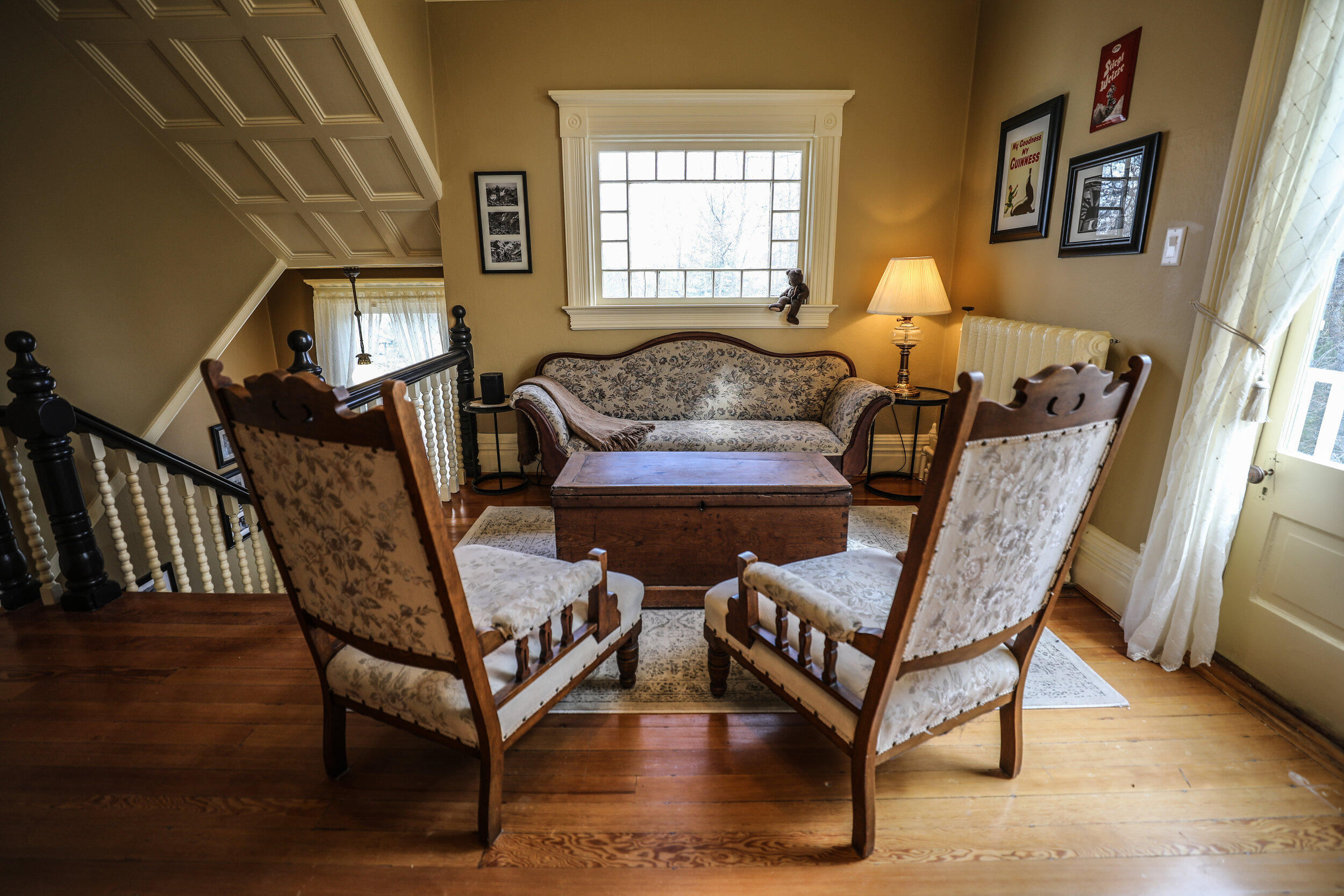
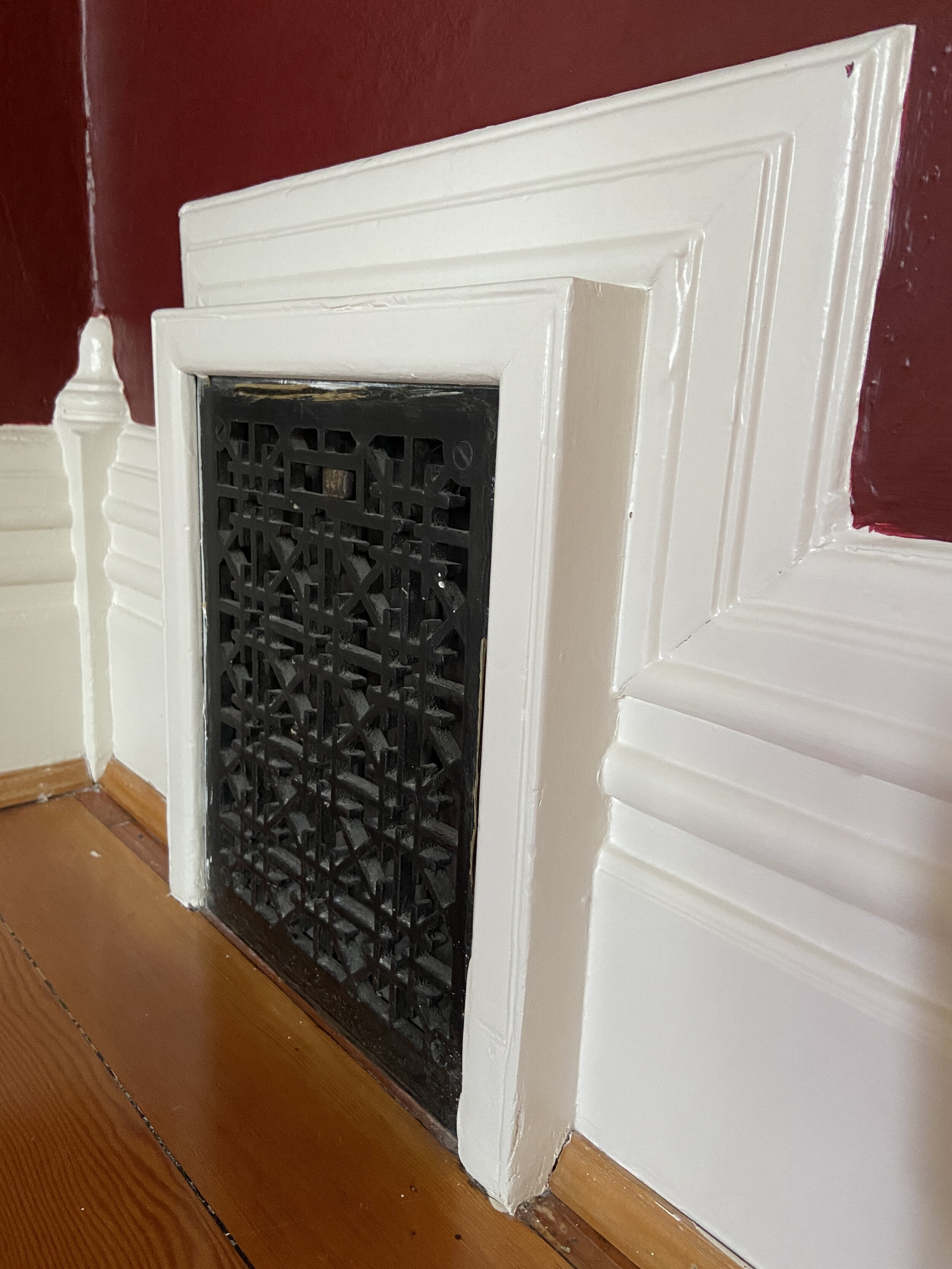
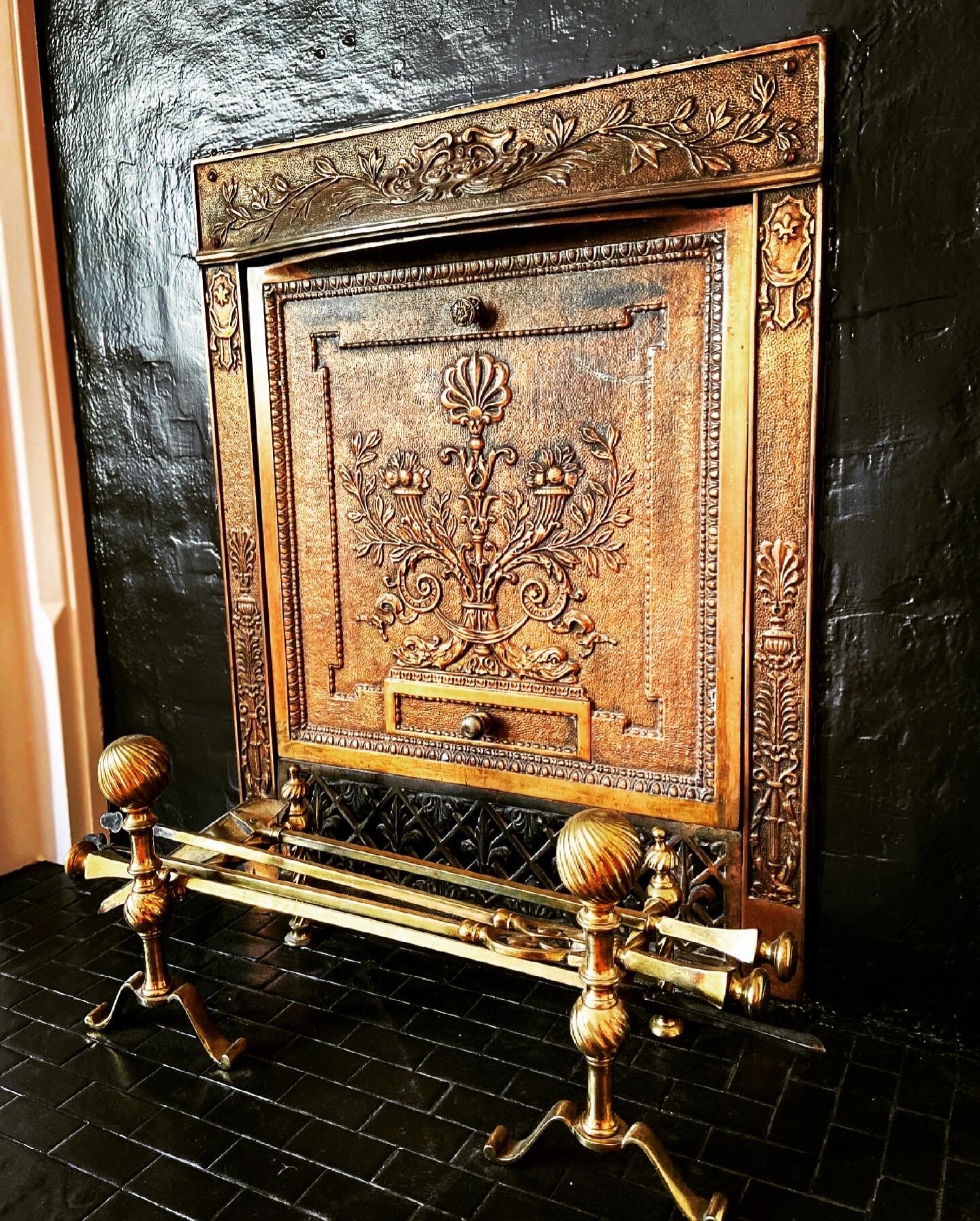
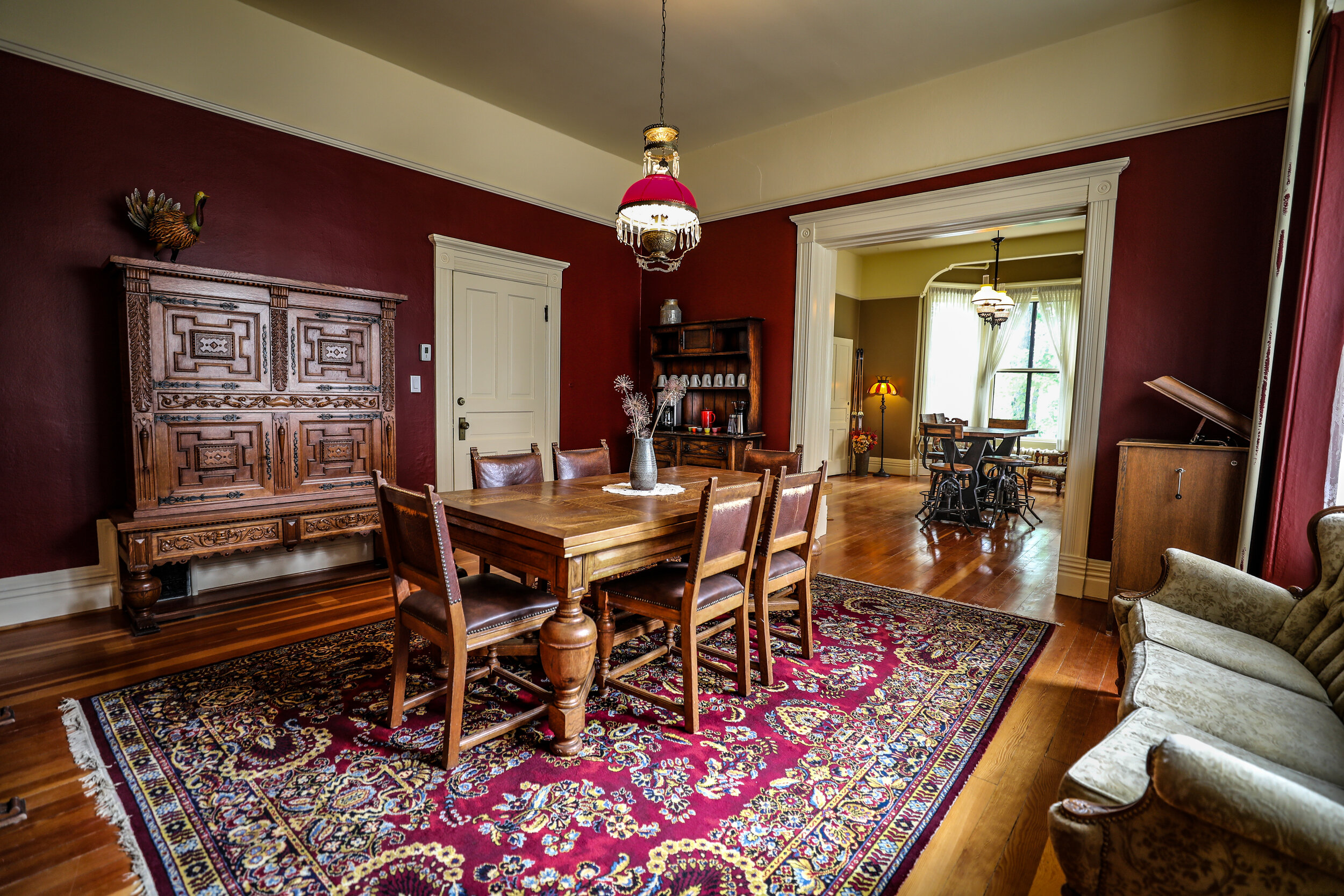
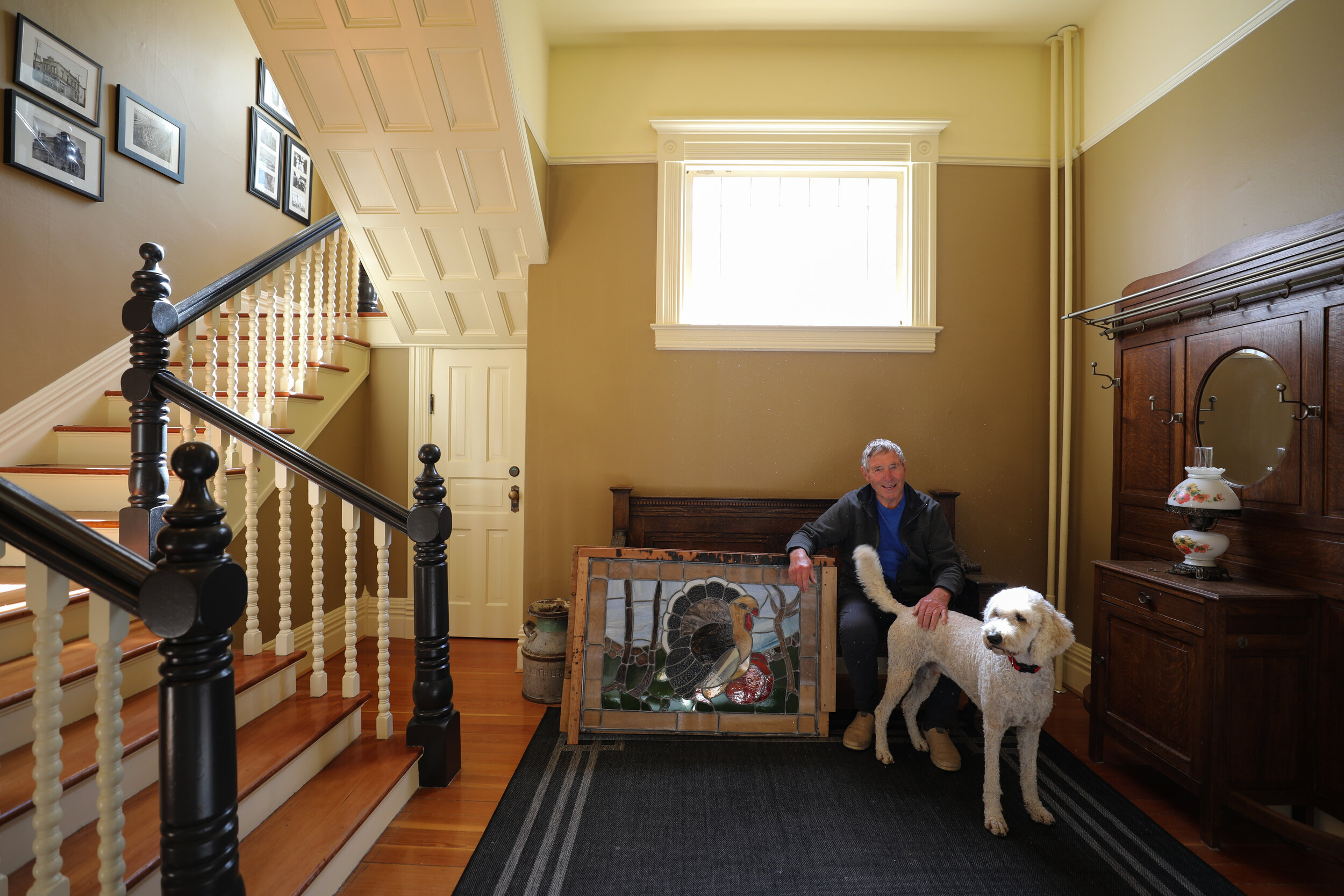
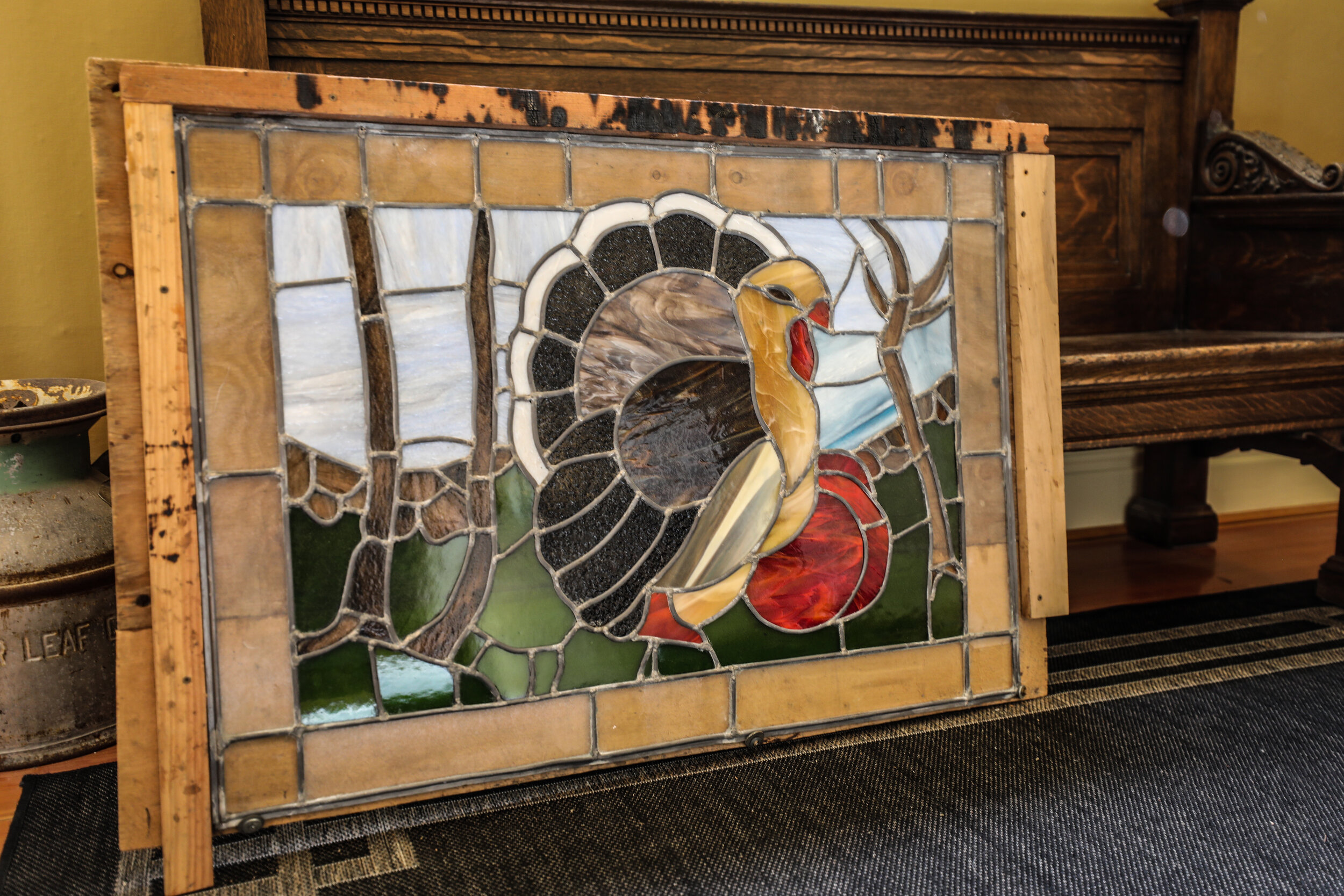
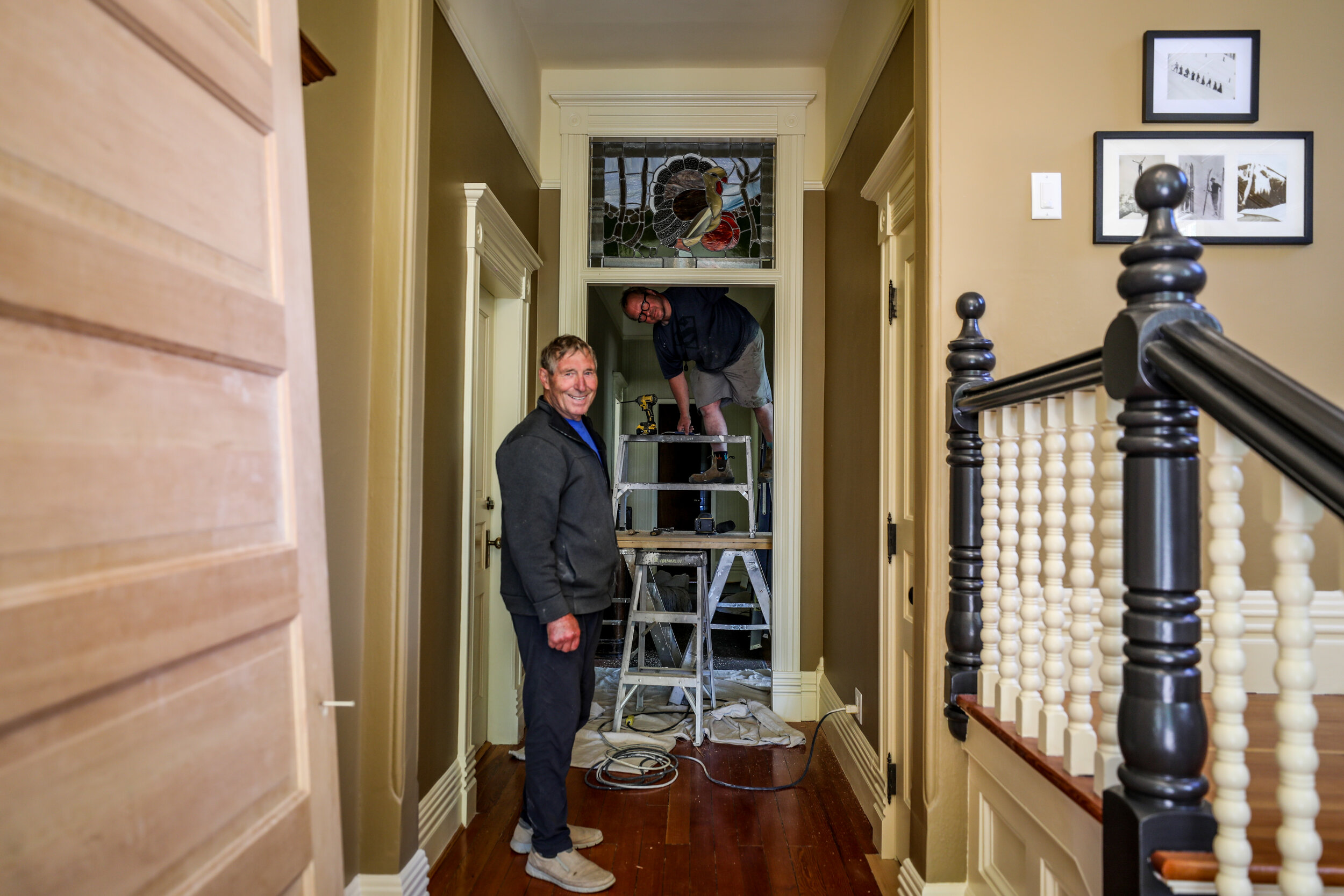
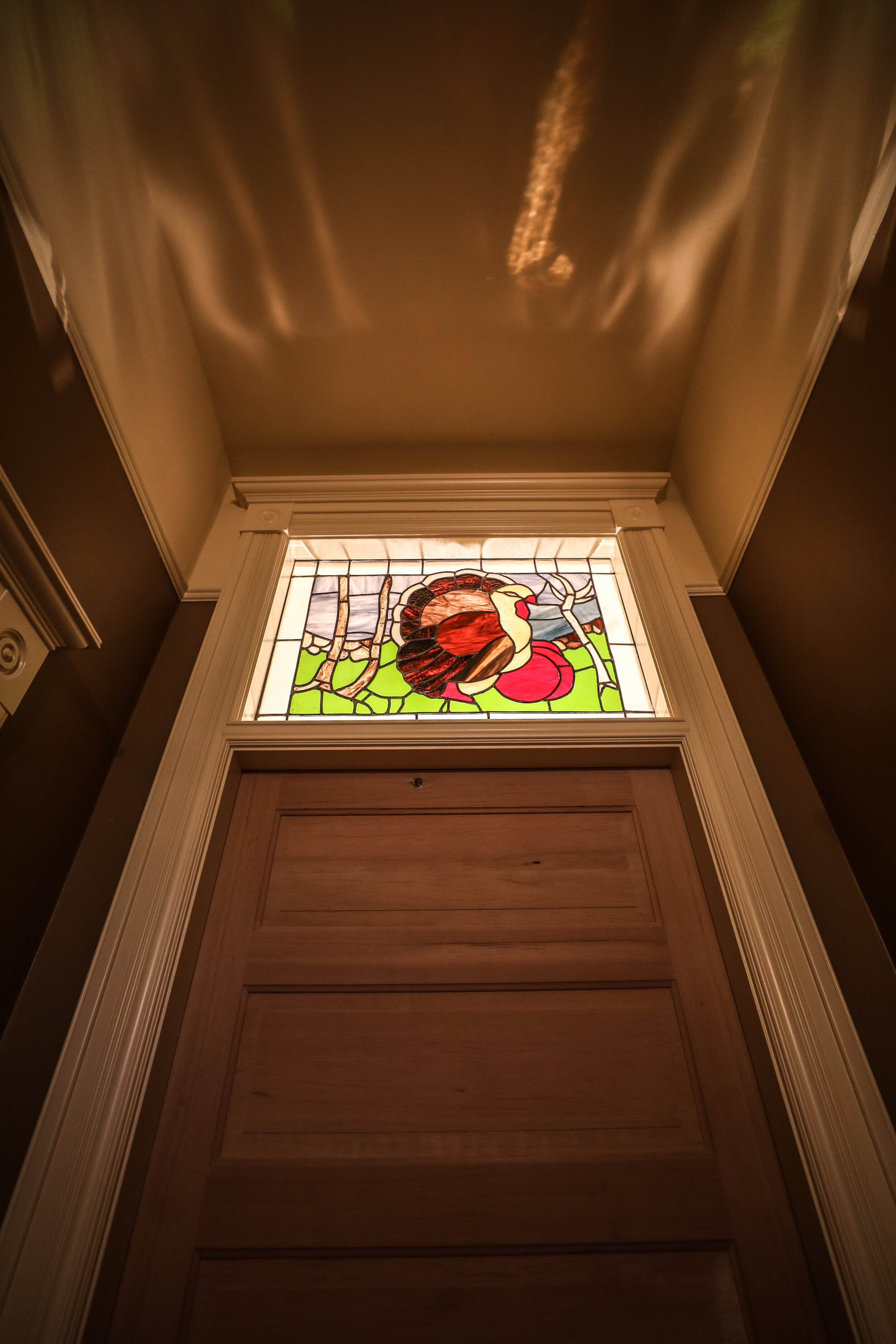
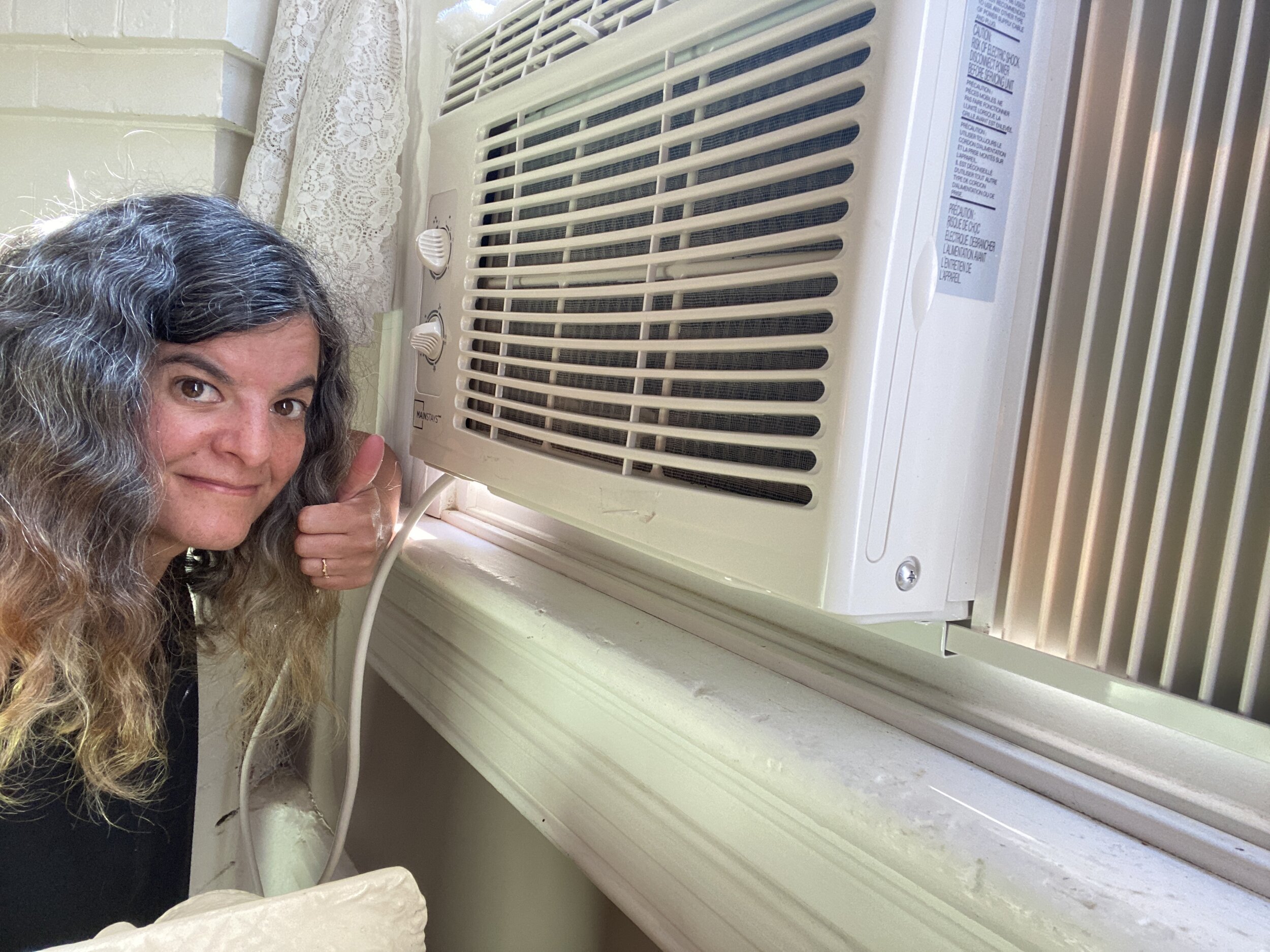
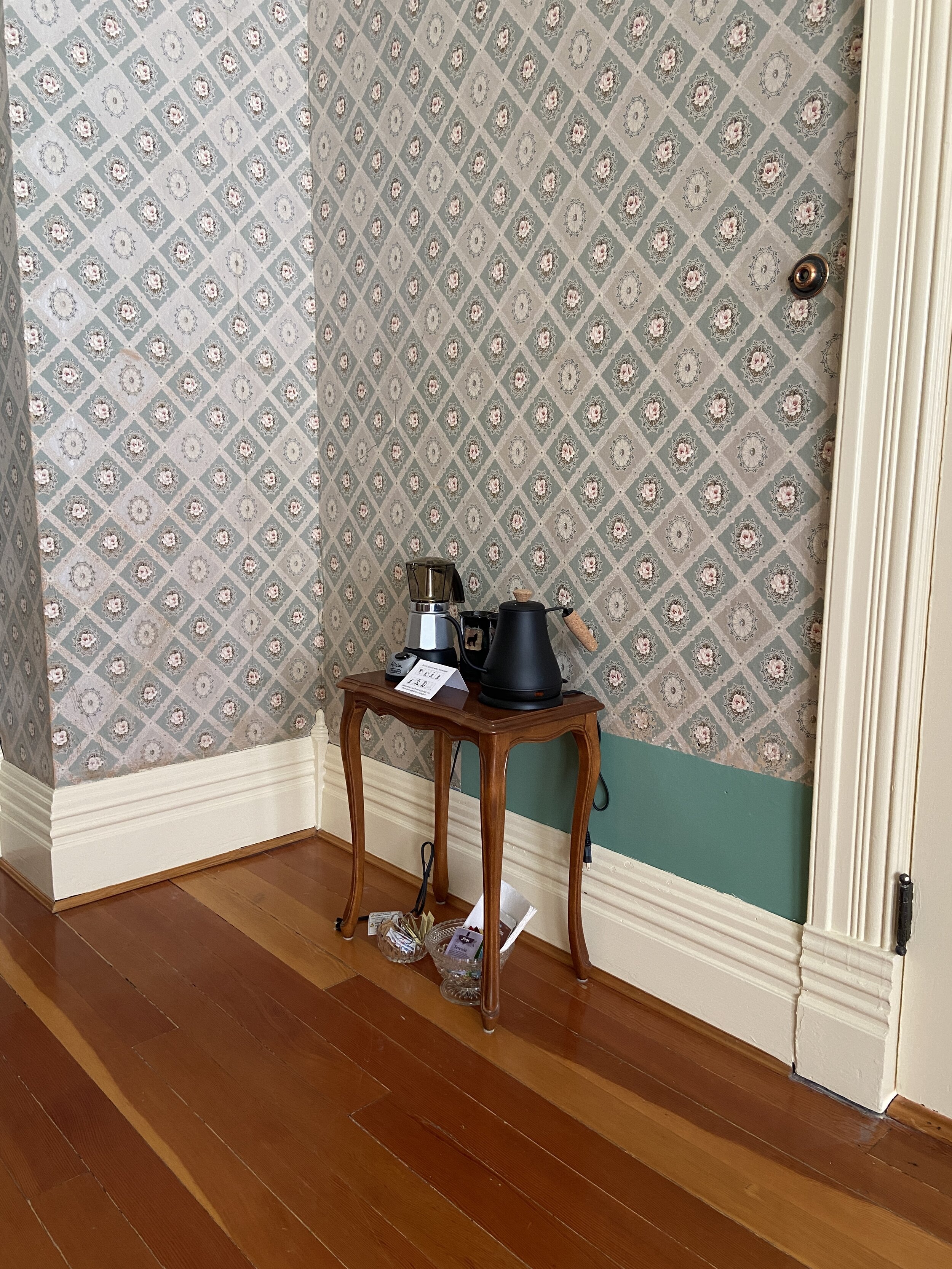
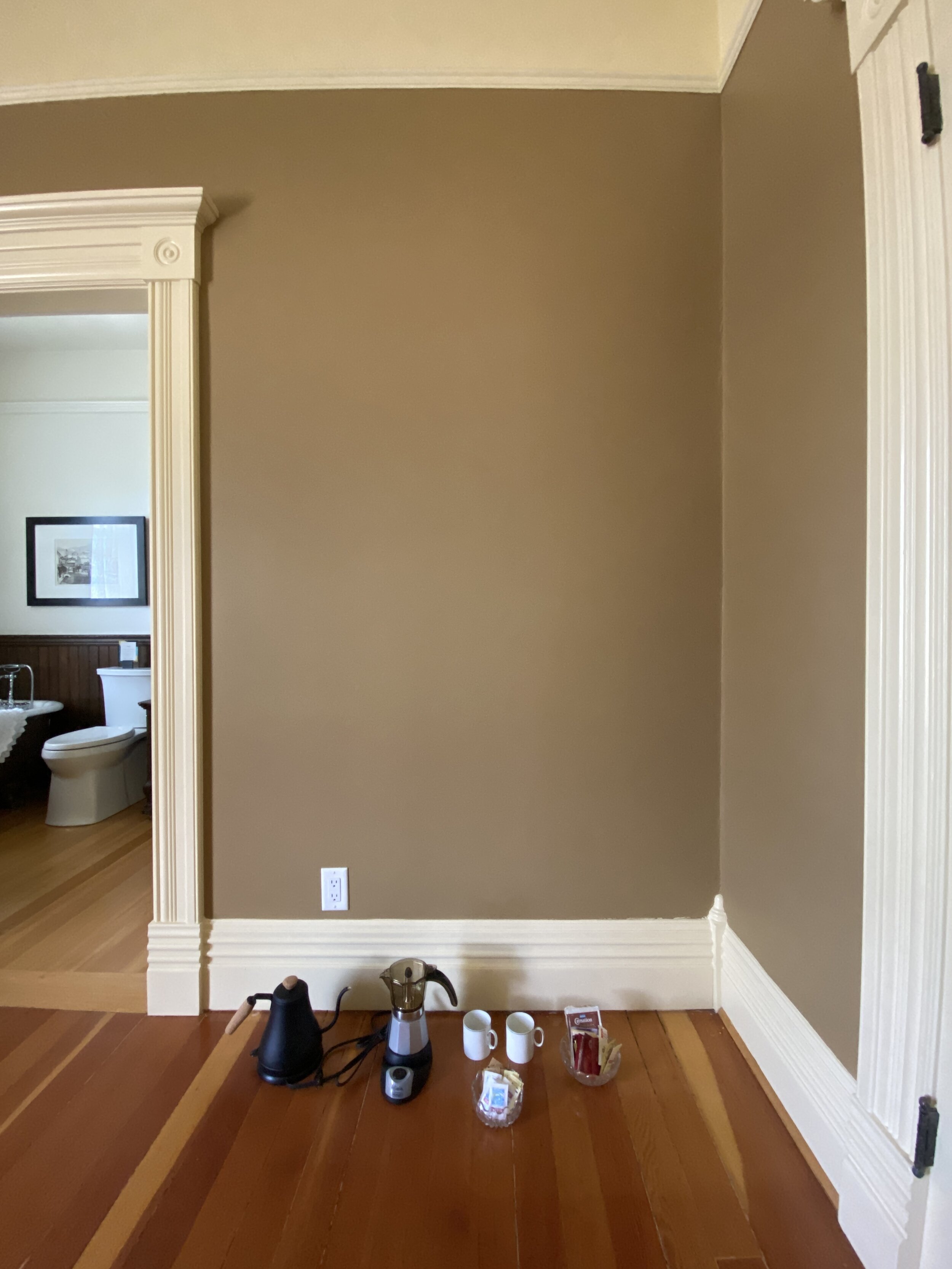
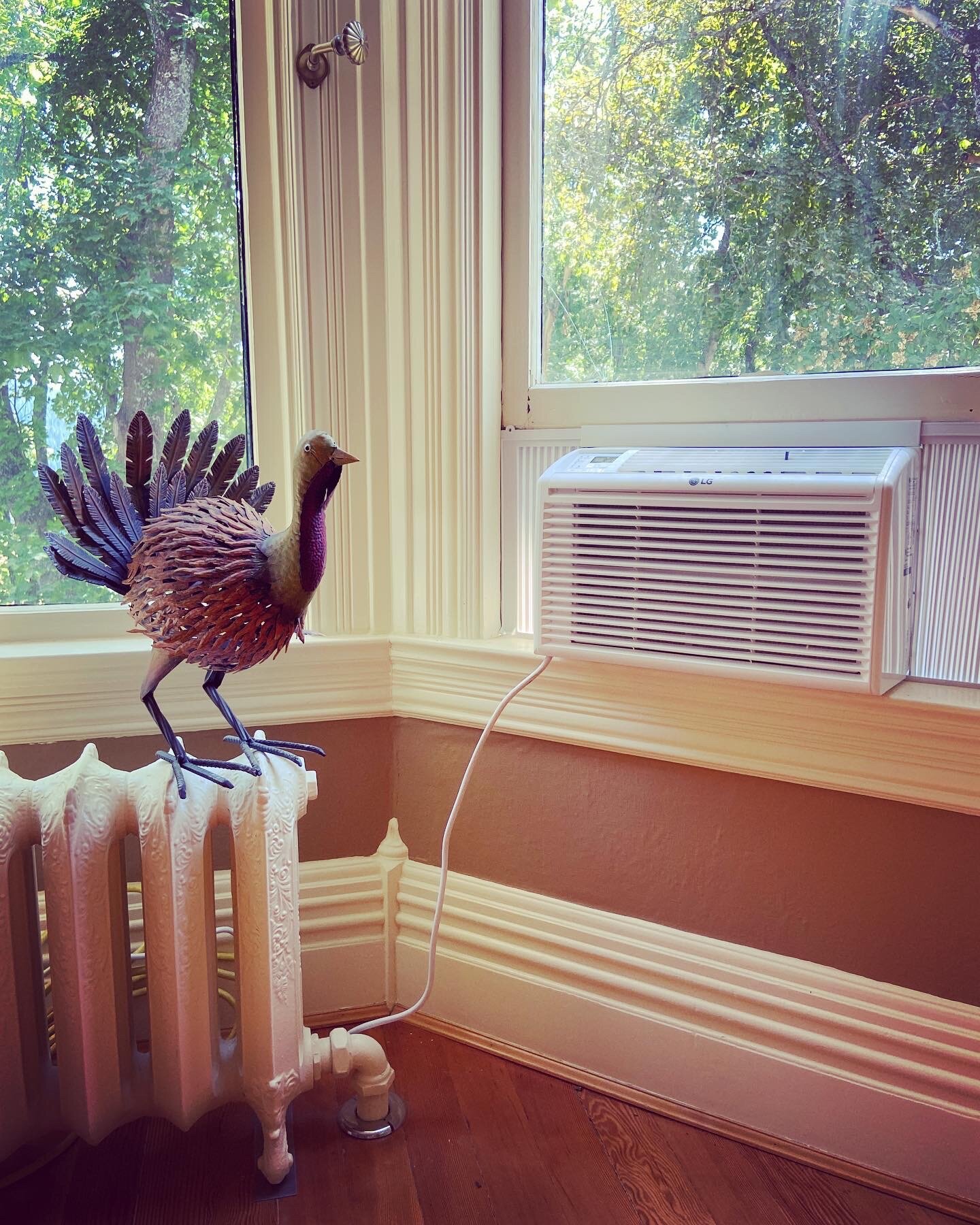
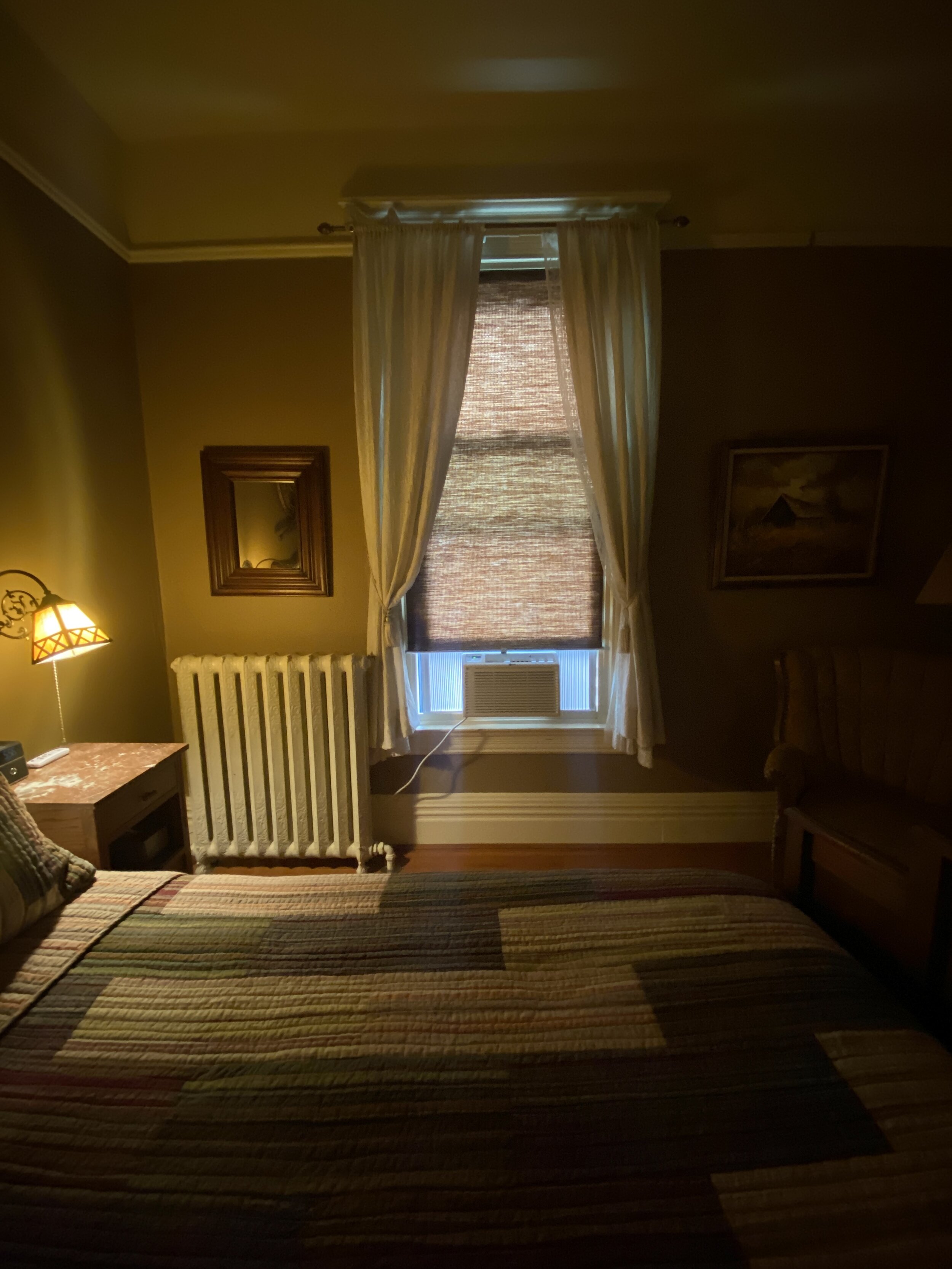
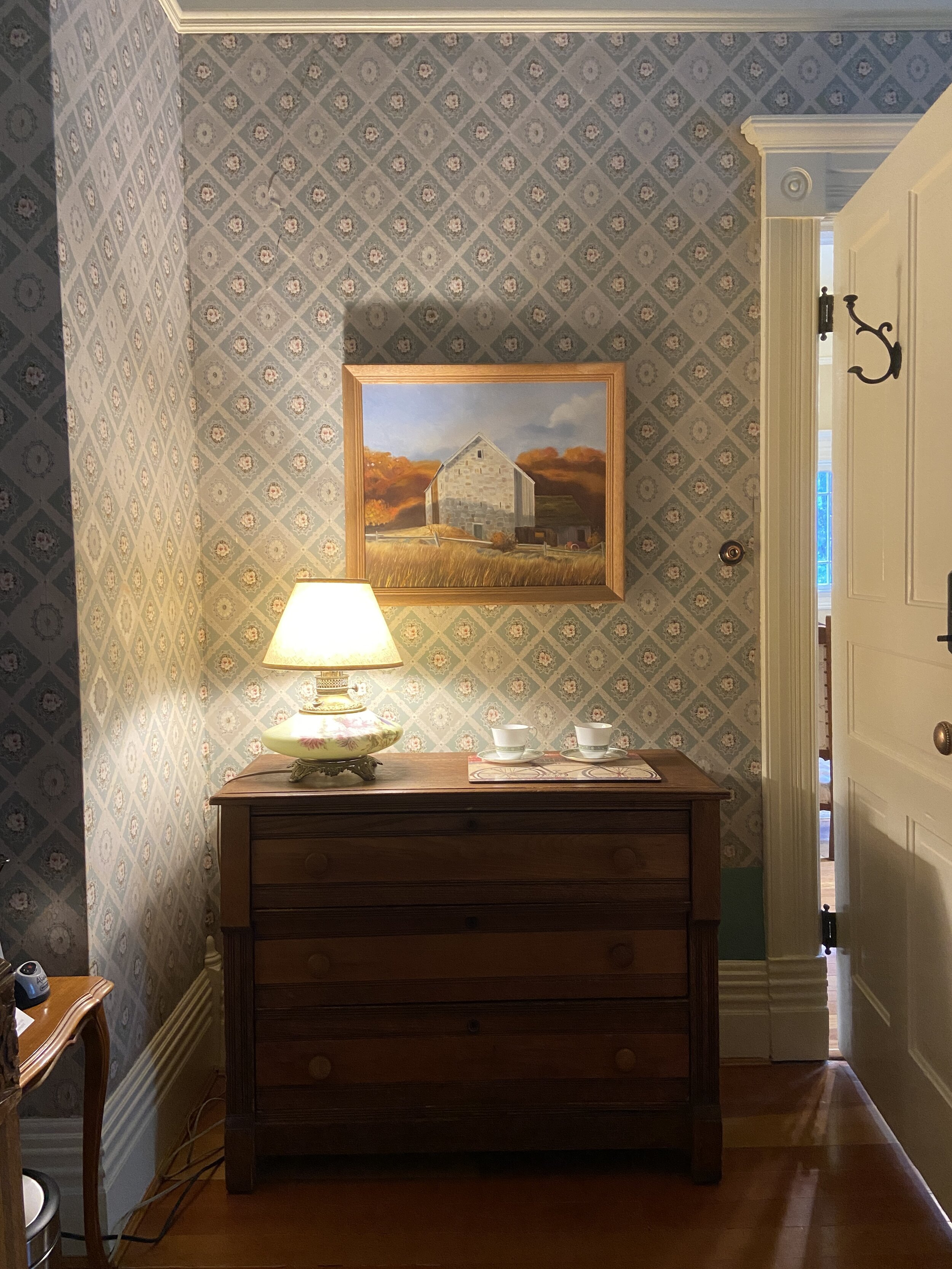
Much of the work became less about renovation and more about repair. Original trim was stripped and restored, damaged pieces were reproduced, walls and ceilings were repaired, and layers of paint and wallpaper revealed what had been hiding underneath.
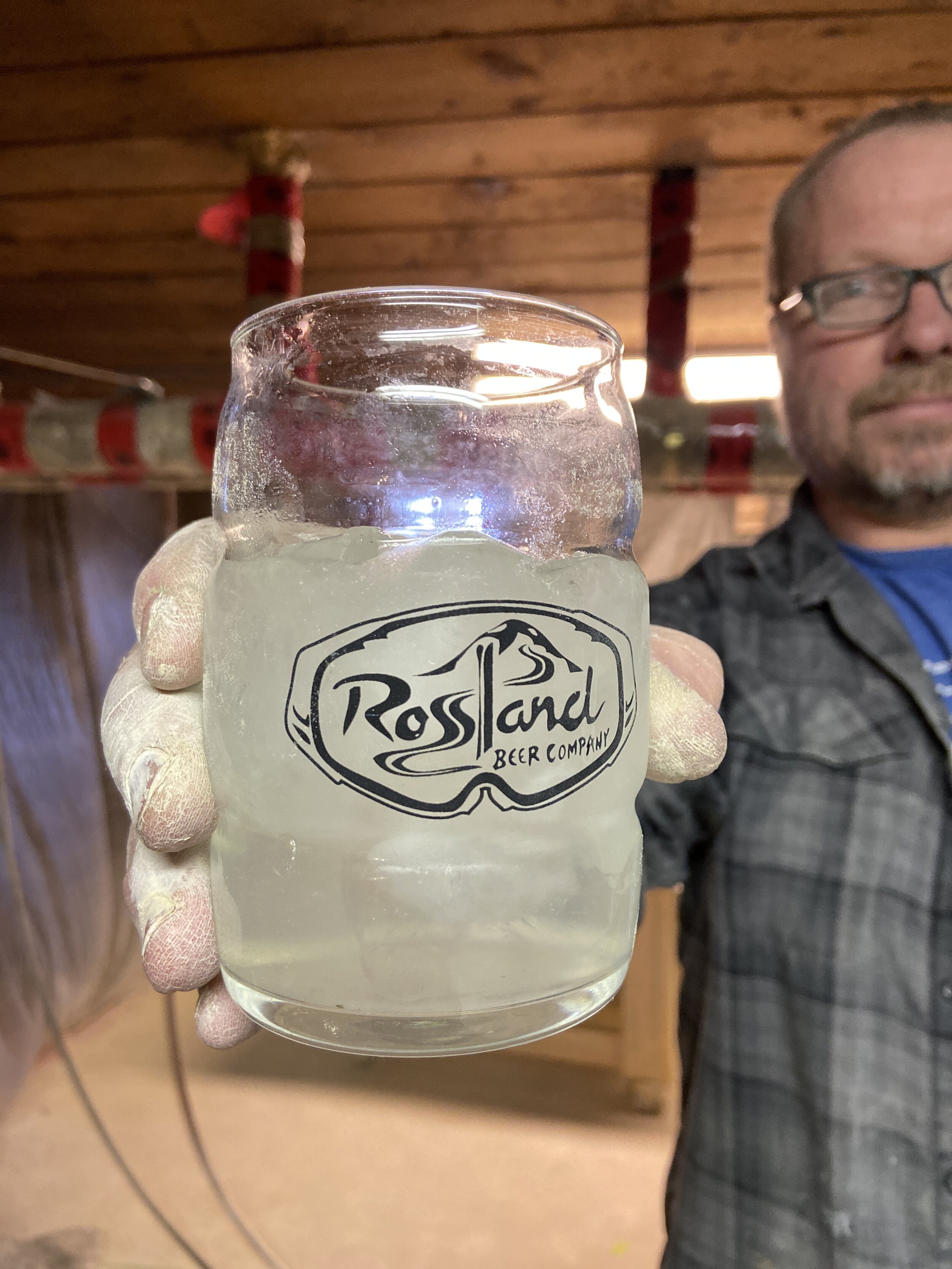
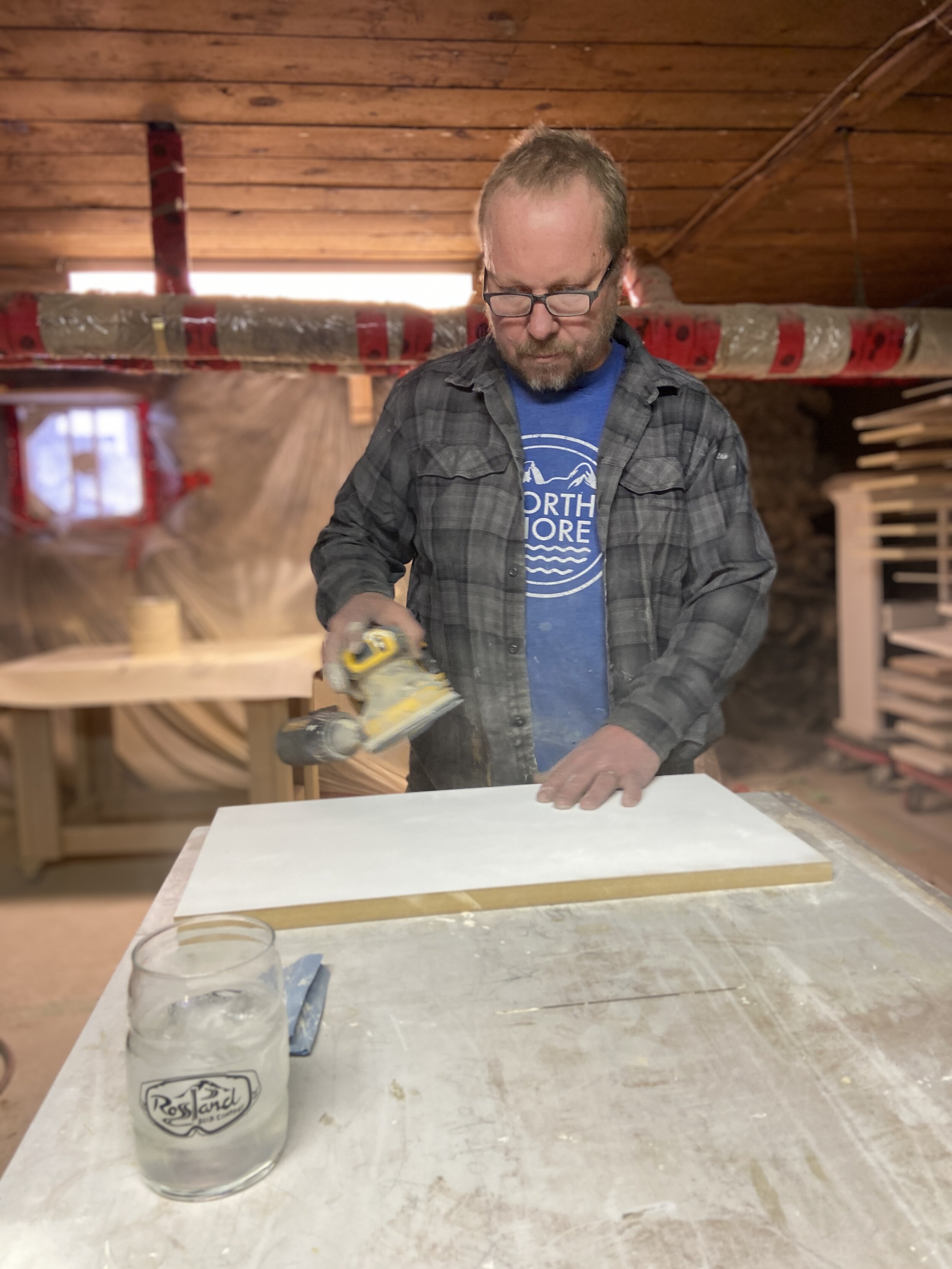
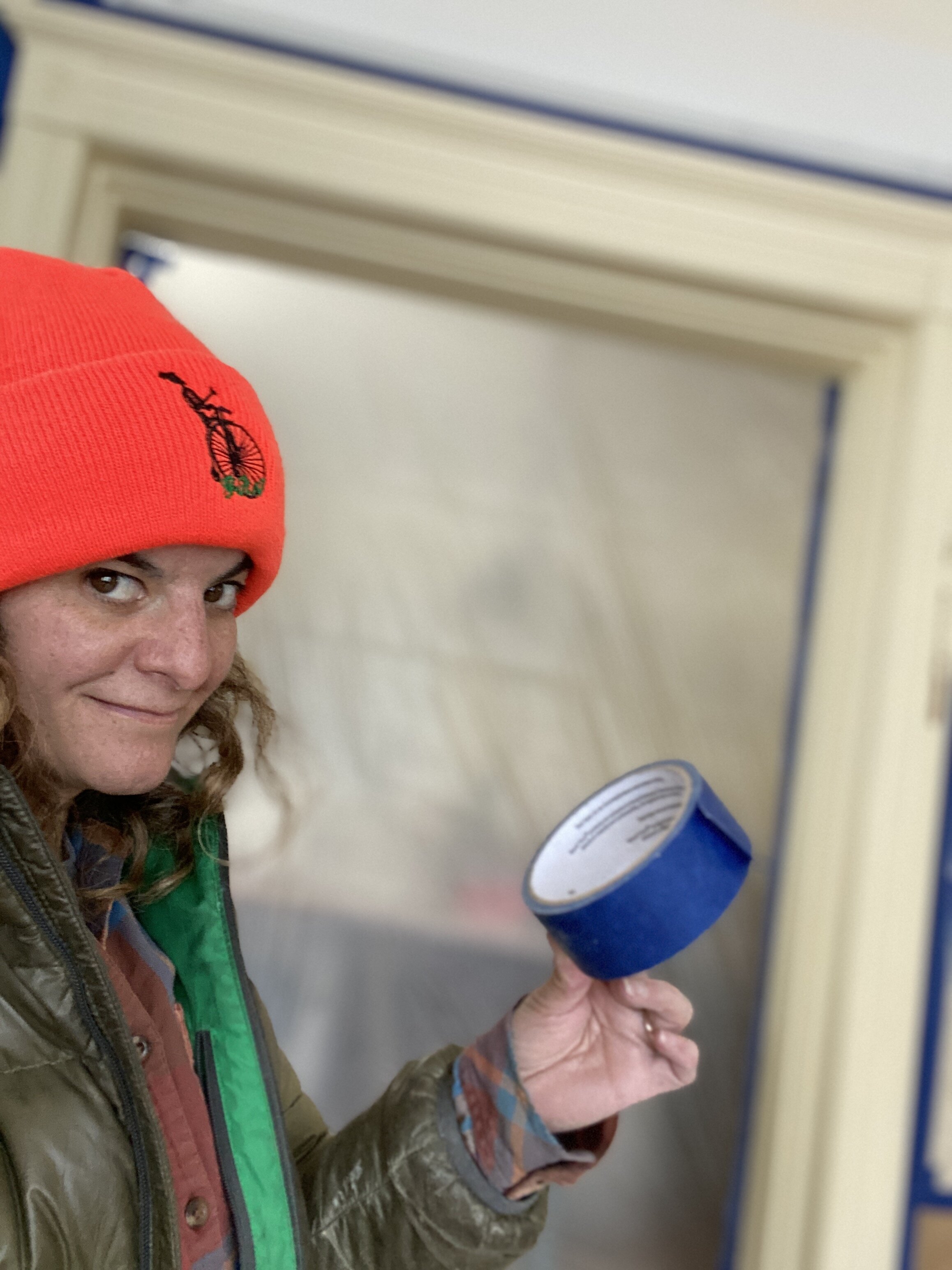
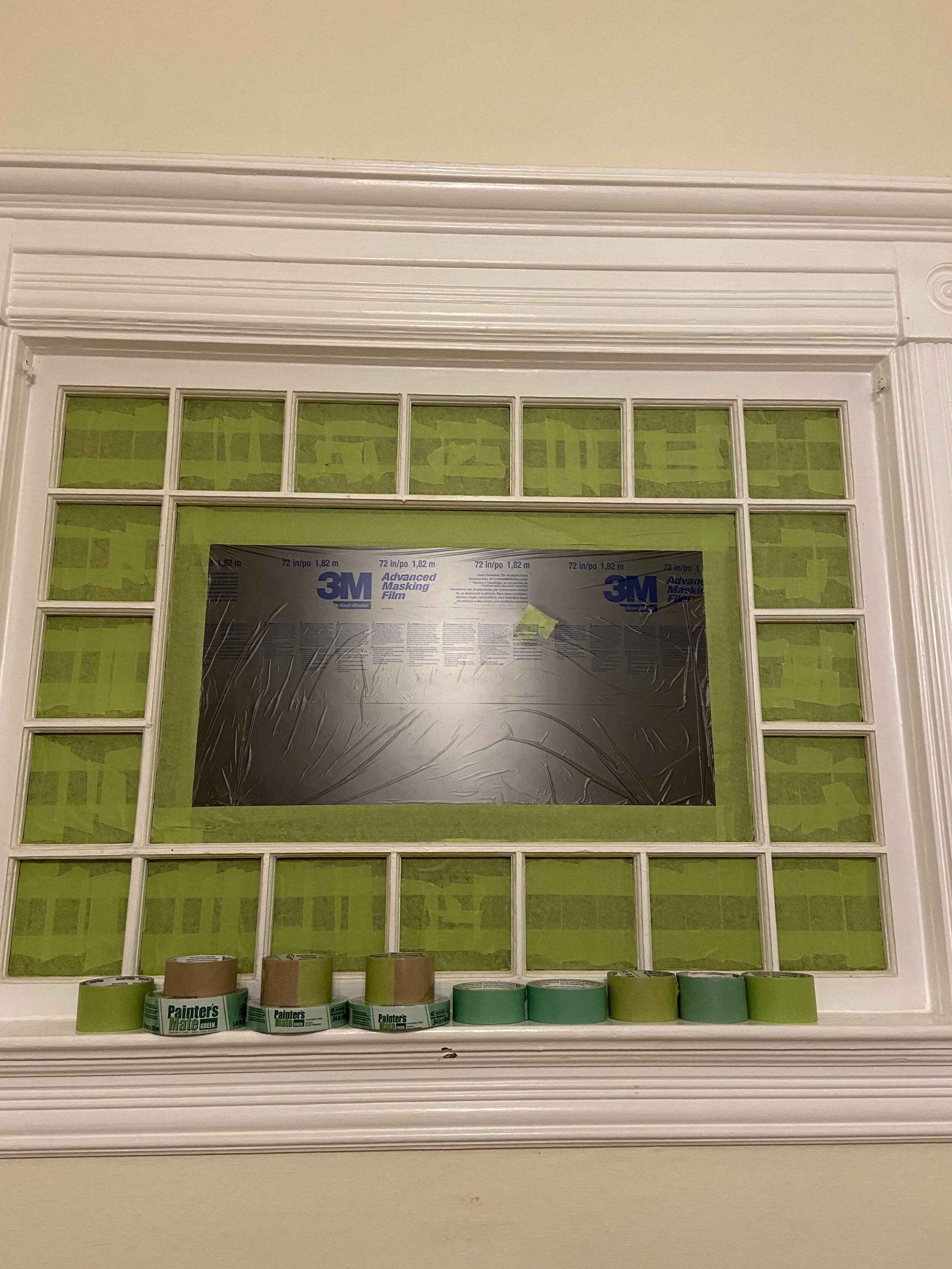
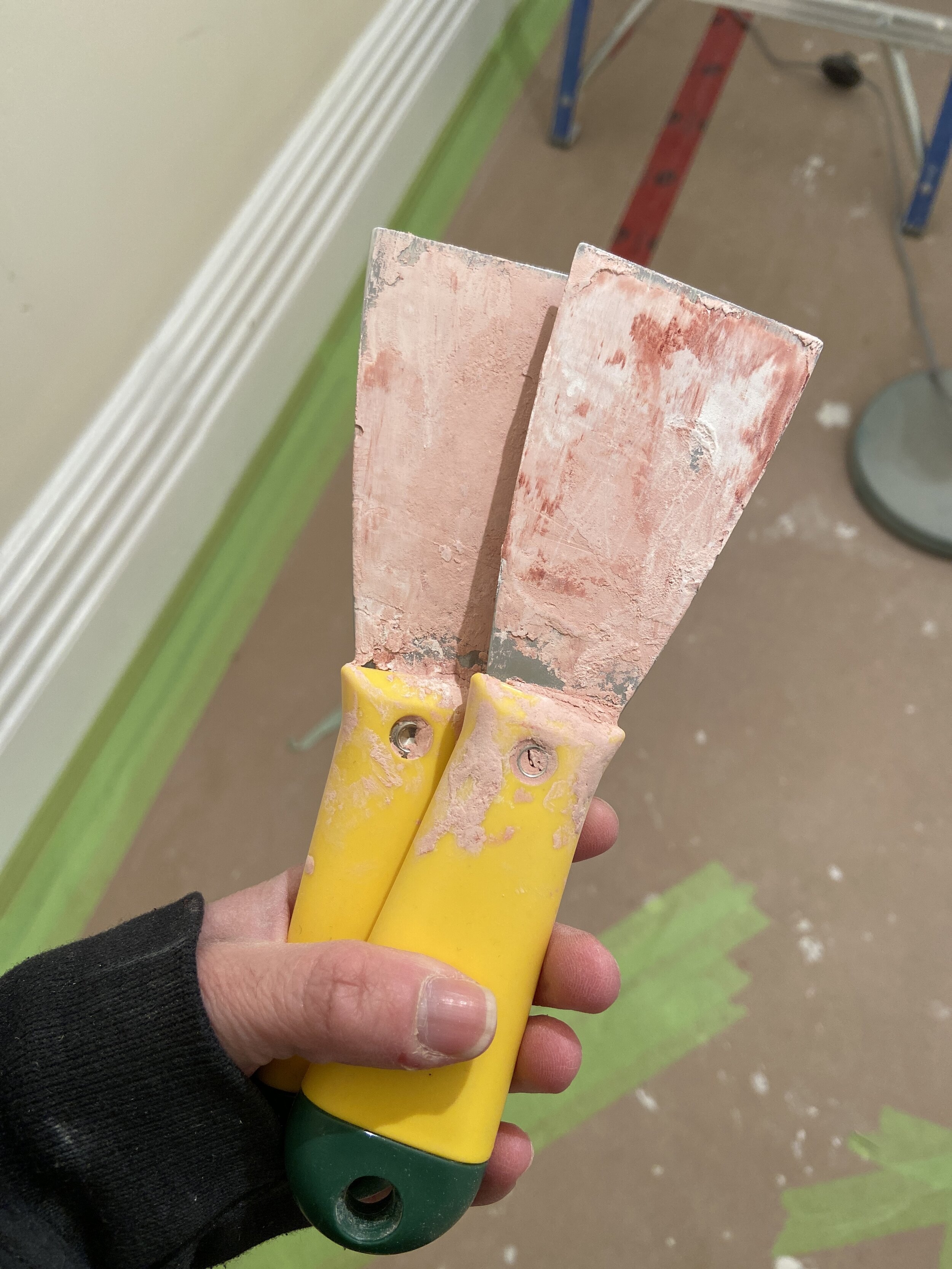
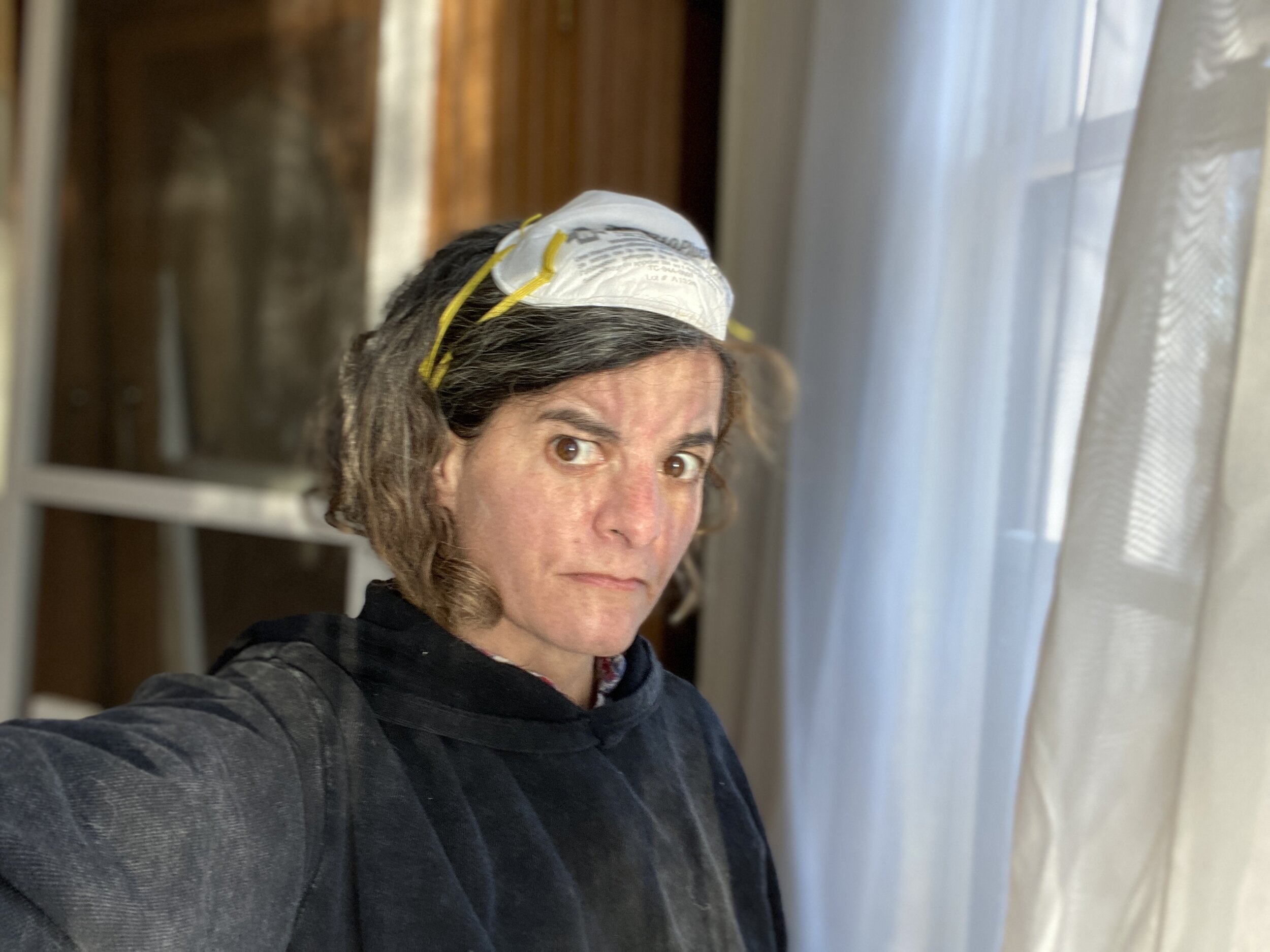
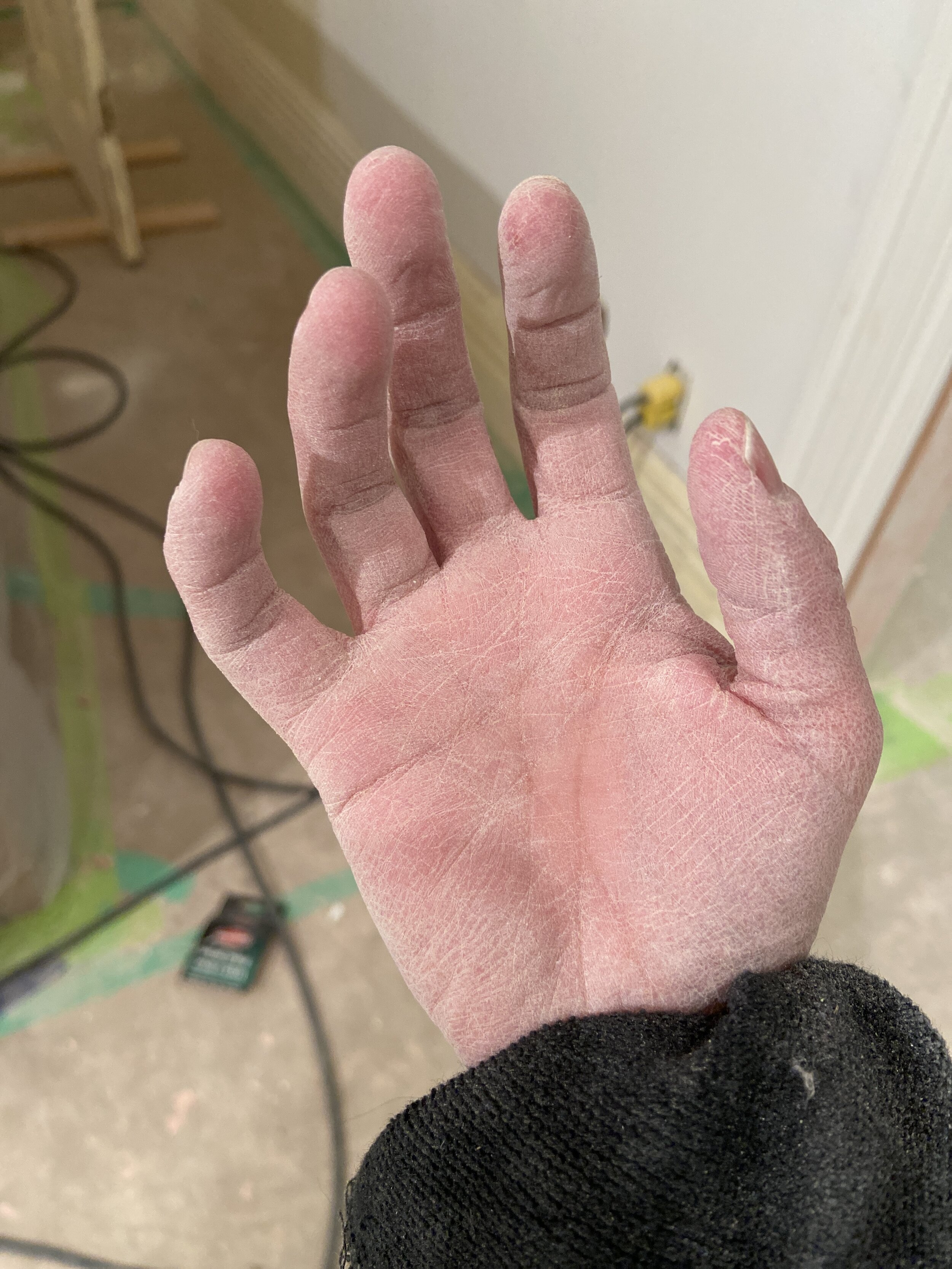
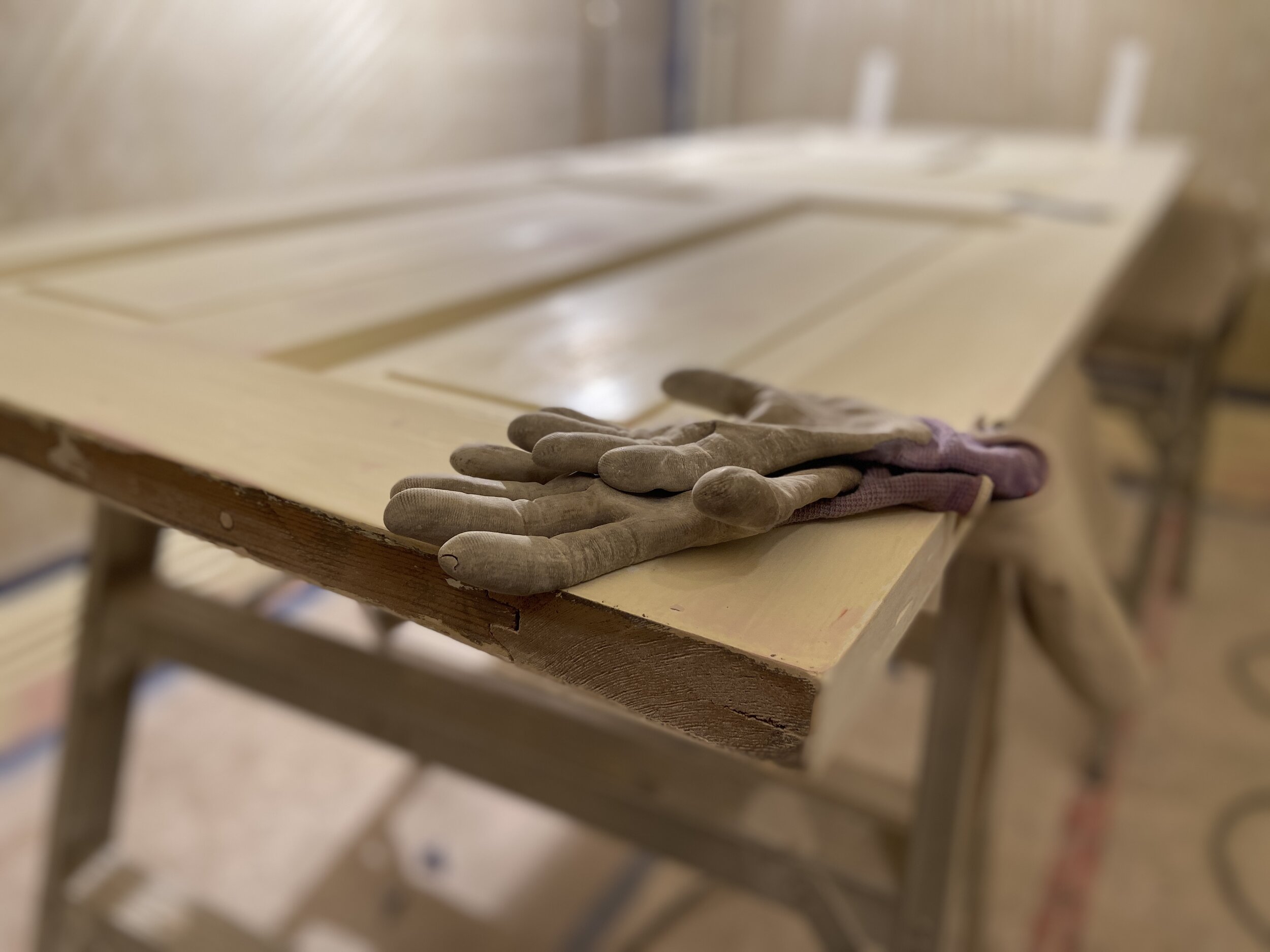
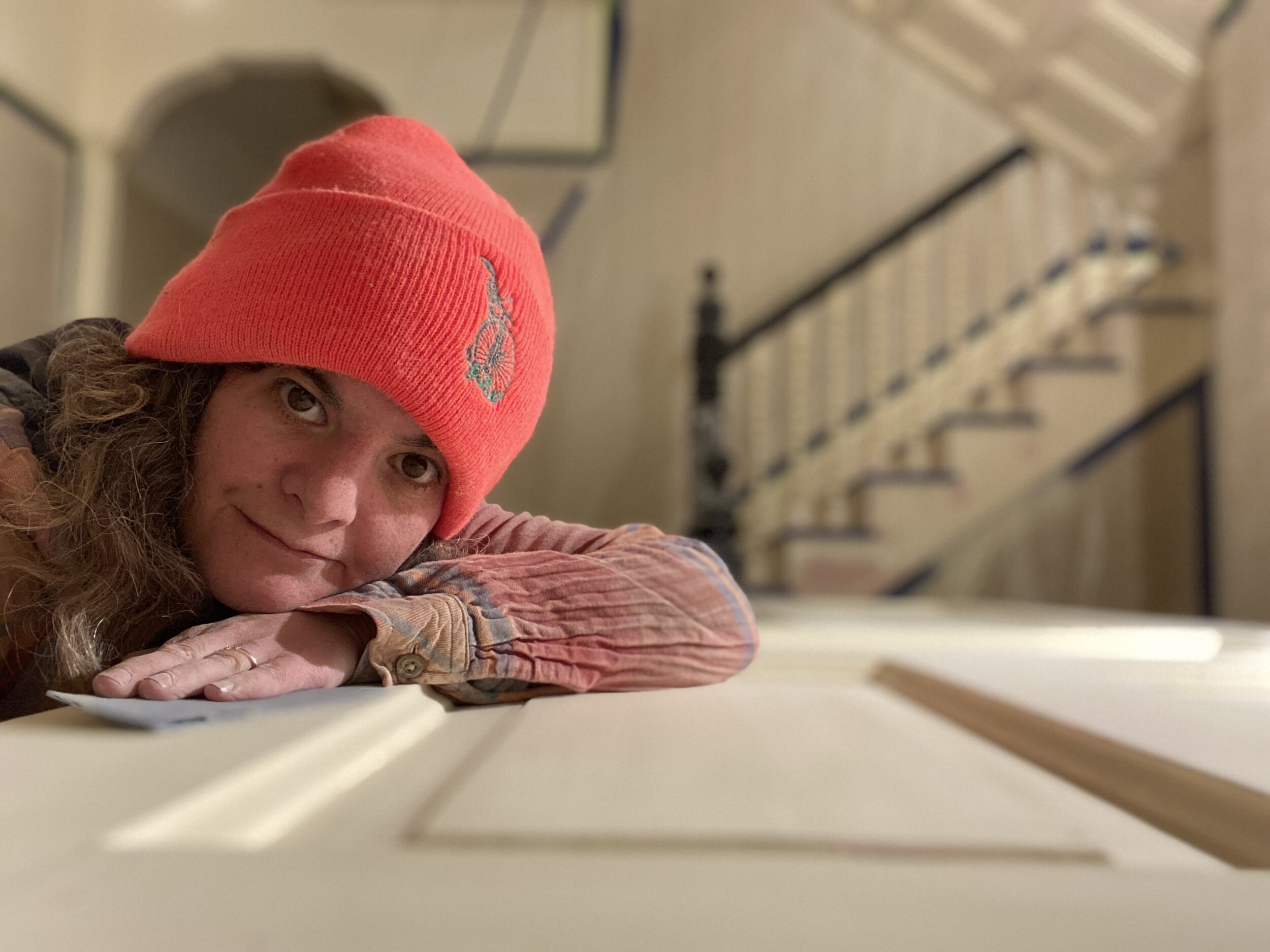
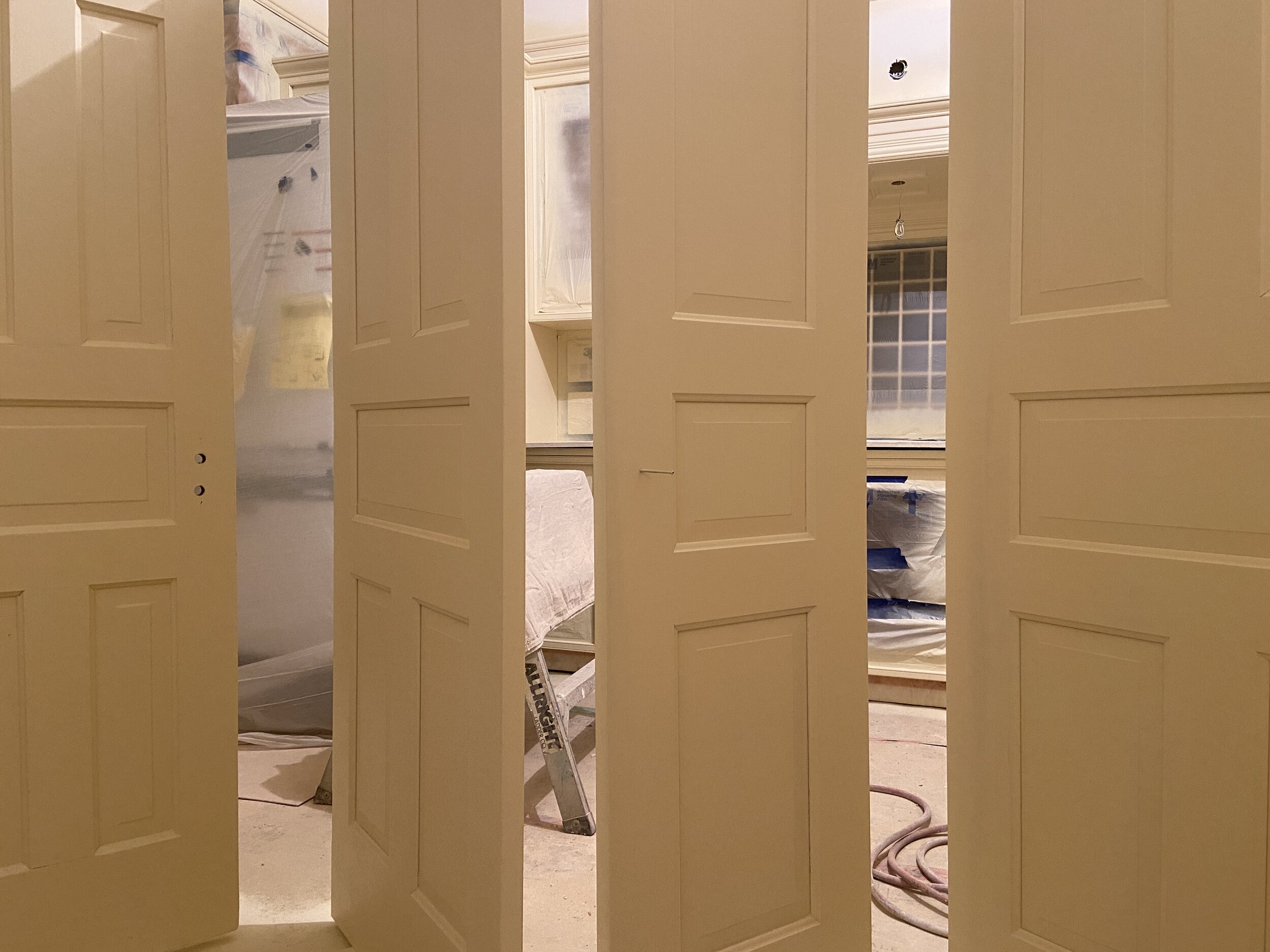
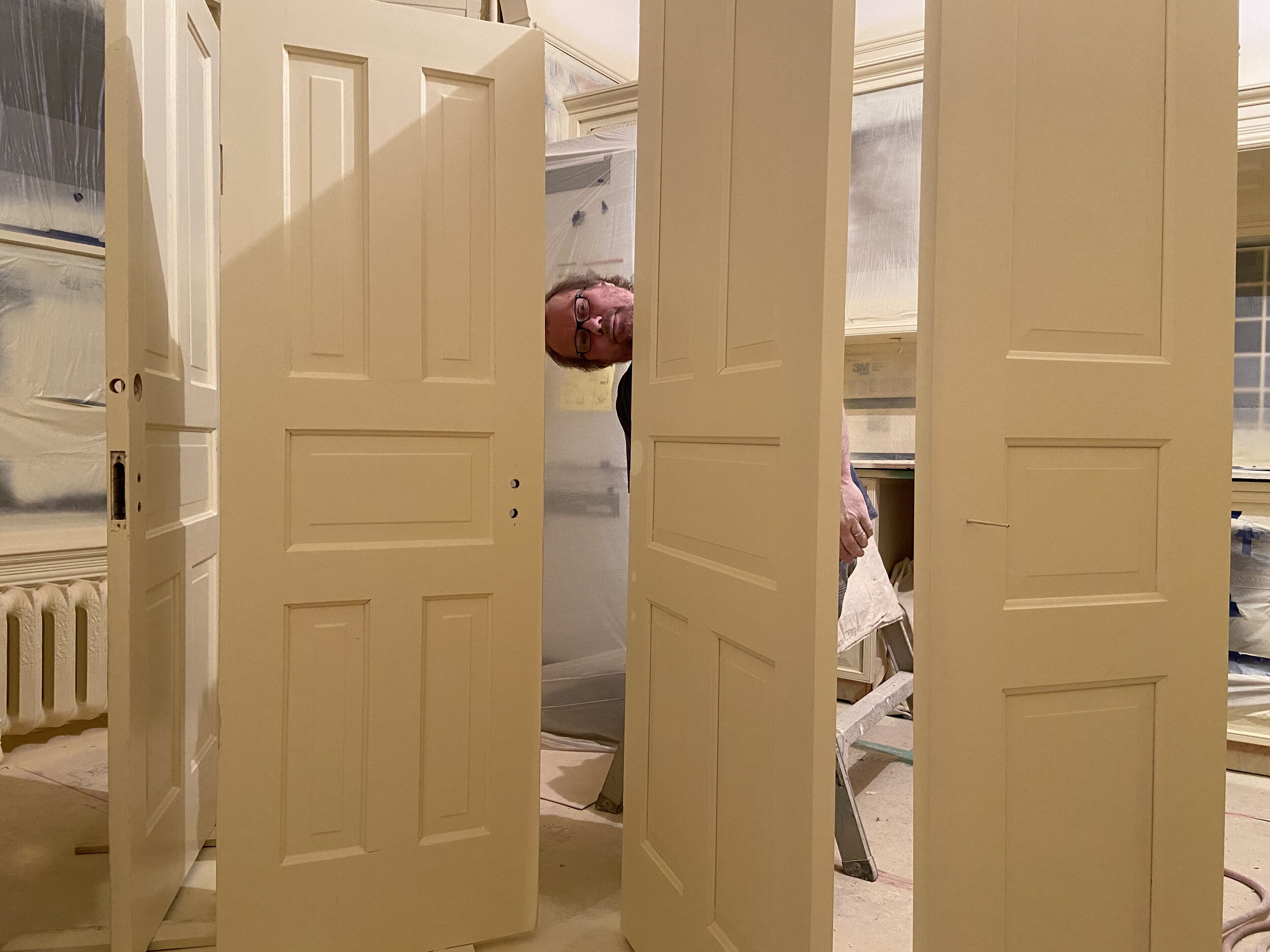
There were months when seemingly every door, baseboard and piece of trim in the guest side of the house was being sanded, filled or painted.
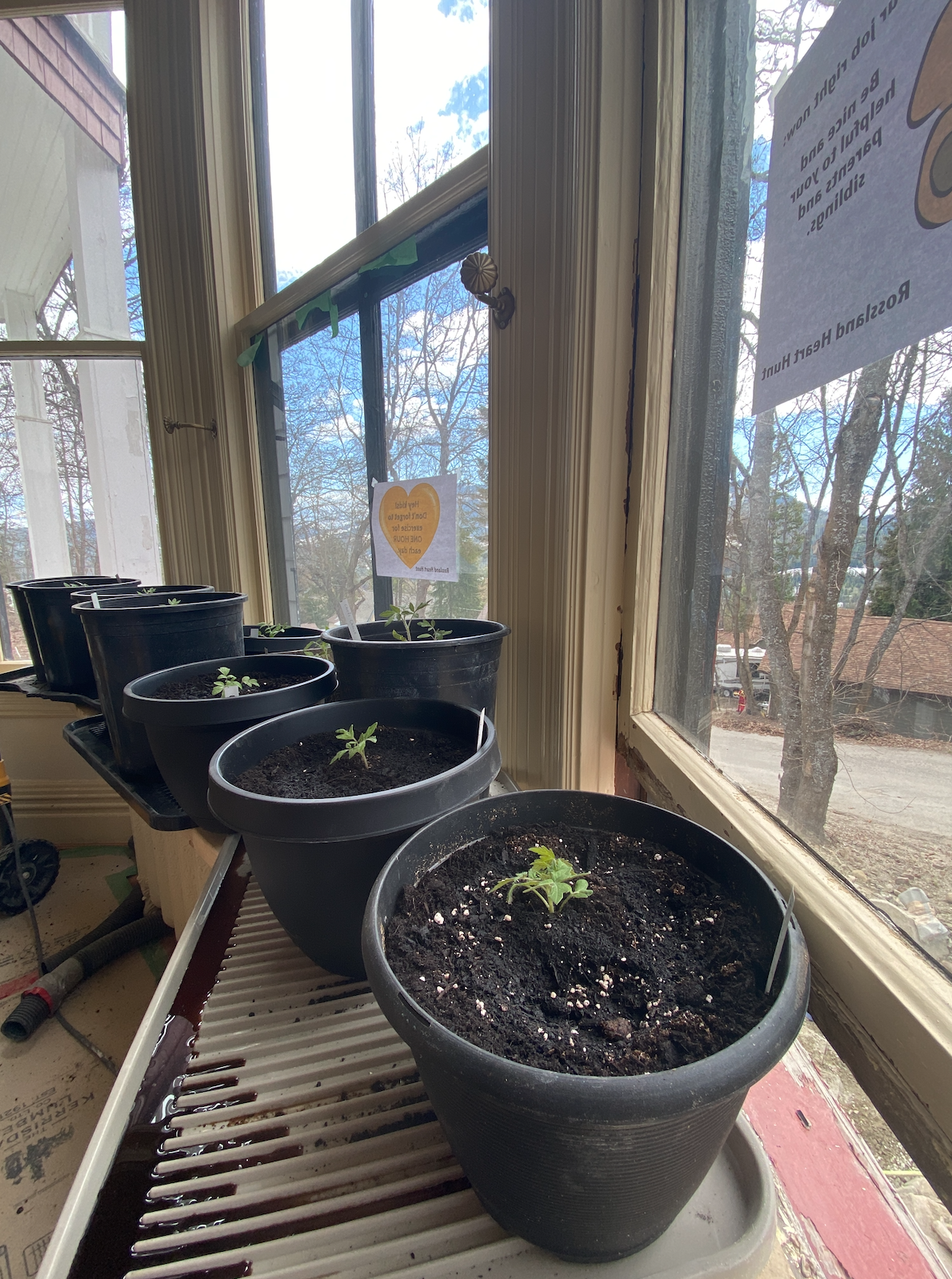
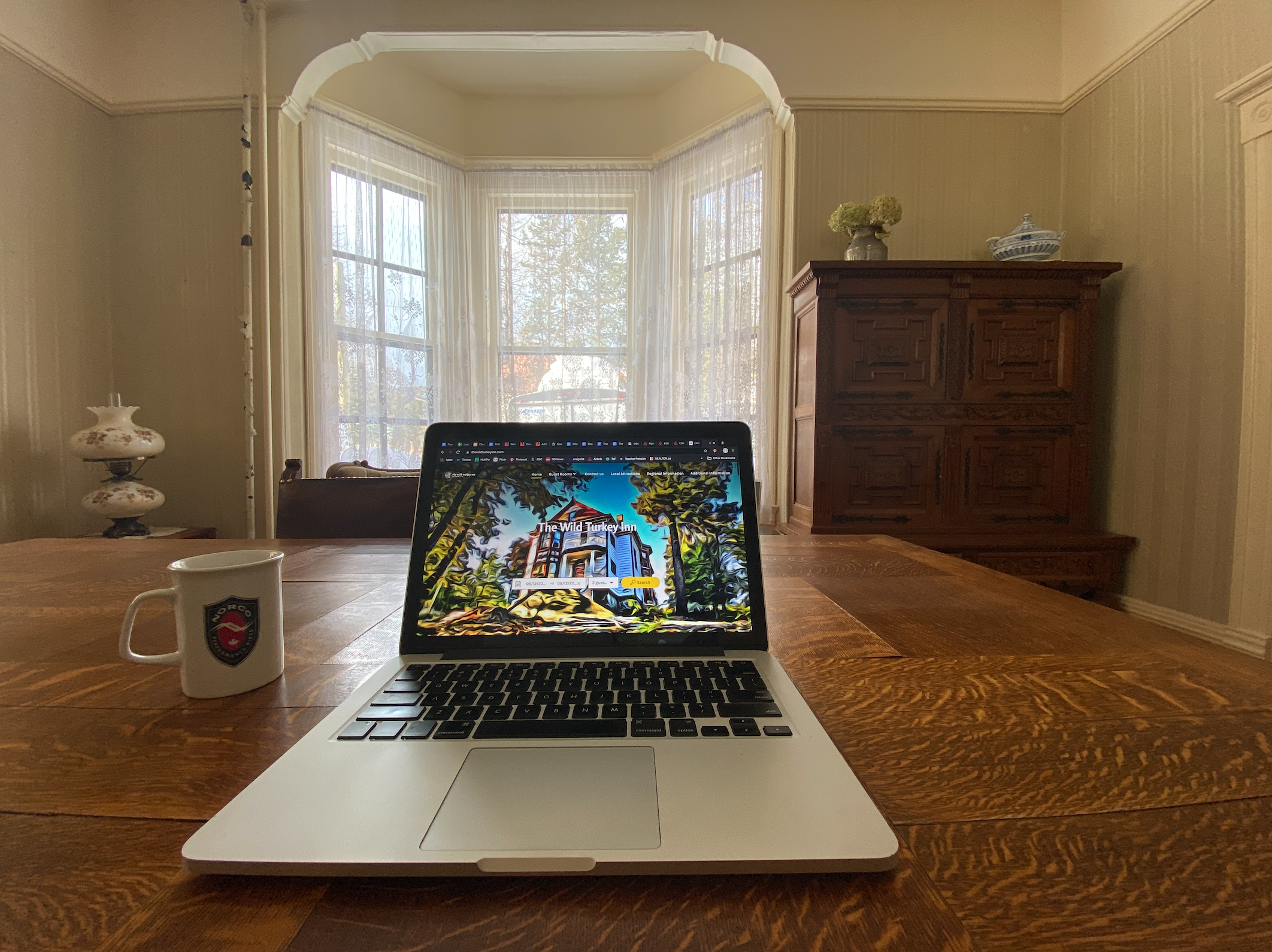
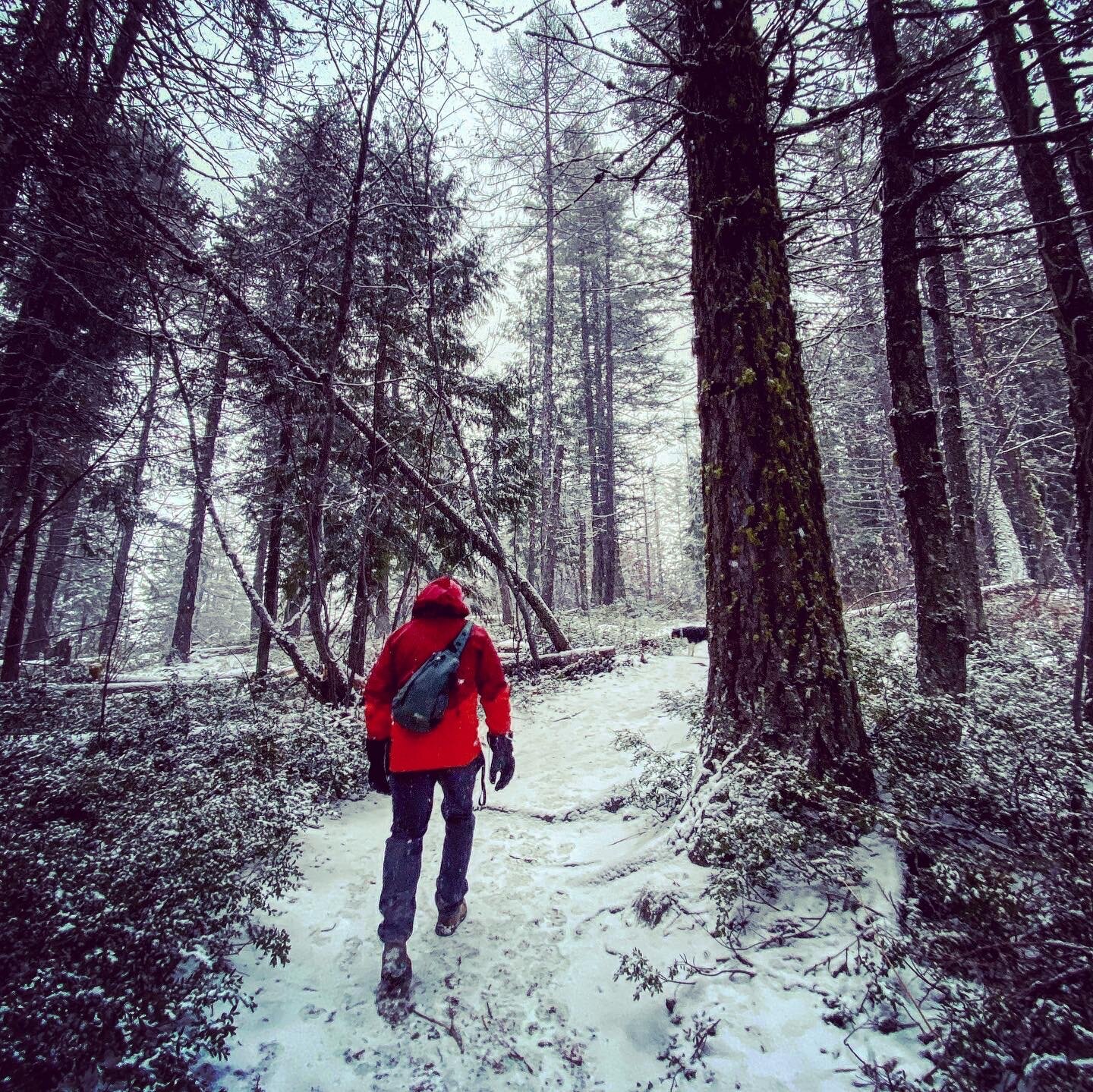
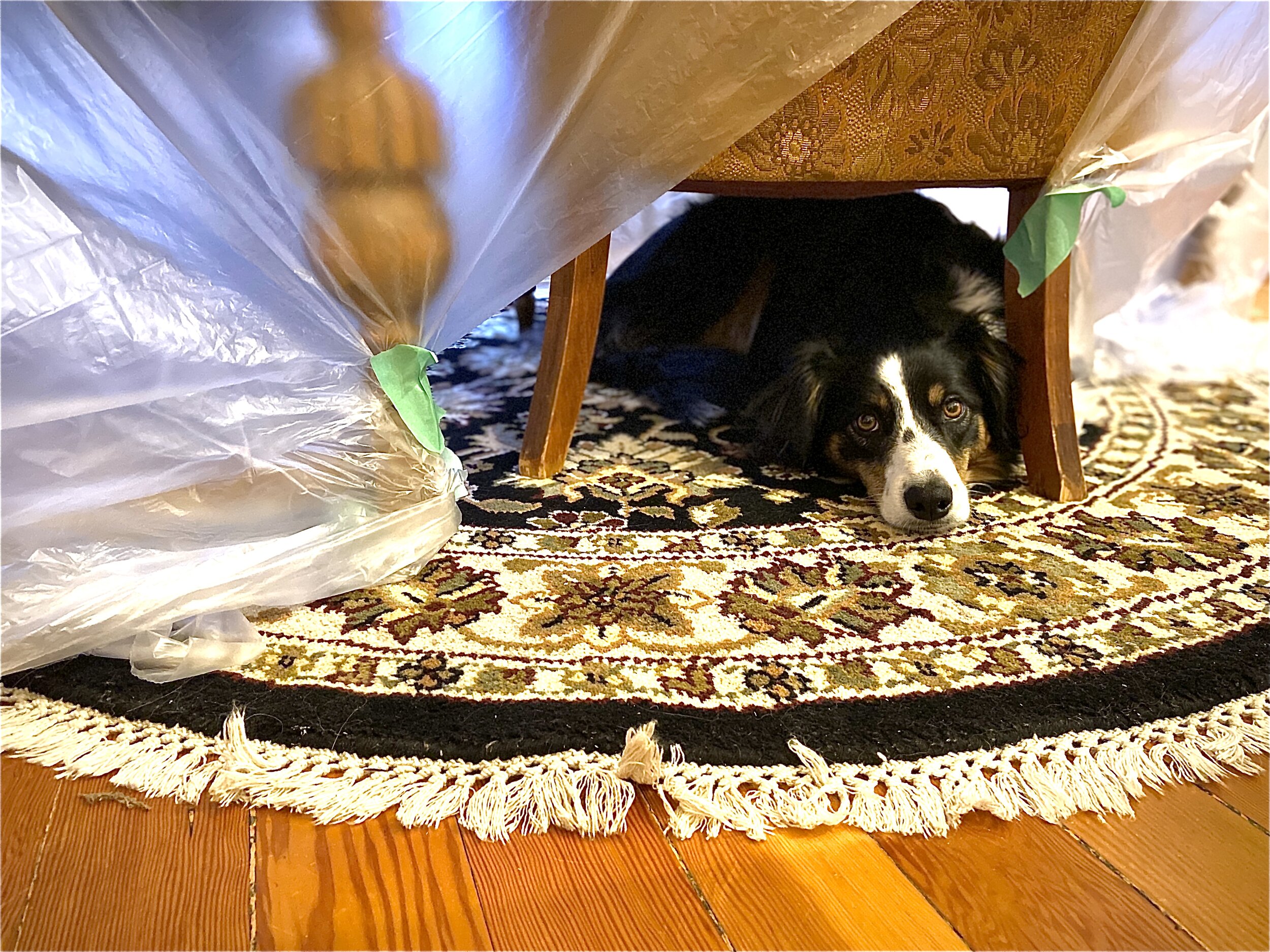
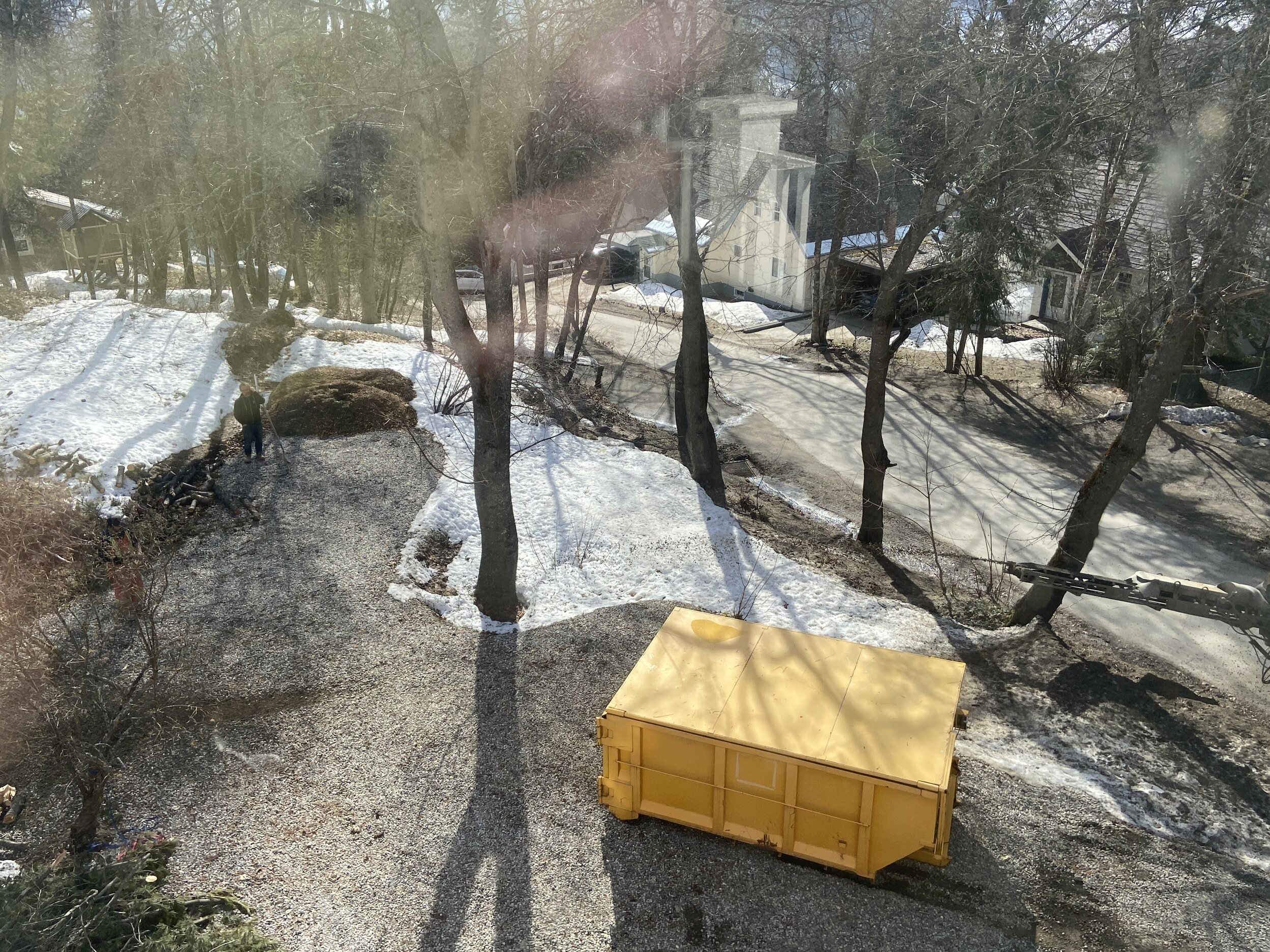
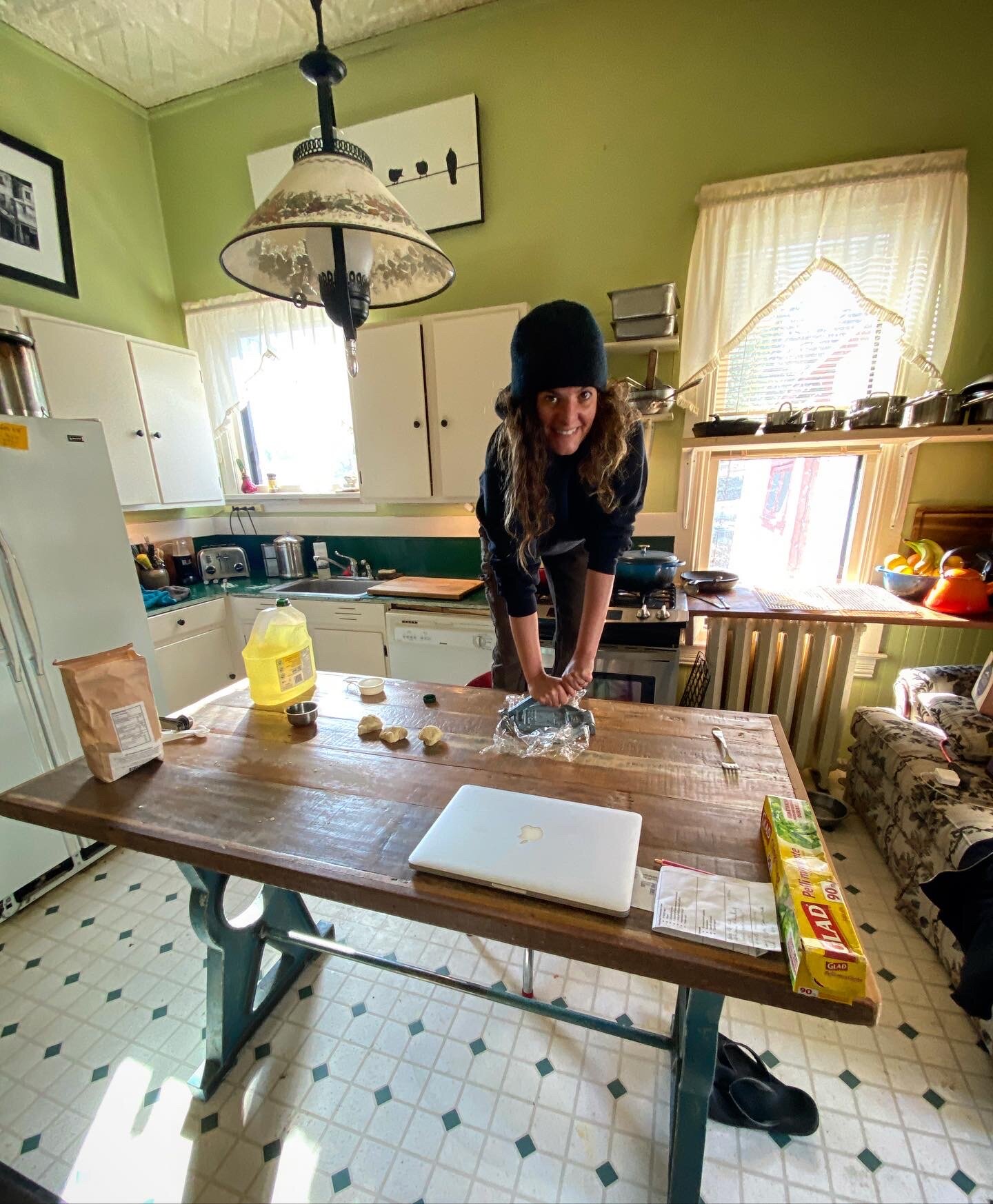
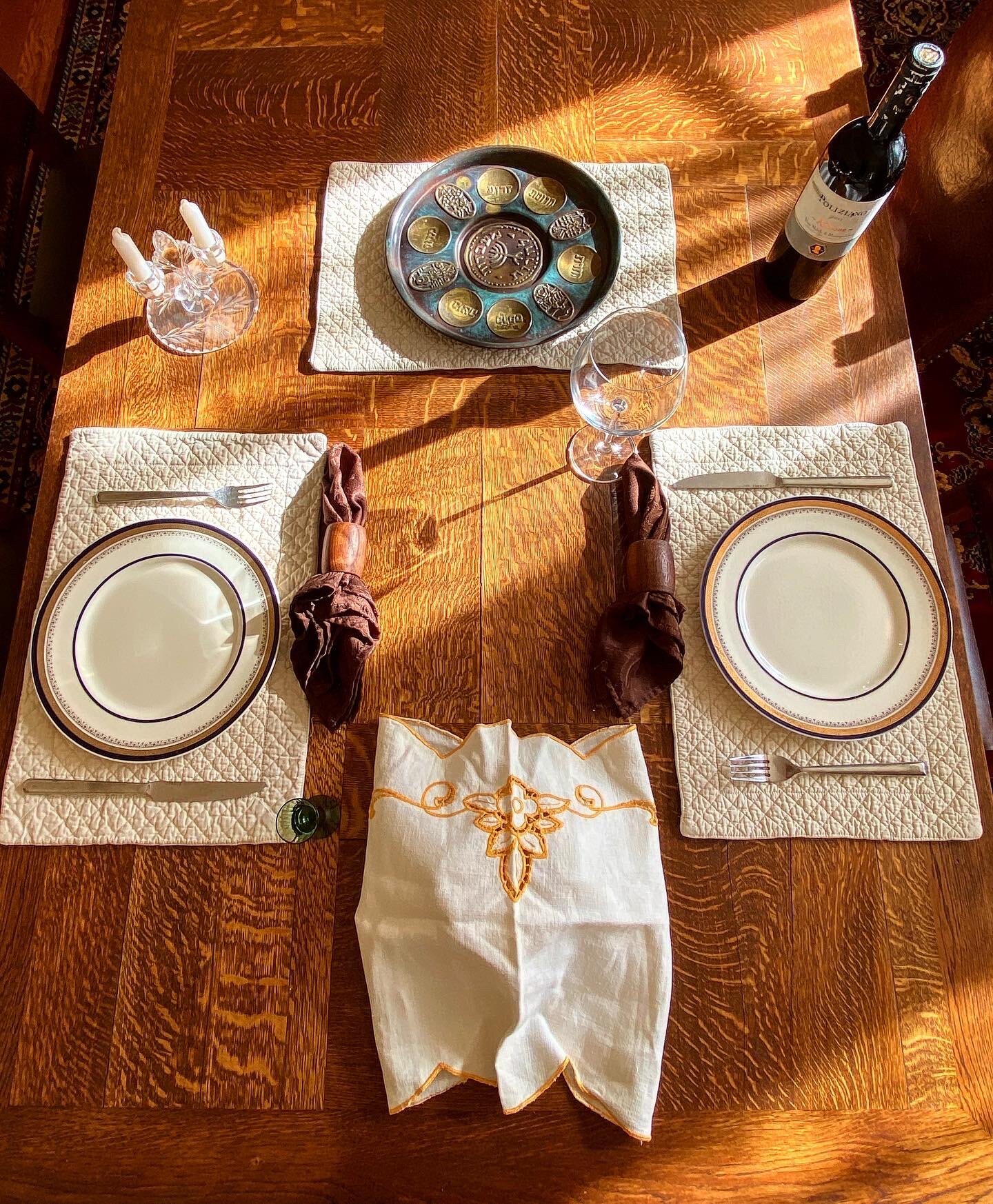
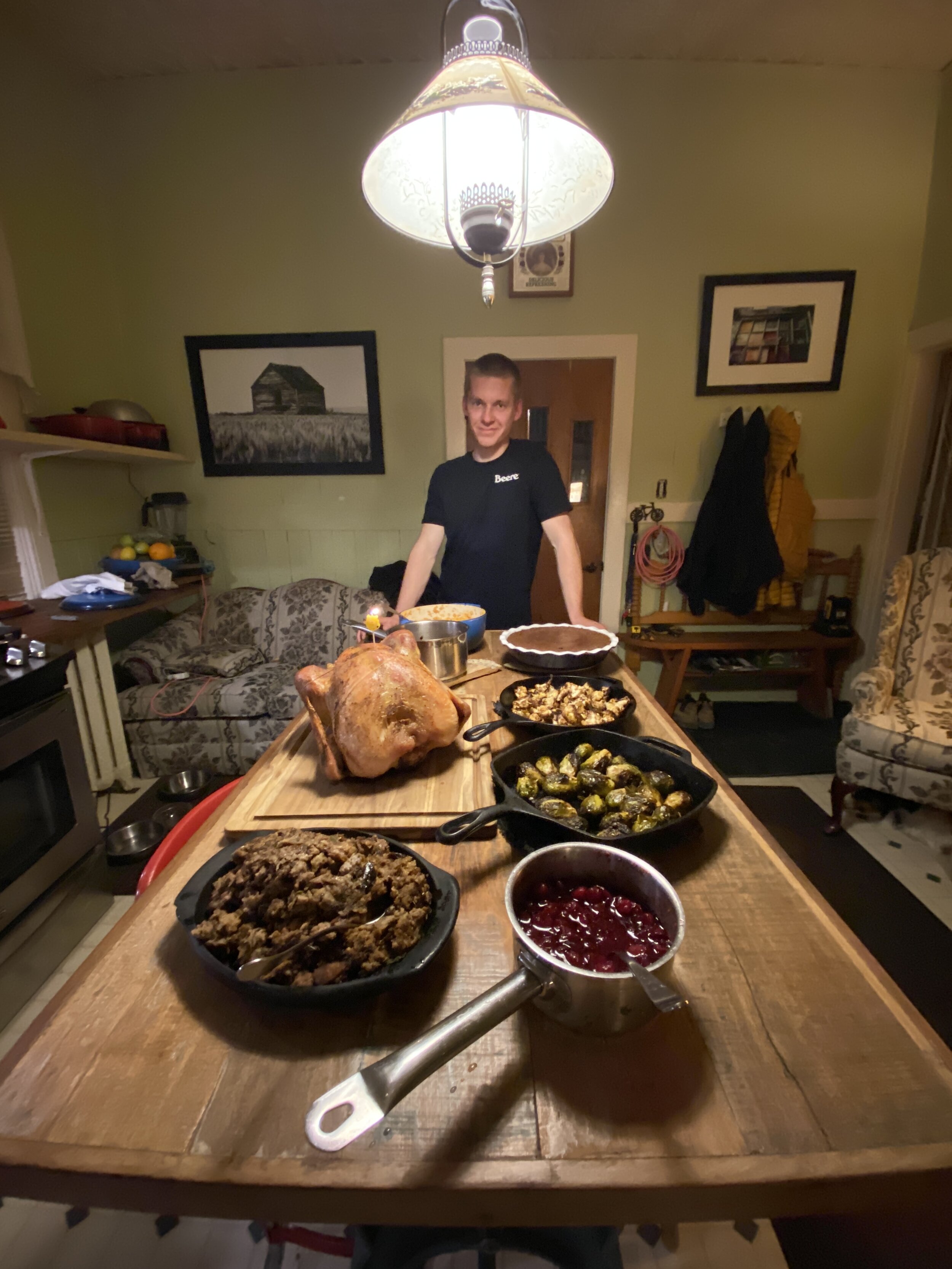
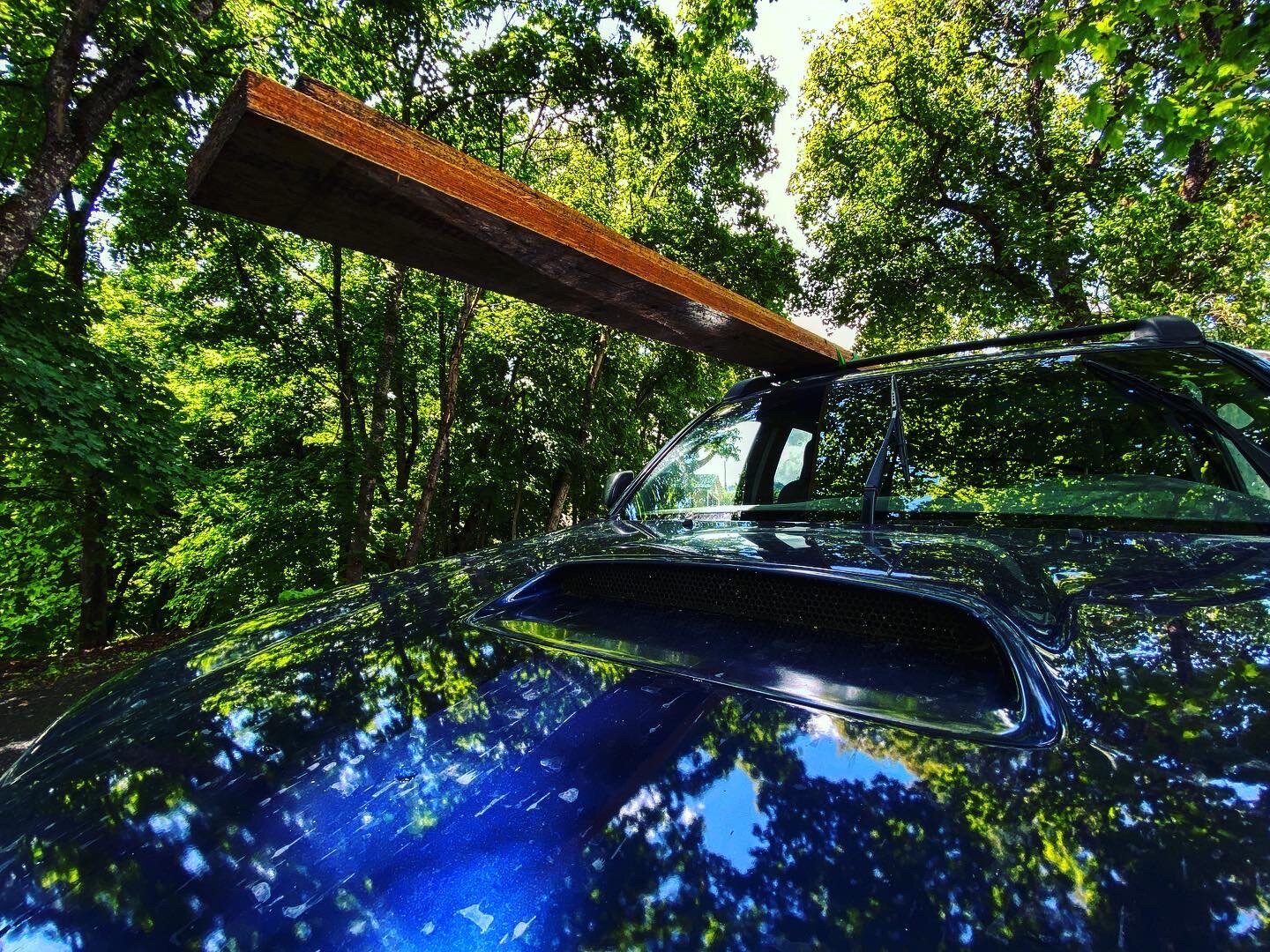
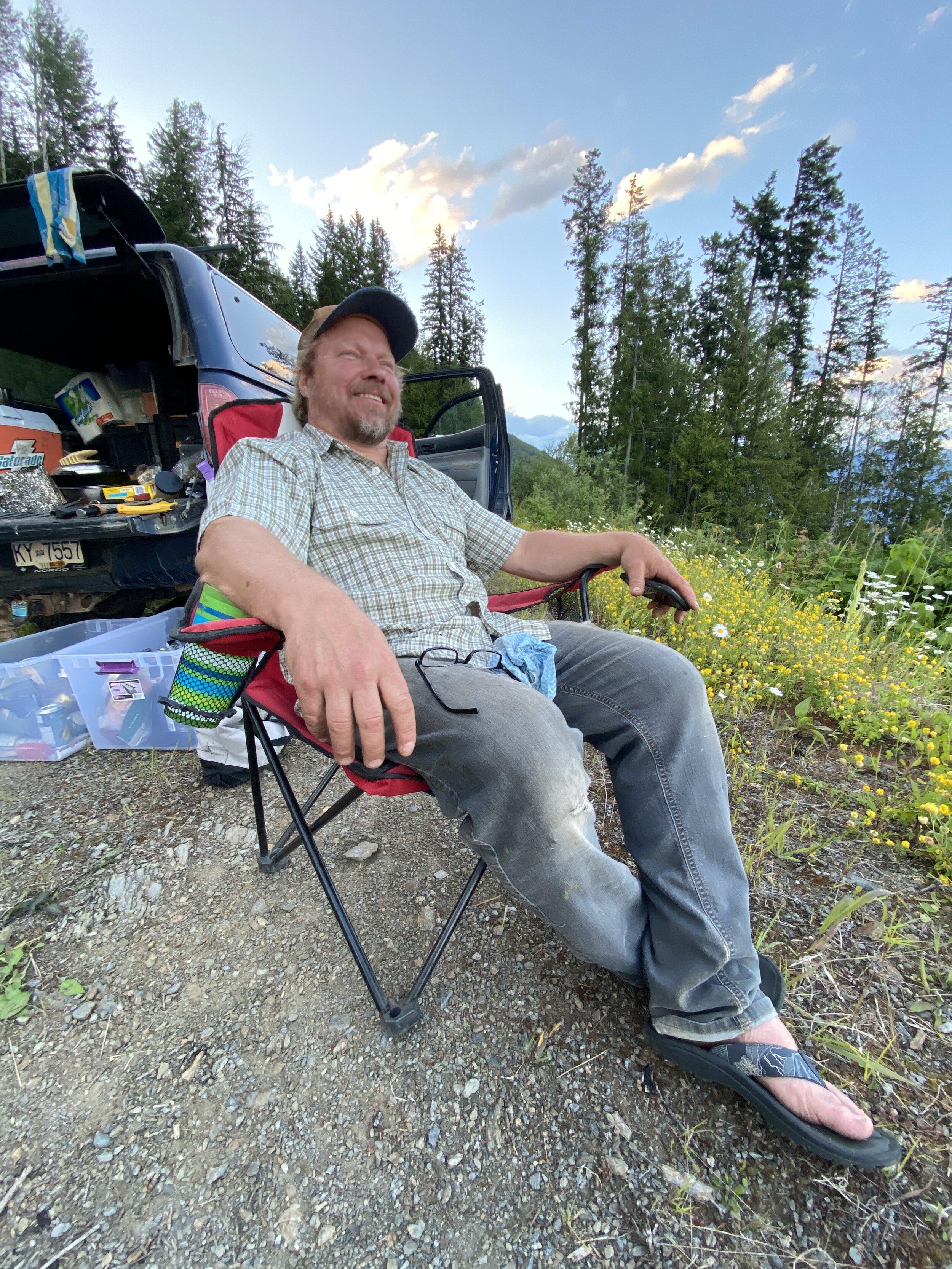
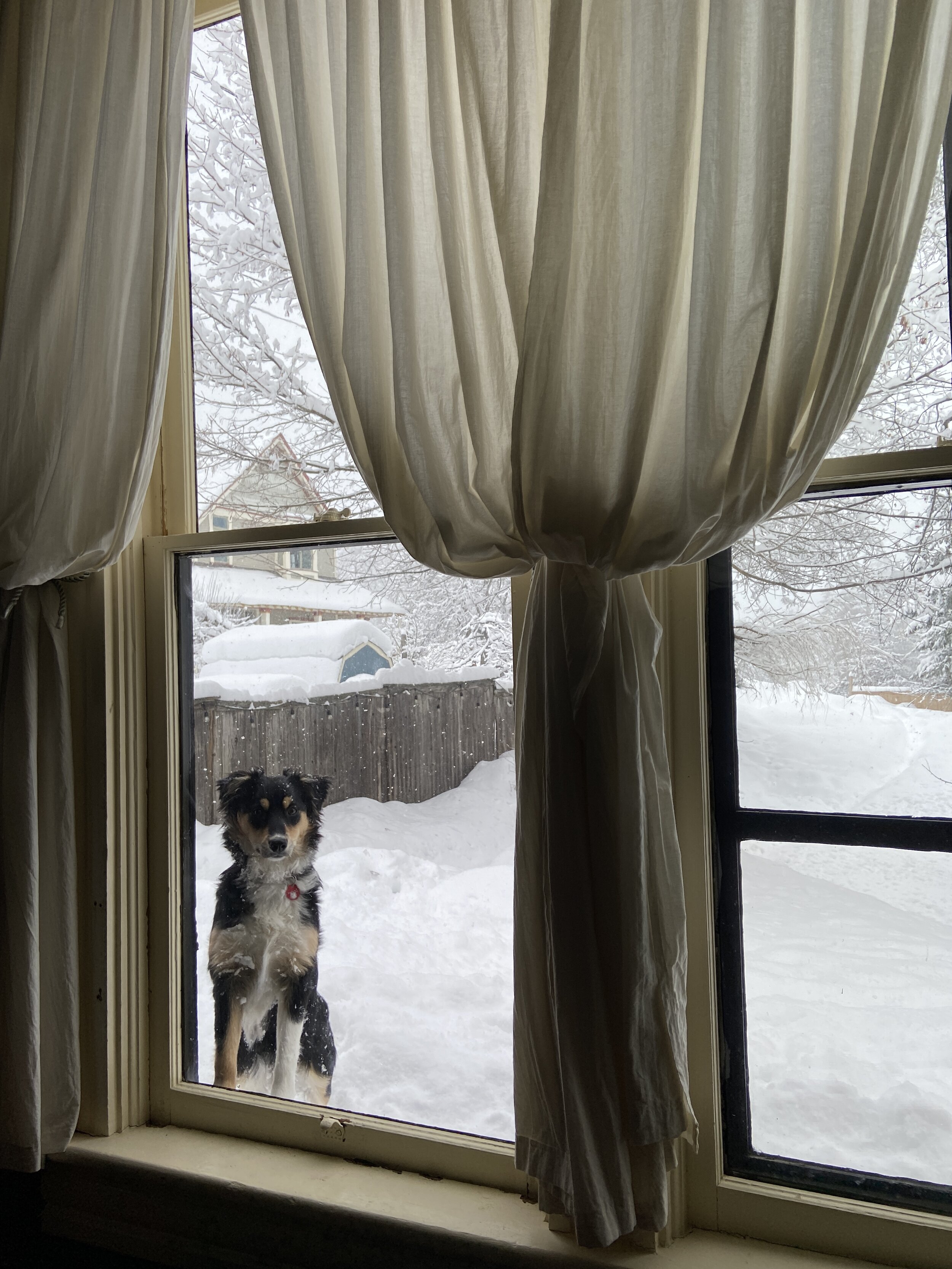
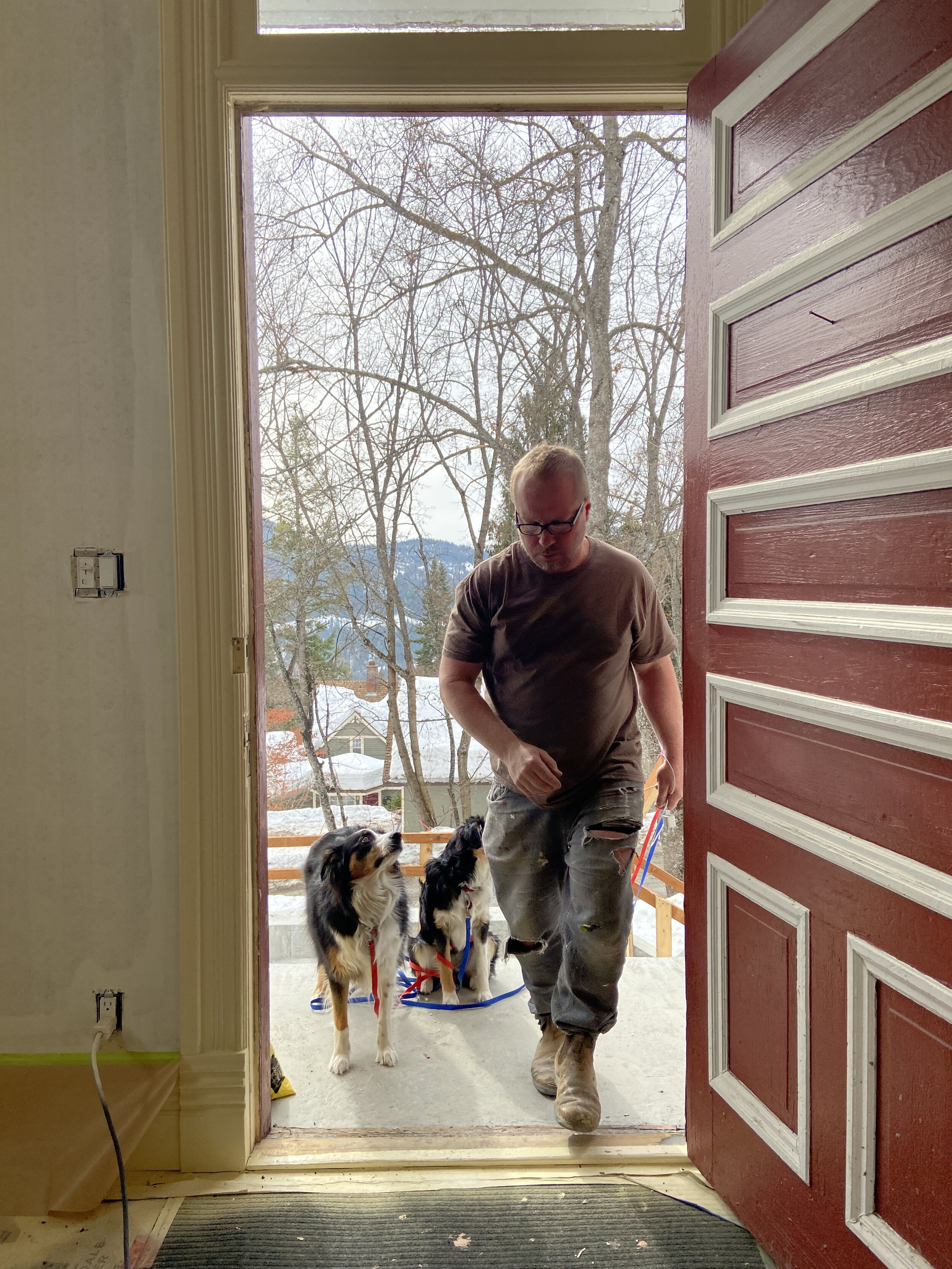
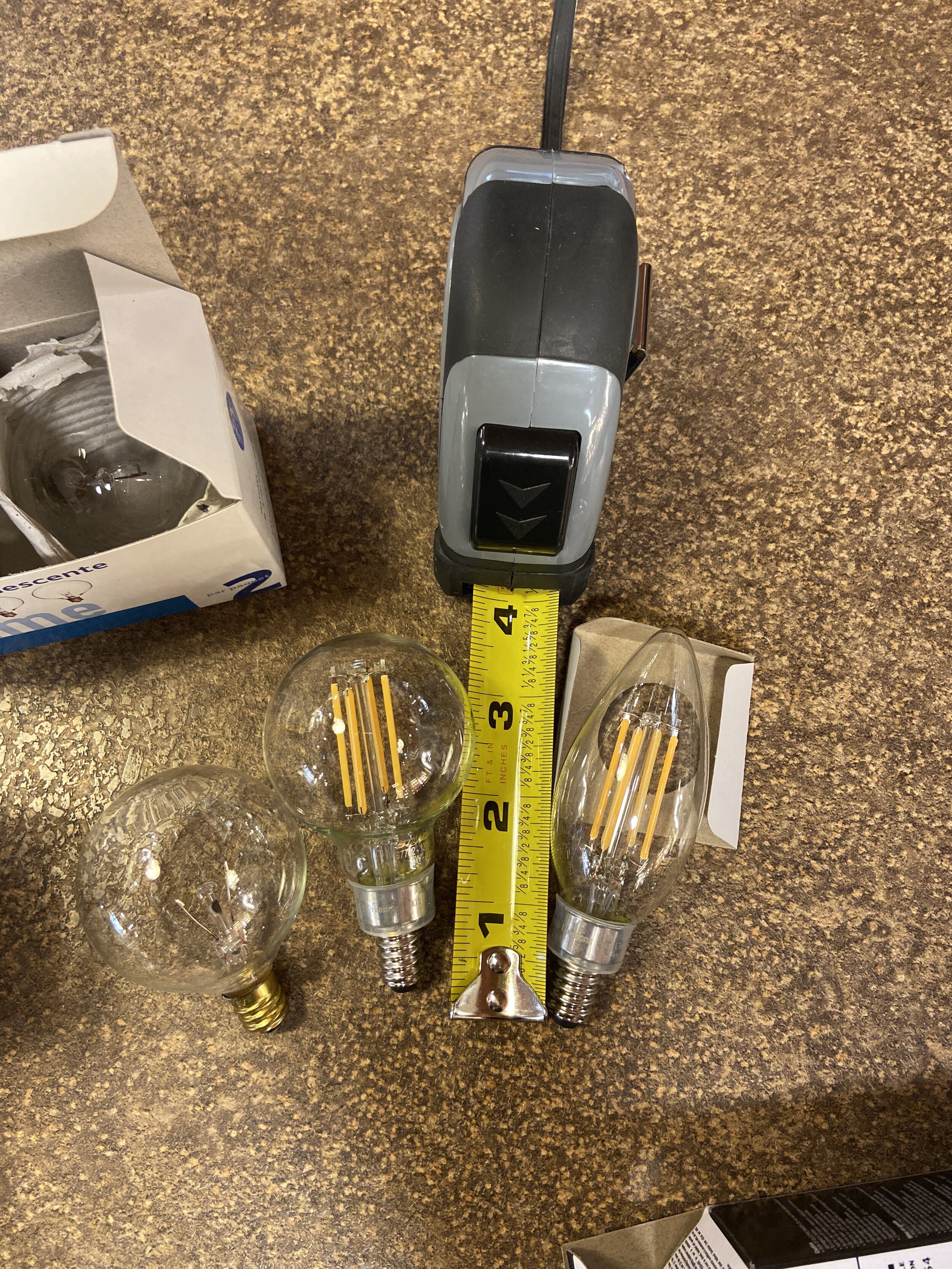
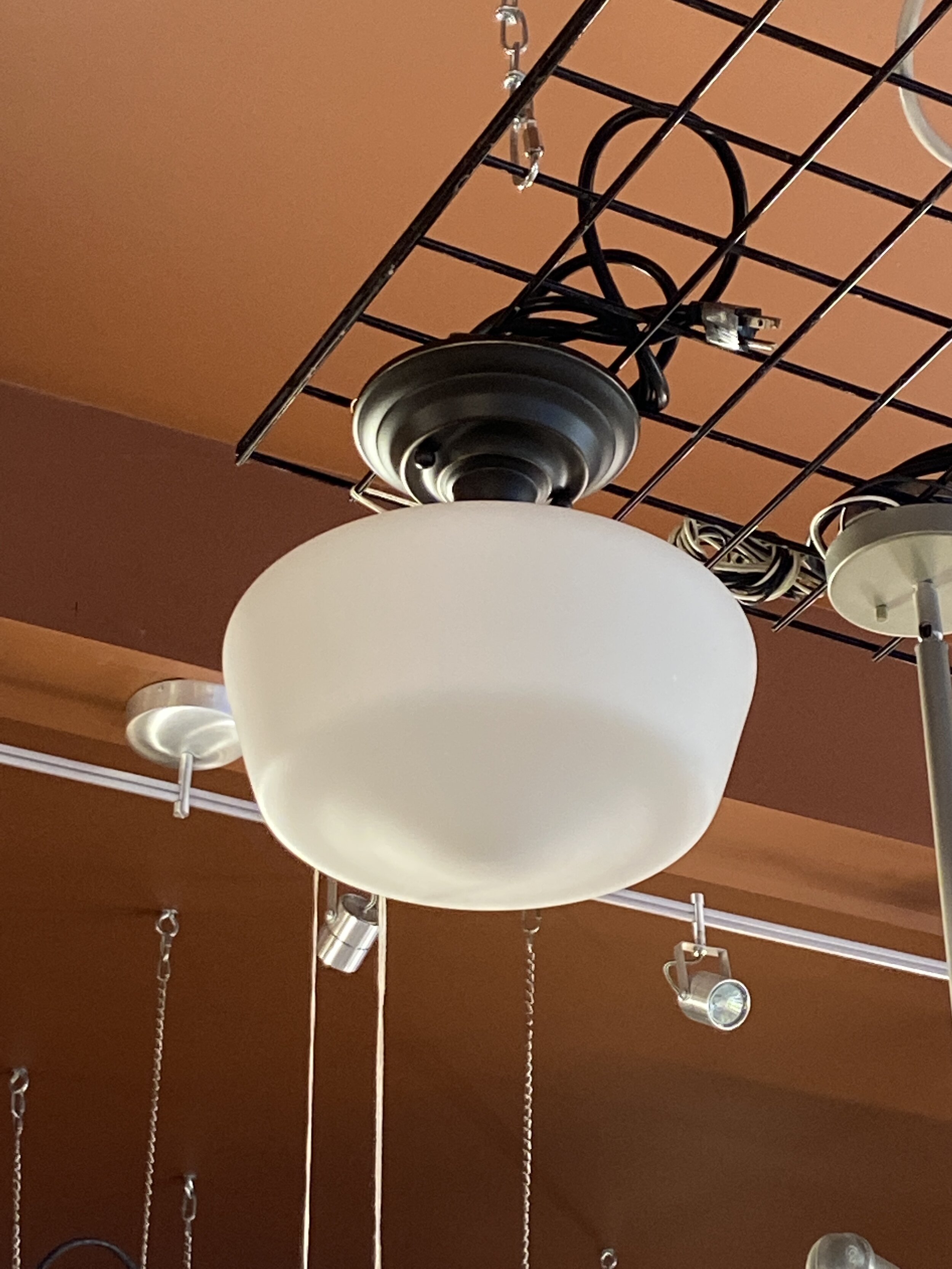
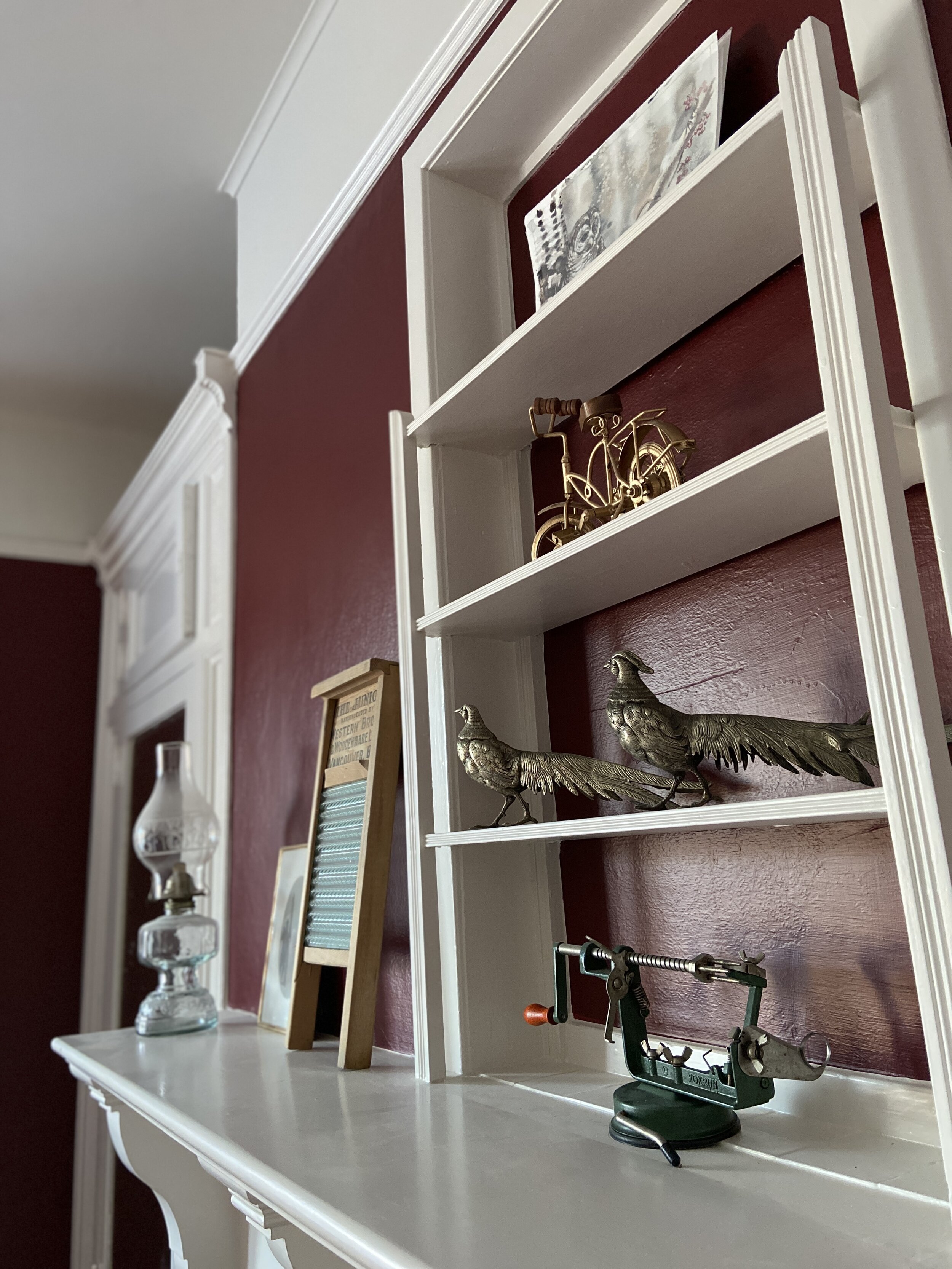
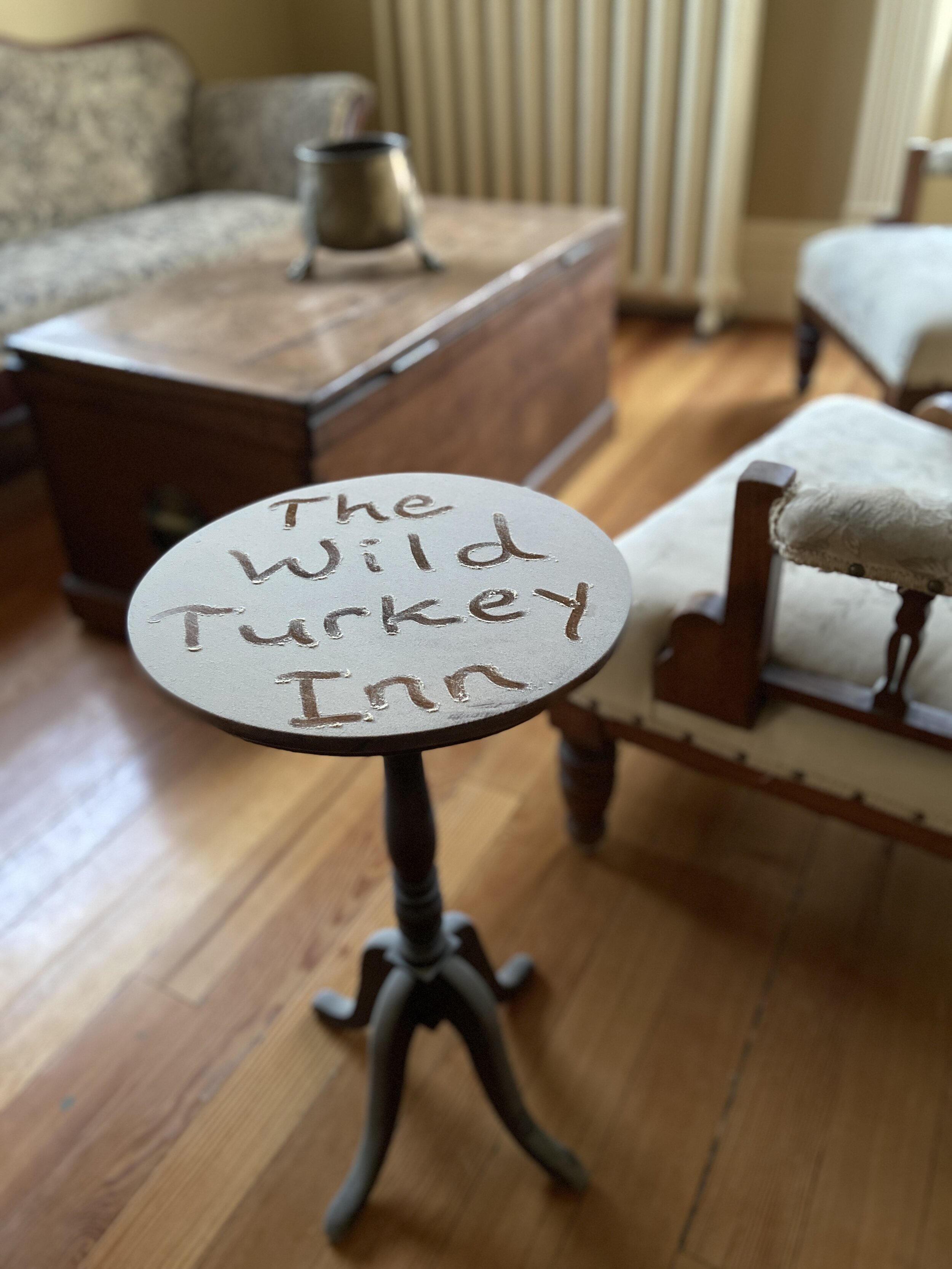
This gallery is the evidence.











And Then We Kept Going
The renovation diary has fallen a little behind the renovations.
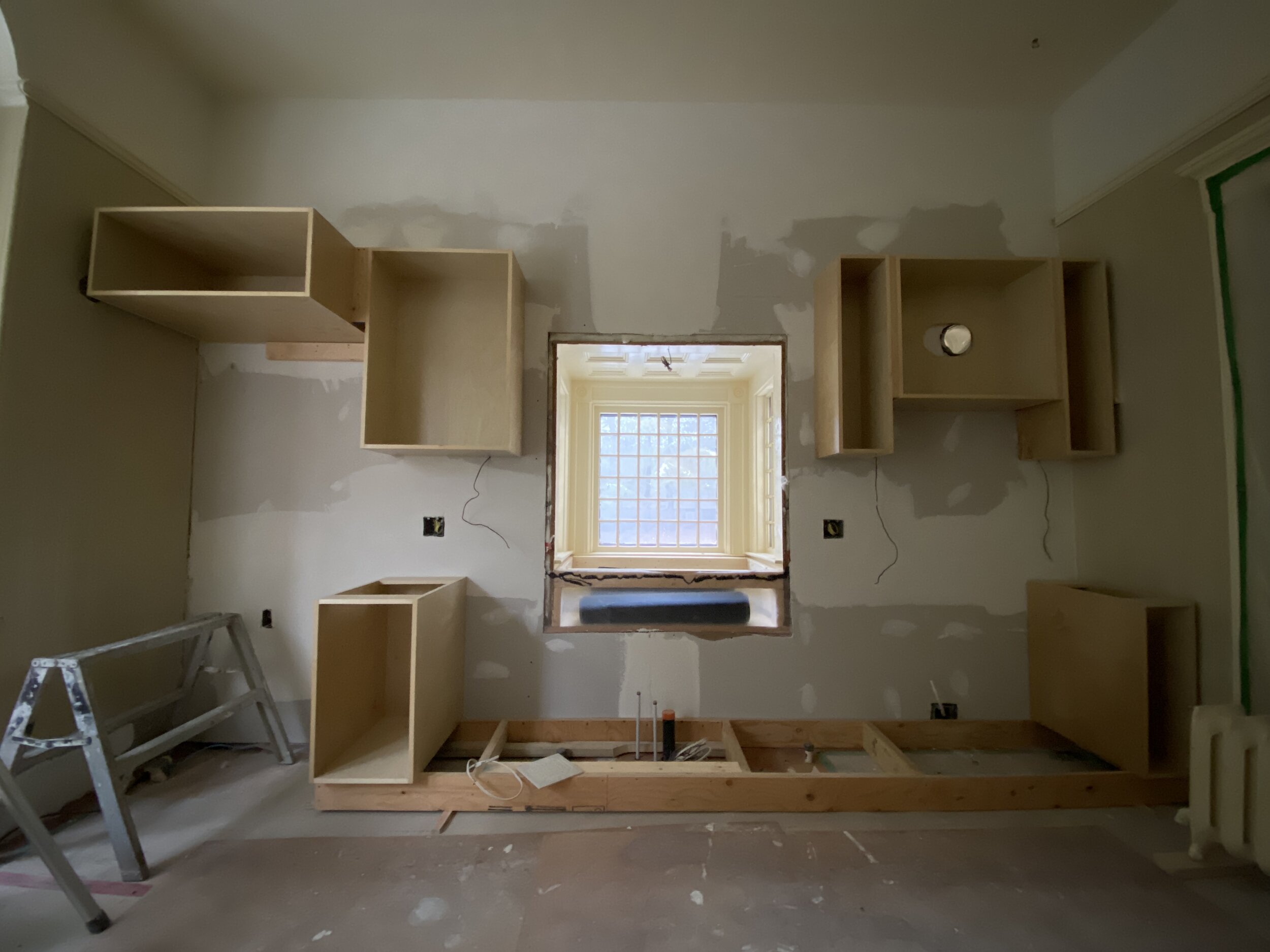
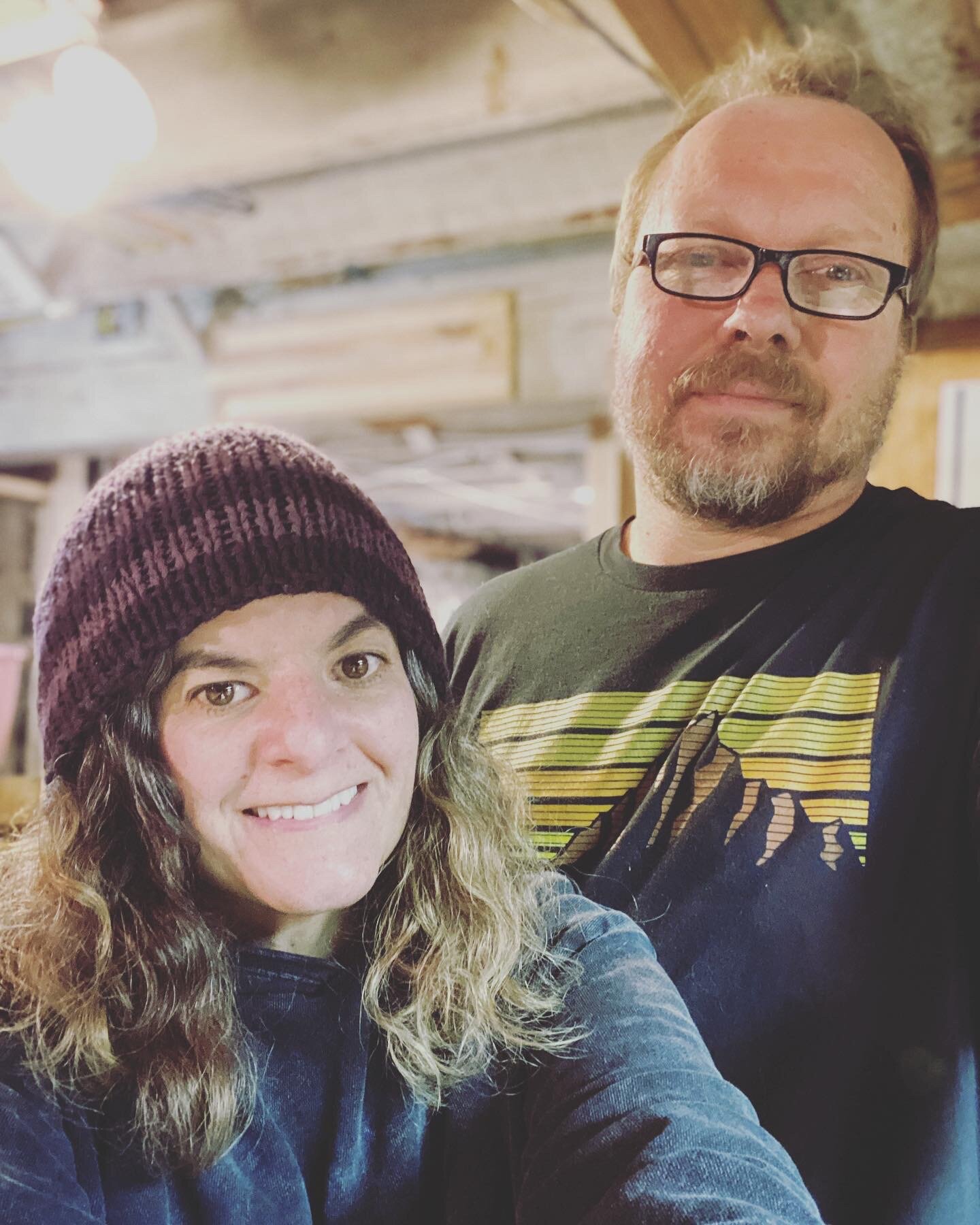
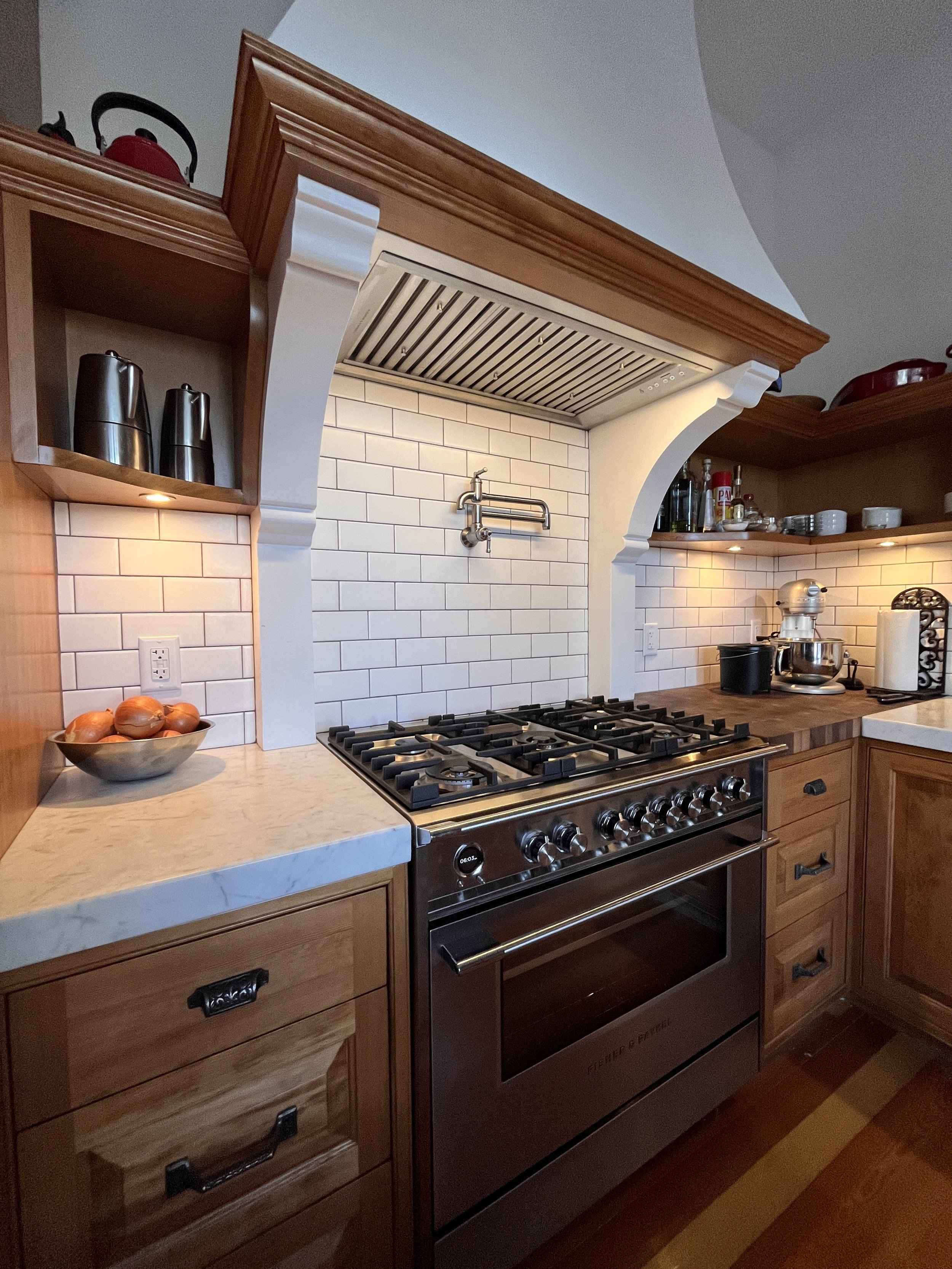
Since these photographs were first assembled, we have moved our kitchen from the west side of the house to the east, overlooking the gardens. Mike built the new kitchen from scratch, tying its cabinetry into the original woodwork of the adjoining library.
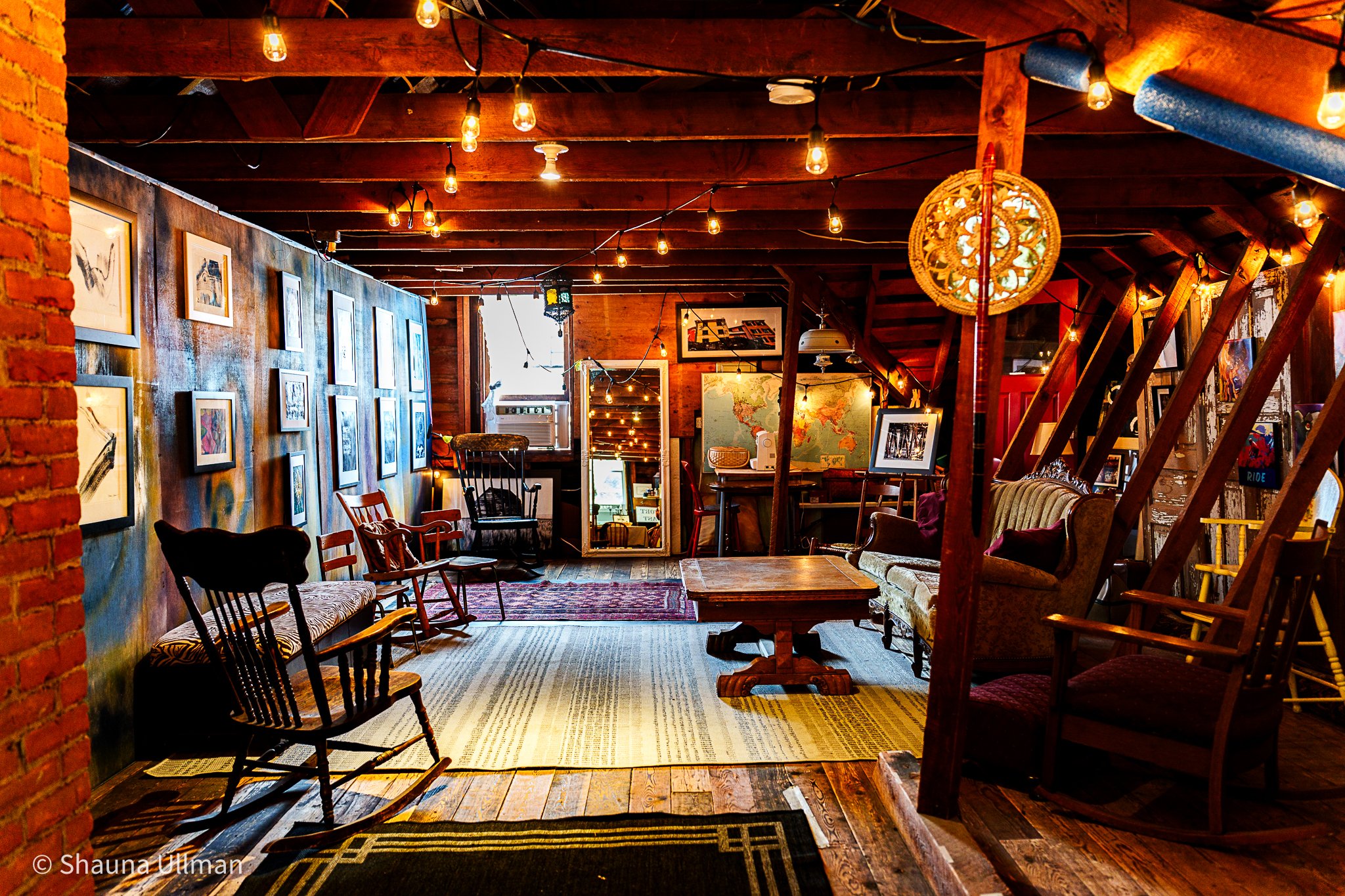
We added a small north entry, transformed the former storage attic into a multipurpose creative space, and have continued adding custom built-ins and restoring rooms throughout the house.
Current projects include turning the former kitchen into our bedroom and ensuite, rebuilding the powder room where the shoes were discovered, and adding cabinetry to two hallways.
Still ahead: a new roof, better attic insulation and, eventually, returning the exterior to the dark green we discovered beneath the white shingles.
There are many more photographs. The full documentation will have to catch up when time allows.
Still in Progress
Some projects are complete. Others are waiting their turn, and there are always new ideas competing with the less glamorous things an old building actually needs.
What has changed since we began is our approach. The more we learn about the house, the more interested we are in keeping what has survived, understanding what was changed before us, and making new work feel like part of the same long story.
So this page will probably never have a true “after.”
We’re quite happy with that.